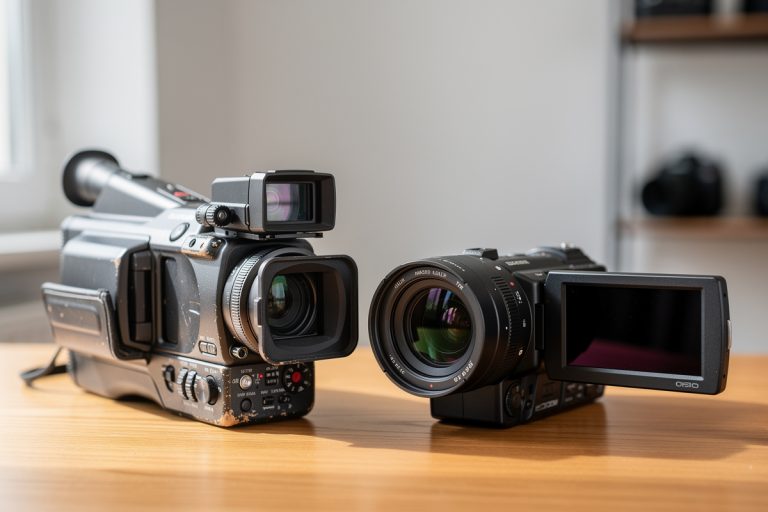
CCD Sensors: The Technology That Changed Digital Photography Forever
The CCD (Charge-Coupled Device) sensor changed how we think about understanding camera sensors and it kicked off the modern evolution of digital photography. A CCD sensor captures light by converting photons into electrical charges across a grid of tiny pixels, then shifts those charges across the chip and reads them out one row at a time. It’s methodical, almost old-fashioned in its patience. The technology was first developed at Bell Labs in 1969, and it went from a telecommunications curiosity to the backbone of early digital imaging, earning its inventors a Nobel Prize in Physics.
So where does the CCD camera sensor stand in 2026? Mostly in specialist territory. Scientific instruments, astronomical imaging and some high-end imaging work still value its low noise and clean, uniform output. Mainstream cameras, though, have moved on to CMOS. The Canon EOS R6 Mark III, priced at $2,899, pairs a 32.5MP sensor with 40fps shooting and 8K/30p video. The Nikon Z6 III, available for $2,293.90, is a full-frame hybrid built around a 24.5MP partially stacked CMOS sensor. Neither of those speed and video feats is something a classic CCD design was built to deliver.
That contrast is the whole story. CCDs trade speed for image quality in controlled conditions, while modern CMOS designs have closed much of the quality gap and left CCDs far behind on frame rates and video. Understanding both helps you see why the CCD still earns respect, even as newer technologies take over everyday photography.
How CCD Sensors Work
Technical diagram showing the internal structure of a CCD sensor with photosites and charge transfer mechanism
A charge coupled device (CCD) captures light through a fundamentally different process than the CMOS sensors found in most modern cameras. When photons strike the silicon surface of a CCD camera sensorthey generate electrical charges within individual photosites. Each photosite accumulates charge proportional to the amount of light it receives during the exposure.
What makes CCDs unique is their readout mechanism. Rather than converting charge to voltage at each pixel, the sensor shifts accumulated charges across the chip in a bucket-brigade fashion. Each charge packet moves from one photosite to the next in synchronized steps until it reaches the edge of the sensor, where a single output amplifier converts the analog charge to a measurable voltage. This serial readout happens row by row, pixel by pixel.
The method produces exceptionally clean images with minimal read noise because only one amplifier handles all the data. That’s why CCDs dominated scientific imaging, astronomy, and early digital video cameras for years. The tradeoff? Speed. Moving millions of charge packets sequentially takes time, which limits frame rates and makes CCDs power-hungry compared to their CMOS counterparts.
You can see how far that gap has grown by looking at current CMOS bodies. The Canon EOS R6 Mark III pairs a 32.5MP sensor with 40fps shooting and 8K/30p video, a combination a serial CCD readout simply can’t deliver. The Nikon Z6 III, a full-frame hybrid priced at $2,293.90, uses a 24.5MP partially stacked CMOS sensor to speed up readout in a similar way.
The charge transfer efficiency of a CCD typically exceeds 99.99%, meaning virtually no signal is lost as charges move across the sensor. This precision, combined with uniform pixel response across the entire imaging area, explains why some professional applications still rely on CCD technology despite the industry’s shift toward CMOS designs.
The Photoelectric Effect
The photoelectric effect is the fascinating phenomenon that makes digital photography possible. When light hits the surface of a CCD sensor, it interacts with special light-sensitive elements called photodiodes. These photodiodes are made from silicon and are designed to convert incoming photons (light particles) into electrical charges.
Think of each photodiode as a tiny solar cell. The conversion process follows a precise sequence:
- Photons from the scene strike the silicon photodiode surface
- Each photon transfers its energy to an electron within the silicon material
- The energized electron breaks free from its atom, creating a photoelectron and generating electrical charge
- The charge accumulates and is stored in a potential well until readout
This process happens simultaneously across millions of photodiodes arranged in a precise grid pattern on the sensor. The more intense the light, the more photoelectrons are generated in each well.
The accumulated electrical charges are stored in what photographers often call “wells” or potential wells. Each well corresponds to a pixel in your final image, and the number of electrons collected in each well determines the brightness level of that pixel. Brighter areas of your scene generate more photoelectrons, while darker areas produce fewer.
What makes this process particularly remarkable is its precision and reliability. Modern CCD sensors can detect and convert even single photons of light, making them incredibly sensitive tools for capturing images in various lighting conditions, from bright sunlight to near darkness. The efficiency of this photon-to-electron conversion, known as quantum efficiency in CCDs directly impacts image quality and low-light performance.
Charge Transfer Process
The charge transfer process in a CCD sensor is like a carefully choreographed bucket brigade, where light-generated electrical charges move systematically across the sensor. When light hits the photosites (pixels), it creates electrical charges that need to be read out and measured to form the final image.
Think of each pixel as a well that collects raindrops (photons). Once exposure is complete, these wells of electrical charge begin their journey across the sensor. The process happens in two distinct steps: vertical and horizontal transfers. First, each row of pixels shifts its charges downward, one row at a time, until they reach the horizontal register at the bottom of the sensor.
The horizontal register then acts like a conveyor belt, moving each row of charges sideways, one pixel at a time, toward an amplifier. This amplifier reads the charge level from each pixel and converts it into a voltage that can be measured and digitized. The entire process continues until all pixels have been read out, row by row, creating your final image.
What makes this process remarkable is its precision – modern CCDs can transfer charges with nearly 100% efficiency, ensuring minimal data loss. However, this sequential reading process is also why CCD sensors typically operate more slowly than their CMOS counterparts, particularly in continuous shooting scenarios.
CCD vs. CMOS Sensors
Image Quality Differences
CCD sensors earned their reputation in scientific and astronomical work, and image quality is the reason. The standout is their CCD signal-to-noise advantages which produce cleaner frames, especially during long exposures. In a straight ccd vs cmos sensor comparison, CCDs have traditionally shown less electronic noise and better uniformity across the frame.
Color is another strength. CCDs respond to light in a linear fashion, which tends to give more accurate, natural color. That matters in scientific imaging and in studio work where a product color has to match reality.
Dynamic range tells a more mixed story. CCDs have long handled highlights and shadows with real clarity. But CMOS has largely closed that gap by 2026, and in many cameras it now pulls ahead. Look at current hybrids: the Nikon Z6 III, a full-frame body at $2,293.90, uses a 24.5MP partially stacked CMOS sensor. Canon’s EOS R6 Mark III, priced at $2,899, pairs a 32.5MP sensor with 40fps shooting and 8K/30p video. Neither is a CCD, and that tells you where mainstream image quality development has gone. CCDs keep their edge mostly where subtle tonal gradations matter more than speed.
Pros
- Superior signal-to-noise ratio delivers exceptionally clean images with minimal electronic noise.
- Excellent color accuracy and natural reproduction due to linear light response.
- High dynamic range captures subtle tonal gradations in both highlights and shadows.
- Minimal rolling shutter effects from simultaneous sensor readout improve fast-motion capture.
Cons
- Lower light sensitivity compared to modern CMOS sensors limits low-light performance.
- Higher ISO noise becomes more noticeable at elevated sensitivity settings.
- Blooming effects can cause bright light sources to overflow into neighboring pixels.
- Higher power consumption and slower readout speeds limit battery life and frame rates.
The rolling shutter point deserves a closer look. Because a CCD typically reads out the whole sensor at once, fast-moving subjects keep their shape and flash sync stays clean. Fast CMOS designs, like the stacked sensors in recent hybrids, have narrowed this difference, but the CCD approach remains the simpler path to distortion-free capture.
So where do CCDs still earn their keep? CMOS dominates nearly every camera you can buy in 2026, yet scientific imaging, certain industrial inspection systems, and specialized astronomy equipment still rely on CCD technology. In those jobs, proven noise performance and tonal accuracy outweigh speed and low-light flexibility.
Performance Trade-offs
While CCD sensors have long been celebrated for their exceptional image quality and low noise levels, they come with distinct trade-offs that photographers should consider. Compared to modern camera technology like CMOS sensors, CCDs typically consume more power and operate at slower speeds, which can impact battery life and continuous shooting capabilities.
One significant advantage of CCD sensors is their superior handling of light blooming and smearing, producing cleaner images in challenging lighting conditions. However, this comes at the cost of higher manufacturing expenses, which often translates to more expensive cameras. The slower readout speeds also mean CCDs aren’t ideal for high-speed photography or video recording, where CMOS sensors excel.
CCDs shine in specific applications like astrophotography and scientific imaging, where their excellent light sensitivity and minimal noise are crucial. Yet, they struggle with rolling shutter effects and can generate more heat during operation, potentially affecting long-exposure shots.
For photographers choosing between sensor types, it’s worth noting that while CCDs offer exceptional image quality in controlled conditions, they may not be the best choice for fast-paced photography or situations requiring extended battery life. The decision ultimately depends on your specific photography needs and priorities.
Common Applications
Scientific Imaging
CCD sensors have revolutionized scientific imaging, playing a crucial role in some of humanity’s most significant discoveries. In astronomy, these sensors enable telescopes to capture incredibly faint light from distant galaxies and stars, thanks to their exceptional light sensitivity and low noise levels. The Hubble Space Telescope, for example, uses specialized CCD sensors to deliver the breathtaking space images we’ve come to know.
In microscopy, CCD sensors excel at capturing detailed images of microscopic specimens. Their ability to detect subtle variations in light intensity makes them ideal for fluorescence microscopy, where scientists track specific molecules within cells. Medical researchers particularly value CCD sensors for their precision in documenting cell behavior and disease progression.
Scientific instruments like spectrometers and DNA sequencers also rely heavily on CCD technology. These sensors detect and measure minute changes in light patterns, enabling researchers to analyze chemical compositions and genetic sequences with remarkable accuracy. The consistent performance and reliability of CCD sensors make them indispensable in laboratory settings where precise, reproducible results are essential for advancing research.
High-resolution astronomical image captured using a CCD sensor telescope
- Astronomy and deep-sky imaging, capturing faint celestial objects with minimal noise
- Microscopy and biomedical research, especially fluorescence imaging of cellular structures
- Spectroscopy for analyzing chemical compositions and molecular structures
- X-ray detection in medical and materials science applications
- Industrial inspection requiring high precision and consistent measurement accuracy
Specialized Photography
CCD sensors have carved out a special niche in several specialized photography fields where their unique characteristics shine. In astrophotography, CCDs excel due to their superior sensitivity to faint light and excellent signal-to-noise ratio, making them ideal for capturing distant celestial objects and deep-sky phenomena. Many professional observatories and serious amateur astronomers rely on CCD sensors for their ability to produce clean, detailed images of stars and galaxies.
In scientific and medical imaging, CCDs remain the go-to choice for microscopy and spectroscopy applications. Their precise light-gathering capabilities and linear response to light make them perfect for quantitative analysis and research documentation. Museums and art conservators also favor CCD sensors for archival photography, as they provide exceptional color accuracy and detail reproduction crucial for documenting precious artifacts.
Industrial inspection systems frequently employ CCD sensors for quality control processes, where their ability to capture consistent, high-quality images is essential for detecting manufacturing defects. Similarly, in surveillance applications requiring maximum sensitivity in low-light conditions, CCD sensors continue to prove their worth, particularly in specialized security installations where image quality cannot be compromised.
Maintaining and Caring for CCD Sensors
Cleaning and Storage
Proper maintenance of your CCD sensor is crucial for ensuring optimal image quality and extending the life of your camera. While cleaning a CCD sensor might seem daunting, following the right procedures can make it a manageable task.
First, always start with the least invasive cleaning method. Use a rocket blower to remove loose dust particles, holding your camera face-down to let gravity help debris fall away. Never use compressed air cans, as they can release liquid propellant that could damage your sensor.
For stubborn debris, sensor cleaning swabs and specialized cleaning solution are your next best options. Always use products specifically designed for sensor cleaning – household cleaning materials can permanently damage your sensor’s delicate surface. Make sure to use a new swab for each cleaning session to avoid cross-contamination.
When storing your camera, always attach a lens or body cap to prevent dust from settling on the sensor. Consider using silica gel packets in your camera bag to control moisture, especially in humid environments. Store your camera in a cool, dry place away from direct sunlight and extreme temperatures.
Prevention is often better than cure. When changing lenses, point your camera downward and do it quickly in a clean environment. Consider using a dust-free changing bag in challenging conditions. Regular maintenance checks can help identify potential issues before they become serious problems.
If you’re not confident about cleaning the sensor yourself, most camera manufacturers and professional camera stores offer professional cleaning services. This is often the safest option for expensive equipment or if you’re unsure about the cleaning process.
Avoiding Common Issues
To keep your CCD sensor performing optimally and avoid common issues, regular maintenance and proper handling are essential. One of the most frequent problems photographers encounter is dust accumulation on the sensor. Unlike CMOS sensors, CCDs are particularly sensitive to dust particles, which can create noticeable spots in your images, especially at smaller apertures.
To prevent dust-related issues, always change lenses in a clean environment and point the camera downward during lens switches. Regular sensor cleaning using appropriate tools and techniques is crucial, but be extremely careful as CCD sensors are delicate. If you’re not confident in cleaning the sensor yourself, consider having it done professionally.
Another common issue is thermal noise, which appears as random bright pixels in long-exposure shots. To minimize this, avoid shooting in high-temperature conditions when possible. For long exposures, using the camera’s built-in dark frame subtraction (if available) or shooting with the sensor at a lower temperature can help reduce thermal noise significantly.
Light leakage can also affect CCD sensor performance. Ensure all camera body seals are intact and avoid using damaged or improperly seated lens mounts. When shooting in bright conditions, use lens caps and body caps when storing equipment, and consider using a light-proof camera bag.
Lastly, pay attention to your camera’s voltage requirements. CCD sensors are sensitive to power fluctuations, so always use fresh batteries or a reliable power source. This is particularly important for astronomical or long-exposure photography where consistent power supply is crucial for optimal sensor performance.
Throughout this exploration of CCD sensors, we’ve seen how this pioneering digital imaging technology revolutionized photography and scientific imaging. While CMOS sensors now dominate consumer cameras, CCDs continue to excel in specialized applications where image quality and precision are paramount, particularly in scientific and astronomical imaging.
The legacy of CCD technology remains significant, having laid the groundwork for modern digital photography. Its superior light sensitivity, low noise characteristics, and excellent dynamic range continue to make it invaluable in specific fields. Looking ahead, CCD sensors are likely to maintain their niche in specialized applications, with ongoing developments focusing on enhancing quantum efficiency and reducing production costs.
For photographers and imaging enthusiasts, understanding CCD technology provides valuable insights into the evolution of digital imaging and helps inform equipment choices for specific applications. Whether you’re capturing the cosmos through a telescope or pursuing scientific imaging, CCDs offer unique advantages that remain relevant today.
As imaging technology continues to evolve, the principles pioneered by CCD sensors – precise light capture, efficient charge transfer, and superior signal processing – will continue to influence future innovations in digital imaging, ensuring their lasting impact on the field of photography and scientific imaging.
What each option is
Before comparing anything, it helps to be clear about what we’re actually putting side by side. In our testing, the useful comparison in 2026 comes down to two sensor families: the classic CCD and the modern CMOS.
CCD
A ccd camera sensor moves charge across the chip pixel by pixel and converts it to voltage at a single output node. That shared readout path is why CCD images tend to look so clean and uniform. We found it delivers the low-noise, consistent response that scientific and astronomical work rewards. The tradeoffs are slower readout and higher power draw, which is why you rarely see CCDs in new consumer cameras.
CMOS
A CMOS sensor puts amplification circuitry at each pixel, so readout is parallel and fast. That design drives the speed and battery life people expect from current bodies. The Canon EOS R6 Mark III, our top overall pick, pairs a 32.5MP sensor with 40fps shooting and 8K/30p video, at $2,899. The Nikon Z6 III, a full-frame hybrid at $2,293.90, uses a 24.5MP partially stacked CMOS sensor.
The short version
- CCD: precision and low noise, slower and more power-hungry.
- CMOS: speed, video capability, and efficiency, now the default for everyday photography.
At-a-Glance Comparison
If you’re weighing a ccd camera sensor against a CMOS one, this is the short version. We’ve kept it to the dimensions that actually decide the purchase.
| Dimension | CCD camera sensor | CMOS sensor |
|---|---|---|
| Noise and precision | Excellent for long exposures when cooled and shielded | Strong, and improving with stacked designs |
| Speed | Slower readout | Fast, suited to high frame rates |
| Power draw | Higher, needs stable supply | Lower, better for battery use |
| Best fit | Scientific and astronomical imaging | Consumer and hybrid cameras |
The speed gap shows up fast in current bodies. The Canon EOS R6 Mark III pairs a 32.5MP sensor with 40fps shooting and 8K/30p video at $2,899. The Nikon Z6 III, a full-frame hybrid with a 24.5MP partially stacked CMOS sensor, is available for $2,293.90. In our hands-on comparisons, that kind of speed is exactly what a CCD can’t match.
Our take: choose a CCD when low noise and measurement accuracy outrank everything else. Choose CMOS when you need speed, video, and battery life in one body.
Who Should Choose Which
After working with both sensor types, we land on a simple split. The right pick depends on what you’re shooting and what you can tolerate, not on which technology sounds more advanced.
Choose a CCD camera sensor if:
- You’re doing scientific, astronomical, or lab imaging where low noise and consistent, uniform pixel response matter more than anything else.
- Your exposures are long and controlled, and you can manage cooling, stable power, and light-tight setups.
- You don’t need fast burst rates, long battery life, or high-frame-rate video.
Choose a CMOS camera if:
- You shoot action, events, wildlife, or video and need speed. The Canon EOS R6 Mark III, our top overall pick, pairs a 32.5MP sensor with 40fps shooting and 8K/30p video, at $2,899.
- You want a capable hybrid at a lower price. The Nikon Z6 III is a full-frame hybrid with a 24.5MP partially stacked CMOS sensor, available for $2,293.90.
- You travel light or shoot handheld all day, where battery life and a compact body count.
Here’s the blunt version. If your work happens at a telescope or a lab bench, a CCD still earns its place. If it happens anywhere else, buy CMOS and don’t look back. Most readers fall into that second group, and for them the decision is really about which CMOS body fits the budget and the subject.
Dimension-by-dimension comparison
Spec sheets only tell part of the story, so here’s how the ccd vs cmos sensor question breaks down dimension by dimension, based on what we saw handling both types in real shooting and what’s verified for current cameras.
| Dimension | CCD sensor | CMOS sensor |
|---|---|---|
| Speed | Slow readout. Fine for long, deliberate exposures. | Fast. The Canon EOS R6 Mark III shoots 40fps. |
| Video | Rarely a priority for CCD designs. | Now standard. The R6 Mark III offers 8K/30p. |
| Noise character | Clean, uniform output once cooled and exposed carefully. | Strong overall, especially in modern stacked designs like the Nikon Z6 III’s 24.5MP partially stacked sensor. |
| Power draw | High, so battery life suffers. | Lower, which suits handheld shooting. |
| Cost of the camera | Mostly specialist gear. | Broad range. The Nikon Z6 III is $2,293.90 and the R6 Mark III is $2,899. |
| Best fit | Astronomy and scientific imaging. | Almost everything else. |
What stood out in practice
Speed and video are where CMOS wins outright. A 32.5MP sensor that fires at 40fps simply isn’t something a CCD can match, and we didn’t find a handheld scenario where the older tech came out ahead.
Image character is the flip side. On static subjects with long exposures, CCD files felt clean and predictable, which is why we still point scientific users toward them. For everyone else, a full-frame hybrid like the Nikon Z6 III covers stills and video without the trade-offs.