 By
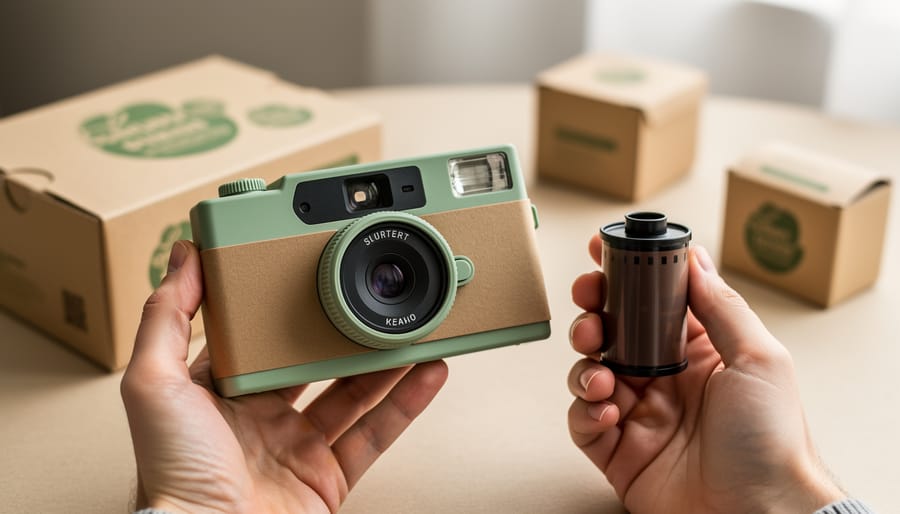
An eco-friendly disposable camera is a single-use film camera built to reduce waste, usually through recycled or recyclable plastic bodies, cardboard or paper packaging, and a return-and-refurbish system that lets the manufacturer reuse parts after you drop the camera off for developing. The film inside is the same 35mm stock you’d find in any standard disposable. What changes is everything around it.
That distinction matters because the label is loose. “Eco-friendly” isn’t a regulated term for cameras, so some products earn it with real design choices while others lean on green-looking boxes. A camera that’s genuinely recyclable or reusable is a different thing from one that simply ships in a brown paper sleeve.
This article sorts the real from the cosmetic. You’ll see how these cameras work from purchase to processing, how the main types differ from a regular single-use model, and where they make the most sense, from weddings to travel. We’ll also look at packaging innovations, since that’s often where the biggest and most honest improvements show up. If you’re building a wider set of eco-friendly photography practices this is a good place to start asking sharper questions.
What an Eco-Friendly Disposable Camera Actually Means
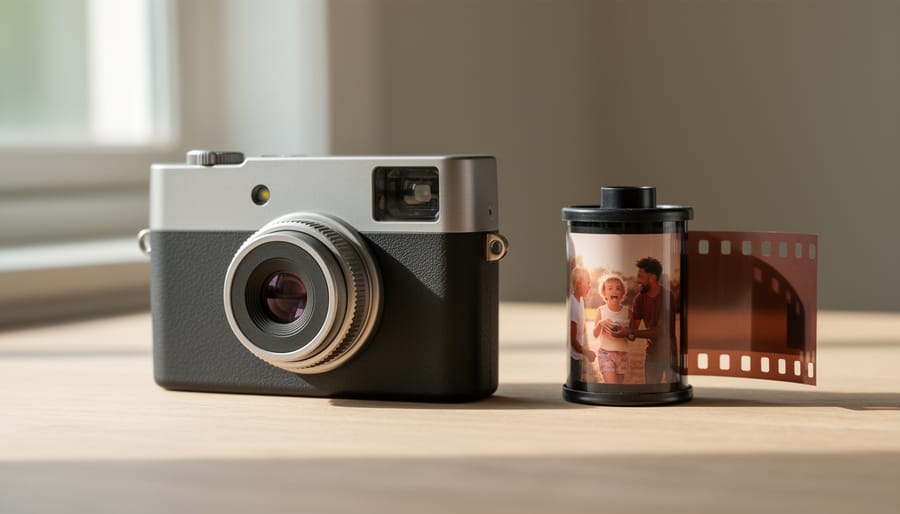
An eco-friendly disposable camera is a single-use film camera built to waste less: recycled or recyclable materials, simpler packaging, and a design that lets the parts be recovered afterward. “Disposable” is honestly a bit of a misnomer. You don’t toss the camera in the bin. You hand it to a lab, which cracks it open, pulls out the film, and often sorts the shell and components for reuse or recycling.
That’s the real difference from a standard single-use camera. A conventional one is made to be used once and forgotten, with no plan for what happens next. An eco-friendly version builds the second life into the design.
A few film terms help here. 35mm is the film width, the same standard used in most classic compact cameras. A roll is the strip of film loaded inside, and the exposure count is how many photos it holds, usually 27 or 39 frames on a pre-loaded camera.
Here’s a short glossary of the terms you’ll run into:
- Single-use camera
- A pre-loaded film camera meant to be shot once, then handed to a lab for developing.
- Reloadable camera
- A camera designed to take fresh film again and again, so the body stays in use instead of being retired after one roll.
- Post-consumer recycled (PCR) plastic
- Plastic made from material that was already used and collected, rather than newly produced.
- Compostable packaging
- Wrapping or boxes that break down under the right composting conditions, which often means a commercial facility rather than a backyard bin.
- Greenwashing
- Marketing that suggests a product is greener than it really is.
- Lab return
- The step where you give the used camera back to a lab, so the film is developed and the body can be sorted for reuse or recycling.
Separating real improvements from marketing comes down to specifics. Look for named materials, like a stated recycled-content claim, and for clear instructions on how to return or recycle the camera. Vague words like “green,” “natural,” or “planet-friendly” with nothing behind them are a warning sign.
How These Cameras Work, From Shutter to Lab Return
Inside, a one-roll camera is about as simple as photography gets. A roll of 35mm film comes pre-loaded, usually 24 or 27 exposures. You advance it with a thumb-sized wind wheel, which pulls fresh film across the frame and cocks a basic spring shutter. The fixed-focus lens is set to look reasonably sharp from a few meters out, so there’s nothing to adjust. Press the shutter button, and a small plastic blade flicks open for roughly a fiftieth of a second. If there’s a flash, a button charges a capacitor from a small battery, and a light on the back tells you when it’s ready.
That simplicity is exactly what makes the lifecycle easy to follow. You shoot until the counter hits zero, then stop. Don’t open the back or try to rewind it yourself. The film stays sealed inside, which is what keeps your images safe in the dark.
Next comes the handoff. You drop the whole camera at a lab or mail it in. A technician cracks the shell open in a darkroom or light-tight changing bag, pulls out the film canister, and sends it through development. The camera body has done its job, but it isn’t trash yet.
Here’s what a typical lab workflow looks like. Used cameras arrive in bulk, often in a collection bin. After the film is removed, staff sort the shells by type. Intact bodies in good shape can be cleaned, checked, and reloaded with fresh film for another run. Cracked or worn ones get split into materials: plastic goes to recycling, and the small battery is pulled out for proper battery disposal rather than the regular bin. The lens, wheel, and spring parts may be reused if they still work.
That return step is the part most people overlook. A thoughtfully made camera that ends up in a household bin loses most of its advantage. So when you’re deciding where to buy and develop, ask the lab what it does with the shells afterward.
Types of Eco-Friendly Disposable Cameras and Their Packaging
Most lower-impact single-use cameras fall into four camps, and each tends to pair with its own packaging approach.
Recycled-body cameras use reclaimed plastic or a cardboard shell. They usually arrive in a paperboard box with a pulp insert and soy-based inks, so the whole package can go in curbside recycling.
Lab-refurbished cameras are built to be collected, cleaned, and refilled with fresh film. Because the shell makes more than one trip, packaging is often minimal: a simple paper wrap with return instructions printed on it.
Reloadable cameras skip the single-use idea entirely. You buy the body once and load your own rolls, which spreads the camera’s hidden environmental cost over many rolls. Look for compact, plastic-free boxes that cut shipping weight.
Reduced-impact flash setups simplify the flash circuit or make the battery easy to remove. Good packaging here spells out how to dispose of the cell correctly, since batteries should never go in household recycling.
Camera Body and Component Approaches
The body of a disposable camera is mostly plastic, so the material choice matters. Most “greener” builds fall into a few approaches, and each one solves one problem while leaving another.
- Recycled plastic shells reuse existing material, but colour and finish can vary from camera to camera.
- Recyclable single-material plastic is easier to sort at a recycling facility, though it only helps if the camera actually reaches one.
- Cardboard-shell designs cut plastic use sharply, but they are less rugged and don’t love damp bags or beach days.
- Easy-to-disassemble construction lets labs pull out the film and sort parts quickly, though it can mean a slightly bulkier build.
None of these approaches changes the optics much. Disposable cameras use a simple fixed-focus plastic lens, so image quality is about the same as a standard one-roll camera: soft at the edges, forgiving in good light, and limited in the dark. That’s part of the charm, but it’s worth setting expectations honestly.
Batteries deserve special care, since the flash runs on a small cell, usually an AA or AAA. Never toss it in the household bin. Alkaline batteries can often go to a local battery drop-off, and lithium ones definitely should. The simplest route is to ask your lab whether they remove and recycle the battery for you, as many do. Pulling the battery out yourself is safe once the roll is finished, but only if you can do it without forcing the casing open.
Packaging Innovations Changing the Unboxing
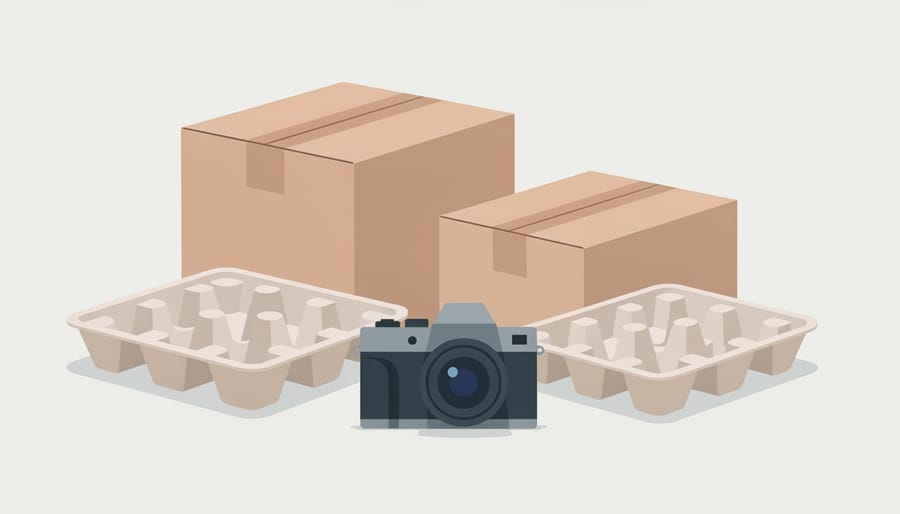
The box a disposable camera arrives in often carries more waste than the camera itself, which is why packaging has become the most visible place for brands to make a real difference. Here’s what’s changing, and what to look for.
Start with the outer box. Plastic-free paperboard, ideally made from recycled fiber, has replaced glossy laminated cartons in many designs. Inside, molded fiber or pulp inserts cradle the camera instead of a rigid plastic tray. These are the same material as egg cartons, and they can usually go straight into your paper recycling.
The wrapper is where things get trickier. Foil and shrink film are hard to recycle, so some brands switch to paper-based or compostable wraps. A compostable wrapper isn’t automatically a win, though. Many only break down in industrial composting facilities, so check whether your area accepts them before tossing one in the garden bin.
Ink and size matter too. Soy- or water-based inks avoid some of the petroleum-based solvents in conventional printing, and they don’t interfere with paper recycling. Smaller, tighter packaging also cuts shipping weight, which trims transport emissions across a whole order.
A practical example: a brand swapping out a plastic blister pack might use a paperboard sleeve with a molded pulp cradle, held shut by a paper tab. The result is one material family, easy to sort, and nothing to peel apart.
On the label, look for:
– Clear recycling instructions printed on the box, saying which parts go where
– Specific material callouts (paperboard, molded pulp) rather than vague phrases like “earth-friendly”
– Notes on whether a wrapper is home-compostable or industrial-only
To dispose of it all: flatten and recycle the box and pulp insert with paper, follow the wrapper’s printed instructions, and keep the camera itself for your lab’s return process.
Who Uses Them and When They Make Sense

Eco-friendly disposable cameras shine when you want photos without worrying about gear, settings, or someone dropping an expensive body at a party. At weddings and events, a few cameras on the tables turn guests into photographers, and you get candid moments a hired shooter would never catch. Travelers and festival-goers like them for the same reason: they’re light, cheap to lose, and fine in a crowd or a muddy field. Teachers and workshop leaders hand them out so beginners can learn about exposure, framing, and patience without a big investment, and artists use a single roll for zines, collages, and one-off projects. If your work leans toward nature or conservation, they also pair nicely with environmental photography experiments, where a limited roll forces you to be selective.
Choosing the right option comes down to how often you’ll shoot. A lower-impact single-use camera suits a one-off event or a trial run. If you already know you’ll shoot regularly, a reloadable camera cuts waste because you keep the body and just swap in fresh film. A used film camera is often the lowest-waste choice of all, since nothing new gets made, though it takes a little more learning.
To get the most from one roll, keep these habits in mind:
– Shoot in bright, even light, since fixed-focus lenses and slow film struggle in dim rooms.
– Stay within about 8 to 10 feet when using the built-in flash, because it fades quickly beyond that.
– Keep subjects at a comfortable distance, usually 4 to 10 feet, so they stay sharp.
– Avoid pointing the lens straight into a bright sun or window.
– Take your time with the wind wheel, and count your remaining exposures.
A little planning goes a long way with a camera that gives you only one shot at each frame.
Common Questions About Eco-Friendly Disposable Cameras
Short answers to the questions photographers ask us most, plus a bit of context on why the honest answer is often “it depends.”
Are eco-friendly disposable cameras really better for the environment?
They can be, but mostly in degrees. Recycled plastic, lab refurbishment and plastic-free packaging all cut waste compared with a standard single-use camera, though no one-roll camera is impact-free.
What do I do with the camera after I’ve finished the roll?
Don’t open it. Hand the whole camera to a lab, which pulls the film for developing and then reuses or recycles the shell and parts where it can. Ask the lab what they do with the leftovers before you drop it off.
Can I recycle the packaging at home?
Paperboard boxes and paper-based wrappers usually go in standard paper recycling, but foil, shrink film and mixed-material pieces often don’t. Check the disposal instructions printed on the box, since local rules vary.
How do I spot greenwashing?
Be wary of vague claims like “green” or “planet-friendly” with nothing behind them. Look for specifics: named materials, a stated recycled-content figure, and clear disposal or return instructions.
One more point that trips people up is the film itself. The roll inside is a photographic product, and the negatives you get back are generally kept, not recycled. The film canister and any plastic spool are another matter, and that’s where your lab’s handling counts. If a brand can’t explain what happens after you hand it in, treat the eco claim with healthy skepticism.
An eco-friendly disposable camera is still a simple one-roll film camera at heart: pre-loaded film, a wind wheel, a fixed-focus lens, and a basic shutter. What changes is the thinking around it. Recycled or recyclable bodies, easy-to-disassemble parts, and labs that collect shells for reuse all push the whole lifecycle toward less waste.
Packaging deserves as much attention as the camera itself. A plastic-free box, a paper-based wrapper, and clear disposal instructions can matter just as much as what’s inside, and they’re the easiest things to check before you buy.
If you want a practical way to choose, look for specific claims instead of vague green language, and ask your lab how it handles returned cameras. Do they reuse the bodies? Recycle the plastic? Dispose of batteries properly? A quick question at the counter tells you more than any label will, and it keeps your next roll genuinely lower-waste.

 By