 By
By 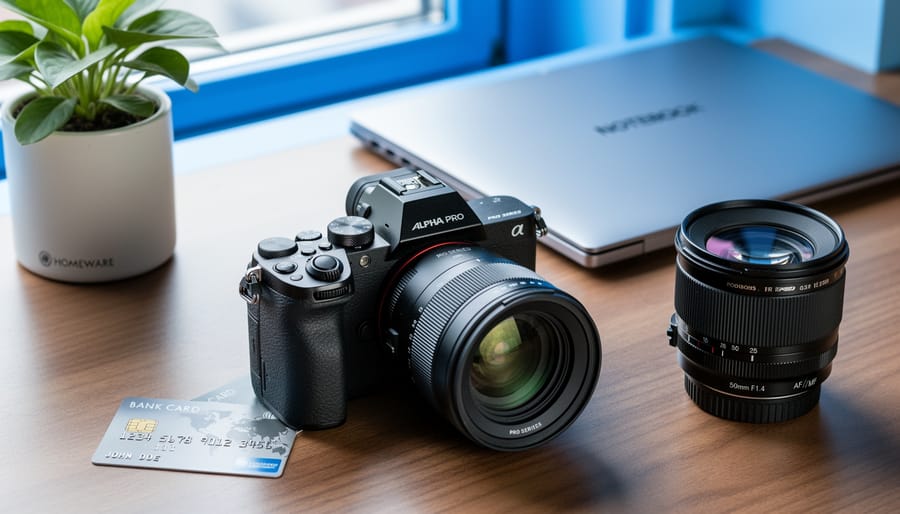
Compare equipment financing options by evaluating interest rates, payment terms, and total cost across credit cards, manufacturer programs, and specialized photography lenders. Professional photographers can often deduct lease payments as business expenses, while purchase financing builds equity in gear that holds resale value.
Calculate the true cost of financing by multiplying your monthly payment by the loan term and comparing it to the gear’s retail price. A $3,000 lens financed at 15% APR over 24 months costs $3,486 total—that extra $486 might cover a quality filter set or extended warranty instead. Factor in whether the gear will generate income during the payment period: a wedding photographer booking three additional events often justifies financing a second camera body, while hobbyists might benefit from saving incrementally.
Request 0% promotional financing directly from major retailers like B&H Photo and Adorama, which frequently offer 6-12 month interest-free periods on purchases above $500. Read the fine print carefully—deferred interest promotions charge retroactive interest on any remaining balance after the promotional window closes.
Consider rent-to-own programs for specialized equipment you’ll use occasionally. Renting a $15,000 cinema lens for specific client projects costs less than financing it if you only need it quarterly. Photography equipment financing transforms your relationship with gear acquisition from aspirational to strategic, enabling you to build a professional toolkit while managing cash flow responsibly. The key lies in matching your financing method to your actual usage patterns and income potential rather than simply accessing the latest releases.
Why Photographers Turn to Equipment Financing
Let’s be honest—photography gear isn’t cheap. Whether you’re eyeing a professional-grade camera body, a specialized lens, or lighting equipment that could transform your work, the price tags can make even seasoned photographers wince. So why do so many photographers choose financing instead of waiting to save up?
The most compelling reason is simple: photography equipment can pay for itself. Consider Sarah, a wedding photographer who needed a second camera body for backup during ceremonies. By financing a $3,000 camera, she could book weddings immediately rather than waiting six months to save. Those bookings not only covered her monthly payments but generated profit from day one. This is the power of using equipment as an income-generating tool rather than just an expense.
Technology moves fast in photography, and waiting too long means potentially missing the current generation entirely. When you’re finally ready to buy that camera you’ve been saving for, a newer model might already be on the horizon. Financing allows you to access current technology when you need it most, whether that’s for buying the right camera to launch your business or upgrading to meet client demands.
Cash flow management is another practical consideration. Professional photographers often face seasonal income fluctuations—busy wedding seasons followed by quieter winters. Financing spreads the cost across manageable monthly payments, making it easier to budget without depleting your emergency fund or working capital needed for marketing, insurance, and other business expenses.
For hobbyists transitioning to professionals, financing can bridge the gap between amateur and pro-level gear without requiring a massive upfront investment. Instead of compromising with entry-level equipment that you’ll quickly outgrow, you can start with gear that matches your ambitions and skill development.
The key is viewing financing as a strategic business decision rather than simply a way to afford something beyond your means. When equipment directly contributes to your ability to earn, financing becomes an investment in your photography career.

Understanding Your Financing Options
Retailer Payment Plans
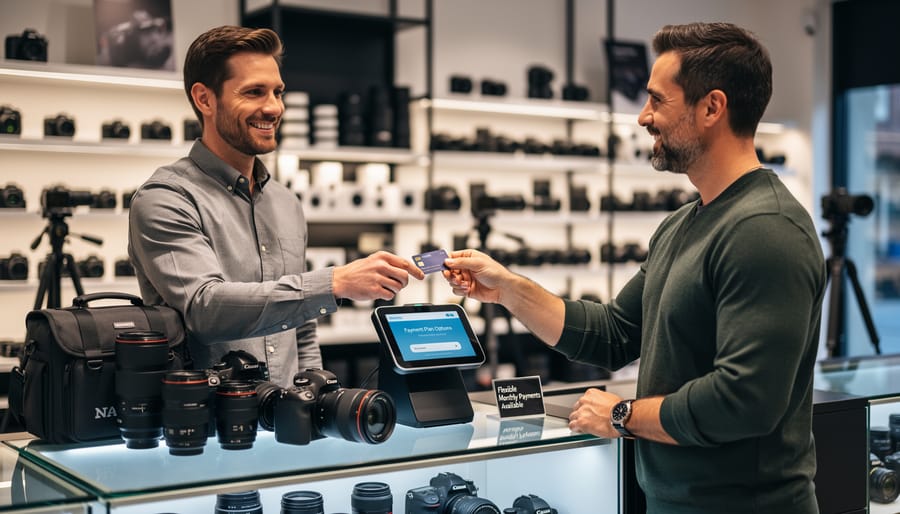
Major camera retailers have recognized that photographers often need flexible ways to acquire expensive gear, which is why many now offer their own in-house payment plans. These programs can be an excellent alternative to traditional credit cards or personal loans, especially when you’re eyeing that new camera body or professional lens.
B&H Photo offers its Payboo Card, which provides interest-free financing when you pay off purchases within the promotional period. The card also helps customers in certain states recoup sales tax, making it particularly attractive for big-ticket items. Adorama partners with Affirm to provide flexible payment options at checkout, offering terms from 3 to 36 months depending on the purchase amount. Their approval process is straightforward and takes just minutes, with most decisions happening instantly online.
KEH Camera, known for used equipment, works with financing providers to offer payment plans on pre-owned gear, making professional equipment more accessible at already-reduced prices. This is particularly helpful if you’re building out your kit gradually or trying to stay within a tighter budget.
Approval requirements typically include a decent credit score (usually 640 or higher for the best terms), proof of income, and a valid checking account. Interest-free promotional periods commonly range from 6 to 18 months, though larger purchases may qualify for extended terms. The key is understanding that these are genuine 0% APR offers during the promotional window, but any remaining balance after that period will accrue interest retroactively in some cases.
Always read the fine print carefully and calculate whether you can realistically pay off the balance before interest kicks in. Missing a payment or carrying a balance beyond the promotional period can result in significant charges that negate the initial savings.
Credit Cards and Photography-Specific Cards
Credit cards can be powerful financing tools when used strategically, but they require careful planning to avoid costly pitfalls. Many photographers successfully leverage 0% APR introductory offers to spread equipment costs over 12-18 months without paying interest. The key is ensuring you can pay off the balance before the promotional period ends—otherwise, you’ll face steep interest rates that can easily exceed 20% APR.
For professional photographers, business credit cards offer distinct advantages beyond consumer cards. These often include higher credit limits, expense tracking features, and reward programs tailored to business needs. Some cards provide cash back on office supply purchases or travel expenses, which can add up quickly when attending workshops or destination shoots.
A real-world example: A wedding photographer I know used a business card with 2% cash back to purchase $8,000 in lighting equipment. That generated $160 in rewards—essentially a discount on already-competitive pricing.
However, credit cards demand discipline. If you’re carrying balances month-to-month, interest charges will negate any rewards or promotional benefits. Only consider this option if you have a solid repayment plan. Think of promotional periods as interest-free payment plans, not opportunities to delay financial responsibility. Always read the fine print regarding minimum payments and what triggers the end of promotional rates.
Equipment Leasing Programs
Equipment leasing offers photographers a structured path to acquiring gear without the full upfront cost, and it’s particularly appealing to established professionals managing cash flow. Unlike outright purchases, leasing lets you use equipment for a fixed monthly payment over a predetermined period.
There are two primary leasing structures to consider. Traditional leasing works similarly to renting a car—you make regular payments to use the equipment, then return it at lease end unless you choose to purchase it for a residual value. Lease-to-own programs, conversely, are designed with ownership in mind. Your payments build equity toward eventually owning the gear outright.
These programs typically cater to professionals and businesses rather than hobbyists. Why? Leasing offers significant tax advantages. Businesses can often deduct lease payments as operating expenses, reducing taxable income. This benefit makes a $5,000 camera system more financially palatable when those monthly payments lower your tax burden. Your accountant can help determine specific deductions available to you.
The key difference from purchases? You’re not immediately building equity, but you preserve capital for other business needs. A portrait photographer, for instance, might lease lighting equipment to maintain cash reserves for marketing campaigns. Some photographers even prefer leasing for gear they’ll upgrade frequently, avoiding depreciation concerns altogether.
Leasing works differently from gear subscription services, offering longer commitment periods with eventual ownership potential rather than flexible short-term access.
Personal Loans and Lines of Credit
Traditional personal loans and lines of credit offer a straightforward path to financing your photography equipment, especially when you need larger amounts or prefer dealing with established financial institutions. Banks, credit unions, and online lenders can provide unsecured personal loans ranging from $1,000 to $50,000 or more, with repayment terms typically spanning two to seven years.
Personal loans work well when you’re making a significant one-time investment, like upgrading your entire lighting setup or purchasing a high-end camera body. You’ll receive a lump sum upfront and repay it in fixed monthly installments, making budgeting predictable. Interest rates generally range from 6% to 36%, depending on your creditworthiness.
Personal lines of credit function more like credit cards, giving you access to funds as needed up to a predetermined limit. This flexibility suits photographers who frequently upgrade equipment or need occasional purchases throughout the year. You only pay interest on what you actually use.
Qualification typically requires a credit score of 650 or higher, though the best rates go to those with scores above 720. Lenders will examine your income, employment history, and debt-to-income ratio. Online lenders like SoFi, LightStream, and Marcus often provide faster approval and funding than traditional banks, sometimes within 24 to 48 hours.
These options make most sense when you have solid credit and need financing without putting up collateral or tapping into manufacturer programs.
What to Consider Before Financing
The True Cost of Financing
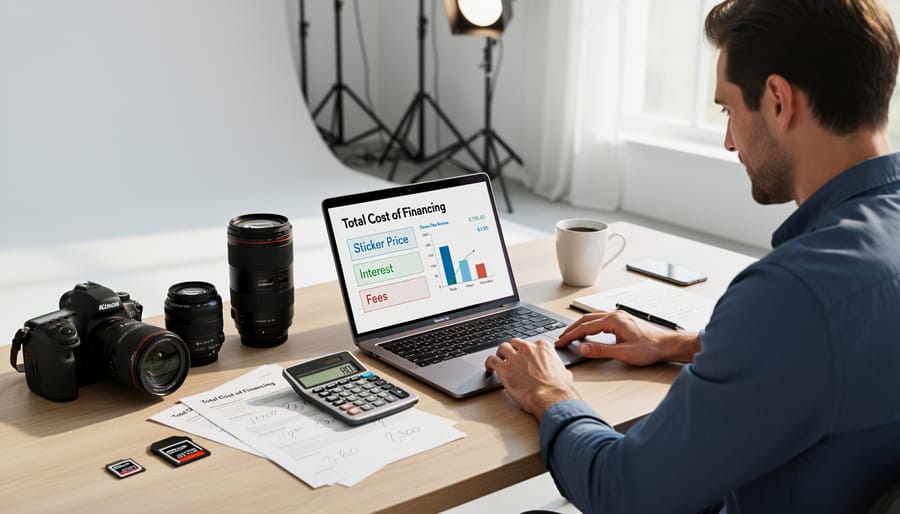
Understanding the real numbers behind financing is crucial before you commit to monthly payments. While spreading out costs feels manageable, the total amount you’ll pay often surprises people who don’t run the calculations beforehand.
Let’s break this down with a practical example. Imagine you’re eyeing a $3,000 camera body and lens combination. If you pay cash, you’re done—$3,000 total. However, if you finance this purchase at 18% APR (a common rate for retail credit cards) over 24 months, you’ll make payments of about $149 per month. Sounds reasonable, right? But here’s the catch: you’ll end up paying approximately $3,576 total—that’s an extra $576 just in interest charges. Essentially, you’ve paid for nearly 20% more than the gear’s actual value.
Now consider extending that to 36 months to lower your monthly payment to around $108. Your total cost balloons to roughly $3,888—almost $900 more than the cash price. That difference could have purchased additional lenses, lighting equipment, or funded workshop attendance.
Beyond interest, watch for origination fees (typically 1-5% of the loan amount), late payment penalties (often $25-40 per occurrence), and annual fees on credit accounts. Some financing programs also include prepayment penalties if you try to pay off your balance early, though promotional zero-interest offers typically don’t. Always read the fine print and calculate the true total before signing, ensuring your dream gear doesn’t become a financial burden that limits your creative growth.
Assessing Your Financial Readiness
Before signing any financing agreement, take an honest look at your financial situation. This step prevents you from overextending yourself and ensures your dream gear doesn’t become a financial burden.
Start by examining your income stability. Do you have consistent monthly earnings, or does your photography income fluctuate seasonally? Lenders prefer stable income, and more importantly, you need predictable cash flow to meet regular payment obligations.
Next, review your existing debt. Calculate your debt-to-income ratio by adding up all monthly debt payments and dividing by your gross monthly income. Most financial advisors recommend keeping this below 36 percent. Additional financing increases this ratio, potentially affecting your ability to secure other loans or credit.
Your credit score plays a significant role in financing approval and interest rates. Check your score before applying—anything above 700 typically qualifies for better terms, while scores below 650 may result in higher rates or denial.
Consider your monthly budget carefully. Can you comfortably afford the projected payment without sacrificing essentials? Remember to factor in ongoing costs like equipment insurance options, maintenance, and accessories.
Finally, assess your emergency fund. Financial experts recommend having three to six months of expenses saved before taking on new debt. This cushion protects you if income unexpectedly drops or equipment requires costly repairs.
Gear That’s Worth Financing (and What Isn’t)
Let’s be honest: not every photography purchase deserves the financing treatment. If you’re earning money with your camera, financing professional-grade equipment can be a strategic investment. A Canon R5 or Sony A1 that books clients for years? Absolutely worth considering. That specialty 400mm f/2.8 lens enabling you to break into wildlife photography professionally? It could pay for itself within a season. Studio lighting setups from brands like Profoto or Broncolor that elevate your commercial work? These are tools that generate revenue.
However, financing entry-level cameras or accessories rarely makes financial sense. That $500 beginner DSLR will depreciate rapidly, and you’ll likely outgrow it before paying off the interest. Camera bags, filters, memory cards, and tripods should come from your existing budget. These items don’t generate income directly and lose value quickly.
Here’s a practical guideline: finance gear only when it directly enables you to accept paid work you’d otherwise turn down. A wedding photographer adding a backup body? Justified. A hobbyist wanting the latest release without a clear business plan? Save up instead.
Consider the depreciation timeline too. Professional bodies typically retain value for 3-5 years, while consumer gear becomes outdated much faster. If your financing term outlasts the equipment’s professional lifespan, you’re setting yourself up for financial stress.
How to Get the Best Financing Deal
Timing Your Purchase Strategically
Timing can make a significant difference in how much you pay for camera gear, especially when combining financing with sales. Black Friday and Cyber Monday typically offer the deepest discounts, with retailers slashing prices on cameras and lenses by 15-30%. You’ll also find strong deals during major photography trade shows like CP+ in February or Photokina years when it runs.
Manufacturer promotions follow predictable patterns too. Canon and Nikon often release rebate programs in spring and fall, while Sony tends to offer instant savings during summer months. These promotions frequently coincide with new product launches, making previous-generation equipment more affordable.
Here’s where strategic thinking pays off: stack these manufacturer deals with financing offers. For example, if B&H Photo offers 12-month interest-free financing and Nikon has a $300 rebate on a lens you need, you get both benefits. Last year, a photographer friend purchased a $2,800 Canon R5 during a $500 holiday rebate, then split payments across 18 months at zero interest, essentially getting an interest-free loan while keeping $2,300 in his savings account earning interest.
Watch for retailer-specific events too. Adorama’s VIP program and B&H’s Payboo card occasionally provide additional incentives that complement standard financing options, maximizing your purchasing power without increasing overall costs.
Reading the Fine Print
Before you sign any financing agreement, take a deep breath and actually read through the entire contract. I know it’s tedious, but those pages of fine print can contain some serious gotchas that could cost you hundreds or even thousands of dollars.
The most common trap is deferred interest financing, often marketed as “no interest for 12 months.” Here’s the catch: if you don’t pay off the entire balance before the promotional period ends, you’ll owe interest retroactively from day one. That $3,000 lens could suddenly cost you an additional $600 in backdated interest charges. Always circle the payoff deadline on your calendar and set reminders well in advance.
Watch out for early payoff penalties too. Some lenders actually charge you for paying off your loan ahead of schedule, which seems counterintuitive but protects their profit margins. If you’re someone who likes to eliminate debt quickly, this clause can work against you.
Hidden fees are another concern. Look for origination fees, processing charges, and annual fees that might not be immediately obvious in the promotional materials. A retailer once quoted me 0% financing, but buried in the agreement was a $99 annual account maintenance fee.
Finally, understand minimum payment warnings. Paying only the minimum will keep you in debt for years while interest compounds. Run the numbers to see what you’ll actually pay over time versus just making the smallest required payment each month.
Building Your Case for Approval
Strengthening your financing application increases your chances of approval and helps you secure better interest rates. Start by checking your credit score a few months before applying—this gives you time to address any errors or pay down existing balances. Even small improvements can translate to significant savings over a multi-year loan.
For professional photographers, documentation is your ally. Gather recent tax returns, business licenses, portfolio samples showing client work, and bank statements demonstrating consistent income. Lenders view established businesses more favorably than hobbyists, so present yourself professionally even if you’re just starting out.
Consider offering a substantial down payment, typically 15-20% of the equipment cost. This demonstrates financial commitment and reduces the lender’s risk, often resulting in lower interest rates and more flexible terms. For example, putting $1,000 down on a $5,000 lens package might reduce your monthly payment by $50 while improving approval odds. Save systematically before applying rather than requesting full financing—it shows fiscal responsibility that lenders appreciate.
Alternatives to Traditional Financing
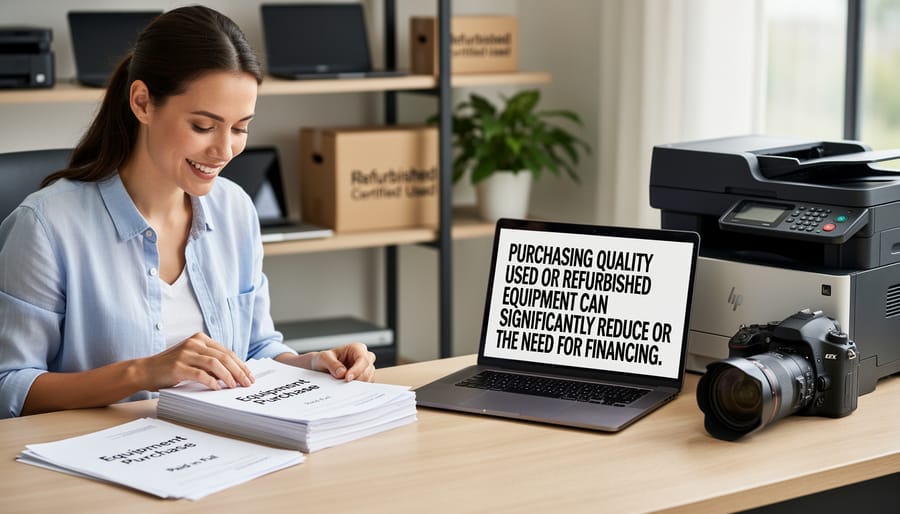
The Used and Refurbished Route
Before jumping into financing, consider whether buying pre-owned gear might eliminate or reduce your need to borrow altogether. The used market offers substantial savings—often 30-50% off retail prices—while still delivering professional-quality results.
Reputable sources like KEH Camera, MPB, and B&H’s used department grade equipment meticulously and offer return policies that protect buyers. Many photographers also find excellent deals through local camera clubs or Facebook groups, though these require more due diligence on your part.
Warranty considerations matter here. While used gear typically lacks manufacturer coverage, third-party sellers often provide limited warranties. A six-month guarantee from a trusted retailer can offer peace of mind without the premium price tag of new equipment.
Set realistic expectations about cosmetic wear versus functional quality. That lens with minor scuffs on the barrel? It’ll perform identically to a pristine version. Bodies with moderate shutter counts (under 50,000 actuations for most models) still have years of reliable service ahead.
For photographers just starting out or testing new focal lengths, pre-owned gear represents a financially smart stepping stone that preserves capital for future investments.
Rent-to-Own and Gear Subscription Services
Rent-to-own programs and gear subscription services offer a middle ground between renting professional equipment and outright purchasing. Companies like Grover and Flex Shopper let you pay monthly fees that gradually build ownership equity in the gear. This works well when you need equipment immediately but want to test it thoroughly before committing.
These programs make sense for photographers unsure about long-term gear needs or those working on project-based timelines. For example, a wedding photographer might subscribe to a high-end lens for peak season, then decide whether to complete the purchase based on booking volume.
However, the total cost typically exceeds retail prices by 15-30 percent, similar to traditional financing interest. Compare the subscription’s total payout against a 0% APR credit card or retailer financing. Subscriptions shine when flexibility matters more than cost savings, letting you swap gear or walk away without the commitment that traditional financing demands.
Building Your Kit Gradually
Before jumping into financing options, consider the power of patience. Building your kit gradually often proves more financially sound than acquiring everything at once. Start with the absolute essentials: a reliable camera body and one versatile lens, like a 24-70mm or 50mm prime. These fundamentals will teach you more about your shooting style than any expensive specialty lens.
Create a realistic priority list based on your actual shooting needs, not aspirational ones. If you’re primarily shooting portraits, that macro lens can wait. Set aside a fixed monthly amount in a dedicated savings account, treating it like a non-negotiable bill payment. This approach eliminates interest charges and gives you time to research purchases thoroughly.
The used market becomes your ally here. A two-year-old professional lens performs nearly identically to the latest model but costs significantly less. Many photographers find that disciplined saving coupled with strategic used purchases builds a comprehensive kit within 12-18 months, debt-free and with greater appreciation for each piece of equipment earned through patience.
Photography equipment financing, when approached thoughtfully, can be a powerful tool that bridges the gap between your current capabilities and your creative vision. But like any financial decision, it demands careful consideration of your unique situation rather than a rushed response to the latest camera release or promotional offer.
The key is distinguishing between what you truly need to advance your craft or business and what simply feels exciting in the moment. A wedding photographer booking consistent clients may genuinely need that reliable second camera body. A landscape photographer still building their portfolio might find better value in renting gear for specific shoots while saving for future purchases. There’s no universal answer, only the one that fits your circumstances.
Remember that the most successful photographers aren’t necessarily those with the newest equipment, but those who maximize what they have while making strategic investments at the right time. Financing can absolutely be part of that strategy when it helps you meet professional commitments, expand your services, or seize legitimate growth opportunities.
Before signing any financing agreement, give yourself permission to pause. Review the numbers honestly. Consider alternatives like buying used, renting, or phased purchases. And most importantly, trust your judgment over any external pressure.
Your photography journey is uniquely yours. Whether you choose to finance equipment, save gradually, or explore other paths, make decisions that honor both your creative ambitions and your financial wellbeing. Invest wisely in your craft, and your craft will reward that wisdom many times over.



 By
By