 By
By 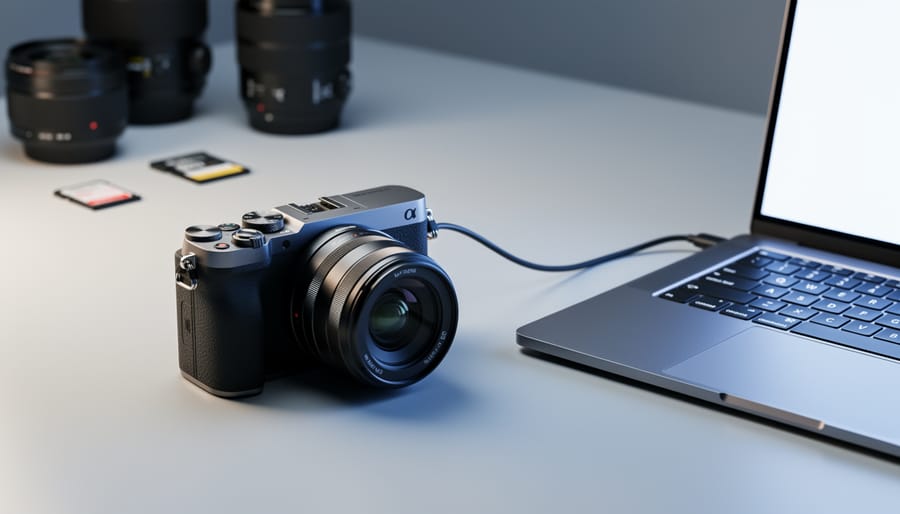
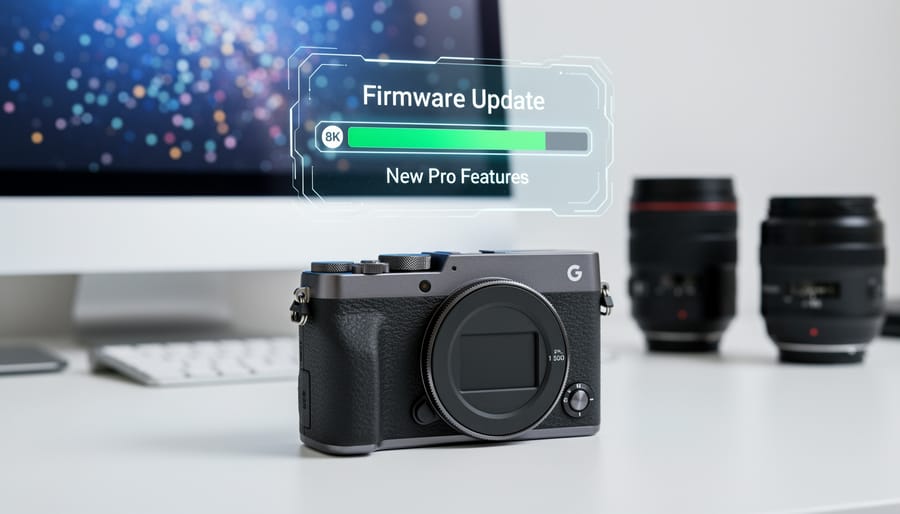
Check your camera manufacturer’s firmware update page monthly to catch critical autofocus improvements, lens compatibility patches, and new shooting modes that can transform how your existing gear performs. Many photographers miss out on significant feature upgrades simply because they don’t realize their three-year-old camera body can now shoot with enhanced dynamic range or improved eye-tracking through a simple software download.
Subscribe to manufacturer-specific RSS feeds or email alerts to receive immediate notifications when major imaging technology innovations drop, ensuring you’re not weeks behind your peers in accessing performance enhancements. This approach proved invaluable when Canon released their overheating fix for the R5, and Nikon added bird detection to several Z-series bodies—updates that fundamentally changed what these cameras could accomplish in the field.
Test new firmware in non-critical shooting situations first, as updates occasionally introduce unexpected behaviors with specific lens combinations or memory card types. Create a simple spreadsheet tracking which firmware versions work best with your particular setup, including notes on battery performance and processing speed changes you observe.
The photography industry now moves at software speed rather than hardware cycles, meaning your investment in today’s camera body extends far beyond its launch-day capabilities. Understanding how to leverage firmware updates and software improvements gives you access to features that previously required purchasing new equipment, making informed awareness of imaging technology developments essential to maximizing your creative toolkit and protecting your gear investment.
The New Era of Camera Intelligence: AI-Powered Updates
Subject Recognition That Actually Learns
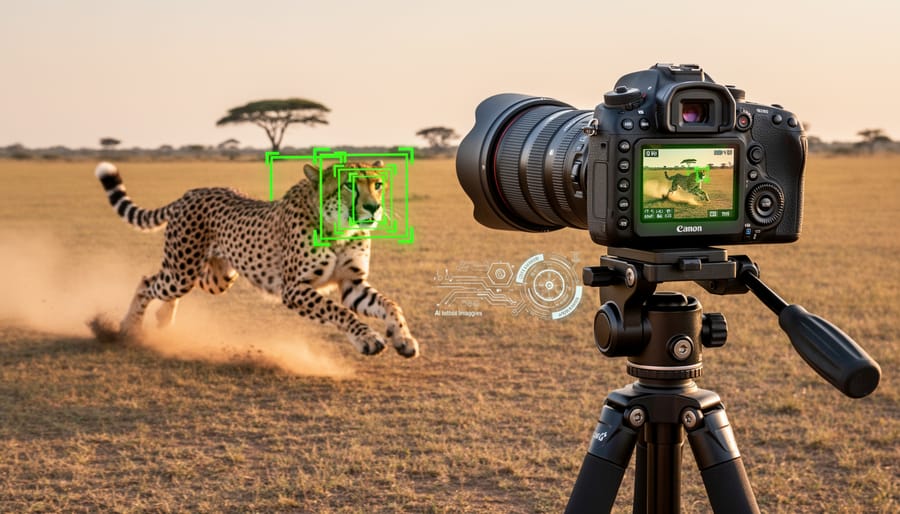
The game has fundamentally changed when it comes to autofocus. Canon’s recent firmware updates for the EOS R5 and R6 series now include vehicle detection that doesn’t just recognize cars, but can identify and track motorcycles, trains, and even airplanes. This matters when you’re shooting motorsports and need your camera to stick with a single bike through a pack of ten riders entering a turn at speed.
Sony’s Real-time Tracking has evolved to recognize animal eyes across species—not just the obvious cats and dogs, but birds in flight where the eye might be just a few pixels in your frame. Photographers shooting backyard feeders report the system now locks onto hummingbirds with remarkable consistency, something that would have been unthinkable just two years ago.
Nikon’s 3D-tracking on the Z8 and Z9 has gained what the company calls “learning capability.” The system analyzes your shooting patterns over time, recognizing when you repeatedly select certain subjects and adapting its priority accordingly. Portrait photographers particularly benefit here—the camera learns to prioritize human subjects over distracting background elements based on your previous selections.
What makes these updates remarkable isn’t just the initial recognition, but the persistence. Modern subject tracking maintains focus even when your subject temporarily disappears behind obstacles or turns away from the camera. That split-second when a basketball player pivots or a bird banks behind a branch no longer means starting your focus search from scratch. The camera anticipates reappearance and reacquires almost instantaneously.
Computational Photography Coming to Traditional Cameras
The line between smartphone cameras and traditional dedicated cameras continues to blur, but not because DSLRs and mirrorless bodies are getting smaller. Instead, camera manufacturers are finally bringing the computational photography magic that’s made smartphone cameras so impressive into the firmware of traditional cameras.
Recent firmware updates from major manufacturers show this trend in action. Canon’s latest updates for the EOS R series include improved HDR processing that rivals what you’d find on flagship smartphones, automatically blending multiple exposures to create images with incredible dynamic range without the artificial look that plagued earlier HDR implementations. Nikon has followed suit, introducing firmware that applies advanced noise reduction algorithms during raw file processing, allowing photographers to shoot at higher ISOs while maintaining image quality that would have been impossible just a few years ago.
What makes this shift particularly exciting is that it’s often coming to existing cameras through free firmware updates. Your three-year-old camera body might suddenly gain capabilities that didn’t exist when you bought it, extending its useful life and delaying that expensive upgrade cycle.
This computational approach builds on cross-industry sensor developments that improve the raw data cameras capture. Sony’s recent Alpha series updates demonstrate this beautifully, with AI-powered subject tracking that learns from millions of images to predict movement patterns, keeping focus locked even in challenging shooting conditions.
The practical impact? You’re getting better images straight out of camera with less post-processing needed, while still maintaining the creative control and flexibility that drew you to dedicated cameras in the first place.
Video Features That Didn’t Exist at Launch
When a Firmware Update Adds Thousands in Value
Some of the most exciting firmware updates in recent years have transformed cameras in ways that rival hardware upgrades costing thousands of dollars. These aren’t minor tweaks—they’re substantial feature additions that fundamentally change what your camera can do.
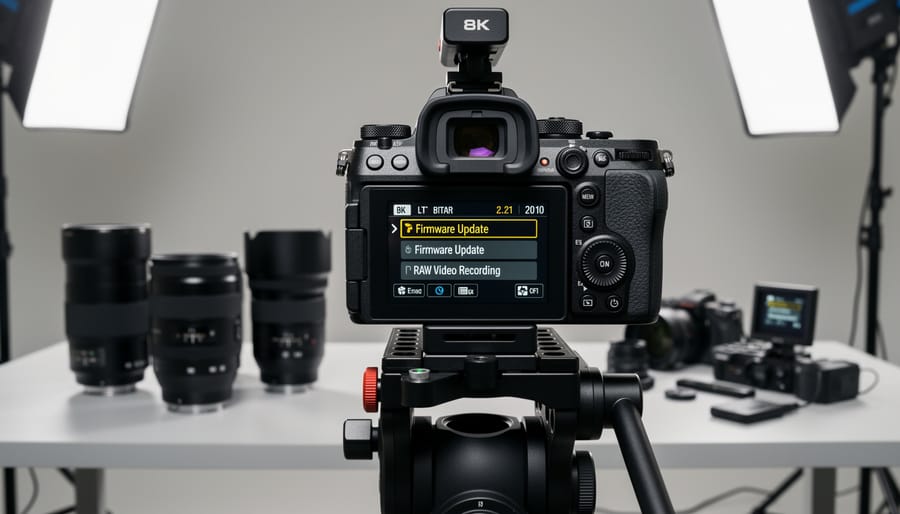
Perhaps the most dramatic example came when Panasonic added RAW video output to several Lumix cameras through firmware updates. Owners of the S5, S1, and S1H suddenly gained the ability to record in ProRes RAW when paired with compatible external recorders. This professional codec typically required cinema cameras costing significantly more, yet existing users received it at no charge. The real-world value? External RAW recording packages often represent a $3,000-5,000 capability boost.
Similarly, Nikon’s Z9 received multiple updates that added high-frame-rate options and improved video specifications. Early adopters found their cameras becoming more capable months after purchase, with features like enhanced bird detection autofocus and additional N-RAW recording options appearing through updates.
Canon followed suit with updates to the EOS R5 and R6 series, addressing overheating concerns while adding features like false color display and waveform monitors—professional video tools previously limited to dedicated cinema cameras.
Fujifilm has built an entire reputation around generous firmware support, with cameras like the X-T3 receiving features from newer models. The addition of improved film simulations and autofocus performance through updates has kept older bodies competitive far longer than typical product cycles would suggest.
These examples demonstrate that manufacturers increasingly view firmware as a way to extend product lifecycles while maintaining customer loyalty, effectively giving your camera a second life without opening your wallet.
The RAW Video Revolution
RAW video recording has become the hot commodity in camera firmware updates, and manufacturers are listening. What was once reserved for cinema cameras costing tens of thousands of dollars is now trickling down to consumer models through simple software unlocks. Canon’s recent firmware updates enabling RAW video on models like the EOS R5 exemplify this trend, transforming capable hybrid cameras into legitimate video production tools.
Here’s the reality check: RAW video files are massive. We’re talking upwards of 2GB per minute in some cases, which means your current card collection might not cut it. Before enabling RAW recording, invest in high-speed CFexpress cards rated for sustained write speeds of at least 400MB/s. Cheaper options will lead to dropped frames and frustration.
The workflow considerations extend beyond capture. Your editing computer needs serious horsepower since RAW video processing demands significantly more from your CPU and GPU than standard codecs. Think of it as the difference between editing JPEGs versus RAW photos, but multiplied exponentially. Budget for external SSD storage too, as those files accumulate quickly.
Despite these challenges, the payoff is undeniable. RAW gives you unprecedented color grading flexibility and dynamic range that pairs beautifully with advanced sensor technology, making previously impossible recovery work routine.
Third-Party Software That’s Changing the Game
Tethering Software That Actually Works
Remember when tethering meant dealing with dropped connections every few minutes? Those frustrating days are finally behind us. Recent software updates from major camera manufacturers have transformed wireless tethering from a temperamental luxury into a genuinely reliable tool.
Canon’s latest EOS Utility update has dramatically improved connection stability, with photographers reporting uninterrupted sessions lasting entire shoots. The software now automatically switches between Wi-Fi bands to maintain the strongest possible signal, which makes a noticeable difference when working in crowded venues or locations with interference.
Capture One 23 introduced a game-changing feature called “Queue Processing” that continues importing images even when wireless signals momentarily drop. Instead of losing your work mid-transfer, the software picks up exactly where it left off. This alone has saved countless photographers from the panic of missing critical shots during fast-paced events.
For those shooting on location, Adobe’s Lightroom mobile tethering has matured considerably. You can now preview images on an iPad in real-time while adjusting exposure settings, making client collaboration significantly smoother. The responsive interface means minimal lag, even when shooting high-resolution files, transforming tablets into legitimate studio monitors for location work.
The Custom Firmware Community
For photographers seeking to push their cameras beyond factory limitations, custom firmware communities have long offered intriguing possibilities. Magic Lantern stands as the most recognized example, providing Canon DSLR users with advanced features like focus peaking, zebras, and raw video recording that manufacturers didn’t include. While active development has slowed considerably in recent years, the community maintains stable builds for popular models like the Canon 5D Mark III and 80D.
The appeal is undeniable: unlocking professional-grade tools without spending thousands on new equipment. Enthusiasts have captured stunning projects using features that simply didn’t exist in their camera’s original firmware. However, approaching custom firmware requires careful consideration. Installation carries risks, including the potential to temporarily brick your camera if done incorrectly, and it typically voids manufacturer warranties.
Today’s landscape has shifted somewhat. Camera manufacturers increasingly incorporate features that custom firmware pioneered, reducing the need for modifications. Still, for photographers with compatible older gear, these projects represent valuable options for extending camera capabilities. If you’re curious, start by thoroughly researching your specific camera model’s compatibility, backing up existing firmware, and following installation guides meticulously. The community forums remain excellent resources for troubleshooting and learning from experienced users who’ve successfully navigated the process.
Cross-Brand Compatibility Breakthroughs
The days of being locked into a single camera ecosystem are finally starting to fade, thanks to some remarkable software innovations that are breaking down the walls between competing brands. If you’ve ever felt trapped by your camera choice or frustrated that your favorite third-party lens wouldn’t communicate properly with your body, this year’s developments should have you genuinely excited.
Leading this compatibility revolution are smart lens adapters that now offer full electronic communication between different camera mounts. Companies like Sigma, Viltrox, and Megadap have released adapters that allow Canon EF lenses to talk seamlessly with Sony E-mount bodies, complete with autofocus, image stabilization data transfer, and even metadata recording. What makes this emerging camera technology particularly noteworthy is that these adapters now receive regular firmware updates, progressively improving compatibility and performance rather than staying static after purchase.
The wireless trigger market has also undergone a significant transformation. Universal systems from manufacturers like Godox and Profoto now support multiple camera brands through sophisticated software protocols that automatically detect and adapt to your specific camera model. This means a single trigger can control your lighting setup whether you’re shooting with Canon, Nikon, Sony, or Fujifilm—no more carrying separate triggers for different systems.
Perhaps most importantly, camera manufacturers themselves are becoming more open to third-party integration. Several brands have published portions of their communication protocols, enabling accessory makers to develop products that work more reliably across different systems. For working photographers who shoot with multiple camera brands or collaborate with others using different equipment, these compatibility breakthroughs translate into real workflow improvements and significant cost savings on accessories.
What These Updates Mean for Your Gear Decisions
Should You Wait for the Update or Buy New?
The hardware-versus-software question isn’t always straightforward. Consider Canon’s recent track record: their EOS R5 received autofocus improvements two years post-launch that genuinely transformed its wildlife tracking capabilities. If you already own compatible gear and the promised update addresses specific pain points, waiting often makes financial sense.
However, manufacturer promises aren’t guarantees. Sony famously delayed certain promised features for months, and some never materialized as originally advertised. Before holding off on a purchase, research the company’s firmware update history. Have they consistently delivered on promises? Check photography forums for real-world experiences from users who’ve waited.
A practical approach: if your current equipment meets 80% of your needs and the update targets that remaining 20%, waiting three to six months is reasonable. But if you’re fundamentally limited by hardware capabilities like sensor resolution, buffer depth, or mechanical shutter speed, no firmware update will bridge that gap.
Think about your actual shooting scenarios too. Wedding photographers can’t afford to wait for “coming soon” features during peak season, while hobbyists might comfortably delay upgrades. The best decision factors in both the manufacturer’s reliability and your immediate creative or professional requirements.
Reading the Update Tea Leaves
Not all camera manufacturers approach firmware updates equally, and learning to spot the difference can save you from buyer’s remorse down the line. Companies like Sony, Fujifilm, and OM System (formerly Olympus) have built reputations for breathing new life into older cameras through substantial firmware updates, sometimes adding features years after release. Look for manufacturers who maintain active communication with their user communities and have a documented history of post-launch support.
On the flip side, watch for red flags like manufacturers who rarely update older models once new ones launch, or those who charge for basic feature additions that competitors offer free. Check how long a company has supported previous camera generations—if they abandoned cameras after just two years historically, that pattern likely continues. Pay attention to whether updates address real-world user feedback or merely fix critical bugs.
Industry observers note that mirrorless manufacturers generally provide better long-term support than traditional DSLR makers, partly because mirrorless technology allows easier implementation of software-based improvements. Before investing in a camera system, spend time in user forums and review sites to gauge how actively the manufacturer responds to customer needs through updates.
We’re living through a genuine paradigm shift in camera ownership, one that would have seemed like science fiction just a decade ago. The camera you purchase today isn’t a static tool frozen in time at the moment of manufacture—it’s a platform that can genuinely improve, sometimes dramatically, long after you’ve unboxed it. This represents a fundamental change in how we should think about our imaging investments.
Consider what this means practically: that camera body you bought two years ago might shoot better video today than it did when it was brand new. Your lenses could gain enhanced autofocus capabilities through a simple firmware installation. The raw files sitting in your archive might suddenly reveal new details when processed with updated algorithms. This evolution transforms the traditional depreciation curve of camera gear into something more nuanced and potentially more valuable over time.
The key to benefiting from this shift is staying informed. Make it a habit to check for firmware updates quarterly, not just when you encounter problems. Subscribe to notifications from your camera manufacturer and follow reputable photography news sources that cover imaging technology developments. Many photographers miss significant improvements simply because they don’t know updates exist.
Looking forward, we’re likely to see even deeper integration of computational photography features, more sophisticated AI-driven tools, and potentially subscription-based enhancement services. The line between hardware and software will continue blurring, making the software that powers your gear just as important as the glass and sensors themselves. Your camera is no longer just a tool—it’s an evolving creative partner.



 By
By