 By
By 
Monitor camera manufacturer websites weekly and sign up for stock alerts, as inventory windows for popular models like the Sony A7 series and Canon R bodies now close within hours rather than days. The photography industry faces unprecedented supply chain turbulence in 2024, with semiconductor shortages, shipping delays, and geopolitical tensions creating a perfect storm that’s reshaping how we buy camera gear.
Check authorized dealer networks daily rather than waiting for single-retailer restocks, since distribution has become fragmented and unpredictable across retailers. Consider pre-owned equipment from reputable sellers as a viable alternative, with used gear prices stabilizing at 70-80% of MSRP for recent models—a smaller premium than the 50-60% typical in stable markets.
Build relationships with local camera shops who often receive allocation priority over big-box retailers and can provide advance notice of incoming shipments. The current disruption isn’t temporary; industry analysts project equipment availability constraints through late 2024, with certain lens categories and medium-format systems facing the longest delays.
Understanding these challenges empowers you to adapt your purchasing strategy, protect your investment timing, and continue pursuing your photographic vision despite market constraints. This guide breaks down exactly what’s causing these disruptions, which products face the greatest impact, and proven tactics successful photographers are using right now to secure the equipment they need.
The Semiconductor Shortage Isn’t Over (And What It Means for Your Next Camera)
If you’ve been eyeing a new camera body lately, you’ve probably noticed something frustrating: your dream model is either backordered, discontinued, or sporting a price tag that’s crept up since you last checked. Welcome to the ongoing reality of the semiconductor shortage, which continues to ripple through the photography industry well into 2025.
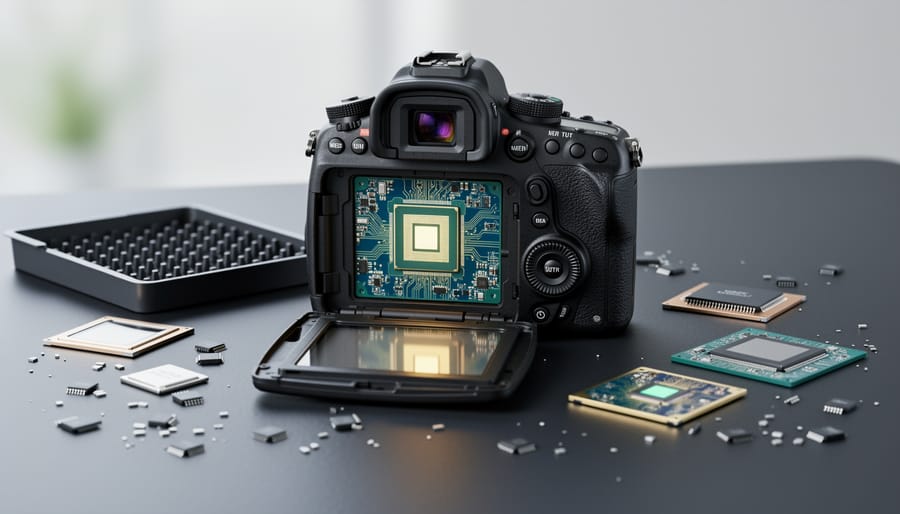
Here’s what’s happening behind the scenes. Camera manufacturers rely on specialized chips for three critical components: image sensors, processors, and autofocus systems. Unlike the generic chips used in smartphones or laptops, these components require specific manufacturing processes that only a handful of factories worldwide can handle. When global demand for semiconductors skyrocketed and production facilities faced pandemic-related disruptions, camera makers found themselves competing with automotive and consumer electronics giants for limited supply. Spoiler alert: cameras aren’t winning that battle.
The impact varies significantly by manufacturer. Sony, which produces sensors for many competitors, has prioritized its own camera lines, meaning third-party brands face longer delays. Canon and Nikon have struggled particularly with their mirrorless models featuring advanced camera sensor technology and sophisticated autofocus processors. Entry-level models with simpler chip requirements remain more readily available, while flagship bodies see wait times stretching three to six months.
Some manufacturers have responded by discontinuing models entirely rather than producing small, unprofitable batches. Others have shifted resources toward their most popular SKUs, leaving specialized or niche cameras in limbo. Meanwhile, firmware updates have become increasingly important as manufacturers extend the life of existing models rather than rushing new releases into an uncertain supply environment.
The practical takeaway? If you find your desired camera in stock today, don’t assume it’ll be available tomorrow. Pre-ordering new releases immediately and maintaining flexibility in your brand preferences have become essential strategies for serious photographers navigating this challenging landscape.
Why Your Favorite Lens Is Out of Stock Everywhere
If you’ve been hunting for that dream lens only to find “out of stock” notices everywhere, you’re not alone. The photography world is facing a perfect storm of supply chain issues that hit lens manufacturers particularly hard.
At the heart of the problem lies specialized optical glass. Unlike regular glass, the high-quality elements in your favorite lenses require specific rare earth minerals like lanthanum and cerium. These materials come from a handful of sources globally, and recent geopolitical tensions combined with mining disruptions have created serious shortages. China controls roughly 70% of rare earth processing, and export restrictions have rippled through the entire optical industry.
Japan’s lens manufacturing giants have been especially impacted. Major production facilities faced temporary shutdowns due to component shortages, and when they reopened, they couldn’t operate at full capacity. Popular models like the 24-70mm f/2.8 zooms and 85mm f/1.4 primes now show backorder times stretching 4-6 months instead of the typical 2-3 weeks.
Germany’s precision optical manufacturers aren’t faring much better. The intricate grinding and polishing equipment required for premium lens elements depends on computer chips and specialized machinery that’s become incredibly scarce. One major manufacturer reported that a single coating machine, critical for reducing lens flare and improving contrast, has a lead time of 18 months.
Real-world impact? That highly-rated 35mm f/1.4 you wanted for street photography might not arrive before your planned trip to Europe. Professional wildlife photographers are waiting months for super-telephoto lenses that used to ship within weeks. Even mid-range zoom lenses that were once readily available now require patience and flexibility.
The situation has created a domino effect where specialty items face the longest delays, forcing photographers to reconsider their purchase timelines and explore alternative options.
Price Increases You Need to Know About
If you’ve been eyeing new camera gear, you’ll want to pay attention to the price adjustments rolling out from major manufacturers. Canon, Nikon, Sony, and Fujifilm have all announced price increases taking effect between now and the next few months, and the numbers are significant enough to impact your purchasing decisions.
Canon led the charge in early 2024, implementing price hikes ranging from 5% to 12% across their mirrorless camera bodies and RF lenses. Their popular RF 24-70mm f/2.8L, for instance, jumped from $2,299 to $2,549—a $250 increase that’s hard to ignore. Meanwhile, Nikon followed suit with increases averaging 8% on Z-mount lenses, with some telephoto options seeing bumps closer to 15%.
Sony has been somewhat more modest, announcing a 4-7% increase on select Alpha bodies and G Master lenses, scheduled to take effect next month. However, Fujifilm surprised many by announcing their second price increase within a year, citing persistent component costs and currency fluctuations. Their X-series cameras and premium XF lenses are seeing increases between 6% and 10%.
So what should you do? If you’ve been saving for a specific piece of gear and the money is ready, buying sooner rather than later makes financial sense. These aren’t promotional price drops that might return—manufacturer price increases tend to be permanent adjustments to the baseline cost.
However, if you’re still undecided or the purchase would stretch your budget uncomfortably, don’t panic-buy. Camera gear remains a significant investment, and choosing the wrong equipment because you rushed will cost more in the long run than waiting for the right piece at a higher price. Consider exploring the used market, which often lags behind new pricing trends, or look into manufacturer rebate programs that occasionally offset recent increases.
The Shipping Container Crisis and Photography Gear
The journey your new camera takes from factory to doorstep has become significantly more complicated over the past few years. Understanding this process helps explain why that lens you ordered might take weeks longer than expected to arrive.
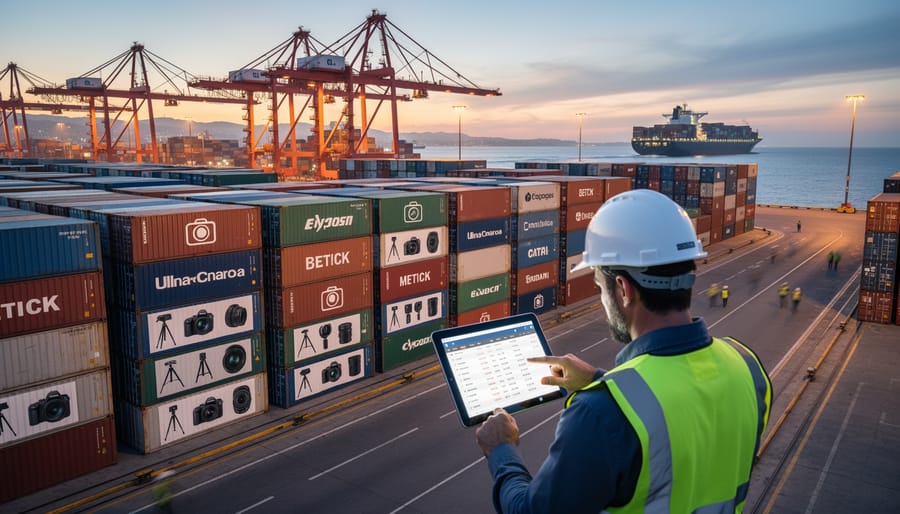
Here’s what’s happening: Once a camera or lens leaves the manufacturing facility in Japan, China, or Thailand, it typically travels by container ship to major ports. These vessels, which once moved with predictable efficiency, now face unprecedented congestion at key ports like Los Angeles, Rotterdam, and Singapore. Ships are waiting days or even weeks to unload, creating a domino effect that ripples through the entire supply chain.
The situation varies dramatically by region. Photographers in North America generally experience the longest delays, particularly on the West Coast where port congestion remains severe. A camera body that would normally arrive within two weeks might now take six to eight weeks. European photographers face moderate delays, typically three to four weeks, while those in Asia-Pacific regions often see shorter wait times due to proximity to manufacturing hubs.
Why the regional differences? It comes down to port infrastructure, labor availability, and shipping route priorities. Carriers increasingly prioritize routes with higher profit margins, sometimes bypassing smaller ports entirely. This means photographers in secondary markets might see even longer delays as products get rerouted through larger distribution centers.
Container costs have also skyrocketed from around $2,000 pre-pandemic to over $10,000 at peak times, though prices have moderated somewhat recently. These expenses inevitably filter down to retail prices and influence which products manufacturers prioritize for shipping. High-demand items like the latest mirrorless bodies typically receive priority, while specialty accessories might face extended delays.
What Photographers Can Actually Do Right Now
While supply chain disruptions can feel overwhelming, photographers aren’t powerless in this situation. Here are practical strategies that can help you secure the gear you need without falling victim to inflated prices or questionable sellers.
Start by getting on official notification lists. Major retailers like B&H Photo, Adorama, and your local camera shops often maintain waitlists for high-demand items. These lists typically prioritize customers in the order they signed up, giving you fair access when stock arrives. Sign up directly on manufacturer websites too—Canon, Nikon, and Sony all offer email alerts for product availability.
Pre-ordering is another effective approach, but only through authorized dealers. When manufacturers announce new products or restock dates, legitimate retailers will accept pre-orders at MSRP. This protects you from the price gouging that happens when products hit secondary markets. Just verify the dealer’s authorization status on the manufacturer’s website first.
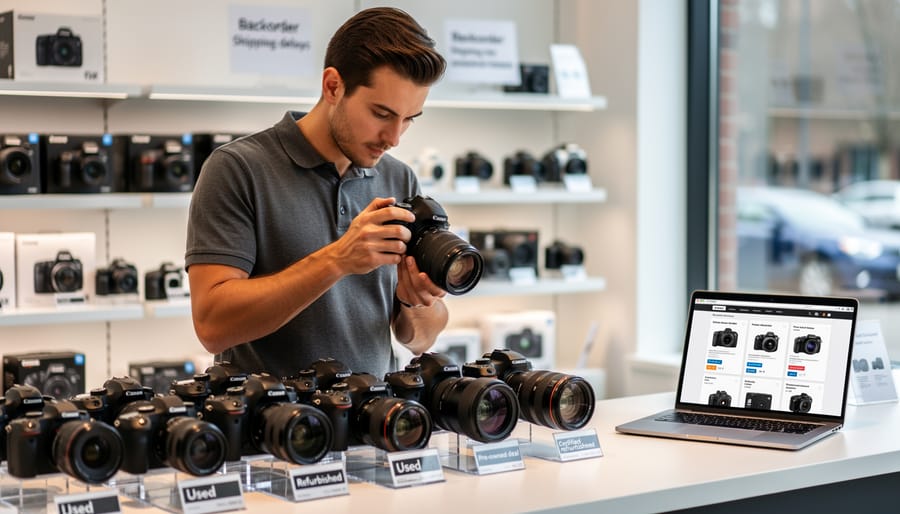
The used market deserves serious consideration right now. Reputable platforms like KEH Camera and MPB inspect and grade their equipment, often providing warranties that rival new purchases. You’ll find previous-generation cameras and lenses that deliver excellent performance at significantly lower prices than current models experiencing supply constraints.
Don’t fixate on a single product. Research alternative camera models that meet your needs. If the Sony A7 IV is unavailable, perhaps the A7 III or Canon R6 Mark II would work equally well for your photography style. Flexibility opens up options that others might overlook.
Renting equipment has become increasingly practical for both short-term projects and testing gear before committing to a purchase. Services like LensRentals and BorrowLenses maintain good inventory levels and offer rent-to-own programs. This approach lets you generate income from paid work while avoiding the pressure of buying during a shortage.
Watch for scams as desperation increases. If a deal seems too good to be true—like a brand-new camera at 40 percent below retail—it probably is. Stick with established retailers, use payment methods with buyer protection, and never wire money or use peer-to-peer payment apps for large purchases from unknown sellers. Verify seller credentials, check reviews from multiple sources, and trust your instincts when something feels off.
Which Brands Are Handling This Best (And Worst)
When it comes to transparency during these supply chain disruptions, some manufacturers are clearly outperforming others in keeping photographers informed.
Canon deserves recognition for consistently updating their website with product availability timelines and sending proactive email notifications to customers with outstanding orders. They’ve also been candid about which specific components are causing delays, particularly regarding imaging technology advances requiring specialized semiconductors. Their customer service teams have been empowered with real information to share, rather than generic responses.
Sony has taken a middle-ground approach. While they’ve published general statements about supply challenges, individual product availability information remains frustratingly vague. Customers often learn about delays only after placing orders, though Sony has avoided the practice of taking payment for items they can’t deliver within reasonable timeframes.
Unfortunately, Nikon’s communication has been the weakest among major manufacturers. Many photographers report radio silence after pre-ordering high-demand items like the Z8 and Z9, with shipping estimates repeatedly pushed back without explanation. Their website frequently shows products as available when authorized dealers have none in stock, creating customer confusion and frustration.
Fujifilm falls somewhere in between, offering decent communication for flagship products but leaving budget-tier items in limbo with minimal updates. Their regional websites often contradict each other regarding availability, suggesting internal coordination challenges that ultimately leave customers guessing about when their gear will actually arrive.
The photography supply chain remains strained, but understanding these challenges puts you in control. While we’ll likely see continued equipment shortages and price fluctuations over the next 6-12 months, manufacturers are adapting and production is gradually stabilizing. This isn’t permanent—it’s a transitional period requiring patience and smart planning. Focus on what you can control today: buy used gear when new inventory is scarce, build relationships with local camera shops for insider information, and prioritize essential equipment over aspirational purchases. Pre-order wisely, comparison shop across multiple retailers, and remember that your current gear is likely more capable than you think. These disruptions are teaching us valuable lessons about resourcefulness and adaptability that will serve photographers well beyond this challenging period.



 By
By