 By
By 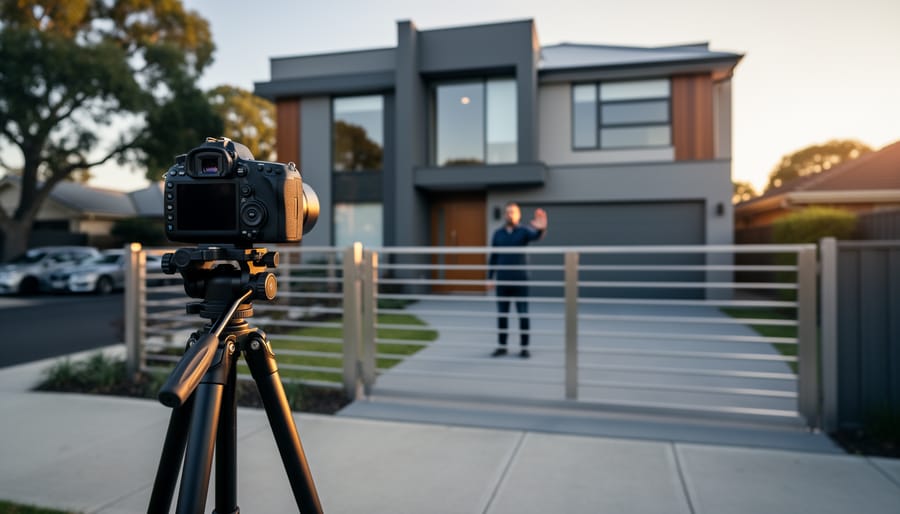
You photographed a stunning building at sunset, but your stock agency rejected it because you lack a property release. That rejection highlights a reality many photographers discover too late: taking the photo doesn’t give you all the rights to profit from it. Property owners hold a “bundle of rights” that can restrict how you commercially use images of their real estate.
This bundle functions like a collection of separate sticks, each representing a distinct property right. The owner can keep all the sticks or hand individual ones to others through licenses, easements, or releases. For photographers, the rights that matter most are the owner’s ability to control commercial exploitation of their property’s appearance and to grant or deny permission for such use.
Understanding these rights protects you from legal complications and rejected submissions. When you shoot a recognizable private property for commercial purposes—whether it’s architectural photography, real estate marketing, or stock images—you’re intersecting with the owner’s rights. Public buildings, streets, and generic cityscapes typically fall outside these restrictions, but distinctive private properties, especially homes and commercial buildings with recognizable features, require permission.
The distinction between editorial and commercial use determines when you need releases. Editorial work documenting newsworthy events or public interest stories generally enjoys broader protections. Commercial work intended for advertising, marketing, or promotional purposes almost always requires property releases for identifiable private real estate. This framework directly impacts your ability to license images and avoid liability claims, making photography rights knowledge essential for your professional practice.
What the ‘Bundle of Rights’ Actually Means for Photographers
When you photograph a stunning mansion, a historic building, or even a charming storefront, you’re not just capturing an image—you’re potentially dealing with someone’s property rights. Understanding the “bundle of rights” concept can save you from legal headaches and help you navigate commercial photography with confidence.
Think of property ownership like holding a bundle of sticks, where each stick represents a specific right. In real estate law, property owners hold five main rights that directly impact your photography work.
The right of possession means the owner has legal title and control over their property. For photographers, this means the homeowner decides who enters their property and under what circumstances. You can’t simply walk onto private property for a photoshoot without permission, even if you’re shooting from the edge of the lawn. That beautiful garden you want to photograph? The owner’s possession right gives them authority to say yes or no.
The right of control allows owners to determine how their property is used. This becomes crucial when you want to use property images commercially. An owner might allow you to take personal snapshots but prohibit commercial use for advertising or stock photography. They control whether their distinctive architectural features become part of your portfolio or marketing materials.
The right of exclusion gives owners power to keep people out. This right directly affects location photography—owners can legally prevent you from photographing their property, even from positions on their land that seem publicly accessible. That private beach or gated community requires explicit permission, not assumptions.
The right of enjoyment means owners can use their property without interference. If your drone photography session disturbs residents or your equipment setup blocks access, you’re potentially violating this right.
Finally, the right of disposition allows owners to sell, lease, or transfer property rights—including the right to license its appearance in photographs. This is why property releases exist. When you photograph a distinctive building for a real estate client’s advertisement, you’re essentially asking the owner to grant limited disposition rights for that specific commercial use.
Understanding these five rights explains why that stock agency rejected your architectural photo without a property release, or why commercial clients require location permissions. Property owners aren’t just being difficult—they’re exercising legitimate legal rights that affect how their property appears in commercial contexts.
When You Actually Need a Property Release
Commercial Photography: The High-Risk Zone
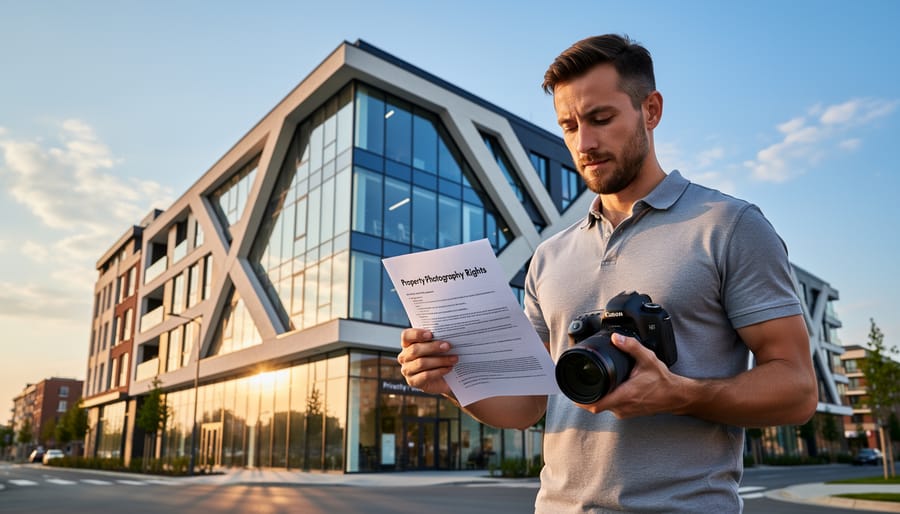
When you start submitting images to stock photography agencies or creating marketing materials for clients, you’ll quickly discover that commercial use operates under completely different rules than editorial photography. Commercial photography—anything used for advertising, product promotion, or marketing—almost always requires property releases, regardless of how recognizable the building might be.
Stock agencies like Shutterstock, Adobe Stock, and Getty Images routinely reject submissions of identifiable buildings without proper documentation. I’ve seen photographers lose entire portfolios of beautiful architectural shots simply because they couldn’t provide releases. One photographer friend captured stunning images of a boutique hotel’s exterior, only to have them rejected for commercial licensing because the property owner hadn’t granted permission. The images could only be sold for editorial use, drastically limiting their earning potential.
The legal reasoning is straightforward: commercial use implies endorsement. When your photo of a distinctive restaurant appears in an advertisement, viewers might assume that business endorsed or partnered with the advertised product. Property owners rightfully want control over these associations. Their building isn’t just a physical structure—it’s part of their brand identity.
Real-world consequences go beyond rejection notices. Businesses have successfully sued photographers and advertisers for using their property in campaigns without permission, claiming trademark infringement or unauthorized commercial use. Even shooting from public property doesn’t protect you if the intent is commercial exploitation.
The takeaway? If there’s any chance your photograph will be used to sell something—whether it’s stock imagery, advertising campaigns, or promotional materials—secure that property release before you shoot. It’s not just best practice; it’s essential protection for your photography business.
Editorial and Fine Art: Where You Have More Freedom
Good news: you have significantly more freedom when your photographs serve editorial, documentary, or fine art purposes rather than commercial ones. The editorial exemption generally protects photographers documenting newsworthy events, creating commentary on social issues, or producing artistic work.
If you’re photographing a building that’s part of a breaking news story—like fire damage, a crime scene, or a controversial development project—you typically don’t need a property release. The same applies to documentary projects examining architectural trends, urban decay, or neighborhood transformation. These uses fall under protected speech because they contribute to public discourse.
Fine art photography also enjoys broader protections. If you’re creating personal artistic work that interprets or comments on the built environment, you’re generally covered. The key distinction is that you’re not using the property image to sell a product or service.
However, this freedom isn’t absolute. You still cannot trespass to get your shot, and you should photograph from public spaces. Additionally, if you later decide to license an editorial image for commercial use—say, selling it to a real estate developer for marketing materials—you’ll need to obtain a release at that point. The context of use determines your legal requirements, not when you pressed the shutter.
The Tricky Middle Ground: Recognizable Private Property
This is where property photography gets genuinely complicated. That iconic Frank Gehry building downtown? Photographing it for your portfolio is generally fine, but using it prominently in commercial work might trigger trademark issues if the building itself is trademarked as part of a brand identity. Think of Las Vegas casinos or distinctive corporate headquarters.
Interior spaces present their own challenges. That mid-century modern chair in the corner of your real estate shot might be protected by design copyright. Artwork on walls definitely carries copyright considerations, even if the property owner gave you full access.
Private estates with distinctive architecture occupy murky territory. While the building’s exterior design might not be copyrightable, the overall composed landscape design often is. This becomes especially relevant with celebrity homes or architecturally significant properties where the design itself has commercial value.
Unlike AI-generated imagery where rights are still being defined, these scenarios involve established intellectual property law intersecting with property rights. When in doubt, especially for commercial projects, secure a comprehensive property release that explicitly addresses trademarked elements and copyrighted designs within the space.
How Property Releases Interact with Model Releases
Understanding the relationship between property and model releases is crucial because you’ll often need both, and having just one doesn’t automatically cover you for the other. Think of them as addressing separate legal rights: model releases cover a person’s right to control their image, while property releases protect the owner’s rights to their property.
Here’s where photographers commonly trip up: you nail down a model release for a fashion shoot on a beautiful private estate, but forget the property release. Now you have permission to use the model’s likeness, but not the distinctive property behind them. This creates a scenario where you might need to blur or replace the background entirely in post-processing, which defeats the purpose of choosing that location.
The reverse situation is equally problematic. Imagine photographing an architectural interior with the owner’s written permission, but an employee or visitor walks into your frame. Even though you have the property release, that person’s recognizable presence in your commercial photograph still requires their consent. I’ve seen photographers assume that property permission somehow extends to anyone on the premises, which simply isn’t true.
Both releases work together when your commercial photograph includes recognizable people in identifiable private spaces. A real estate marketing shot showing a model lounging in a luxury home’s living room requires both the homeowner’s property release and the model’s personal release. Miss either one, and you’re exposed to potential legal issues.
A common misconception is that public property eliminates release requirements entirely. While you generally don’t need property releases for spaces like city parks or streets, if recognizable people appear in your commercial work, you still need model releases. The location being public doesn’t negate personal privacy rights.
The safest approach is to evaluate each shoot independently: identify who appears in the frame and what property is recognizable, then secure appropriate releases for both. This dual-release strategy protects you comprehensively and gives clients confidence that your images are legally cleared for commercial use.
Getting Property Releases: Practical Steps for Photographers
Who Can Actually Sign a Property Release
Understanding who can legally sign a property release saves you from headaches down the road. The property owner holds the primary authority—they possess the complete bundle of rights and can grant permission for commercial use of their property’s image.
Here’s where it gets interesting: authorized agents can also sign on behalf of owners. This includes property managers overseeing commercial buildings, real estate agents handling listings, or attorneys with power of attorney. Always verify their authority by asking for documentation if you’re uncertain.
Renters occupy a gray area. While they have possession rights, they typically don’t hold the right to grant commercial photography permissions unless their lease specifically allows it. If you’re photographing a rental property, it’s safest to obtain releases from both the tenant and the property owner.
Corporate properties require signatures from authorized representatives—usually someone in legal, marketing, or facilities management. The front desk receptionist, despite being helpful, typically lacks signing authority.
A practical tip: when someone offers to sign a release, politely ask about their relationship to the property. If they’re not the owner, request contact information for verification. This simple conversation protects you from invalid releases that won’t hold up when licensing your images. Remember, an invalid release is essentially no release at all.

What Your Property Release Should Include
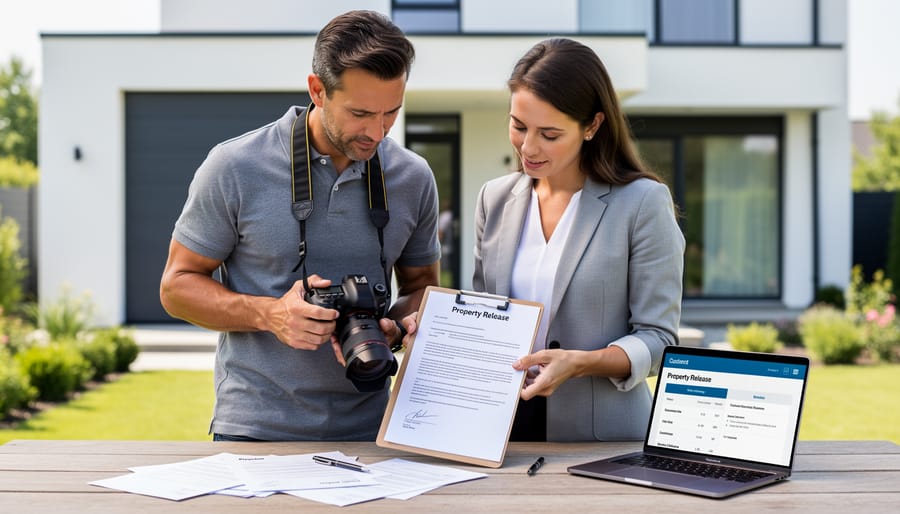
A solid property release protects both you and the property owner by clearly defining what’s permitted. At minimum, your release should identify the property with its complete address and a brief description (such as “two-story Victorian home with wraparound porch”). Next, specify exactly what usage rights you’re requesting—will these images be used for commercial advertising, editorial content, stock photography, or all of the above? Be specific here, as vague language creates confusion later.
Include your compensation terms, even if you’re not paying anything. If it’s a free release, state “no monetary compensation provided” to avoid future disputes. The form needs signature lines for all property owners (remember, if multiple people hold title, you typically need everyone’s consent), along with printed names and the date of signing.
Finally, consider adding a clause about model releases if people appear in your shots, plus your contact information for questions. While you can certainly hire an attorney to draft a custom form, many photographers start with templates from stock photography agencies like Shutterstock or Adobe Stock, which offer free downloadable releases. Photography organizations such as ASMP (American Society of Media Photographers) also provide member resources. Just remember to adapt any template to your specific situation and local laws—one size rarely fits all in legal documents.
Special Situations: Public Buildings, Landmarks, and Venues
Public buildings and landmarks present unique challenges because multiple rights layers often overlap. Government buildings are generally fair game for exterior photography, but individual architectural features may carry trademark protections. The Eiffel Tower’s daytime appearance is public domain, but its evening light display is copyrighted, creating a situation where your timing affects your rights.
Museums and private venues typically restrict commercial photography through admission policies, which become contractual agreements when you enter. That stunning hotel lobby or historic theater interior may require explicit permission for commercial use, regardless of whether you’re on publicly accessible property. Many venues post clear photography policies at entrances, and violating these terms can lead to legal complications beyond property rights alone.
Famous landmarks often face additional restrictions through trademark law protecting their commercial use. Photographing the Hollywood sign or certain sports stadiums for stock photography may require releases, even from public vantage points. The property owner’s bundle of rights extends to controlling commercial exploitation of their property’s recognizable identity.
Before photographing distinctive venues commercially, research their specific policies. Many organizations offer commercial photography permits for reasonable fees, providing clear legal standing for your work while respecting property owners’ rights to control commercial use of their spaces.
State and Regional Variations in Property Rights
Property rights aren’t universal—they shift dramatically depending on where you’re pointing your camera. If you’re shooting real estate photography professionally or licensing globally, understanding these variations can save you from costly legal headaches.
In the United States, property photography laws vary significantly by state. California, for instance, has stricter privacy protections than many other states, particularly regarding residential properties. If you’re photographing a distinctive home—think iconic architecture or celebrity residences—you may face additional scrutiny even when shooting from public property. Texas and Florida tend to be more photographer-friendly for exterior shots, while states like New York have complex rules around commercial use of recognizable properties, especially landmarks.
European photographers face an additional layer of complexity with GDPR regulations. While GDPR primarily addresses personal data, it intersects with property photography when images contain identifying features that could reveal information about residents. A photo showing house numbers, nameplates, or vehicles with visible license plates could potentially fall under GDPR’s scope. Many European photographers now routinely blur or remove these elements during post-processing for commercial work, even when technically shooting from public spaces.
Beyond the US and Europe, international differences become even more pronounced. In some Middle Eastern countries, photographing certain government buildings or private residences can carry serious penalties. Japan has unique privacy expectations around residential photography, and many photographers seek permission even when not legally required to maintain good relations with communities.
The practical takeaway? Before accepting assignments in unfamiliar jurisdictions, research local property photography laws or consult with local photographers. When shooting for stock agencies, many photographers adopt the most conservative approach—obtaining property releases whenever the location is recognizable—to ensure their images remain marketable worldwide. This proactive strategy, while requiring more paperwork upfront, protects your work’s commercial value across all potential markets.
Real Consequences: What Happens When You Skip the Release
Let’s talk about what actually happens when you photograph property without a release and try to use those images commercially.
Stock agencies will flat-out reject your submissions. Sites like Shutterstock, Adobe Stock, and Getty Images have automated systems that flag images containing recognizable buildings, distinctive architectural features, or branded properties. You’ll receive a standard rejection email explaining that a property release is required. No release means no sale, period. This isn’t a hypothetical scenario—it’s the daily reality for photographers who don’t secure proper documentation.
For photographers working with commercial clients, the stakes get higher. Imagine delivering photos for an advertising campaign, only to have your client receive a cease-and-desist letter from a property owner who spotted their building in the ad. Your client now faces potential legal action, and guess who’s liable under the contract? Usually you, the photographer. Many professional contracts include indemnification clauses that make you responsible for obtaining all necessary releases.
Real lawsuits do happen, though they’re less common than many photographers fear. Property owners have successfully sued when their distinctive buildings appeared in advertisements without permission. The Rock and Roll Hall of Fame famously went after photographers for unauthorized commercial use of their building’s image. Financial damages in these cases can range from thousands to hundreds of thousands of dollars, depending on how the image was used and any profits generated.
Here’s the practical reality: risk varies dramatically based on context. Posting a photo on your portfolio website? Minimal risk. Using a distinctive private estate in a national advertising campaign? High risk. Understanding this spectrum helps you make informed decisions about when releases are absolutely essential versus simply good practice.
Building a Release Management System
Once you understand when property releases are necessary, the next challenge is keeping them organized and accessible. A scattered collection of signed forms won’t help you when a stock agency requests verification or a client asks about licensing six months after a shoot.
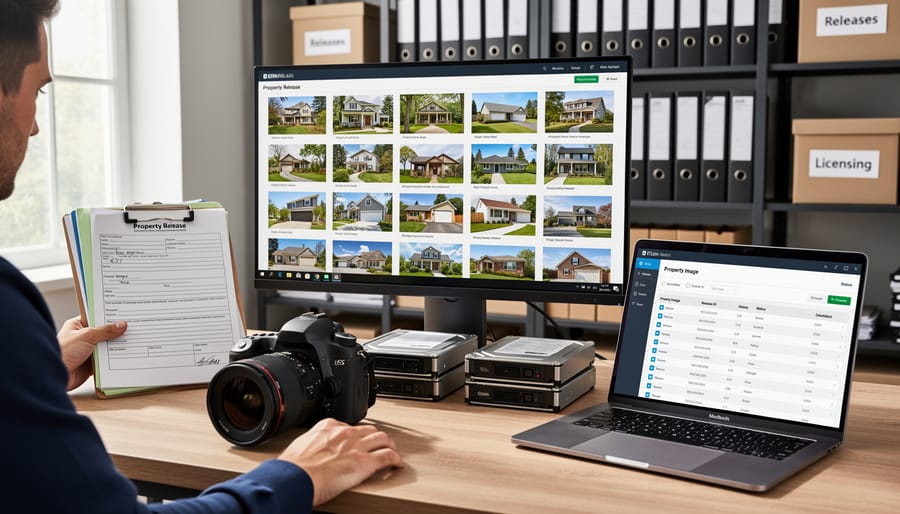
Start by creating a digital filing system that mirrors your image library structure. If you organize photos by date or project name, use the same system for releases. Scan all physical releases immediately after obtaining them, saving files as searchable PDFs. Name each file descriptively, such as “2024-03-15_SmithProperty_123MainStreet_Release.pdf” rather than generic names like “scan001.pdf.”
The critical step is linking releases to specific images. Most photo management software, including Adobe Lightroom and Capture One, allows you to attach documents or notes to image metadata. Add the release filename or reference number to your photo’s keywords or caption fields. For multiple images from one property, create a collection or keyword tag that connects them all to a single release document.
Cloud storage solutions like Google Drive or Dropbox work well for maintaining accessible copies. Create a dedicated folder structure that you can access from anywhere, particularly important when responding to licensing inquiries. Some photographers keep a separate spreadsheet that lists shoot dates, property addresses, release status, and file locations as a quick reference guide.
For on-location management, apps like Easy Release or Model Release App streamline the process by capturing signatures digitally and storing them immediately. These tools often include GPS data and timestamps, providing additional documentation of when and where consent was obtained. Back in the studio, consider using asset management systems like Photo Mechanic or dedicated release tracking software that integrates with your existing workflow.
Remember, your system only works if you use it consistently. Make organizing releases part of your post-shoot routine, just like backing up images or updating your shot lists.
Understanding the bundle of rights in real estate isn’t just about avoiding legal headaches—it’s about building professional credibility that opens doors to higher-paying commercial work. Clients notice when you handle property releases properly, and it sets you apart from photographers who ignore these details. Take time this week to audit your existing portfolio. Review those architectural shots, commercial interiors, and recognizable properties. Are there images you’ve licensed without proper releases? Address those gaps now before they become problems.
Moving forward, make property release acquisition a standard part of your workflow, just like backing up memory cards or editing photos. Create templates, build relationships with property managers, and educate clients about why releases matter. When you demonstrate this level of professionalism, you’re not just covering legal bases—you’re showing clients you understand the business side of photography.
Your photography business deserves the same protection you give your camera gear. Understanding property rights empowers you to shoot confidently, license strategically, and grow sustainably. The photographers who thrive long-term are those who master both the creative and legal aspects of their craft. Make protecting their photography business through proper releases a competitive advantage, not an afterthought.




 By
By