Rights & Regulations

Authoritative guidance on the legal side of image-making: copyright and licensing, contracts and releases, privacy and permits, drone and airspace rules, warranties, and international compliance.

How One Broken Link Could Destroy Your Photography Evidence in Court

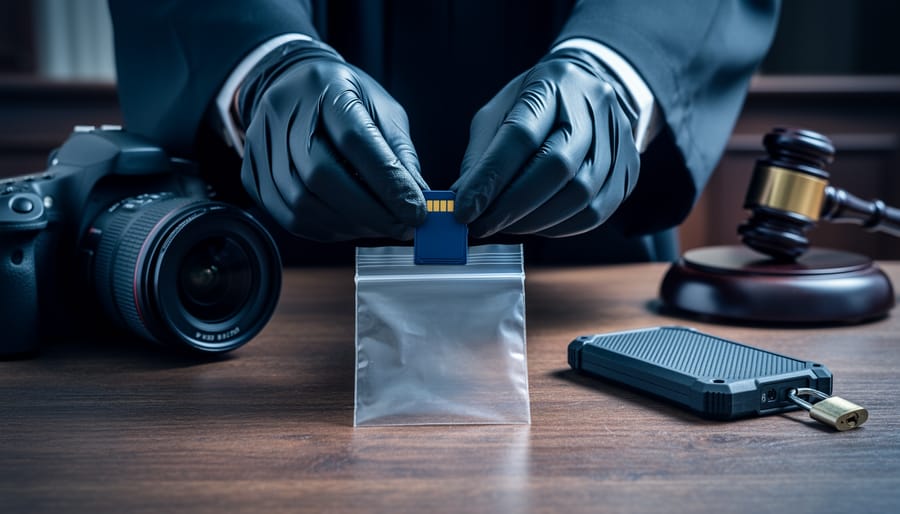
Document every transfer of your digital files from camera to final storage, recording the date, time, person handling the file, and reason for transfer. This paper trail becomes your legal armor when a photograph’s authenticity is questioned in court or during an insurance claim. For example, when photojournalist Marcus Chen captured images of a traffic accident in 2022, his meticulous documentation—from camera card to encrypted backup—helped prosecutors authenticate his photos against claims they’d been manipulated.
Preserve original RAW files untouched in write-protected storage immediately after capture. Think of …
What Articles Editors Actually Do (And Why Your Photos Depend on Them)

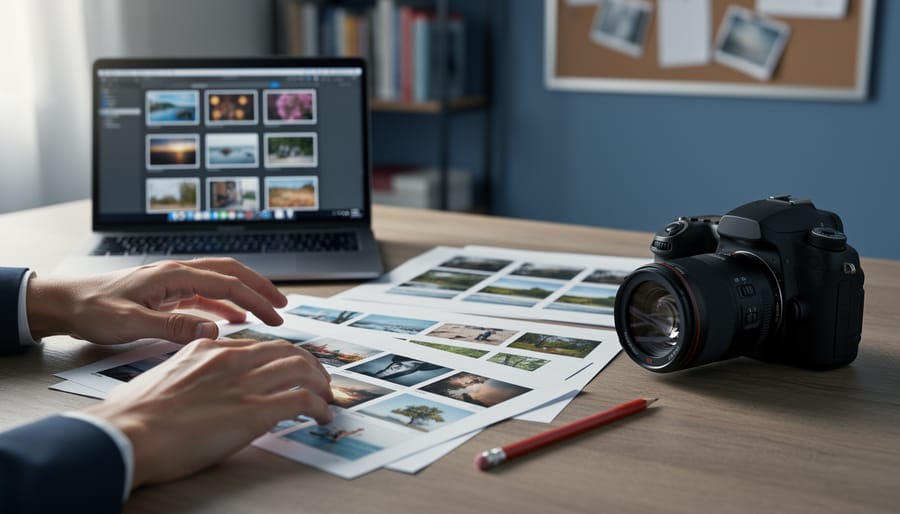
An articles editor shapes every word readers encounter, transforming raw manuscripts into polished stories that inform, inspire, and sometimes spark controversy. Behind every compelling photography feature or technical tutorial lies an editor who balanced creative vision with legal boundaries, fact-checked claims about camera specifications, and ensured proper attribution for every image used.
This role extends far beyond correcting grammar. Articles editors in photography publishing navigate complex terrain where creative expression meets intellectual property law. They determine whether a street photograph can illustrate a story …

When Your Camera Brand Becomes Someone Else’s Problem: Understanding Trademark Natural Expansion Zones

When Canon releases a new mirrorless camera system, trademark law protects not just the name but the logical business territories the brand might naturally enter. This legal concept—the zone of natural expansion—determines whether a company can stop others from using similar trademarks in related markets, and it profoundly affects the photography industry you navigate daily.
Picture this: You’re browsing for camera gear online and encounter two brands with nearly identical names—one selling professional DSLRs, the other marketing smartphone photography accessories. Should the DSLR manufacturer have legal grounds to …

When Apple Sued a Photography App: What Trade Dress Protection Means for Your Camera Gear

Look at any photography store shelf and you’ll notice something remarkable: even without reading labels, you can instantly identify a Nikon lens by its distinctive gold ring, a Canon L-series by its red accent band, or a Fujifilm camera by its retro-inspired dials and silver-black body styling. These visual signatures aren’t accidents—they’re legally protected trade dress, a form of intellectual property that safeguards the overall look and feel of products from copycat competitors.
Trade dress protection extends beyond logos and brand names to encompass the complete visual impression a product creates. In the …

That Little ® Symbol Could Save (or Cost) Your Photography Business Thousands

Understanding the ® symbol starts with recognizing it as legal shorthand that tells you a trademark has been officially registered with the United States Patent and Trademark Office. When you see it on camera gear, lens brands, or photography software, you’re looking at intellectual property that carries federal legal protections—and misusing it on your own products or business name could land you in serious trouble with hefty fines up to thousands of dollars.
The distinction matters tremendously for photographers running businesses or reviewing equipment. You can freely mention registered brand names like Canon® or Nikon…

How U.S. Copyright Laws Protect Your Photography (And What Happens When They Don’t)

Register your photographs with the U.S. Copyright Office within three months of publication to qualify for statutory damages up to $150,000 per infringement and attorney’s fees in litigation. This single action transforms your copyright from a basic protection into a powerful legal tool that makes pursuing infringers economically viable.
Apply visible watermarks and embed metadata containing your copyright notice, contact information, and licensing terms into every digital file you distribute. When a commercial blog used a wedding photographer’s image without permission in 2019, the embedded metadata proved ownership …

Flying Your Camera Drone Legally: What Photographers Need to Know About Airspace Rules

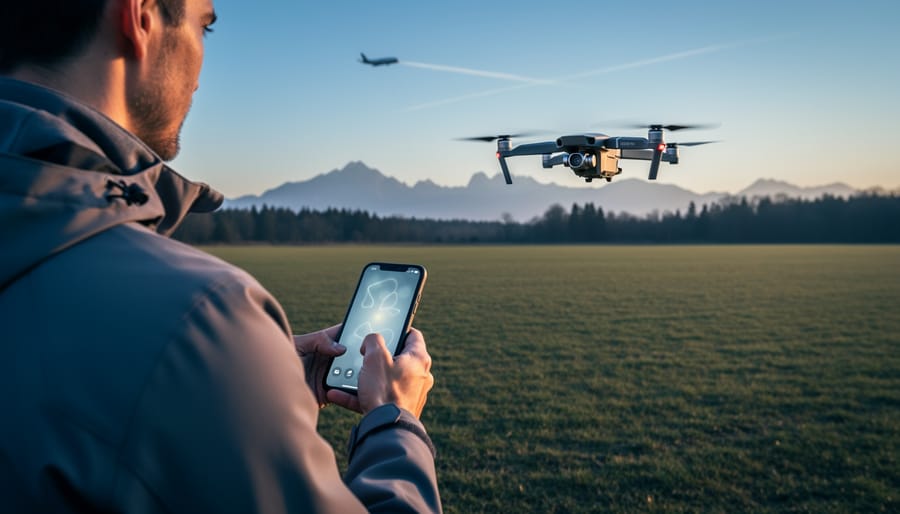
Check your drone’s registration status with the FAA before every flight—recreational drones weighing over 0.55 pounds require registration, and flying unregistered can result in civil penalties up to $27,500. Download the B4UFLY mobile app to get instant airspace status for your exact location, identifying controlled airspace, temporary flight restrictions, and whether you need authorization before launching. Verify your flight altitude stays below 400 feet in uncontrolled airspace, as this is the maximum legal ceiling for recreational drone operations in the United States.
Understanding drone airspace isn’t just about…

Why You Can’t Sell Your Photos Without Understanding Property Rights

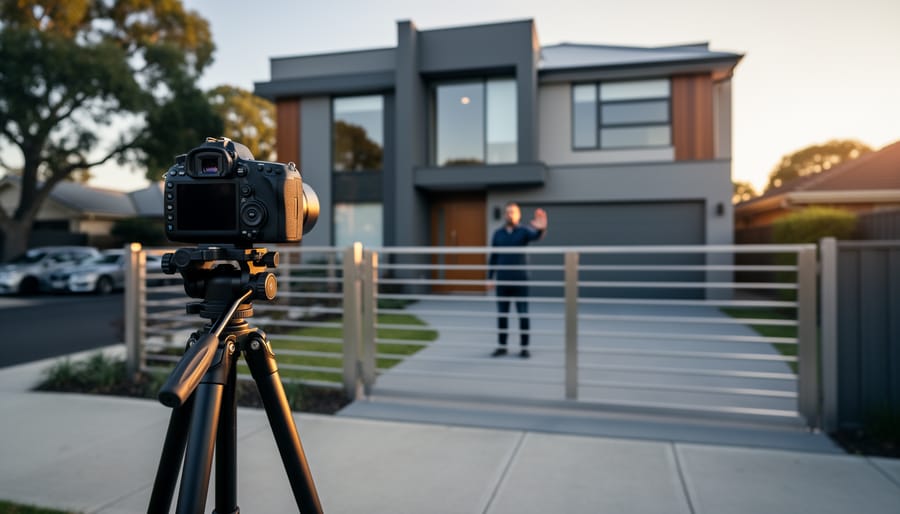
You photographed a stunning building at sunset, but your stock agency rejected it because you lack a property release. That rejection highlights a reality many photographers discover too late: taking the photo doesn’t give you all the rights to profit from it. Property owners hold a “bundle of rights” that can restrict how you commercially use images of their real estate.
This bundle functions like a collection of separate sticks, each representing a distinct property right. The owner can keep all the sticks or hand individual ones to others through licenses, easements, or releases. For photographers, the rights …

What AI-Generated Imagery Means for Your Photography Rights (And What CGI Really Is)

Understand that computer-generated imagery (CGI) refers to any visual content created using software and computational processes, from the dinosaurs in Jurassic Park to architectural renderings you might create in Blender or Cinema 4D. This definition becomes crucial now because a new category has emerged that’s fundamentally different: AI-generated imagery, where algorithms trained on millions of existing images produce new visuals through prompts rather than manual 3D modeling or digital painting.
Recognize the distinction between traditional CGI and AI-generated content by examining the creation process. When you build a …