 By
By 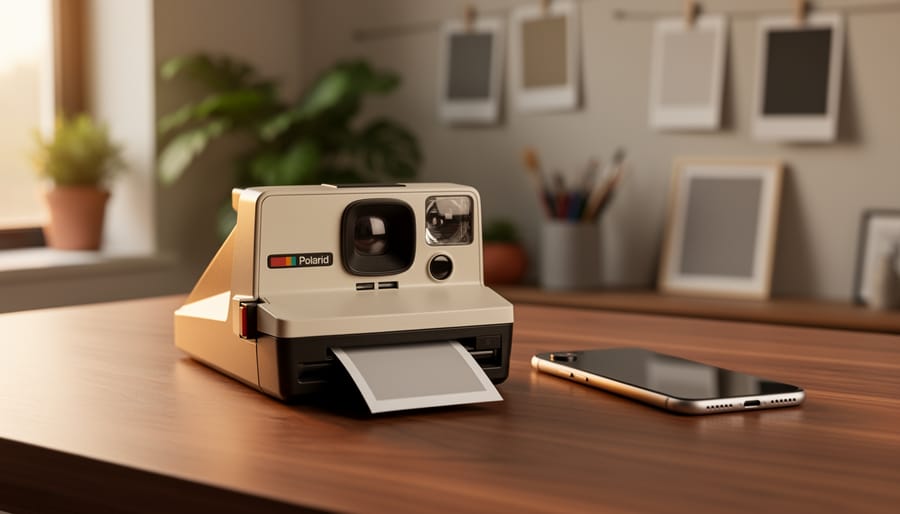
In an era where smartphone cameras deliver technically flawless images in milliseconds, instant analog cameras are experiencing a renaissance that defies digital logic. These mechanical marvels—cameras that expose light-sensitive film and eject fully developing photographs within seconds—offer something your phone never can: a physical artifact, chemical unpredictability, and the irreplaceable thrill of waiting for an image to materialize in your hands.
Unlike digital photography’s infinite do-overs, instant film photography demands intentionality. Each shot costs between $2-3, transforming casual snapshots into deliberate compositions. This economic reality sharpens your eye, teaching discipline that translates across all photographic formats. The chemical process itself introduces organic imperfections—color shifts, light leaks, unique emulsion characteristics—that digital filters can only imitate, never authentically recreate.
Modern instant cameras fall into two categories: Polaroid-style cameras using large-format integral film (where development happens inside the photo itself) and Instax cameras utilizing smaller, more affordable film. Each system presents distinct advantages in image size, cost per shot, and creative flexibility. Meanwhile, vintage models from the 1970s-90s offer superior optics and manual controls, though finding compatible film requires research and patience.
Whether you’re documenting events where guests treasure physical keepsakes, exploring alternative processes as an artistic statement, or simply craving tangible results in our increasingly virtual world, instant analog cameras reward those willing to embrace their constraints. The question isn’t whether they match digital convenience—they don’t. It’s whether their unique creative possibilities justify the investment and learning curve ahead.
What Makes an Instant Analog Camera Different
The Chemistry Behind Instant Magic
When you press the shutter button on an instant camera and watch that photo slide out, you’re witnessing a remarkable chemical ballet that’s been perfecting itself since the 1940s. Understanding what happens inside that white-bordered frame transforms these cameras from simple novelties into sophisticated chemical laboratories you can hold in your hands.
Unlike the traditional film development process that requires darkrooms and separate chemicals, instant film contains everything needed for development within its multilayered structure. Each sheet of instant film packs up to a dozen microscopically thin layers, including three light-sensitive emulsion layers (cyan, magenta, and yellow), corresponding dye developers, and a reagent pod filled with developing chemicals.
Here’s where the magic begins: when your camera ejects the film, it passes through rollers that rupture the reagent pod along the bottom edge. This releases a viscous alkaline paste that spreads evenly across the film surface in less than a second. As this paste travels upward, it activates the development process layer by layer.
The exposed silver halide crystals in each emulsion layer react with the alkaline reagent, releasing corresponding dyes that migrate upward to form your final image. Meanwhile, unexposed crystals remain stable, creating the contrast and detail in your photograph. An opaque layer protects the developing image from light exposure during this sensitive period, which is why you don’t need to shield photos immediately after ejection, despite what popular myths suggest.
The white border serves a practical purpose beyond aesthetics: it contains the developing chemicals, preventing them from leaking while allowing the image to fully develop over 10 to 15 minutes, depending on temperature and film type.
Analog vs. Digital Instant: Understanding the Split
When shopping for an instant camera, you’ll encounter two fundamentally different technologies marketed under similar names. Understanding this distinction matters because it affects everything from image quality to long-term costs.
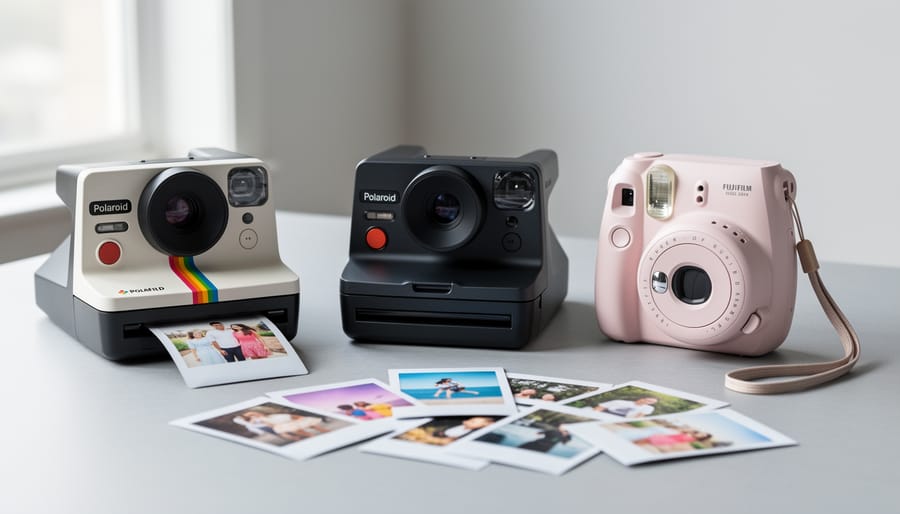
True analog instant cameras use a purely chemical process. When you press the shutter, light hits actual film containing light-sensitive chemicals. Development happens automatically inside the ejected print through a clever arrangement of dyes and reagents. No electronics process the image itself. Think Polaroid Originals cameras (like the OneStep+) and Fujifilm’s Instax line. These cameras capture and develop photos entirely through analog means, making them part of the traditional analog photography workflow.
Hybrid digital-instant cameras take a different approach. These devices contain digital sensors that capture your image electronically first. The camera then prints that digital file onto special paper using inkjet or dye-sublimation technology. Examples include the Fujifilm Instax Mini Evo and Polaroid Lab. While they produce physical prints instantly, the actual image capture is digital.
The practical difference? Analog instant cameras give you one-shot-one-print unpredictability with unique color characteristics and occasional imperfections that many photographers cherish. Hybrids offer editing capabilities, reprinting options, and digital backups, but lose that raw, unrepeatable quality.
Neither approach is inherently better. If you want the authentic instant film experience with all its spontaneity and limitations, choose true analog. If you prefer safety nets and creative control before printing, hybrids make sense. Just know what you’re buying before investing in film or paper.
The Main Players: Polaroid, Instax, and Beyond
Polaroid’s Comeback Story
Polaroid’s story reads like a Hollywood script—a dramatic fall followed by an against-all-odds resurrection. The company that invented instant photography filed for bankruptcy in 2001, and by 2008, it discontinued film production entirely. For instant film enthusiasts, this felt like the end of an era.
Enter a group of passionate believers who refused to let instant film die. They purchased Polaroid’s last remaining film factory in Enschede, Netherlands, and launched The Impossible Project in 2008. What followed was years of painstaking reverse-engineering. Original Polaroid chemists had retired, recipes were lost, and crucial chemical suppliers had vanished. The team essentially had to reinvent instant film from scratch.
By 2017, The Impossible Project had stabilized production and rebranded as Polaroid Originals, eventually becoming simply Polaroid again. Today, they offer several camera models that honor the original designs while incorporating modern improvements. The Polaroid Now+ features autofocus and Bluetooth connectivity for creative controls. The OneStep+ appeals to beginners with its point-and-shoot simplicity, while the I-2 caters to advanced photographers with manual controls and a sharp three-element glass lens.
What makes modern Polaroid film distinctive is its unique aesthetic. The chemistry produces slightly softer images with characteristic color shifts—sometimes warmer, sometimes cooler—that vary based on temperature and development conditions. Each pack costs around $2 per shot, making it a more deliberate photographic medium. This unpredictability isn’t a flaw; it’s part of the charm that draws photographers seeking authenticity in an age of digital perfection.
Fujifilm Instax: The Market Leader
When Polaroid stepped back from instant film production in the early 2000s, Fujifilm saw an opportunity and seized it with impressive commitment. Today, the Instax line stands as the undisputed leader in instant analog photography, offering a complete ecosystem that’s both accessible and creatively satisfying.
Fujifilm’s success stems from their smart market segmentation through three distinct film formats. The Instax Mini format, measuring 62mm x 46mm, produces credit-card-sized images that strike a perfect balance between portability and visual impact. It’s the most popular format, with the widest selection of cameras ranging from budget-friendly point-and-shoots to feature-rich models with multiple exposure capabilities. The compact prints slip easily into wallets or journals, making them ideal for everyday moments and social gatherings.
For those wanting more substantial prints, the Instax Square format delivers 62mm x 62mm images that harken back to classic instant photography aesthetics. This format appeals to photographers who appreciate the compositional discipline that square frames demand, offering more breathing room for portraits and creative compositions.
The Instax Wide format, at 99mm x 62mm, caters to landscape enthusiasts and group photos, though camera options are more limited. These larger prints command attention and work beautifully for documenting travel or special events.
What truly distinguishes Fujifilm is their consistent film production, competitive pricing, and continuous innovation in camera features. While Polaroid focuses on nostalgia, Instax embraces practicality without sacrificing the magic of instant gratification that makes analog photography so compelling.
The Boutique Options
Beyond the mainstream options from Fujifilm and Polaroid, several boutique manufacturers offer instant cameras for photographers seeking something with more character and experimental possibilities. Lomography stands out in this space, producing cameras like the Lomo’Instant series that embrace the brand’s philosophy of creative imperfection. These cameras often include features like multiple exposure modes, long exposure capabilities, and interchangeable lens attachments that encourage playful experimentation rather than technical precision.
For those drawn to authentic vintage aesthetics, the market for refurbished classic Polaroid cameras has grown substantially. Models like the SX-70 and 600 series are being professionally restored by specialists who rebuild the mechanisms and replace aging components. While these refurbished units command premium prices, they offer the genuine tactile experience of shooting with the cameras that defined instant photography’s golden era. Keep in mind that finding repair services and replacement parts can be challenging if issues arise.
These boutique options suit photographers who value uniqueness over convenience and are willing to accept occasional quirks in exchange for distinctive results that stand apart from mass-market instant prints.
Understanding Instant Film Emulsions
How Instant Film Really Works
The magic of instant photography happens through a remarkably sophisticated chemical sandwich. When you press the shutter button and the camera ejects a photo, you’re not just getting a blank piece of paper—you’re holding a miniature darkroom where multiple chemical reactions occur simultaneously.
Each sheet of instant film contains roughly a dozen layers compressed into a package thinner than a credit card. At the bottom sits the negative layer, which captures your image when exposed to light. Above that are three separate light-sensitive emulsion layers, each responding to different colors: blue, green, and red. These work similarly to analog color processes you’d find in traditional color photography, but everything happens in reverse.
The real innovation lies in the reagent pod at the bottom of each frame. When your camera’s rollers squeeze the ejected film, they rupture this pod and spread a thick alkaline paste across the entire surface. This paste contains developing agents, dyes, and opacifying materials that work together to create your final image.
Here’s where it gets fascinating: the opacifying layer initially blocks light, protecting your developing photo from being ruined by ambient light. As the chemical reaction progresses, dyes migrate from the negative layers to the positive receiving layer at the top of the film—the side you eventually see. The unused dyes remain trapped in the negative below.
Temperature plays a crucial role in this process. Warmer conditions speed up development, while cold temperatures slow it dramatically. That’s why photographers often tuck freshly ejected photos into their jacket pockets during winter shoots. Within minutes, the opacifying layer becomes transparent, the dyes stabilize in their final positions, and your photograph emerges fully formed—no darkroom required.

Film Characteristics You Need to Know
Understanding the characteristics of instant film is essential for getting the results you want. Unlike digital photography where you can adjust white balance and exposure in post-processing, instant film delivers final results in minutes, making it crucial to know what you’re working with before you press the shutter.
ISO ratings in instant film typically range from ISO 100 to ISO 800. Polaroid i-Type and 600 films sit at ISO 640, making them versatile for various lighting conditions but requiring careful exposure management in bright sunlight. Fujifilm Instax Mini uses ISO 800 film, which handles indoor and low-light situations well but can blow out highlights if you’re not careful outdoors. Lower ISO options like ISO 100 exist in some specialty packs and provide finer grain and better color saturation, though they demand more light to work effectively.
Color reproduction varies dramatically between brands and film types. Fujifilm Instax tends toward cooler, more neutral tones with punchy saturation that many describe as having a slight cyan cast. Polaroid films lean warmer with a nostalgic quality, often producing creamy skin tones and slightly muted colors that recall vintage photography. When shooting portraits, Polaroid’s warmth flatters most subjects, while Instax’s cooler palette works beautifully for landscapes and architectural shots.
Contrast is another defining characteristic. Instant films generally produce higher contrast than traditional negative films, with deep shadows and bright highlights. This characteristic works wonderfully for graphic subjects with strong shapes but can be challenging for subtle tonal ranges. Overcast days actually become your friend, providing natural diffusion that tames contrast and reveals more detail throughout the tonal range.
The distinctive look of instant film also includes soft focus around edges, slight color shifts as chemistry develops, and unique texture. working with film emulsions teaches patience and intentionality. For example, shooting a sunset with Polaroid film might yield dreamy, pastel tones, while the same scene on Instax produces more dramatic, saturated colors. Understanding these nuances helps you choose the right film for your creative vision.
Temperature, Storage, and Film Care
Instant film is surprisingly sensitive to temperature fluctuations, and understanding this relationship can mean the difference between stunning results and wasted packs. The chemical reactions happening inside each frame work best between 55-82°F (13-28°C). Shoot in cold weather, and your images may develop with cool blue tones and muted colors. In hot conditions, expect warmer yellows and potential overexposure. I learned this the hard way during a winter wedding shoot when my Polaroid photos emerged looking like Arctic landscapes, washed out and bluish. Now I keep film packs tucked inside my jacket pocket until I’m ready to shoot, letting my body heat maintain optimal temperature.
Storage matters just as much as shooting conditions. Always keep unused film refrigerated in its original packaging, but never freeze it—those extreme temperatures can damage the chemical pods. Before shooting, let refrigerated film warm to room temperature for about an hour. Once you load a pack into your camera, use it within a few days for best results.
After shooting, shield developing prints from direct sunlight and extreme temperatures for at least 10-15 minutes. Think of this time as crucial development real estate. If you notice consistent problems like streaks or uneven development, check your camera’s rollers for dried chemistry buildup. A gentle cleaning with a soft, slightly damp cloth can work wonders. Store finished prints away from humidity and UV light to preserve them for decades rather than months.
Choosing Your First (or Next) Instant Analog Camera
What to Consider Before You Buy
Before diving into the world of instant analog photography, it’s important to understand what you’re signing up for. Unlike digital cameras where you can shoot hundreds of images without worrying about cost, instant film photography requires a more deliberate approach, and that starts with understanding the ongoing expenses.
Film cost is perhaps the most significant consideration. Each pack of instant film typically contains 8-10 shots and costs between $15-25, meaning you’re spending roughly $2-3 per photograph. This might seem steep compared to digital, but it fundamentally changes how you shoot, encouraging more intentional composition and thoughtful image-making. If you’re planning to shoot frequently, budget accordingly, because these costs add up quickly over time.
Format preferences matter more than you might think. Instant cameras come in various film formats, from the wallet-sized Instax Mini to the larger square formats and wide options. Consider what you’ll be photographing and how you want to display or share your images. Smaller formats are more affordable per shot but offer less detail, while larger formats deliver more impressive results but cost more.
The debate between manual controls and automatic operation depends on your experience level and creative goals. Automatic cameras are perfect for beginners or casual shooting, handling exposure decisions for you. However, if you’re coming from a background in traditional film or digital photography, you might appreciate models offering manual exposure control, focus options, and creative flexibility. These advanced features let you adapt to challenging lighting conditions and execute specific artistic visions.
Finally, think about long-term investment. Quality instant cameras can last decades, but remember that film availability varies by format. Research which film types are actively supported by manufacturers to avoid investing in a system that might become obsolete. Consider whether you’re buying for occasional fun or serious creative work, as this will guide both your camera choice and film stock investment.
Popular Models Worth Your Attention
Navigating the instant analog market can feel overwhelming with options ranging from budget-friendly basics to premium performers. Here’s an honest look at cameras that genuinely stand out, each serving different needs and budgets.
For newcomers seeking maximum value, the Fujifilm Instax Mini 11 remains a compelling entry point at around $70. This camera strips away unnecessary complexity while delivering consistently well-exposed images thanks to its automatic exposure adjustment. The built-in selfie mode and close-up lens attachment make it surprisingly versatile for casual shooting. Real-world performance reveals its sweet spot: outdoor portraits, travel snapshots, and social gatherings where lighting conditions remain relatively straightforward. The limitation? Low-light capability is modest at best, and you won’t find manual controls for creative experimentation. Film costs run about $0.75 per shot, making it manageable for occasional use.
Stepping up to the midrange, the Polaroid Now Plus ($150) bridges the gap between simplicity and creative control. This model introduces aperture priority mode and manual controls accessible through a smartphone app, giving you room to grow technically. I’ve found the double exposure feature particularly rewarding for artistic experimentation, producing genuinely unique results that justify the film cost. The wider format compared to Instax Mini provides more breathing room for composition. However, Polaroid’s i-Type film remains noticeably more expensive at roughly $2 per exposure, and color consistency can vary between film batches—something to consider for serious work.
For photographers treating instant film as a legitimate creative medium, the Lomography Lomo’Instant Automat Glass ($169) deserves attention. The glass lens delivers noticeably sharper images than typical plastic instant camera optics, bringing your work closer to traditional medium format quality. Multiple exposure modes, a built-in wide-angle lens, and comprehensive manual controls provide genuine creative latitude. The trade-off involves a steeper learning curve and slightly bulkier form factor.
Finally, the Fujifilm Instax Wide 300 ($120) fills a specific niche for group shots and landscapes where the standard Mini format feels cramped. The larger negative captures more scene information, though per-shot costs increase accordingly. Consider this your specialized tool rather than everyday carry camera.
Getting Better Results with Instant Film
Mastering Exposure and Light
Instant film has a narrower exposure latitude than negative film, meaning it’s less forgiving of metering mistakes. Most instant cameras use automatic exposure systems, but understanding how they work helps you compensate for tricky lighting situations.
Your camera’s meter typically reads the entire scene and averages the exposure, which works beautifully in evenly lit conditions. However, this system struggles with high-contrast scenes. If you’re photographing someone against a bright window, the meter might expose for the background, leaving your subject underexposed. Conversely, shooting a brightly lit subject against a dark background often results in overexposure.
Many instant cameras include an exposure compensation dial, usually marked with lighten and darken symbols. This becomes your best friend in challenging light. As a practical rule, if your main subject is backlit or significantly darker than the background, dial toward the lighten setting by one or two stops. For subjects brighter than their surroundings, compensate in the opposite direction.
Here’s a real-world example: photographing someone wearing dark clothing on a sunny beach. The meter sees all that bright sand and sky, assuming the scene needs less exposure. Without compensation, your subject becomes a silhouette. Shifting toward lighten by one stop brings proper exposure to their face while slightly overexposing the background, an acceptable trade-off.
Remember that instant film responds differently across formats and emulsions. Polaroid SX-70 film, for instance, tends toward cooler tones and benefits from slight overexposure in indoor lighting, while Instax film handles shadows more gracefully. Shoot test frames in your typical environments to learn your film’s personality.
Composition for the Instant Format
Instant film forces you to be more intentional with every shot, and that constraint can actually improve your photography. With only eight or ten frames per pack and no option to delete, you’ll naturally slow down and think through each composition before pressing the shutter.
The small square or rectangular format of instant prints demands simplification. Unlike digital cameras where you can crop later, what you see in the viewfinder is essentially what you get. Fill the frame with your subject—getting close eliminates distracting backgrounds and makes better use of the limited real estate. A person’s face, a single flower, or a carefully arranged still life often works better than sweeping landscapes that lose detail when compressed into a few square inches.
Consider the rule of thirds, but don’t overthink it. Placing your main subject slightly off-center usually creates more visual interest than dead-center composition. Pay attention to backgrounds, checking for distracting elements like telephone poles appearing to sprout from someone’s head.
Since instant film typically performs best in good lighting, compose with light in mind. Position subjects near windows for portraits, or shoot outdoors during golden hour when possible. Remember that each frame costs money, so take a breath, check your composition one more time, and then commit to the shot with confidence.
Common Mistakes and How to Avoid Them
Even experienced photographers stumble when starting out with instant cameras. The most common mistake? Shaking or bending photos immediately after ejection. Those beautiful developing images are incredibly sensitive, containing chemical pods that spread reagent across the film surface. Any pressure, bending, or vigorous shaking disrupts this delicate process, creating uneven development or permanent streaks. Simply lay your photo face-down on a flat surface for the first few minutes, then place it face-up to continue developing naturally.
Poor lighting conditions trip up countless beginners. Unlike digital cameras that can boost ISO to extreme levels, instant film has fixed sensitivity ratings, typically between ISO 640 and 800. Shooting indoors without flash often produces dark, muddy results. The practical solution is straightforward: embrace your camera’s built-in flash for interior shots, or move closer to windows for natural light. Many newcomers also forget that instant cameras require more light than they expect because you’re essentially creating a physical print in real-time.
Temperature extremes present another challenge that catches people off-guard. Instant film chemistry relies on specific temperature ranges to develop properly. Shooting in cold weather below 55°F causes sluggish development and color shifts, while heat above 85°F can overdevelop images or create unwanted color casts. Keep spare film packs in an inside pocket during winter shoots, and shield developing photos from direct sunlight in summer. This simple awareness prevents disappointing results and wasted film.
The Real Cost of Instant Photography
Let’s be honest upfront: instant film photography is not cheap. Unlike digital where you can shoot hundreds of frames at no additional cost, every press of the shutter on an instant camera carries a real financial consequence. A pack of instant film typically contains 8-10 exposures and costs between $15-25, depending on format and brand. That translates to roughly $2-3 per shot, making it one of the most expensive forms of photography per frame.
This reality fundamentally changes how you approach shooting. You become more deliberate, more thoughtful about composition and timing. There’s no spray-and-pray here. That spontaneity comes with a mental calculator running in the background, which can either enhance your discipline or add unwelcome pressure to creative moments.
The cost of film photography extends beyond the initial purchase. If you’re shooting regularly, budget at least $50-100 monthly for film alone. Storage matters too—instant film degrades with temperature fluctuations and has expiration dates, so buying in bulk to save money requires proper refrigeration and planning.
Strategies for managing expenses include treating instant photography as an occasional medium rather than your primary format, reserving it for special moments or final compositions you’ve already tested with digital. Some photographers designate instant cameras for specific projects or events where the physical print adds unique value.
Consider whether instant photography aligns with your shooting habits. If you’re someone who takes hundreds of photos weekly, instant film will quickly become unsustainable. But if you appreciate the tangible, immediate gratification and don’t mind the premium for that magic, the experience justifies the expense. Set realistic expectations: instant photography is a premium experience with premium costs attached.
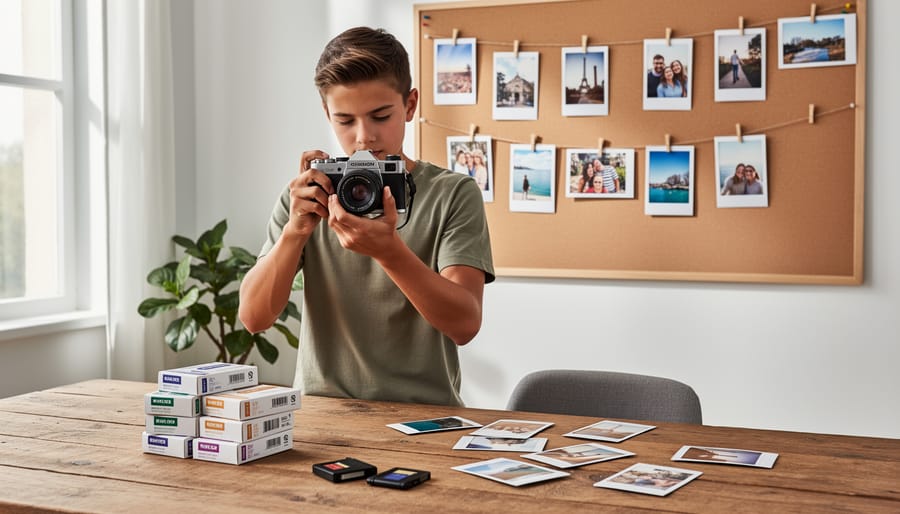
In a world where photography has become instantaneous, infinitely editable, and almost effortlessly perfect, instant analog cameras offer something increasingly rare: the gift of limitations. These constraints aren’t obstacles to overcome but rather guardrails that guide you toward more intentional, creative work. When you have only eight or ten shots in a pack, each one matters. When you can’t delete or adjust in post-production, you learn to see more carefully before pressing the shutter.
Instant analog photography isn’t for everyone, and that’s perfectly okay. It’s for those who find joy in the process as much as the result. It’s for photographers tired of shooting hundreds of frames and spending hours culling through them. It’s for people who appreciate the tactile experience of holding a physical photograph moments after capturing it, complete with all its imperfections and quirks.
If you value predictability and pixel-perfect results, digital photography remains the superior choice. But if you’re drawn to the unpredictable alchemy of chemistry and light, if you find beauty in grain and slight color shifts, if you want photographs that exist as objects rather than files, then instant analog cameras deserve a place in your creative toolkit.
The question isn’t whether instant film can match digital capabilities—it can’t and doesn’t try to. The real question is whether its unique character speaks to you as a photographer. Try a pack of film and see where those limitations take you. You might surprise yourself.

 By
By