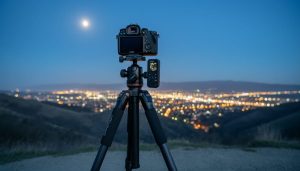
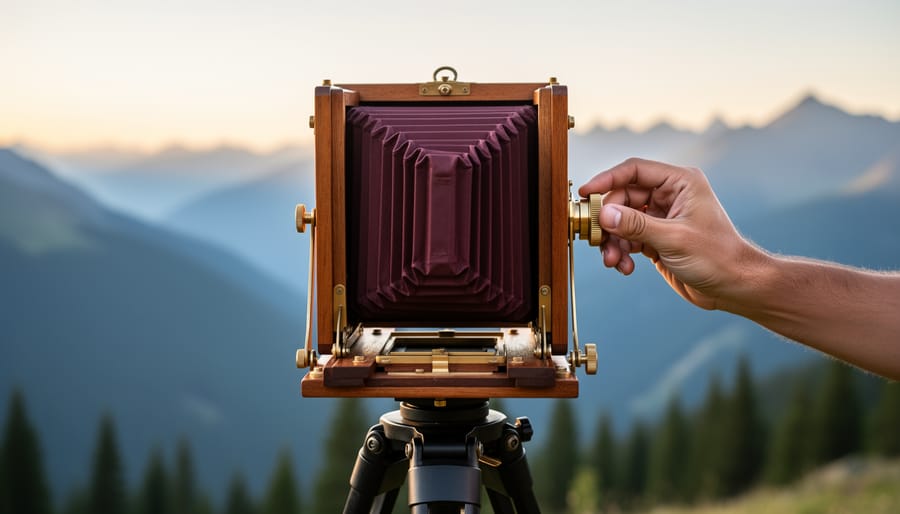
Stand before a large format camera for the first time, and you’ll understand why legendary photographers like Ansel Adams refused to work with anything else. These cathedral-sized instruments—some with bellows extending two feet or more—transform photography from point-and-shoot simplicity into a deliberate, almost meditative craft where every decision matters.
Large format cameras use individual sheets of film, typically 4×5 or 8×10 inches, instead of rolls. This means loading each exposure separately under a dark cloth, composing your image upside-down on a ground glass screen, and making precise adjustments to…
Why Your Film Photos Look Wrong (And How to Meter Like a Pro)
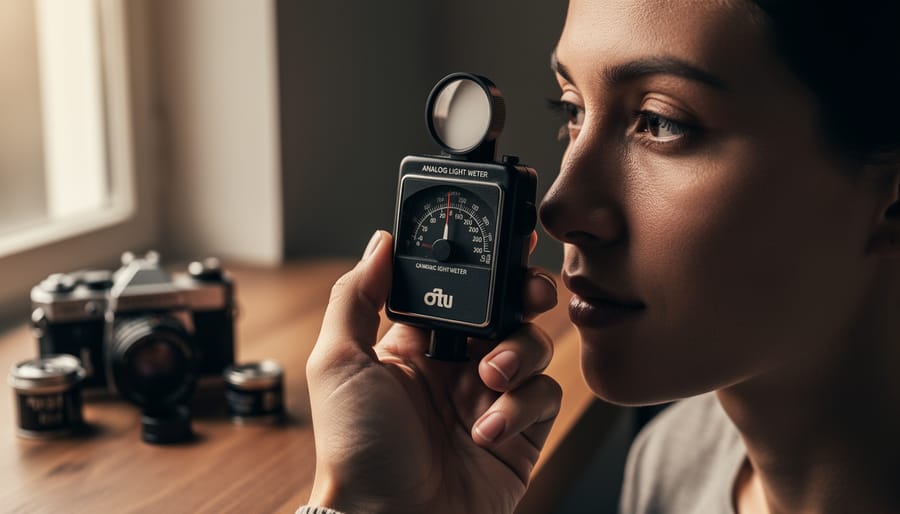
Meter for the shadows, expose for the highlights, and develop for the midtones—this fundamental principle separates successful film shooters from those burning through expensive rolls with inconsistent results. Your light meter doesn’t think like film does, which is why that perfectly exposed digital shot translates to underexposed, muddy negatives when you shoot the same scene on analog. Film has approximately five to seven stops of latitude depending on the stock, but unlike digital sensors that clip highlights first, negative film is remarkably forgiving in the highlights while shadows go to black quickly.
Start by rating…
Your Film Camera Doesn’t Need a Repair Shop (Here’s How to Fix It Yourself)
Check your camera’s light seals first—deteriorated foam around the film door causes light leaks that ruin exposures, and replacement costs under $15 for a DIY kit. Test your shutter speeds by comparing them against a smartphone stopwatch app in bulb mode; if your 1/125th setting actually fires at 1/60th, you’ll need professional CLA (clean, lubricate, adjust) service. Verify film advance issues by opening the back and watching whether sprockets engage properly with empty camera—stuck advance levers often result from old lubricant rather than broken gears.
Your mechanical film camera represents decades-old engineering…
Why Instant Analog Cameras Still Beat Your Smartphone
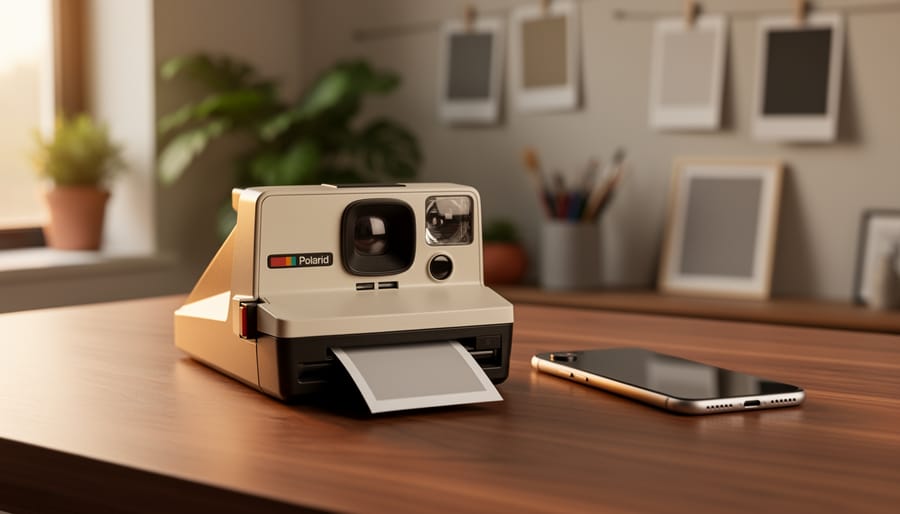
In an era where smartphone cameras deliver technically flawless images in milliseconds, instant analog cameras are experiencing a renaissance that defies digital logic. These mechanical marvels—cameras that expose light-sensitive film and eject fully developing photographs within seconds—offer something your phone never can: a physical artifact, chemical unpredictability, and the irreplaceable thrill of waiting for an image to materialize in your hands.
Unlike digital photography’s infinite do-overs, instant film photography demands intentionality. Each shot costs between $2-3, transforming casual snapshots into deliberate…
Why Your Film Photography Needs a Darkroom (And How to Build One)
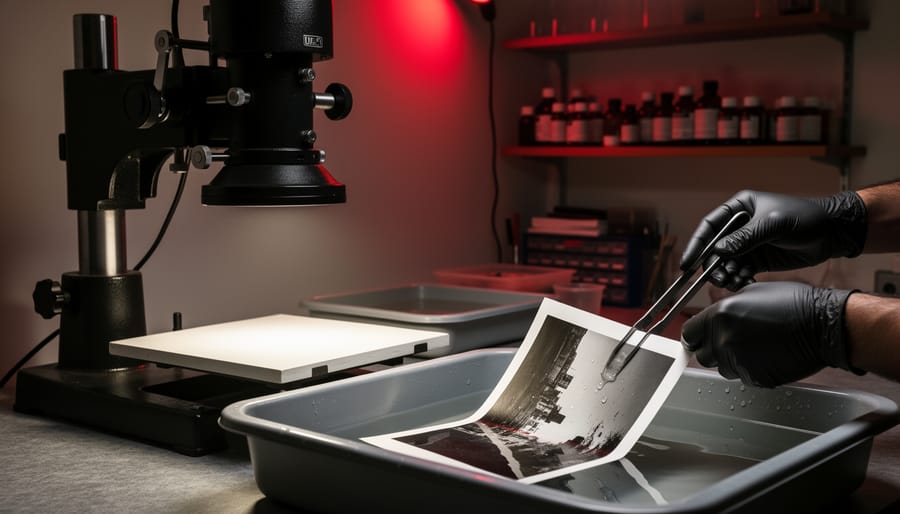
Standing in a darkroom watching an image slowly emerge in the developer tray creates a connection to photography that digital workflows simply cannot replicate. This hands-on process transforms your negatives into tangible prints through a series of chemical reactions you control entirely, making each print a unique physical object rather than another file on a hard drive.
The darkroom remains relevant because it offers complete creative control over your final image. When you adjust exposure time by seconds, dodge shadows with your hands, or burn in highlights with carefully shaped cards, you’re making artistic decisions that…
Why RA-4 Printing Still Delivers Colors Digital Can’t Match
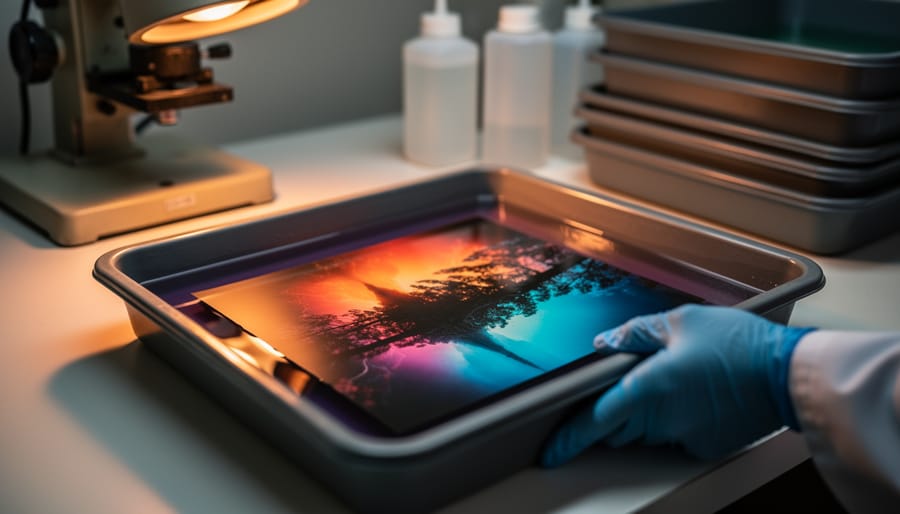
Understand that RA-4 is the chromogenic color process used to print from color negatives onto light-sensitive paper, creating vivid, archival-quality prints in your own darkroom. Unlike black and white printing, RA-4 demands precise temperature control—chemicals must stay within 0.5°F of the target temperature, typically around 95-100°F, making a good thermometer and temperature stabilization system non-negotiable investments. Master your test strip technique by exposing a single strip of paper in incremental time intervals (usually 5-second steps) under your enlarger, which reveals the correct base exposure before you fine-tune color …