 By
By 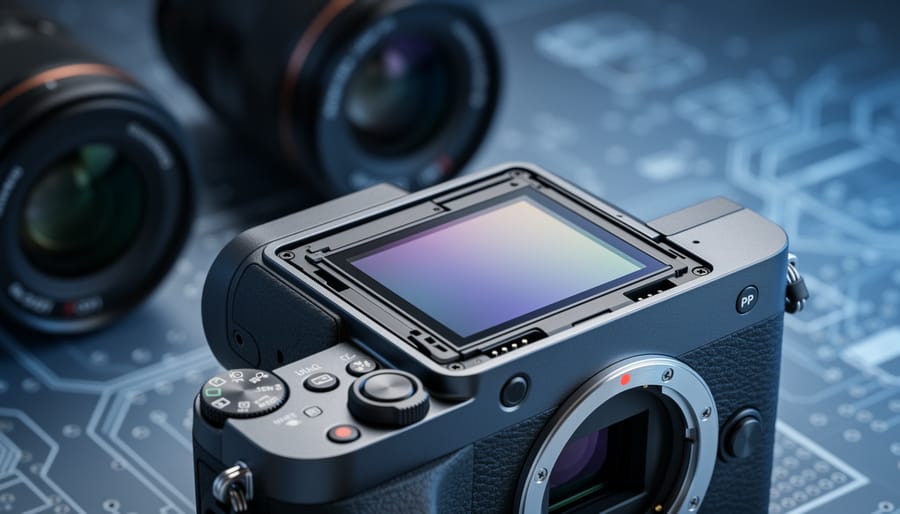
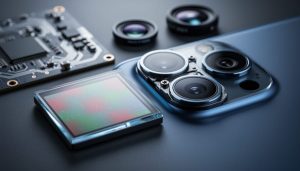
Understand that the analog-to-digital converter (ADC) in your camera sensor is the bridge between light and your final image—it determines how those captured photons become the digital data you edit in post-production. Modern camera sensors use three primary ADC architectures, each making distinct trade-offs between read speed, noise performance, and bit-depth that directly impact your shooting experience.
Column-level ADCs place a converter at each pixel column, enabling faster readout speeds for high frame rates and reduced rolling shutter, though they typically operate at lower bit-depths (10-12 bits). This architecture powers most mirrorless cameras’ impressive burst rates and 4K video capabilities. Chip-level ADCs, conversely, funnel all sensor data through a single converter, achieving higher bit-depths (14-16 bits) for superior dynamic range but at slower read speeds—explaining why some cameras excel at stills but lag in video.
Dual-gain architectures represent a hybrid approach, switching between high and low amplification to capture detail in both shadows and highlights simultaneously, effectively expanding usable dynamic range beyond the ADC’s native bit-depth. This technology explains why sensor size matters more than megapixels alone—larger photosites collect more light, reducing the ADC’s workload in challenging conditions.
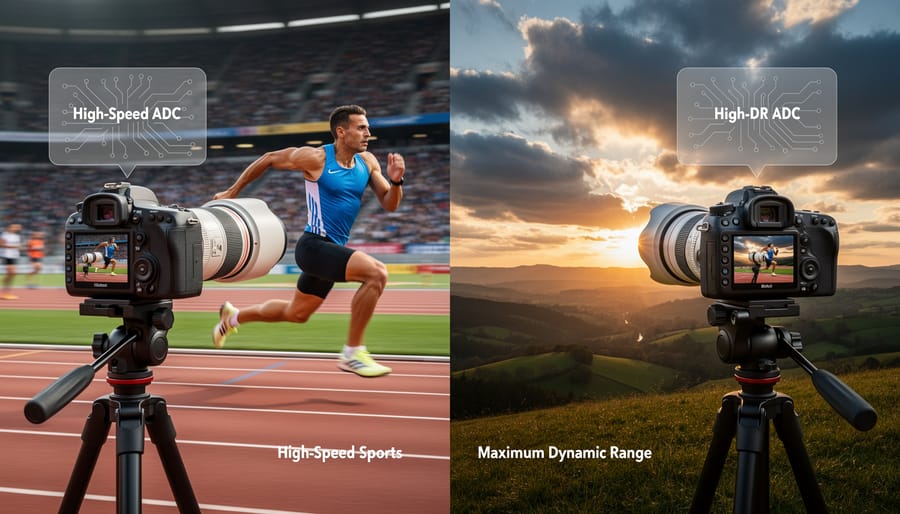
These architectural choices cascade into real-world implications: sports photographers benefit from faster column-level designs, landscape photographers prioritize chip-level converters for maximum tonal gradation, and hybrid shooters increasingly demand dual-gain systems. Understanding these fundamentals helps decode specification sheets and match camera technology to your actual shooting requirements rather than chasing arbitrary numbers.
What ADCs Actually Do in Your Camera (And Why You Should Care)
Think of your camera’s analog-to-digital converter as a skilled translator working in real-time. When light hits your sensor, it creates an analog electrical signal—a continuous flow of information, like someone speaking in a flowing conversation. The ADC’s job is to translate that smooth, continuous signal into digital language: discrete numbers that your camera’s processor can understand and your computer can read.
Here’s what actually happens: Your sensor’s photosites collect photons and convert them into tiny electrical charges. These charges vary in strength depending on how much light hit each photosite—brighter areas create stronger signals, darker areas create weaker ones. The ADC samples these varying voltages and assigns each one a numerical value. A 14-bit ADC, for example, can distinguish between 16,384 different brightness levels per color channel.
Why should you care? Because this conversion process is where the rubber meets the road for image quality. The ADC’s precision directly determines your camera’s dynamic range—how much detail you can capture from the deepest shadows to the brightest highlights in a single shot. A more capable ADC preserves subtle tonal gradations that a lesser one would simply discard.
The conversion speed and accuracy also affect low-light performance and noise levels. An ADC that introduces less electronic noise during conversion means cleaner shadows and smoother gradients. Color accuracy depends on it too—how faithfully your sunset’s gradient is rendered or whether skin tones look natural all traces back to how precisely the ADC translates those analog signals.
Understanding ADCs helps you move beyond marketing specs and grasp what genuinely impacts your photographs.
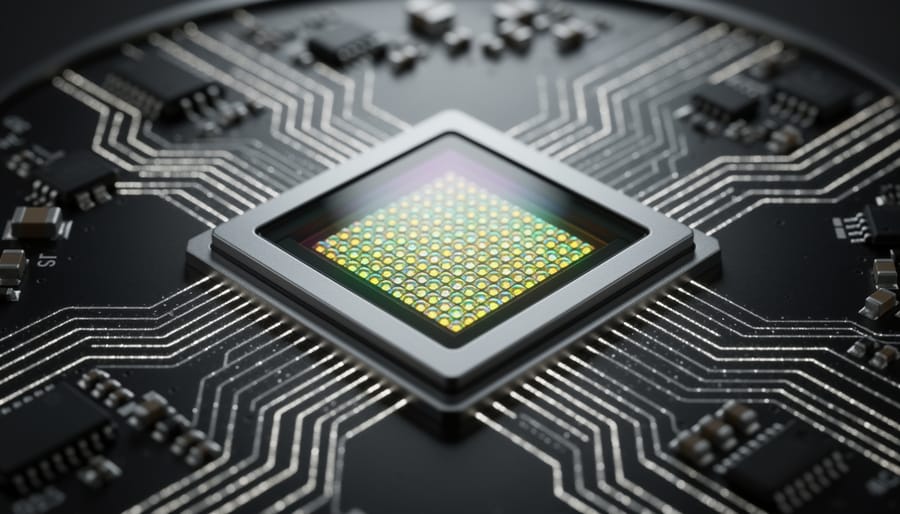
The Three Main ADC Architectures You’ll Find in Modern Cameras
Column-Parallel ADCs: The Speed Demons
If you’ve ever wondered how modern cameras capture rapid-fire bursts or shoot ultra-smooth 4K video, column-parallel ADCs deserve much of the credit. This architecture represents a significant leap forward in sensor design, prioritizing speed above all else.
Here’s how it works: instead of using one or two ADCs to process all the pixel data sequentially, column-parallel designs place one ADC at the bottom of each pixel column. Imagine a sensor with 6,000 columns—that means 6,000 ADCs working simultaneously. This parallel processing approach dramatically accelerates data conversion, allowing sensors to read out information much faster than traditional architectures.
The advantages are immediately apparent in real-world shooting scenarios. When you’re photographing a wildlife sequence or capturing your child’s soccer game, you need fast burst rates without electronic shutter distortion. Column-parallel ADCs enable exactly that. They’re also essential for high-resolution video recording, where the sensor must read millions of pixels multiple times per second to create smooth motion.
Most modern mirrorless cameras and higher-end DSLRs employ this architecture. The Sony A9 series, for instance, uses a column-parallel ADC design that enables its impressive 20 frames-per-second continuous shooting with virtually no viewfinder blackout. This speed comes from processing all those columns simultaneously rather than waiting for a single ADC to work through each pixel one by one.
The trade-off? Column-parallel designs typically offer lower bit-depth than their slower counterparts—often 12 or 14 bits rather than 16 bits. However, for most practical photography purposes, 14-bit color depth provides more than enough dynamic range and tonal gradation. The speed gained usually outweighs the marginal loss in bit-depth, especially when you consider that capturing the perfect moment often matters more than squeezing out that last fraction of a stop in shadow detail.
Single-Slope ADCs: The Budget-Friendly Workhorses
If you’ve ever wondered why some cameras cost significantly less than others while still producing decent images, single-slope ADCs might be part of the answer. Think of this architecture as the reliable economy car of the analog-to-digital conversion world—it gets the job done without all the bells and whistles.
The single-slope ADC works on an elegantly simple principle. As light hits your sensor’s photodiodes and generates electrical charge, this architecture uses a single reference voltage that ramps up at a steady rate, like water filling a bathtub. A counter tracks how long it takes for this ramping voltage to match the signal from each pixel. The longer the count, the brighter that pixel was. This straightforward approach means fewer components, simpler circuitry, and ultimately, lower manufacturing costs.
You’ll find single-slope ADCs in entry-level DSLRs, budget mirrorless cameras, and many action cameras—think GoPros and their competitors. These converters shine in situations where moderate resolution and frame rates are perfectly acceptable. For casual photography, travel documentation, or capturing your weekend adventures, the performance trade-offs are often negligible in real-world use.
However, simplicity comes with compromises. Single-slope ADCs are relatively slow because they process pixels sequentially rather than simultaneously, which limits continuous shooting speeds and can increase power consumption. That sequential counting process also means these converters draw more power over time compared to their more sophisticated cousins. Additionally, they’re more susceptible to noise interference during the longer conversion periods.
For photographers, this translates to practical considerations. If you’re shooting landscapes where burst speed doesn’t matter, or you’re documenting a family vacation where image quality far exceeds what you’d get from a smartphone, a camera with single-slope ADCs serves you perfectly well. These workhorses prove that cutting-edge technology isn’t always necessary to capture compelling images—sometimes reliability and affordability matter more.
Successive Approximation (SAR) ADCs: Balancing Act
Think of Successive Approximation Register (SAR) ADCs as the diplomatic negotiators of the analog-to-digital conversion world. While flash ADCs sprint ahead at lightning speed and sigma-delta ADCs take their time for precision, SAR ADCs find a comfortable sweet spot in the middle, offering a practical balance of speed, power consumption, and accuracy.
Here’s how they work: imagine you’re playing a sophisticated guessing game with a scale. Instead of testing every possible value like flash ADCs, SAR converters use a binary search approach. They start by asking “is the signal greater than half the maximum value?” Based on that answer, they narrow down the possibilities, then repeat the process with increasingly refined questions until they zero in on the correct digital value. It’s remarkably efficient, completing conversions in just a few clock cycles while sipping power compared to their flash counterparts.
In photography, SAR ADCs shine in specialized imaging applications where you need good speed without draining your battery or generating excessive heat. You’ll find them in medium-format digital backs, scientific cameras, and certain industrial imaging systems where the sweet spot between frame rate and image quality matters more than absolute extremes in either direction. They typically handle moderate bit depths effectively, making them ideal for situations requiring 12 to 16-bit precision without the complexity of sigma-delta architectures.
The real beauty of SAR ADCs lies in their versatility. They can adapt to different resolution requirements relatively easily, making them popular in cameras that need to handle various shooting modes. For instance, a camera using SAR conversion might seamlessly switch between different bit depths depending on whether you’re shooting high-speed bursts or single exposures prioritizing dynamic range. This flexibility, combined with reasonable power consumption, makes them an attractive option for battery-powered professional equipment where every watt counts during extended shooting sessions.
Bit Depth Explained: Why 12-Bit vs. 14-Bit Actually Matters
Think of bit depth as the number of distinct brightness levels your camera can record between pure black and pure white. A 12-bit ADC captures 4,096 gradations per color channel, while a 14-bit ADC records 16,384 gradations. That might sound like splitting hairs, but in real-world photography, those extra steps make a significant difference.
Here’s a tangible comparison: imagine painting a sunset gradient. With 12-bit depth, you have 4,096 shades of orange to work with per channel. With 14-bit, you suddenly have 16,384 shades. The 14-bit version creates smoother transitions without visible banding, especially in subtle tonal areas like clear skies or studio backdrops.
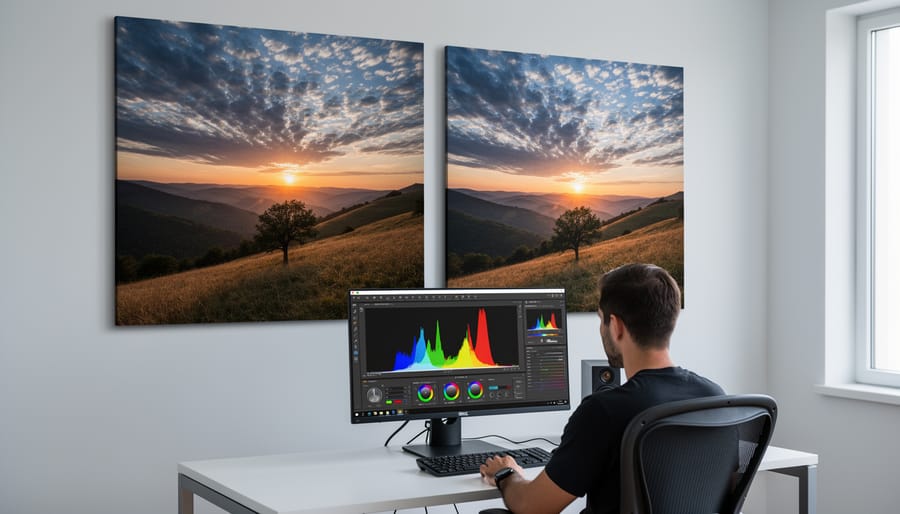
This distinction becomes critical during post-processing. When you pull up shadows in Lightroom or Photoshop, you’re essentially redistributing those available tonal steps across a wider brightness range. A 12-bit file might have only 50 distinct levels in the deep shadows you’re trying to recover. Stretching those 50 levels to fill a broader range creates visible posterization and noise. A 14-bit file, with roughly four times more data to work with, maintains smoother gradations even after aggressive adjustments.
The same principle applies to highlight retention. If you’re shooting a bride’s white dress in bright sunlight, those extra bits preserve subtle texture and detail that would otherwise merge into featureless white. Wedding and portrait photographers particularly value this headroom.
Color grading benefits immensely from higher bit depth too. When you shift hues or adjust saturation, you’re manipulating the relationships between those red, green, and blue channels. More gradations mean cleaner, more professional-looking color adjustments without artifacts.
However, context matters. If you’re shooting JPEGs or rarely push your editing beyond basic exposure tweaks, you might not notice the difference. But for photographers who shoot RAW and regularly rescue underexposed images or create dramatic looks in post, that jump from 12-bit to 14-bit provides genuine creative flexibility. It’s not just a spec sheet talking point—it’s breathing room when your editing gets ambitious.
The trade-off? Higher bit depth typically means slower readout speeds and larger file sizes, which brings us back to why ADC architecture choices matter so much in camera design.
The Real-World Trade-offs: Speed, Power, and Image Quality
When Speed Beats Bit Depth (And Vice Versa)
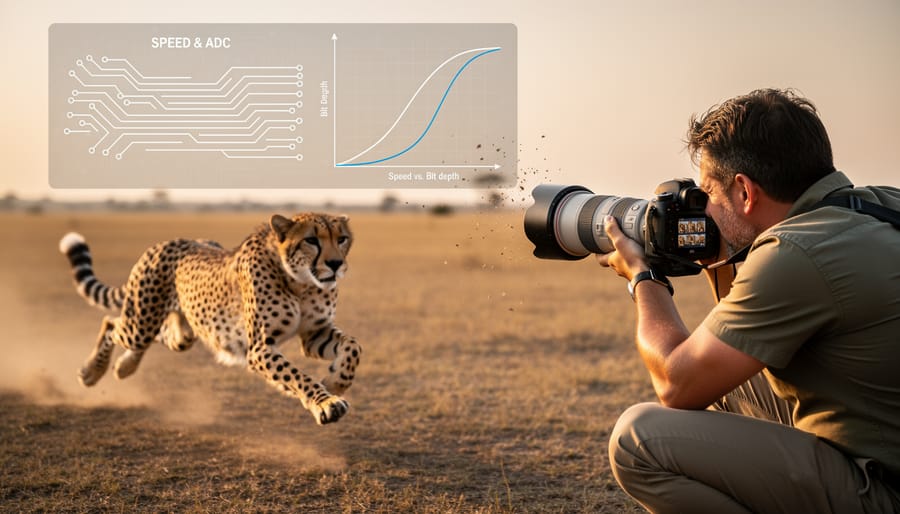
Understanding when to prioritize speed over precision, or vice versa, can dramatically improve your photography. The trade-off between readout speeds and bit depth isn’t about one being better than the other—it’s about matching your camera’s capabilities to your shooting situation.
Fast readout speeds with lower bit depth excel when capturing decisive moments. Sports photographers shooting a soccer match need 20+ frames per second to freeze peak action—a striker’s foot connecting with the ball, a goalkeeper’s diving save. Here, getting the shot matters more than extracting every last shadow detail in post-processing. Similarly, wildlife photographers tracking birds in flight benefit from high-speed bursts that increase their keeper rate, even if each individual frame has slightly less tonal information to work with.
On the flip side, maximum bit depth becomes crucial when you have time to work methodically. Landscape photographers shooting a golden-hour scene want those 14 or 16 bits per channel to preserve subtle gradations in the sky, allowing them to pull detail from near-black shadows and bright highlights during editing. Studio photographers lighting a product shot don’t need 30 fps—they need the flexibility to perfect their image in post-production without banding or posterization.
HDR photography represents perhaps the clearest example where bit depth reigns supreme. When bracketing exposures to merge later, each frame needs maximum tonal information. A real estate photographer shooting an interior with bright windows wants those extra bits to create smooth, natural-looking HDR images without artifacts.
The key is recognizing that modern cameras often let you choose—high-speed modes for action, lower-speed modes with enhanced bit depth for deliberate work.
The Battery Life Factor Nobody Talks About
Here’s something most camera reviews gloss over: the ADC architecture in your camera has a significant impact on how long your battery lasts between charges. This becomes especially critical for mirrorless shooters and videographers who already face shorter battery life compared to DSLR users.
Different ADC designs consume vastly different amounts of power. Column-parallel ADCs, which place a converter at each pixel column, offer incredible read speeds but draw more power continuously. On the other hand, single-slope ADCs are more power-efficient but slower, making them less suitable for high-speed shooting or 4K video at higher frame rates.
Modern dual-gain and multi-conversion ADC architectures add another layer of complexity. While they deliver superior dynamic range, they require multiple read cycles per frame, which translates directly to increased power consumption. When you’re shooting 10-bit or 12-bit raw video, your camera is working significantly harder than when capturing standard 8-bit footage.
So what can you do about it? First, understand that shooting modes with higher bit depths and frame rates will drain your battery faster, not just because of processing demands but due to the ADC architecture working overtime. If battery life is crucial for your shoot, consider using electronic shutter modes selectively, as mechanical shutter operation combined with ADC readouts can be particularly power-hungry.
Carry extra batteries when shooting in modes that leverage advanced ADC features like high-speed continuous shooting or high-resolution video. Your camera’s impressive technical specifications come with real-world trade-offs that every practical photographer needs to plan for.
How This Affects Your Actual Photography
Now that we’ve explored the technical side of ADC architectures, let’s talk about what this actually means when you’re out shooting or comparing cameras at your local camera shop.
The most important thing to understand is that ADC architecture affects your dynamic range—essentially, how much detail your camera can capture in both the darkest shadows and brightest highlights of a single image. A camera with a better ADC design might rescue details from an otherwise blown-out sky during a sunset shoot, or pull usable shadow information from a poorly lit interior without introducing excessive noise.
When you’re researching cameras, here’s the reality: manufacturers rarely advertise their specific ADC architecture. You won’t find “dual-slope integration ADC” listed in the specs sheet. Instead, look for published dynamic range measurements, typically expressed in stops or EV. A modern full-frame camera should deliver around 14-15 stops of dynamic range at base ISO. However, pay attention to how that dynamic range behaves as ISO increases—this is where ADC efficiency really shows itself.
Independent testing sites like DXOMark or DPReview provide measured dynamic range data that cuts through marketing language. These third-party measurements reveal the practical performance differences between cameras that might look similar on paper.
For matching these specifications to your shooting style, consider this practical framework. Landscape photographers benefit enormously from maximum dynamic range at base ISO—those challenging dawn and dusk shoots with extreme contrast between sky and foreground demand every bit of sensor performance. Portrait photographers working in controlled studio lighting can often prioritize other features, since you’re managing the light environment. Sports and wildlife shooters need to focus on how well dynamic range holds up at higher ISOs, typically ISO 1600 and above, where you’ll frequently be working in less-than-ideal lighting conditions.
Here’s a real-world scenario: imagine shooting a wedding ceremony in a dimly lit church. A camera with a more efficient ADC architecture maintains cleaner shadows and better color accuracy at ISO 3200, allowing you to capture usable images of guests in the darker pews while properly exposing the brighter altar area—all in a single frame.
The truth is, for most photography situations, any modern mirrorless or DSLR from the past five years has sufficiently good ADC technology. The differences become meaningful when you’re regularly shooting high-contrast scenes, doing extensive shadow recovery in post-processing, or working professionally where image quality directly impacts your income. Don’t let ADC specifications become the sole deciding factor—sensor size, lens selection, autofocus performance, and ergonomics matter just as much for your actual photography experience.
Understanding ADC architectures and bit depth might not be as exciting as unboxing a new camera, but these specifications have a profound impact on the images you capture. While megapixels dominate marketing materials and online discussions, the analog-to-digital converter working behind the scenes determines how accurately your camera translates light into data—and ultimately, into the photographs you share and print.
Think of it this way: a high-megapixel sensor with a poorly designed ADC is like having an exceptional microphone connected to a cheap recording device. The potential is there, but the final result suffers from the weakest link in the chain. Dynamic range, color accuracy, low-light performance, and even your workflow efficiency all trace back to these often-overlooked components.
The good news? You now have the knowledge to look beyond surface-level specifications. When researching your next camera, ask about ADC architecture and bit depth alongside megapixel count. Consider what you actually photograph—landscape shooters benefit enormously from higher bit depth and better dynamic range, while sports photographers might prioritize faster readout speeds even if it means accepting certain trade-offs.
Don’t chase numbers for their own sake. A 12-bit ADC in a well-designed system can outperform a 14-bit converter with poor implementation. Focus on real-world performance reviews, sample images, and how a camera handles the lighting conditions you typically encounter. Your photography deserves equipment chosen with intention, not just impressive specifications on a datasheet.


 By
By