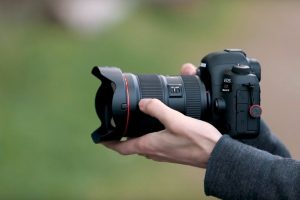
Position yourself at the edges of crowds rather than in the center, giving you clear exit routes and wider compositional angles while reducing your risk of being caught in sudden movements or confrontations. Keep your camera strap wrapped around your wrist, not just hanging from your neck, so equipment stays secure if you need to move quickly or protect someone’s identity by lowering your lens immediately.
Document the full story, not just the dramatic clashes. Photograph the organizers passing out water, the handmade signs that reveal why people showed up, the medics treating injuries, and the moments of solidarity that …
Why Your Studio Photos Look Wrong (And How the Lighting Color Wheel Fixes It)
Understand that the lighting color wheel maps the relationship between light temperature and complementary colors, operating on a different principle than the traditional artist’s color wheel you learned in school. In photography, this tool reveals how your camera sensor interprets mixed lighting sources and why that overhead fluorescent creates a sickly green cast on your subject’s skin while the window light reads beautifully warm.
Master color temperature shifts by recognizing that moving from tungsten (3200K) to daylight (5600K) doesn’t just make light “cooler”—it fundamentally changes how colors …
Why Underwater Infrared Photography Is Nearly Impossible (And How to Do It Anyway)
Understand this first: true infrared photography underwater is physically impossible. Water absorbs infrared wavelengths within mere centimeters of the surface, making those ethereal IR effects you’ve achieved on land completely unachievable once submerged. The physics are unforgiving—infrared light penetrates water about as effectively as a brick penetrates concrete.
If you’ve seen images labeled “underwater infrared,” they’re either captured at the water’s surface with specialized techniques, heavily post-processed visible-light images, or deliberately misleading. This isn’t a matter of …
Q-Focus: The Secret Weapon That’s Changing How Cinematographers Pull Focus
Focus pulling separates amateur footage from cinematic storytelling, and q-focus represents one of the most sophisticated approaches to achieving rack focus transitions. This wireless follow focus system transforms how camera operators execute focus shifts during live recording, replacing guesswork with precision-mapped focus points that can be triggered on demand. Unlike traditional manual focus pulling that requires estimating distances and memorizing lens markings, q-focus allows you to pre-program exact focus positions—say, from an actor’s face at three feet to a doorway at fifteen feet—then execute that transition smoothly …
Why Your Display Photos Are Fading (And How IoT Sensors Can Stop It)
Install smart sensors in your gallery or exhibition space to track temperature fluctuations between 65-75°F and humidity levels at 30-50% relative humidity—the sweet spot that prevents your photographic prints from warping, fading, or developing mold. A sudden spike to 80% humidity overnight could damage months of displayed work before you even arrive in the morning.
Position light sensors near your most valuable prints to monitor cumulative UV exposure, which degrades pigments and paper fibers invisibly over time. These devices log exposure data continuously, allowing you to identify problem areas where sunlight streams through …
Why Your Camera’s Bit Depth Matters More Than Megapixels
Understand that the analog-to-digital converter (ADC) in your camera sensor is the bridge between light and your final image—it determines how those captured photons become the digital data you edit in post-production. Modern camera sensors use three primary ADC architectures, each making distinct trade-offs between read speed, noise performance, and bit-depth that directly impact your shooting experience.
Column-level ADCs place a converter at each pixel column, enabling faster readout speeds for high frame rates and reduced rolling shutter, though they typically operate at lower bit-depths (10-12 bits). This architecture powers …
How the University Photographers Association of America Transforms Collaboration for Campus Shooters
University photography isn’t just about capturing campus events and student portraits anymore. Today’s university photographers face unique challenges that set them apart from commercial or editorial shooters: navigating complex institutional hierarchies, balancing diverse stakeholder expectations, maintaining consistent visual branding across hundreds of annual projects, and justifying photography budgets to administrators who may not understand the medium’s value.
The University Photographers Association of America addresses these specific pain points through a collaborative network that transforms isolated …
Why Your Camera Card Keeps Failing (And How to Choose the Right Recording Media)
Match your memory card’s file system to your camera’s specifications before shooting—most modern cameras use exFAT for cards larger than 32GB, while older models require FAT32. Check your camera manual or manufacturer’s website to confirm compatibility, as using the wrong format can result in unrecognized cards, corrupted files, or shooting limitations that leave you unable to capture critical moments.
Format cards in-camera rather than on your computer whenever possible. This ensures the file system structure aligns perfectly with your camera’s requirements and creates the proper directory hierarchy for …
What’s Actually Inside Your Photochromic Lenses (And Why It Matters for the Planet)
Photochromic lenses contain silver halide crystals or organic photochromic molecules—typically indolino-spiropyrans or naphthopyrans—embedded within the lens material that react to ultraviolet light exposure. When UV rays hit these molecules, they undergo a reversible chemical transformation that darkens the lens, then return to their clear state once removed from sunlight. Understanding this composition matters because these chemical compounds directly impact both your visual experience and the planet’s health.
The silver compounds in traditional photochromic lenses pose recycling challenges since separating these …
Master Your X100VI: Camera Settings That Actually Make Sense
Grab your X100VI, flip the exposure compensation dial to zero, set the shutter speed dial to ‘A’ (for Aperture Priority), and rotate the aperture ring to f/5.6—you’ve just configured the most forgiving shooting mode for learning this camera. Unlike other compact cameras that hide controls in menus, the X100VI puts physical dials for shutter speed, aperture, and ISO directly at your fingertips, which feels intuitive once you understand what each dial actually does to your images.
The learning curve exists not because this camera is complicated, but because it respects you enough to offer real control. Many …