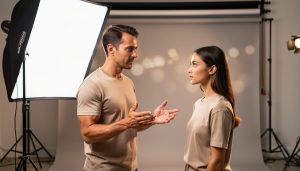
Position your single light source 45 degrees to your subject’s face and slightly above eye level to create the foundational Rembrandt lighting pattern—recognizable by the small triangle of light beneath the shadowed eye. Master feathering by angling your light so the edge of the beam, rather than its center, illuminates your subject, producing softer transitions and more dimensional skin tones. Control the shadow intensity using a reflector on the opposite side of your light source, bouncing fill light back into darker areas to achieve ratios ranging from dramatic 4:1 splits to gentle 2:1 portraits. Experiment with light-to-subject…
Why Your Time-Lapse Videos Look Stuck in Place (And How Motion Changes Everything)
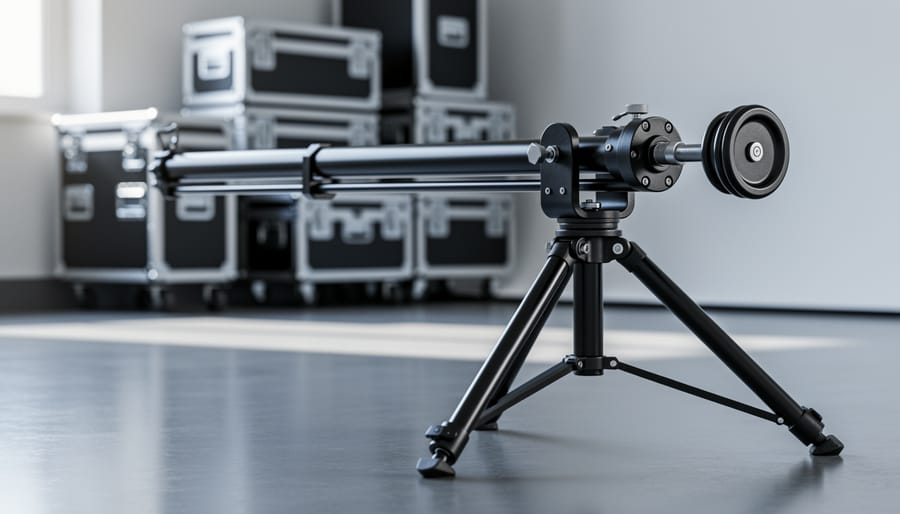
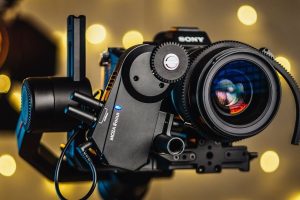
Mount your camera on a motorized slider or gimbal to create the fluid, cinematic movement that transforms ordinary time-lapses into professional-grade sequences. The difference between a static time-lapse and a moving one lies in that subtle dollying motion—a slow push toward your subject or a gentle pan across a cityscape—that adds dimensionality and visual interest your audience craves.
Moving time-lapses combine two complex techniques: capturing sequential frames over extended periods while simultaneously repositioning your camera between each shot. This marriage of time compression and physical movement creates what …
FPO Images: Why Your Portfolio Is Showing Placeholders (And How to Fix It)
You’ve just launched your photography portfolio website, proud to showcase your best work to potential clients. But instead of your stunning landscape shots or carefully composed portraits, you’re staring at gray boxes labeled “FPO” scattered across your galleries. Your heart sinks as you realize visitors are seeing the same thing.
FPO stands for “For Position Only,” a placeholder term borrowed from the printing and publishing industry. These temporary images were originally used in magazine layouts and print proofs to indicate where final photographs would eventually appear. In the digital age, …
Three Places Where Your Camera Can Actually Save Wildlife
The planet’s most biodiverse regions are disappearing at an unprecedented rate, and photographers hold a unique power to document these vanishing ecosystems before they’re lost forever. Your images can become powerful conservation tools, influencing policy decisions, raising public awareness, and generating funding for protection efforts. But capturing these fragile environments requires more than technical skill—it demands an understanding of where to go, what makes each location ecologically significant, and how to photograph responsibly without causing harm.
Biodiversity hotspots represent just 2.4% of Earth’s…
AI Photo Editing Just Changed Everything (Here’s What You Need to Know)
Picture this: You’ve just returned from a spectacular sunset shoot with hundreds of raw images waiting on your memory card. Five years ago, you’d face hours of tedious adjustments—correcting exposure, removing distractions, and fine-tuning colors frame by frame. Today, artificial intelligence handles these tasks in seconds, often with results that rival or exceed manual editing.
AI-assisted photo editing represents the most significant shift in post-processing since Adobe introduced layers in Photoshop. These tools use machine learning algorithms trained on millions of images to intelligently recognize subjects, …
Why Your Best Photos Might Never See the Light of Day
Your photograph of a breastfeeding mother was removed from Instagram within minutes. A gallery canceled your documentary series on migrant workers after pressure from local officials. Your street photography book faced distribution challenges because it contained images of protest signs. These aren’t hypothetical scenarios—they’re experiences photographers face daily as they navigate an increasingly complex landscape of censorship.
Censorship in photography operates on multiple levels, from platform algorithms flagging artistic nudes as pornography to governments restricting documentary work that challenges official …
How Historical Societies Are Bringing Lost Heritage Sites Back to Life Through Photography
Examine historical photographs with attention to architectural details, measuring shadows and light angles to determine exact building dimensions and spatial relationships—this forensic approach transforms century-old images into blueprints for heritage reconstruction. Study multiple photographs of the same structure from different perspectives, as the Western Photographic Historical Society’s archives demonstrate that triangulating viewpoints reveals precise measurements that single images cannot provide. Document your own community’s changing landscape now, using consistent vantage points and standardized focal lengths, …
Your Photos Don’t Have to Cost the Earth (Here’s How to Print Sustainably)
Choose FSC-certified or recycled paper stock when ordering prints to immediately reduce your environmental footprint—these materials use up to 50% less energy and water in production compared to virgin paper. Request vegetable or soy-based inks from your print lab instead of petroleum-based alternatives, which release fewer volatile organic compounds and biodegrade more readily without sacrificing color vibrancy or longevity.
Work with print-on-demand services rather than ordering bulk quantities to eliminate waste from unsold inventory, a practice that aligns with broader …
Why Your Thermal Camera Keeps Overheating (And How to Fix It)
Monitor your thermal analog camera’s operating temperature by checking the manufacturer’s specifications for maximum ambient conditions, typically ranging between 40-50°C (104-122°F), and ensure your setup location stays well below these thresholds to prevent automatic shutdowns or permanent sensor damage.
Position passive cooling solutions strategically around your camera housing by installing heat sinks on the camera body’s exterior surfaces, mounting the unit away from direct sunlight and heat-generating equipment, and maintaining at least 6 inches of clearance on all ventilated sides to promote natural …
Why Used Medium Format Cameras Give You Pro Quality at Half the Price
Start browsing reputable film camera retailers like KEH Camera, B&H Photo’s used department, and MPB rather than diving straight into eBay—these specialists grade condition accurately and offer return policies that protect you from expensive mistakes. Check the shutter for inconsistent speeds by shooting a test roll at various settings, inspect the light seals for deterioration (those foam strips crumble after decades), and examine the mirror and focusing screen for damage that could affect composition accuracy.
Medium format cameras deliver exceptional image quality that rivals modern digital systems, with negatives …