 By
By 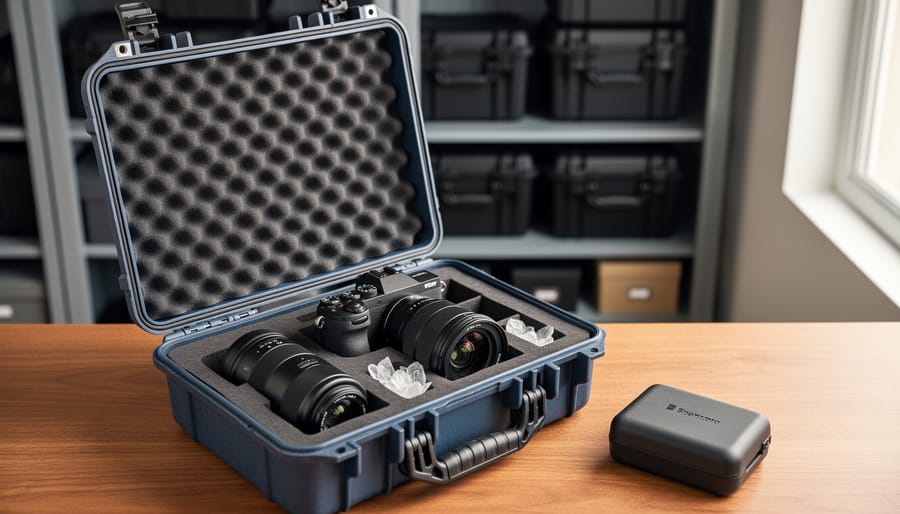
Store camera bodies and lenses in climate-controlled spaces with consistent temperature between 60-75°F and humidity levels around 40-50% to prevent mold growth and electronic component degradation. Use silica gel packets in your storage containers, replacing them every three months or when they change color to indicate moisture saturation.
Organize gear in padded, impact-resistant cases with custom foam inserts that hold each item securely in place, preventing equipment from shifting during storage and causing internal damage. This approach to extending equipment lifespan reduces the need for premature replacements and keeps perfectly functional gear out of landfills.
Remove all batteries from cameras, flashes, and accessories before long-term storage to prevent corrosive leakage that can destroy electronic circuits and render equipment unusable. Store batteries separately in a cool, dry location at approximately 40% charge for optimal longevity.
Label all storage containers clearly with contents and last-access dates, enabling you to rotate gear usage and ensure nothing sits unused for extended periods. Equipment that remains stagnant develops issues like stuck aperture blades, frozen focus rings, and deteriorated lubricants.
Position storage areas away from direct sunlight, which fades camera grip materials and degrades lens coatings over time. Your storage system becomes an investment in sustainability, protecting the significant resources and energy already embedded in your photography equipment while maintaining its value and performance for years to come.
Why Storage Is Your Gear’s Silent Killer
The Real Cost of ‘Just Throwing It in a Bag’
We’ve all been there—after a long shoot, you’re exhausted and just toss your camera into the bag without a second thought. But that casual approach comes with hidden costs that many photographers discover too late.
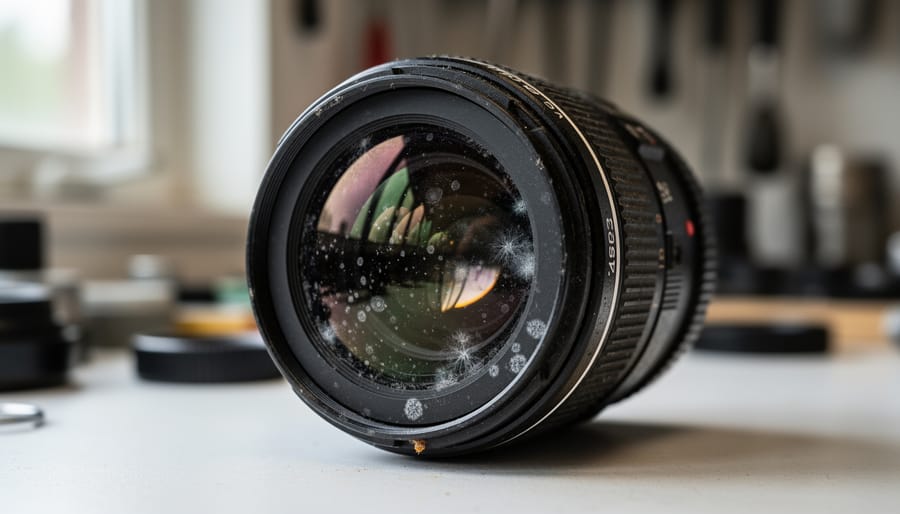
Take Sarah, a wedding photographer from Vancouver, who stored her backup camera body in her garage during the humid summer months. When she pulled it out for a fall wedding, she discovered a $1,200 repair bill for extensive lens fungus that had spread to her camera sensor. “I thought a camera bag was enough protection,” she recalls. “I was wrong.”
The financial impact of poor storage practices adds up quickly. Lens fungus remediation typically costs between $150-400 per lens, assuming it’s caught early. Sensor cleaning for moisture damage runs $200-500, while corroded battery contacts can require complete electronic board replacements costing upwards of $800. According to repair shop surveys, approximately 30% of camera equipment damage stems from improper storage rather than shooting accidents.
Beyond your wallet, there’s an environmental toll. The photography industry generates an estimated 2.5 million tons of electronic waste annually. When equipment fails prematurely due to storage neglect, it contributes to this growing problem. Adopting sustainable gear practices means protecting your investment while reducing waste.
The truth? That ten-minute cleanup and proper storage routine after each shoot could save you thousands of dollars and prevent perfectly good equipment from ending up in landfills.
What Your Camera Equipment Actually Needs
Different types of gear have distinct environmental needs, and understanding these requirements is the first step toward extending your equipment’s lifespan. Camera bodies and lenses thrive in stable conditions with humidity levels between 30-50%. Why does this matter? Too much moisture invites fungus growth on lens elements and internal circuitry, while excessive dryness can cause lubricants to deteriorate and rubber seals to crack. Think of it like caring for a houseplant—consistency matters more than perfection.
Batteries deserve special attention. Lithium-ion batteries, which power most modern cameras, should be stored at around 40-60% charge in cool, dry places. Fully charged batteries stored long-term actually degrade faster, potentially costing you replacements sooner than necessary. Memory cards need protection from extreme temperatures and magnetic fields, though they’re generally more resilient than other components.
Sensors are particularly vulnerable to dust and humidity. Even when your camera sits idle, environmental contaminants can settle on the sensor, requiring professional cleaning. This is where proper storage containers and climate control become investment pieces rather than optional extras. By creating a stable microenvironment for your gear, you’re preventing expensive repairs and reducing the environmental impact of premature equipment replacement—a win for both your wallet and the planet.
Sustainable Storage Solutions That Actually Work
Climate Control Without Breaking the Bank (or Planet)
Protecting your gear from humidity doesn’t require expensive equipment or excessive energy consumption. Let me share some practical solutions I’ve tested over the years that won’t drain your wallet or increase your carbon footprint significantly.
Start with the basics: silica gel packets. These reusable desiccants are remarkably effective for small spaces like camera bags and lens cases. I keep a rotation system going—while one set absorbs moisture in my storage cabinets, another set dries out on a sunny windowsill or in a barely-warm oven. This zero-energy approach has kept my backup bodies and vintage lenses mold-free for years. Pro tip: buy silica gel in bulk with color-changing indicators rather than hoarding those tiny packets from shoe boxes.
For larger storage areas, consider a DIY dry box setup. A simple airtight plastic container with a hygrometer and rechargeable silica gel creates an effective micro-climate for under thirty dollars. I’ve monitored one of these boxes in my garage studio for eight months, and it maintains 40-45% humidity even during humid summers. The key is checking the indicator weekly and recharging the gel before it saturates completely.
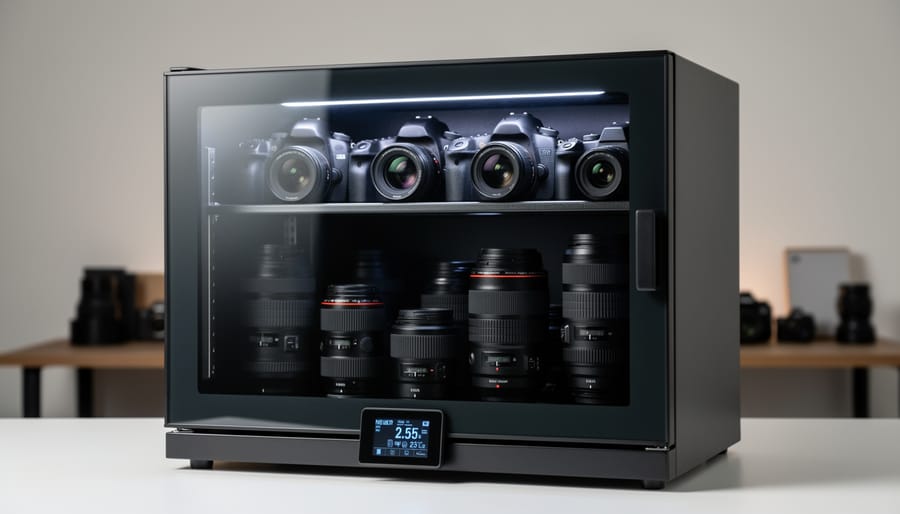
Electronic dry cabinets represent the premium option, but newer models use thermoelectric technology that consumes roughly the same energy as an LED bulb. If you’re storing significant gear value, the investment makes sense. Look for Energy Star ratings and adjustable humidity settings—you don’t need the Sahara Desert inside your cabinet, just consistent conditions between 35-50% humidity.
One real-world test that surprised me: cedar blocks traditionally used in closets. While they won’t control humidity levels, they naturally resist mold and add pleasant scent to camera bags. Combined with basic silica gel, they create a chemical-free storage environment that’s worked beautifully for my personal camera collection.
Choosing Storage Cases and Bags That Last
Investing in quality storage cases and bags might feel expensive upfront, but it’s one of the smartest sustainability moves you can make. A well-constructed bag can protect your gear for decades, while cheap alternatives often fall apart within a year or two, creating unnecessary waste and costing more money over time.
When evaluating storage options, pay close attention to materials and construction. Look for ballistic nylon, Cordura, or waxed canvas exteriors that can withstand weather and abrasion. Check the stitching—it should be reinforced at stress points like handles and straps. Quality zippers from manufacturers like YKK are less likely to fail. Many brands known for longevity offer repairable designs with replaceable parts, extending the useful life significantly.
Consider the secondhand market before buying new. Photography forums, auction sites, and local camera shops often have vintage cases that have already proven their durability. A 1970s aluminum Halliburton case or a classic Domke bag can serve you just as well today as when it was first made.
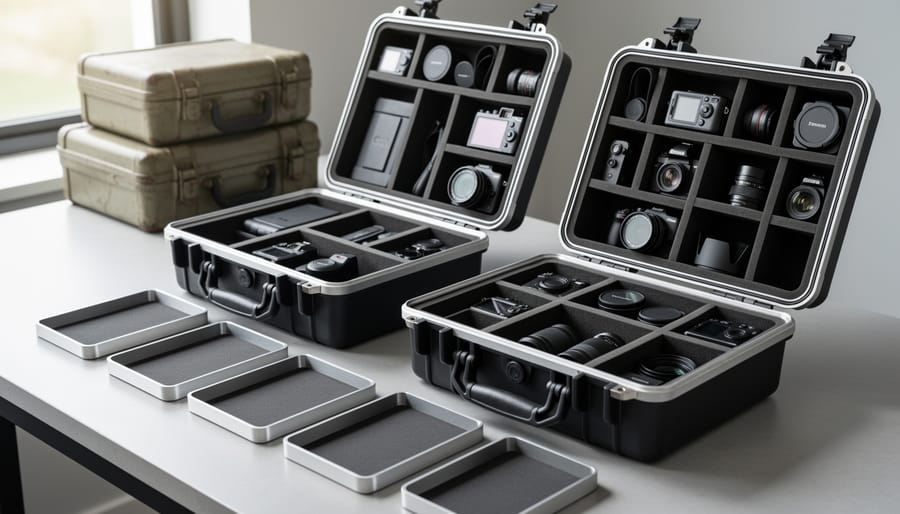
Think about modularity too. Cases with removable dividers and customizable interiors adapt as your equipment changes, eliminating the need for replacement when you upgrade cameras or lenses. Some companies offer lifetime warranties or repair services—a strong indicator of confidence in their product’s longevity. While these solutions cost more initially, they represent genuine value when measured against repeated purchases of disposable alternatives.
The Modular Storage System Approach
Think of your storage system like your camera bag—it should adapt to what you’re shooting, not force you into compromises. A modular approach means investing in components that work together and can be reconfigured as your gear collection evolves, eliminating the wasteful cycle of buying and discarding entire storage setups.
Start with a foundation of stackable, standardized containers. Many photographers find success with plastic bin systems featuring identical footprints but varying depths. You might begin with three medium bins for lenses, bodies, and accessories. When you acquire that dream telephoto lens, simply add another compatible bin rather than replacing everything. This approach prevented one landscape photographer I know from discarding her entire shelving system when she expanded from three to twelve lenses over five years.
Adjustable dividers are game-changers for modular storage. Foam inserts that you can cut and reconfigure, or padded divider sets with velcro attachments, let you reshape compartments as gear dimensions change. When you upgrade from a compact mirrorless to a pro-level DSLR with battery grip, you’re repositioning dividers, not shopping for new cases.
Consider vertical expansion too. Wall-mounted pegboard systems or rail-based shelving allow you to add hooks, baskets, and shelves incrementally. A wedding photographer might start with space for two camera bodies and five lenses, then gradually add sections for lighting gear and backup equipment without disturbing the existing setup. This flexible foundation respects both your budget and the environment.
Battery and Memory Card Storage Best Practices
Batteries and memory cards are the unsung heroes of photography, yet they’re often tossed in drawers or left in camera bags until they fail. This neglect creates unnecessary e-waste and costs you money. Here’s how to store them properly.
For lithium-ion batteries, partial charging is your friend. Store them at 40-60% capacity in a cool, dry place between 60-70°F. Fully charged or completely drained batteries degrade faster. I learned this the hard way when three camera batteries died within months because I’d left them fully charged in a hot garage. Remove batteries from cameras during long-term storage to prevent slow discharge and potential corrosion.
Memory cards deserve equal attention. Store them in protective cases rather than loose in pockets where static electricity and physical damage lurk. Keep them away from magnetic fields, extreme temperatures, and humidity. Label each card with its purchase date using a permanent marker—this helps you rotate older cards into less critical shooting situations before they fail unexpectedly.
Consider creating a dedicated storage station: a small container with silica gel packets for moisture control, where batteries and cards live between shoots. This simple system can double their lifespan, reducing the environmental impact of manufacturing replacements and keeping perfectly functional gear out of landfills. When batteries eventually decline, recycle them through proper e-waste programs rather than trashing them.
Organizing for Longevity and Efficiency
A well-organized storage system does more than protect your gear—it prevents the costly mistake of buying equipment you already own. I once watched a photographer purchase a second circular polarizer simply because their first one was buried in an unlabeled drawer. This waste affects both your wallet and the environment.
Start with a clear labeling system. Use weatherproof labels on cases and drawers, listing contents and last-use dates. This simple practice helps you identify underused gear that might be candidates for selling or donating rather than keeping indefinitely. For larger collections, maintain a digital inventory using a simple spreadsheet or photography-specific apps that track serial numbers, purchase dates, and condition notes.
Group similar items together—all filters in one container, batteries in another—and store frequently used gear at eye level while archiving seasonal equipment higher up. This reduces unnecessary handling that leads to accidental damage. Consider photographing the contents of each storage container and taping the image to its exterior for quick visual reference.
Regular inventory reviews, perhaps quarterly, help you assess what you truly need versus what’s collecting dust. This awareness encourages mindful purchasing decisions and extends the useful life of equipment you already own, reducing the demand for new manufacturing and its environmental impact.
Storage Practices for Different Photography Scenarios
Home Studio and Permanent Workspace Setup
When you’re fortunate enough to have a dedicated photography space, investing in proper long-term storage becomes both practical and sustainable. Think of it as creating a home for your gear that extends its lifespan while keeping everything accessible.
Start with modular metal shelving units, which offer durability without the environmental footprint of plastic alternatives. Look for adjustable systems that can adapt as your equipment collection evolves. I’ve found that repurposing commercial-grade shelving from warehouse suppliers often provides better value and longevity than photography-specific solutions.
For lenses and delicate equipment, consider wooden cabinets with glass doors. They protect against dust while allowing you to quickly assess your inventory without opening multiple containers. Cedar-lined options naturally deter pests without chemical treatments.
Climate control is essential for permanent setups. A small dehumidifier maintains optimal humidity levels between 30-50%, preventing mold growth on camera bodies and lens elements. Digital hygrometers cost under twenty dollars and provide peace of mind. Position equipment away from exterior walls where temperature fluctuations are greatest.
Create designated zones: one area for active gear you use weekly, another for specialized equipment, and a third for archived bodies or vintage cameras. This organization reduces handling and potential damage while making inventory management straightforward. Remember, sustainable storage means buying quality solutions once rather than replacing cheaper options repeatedly.
Travel and Location Photography Storage
Traveling with camera gear presents unique storage challenges where protection meets practicality. Your equipment needs to survive airport handling, sudden weather changes, and constant movement while remaining accessible for those unexpected photo opportunities.
Invest in a quality, weather-resistant camera backpack or hard case designed for travel. Pelican cases offer exceptional protection for checked luggage, while Think Tank and Peak Design provide padded backpacks that meet carry-on requirements. From a sustainability perspective, choose durable cases that will last years rather than cheap options requiring frequent replacement. Many photographers find that one well-made case serves them for a decade or more, reducing waste significantly.
In-field storage requires constant vigilance. Always seal your bag when not actively shooting, even briefly. Silica gel packets become essential travel companions, particularly in humid environments. Replace them regularly or use rechargeable versions to minimize waste, aligning with eco-friendly photography practices.
Climate adaptation matters tremendously. In extreme heat, never leave gear in vehicles. Cold weather demands gradual temperature transitions, keeping equipment in sealed bags until it acclimates to indoor temperatures, preventing condensation damage. When traveling to coastal areas, clean equipment daily to remove salt residue.
Consider a lightweight, collapsible reflector or rain cover that doubles as equipment protection during sudden weather changes. This multipurpose approach reduces what you carry while maintaining gear safety.
Seasonal and Occasional Use Equipment
Gear that only sees action during specific seasons or events requires special attention to remain in working condition. Think of your underwater housing gathering dust between tropical vacations, or that vintage film camera you pull out for special projects. Without proper preparation, these occasional-use items can develop corrosion, fungus, or mechanical issues during their downtime.
Before storing seasonal equipment, give it a thorough cleaning to remove any residue, moisture, or salt. For underwater gear, rinse thoroughly with fresh water and ensure complete drying before storage. Remove batteries from all devices to prevent corrosion from potential leaks. This simple step has saved countless cameras from irreversible damage.
Store seasonal gear in climate-controlled spaces rather than attics or basements where temperature and humidity fluctuate dramatically. Use silica gel packets in storage containers, replacing them every few months as they absorb moisture. Label each container with contents and storage date for easy tracking.
Set calendar reminders to inspect stored equipment quarterly. During these checks, operate mechanical components like shutters and focus rings to prevent them from seizing up. Charge batteries to 40-50 percent if they’ve been removed, as complete discharge can reduce their lifespan.
This proactive approach means your specialty gear remains ready whenever inspiration strikes, extending its functional life and reducing the environmental impact of premature replacements.
Maintenance Routines That Extend Storage Life
Pre-Storage Cleaning and Preparation
Before tucking your gear away for extended periods, proper cleaning is essential to prevent long-term damage and extend equipment life—a cornerstone of sustainable photography practices.
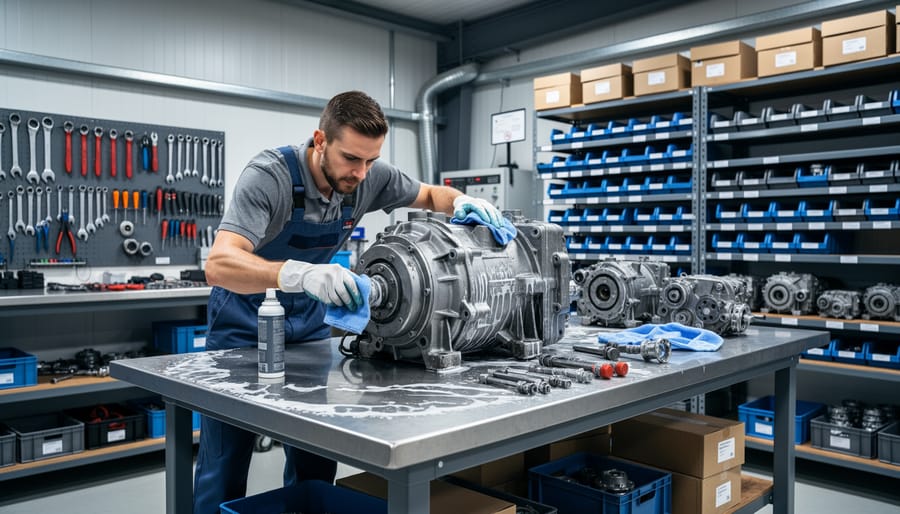
Start with camera bodies by removing batteries, which can leak corrosive chemicals during storage. Use a soft microfiber cloth to wipe down the exterior, paying special attention to grip areas where oils and dirt accumulate. For the sensor, use a blower to remove loose particles, but save deep sensor cleaning for a professional unless you’re experienced with this delicate task.
Lenses require careful attention. Remove any protective filters and clean both ends using a lens cleaning solution and microfiber cloth, working in circular motions from center to edge. Check for dust inside the barrel by holding the lens up to light—if you spot any, gently tap it out rather than blowing air inside, which can spread particles.
Memory cards should be formatted and stored in protective cases, not left inside cameras where they can corrode contacts. Clean battery terminals with a dry cloth to remove any residue.
For camera bags and straps, empty all pockets completely and wipe down interior surfaces with a slightly damp cloth. Allow everything to air dry thoroughly in a well-ventilated area for at least 24 hours before storage. This simple investment of time prevents mold, corrosion, and costly repairs, ultimately reducing waste and keeping your equipment performing optimally for years.
The Monthly Check-In System
Establishing a monthly check-in routine doesn’t need to consume your entire weekend. Set aside just 15-20 minutes to run through this simple inspection process that can save you from costly surprises down the road.
Start with a quick visual sweep of your storage area. Look for any signs of moisture, unusual odors, or temperature fluctuations that might indicate environmental changes. Next, open your camera bags and cases to allow air circulation and prevent musty smells from developing.
For your camera bodies, check the battery compartments for corrosion, even if batteries are removed. Run your finger along rubber seals and grips to catch early signs of degradation. With lenses, inspect both ends for dust accumulation and verify that lens caps remain securely in place.
Power up your cameras and test basic functions like the shutter, autofocus, and display screens. This simple step ensures batteries maintain their charge and catches electronic issues before important shoots. For example, one wedding photographer I know discovered a failing shutter mechanism during a routine check, avoiding potential disaster on a client’s big day.
Document any concerns in a simple spreadsheet or note app on your phone. This creates a maintenance history that helps you spot patterns and plan for future equipment needs while maximizing the usable life of your current gear.
When to Retire vs. Repair: The Sustainability Decision
Your camera bag holds more than just equipment—it contains resources, energy, and materials that took considerable effort to produce. When gear shows signs of wear or damage, the sustainability decision comes down to a simple question: repair, repurpose, or retire?
Start by honestly assessing the damage. A lens with a stuck focusing ring might need only a professional cleaning and lubrication, costing a fraction of replacement. Similarly, a camera body with sensor dust spots is an easy fix rather than a reason to upgrade. However, a camera with significant water damage or a lens with internal fungus growth might be too costly to restore to reliable working condition.
Consider the repair-to-value ratio. If repairs cost more than 60-70% of the equipment’s current used value, replacement might make more sense. But don’t forget to factor in the environmental cost. A well-maintained older camera body might serve you perfectly for years, even if it lacks the latest features. This aligns with broader sustainable photography principles that prioritize longevity over constant upgrades.
For equipment beyond practical repair, explore repurposing options. That old DSLR could become a dedicated infrared camera with sensor modification. Vintage lenses often work beautifully on mirrorless bodies with adapters, giving them new life in your kit.
When retirement is unavoidable, dispose responsibly. Many camera stores and manufacturers offer trade-in programs that refurbish usable equipment. Electronics recycling programs ensure materials are recovered rather than ending up in landfills. Local photography schools or community centers might welcome donations of older gear for teaching purposes.
Remember, proper storage practices prevent many common issues that lead to premature retirement, making this decision far less frequent in a well-maintained collection.
Proper storage isn’t just about keeping your gear organized—it’s an active commitment to sustainability that pays dividends for years to come. Every time you prevent a lens from developing fungus or protect a camera body from corrosion, you’re making a choice that reduces electronic waste and conserves the resources required to manufacture replacement equipment. Think of it this way: a $50 investment in quality storage solutions today could save you thousands in premature equipment replacement while keeping perfectly functional gear out of landfills.
The beauty of these storage practices is that they’re immediately actionable, regardless of your budget or experience level. You don’t need to overhaul your entire system overnight. Start with one simple step: assess your current storage situation this week. Check for moisture issues, evaluate your cases for adequate protection, and identify any gear that’s been neglected. Then commit to implementing just one improvement—whether that’s adding silica gel packets, reorganizing your camera bag, or creating a proper cleaning routine.
Your equipment is a significant investment, both financially and environmentally. By treating storage as an ongoing practice rather than an afterthought, you’re not just preserving your tools—you’re participating in a more sustainable approach to photography that respects both your craft and our planet.


 By
By