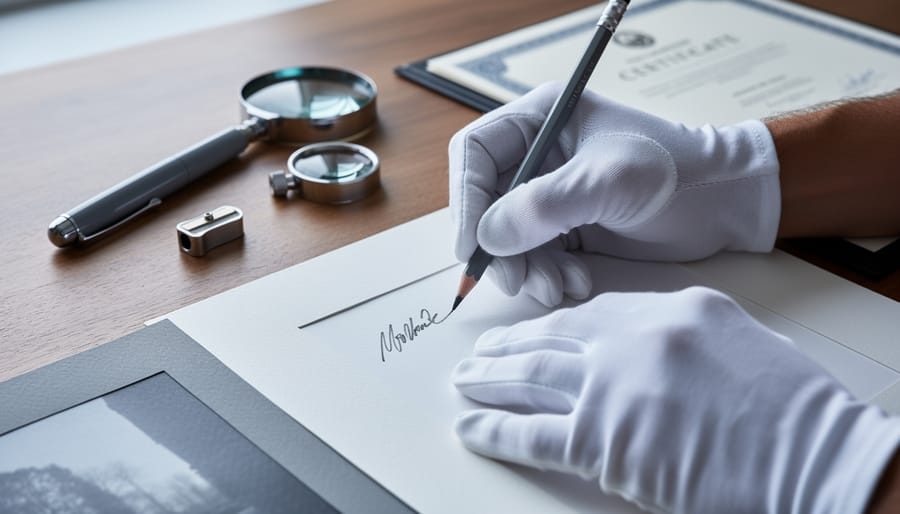
Sign your prints in soft graphite pencil (2B or 4B) on the white border below the image, placing your signature on the right side, the edition number on the left (formatted as “1/50” for example), and an optional title in the center. This traditional layout has remained standard across galleries and collectors for decades because it creates a clear, unobtrusive documentation system that doesn’t distract from the artwork itself.
Use archival-quality materials exclusively—acid-free pencils or archival ink pens—because regular ballpoint pens will fade and deteriorate over time, potentially damaging both your …
Your Cloud Photo Library Might Be an Open Book (Here’s How to Lock It)
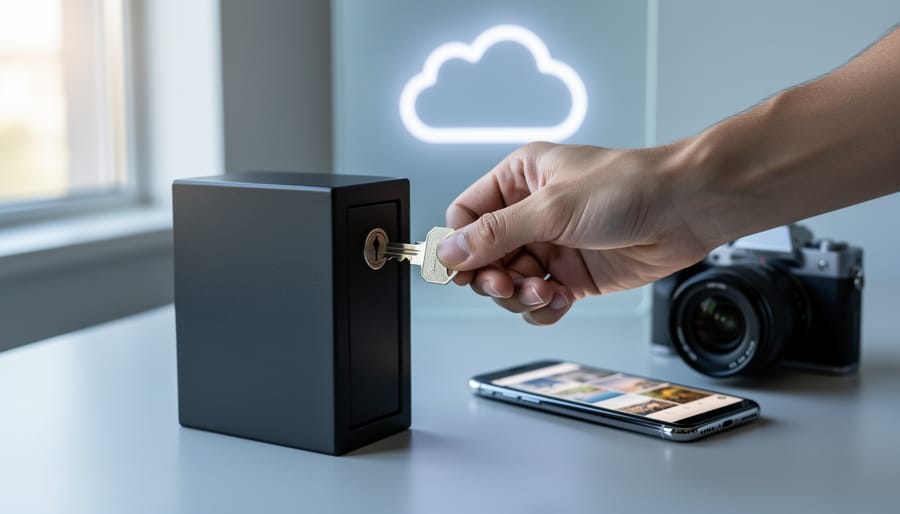
Your photo library contains more than just images—it holds memories, client work, location data, and potentially sensitive metadata that could expose where you live, work, or travel. Zero-access encryption ensures that even the company hosting your photos cannot view, scan, or decrypt your files. Unlike standard cloud storage where providers hold the keys to your data, zero-access encryption puts you in complete control: your photos are encrypted on your device before upload, and only you possess the decryption key.
This matters because data breaches at major tech companies have exposed millions of users’ private files, and …