 By
By 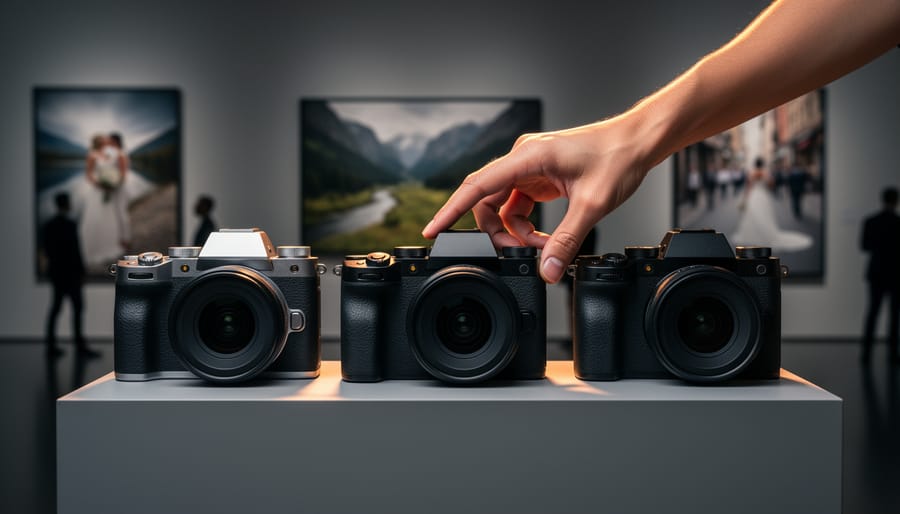
Every time you consider buying a new camera body, lens, or accessory, you’re experiencing imaging marketing in action—and it’s far more sophisticated than you might realize. Camera manufacturers don’t just sell products; they sell dreams of sharper images, creative freedom, and professional credibility. Understanding these tactics transforms you from a passive consumer into an informed decision-maker who recognizes when genuine innovation meets clever psychological manipulation.
Imaging marketing operates differently from other consumer electronics sectors. While smartphone companies race for megapixels and computational features, camera brands cultivate brand loyalty that borders on tribal allegiance. Canon shooters debate Nikon users with the passion of sports fans, while Sony positions itself as the innovative disruptor challenging traditional giants. These aren’t accidents—they’re carefully constructed narratives designed to create emotional connections that transcend specifications and price points.
The industry leverages aspirational marketing particularly effectively. Professional photographers become brand ambassadors, their stunning work implicitly promising that the right gear unlocks similar results. Limited edition releases create artificial scarcity, while incremental upgrades maintain perpetual upgrade cycles. Understanding these patterns doesn’t diminish the joy of photography or the value of quality equipment. Instead, it empowers you to distinguish between marketing hype and meaningful technological advancement, ensuring your purchasing decisions align with your actual creative needs rather than manufactured desire. The following exploration reveals exactly how imaging companies capture attention, build loyalty, and influence purchasing behavior across the photography industry.
What Makes Imaging Marketing Different From Selling Phones or Laptops

The Emotional Investment Factor
Camera companies understand something fundamental: photographers don’t just buy equipment, they buy into dreams. This is why imaging marketing focuses heavily on the emotional and creative aspects of photography rather than merely listing specifications.
Think about the advertising you’ve seen. It rarely shows someone reading a camera manual or adjusting ISO settings in a studio. Instead, you’ll see a photographer perched on a mountain peak capturing golden hour, or documenting intimate family moments, or freezing a decisive street photography scene. The message is clear: this camera doesn’t just take pictures, it helps you realize your artistic vision.
This approach works because photographers genuinely view their cameras as creative partners. A new lens isn’t just glass and metal—it represents new photographic possibilities, whether that’s creamy bokeh for portraits or ultra-wide perspectives for landscapes. Camera companies tap into this by showcasing real-world results and the stories behind them, making potential buyers envision themselves creating similar work.
The effectiveness of this emotional marketing explains why photographers often develop fierce brand loyalty and why gear discussions can become surprisingly passionate. We’re not just talking about tools; we’re discussing instruments of creative expression that photographers have used to capture irreplaceable moments and build their artistic identities.
Why Sample Images Matter More Than Spec Sheets
Here’s the thing: when you’re looking at camera advertisements, those stunning landscape photos and crisp portraits aren’t just showing off pretty pictures—they’re doing the heavy lifting in convincing you to buy. Camera manufacturers have learned that while photographers care about megapixels and dynamic range, what really seals the deal is showing what’s possible with their gear.
Think about it. When Canon or Sony launches a new camera, they don’t lead with a spreadsheet of sensor specs. Instead, they showcase breathtaking images captured by talented photographers using that body. These sample images tell a story that technical specifications simply can’t convey. They answer the question every photographer secretly asks: “Can I create something this amazing with this camera?”
This approach works because photography is ultimately about the final image, not the tool used to capture it. Sample galleries demonstrate real-world performance in ways that spec sheets never could—how the camera handles challenging lighting, renders skin tones, or captures fast action. While technical innovations matter, marketing teams know that inspiration sells cameras more effectively than numbers ever will.
Current Trends Reshaping How Camera Companies Reach Photographers
The Creator Economy Connection
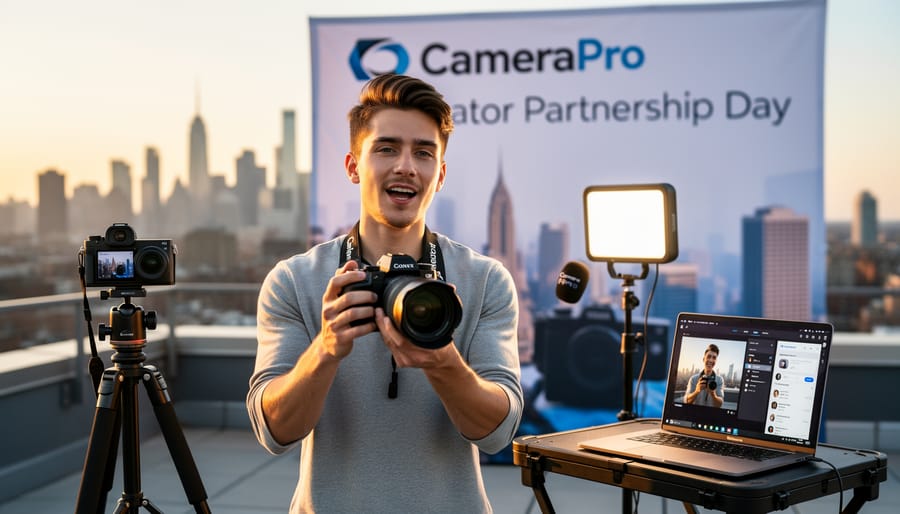
Camera manufacturers have discovered that real photographers using gear in authentic situations sell products far better than traditional advertisements ever could. Instead of relying solely on glossy studio shots, brands now partner with content creators who showcase cameras and lenses in action—whether that’s a travel vlogger hiking through Patagonia with a mirrorless body or a wedding photographer sharing behind-the-scenes Instagram stories.
This shift represents a fundamental change in digital marketing strategies within the imaging industry. YouTubers like Peter McKinnon or Manny Ortiz don’t just review cameras—they integrate them into narratives about creativity and workflow. When you watch someone capture stunning street photography in Tokyo or document a music festival, you’re seeing exactly how that gear performs under real conditions.
Brands provide early access to new products, sponsorships, and sometimes direct compensation to these creators. The benefit is mutual: creators get equipment and funding while manufacturers reach engaged audiences who trust these voices more than corporate messaging. Instagram photographers demonstrating a lens’s bokeh quality through their feed or TikTok creators showing quick editing workflows make technical specifications tangible.
For consumers, this means more genuine insight into how gear actually performs. However, it’s worth remembering that sponsored content, while authentic, still serves marketing purposes. The best approach is watching multiple creators with different shooting styles to get a balanced perspective before making purchasing decisions.
From Gear Reviews to Storytelling Campaigns
The imaging industry has undergone a remarkable transformation in how it communicates with consumers. Gone are the days when camera advertisements focused solely on megapixel counts, autofocus points, and ISO ranges. Today’s most effective campaigns tell stories about what photographers can achieve with their gear.
This shift became particularly evident when companies like Sony and Fujifilm began featuring actual photographers and their work in campaigns rather than just product specifications. Instead of listing technical features, brands now showcase travel photographers capturing remote landscapes, wedding photographers freezing emotional moments, or wildlife shooters documenting endangered species. The message has evolved from “this camera has 45 megapixels” to “this camera helped capture a once-in-a-lifetime moment.”
This narrative-driven approach resonates because it speaks to why we pick up cameras in the first place—to create, to document, to express ourselves. When Canon launched recent campaigns featuring behind-the-scenes footage of photographers at work, they weren’t selling sensors and processors; they were selling the experience of being a creator.
The most successful imaging marketing now answers a fundamental question: “What will I be able to create?” This transformation acknowledges that photographers aren’t just buying equipment—they’re investing in their creative vision and storytelling capabilities.
Hands-On Experience Marketing
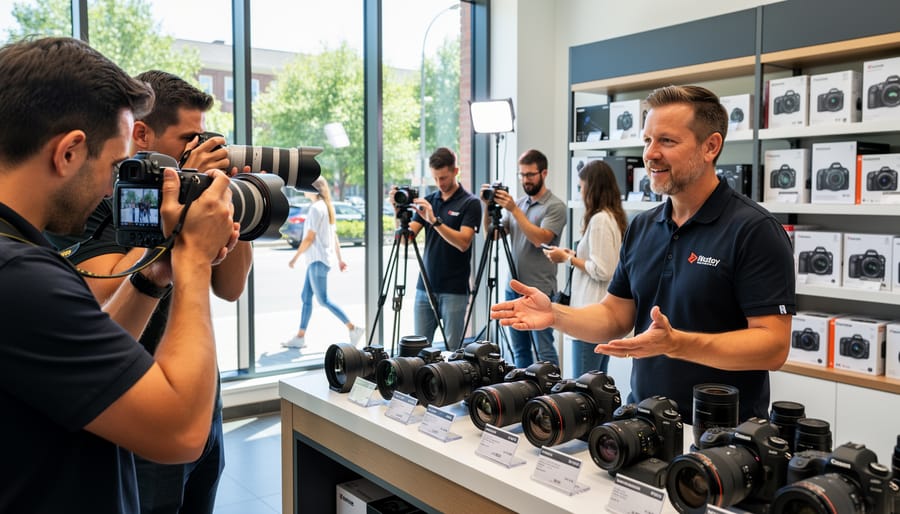
Camera companies have realized that letting photographers actually handle gear speaks louder than any ad campaign. The imaging industry has embraced hands-on marketing through several innovative programs that remove barriers between potential buyers and products.
Demo programs have become standard practice at major photography events. Companies like Canon and Sony now host “experience zones” where photographers can test the latest bodies and lenses in real shooting scenarios. These aren’t just quick handling sessions—some programs offer full-day equipment loans during conferences, allowing serious evaluation under actual working conditions.
Ambassador programs have expanded beyond elite professionals to include micro-influencers and enthusiastic hobbyists. Brands provide gear to these ambassadors who share authentic experiences with their communities. This approach creates relatable marketing that resonates more effectively than celebrity endorsements.
Lens rental partnerships represent another smart strategy. Companies collaborate with services like LensRentals and BorrowLenses, knowing that photographers who rent equipment often become buyers. The try-before-you-buy model reduces purchase anxiety, especially for expensive gear investments.
Some retailers now offer extended trial periods—Canon’s loyalty program lets existing users test new bodies for weeks before committing. This confidence-building approach acknowledges that specifications alone don’t tell the complete story. By experiencing how equipment performs in their own workflow, photographers make more informed decisions while companies build trust through transparency rather than pressure.
Sustainability and Ethics as Selling Points
Today’s photographers increasingly care about where their gear comes from and how it’s made, and imaging companies have taken notice. Sustainability has evolved from a corporate checkbox to a genuine selling point that resonates with conscious consumers.
Canon, for example, has made significant strides in promoting its eco-conscious manufacturing processes, highlighting recycled plastics in certain camera components and carbon-neutral production facilities. Nikon has followed suit, emphasizing responsible sourcing of materials and reducing packaging waste. These aren’t just behind-the-scenes initiatives anymore—they’re front and center in product launches and marketing campaigns.
Fujifilm deserves particular mention for transparently sharing its environmental targets and progress reports, building trust with consumers who want accountability. Meanwhile, smaller brands like Peak Design have built their entire identity around ethical manufacturing and sustainable practices, proving that eco-consciousness can be a competitive advantage.
This shift reflects a broader consumer trend. When photographers invest in expensive gear, many want to support companies whose values align with their own. Smart imaging marketers recognize this, weaving sustainability narratives into product stories without making it feel forced or superficial. The key is authenticity—photographers can quickly spot greenwashing, so companies that back up their claims with concrete actions and certifications tend to earn lasting customer loyalty.
The Psychology Behind Why We Choose One Camera Brand Over Another
The Power of the Ecosystem
Once you invest in a camera system, you’re not just buying a body—you’re entering an ecosystem designed to keep you there. Camera manufacturers understand this intimately, which is why they’ve built intricate networks of proprietary technology that make switching brands genuinely painful.
The lens mount is the most obvious example. Canon shooters accumulate EF and RF lenses over years, sometimes decades. Those lenses represent thousands of dollars and countless hours learning their characteristics. Sony’s E-mount users face the same reality. Sure, adapters exist, but they’re compromise solutions that don’t always deliver full functionality.
Beyond glass, brands lock you in through proprietary features that only work within their ecosystem. Think of Canon’s RF lens communication protocols or Nikon’s Z-mount innovations that enable features impossible on competitor systems. These aren’t just technical achievements—they’re strategic mooring points.
Modern firmware updates add another layer, continuously improving cameras you already own while simultaneously deepening your commitment to the brand. Companies also create integrated workflows: Canon’s DPP software works seamlessly with Canon cameras, Sony’s Imaging Edge connects perfectly with Sony bodies.
The result? Switching costs become psychological as much as financial, creating brand loyalty that marketing teams leverage brilliantly.
Heritage vs. Innovation Marketing
Camera manufacturers face a fascinating dilemma: should they emphasize decades of optical expertise and heritage, or position themselves as tomorrow’s technology today? This strategic choice defines how brands connect with different photographer segments.
Leica exemplifies heritage marketing, celebrating its century-old legacy of craftsmanship and optical excellence. Their campaigns evoke nostalgia and prestige, attracting photographers who value tradition and timeless design. Nikon similarly leans into its reputation for reliability and professional pedigree, reminding us they’ve captured history’s defining moments.
Conversely, Sony disrupted the industry by positioning itself as the innovation leader. Their messaging focuses on mirrorless technology breakthroughs, AI-powered autofocus, and pushing technical boundaries. This appeals to photographers excited by cutting-edge features and willing to abandon traditional DSLR systems.
The challenge? Distinguishing genuine innovation versus marketing spin. Some brands successfully straddle both worlds—Canon, for instance, honors its legacy while aggressively developing mirrorless systems and computational photography features.
Understanding these positioning strategies helps you recognize whether marketing appeals to your emotional connection with tradition or your desire for technological advancement. Neither approach is inherently better; they simply target different values. The key is recognizing which resonates with your photography style and whether the promised benefits genuinely enhance your creative work.
Community Building as a Marketing Strategy
Camera companies understand that photographers aren’t just buying equipment—they’re joining tribes. That’s why brands like Fujifilm, Sony, and Canon invest heavily in building dedicated communities where users can connect, share work, and learn together.
These communities take many forms. Canon’s Explorer of Light program brings together professional photographers for workshops and collaborative projects, creating a network of brand ambassadors who naturally advocate for the gear they use. Sony’s Alpha Universe serves as both a learning platform and social hub, featuring member galleries and behind-the-scenes stories that inspire loyalty beyond product specifications.
Online forums like Fred Miranda and DPReview’s brand-specific boards become gathering places where experienced users help newcomers troubleshoot issues and share shooting tips. This peer-to-peer support reduces the burden on customer service while reinforcing positive brand associations.
Social media groups amplify this effect. A photographer posting their latest portrait in a brand-dedicated Facebook group receives validation from fellow users, creating emotional connections that transcend the camera itself. When someone asks “Should I buy this lens?” in these spaces, they’re getting recommendations from trusted community members—perhaps the most powerful marketing of all.
This strategy works because it transforms customers into stakeholders who feel personally invested in their chosen brand’s success.

Real-World Marketing Campaigns That Actually Worked (And Why)
Sony’s Mirrorless Revolution Messaging
Sony’s mirrorless revolution succeeded because they positioned themselves as the bold alternative when Canon and Nikon seemed content with incremental DSLR improvements. Their messaging was clear: smaller, lighter, faster, and technologically superior. Rather than playing it safe, Sony embraced the disruptor role, creating cameras that professionals couldn’t ignore.
The breakthrough came with the A7 series in 2013. Sony marketed full-frame mirrorless as the future, not a compromise. They showcased real-world advantages like silent shooting for wedding photographers and eye-tracking autofocus that actually worked. Their campaigns featured established professionals making the switch, lending credibility to their claims.
What really sealed the deal was Sony’s commitment to listening. When pros complained about battery life or menu systems, Sony addressed these issues in subsequent models and made sure everyone knew about the improvements. They sponsored high-profile photographers and flooded social media with stunning results from their sensors.
By the time Canon and Nikon released competitive mirrorless systems, Sony had already captured significant market share. They proved that bold messaging backed by genuine innovation could challenge even the most established brands. Their success taught the industry that photographers value progress over tradition when the technology delivers tangible benefits.
Fujifilm’s Film Simulation Strategy
Fujifilm has masterfully tapped into something powerful: our collective longing for the tangible, imperfect beauty of film photography. Their Film Simulation modes—presets that mimic classic film stocks like Velvia, Provia, and Classic Chrome—aren’t just digital filters. They’re a bridge between eras, appealing to veteran photographers who remember shooting actual rolls of Velvia and Gen Z creators who’ve only seen film aesthetics on Instagram.
This strategy works because it offers instant gratification with a vintage soul. You get the convenience of digital shooting with colors and tonal curves that feel authentically analog. Fujifilm even names these simulations after their legendary film products, reinforcing their heritage as a company that literally invented some of photography’s most beloved color science.
The genius here is dual-appeal marketing: older photographers appreciate the authentic connection to films they once used, while younger shooters—drawn to the aesthetic without wanting film’s hassle—find a shortcut to that coveted analog look. It’s nostalgia marketing that doesn’t alienate newcomers, making film heritage accessible and relevant in the digital age.
GoPro’s User-Generated Content Empire
GoPro brilliantly transformed their customers into a worldwide marketing force by making content creation the very purpose of their product. Rather than spending millions on traditional advertising, they launched the GoPro Awards program, offering cash prizes and recognition for compelling user footage. This simple strategy encouraged millions of customers to share their adventure-filled videos, essentially creating an endless stream of authentic testimonials.
The company amplified this approach with photo and video challenges centered around specific themes like “best travel moment” or “most epic wildlife encounter.” Winners gained exposure across GoPro’s massive social media channels, creating aspirational motivation for participants. What makes this strategy particularly effective is its authenticity—these aren’t polished studio productions but real moments captured by everyday adventurers, making the content relatable and credible.
GoPro’s content sharing platform became a community where users could showcase their work while simultaneously demonstrating the camera’s capabilities in extreme conditions. This approach solved a fundamental marketing challenge: proving durability and versatility through genuine use cases rather than manufactured claims. By turning customers into brand ambassadors, GoPro built an empire on the simple premise that their best advertisement was their product in action.
What These Marketing Trends Mean for You as a Photographer
Seeing Through the Hype
Before you swipe that credit card for the latest camera body promising “revolutionary” improvements, take a step back. Not every marketing claim translates to meaningful real-world benefits for your photography.
Start by asking yourself: “Does this feature solve a problem I actually have?” A camera with 60 frames per second might sound impressive, but if you shoot landscapes, it won’t enhance your work. Similarly, that extra megapixel bump from 24 to 26MP is barely noticeable in practice, despite how manufacturers tout it.
Look beyond the press release language. When companies use vague terms like “enhanced processing” or “improved clarity,” dig deeper. Seek out independent reviews, test footage, and sample images from real users rather than promotional materials. Check if claimed improvements show up in standardized tests or just in controlled marketing scenarios.
Consider the timing too. New releases often coincide with competitive pressures rather than genuine breakthroughs. Factor in how availability and pricing affect the actual value proposition.
Finally, remember that meaningful innovation typically addresses fundamental challenges in image quality, usability, or workflow. Incremental spec bumps, on the other hand, are often just marketing ammunition designed to trigger upgrade cycles. Your current gear is probably more capable than you think.
Using Marketing Content to Your Advantage
Camera manufacturers invest heavily in educational content, and savvy photographers can mine these resources for genuine learning opportunities—just with a critical eye. Company-produced tutorials often feature top-tier instructors demonstrating advanced techniques, providing free education that would otherwise cost hundreds of dollars. The key is separating the valuable instruction from the product placement.
Sample galleries showcase what’s possible with specific gear, offering inspiration for your own creative work. Study the lighting, composition, and post-processing rather than fixating on whether you need that exact camera body. Brand ambassador content works similarly—professionals like Joe McNally or Annie Leibovitz create compelling work that transcends the marketing message. Focus on their methodology and creative decisions rather than their equipment lists.
Consider these resources as a starting point for your own experiments. Take the techniques you learn, apply them with whatever gear you currently own, and evaluate whether upgrading would genuinely enhance your results. Marketing content can absolutely inspire and educate, but let your creative goals—not the marketing department’s agenda—drive your decisions about which techniques and tools deserve your investment.
Understanding imaging marketing isn’t about becoming cynical toward the industry we love—it’s about becoming smarter, more intentional consumers and creators. When you can recognize the psychological triggers behind a product launch campaign or understand why certain features get amplified while others stay quiet, you’re equipped to make gear decisions based on your actual needs rather than manufactured desire.
This awareness doesn’t diminish the genuine excitement of new technology. There’s nothing wrong with wanting that latest camera body or innovative lens—these products represent real engineering achievements and creative possibilities. The difference is knowing whether you’re responding to how a product genuinely fits your photography or to how effectively it’s been marketed to you.
The most successful photographers often share a common trait: they squeeze extraordinary results from equipment others might consider outdated or insufficient. They’ve learned to separate marketing narratives from practical value, investing in gear that serves their vision rather than chasing every release cycle.
As you encounter imaging marketing in the wild—whether scrolling through social media, watching YouTube reviews, or browsing manufacturer websites—approach it with both enthusiasm and critical thinking. Appreciate the creativity and strategy behind compelling campaigns, but always ask yourself: What problem does this solve for my photography? Am I being shown genuine innovation or clever positioning?
The imaging industry thrives when photographers thrive. By becoming more informed consumers who demand substance alongside style, we collectively push manufacturers toward meaningful innovation rather than superficial differentiation.




 By
By