 By
By 
Human life unfolds through universal transitions that transcend culture, geography, and time—moments when we shed one identity and embrace another. Birth welcomes new souls into our world. Marriage unites two lives into shared purpose. Death marks our final passage, completing the circle. These three rites of passage represent photography’s most profound documentary opportunities, yet they demand far more than technical proficiency with your camera.
Photographing these sacred transitions requires you to balance artistic vision with deep cultural sensitivity. A birth photographer must anticipate fleeting expressions of wonder and exhaustion in unpredictable lighting conditions, often working in cramped hospital rooms or intimate home settings. Wedding photographers navigate complex family dynamics while capturing genuine emotion amid choreographed traditions that vary wildly across cultures—from Indian mehendi ceremonies to Japanese Shinto rituals. Death and memorial photography, perhaps the most delicate of all, asks you to document grief with compassion, preserving memories for families during their most vulnerable moments.
Each passage presents distinct technical challenges. You’ll work in low light without flash during a vigil, manage harsh midday sun at an outdoor ceremony, or capture the soft, golden hour glow of a newborn’s first portrait. Beyond aperture settings and shutter speeds, success depends on understanding the ethical weight these images carry. You’re not simply taking photographs—you’re preserving family legacies, honoring cultural traditions, and documenting the very moments that define what it means to be human.
What Makes Rites of Passage So Compelling to Photograph
There’s something profoundly magnetic about photographing rites of passage that goes beyond simply capturing beautiful images. These ceremonies represent the moments when life pivots, when individuals cross invisible thresholds from one identity to another. As photographers, we’re drawn to these transitions because they compress years of meaning into single, crystallized moments—and that’s where the visual magic happens.
The convergence of raw emotion, time-honored tradition, and symbolic gesture creates photography goldmines. Think about the trembling hands of a bride as her mother fastens her veil, or the solemn concentration on a young person’s face during their first religious ceremony. These aren’t posed or manufactured moments. They’re genuine human experiences, and our cameras become time machines that preserve them for future generations.
What makes these ceremonies particularly compelling is their universality wrapped in cultural specificity. While every culture celebrates life transitions differently, the underlying emotions—joy, nervousness, pride, grief—translate across all boundaries. This gives photographers the unique opportunity to tell both individual and collective human stories through a single frame.
However, this privilege comes with significant responsibility. When you’re documenting cultural ceremonies, you’re not just creating art—you’re preserving cultural heritage and family history. Your images may become the only visual record of traditions passed down through generations, or the treasured documentation of someone’s most important day.
This responsibility means approaching these moments with respect, cultural sensitivity, and technical preparedness. It means understanding that sometimes the most powerful image is the one you didn’t take because it would have disrupted a sacred moment. It requires balancing your artistic vision with the needs and values of the communities you’re documenting.
The transformation inherent in rites of passage—whether someone becoming a parent, spouse, or mourner—offers photographers rare access to humanity at its most vulnerable and authentic. That’s both the opportunity and the obligation we carry every time we raise our cameras to these moments.
Birth and Coming-of-Age Ceremonies: Capturing the Beginning
Cultural Examples and Their Visual Elements
Each rite of passage carries distinct visual signatures that help photographers anticipate and capture meaningful moments. Understanding these elements beforehand allows you to position yourself strategically and choose appropriate gear.
Baptisms and christenings typically feature white garments, water, and soft church lighting. The key visual moment occurs when water touches the child’s forehead, creating opportunities for close-up shots that capture both the ritual action and family reactions. The combination of dim sanctuary lighting and white clothing presents exposure challenges, so consider arriving early to test your settings and identify the best vantage points that won’t disrupt the ceremony.
Bar and bat mitzvahs center around the Torah reading, where the young person stands at the bimah surrounded by ornate textiles and scrolls. The visual narrative extends beyond the synagogue to elaborate receptions featuring symbolic elements like candle-lighting ceremonies with thirteen candles representing years of life. These celebrations offer rich opportunities for both documentary and portrait work, with colorful decor and emotional family moments throughout.
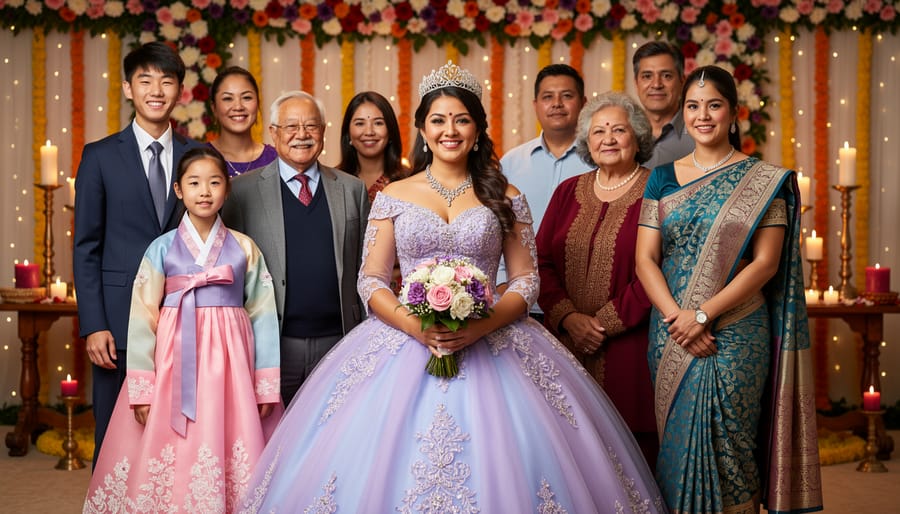
Quinceañeras present photographers with stunning visual variety. The celebration begins with a church ceremony where the quinceañera wears an elaborate ball gown, often in pink or pastels, and receives symbolic gifts like a tiara, bible, and her last doll. The reception includes choreographed dances, particularly the father-daughter waltz and the surprise dance, which provide dynamic action shots. The color palette, formal portraits, and multi-generational gathering create a visually rich environment.
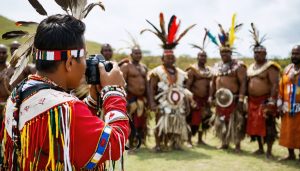
Indigenous coming-of-age ceremonies vary dramatically but often incorporate body paint, traditional dress, fire, and natural settings. Australian Aboriginal walkabouts, Apache Sunrise ceremonies, and Maasai warrior initiations each feature distinctive visual elements tied to their landscapes and traditions. When photographing these ceremonies, obtaining proper permission and understanding cultural protocols becomes paramount, as many elements may be considered sacred and off-limits to cameras.
Technical Approach and Gear Recommendations
Photographing rites of passage requires adapting to spaces you often can’t control. The best approach starts with understanding your limitations before you arrive.
For lens selection, a fast 35mm f/1.4 or 50mm f/1.8 works beautifully in intimate venues like small chapels or family homes. These focal lengths let you capture environmental context without backing into walls, which happens more than you’d think during a crowded naming ceremony or funeral gathering. A 24-70mm f/2.8 zoom offers versatility when you need to shift between wider group shots and tighter candid moments without changing lenses during emotional peaks.
Religious venues present unique lighting challenges. Many have beautiful stained glass windows that create color casts, while dim interiors demand high ISO performance. Modern cameras handle ISO 3200 remarkably well, but test your specific body beforehand. Avoid flash during ceremonies unless explicitly permitted, as the disruption can be deeply disrespectful. Instead, embrace available light and shoot wide open when necessary.
The eternal question becomes candid emotion versus formal portraits. The answer is both, but weighted toward candids. Formal portraits serve as anchors, documenting who attended, but the unguarded tears during vows or the grandmother’s smile watching a baby’s first religious ceremony tell the real story. Position yourself where natural interactions happen, like doorways or receiving lines, rather than staging moments.
For mixed lighting scenarios common at receptions or wakes, set your white balance to Auto and shoot RAW files. This combination gives you flexibility in post-processing when tungsten chandeliers meet daylight streaming through windows, letting you correct color temperatures without destroying image quality.
Navigating Respect and Access
Photographing life’s sacred transitions requires more than technical skill—it demands cultural awareness and genuine respect. Before raising your camera at any ceremony, always seek explicit permission from family members, religious leaders, or community elders. A simple conversation beforehand can clarify boundaries, restricted moments, and appropriate positioning.
When documenting cultural heritage events, research specific customs ahead of time. Some traditions prohibit photography during certain rituals, while others welcome it with guidelines. For example, many Jewish weddings encourage photography but restrict flash during the ceremony itself, while some Indigenous ceremonies may be entirely off-limits to outside documentation.
Building trust starts with showing up early, introducing yourself respectfully, and explaining your intentions. Dress appropriately for the occasion and be prepared to put your camera down when requested. Position yourself where you won’t obstruct participants or guests—think like a guest first, photographer second.
Remember that families are inviting you into intimate moments. Silent shutter modes, longer lenses for distance when appropriate, and awareness of your physical presence all demonstrate professionalism. Your goal is capturing memories without becoming a distraction, honoring the significance these moments hold for those experiencing them.
Marriage and Union Rituals: The Sacred Bond
Beyond the Western White Wedding
Marriage ceremonies around the world offer photographers extraordinary opportunities to document traditions that reveal deep cultural meaning. Moving beyond the familiar Western white wedding opens up a universe of color, ritual, and visual drama that challenges us to approach our craft with both technical skill and cultural sensitivity.
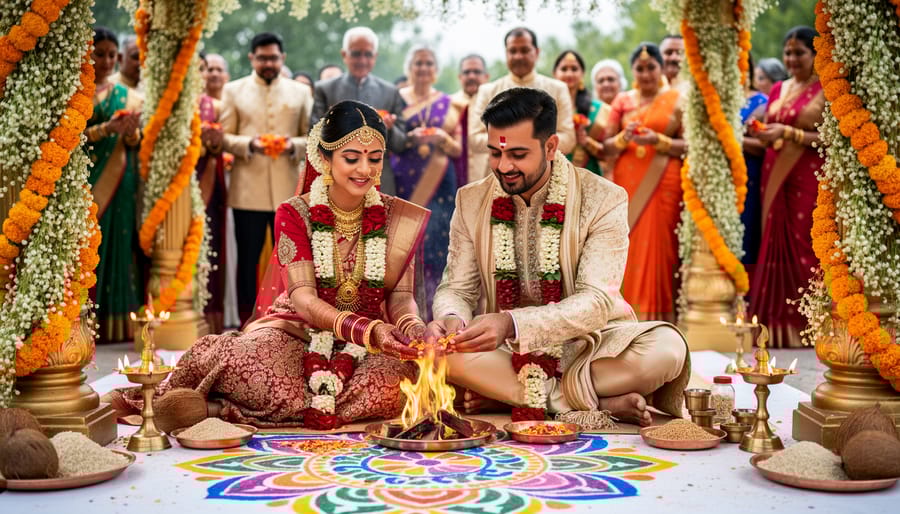
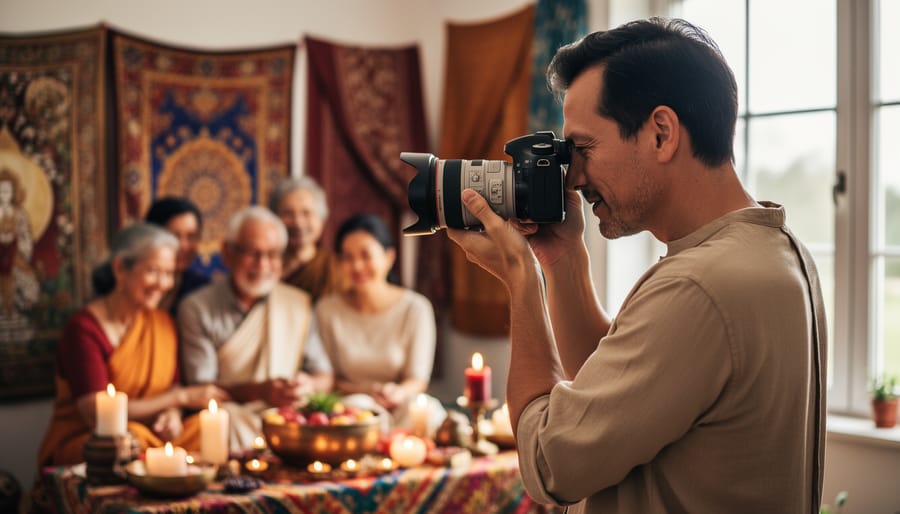
Hindu weddings present a photographer’s paradise of vivid colors and multi-day ceremonies. The Mehndi ceremony, where intricate henna designs adorn the bride’s hands and feet, offers incredible macro photography opportunities. During the main ceremony, the couple circles the sacred fire (Agni) seven times while taking their vows—a moment rich with movement and emotion. The lighting challenge here is significant: you’ll often work with mixed light sources from the ceremonial fire, indoor venue lighting, and possibly natural light. Setting your camera to shoot in RAW format gives you crucial flexibility when balancing these warm tones in post-processing.
Traditional Chinese tea ceremonies embody quiet intimacy and respect. The bride and groom serve tea to elders, receiving blessings and red envelopes in return. This ritual demands anticipation and positioning—the exchange happens quickly, and the emotions in those brief moments of eye contact between generations tell powerful stories. A 50mm or 85mm prime lens works beautifully here, allowing you to maintain respectful distance while capturing genuine connection.
The African-American tradition of jumping the broom, rooted in historical resilience, combines symbolic action with celebration. Position yourself to capture the moment the couple leaps together, their joined hands and joyful expressions frozen in time. A fast shutter speed (1/500 or higher) ensures sharpness during this dynamic movement.
Handfasting ceremonies, with ancient Celtic and Pagan origins, feature the literal binding of hands with cords or ribbons. The intertwined hands, often in colorful fabrics, create striking compositional opportunities. Focus on the details—the texture of the fabric, the couple’s clasped fingers—while also capturing wider shots showing family members weaving the cords around their hands.
These diverse traditions remind us that cultural photography bridges generations, preserving practices that carry centuries of meaning. Before photographing any cultural ceremony, research the specific customs and restrictions. Some traditions prohibit photography during sacred moments, while others welcome documentation but require specific positioning. Always communicate with the family beforehand, asking which moments are most important to capture and whether any restrictions apply.
Capturing Ceremonial Flow and Key Moments
Successfully photographing rites of passage requires you to think like both a director and a photojournalist. The key is anticipating critical moments before they unfold, positioning yourself strategically, and being ready to capture the emotional peaks that define these ceremonies.
Start by thinking in sequences rather than isolated shots. A single image of a bride walking down the aisle is lovely, but a sequence showing her father’s face, the groom’s reaction, and the guests turning to watch tells a complete story. When photographing baptisms, confirmations, or coming-of-age ceremonies, capture the approach, the pivotal moment, and the immediate aftermath. This sequence approach provides context and emotional depth that individual images cannot achieve alone.
Balance your coverage between traditional posed shots and candid documentary moments. While families expect formal group portraits, the unguarded glances between participants often become the most treasured images. At weddings, shoot the required family combinations, but keep one camera ready for spontaneous interactions during cocktail hour. During funerals or memorial services, documentary coverage becomes especially important since re-creating moments isn’t an option.
Managing multiple locations presents logistical challenges. Scout venues beforehand when possible, noting where natural light enters and identifying backup positions if your primary spot becomes blocked. Ceremonies rarely follow perfect timelines, so prepare for rapid transitions between indoor chapels, outdoor gardens, and dimly lit reception halls. Keep your camera settings flexible, use a higher ISO than you might prefer to maintain shutter speed, and trust your gear to handle varying conditions. The spontaneous moments between locations, like families gathering on church steps orprocessional walks, often yield compelling images that capture the ceremonial flow authentically.
Gear That Won’t Let You Down
When photographing life’s most significant transitions, equipment failure isn’t an option. That’s why dual camera bodies are non-negotiable for rite of passage work. If your primary camera fails during a baptism or wedding ceremony, there are no do-overs. Mount different focal lengths on each body so you can quickly switch perspectives without fumbling with lens changes during crucial moments.
Low-light performance matters immensely in these settings. Religious ceremonies often occur in dimly lit sanctuaries where flash photography is prohibited or inappropriate. Invest in fast glass, meaning lenses with apertures of f/2.8 or wider, which allow more light to reach your sensor while creating beautiful subject separation. A 24-70mm f/2.8 and 70-200mm f/2.8 combination covers most ceremonial scenarios effectively.
Silent shooting modes deserve special attention here. Modern mirrorless cameras offer electronic shutters that eliminate the mechanical clack that can disrupt solemn moments. This feature proves invaluable during quiet prayer, memorial services, or intimate family gatherings where every shutter click echoes through the room.
Your memory card strategy should prioritize redundancy over capacity. Use dual card slots to simultaneously write to two cards, creating instant backups. Bring multiple smaller cards rather than one large one, distributing risk across several storage devices. These moments happen once, and your reputation depends on delivering those images safely.
Death and Memorial Ceremonies: Honoring the Passage
Cultural Perspectives on Photographing Death
Death photography exists in a fascinating paradox across cultures. While some traditions actively invite documentation, others consider it deeply taboo. Understanding these cultural perspectives isn’t just about respect—it’s essential for any photographer working in documentary or cultural contexts.
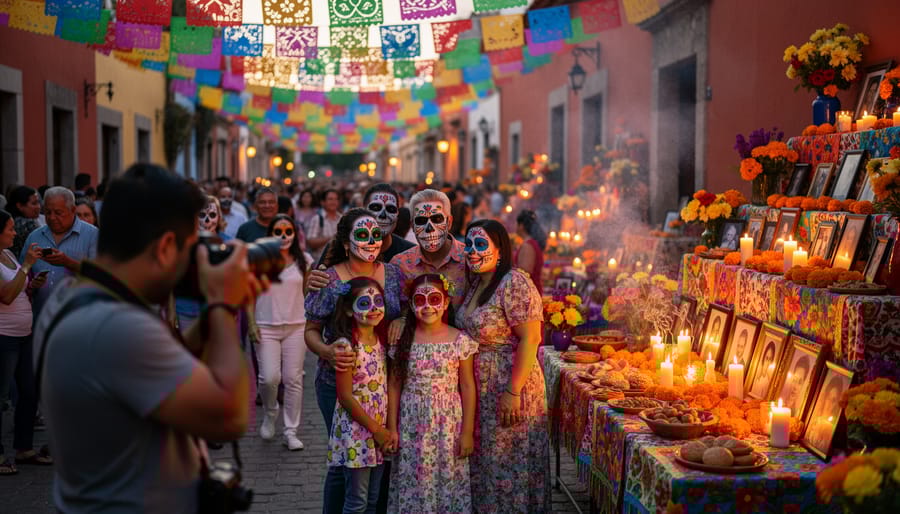
New Orleans jazz funerals exemplify celebration through documentation. These processions feature brass bands, dancing mourners, and a transformation from solemn dirges to upbeat celebration. Photography is not only welcomed but expected, as these public displays honor the deceased through joyful community participation. Similarly, Mexico’s Day of the Dead celebrations embrace visual storytelling. Families create elaborate altars, paint faces as calaveras, and gather in cemeteries with marigolds and candles—all photographable moments that honor rather than exploit.
In stark contrast, many Buddhist cremation ceremonies require discretion. While some communities permit photography during public portions, the actual cremation often remains private. Irish wakes traditionally occurred in homes where the deceased was displayed, with photography varying by family preference—some treasure these final portraits while others find them intrusive.
Viking funeral traditions, though largely historical, demonstrate how different societies approached death documentation. Modern recreations sometimes occur, but authentic Viking burials left no photographic record by necessity.
The key distinction often lies in whether death is viewed as private grief or communal transition. Cultures emphasizing collective celebration typically welcome cameras as witnesses, while those treating death as intimate family matters may restrict access. Before photographing any funeral or death ritual, research specific traditions, ask permission from family members or community leaders, and understand that consent can be withdrawn at any moment. Your role is documenting, not intruding.
The Ethics and Emotional Weight
Photographing life’s most profound moments requires more than technical skill—it demands emotional intelligence and ethical awareness. The most crucial decision you’ll make isn’t about which lens to use, but when to put the camera down entirely.
Learning to read the room is essential. At a birth, if the mother requests privacy during active labor, respect it immediately. During funerals, watch for family members who turn away or shield their faces—these are clear signals that your presence feels intrusive. Some moments are simply too raw for documentation, and recognizing this boundary distinguishes compassionate photographers from insensitive ones.
Consider how you’re offering your services. Memorial photography, when welcomed, can become a powerful healing tool. Parents who’ve experienced pregnancy loss often treasure the only photographs they’ll have of their child. Wedding photos become cherished heirlooms that help families remember departed loved ones. However, approaching grieving families unsolicited or posting sensitive images publicly without explicit permission crosses ethical lines.
Managing your own emotional response is equally important. Witnessing birth, celebrating unions, or documenting death will affect you. It’s perfectly normal to tear up during vows or feel shaken after photographing a memorial service. Take breaks when needed, seek support from fellow photographers who understand, and don’t hesitate to step back if you’re too emotionally overwhelmed to work professionally.
Remember that you’re documenting human vulnerability at its peak. Your role is to serve the subjects’ needs, not your portfolio’s growth. When approached with genuine respect and sensitivity, rites of passage photography becomes a privilege that honors life’s most meaningful transitions.
Technical Considerations in Somber Settings
Funerals and memorial services present unique technical challenges that require both sensitivity and preparation. Start by silencing your camera completely—disable all beep sounds and switch to electronic shutter mode if your camera offers it. Many mirrorless cameras provide completely silent shooting, which is invaluable during quiet moments of reflection or prayer.
Lighting in funeral venues is notoriously difficult, often dim and unevenly distributed. Boost your ISO without hesitation—modern cameras handle ISO 3200 or even 6400 remarkably well. Use fast lenses (f/1.8 or f/2.8) to gather maximum light, and avoid flash entirely unless specifically requested by the family. If you must use flash, bounce it off ceilings or walls to create softer, less intrusive illumination.
The black and white versus color decision carries significant weight here. Black and white often feels more timeless and removes distracting color casts from mixed lighting, while emphasizing emotion and composition. However, color can capture meaningful details like flowers, religious symbols, or cultural dress that contribute to the story.
Compose respectfully by focusing on details rather than faces in grief—hands holding, meaningful objects, architectural elements of the venue. Position yourself discreetly along walls or in back corners. Sometimes the most powerful images come from stepping back and capturing the overall atmosphere rather than close-up emotional moments, allowing mourners their privacy while still documenting the significance of the gathering.
Building Your Skills as a Ritual Photographer
Developing expertise in ritual photography requires patience, cultural sensitivity, and consistent practice. Unlike other photographic specialties where you can freely experiment, ceremonial work demands respect and preparation before you ever lift your camera at an actual event.
Start by studying the work of established documentary photographers who specialize in cultural events. Analyze their compositional choices, how they capture emotion without intrusion, and their positioning during key moments. Many museums and cultural institutions offer exhibitions featuring ceremonial photography from around the world, providing valuable learning opportunities without imposing on private events.
Before photographing any ceremony, invest time in research. Understanding the religious or cultural significance of each ritual element helps you anticipate meaningful moments and avoid offensive mistakes. For example, knowing that certain Hindu wedding rituals involve seven steps around a sacred fire allows you to position yourself appropriately without disrupting the ceremony’s flow.
Building relationships within communities is essential. Attend cultural events as an observer first, introducing yourself to organizers and explaining your interest respectfully. Many communities welcome photographers who demonstrate genuine appreciation rather than voyeuristic curiosity. Photography bridges artistic traditions, creating opportunities for meaningful cultural exchange when approached thoughtfully.
Practice discreet shooting techniques at public events or with willing friends and family. Master using natural light in dim environments, perfect your silent shutter technique, and learn to anticipate moments without chimping (constantly checking your LCD screen). Consider creating a practice portfolio by photographing graduation ceremonies, which offer similar lighting challenges and emotional moments without the same cultural sensitivities.
When approaching communities professionally, prepare a respectful portfolio presentation that demonstrates your understanding of ceremonial significance. Include testimonials from previous clients when possible, and always discuss boundaries, restrictions, and image usage rights upfront. Some communities may prohibit photography during sacred moments or restrict how images can be shared publicly.
Invest in equipment that supports unobtrusive shooting: cameras with excellent low-light performance, silent shutters, and fast lenses. However, remember that technical skill matters less than cultural competence and respect. The best ritual photographers understand they’re privileged guests documenting deeply personal moments, not entitled observers capturing content.
Photographing rites of passage sits at the intersection of technical mastery and profound human responsibility. These aren’t just assignments to check off your shot list—they’re irreplaceable moments that families will treasure for generations. When you raise your camera at a naming ceremony, a wedding, or a memorial service, you’re not simply capturing images; you’re creating visual heirlooms that will help people remember, grieve, celebrate, and connect with their heritage long after the moment has passed.
The challenge lies in balancing your role as both observer and participant. You need the technical skills to handle difficult lighting, moving subjects, and unpredictable environments, but you also need the emotional intelligence to read a room, anticipate meaningful moments, and know when to step back. This duality makes rites of passage photography uniquely demanding and uniquely rewarding.
Before you accept any assignment documenting life transitions, invest time in understanding the specific traditions you’ll be photographing. Have honest conversations with families about their expectations and boundaries. Prepare your equipment for the conditions you’ll face, but also prepare your heart for the emotional weight these moments carry.
Remember that the images you create serve purposes far beyond your portfolio. They become part of family narratives, teaching tools for younger generations, and sometimes the only tangible connection to loved ones and cultural practices. When approached with preparation, respect, and genuine care, your photographs don’t just document rites of passage—they become part of the passage itself, honoring what came before and preserving it for what comes next.
 By
By