 By
By 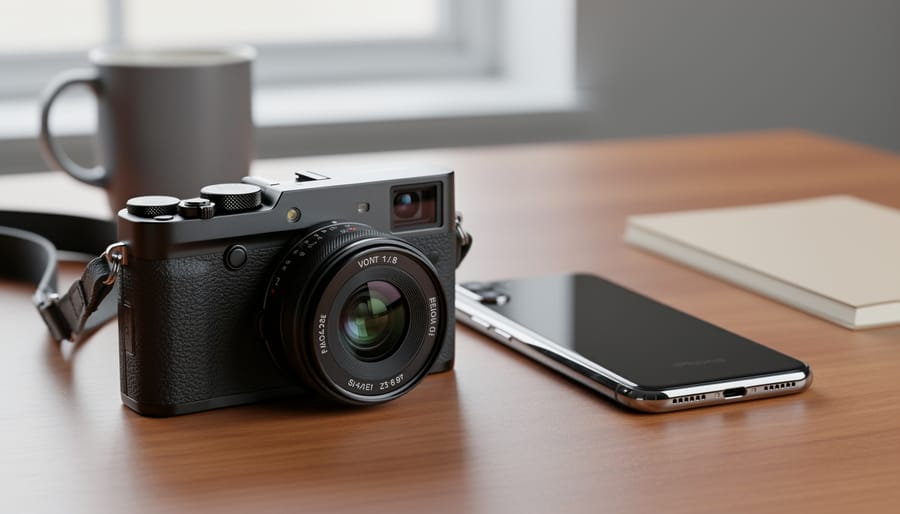
The smartphone in your pocket takes remarkably good photos, yet serious photographers continue investing $500 to $1,500 in premium point-and-shoot cameras. The reason? High-quality compacts deliver capabilities that phones simply can’t match: larger 1-inch sensors that capture substantially more light and detail, optical zoom lenses reaching 200mm or beyond without digital trickery, apertures as wide as f/1.8 for genuine background blur, and manual controls that give you creative authority over every exposure.
Understanding what separates a premium compact from a basic one requires looking beyond megapixel counts and zoom ranges. The defining characteristics include sensor size (1-inch or larger versus the tiny sensors in budget models), lens quality (sharp corner-to-corner with minimal distortion), responsive autofocus systems that actually track moving subjects, and thoughtful ergonomics with physical dials rather than buried menu options. These cameras aren’t trying to replace your smartphone for quick snapshots; they’re designed as lightweight alternatives to full camera systems when carrying multiple lenses isn’t practical.
The market offers distinct categories serving different purposes. Premium travel compacts prioritize portability with moderate zoom ranges, enthusiast models emphasize low-light performance and manual control, and superzoom variants sacrifice some image quality for extraordinary reach. Knowing which category aligns with your shooting style determines whether you’ll actually carry the camera or leave it home while your phone does all the work. Let’s examine what makes these cameras worth considering and how to identify which features matter for your photography.
What Makes a Point-and-Shoot Camera ‘High Quality’?
Sensor Size and Image Quality
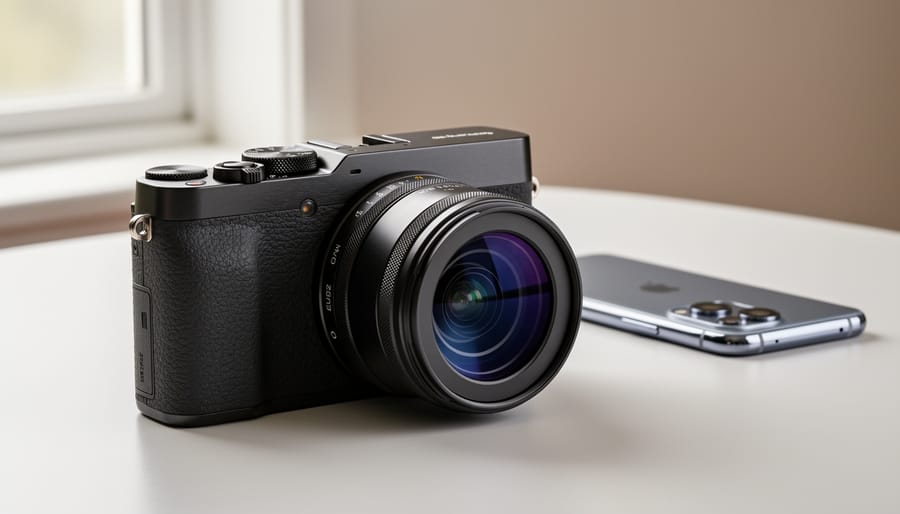
Sensor size is the single most important factor separating truly high-quality point-and-shoots from basic compacts. Think of the sensor as the digital equivalent of film—it’s where light becomes your photograph. Larger sensors capture more light and information, which translates to noticeably better image quality, especially when conditions aren’t perfect.
Entry-level compacts typically use tiny 1/2.3-inch sensors, but premium point-and-shoots step up to 1-inch sensors or larger. That 1-inch sensor might sound small, but it’s actually about four times the surface area of those compact sensors. The difference shows immediately in low-light situations—shooting indoors at a family gathering or capturing sunset scenes produces cleaner images with less digital noise and grain.
Move up to cameras with APS-C sensors (the same size found in many interchangeable lens cameras) or even full-frame sensors, and you’re getting exceptional dynamic range. This means you can recover detail from both bright skies and shadowy foregrounds in the same shot—something smaller sensors simply can’t match. You’ll also gain more control over depth of field, allowing you to create that attractive background blur that separates your subject from distracting backgrounds. For photographers who demand professional-level image quality without carrying multiple lenses, these larger-sensor compacts represent a genuine sweet spot.
Lens Quality and Optical Design
The optical heart of any premium compact camera matters far more than megapixel counts or processing power. Think of the lens as the eye of your camera—no amount of computational wizardry can compensate for subpar glass.
Fast apertures, typically ranging from f/1.8 to f/2.8, separate high-quality point-and-shoots from their budget cousins. These wider openings allow more light to reach the sensor, enabling better low-light performance and creating that beautiful background blur (bokeh) that adds a professional touch to your images. For example, Sony’s RX100 series features an f/1.8-2.8 aperture across its zoom range, letting you capture sharp handheld shots in dimly lit restaurants or museums without cranking up the ISO.
Optical zoom ranges present a balancing act. Premium compacts typically offer modest 3x to 4x zooms rather than the 20x+ ranges found on cheaper cameras. Why? Because maintaining optical quality throughout the zoom range requires precision engineering and specialized glass elements. Professional-grade lens coatings, aspherical elements, and ED (extra-low dispersion) glass minimize chromatic aberration and distortion—technical terms that simply mean your images stay sharp and color-accurate from corner to corner, whether shooting at wide angle or telephoto.
Manual Controls and Creative Freedom
One hallmark of high-quality point-and-shoot cameras is their commitment to giving you creative control without requiring an interchangeable lens system. Look for models with physical control dials—typically an exposure compensation dial and a dedicated control ring around the lens. These tactile elements let you adjust settings quickly without diving into menus, much like you would on a DSLR or mirrorless camera.
Customizable function buttons are equally valuable. Premium compacts often feature programmable buttons that you can assign to frequently used settings like ISO, white balance, or focus modes. This personalization means your camera adapts to your shooting style rather than forcing you to work around its limitations.
Advanced shooting modes distinguish these cameras from basic compacts. Aperture priority, shutter priority, and full manual modes give you the same creative latitude you’d expect from larger cameras. Many high-end models also include specialty modes like multiple exposure, interval shooting, and advanced panorama stitching. For instance, street photographers appreciate having quick access to zone focusing or manual focus peaking, while landscape shooters benefit from built-in ND filters controlled via dedicated switches. These features transform a pocketable camera into a genuine creative tool rather than just a smartphone alternative.
Types of High-Quality Point-and-Shoot Cameras
Fixed Lens Large-Sensor Compacts
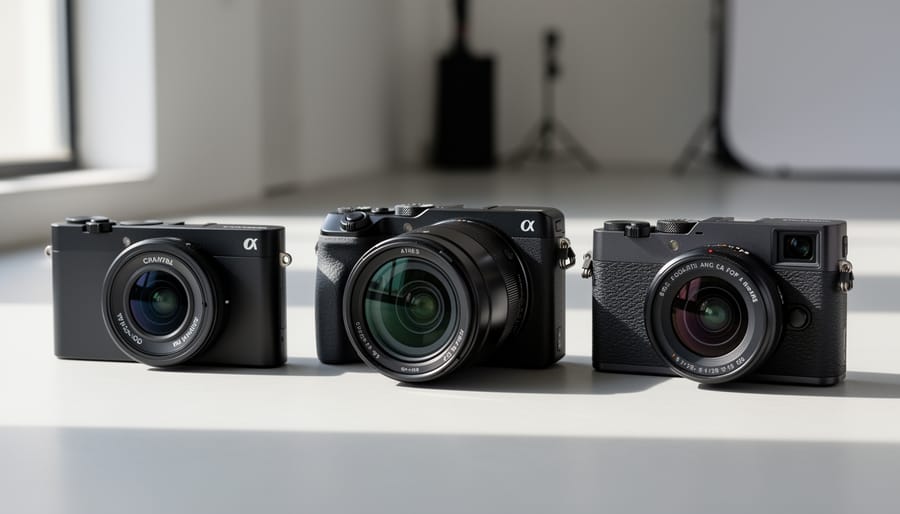
Fixed lens large-sensor compacts represent the pinnacle of image quality in the point-and-shoot world. These cameras pair APS-C or even full-frame sensors with high-quality prime lenses, delivering results that rival interchangeable lens systems while maintaining genuine pocketability.
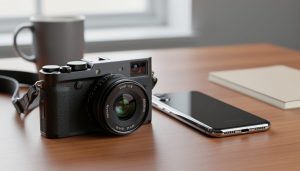
The Fujifilm X100 series has become legendary among street photographers and documentary shooters. With its 35mm equivalent f/2 lens and full-frame sensor in the X100VI, it captures stunning images with beautiful depth of field and excellent low-light performance. The hybrid viewfinder offers both optical and electronic options, giving you compositional flexibility that feels intuitive and fast.
The Ricoh GR III and GR IIIx take a different approach with an ultra-compact body housing an APS-C sensor and either a 28mm or 40mm equivalent lens. These cameras slip into a jacket pocket yet produce files comparable to much larger cameras. They’re particularly beloved by photographers who want to shoot inconspicuously in urban environments.
The trade-off with these cameras is obvious: you cannot change lenses. This limitation forces creative problem-solving and often leads to more intentional photography. If you know the focal length works for your style, these cameras offer uncompromising quality without the bulk of a camera bag full of gear.
High-Zoom Enthusiast Compacts
If you’re looking for cameras that bridge the gap between pocketability and optical reach, high-zoom enthusiast compacts deserve serious consideration. These cameras typically feature 1-inch sensors—significantly larger than smartphone sensors—paired with versatile zoom lenses that extend your creative possibilities without the bulk of interchangeable lens systems.
The Sony RX100 series has long dominated this category, with models like the RX100 VII offering a 24-200mm equivalent zoom range while maintaining excellent image quality. Canon’s G-series, particularly the G5 X Mark II and G7 X Mark III, deliver similar performance with slightly different feature sets. These cameras produce clean files at higher ISOs than their smaller-sensor cousins, making them reliable performers in challenging light.
What makes these cameras stand out among top point-and-shoot options is their balance of compromises. You’re trading extreme portability for genuine optical versatility and superior low-light performance. The 1-inch sensor provides shallow depth-of-field effects that smaller compacts simply cannot achieve, while the built-in zoom ranges cover everything from wide landscapes to distant subjects.
For photographers who want backup camera quality that genuinely complements their main kit, these best zoom compacts represent the sweet spot between capability and convenience.
Pro-Grade Fixed Lens Compacts
For professionals who need uncompromising image quality in a pocketable package, pro-grade fixed lens compacts represent the pinnacle of point-and-shoot design. These cameras feature large APS-C or full-frame sensors paired with exceptional fixed lenses—combinations that often rival interchangeable lens systems in optical performance.
The Fujifilm X100 series has become legendary among this category, offering a 26mm equivalent lens with an APS-C sensor and hybrid optical/electronic viewfinder that many photographers find indispensable. Sony’s RX1 series takes things further with a full-frame sensor and 35mm f/2 lens, delivering image quality that competes with professional DSLRs despite fitting in a jacket pocket.
These cameras typically cost between $1,400 and $3,000, which might seem steep until you consider what they replace. A professional traveling to a wedding venue might use an X100V for candid moments before the ceremony begins, while a photojournalist could rely on a Ricoh GR III for street documentation between assignments. The fixed focal length becomes an advantage here—you learn to see in that specific perspective, and the lens quality far exceeds what’s possible in zoom designs at similar prices.
The key advantage is having professional-grade files without carrying a camera bag, making these ideal backup bodies that won’t compromise your portfolio.
Key Features to Look For When Shopping
Sensor Performance and ISO Range
When evaluating sensor performance, the megapixel count tells only part of the story. A premium point-and-shoot with a 20-megapixel one-inch sensor typically outperforms a budget compact with 24 megapixels on a smaller sensor. The physical sensor size matters more for image quality than resolution numbers alone.
Pay close attention to native ISO ranges rather than expanded settings. A camera advertising ISO 25,600 might produce unusable images beyond ISO 3,200. Look for samples shot at ISO 1,600 and above to assess real-world low-light capabilities. Quality compacts like the Sony RX100 series maintain excellent detail and manageable noise through ISO 1,600, with acceptable results at ISO 3,200.
Consider how the camera handles noise reduction. Aggressive processing may smooth away fine detail along with noise, creating a watercolor effect. The best approach is reviewing actual image samples from trusted sources rather than relying on specification sheets, since manufacturers often cherry-pick ideal conditions for their marketing materials.
Autofocus Speed and Accuracy
Autofocus performance separates truly capable point-and-shoots from sluggish compacts. The best models employ hybrid autofocus systems that combine phase-detection and contrast-detection. Phase-detection sensors identify how far out of focus a subject is, allowing the camera to move the lens directly to the correct position—much faster than contrast-detection, which “hunts” back and forth to find peak sharpness. Think of it like throwing a dart directly at the bullseye versus slowly walking toward it.
For real-world shooting, continuous autofocus (AF-C) matters enormously. Premium compacts with robust AF-C tracking can follow moving subjects like your dog racing across a park or a child on a swing, keeping them sharp throughout the sequence. Look for cameras advertising subject tracking or eye-detection AF, which intelligently maintains focus on faces and eyes even as your subject moves. Many enthusiast photographers overlook AF speed when choosing compacts, assuming all modern cameras perform similarly—they don’t. A half-second delay between pressing the shutter and capturing the moment can mean missing the shot entirely.
Video Capabilities
Modern premium point-and-shoots have become surprisingly capable video tools, with most flagship models now offering 4K recording at 30fps and some pushing to 60fps or even 120fps for slow-motion work. When evaluating video capabilities, pay attention to the recording limits—some cameras impose time restrictions due to heat management, which can be problematic for longer shoots like interviews or events.
Image stabilization becomes even more critical for video than stills. Look for models with effective optical or hybrid stabilization systems that can handle handheld shooting without introducing the jittery footage that ruins otherwise great clips. The Sony RX100 VII, for example, combines sensor and optical stabilization for remarkably smooth results.
Audio quality often separates casual from serious video shooters. While most compacts include built-in microphones, the presence of an external microphone input gives you professional audio options. Unfortunately, this feature remains rare in the point-and-shoot category, so if audio matters for your work, verify this specification before purchasing.
Consider whether the camera offers manual exposure control during video recording and supports flat picture profiles for color grading flexibility in post-production.
Build Quality and Weather Sealing
Premium point-and-shoot cameras justify their higher price tags partly through superior construction. Metal bodies—typically magnesium alloy or aluminum—resist impacts and daily wear far better than plastic housings found on budget models. This matters when you’re shooting in crowded markets, hiking rugged trails, or simply tossing the camera in your bag alongside keys and other gear.
Weather sealing represents another crucial consideration for serious photographers. Gaskets around buttons, dials, and lens assemblies protect against moisture and dust infiltration. For example, cameras like the Ricoh GR III feature comprehensive sealing that lets you shoot confidently during light rain or in sandy beach environments without risking internal damage. While these cameras aren’t submersible, weather resistance extends their usability across challenging conditions where lesser models would fail.
Consider this practical scenario: a wedding photographer carrying a high-quality compact as a backup needs reliability. A weather-sealed metal body provides peace of mind that the camera will perform whether the ceremony moves outdoors unexpectedly or gets caught in unexpected weather. The initial investment pays dividends through years of dependable service rather than premature replacement.
When High-Quality Point-and-Shoots Make Sense
Street and Documentary Photography
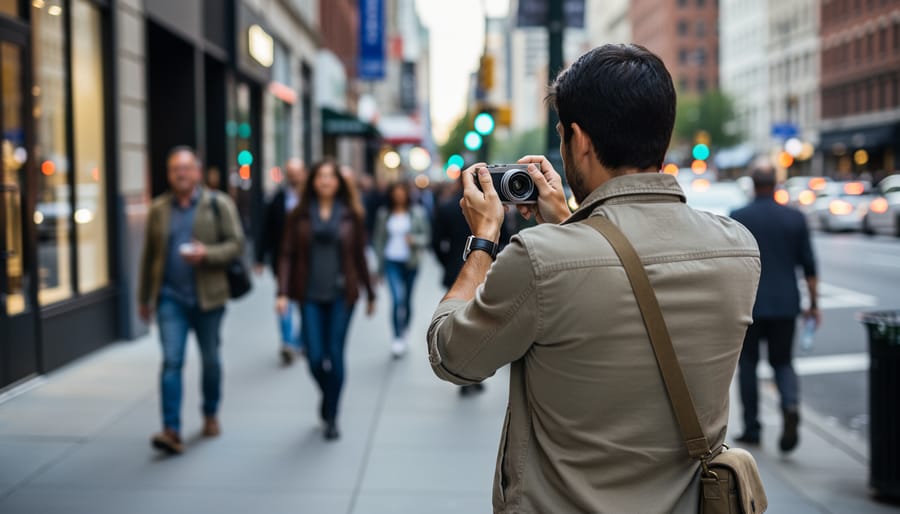
Street and documentary photographers have long appreciated what premium compacts bring to their craft: the ability to capture authentic moments without drawing attention. A high-end point-and-shoot like the Ricoh GR III or Fujifilm X100V fits in a jacket pocket yet delivers image quality rivaling much larger cameras. This combination proves invaluable when photographing people in their natural environment.
The discrete nature of these cameras changes how subjects respond to you. Walking through markets or urban environments with a compact camera at your side rather than a DSLR with a protruding lens simply feels less intrusive. People relax, continue their activities naturally, and often forget you’re even photographing. Documentary photographer David Alan Harvey has long advocated for smaller cameras precisely because they create this psychological advantage.
Fast operation matters equally in candid work. Premium compacts wake from sleep almost instantly, focus quickly in challenging light, and respond to your inputs without lag. When a fleeting expression or perfect compositional alignment appears, these cameras capture it before the moment dissolves. Models with zone focusing capabilities, like the Ricoh GR series, let you pre-set focus distances for true shoot-from-the-hip street photography where every fraction of a second counts.
Travel and Adventure
When you’re hiking through Patagonia or navigating crowded markets in Marrakech, every ounce in your backpack matters. This is where high-quality point-and-shoot cameras truly shine, delivering professional-grade image quality without the bulk of interchangeable lens systems. A premium compact weighing less than a pound can produce files that rival those from much larger setups, making them ideal travel companions for photographers who refuse to compromise on quality.
Consider the practical advantages: you’ll breeze through airport security, draw less attention while shooting street scenes, and still capture those golden-hour landscapes with excellent dynamic range and detail. Modern high-end compacts feature weather sealing for unexpected downpours, fast lenses for low-light markets and museums, and image stabilization that compensates for shooting from moving boats or vehicles. Many travel photographers keep one as their primary camera for documentary work, finding that the limitations actually encourage creative problem-solving rather than hindering it. The best part? You’ll actually want to carry it everywhere, which means you won’t miss those spontaneous moments that make travel photography memorable.
Professional Backup and Secondary Camera
Professional photographers have discovered something important: a high-quality point-and-shoot serves as more than just a backup. It’s an insurance policy and creative tool rolled into one.
When you’re shooting a wedding or commercial assignment, having a premium compact in your bag means you’re covered if your primary camera fails. The Ricoh GR III, for example, offers image quality comparable to many DSLRs, making it a credible backup that doesn’t compromise your deliverables.
Beyond reliability, these cameras offer alternative perspectives. Street photographers often carry a compact alongside their main system because its discrete size captures candid moments that larger cameras might miss. Documentary photographer James Nachtwey has been known to use compact cameras for exactly this reason.
The financial logic also makes sense. A $1,000 point-and-shoot costs less than missing a critical shot or losing a client’s trust. Plus, these cameras excel for personal work during downtime, keeping your creativity flowing without lugging heavy gear bags during travel.
Common Misconceptions About Premium Compacts
They’re Just Overpriced Tourist Cameras
Let’s address the elephant in the room: yes, premium point-and-shoot cameras carry prices that might make you wince. But dismissing them as overpriced tourist traps misses what’s actually under the hood.
Consider what goes into a camera like the Sony RX1R II. Engineers managed to fit a full-frame sensor—the same size found in professional DSLRs—into a body you can slip into a jacket pocket. That’s not simple cost-cutting reversed; it’s sophisticated miniaturization requiring custom components, precision manufacturing, and thermal management solutions that larger cameras never face.
The glass matters too. A Fujifilm X100V’s 23mm f/2 lens might seem modest on paper, but it’s optimized specifically for its sensor with minimal distortion and exceptional sharpness corner-to-corner. Compare that to interchangeable zoom lenses covering similar focal lengths, and you’ll often find the fixed lens delivers superior optical performance because it’s purpose-built rather than compromised for versatility.
Then there’s the integration. Premium compacts feature processors designed to maximize their specific sensor and lens combination, custom-tuned autofocus algorithms, and sophisticated image stabilization systems packed into impossibly tight spaces. This level of engineering integration simply costs more to develop and manufacture than assembling off-the-shelf components into a larger body.
Smartphones Have Made Them Obsolete
Let’s address the elephant in the room: yes, smartphone camera capabilities have become genuinely impressive. Modern phones produce stunning images in good lighting, and their computational photography can work miracles. But here’s what they can’t match: a high-quality point-and-shoot with a 1-inch sensor captures approximately four times more light than even flagship phone cameras. This translates to noticeably cleaner images in challenging conditions like dimly lit restaurants or evening cityscapes.
The optical zoom advantage is equally significant. While phones use digital cropping or multiple lenses with modest focal lengths, premium compacts offer true 3x to 5x optical zoom without quality loss. Try photographing wildlife or your child’s soccer game with a phone, then with a Sony RX100 VII, and the difference becomes undeniable. Add features like manual exposure control, RAW capture, and faster autofocus systems, and you’ll understand why serious photographers still invest in dedicated cameras despite carrying capable phones everywhere.
Making Your Purchase Decision
Budget Considerations and Value
High-quality point-and-shoot cameras typically fall into three price tiers. Entry-level premium models ($400-$700) offer excellent sensors and lenses that outperform smartphones significantly. Mid-range options ($700-$1,200) add faster lenses, advanced autofocus systems, and weather sealing. Flagship compacts ($1,200-$1,500+) deliver professional-grade image quality with larger 1-inch sensors and exceptional build quality.
The key question isn’t just about upfront cost, but how the camera fits your workflow. If you’re a working photographer who needs a reliable backup body or a discreet client-meeting camera, investing $1,000+ makes financial sense when it protects larger projects. For travel enthusiasts who want one versatile camera that eliminates lens-changing hassles, mid-tier options offer sweet-spot value.
Consider the longevity factor too. Premium compacts from reputable manufacturers typically receive firmware updates for years and maintain better resale value. A $1,200 camera that serves you reliably for five years costs just $240 annually, while a $400 model replaced every two years actually costs more over time. Calculate your cost-per-use based on how frequently you’ll reach for it instead of your main camera system.
Testing Before Buying
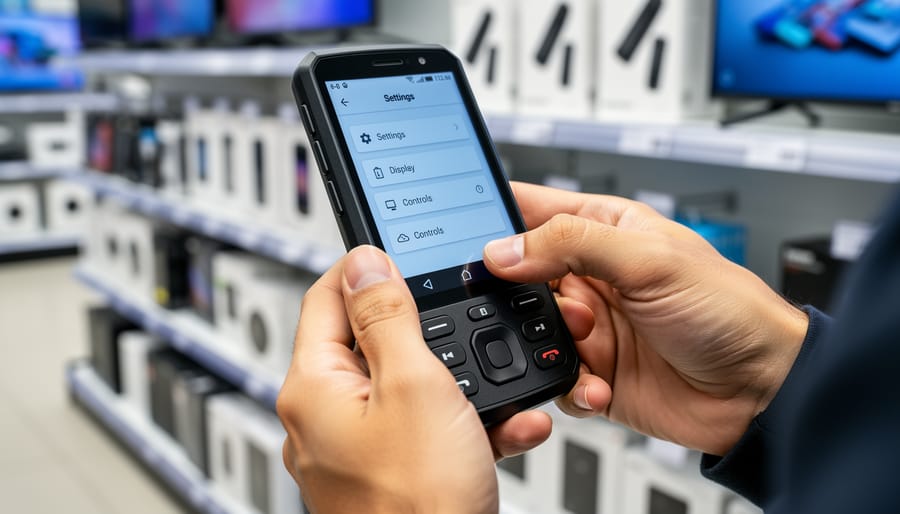
If possible, handle a camera before committing your budget. Visit a camera store and ask to try models on your shortlist. Start with ergonomics: does the camera feel balanced in your hand? Can you reach the shutter button, zoom control, and key settings without awkward finger gymnastics? Premium point-and-shoots vary dramatically in size and weight, so what works for someone else might not suit you.
Next, navigate the menu system. High-quality compacts pack professional features into compact bodies, but some manufacturers organize these controls more intuitively than others. Try accessing exposure compensation, ISO settings, and focus modes. If you find yourself hunting through three submenus for basic adjustments, that camera might frustrate you in the field.
Take actual test shots if the store permits. Photograph something with fine detail, then review the image at full magnification on the camera’s screen. Check autofocus speed by capturing a moving subject. Test the lens at both wide and telephoto ends. Even a quick five-minute shooting session reveals more than spec sheets ever could.
Don’t overlook the viewfinder experience on models that include one. Some electronic viewfinders display lag or graininess that becomes distracting during prolonged use. While beginner-friendly compact cameras prioritize simplicity, premium models should offer sophisticated control without unnecessary complexity.
High-quality point-and-shoot cameras deserve recognition as legitimate creative tools rather than consolation prizes for photographers unwilling to carry larger gear. If you’ve explored the options we’ve discussed, you’ve likely realized these cameras represent intentional design choices rather than compromises. They embody a philosophy that great photography depends more on seeing opportunities and capturing them than on sensor size or interchangeable lenses.
The photographer who slips a premium compact into their jacket pocket before a family gathering often returns with more compelling images than someone who left their full-frame system at home because it felt too cumbersome. That’s the real value proposition here. These cameras exist because being present with capable equipment beats having theoretically better gear sitting in your closet.
Finding the right model comes down to honest self-assessment. Consider where you actually photograph, not where you imagine photographing. If you’re constantly in low light, prioritize larger sensors and fast lenses. If you chase fleeting moments with your kids or while traveling, responsive autofocus and quick wake-from-sleep times matter more than ultimate image quality. Street photographers might value discreet designs, while landscape enthusiasts could prioritize dynamic range and built-in ND filters.
The beauty of today’s premium compact market is that nearly every photographic priority has a well-executed option. Your perfect point-and-shoot camera isn’t necessarily the most expensive or technically impressive model. It’s the one that disappears into your workflow while consistently delivering images you’re proud to share.


 By
By