Month: March 2026

Why Your GPU Sits Idle While Lightroom Crawls (And How to Fix It)

Allocate 80% of your system RAM to your photo editing software in the performance preferences—most applications default to conservative memory usage that leaves significant processing power untapped. Navigate to your editing program’s preferences menu, locate the memory allocation slider, and push it to the recommended maximum (typically 70-85% depending on your total RAM).
Enable GPU acceleration for all compatible processes in your software settings, ensuring your graphics card handles intensive tasks like rendering previews, applying effects, and generating thumbnails. Check that your editing application recognizes your …


Why Your Smartphone Has Three Cameras (And How to Actually Use Them)

Flip open your smartphone’s camera app and you’ll see options for 0.5x, 1x, 2x, maybe even 5x or 10x. Each number represents a different lens with its own unique perspective, but here’s what most people don’t realize: these aren’t just zoom settings—they’re distinct creative tools that fundamentally change how your photos look and feel. That ultra-wide 0.5x lens doesn’t simply show “more stuff” in the frame; it stretches perspective, making foregrounds dramatic and backgrounds seem miles away. Your main 1x camera captures scenes closest to how your eye sees them, while telephoto …

What Photographers Need to Know About Model Safety and Consent

Recognize that every person you photograph—whether a professional model, street subject, or wedding guest—deserves dignity, respect, and agency over how their image is captured and used. This fundamental truth sits at the heart of photography ethics, yet many photographers operate without clear guidelines for navigating the complex situations that arise behind the camera.
Establish boundaries before pressing the shutter. Your creative vision never supersedes a subject’s comfort, privacy, or consent. …

How One Archive Is Bringing Forgotten Black Photographs Back to Life

For decades, millions of photographs documenting Black joy, resilience, family traditions, and everyday moments have languished in shoeboxes, attics, and forgotten albums—fading relics of lives fully lived but inadequately preserved. The Black Archives project challenges this erasure by celebrating and restoring these visual testimonies, transforming damaged snapshots into vibrant historical records that reclaim narratives often missing from mainstream collections.
This photographic celebration represents more than nostalgia. It’s a technical and cultural movement merging archival science with digital restoration to salvage …

Your Camera Gear’s Hidden Environmental Cost (And What You Can Do About It)

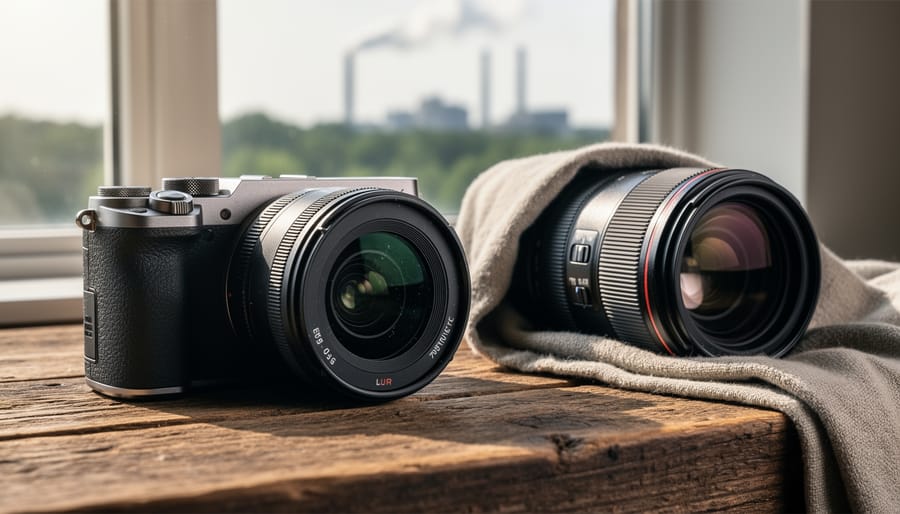
Every lens you purchase carries an environmental footprint—from the rare earth minerals mined for its glass elements to the energy consumed during manufacturing, and eventually, to the e-waste it becomes. The photography industry produces approximately 50 million metric tons of electronic waste annually, and camera gear plays a significant role in that staggering figure. Yet most photographers remain unaware that their equipment choices directly impact everything from mining practices in developing nations to greenhouse gas emissions during production.
Making …

Why Large Format Film Cameras Still Matter (And How to Master Them)

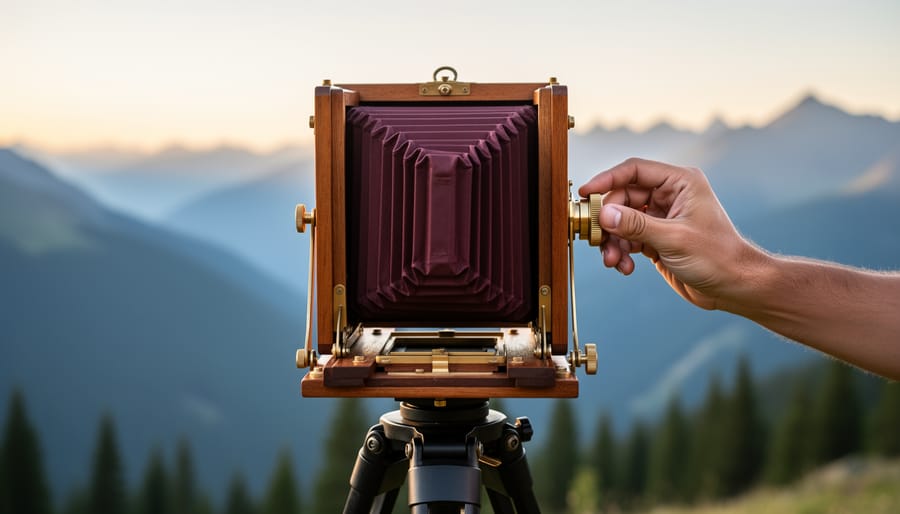
Stand before a large format camera for the first time, and you’ll understand why legendary photographers like Ansel Adams refused to work with anything else. These cathedral-sized instruments—some with bellows extending two feet or more—transform photography from point-and-shoot simplicity into a deliberate, almost meditative craft where every decision matters.
Large format cameras use individual sheets of film, typically 4×5 or 8×10 inches, instead of rolls. This means loading each exposure separately under a dark cloth, composing your image upside-down on a ground glass screen, and making precise adjustments to…

The Camera Setup That Makes Your Casino Stream Look Professional

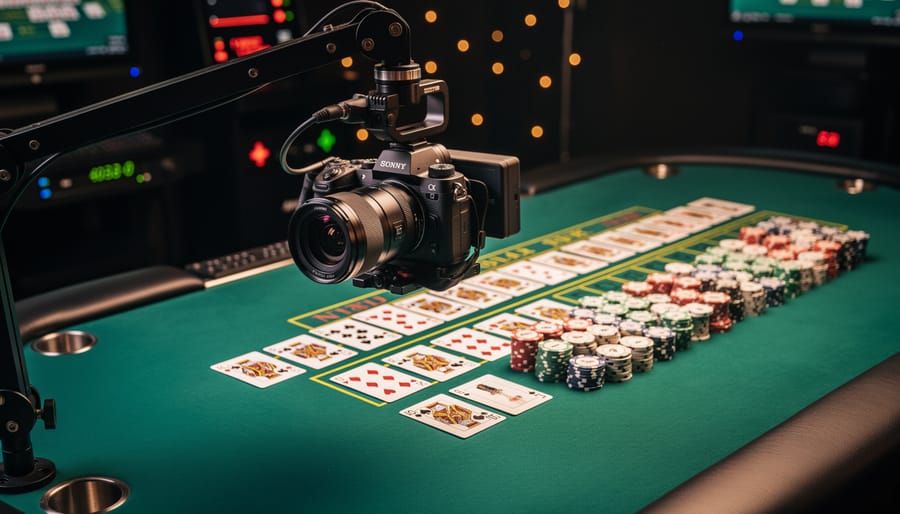
Casino streaming demands camera capabilities that most generic streaming guides completely overlook. While poker pros chase Moonbet bonuses and build their bankrolls, your audience won’t stick around if they can’t read your cards or see chip denominations clearly. The difference between a successful casino stream and an unwatchable one often comes down to three technical factors: your camera’s ability to maintain crisp detail during rapid hand movements, its performance during marathon six-hour sessions without overheating, and whether it can properly expose both bright casino chips …

Why Your Tripod Keeps Wobbling (And How to Fix It for Good)

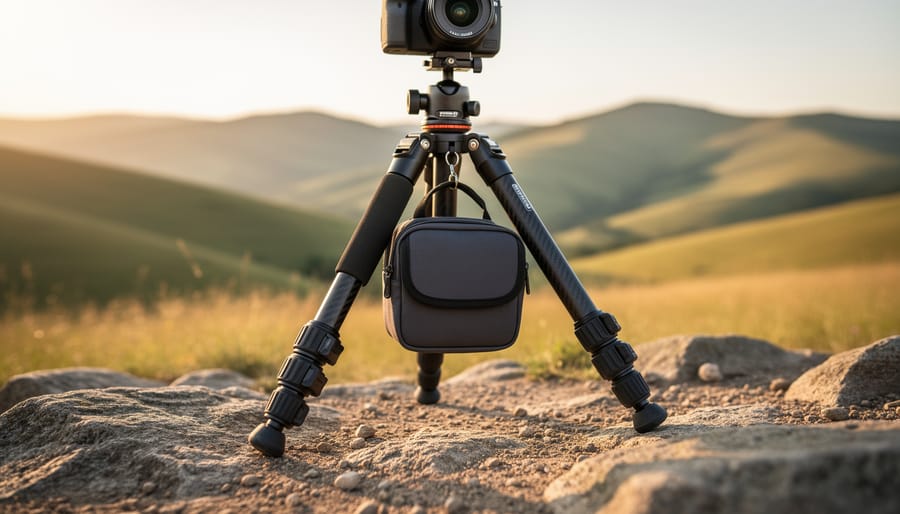
Tighten your tripod’s leg locks systematically, working from top to bottom, ensuring each section clicks firmly into place—loose leg segments are the most common culprit behind shaky shots. Check the center column lock next, as even slight play here translates to significant movement at your camera position, particularly when you’re shooting at telephoto focal lengths or during long exposures.
Spread your tripod legs wider to lower the center of gravity and increase the footprint, which dramatically improves stability on uneven terrain. When shooting outdoors, press down gently on the tripod head after setup to ensure …

Why Photography Forums Changed How We All Shoot (And Where to Join the Conversation)

Photography culture thrives in the spaces between shutter clicks—in the forums where a landscape photographer from Iceland shares post-processing wisdom with a street photographer in Mumbai, where constructive critique replaces gear obsession, and where creative vision matters more than camera specs.
The digital age has transformed how photographers learn, grow, and find their artistic voices. Beyond YouTube tutorials and Instagram feeds lies a deeper layer of engagement: dedicated communities where photographers exchange not just technical tips, but perspectives, philosophies, and genuine creative inspiration. These forums …

Sensor Binning Explained: Why Your 48MP Camera Takes 12MP Photos

You just bought a 48-megapixel smartphone or mirrorless camera, but your photos are coming out at 12 megapixels. Before you assume something’s broken, understand this: your camera is likely using sensor binning, and it’s probably making your images better, not worse.
Sensor binning combines data from multiple adjacent pixels into one larger “super pixel.” Instead of recording information from four separate 1-micron pixels, your sensor merges them into a single 2-micron pixel equivalent. This process sacrifices resolution but delivers significant improvements in low-light performance, reduced noise, and faster…