 By
By 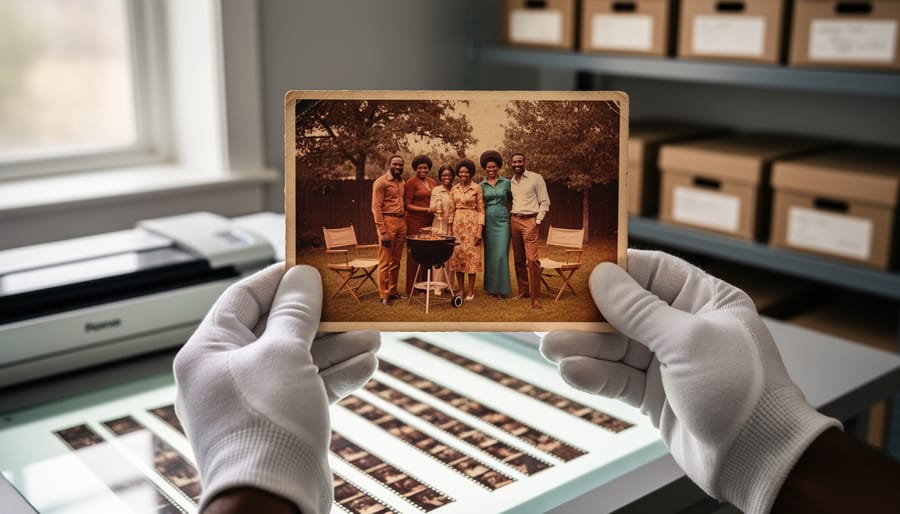
For decades, millions of photographs documenting Black joy, resilience, family traditions, and everyday moments have languished in shoeboxes, attics, and forgotten albums—fading relics of lives fully lived but inadequately preserved. The Black Archives project challenges this erasure by celebrating and restoring these visual testimonies, transforming damaged snapshots into vibrant historical records that reclaim narratives often missing from mainstream collections.
This photographic celebration represents more than nostalgia. It’s a technical and cultural movement merging archival science with digital restoration to salvage images previously considered beyond repair. Scratched negatives, color-shifted prints from the 1970s, and water-damaged family portraits gain new life through careful scanning, color correction, and reconstruction techniques that photography enthusiasts can learn and apply to their own heritage collections.
Understanding the restoration methods behind this project offers practical value whether you’re preserving your grandmother’s wedding photos or exploring how professionals breathe life into century-old images. The techniques span analog preservation fundamentals—proper storage, handling, and initial assessment—to advanced digital workflows involving layers, masks, and selective color grading that address specific types of photographic damage.
What makes the Black Archives particularly compelling is its dual mission: documenting underrepresented cultural history while demonstrating that photo restoration isn’t exclusively for professionals with expensive software. The project proves that with foundational knowledge of photographic processes, patience, and readily available tools, anyone can become a guardian of visual memory, ensuring that these celebrations of Black life endure for generations to witness and honor.
What Black Archives Reveals About Lost History
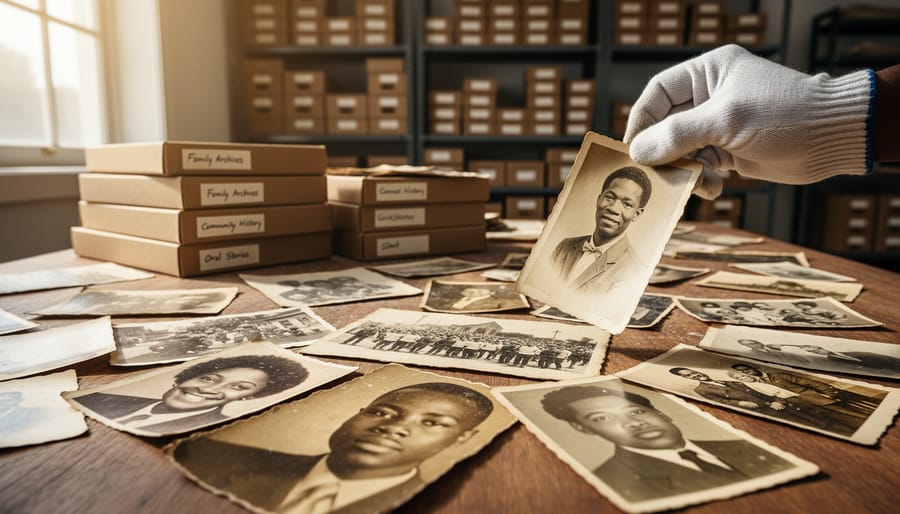
The Black Archives project represents one of the most ambitious photographic preservation efforts focused on documenting African American life across generations. Founded by preservation specialists and cultural historians, this initiative addresses a profound gap in our visual historical record. For decades, countless images capturing the richness of Black communities remained scattered in attics, basements, and family albums, at risk of deterioration or permanent loss.
What makes this project particularly significant is the deliberate focus on ordinary moments. These aren’t just photographs of prominent civil rights leaders or major historical events—though those certainly appear. Instead, the collection celebrates the everyday: families gathered for Sunday dinners, professionals in their workplaces, children playing in neighborhood streets, couples dressed for dances, and individuals simply living their lives with dignity and joy. This approach directly challenges historical narratives that either marginalized or stereotyped Black experiences, instead reclaiming cultural narratives through authentic visual documentation.
Consider a recently restored 1947 portrait of a Black businesswoman standing confidently outside her dress shop in Detroit. The photograph had been stored in a deteriorating album for seventy years, suffering from fading, water damage, and emulsion cracks. Through careful restoration, the image now reveals intricate details: her tailored suit, the shop’s hand-painted sign, the pride evident in her posture. This single photograph contradicts decades of narrow representation, documenting Black entrepreneurship and female empowerment in post-war America.
Another powerful example features a 1920s beach gathering in what historians identified as a segregation-era resort for Black families. The joy captured in that image—children splashing in waves, adults relaxing under umbrellas—presents a complete picture of community life that textbooks rarely acknowledge. These photographs don’t just fill historical gaps; they fundamentally reshape our understanding of the past.
The technical challenges these archivists face are substantial. Many photographs arrive severely damaged, requiring advanced restoration techniques we’ll explore later. Yet the effort matters profoundly, preserving visual evidence that future generations deserve to inherit and learn from.
The Technical Challenge: Why Old Photographs Deteriorate
Historical photographs from Black communities face a perfect storm of preservation challenges that threaten to erase irreplaceable visual history. Understanding these technical issues helps us appreciate why restoration work is so critical and time-sensitive.
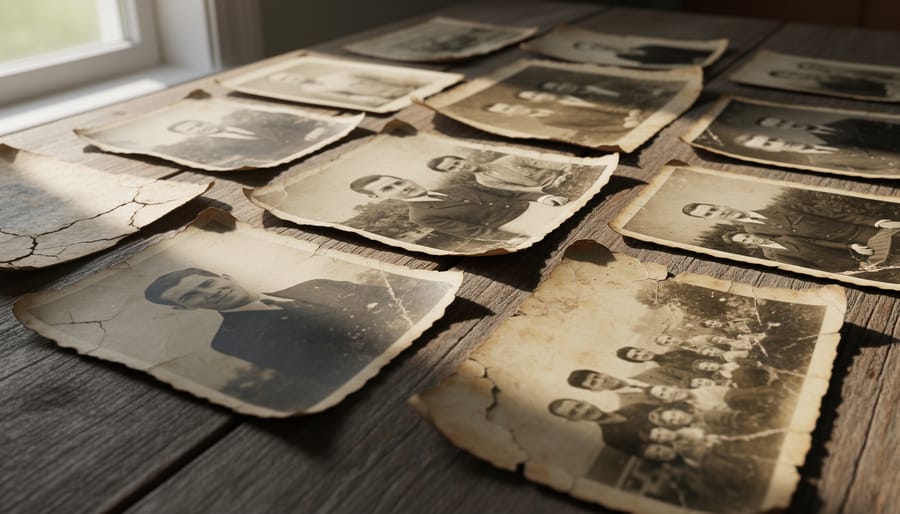
The most fundamental problem is chemical deterioration. Photographs from the late 1800s through mid-1900s relied on silver-based processes that naturally degrade over time. Silver mirroring creates that telltale metallic sheen you might notice on old prints, while fading gradually steals contrast and detail from images. When you see a photograph where faces have become indistinct shadows, that’s often silver oxidation at work—literally erasing people from history.
Storage conditions compound these chemical issues dramatically. Many photographs from Black communities were stored in homes rather than climate-controlled archives, exposing them to humidity, temperature fluctuations, and environmental pollutants. Attics and basements, where family treasures often resided, create the worst possible preservation environment. High humidity encourages mold growth and causes emulsion layers to separate from paper bases. Heat accelerates chemical reactions that break down the image itself.
Physical damage presents another layer of challenges. Fingerprints contain oils and acids that permanently mark gelatin emulsions. Tears, creases, and water damage are common in photographs that were handled, displayed, and treasured rather than archived. Unlike institutional collections that remained untouched in acid-free folders, these community photographs were living documents—passed around at family gatherings, pinned to walls, tucked into Bibles—which means they show signs of their cherished status.
Format obsolescence adds urgency to preservation efforts. Certain processes popular in Black photography studios, including specific tintypes and cabinet cards, require specialized knowledge to restore. As fewer conservators understand these historical techniques, the window for successful restoration narrows.
Perhaps most poignant is the reality that photographs from marginalized communities often received lower-quality materials from the start. Budget studios serving Black neighborhoods sometimes used cheaper papers and chemicals, meaning these images were fighting an uphill preservation battle from day one.
Modern Restoration Techniques Bringing These Images Back
High-Resolution Scanning and Capture
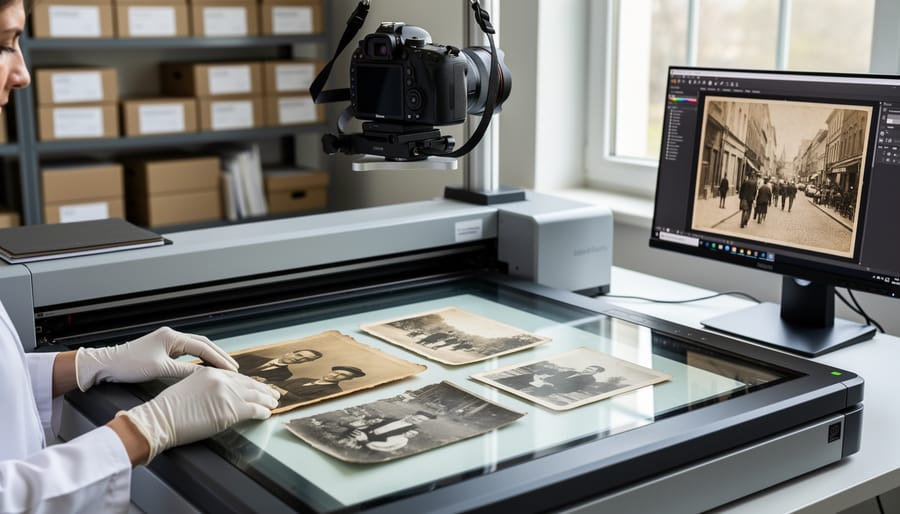
The digitization process for the Black Archives project begins with selecting the right tools for each photograph’s unique condition. Professional archivists typically rely on two primary methods: high-end flatbed scanners and camera-based reproduction systems.
For flatbed scanning, archival facilities use specialized equipment like the Epson Expression series or Hasselblad Flextight scanners, which can capture details at resolutions between 2400 and 4800 DPI. This level of detail is essential when working with deteriorated prints, as it captures not just the visible image but also subtle texture information that helps restorers understand the original printing process and damage patterns.
Camera-based reproduction setups offer an alternative that’s particularly valuable for fragile materials that shouldn’t be pressed against glass. These systems use medium-format digital cameras (often 50-100 megapixels) mounted on copy stands with carefully calibrated lighting at 45-degree angles to minimize glare and reveal surface texture. Many institutions prefer LED lighting for its color accuracy and lack of heat, which could further damage delicate prints.
The golden rule for archival digitization is scanning at the highest practical resolution. Even if current restoration plans don’t require every pixel, future technology might extract information we can’t access today. For home photographers looking to preserve family photographs, a scanner capable of at least 1200 DPI will capture sufficient detail for most restoration work.
One practical lesson from professional archivists: always scan or photograph in color RAW format, even for black-and-white images. Color information often reveals fading patterns, stains, and deterioration that monochrome capture would miss, giving restorers more data to work with during the recovery process.
Digital Restoration and Color Correction
The Black Archives project relies on sophisticated digital tools to bring damaged and faded photographs back to life. Adobe Photoshop remains the industry standard, offering powerful healing brushes, clone stamps, and layer-based editing that allows restorers to work non-destructively. Specialized software like GIMP (a free alternative), DxO PhotoLab, and dedicated restoration programs such as Retouch Pilot provide additional capabilities for tackling specific challenges like scratch removal and grain reduction.
The restoration process for these historical images typically begins with high-resolution scanning at 600 dpi or higher, capturing every detail of the original photograph. Restorers then address physical damage—tears, creases, and water stains—using healing tools that intelligently sample surrounding pixels. Next comes the delicate work of adjusting contrast and exposure, often using curves and levels adjustments to recover details lost to time. Color correction proves particularly challenging with faded prints, requiring careful attention to skin tones and period-accurate color palettes.
This work raises important ethical questions central to vintage photograph restoration. How much intervention is too much? The Black Archives team follows a philosophy of respectful restoration—repairing obvious damage while preserving the photograph’s essential character, including natural aging that tells part of the historical story.
Consider a striking example from the collection: a 1940s family portrait arrived severely cracked with brown water stains obscuring faces. The restored version reveals warm expressions and period clothing details while maintaining slight texture that honors its age. The goal isn’t creating a modern-looking image but rather revealing what was always there, allowing these precious moments of Black life to shine through the fog of deterioration with dignity and authenticity intact.
Preserving Authenticity While Improving Quality
When archivists approach historical photographs, they face a fundamental question: how much restoration is too much? The Black Archives project exemplifies this careful balance, where technical enhancement must serve the photograph without erasing its story.
Professional archivists typically follow a guiding principle: preserve evidence of the photograph’s journey through time while making the image and its subjects clearly visible. A crease from being carried in a wallet tells a story about how precious that image was to someone. Water stains might indicate a photograph survived a flood or difficult migration. These imperfections become part of the historical record.
The decision-making process starts with documentation. Before any modern restoration techniques are applied, archivists photograph the original in its current state. They catalog every tear, stain, and mark. Then they ask: does this damage obscure the subject or the photograph’s purpose? If a scratch runs across someone’s face, it might warrant careful removal. But if it sits in the margin, it often stays.
For those working on family archives, this approach offers valuable guidance. Focus your restoration efforts on damage that prevents you from seeing your relatives clearly—fading that obscures facial features, tears that separate important elements, or discoloration that makes details disappear. But consider leaving minor imperfections intact. That foxing along the edge or slight yellowing? It’s proof your family’s history endured, was held, was loved, and survived to reach you.
What Photographers Can Learn From Archival Work
The professional archivists working with Black Archives offer invaluable lessons that anyone can apply to their own photographic collections. Whether you’re preserving family photographs or building a personal archive, the same principles that protect culturally significant images can safeguard your irreplaceable memories.
Start with storage fundamentals. Archival-quality materials aren’t just for institutions. Acid-free sleeves, boxes, and folders prevent chemical degradation that causes yellowing and brittleness. For prints, look for products labeled archival or photo-safe, available at major retailers for reasonable prices. Store photographs in cool, dry environments, ideally between 65-70 degrees Fahrenheit with 30-40% humidity. Avoid attics, basements, and anywhere temperature fluctuates dramatically.
Digitization represents your most important preservation step. For hobbyists, a flatbed scanner with at least 600 DPI resolution captures sufficient detail for most photographs. The Epson Perfection V600 hits the sweet spot between quality and affordability, offering professional-grade scanning without the professional price tag. When scanning, save files as TIFF or PNG rather than JPEG to preserve maximum information for future restoration work. Create multiple backup copies on separate hard drives, and consider cloud storage for additional security.
Basic restoration doesn’t require expensive software. While professionals use Adobe Photoshop, free alternatives like GIMP provide similar capabilities for common issues. Focus on non-destructive editing techniques, working with layers and adjustment tools rather than permanently altering original scans. Start with simple fixes: adjusting exposure and contrast, removing obvious dust spots with cloning tools, and correcting color casts. YouTube tutorials offer step-by-step guidance for specific problems.
For physical photographs showing damage, sometimes the best preservation is simply stopping further deterioration. Don’t attempt DIY repairs with tape or adhesives, which cause irreversible harm. Instead, carefully sleeve damaged photos and consider professional conservation for truly irreplaceable images.
Develop a simple workflow: sort photographs chronologically or thematically, document what you know about each image while that information remains available, scan systematically rather than randomly, and organize digital files with clear, consistent naming conventions. This methodical approach mirrors professional archival practices while remaining manageable for personal projects.
The key insight from Black Archives is that preservation isn’t about perfection but about action. Every photograph you properly store, every image you digitize, every story you document represents cultural heritage worth protecting, whether for future generations of your family or the broader historical record.
The Cultural Impact Beyond the Technical Process
The restored photographs from Black Archives have transcended their technical rehabilitation to become powerful tools for cultural reclamation and education. Museums and galleries worldwide now feature these images in exhibitions that draw thousands of visitors, creating spaces where Black history is celebrated with the visual dignity it deserves. The Smithsonian’s National Museum of African American History and Culture, for instance, has incorporated restored photographs into permanent displays, allowing visitors to connect with ancestors they might never have seen clearly before.
Perhaps most profound is the project’s impact on family reunification and personal identity. When descendants see great-great-grandparents clearly for the first time, the emotional response is overwhelming. One woman shared how a restored portrait of her ancestor, previously too damaged to display, now hangs in her living room, connecting four generations to their roots. These images provide tangible proof of existence and achievement in an era when Black lives were systematically erased from historical records.
Educational institutions are integrating these photographs into curricula, moving beyond textbook abstractions to show students real faces and real stories. Teachers report that students engage differently when learning history through restored photographs that reveal ordinary moments—families at Sunday dinner, children playing, entrepreneurs outside their businesses. This approach to documenting cultural heritage creates meaningful connections across time.
Publications featuring restored images from Black Archives have become bestsellers, demonstrating public hunger for these visual narratives. More importantly, the project has inspired countless individuals to seek out and restore their own family photographs, creating ripple effects through communities as people reclaim their visual history and share stories that might otherwise have been lost forever.
The intersection of photography, technology, and cultural preservation reveals something profound: every photograph is both a technical achievement and a vessel of memory. The Black Archives demonstrates how restoration work transforms fading prints into vibrant connections to our shared past, but this mission extends beyond institutional collections. Your own family albums hold similar power, containing stories that deserve protection and celebration.
Consider taking concrete steps today. Explore the Black Archives online to witness restoration’s impact firsthand and draw inspiration from their methodology. If you have family photographs tucked away, start your own digitization project—even smartphone scans are better than letting images deteriorate further. Invest in proper storage materials for physical prints, and create backup copies of digital files across multiple locations.
Most importantly, engage with the stories behind your images. Interview family members about the people and moments captured before those memories fade. Document dates, locations, and context on the backs of prints or in digital metadata.
Photographic preservation isn’t merely technical work—it’s an act of cultural stewardship. Whether you’re safeguarding personal history or contributing to broader archival efforts, you’re ensuring that these visual narratives survive for future generations to discover, study, and cherish.




 By
By