
 By
By 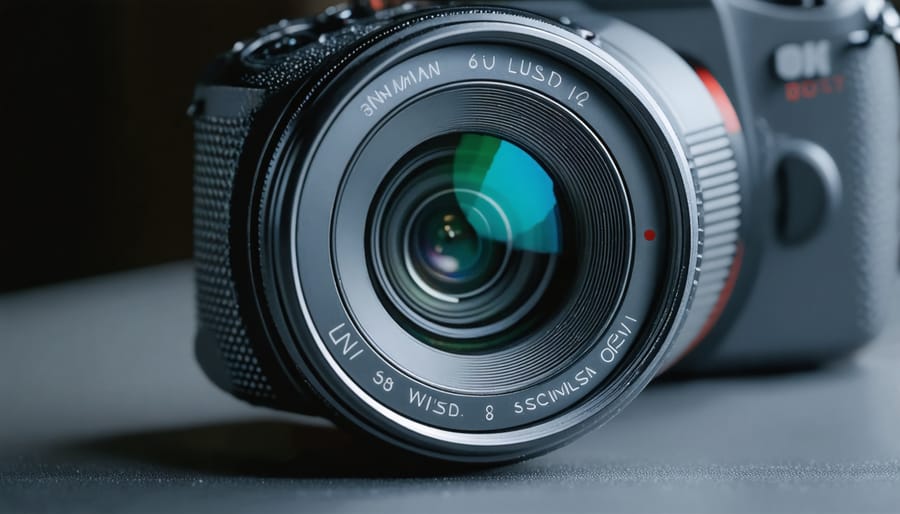
Through the lens of modern technology, we’re witnessing a revolutionary transformation in how we capture and perceive reality. From computational photography algorithms that process billions of calculations per shot to adaptive optical elements that respond to environmental changes in real-time, the evolution of digital photography has fundamentally altered the relationship between photographer and equipment.
Today’s technological lenses represent the convergence of centuries-old optical science with cutting-edge digital innovation. These smart optical systems don’t just transmit light; they analyze, adjust, and enhance image data before it ever reaches your sensor. Whether you’re capturing the subtle details of a macro photograph or tracking fast-moving subjects in challenging light conditions, modern lens technology serves as both tool and creative partner.
As we stand at the intersection of artificial intelligence and optical engineering, technological lenses are redefining the boundaries of what’s possible in photography. From liquid crystal elements that change their properties on demand to neural network-powered focusing systems that predict subject movement, these advances aren’t just incremental improvements – they’re fundamentally changing how we think about image capture and creation.
For photographers and imaging professionals, understanding these technological developments isn’t just about staying current – it’s about embracing new creative possibilities that were unimaginable just a few years ago. Let’s explore how these innovations are shaping the future of visual storytelling and what they mean for both professional and enthusiast photographers.
Smart Lens Technology: Beyond Traditional Glass
Liquid Crystal Lenses
Liquid crystal technology, once confined to display screens, is now revolutionizing how camera lenses function. These innovative elements use electronically controlled liquid crystal layers to adjust focus and aperture without any mechanical movement, marking a significant departure from traditional lens designs.
The principle behind liquid crystal lenses is elegantly simple: by applying different voltages to the liquid crystal elements, their molecular arrangement changes, altering how light passes through them. This allows for instant focus adjustments and aperture changes without the need for physical lens elements to move, resulting in faster, silent, and more precise control over image capture.
One of the most exciting applications is in autofocus systems, where liquid crystal elements can achieve focus speeds previously thought impossible. Professional photographers are particularly enthusiastic about the technology’s ability to maintain consistent focus during high-speed continuous shooting, especially in challenging lighting conditions.
The benefits extend beyond just speed. Liquid crystal lenses are typically lighter and more compact than their mechanical counterparts, making them ideal for mobile photography and compact camera systems. They’re also more energy-efficient, as they require minimal power to operate compared to traditional focus motors.
Manufacturers are increasingly incorporating this technology into their latest lens designs, with some models featuring hybrid systems that combine liquid crystal elements with conventional optics for optimal performance. As the technology matures, we can expect to see even more innovative applications in both consumer and professional photography equipment.
Computational Lens Systems
The fusion of artificial intelligence with traditional optics has revolutionized how modern lenses perform. These computational lens systems combine sophisticated software algorithms with physical glass elements to overcome traditional optical limitations. Working in harmony with digital camera sensors, these smart lenses can correct distortions, enhance sharpness, and even simulate different focal lengths in real-time.
One of the most impressive capabilities of computational lens systems is their ability to adapt to shooting conditions. Using AI-powered scene recognition, these lenses can automatically adjust their elements to optimize performance for specific subjects, whether you’re capturing fast-moving sports action or detailed macro shots. The software can also compensate for atmospheric disturbances and minimize chromatic aberration that would typically affect image quality.
What’s particularly exciting for photographers is how these systems can extend the practical capabilities of physically compact lenses. A single computational lens can effectively perform like multiple traditional lenses by using software to alter its optical characteristics. This not only reduces the gear photographers need to carry but also opens up new creative possibilities that weren’t previously possible with conventional optics.
The technology also enables features like real-time depth mapping, intelligent bokeh simulation, and advanced image stabilization that considers both optical and digital corrections simultaneously. These innovations are making high-end photography techniques more accessible to enthusiasts while providing professionals with powerful new tools for their creative vision.
Material Science Breakthroughs
Nano-engineered Glass
The world of lens technology has been revolutionized by nano-engineered glass, a breakthrough that’s transforming how we capture images. This innovative approach to lens manufacturing involves manipulating glass at the molecular level, creating materials with extraordinary optical properties that weren’t possible just a decade ago.
At the heart of this innovation is the ability to create glass with precisely controlled refractive indices and dispersion characteristics. By incorporating nanoparticles and specialized molecular structures, manufacturers can now produce glass elements that significantly reduce chromatic aberration and enhance light transmission. This advancement works hand-in-hand with modern high-resolution imaging technology, ensuring that every detail is captured with stunning clarity.
One of the most impressive aspects of nano-engineered glass is its ability to combat common lens issues like flare and ghosting. The glass surface can be treated with nano-scale coatings that create an almost invisible barrier against unwanted light reflections, resulting in images with better contrast and color accuracy.
Photographers are particularly excited about the weight reduction benefits of these new materials. By engineering glass at the nano level, manufacturers can create elements that are lighter yet maintain excellent optical qualities. This means professional-grade lenses can be more compact and portable without sacrificing image quality.
The durability of nano-engineered glass is also noteworthy. These materials often feature enhanced scratch resistance and better tolerance to temperature changes, making them ideal for challenging shooting conditions. Whether you’re capturing landscapes in freezing temperatures or shooting in dusty environments, these advanced glass formulations help ensure consistent performance and longevity.


Revolutionary Coating Technologies
Modern lens coating technologies have revolutionized the way we capture images, offering unprecedented clarity and protection for our valuable glass. One of the most significant breakthroughs has been the development of nano-coating technology, which applies microscopically thin layers of specialized materials to lens surfaces. These coatings work at the molecular level to combat common photography challenges like lens flare, ghosting, and unwanted reflections.
Multi-layer coating systems now incorporate up to 16 distinct layers, each serving a specific purpose. For instance, the latest fluorine-based coatings not only repel dust and moisture but also make cleaning significantly easier – a game-changer for photographers working in challenging environments. These hydrophobic coatings cause water droplets to bead up and roll off, rather than spreading across the lens surface.
Anti-reflective coatings have also seen remarkable improvements. Today’s advanced formulations can reduce light reflection to as low as 0.2%, compared to about 4% in uncoated lenses. This enhancement translates to better light transmission and improved image contrast, particularly noticeable in backlit situations and night photography.
Perhaps most exciting is the emergence of self-healing coatings, which can repair minor scratches through a combination of heat and UV exposure. While still in early stages, this technology promises to extend lens life significantly. Some manufacturers have also introduced antimicrobial coatings, particularly valuable for shared equipment in educational or rental settings.
These coating innovations aren’t just about protection – they’re fundamentally changing how lenses perform. By reducing internal reflections and improving light transmission, modern coatings help photographers achieve sharper images with better color accuracy and contrast, even in challenging lighting conditions.
Miniaturization and Mobile Photography
Periscope Lens Design
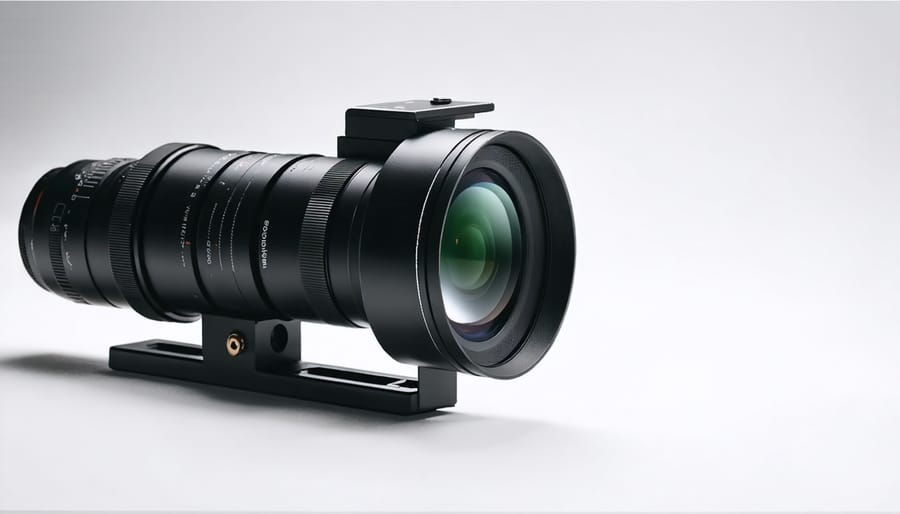
Periscope lens technology represents one of the most innovative breakthroughs in mobile photography, enabling powerful zoom capabilities while maintaining sleek device profiles. The design works similarly to a submarine’s periscope, using a series of prisms or mirrors to redirect light at 90-degree angles through the body of the device.
Instead of extending outward like traditional telephoto lenses, periscope lenses lay flat within the device, utilizing the phone’s thickness rather than its width. Light enters through the rear lens, travels horizontally through a series of precision-engineered optical elements, and is then directed to the image sensor. This clever arrangement allows manufacturers to incorporate longer focal lengths without increasing device thickness significantly.
The benefits are remarkable: smartphones can now achieve optical zoom ranges of 5x to 10x, with some models pushing beyond 100x when combined with digital zoom. This technology has revolutionized mobile photography, enabling users to capture detailed shots of distant subjects while maintaining image quality that was previously only possible with dedicated cameras.
However, periscope designs do present some challenges. The complex arrangement of optical elements requires precise manufacturing and alignment, and the additional components can increase production costs. Despite these challenges, the technology continues to evolve, with manufacturers developing increasingly sophisticated implementations that promise even better zoom capabilities in future devices.
Metalenses
Metalenses represent one of the most exciting breakthroughs in optical technology, promising to revolutionize how we think about smartphone photography. Unlike traditional glass lenses that rely on curved surfaces to manipulate light, metalenses use nano-scale structures arranged on a flat surface to achieve the same effect, but with remarkable improvements in both size and performance.
These ultra-thin optical elements, often thinner than a human hair, are crafted from materials like titanium dioxide or silicon and can focus light with incredible precision. The real game-changer lies in their potential to dramatically reduce the bulk of smartphone camera modules while simultaneously enhancing image quality. Imagine capturing professional-grade photos with a phone that doesn’t have a protruding camera bump – that’s the promise metalenses hold.
Recent developments have shown that metalenses can correct chromatic aberration more effectively than traditional lenses, producing sharper images with better color accuracy. They also offer the possibility of incorporating multiple optical functions into a single layer, potentially replacing entire lens systems with a single metalens.
While mass production challenges currently limit their commercial availability, several major smartphone manufacturers are actively investing in metalens technology. Industry experts predict we could see the first metalens-equipped smartphones within the next few years, marking the beginning of a new era in mobile photography.
Future Perspectives
The horizon of lens technology is expanding at an unprecedented pace, driven by breakthroughs in materials science, electronics, and computational photography advances. One of the most exciting developments on the horizon is the emergence of liquid crystal lenses, which can change their optical properties instantly without any mechanical movement. This technology promises to revolutionize how we think about zoom and focus capabilities.
Metalenses, ultra-thin flat surfaces that can manipulate light at the nanoscale, are poised to transform the photography landscape. These innovative elements could potentially replace traditional glass elements, leading to dramatically smaller and lighter lenses without compromising image quality. Early prototypes have already demonstrated promising results in laboratory settings.
Adaptive optics, originally developed for astronomy, is making its way into consumer photography. Future lenses may incorporate deformable mirrors or specialized materials that can automatically correct for atmospheric distortion and other environmental factors, ensuring crystal-clear images in challenging conditions.
Another groundbreaking innovation in development is the integration of artificial intelligence directly into lens systems. Smart lenses will be able to predict and adjust to shooting conditions before you even press the shutter, while also learning from your shooting style to optimize performance over time.
We’re also seeing the emergence of hybrid optical-digital systems that blur the line between traditional optics and digital processing. These systems could potentially offer unlimited depth of field, perfect focus at any distance, and the ability to change perspective after the shot has been taken.
Looking further ahead, researchers are exploring quantum optics and metamaterials that could lead to lenses with capabilities we can barely imagine today, such as perfect light gathering in near-darkness or true optical camouflage effects. While some of these technologies may seem like science fiction, the rapid pace of innovation suggests they could become reality sooner than we think.
The rapid evolution of technological lenses has fundamentally transformed the landscape of modern photography. As we’ve explored throughout this article, innovations in optical design, materials science, and digital integration have opened up unprecedented creative possibilities for photographers at all skill levels.
These advances have not only improved image quality but have also made sophisticated photographic techniques more accessible to enthusiasts and professionals alike. From computational photography enhancing smartphone cameras to advanced autofocus systems in professional lenses, technology continues to push the boundaries of what’s possible in image capture.
Looking ahead, photographers can expect even more exciting developments. Artificial intelligence will likely play an increasingly important role in lens technology, offering features like predictive focusing and enhanced stabilization. We may see the emergence of “smart lenses” that can automatically adjust their characteristics based on shooting conditions or creative intent.
However, it’s important to remember that these technological advances are tools that complement, rather than replace, photographic skill and creative vision. The most successful photographers will be those who can effectively blend traditional expertise with new technological capabilities.
For both professional and amateur photographers, staying informed about these developments while maintaining focus on fundamental photography principles will be key. As lens technology continues to evolve, we can anticipate more intuitive interfaces, improved performance in challenging conditions, and new creative possibilities that we haven’t yet imagined.
The future of photographic technology is bright, and these advances in lens technology will continue to empower photographers to push creative boundaries and capture moments with unprecedented clarity and artistic expression.




 By
By