 By
By 
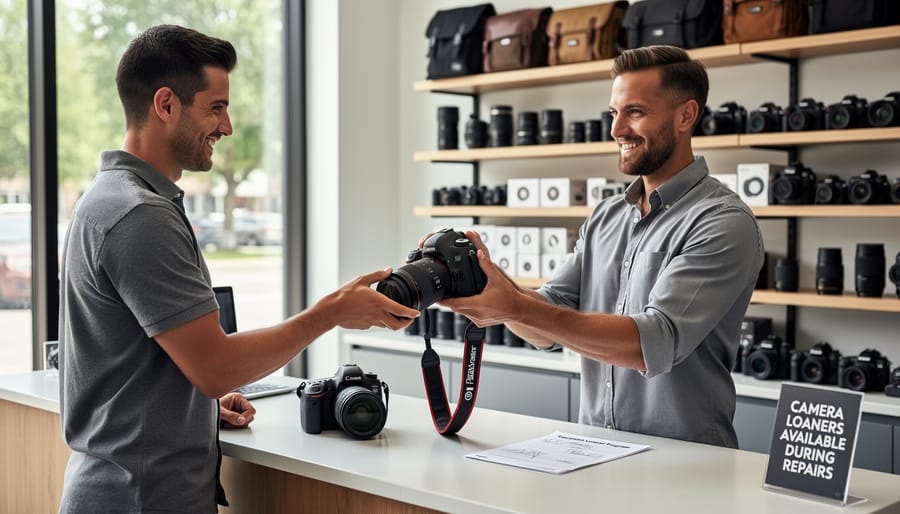
Contact your camera manufacturer or authorized dealer directly when your equipment fails—most major brands like Canon, Nikon, and Sony offer free loaner gear while your equipment undergoes repair, often shipping replacement bodies or lenses within 24-48 hours of your service request. Check your camera store membership benefits immediately, as retailers like Samy’s Camera, Adorama, and local specialty shops frequently provide loaner programs to members at no additional cost beyond annual dues, giving you access to thousands of dollars worth of gear for testing before purchase.
Visit manufacturer websites to verify your warranty status and loaner eligibility, since professional-grade equipment typically includes priority loaner services while consumer models may require extended warranty coverage or professional membership programs like Canon Professional Services (CPS) or Nikon Professional Services (NPS). These programs grant working photographers immediate equipment replacement during critical shoots, ensuring you never miss a paying job due to gear failure.
Request loaners from local camera clubs and photography organizations, which often maintain equipment libraries for members to borrow high-end lenses, lighting equipment, and specialty cameras for weekends or specific projects. This approach works exceptionally well for hobbyists wanting to test expensive gear like 400mm telephoto lenses or medium format cameras without the financial commitment of purchase.
Understanding loaner program requirements, application processes, and insider strategies transforms equipment emergencies from career-threatening disasters into minor inconveniences while simultaneously opening doors to try gear you’ve been eyeing for years—all without spending a dime beyond potential membership fees or deposits.
What Are Equipment Loaner Programs?
Equipment loaner programs are services offered by camera manufacturers and retailers that provide temporary access to photography gear under specific circumstances. Think of them as a safety net for photographers—whether your camera body is in the repair shop, you’re considering a significant investment in new equipment, or you need specialized gear for an upcoming shoot that’s beyond your current collection.
These programs fall into two main categories. Manufacturer programs, often called professional services (like Canon Professional Services, Nikon Professional Services, or Sony’s Artisan of Imagery program), typically require membership and cater primarily to working photographers. These programs shine when you need a replacement during repairs or want to evaluate gear before making a purchase decision. For instance, if your primary camera body fails before a wedding shoot, CPS might provide a comparable loaner within 24 hours, ensuring you don’t miss critical work.
Retailer programs operate differently and are often more accessible to enthusiasts and hobbyists. Local camera shops and online retailers like BorrowLenses or LensRentals provide equipment loans that function more like traditional rentals, though some shops offer courtesy loaners during repairs for regular customers. The key distinction is that retailer programs usually charge fees, while manufacturer programs often include loaner services as part of membership benefits.
The basic premise across all loaner programs remains consistent: you receive temporary equipment to bridge a gap—whether that gap is caused by gear failure, the evaluation period before a major purchase, or a specific project requiring specialized tools. Understanding which program type fits your situation and eligibility status is the first step toward accessing these valuable resources.
Why Manufacturers and Retailers Offer Loaners
At first glance, loaner programs might seem like a generous perk, but they’re actually smart business strategies that benefit both companies and customers in meaningful ways.
For manufacturers and retailers, these programs are powerful tools for building long-term brand loyalty. When Canon or Nikon hands you a professional-grade camera body while yours is being repaired, they’re demonstrating commitment beyond the initial sale. This creates an emotional connection that transcends product specifications—you remember who had your back when you needed it most.
The professional photographer angle is particularly crucial. Imagine you’re a wedding photographer with bookings lined up, and your main camera body fails right before the season begins. Without a loaner program, you’d face impossible choices: rent expensive gear, purchase backup equipment prematurely, or cancel jobs and lose income. By providing loaners, companies prevent professionals from seeking alternative brands in desperate situations and potentially switching systems entirely.
Try-before-you-buy programs serve a different but equally important purpose. That $3,000 lens or $6,500 camera body represents a significant investment. Letting photographers test equipment in real-world shooting conditions—not just a quick store demo—reduces purchase anxiety and return rates. You’ll make more confident decisions after spending a weekend actually using that gear.
Premium retailers also use loaner programs to differentiate their service tiers. While online discounters compete purely on price, local camera shops offering robust loaner benefits create tangible value that justifies slightly higher prices. It’s relationship-based retail in an increasingly transactional marketplace, fostering community connections that keep customers returning for advice, accessories, and future purchases.
Types of Loaner Programs You Should Know About
Repair Replacement Loaners
This is the bread-and-butter of manufacturer loaner programs, and it’s what most photographers will encounter when their primary equipment needs servicing. When you send your camera or lens in for repair, qualifying photographers can receive temporary replacement gear to ensure their work doesn’t grind to a halt.
Here’s how it typically works: When you’re eligible for a repair loaner through programs like Canon Professional Services (CPS) or Nikon Professional Services (NPS), you’ll receive equipment comparable to what you’ve sent in. Send in your professional-grade body for sensor cleaning or shutter replacement? You’ll get a similar model to use while yours is in the shop. The loaner usually ships before or simultaneously with your repair shipment, minimizing downtime.
Duration varies but generally aligns with your repair timeline, typically ranging from one week to several weeks depending on the issue’s complexity. Canon CPS, for instance, provides loaners for the entire repair period plus shipping time. You’ll receive prepaid shipping labels to return the loaner once your equipment comes back.
Eligibility requirements are straightforward but important. Both CPS and NPS require active membership in their professional programs, which involves annual fees and proof of professional photography work. CPS offers different membership tiers (Platinum, Gold, Silver), with varying loaner benefits at each level. NPS similarly requires documentation proving you’re earning income from photography.
For professionals, this service is invaluable. Imagine you’re booked for a wedding this weekend and your main camera body fails mid-week. Without a repair loaner program, you’d face expensive emergency rentals or potentially disappointing clients. With it, you’re back in business within days.
Evaluation and Trial Programs
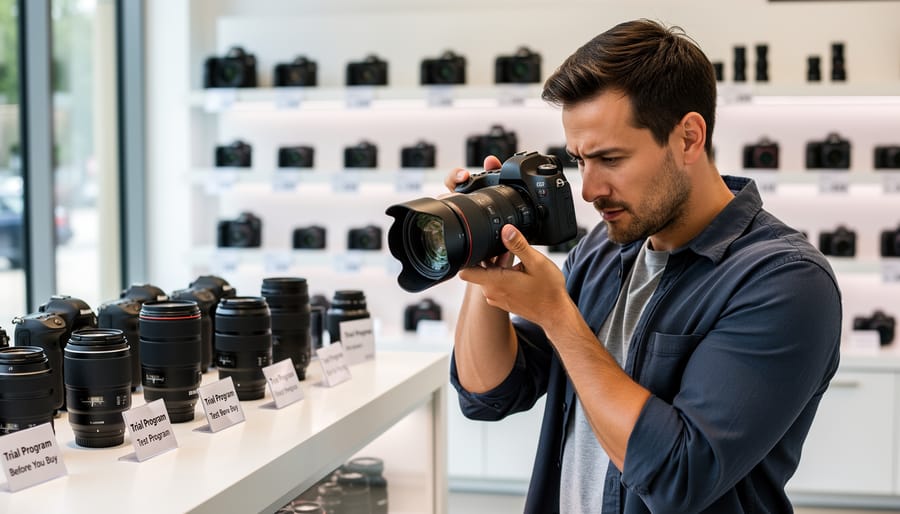
Before committing thousands of dollars to a lens or camera body, evaluation and trial programs offer a smart middle ground between rental fees and outright purchase. These programs are specifically designed to help photographers make informed purchasing decisions by providing extended hands-on experience with equipment.
BorrowLenses and LensRentals both offer try-before-you-buy programs where rental fees can often be applied toward purchase if you decide to keep the gear. LensRentals’ Keeper Program is particularly photographer-friendly, allowing you to buy the exact item you rented at a discounted price, minus your rental fee. This means you’re essentially testing expensive equipment with minimal financial risk.
Many local camera retailers have also developed trial programs. Adorama and B&H Photo offer evaluation periods on select items, while smaller independent shops may provide weekend demo programs for regular customers. Some manufacturers, including Canon and Nikon, occasionally run direct trial programs through their professional services divisions.
To maximize these opportunities, plan your trial during a period when you’ll actually use the gear in real shooting conditions. A weekend wedding, landscape trip, or sports event provides much better insight than casual backyard testing. Document your experience, noting autofocus performance, ergonomics, and image quality. Compare files side-by-side with your current equipment. This methodical approach transforms a simple trial into valuable research that pays dividends long after your purchase.
Professional Membership Programs
For photographers who regularly need access to the latest gear, professional membership programs offer the fastest and most generous loaner privileges available. Canon Professional Services (CPS), Nikon Professional Services (NPS), and Sony Professional Support provide tiered membership options that include priority loaner access as a core benefit.
CPS membership, for example, starts at around $100 annually for the basic tier, with platinum membership costing approximately $300. These higher tiers typically include two-day advance shipping on loaners and extended loan periods up to two weeks. NPS operates on an invitation-only basis for working professionals who can demonstrate regular use of Nikon equipment for paid assignments. Sony’s program similarly requires verification of professional status but offers competitive benefits once approved.
The real value becomes clear when you consider a wedding photographer who needs a backup body during peak season, or a wildlife shooter wanting to test a 600mm lens before committing $13,000. That CPS membership pays for itself with a single loaner that would otherwise cost hundreds to rent commercially.
These programs also provide repair priority and technical support, making them particularly worthwhile for full-time professionals whose income depends on reliable gear access. If you shoot more than a few paid assignments monthly, the membership investment typically makes financial sense within the first year.
Retailer Courtesy Loaners
Your local camera shop might be your best-kept secret for equipment access. Many independent retailers offer informal loaner programs to valued customers, though these arrangements are rarely advertised and operate on a relationship-first basis.
Unlike manufacturer or membership programs, retailer loaners work through trust and reciprocity. Shop owners remember customers who regularly purchase film, accessories, or services, and they’re often willing to lend equipment during repairs or for weekend test runs. I’ve seen photographers walk out with a professional telephoto lens simply because they’ve been loyal customers for years.
The key is building genuine relationships before you need help. Visit regularly, ask thoughtful questions, and support the business with your purchases. When repair situations arise or you’re considering a major investment, don’t hesitate to ask if a loaner might be available. Many shops maintain a small inventory specifically for this purpose.
These programs work best in smaller, independent stores rather than large chains. While availability varies dramatically by location, the personalized service often includes expert advice that’s worth far more than the equipment itself.
Who Qualifies for Loaner Programs
Eligibility for loaner programs varies significantly depending on the provider, but most fall into three main categories: professional status programs, customer loyalty programs, and membership-based services.
Professional photographers typically have the easiest access to loaner equipment. Major camera manufacturers like Canon Professional Services (CPS) and Nikon Professional Services (NPS) prioritize working pros, but what counts as “professional” might surprise you. You don’t necessarily need to shoot for National Geographic. Most programs accept anyone who derives income from photography, whether you’re shooting weddings on weekends or running a small portrait business. Documentation usually includes business licenses, tax returns showing photography income, a professional website, or published work samples.
Retail programs operate differently. Many camera stores offer loaners to customers with substantial purchase history, though the threshold varies widely. Some retailers extend loaner privileges after a single camera body purchase, while others require you’ve spent several thousand dollars over time. Building a relationship with your local camera shop pays dividends here, as managers often have discretion in borderline cases.
Membership programs like BorrowLenses and LensRentals have the most accessible entry point. Anyone can rent equipment, though some offer priority access or discounted rates to frequent renters. These services don’t require professional credentials, making them ideal for hobbyists wanting to test expensive gear before committing to a purchase.
Here’s a practical tip: if you’re establishing professional status, create a simple portfolio website and register your business name, even if you’re just starting out. These basic steps demonstrate serious intent and often satisfy program requirements. Also, don’t hesitate to call program administrators directly. Many have unpublished guidelines and can advise whether your specific situation qualifies.
How to Access Loaner Programs: Step-by-Step
Before You Need It: Setting Yourself Up
The best time to explore loaner programs is before your camera breaks or you need that dream lens for a weekend shoot. Think of it like insurance—setting things up in advance saves you stress when you’re facing a deadline.
Start by registering your equipment with manufacturers. Canon Professional Services (CPS) and Nikon Professional Services (NPS) require proof of ownership, so keep those receipts and register your gear through their online portals. This simple step opens doors to loaner access during repairs and often provides priority service.
If you’re not quite at the professional tier yet, establish a relationship with your local camera retailer. Stop by, introduce yourself, and ask about their loaner policies. Many shops remember regular customers and are more likely to accommodate loaner requests when you’ve built rapport—even if it’s just buying memory cards and filters there instead of online.
Review your warranty and protection plans carefully. Some extended warranties include temporary replacement coverage, but you’ll need to understand the specific process for requesting loaners. AppleCare-style programs for cameras often have fine print worth reading.
Finally, if you’re considering gear purchases anyway, explore manufacturer membership programs now. The application process can take weeks, so don’t wait until you’re in crisis mode.
When You Need It: Making the Request
When you’re ready to request a loaner, start by contacting your camera manufacturer’s support line or visiting their website’s support section. Most programs require basic information: your equipment’s serial number, proof of purchase, and details about the repair or reason for the request. If your camera failed during a wedding shoot, for example, explain the urgency and your timeline.
Professional photographers often see faster turnaround times, typically 1-3 business days, especially when demonstrating immediate need. One wedding photographer shared how Canon expedited a loaner body overnight when her primary camera failed three days before a destination wedding. She provided her CPS membership number, the repair tracking number, and her shooting schedule.
Documentation varies by program but generally includes a valid ID, credit card authorization for security purposes, and proof of your membership level if applicable. Some retailers like BorrowLenses simply require account creation and payment information.
Keep your request specific and realistic. Instead of asking for the latest flagship model, request equipment comparable to what you’re having repaired. Programs appreciate photographers who understand their limitations and work collaboratively. One landscape photographer noted that being flexible about body models, while specific about lens focal lengths needed for an upcoming assignment, resulted in approval within hours rather than days.
What to Expect From Your Loaner Experience
Here’s the reality check: loaner equipment typically won’t be the latest model that just hit the market last month. Most programs provide gear that’s one or two generations behind current releases, and it’s been used by other photographers before you. Think of it like a rental car—clean, functional, and maintained to professional standards, but showing signs of normal wear.
Before you walk out with a $3,000 lens, expect to provide a credit card for a security deposit, which typically matches the retail value of the equipment. Some programs require proof of insurance that covers borrowed gear, while others include coverage in their membership fees. Always ask what your financial responsibility is if something goes wrong.
Usage restrictions vary by program. Professional repair shop loaners usually come with tight deadlines and local-use-only requirements, meaning you can’t take that backup camera body on your international assignment. Retail membership programs offer more flexibility but may limit how many items you can borrow simultaneously or how frequently you can swap gear.
What happens if you damage the equipment? Most programs distinguish between normal wear and negligence. A few scuffs from regular use? That’s expected. Dropping a lens in saltwater? You’ll likely be covering the repair or replacement cost. Review the damage policy carefully and consider documenting the equipment’s condition with photos before leaving the store.
Return procedures are usually straightforward—bring everything back in the same case with all accessories included. Late returns often trigger fees or membership restrictions, so treat deadlines seriously. Some programs offer convenient drop-off options or prepaid shipping labels for mail returns.
Real-World Scenarios: When Loaners Save the Day
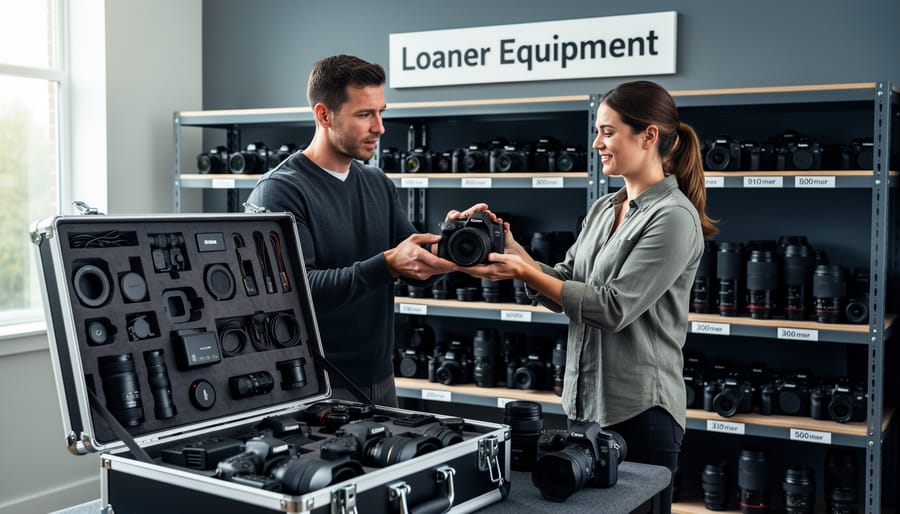
Sarah’s heart sank when her camera body suddenly refused to power on—just five days before she was scheduled to photograph a friend’s ceremony. As a wedding photographer, missing this booking wasn’t an option, but purchasing a replacement body overnight would devastate her budget. She contacted her local camera store’s loaner program, explained the situation, and walked out two hours later with a comparable body that saw her through both the wedding and the three-week repair period. The program literally saved her business reputation and client relationship.
Wildlife photographer Marcus had been eyeing a 600mm super-telephoto lens for months, but the $12,000 price tag made him hesitant. His camera club’s loaner program allowed him to borrow the lens for a weekend birding trip. After two days of shooting, he discovered the lens was actually too heavy for his shooting style and opted for a lighter 500mm instead—saving him from an expensive mistake and helping him make a more informed purchasing decision.
Portrait photographer Jennifer faced every destination shooter’s nightmare when her 24-70mm lens took a hard knock during a family session in Hawaii. With four more days of booked sessions remaining, she located a nearby camera retailer offering loaner services. Within hours, she had a replacement lens that allowed her to complete her assignments professionally. The nominal daily rental fee was a fraction of what she would have lost canceling those sessions.
These scenarios highlight how loaner programs provide critical safety nets for photographers at every level, transforming potential disasters into minor inconveniences.
Common Pitfalls and How to Avoid Them
Even seasoned photographers stumble when using loaner programs. Here’s how to sidestep the most common mistakes.
The biggest pitfall? Waiting until your shoot is tomorrow to request a loaner. Many programs require 3-5 business days for processing, and popular items like the Canon RF 100-500mm disappear quickly during wedding season. The fix is simple: request equipment as soon as you know you’ll need it, or better yet, when you first drop off your gear for repair.
Insurance requirements trip up many first-timers. Some programs require proof of coverage before shipping expensive lenses, and your homeowner’s policy might not cut it. Review insurance requirements during the application process, not when you’re rushing to receive equipment. If you’re uninsured, some retailers offer short-term coverage options.
Assuming all loaner programs work identically is another costly mistake. One camera shop might offer free three-day loans while another charges daily rates after 48 hours. A manufacturer’s program might only cover warranty repairs, not accidental damage. Always read the specific terms for each program you’re considering.
Late returns create problems for everyone. You’ll face fees, damage your standing with the program, and prevent other photographers from accessing gear they need. Set phone reminders for return dates and factor in shipping time—if the deadline is Friday, ship on Wednesday.
Finally, inspect loaner equipment immediately upon receipt. That small scratch on the lens barrel? Document it with photos before you even power on the camera. This protects you from liability for pre-existing damage and ensures you’re working with functional gear.
Alternatives When Loaner Programs Aren’t Available
When manufacturer loaner programs aren’t an option—whether you don’t meet membership requirements or equipment simply isn’t available—you still have solid alternatives to keep shooting.
Professional rental services like LensRentals, BorrowLenses, and local camera shops offer extensive gear catalogs with next-day shipping. While you’ll pay out of pocket (typically $30-200+ depending on the equipment and rental duration), you gain access to virtually any gear you need, often with insurance included. Many rental companies also offer membership programs with discounted rates for frequent renters.
Building relationships within your local photography community creates informal loaner networks. Fellow photographers often understand equipment emergencies and may lend gear in a pinch. Wedding photographers, for example, frequently maintain backup arrangements with trusted colleagues. Just ensure you return borrowed equipment promptly and in pristine condition—your reputation depends on it.
The best solution, however, is proactive planning. Professional photographers should maintain backup gear for critical equipment. This doesn’t mean duplicating your entire kit, but having a backup camera body and one versatile lens can save a shoot. Even enthusiasts benefit from keeping an older camera body as insurance.
Finally, explore insurance considerations that cover equipment replacement during repairs. Some policies provide rental reimbursement, effectively giving you loaner access through financial coverage rather than direct equipment exchange. This transforms unexpected repairs from disasters into manageable inconveniences.
Loaner programs remain one of photography’s best-kept secrets, yet they could save you thousands of dollars and countless missed opportunities. Whether you’re a weekend enthusiast wanting to try that dream lens before committing or a professional whose primary camera just failed the night before a wedding, these programs exist to support you. The difference is simply knowing they’re there and taking action before you need them.
The photographers who benefit most from loaner programs aren’t necessarily the ones with the biggest budgets or most impressive portfolios. They’re the ones who did their homework ahead of time. They registered their equipment with the manufacturer. They joined a professional organization or invested in a camera store membership. They built relationships with their local retailers by being regular customers and treating staff with respect.
Don’t wait until you’re in crisis mode to discover what resources are available to you. Take thirty minutes this week to explore your options. Check your manufacturer’s website for warranty details and loaner eligibility. Research whether organizations like Professional Photographers of America or ASMP might benefit your career beyond just equipment access. Visit your local camera shop and ask about their loaner policies. These small steps today could mean the difference between landing that dream assignment or losing income to equipment downtime tomorrow.




 By
By