 By
By 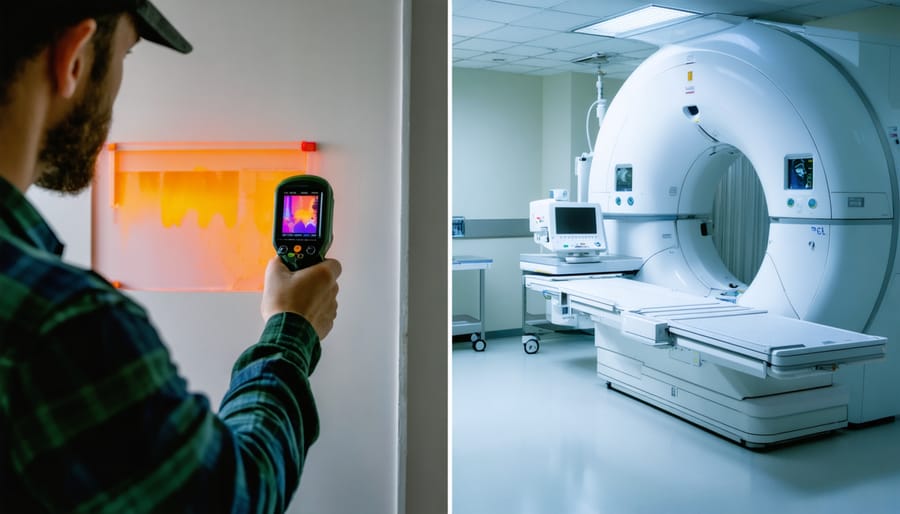
Forget what you’ve seen in movies—no camera can see through walls like Superman’s X-ray vision. The search term “X-ray thermal camera” reveals a common misconception: thermal cameras and X-ray technology are completely different beasts, each with distinct capabilities and limitations.
Thermal cameras detect infrared radiation (heat signatures) emitted by objects, creating images based on temperature differences. They excel at spotting warm bodies in darkness, identifying heat loss in buildings, or detecting equipment malfunctions before they become costly failures. X-ray systems, conversely, use electromagnetic radiation to penetrate solid objects—think medical imaging or airport security scanners—but require specialized equipment, safety protocols, and often regulatory approval.
Here’s what matters for practical use: thermal cameras cannot see through solid walls, but they can detect temperature variations on wall surfaces that might indicate hidden pipes, electrical issues, or insulation problems. They won’t reveal what’s inside a locked safe, but they’ll show you if someone recently touched it. This makes thermal imaging invaluable for home inspections, wildlife observation, security applications, and preventive maintenance—without the safety concerns or legal restrictions surrounding actual X-ray technology.
Understanding this distinction helps you choose the right tool for your needs. Whether you’re a wildlife photographer tracking nocturnal animals, a homeowner investigating energy efficiency, or a professional conducting building inspections, thermal cameras offer remarkable capabilities—just not the see-through walls kind. Let’s explore what these fascinating devices actually do and how you can leverage their real-world applications.
What People Really Mean When They Search for ‘X-Ray Thermal Camera’
Let’s be honest—when most people type “x-ray thermal camera” into a search engine, they’re usually picturing something straight out of a spy movie. Maybe you’re imagining a device that lets you peer through walls like Superman, or perhaps you’ve seen those dramatic thermal images on TV and wondered if they offer X-ray-like vision. The truth is, this search term combines two completely different technologies, and understanding what you’re really looking for matters.
Here’s what typically drives this search. First, some folks genuinely believe thermal cameras can see through solid objects the way X-rays penetrate the body at a doctor’s office. Second, others are searching for infrared cameras that detect heat signatures through certain materials—which is actually possible in limited scenarios. Third, there’s a group who simply aren’t sure about the terminology and are trying to find advanced imaging equipment without knowing the proper technical names.
The reality check? Thermal cameras cannot see through solid walls, clothing, or most materials like X-rays can. Instead, they detect infrared radiation—essentially heat—emitted by objects. Think of it this way: when you stand near a wall, your body heat might warm that wall slightly, and a thermal camera picks up that temperature difference on the surface. It’s detecting the warmth on the wall itself, not seeing your skeleton through it.
That said, thermal imaging is incredibly powerful within its actual capabilities. These cameras excel at finding heat leaks in home insulation, detecting electrical hotspots before they become fire hazards, locating people in search-and-rescue operations, and even spotting wildlife at night. Real-world example: firefighters use thermal cameras to see through smoke—not because they penetrate materials, but because smoke is relatively transparent to infrared wavelengths.
Understanding this distinction helps you choose the right tool. If you need actual penetrating vision for medical or security purposes, you’re looking at entirely different equipment with strict regulations. But if you want to visualize heat patterns and temperature variations—which covers most practical applications—thermal cameras deliver impressive results without any confusion.
The Science Behind Thermal Imaging (No X-Rays Involved)
Infrared Detection vs. X-Ray Penetration
Let’s clear up a common misconception by looking at how these two technologies actually work, because they’re fundamentally different in fascinating ways.
X-rays penetrate through objects. Think of them as powerful waves that pass right through soft tissues, plastics, and thin materials, but get absorbed by denser substances like bones or metal. When you get a medical X-ray, radiation travels through your body and creates a shadow image on the detector behind you. The darker areas show where the rays passed through easily, while lighter spots indicate where denser materials blocked them. It’s essentially creating a picture of what’s inside an object.
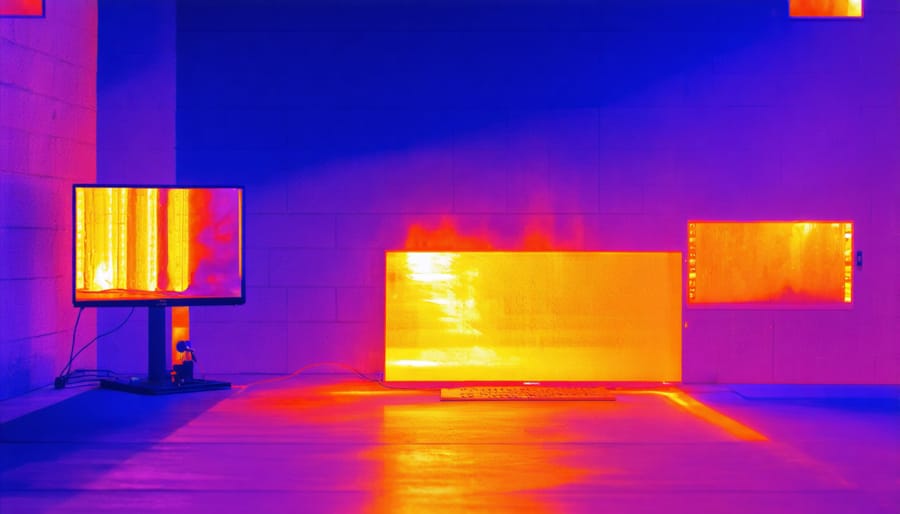
Thermal cameras, on the other hand, work with infrared imaging capabilities that detect heat energy radiating from surfaces. They cannot see through walls or clothing. Instead, they measure temperature differences on the outer surface of whatever you’re pointing them at. Imagine holding your hand against a cold wall for a minute, then removing it. A thermal camera would detect the warm handprint you left behind, but it wouldn’t show anything about what’s inside the wall itself.
Here’s a practical example: If someone stands behind a closed door, an X-ray could theoretically image their skeleton through the door. A thermal camera would only show the door’s surface temperature, possibly revealing a slightly warmer spot where the person’s body heat transfers through the material over time. The thermal camera reads temperature patterns, not internal structures.
What Thermal Cameras Can and Cannot See
Let’s clear up a persistent myth: thermal cameras don’t have X-ray vision, and they certainly can’t see through walls or clothing like in the movies. What they do exceptionally well is detect heat signatures and temperature differences on surfaces.
Think of it this way: a thermal camera sees heat radiating from the outermost surface of objects. When pointed at a wall, you’ll see the wall’s surface temperature—maybe spotting a warm patch where a pipe runs underneath or a cold area indicating poor insulation. But you won’t see the person standing on the other side. Similarly, clothing acts as insulation, and the camera captures the heat signature of the fabric itself, not your body underneath.
Where thermal cameras truly shine is in identifying temperature variations. A plumber might spot a hidden water leak behind drywall because moisture changes the wall’s surface temperature. Wildlife photographers use them to locate animals at night by detecting their body heat against cooler backgrounds. Home inspectors reveal drafty windows, missing insulation, or overheating electrical components—all visible as temperature contrasts.
In practical terms, thermal imaging shows you hot engines, cold beverages, warm handprints on surfaces, and heat loss around doors. It’s powerful technology for temperature-based detection, just not the see-through superpower that science fiction suggests.
Practical Applications Where Thermal Imaging Shines
Wildlife and Nature Photography
For wildlife photographers, thermal cameras have become invaluable tools for tracking and observing animals in complete darkness. Unlike traditional night vision that requires some ambient light, thermal imaging detects heat signatures, allowing you to spot warm-blooded animals hiding in dense foliage or moving across open terrain at night.
Professional wildlife photographer Sarah Chen uses her thermal camera as a scouting tool before dawn shoots. “I can identify where deer are bedding down without disturbing them,” she explains. “It’s like having a preview of the scene before I even set up my main camera.” This pre-visualization helps photographers position themselves strategically and anticipate animal behavior.
Thermal cameras also reveal fascinating patterns invisible to the naked eye. You can observe how nocturnal animals navigate their environment, track their movement corridors, and even spot recently vacated resting spots through residual heat signatures. These insights offer unique perspectives that enhance your understanding of wildlife behavior.
Conservation photographer Mike Rodriguez pairs thermal footage with conventional photography to document species activity patterns. “The thermal data adds scientific value to my work,” he notes. “It shows when and where animals are most active without the invasive presence of visible lighting.”
While you won’t capture award-winning photos directly through thermal cameras, they serve as powerful companion tools for serious wildlife photographers seeking to elevate their craft.
Home Inspection and Energy Auditing
For homeowners and professionals alike, thermal cameras have become surprisingly accessible tools for identifying problems that remain invisible to the naked eye. Think of them as diagnostic devices that reveal the story your home is telling through its heat signature.
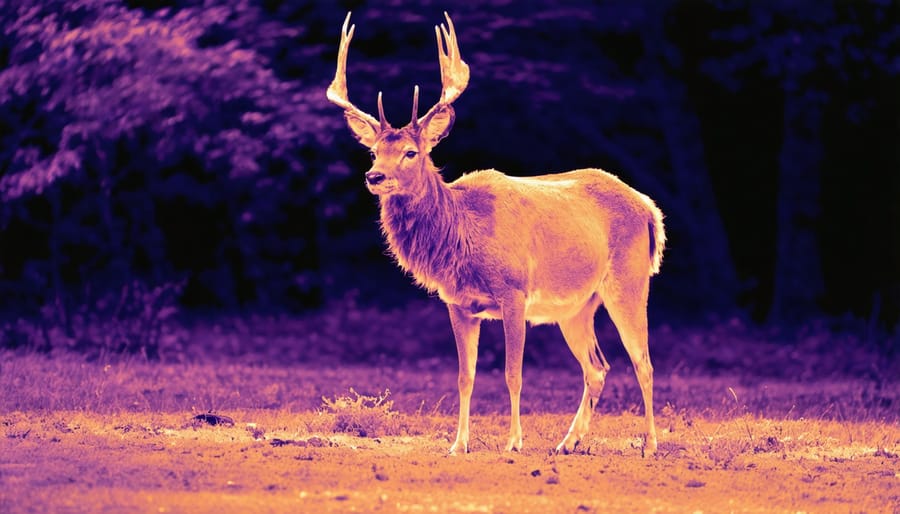
One of the most practical applications is detecting insulation gaps. Point a consumer-level thermal camera at your walls during winter, and poorly insulated areas will appear as distinct cold spots in brilliant blues and purples, while properly insulated sections glow warmer. This visual feedback helps prioritize energy efficiency upgrades and can save hundreds on heating bills.
Water leaks present another valuable use case. Because moisture affects surface temperature, thermal cameras can detect hidden leaks behind walls or under floors before they cause extensive damage. You’ll notice cooler areas where water has accumulated or warmer spots where plumbing issues exist.
Electrical hotspots deserve special attention for safety reasons. Overloaded circuits, loose connections, or failing components generate excess heat that thermal cameras readily identify. This early warning system can prevent electrical fires.
For those considering a purchase, entry-level thermal cameras now start around $200-300. Look for models with at least 160×120 resolution for home inspections. Higher-end options offer smartphone connectivity and detailed reporting features. Remember, thermal cameras complement traditional inspection methods rather than replacing them entirely.
Creative and Artistic Photography
Beyond their practical applications, thermal cameras have opened up fascinating creative possibilities for photographers willing to experiment. Artists and photographers are discovering that heat signatures can reveal a completely different perspective on familiar subjects, creating images that blur the line between science and art.
Thermal portraits have become particularly intriguing. Rather than capturing facial features in traditional ways, these images show temperature variations across the skin—highlighting areas where blood flows close to the surface, recent touch marks on objects, or the warmth lingering after physical contact. Photographer Richard Mosse famously used military-grade thermal imaging to create hauntingly beautiful portraits that challenge conventional documentary photography.
Abstract heat patterns offer another creative avenue. Photographing everyday objects as they cool or heat creates mesmerizing gradients and color shifts. A simple cup of coffee becomes a glowing beacon, while ice cubes transform into dark voids against warmer backgrounds. These images often resemble abstract paintings more than traditional photographs.
Some experimental photographers combine thermal imagery with visible light shots, layering them in post-processing to create surreal composite images. Others document temporal heat signatures—capturing the ghost-like impressions people leave behind when they walk away from chairs or touch walls.
The key to successful thermal art photography lies in understanding that you’re essentially painting with temperature, creating compositions based on heat rather than light.
Search and Rescue, Security, and Professional Use
While thermal cameras might not offer X-ray vision, they’ve become invaluable tools across numerous professional fields, and understanding these applications can open exciting doors for photography enthusiasts looking to expand their skill sets.
In search and rescue operations, thermal imaging literally saves lives. Emergency responders use these cameras to locate missing persons in darkness, dense forests, or smoke-filled buildings where traditional vision fails completely. The technology detects body heat signatures through conditions that would leave conventional cameras useless. Fire departments rely on thermal cameras to identify hot spots hidden behind walls, locate victims in zero-visibility situations, and assess structural integrity during emergencies.
Building inspectors have embraced thermal imaging as their secret weapon for detecting problems invisible to the naked eye. These professionals scan structures to find heat loss from poor insulation, locate moisture intrusion before it causes major damage, and identify electrical hotspots that could signal fire hazards. A real-world example: inspectors can quickly spot a failing HVAC system or find exactly where cold air infiltrates through gaps in building envelopes, saving property owners thousands in energy costs.
Industrial maintenance teams use thermal cameras for predictive maintenance, identifying overheating machinery components before they fail catastrophically. This proactive approach prevents costly downtime and dangerous equipment failures.
For hobbyists interested in exploring these professional applications, consider starting with entry-level thermal cameras designed for home energy audits or basic inspections. Many community colleges and trade schools offer thermal imaging certification courses that welcome enthusiasts alongside professionals, providing hands-on experience with industrial-grade equipment and opening potential career pathways.
Types of Thermal Cameras Available Today
Smartphone Attachments and Budget Options
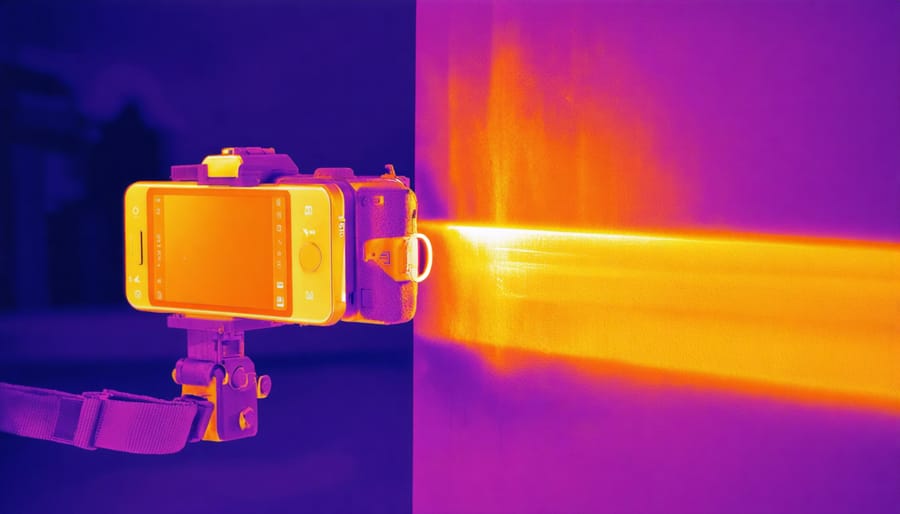
If you’re curious about thermal imaging but not ready to invest hundreds or thousands of dollars, smartphone attachments offer an accessible entry point. Devices like the FLIR One and Seek Thermal CompactPRO transform your existing phone into a capable thermal camera for $200-$400.
These attachments plug directly into your smartphone’s charging port and work through dedicated apps. The FLIR One (starting around $230) provides thermal resolution of 160×120 pixels and features MSX technology, which overlays visible light edges onto thermal images for better clarity. Seek Thermal’s options range from $200-$350, with their higher-end models offering slightly better resolution at 206×156 pixels.
Real-world performance is surprisingly capable for the price. I’ve used these devices to identify drafty windows in my home, locate overheating electrical outlets, and even spot wildlife during evening walks. However, limitations exist: detection ranges typically max out around 300 feet, image quality won’t match professional-grade cameras, and they drain your phone battery relatively quickly.
These budget options won’t see through walls or clothing despite any X-ray misconceptions. They’re legitimate thermal imaging tools perfect for home inspections, basic electrical diagnostics, or exploring thermal photography as a creative hobby. For beginners wanting to understand thermal imaging without significant financial commitment, smartphone attachments represent excellent value.
Professional Handheld Thermal Cameras
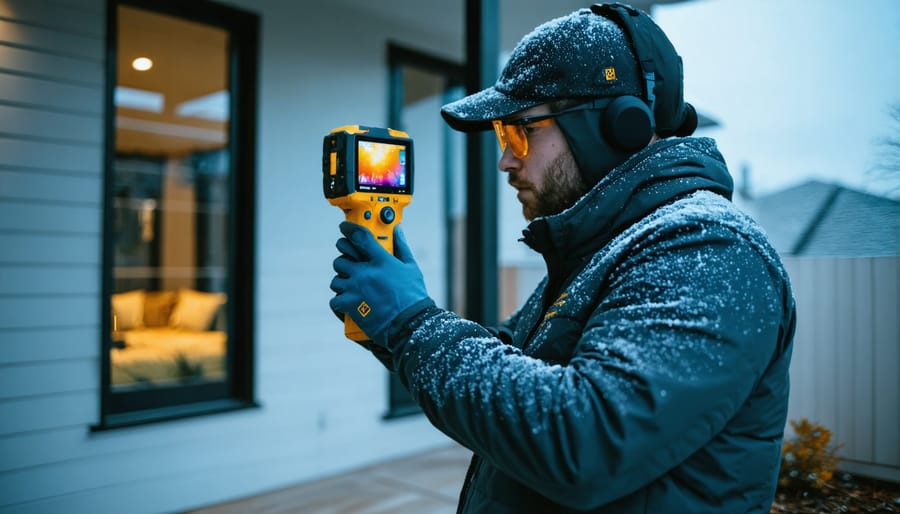
When you’re ready to move beyond smartphone attachments and entry-level devices, professional handheld thermal cameras offer significantly enhanced capabilities that justify their higher price tags. These dedicated units typically range from $1,500 to $10,000 or more, and they’re designed for users who need thermal imaging regularly and demand reliable performance.
The most critical specification to examine is thermal resolution, measured in pixels. Entry-level professional cameras start around 160×120 pixels, but serious work benefits from 320×240 or higher. Similar to resolution considerations in traditional photography, higher pixel counts deliver clearer images and allow you to spot smaller temperature differences from greater distances. A 640×480 thermal camera, for instance, can detect a hotspot the size of a quarter from across a large room—invaluable for building inspections or electrical work.
Temperature range and accuracy matter tremendously. Professional models typically measure from -40°F to 1,200°F with accuracy within 2°C, though specialized industrial versions extend much further. Look for cameras with interchangeable lenses if you need flexibility—a wide-angle lens works beautifully for室 interior surveys, while telephoto options help when inspecting high-voltage equipment from safe distances.
The investment makes sense when thermal imaging becomes integral to your work. Home inspectors, electrical contractors, HVAC technicians, and wildlife researchers quickly recoup costs through improved efficiency and enhanced service offerings. For hobbyists, consider whether occasional use justifies the expense, or if rental options might serve better.
Hybrid and Dual-Camera Systems
Some manufacturers now offer dual-camera systems that combine traditional visible light imaging with thermal capabilities in one device. These hybrid units prove invaluable for documentation work, letting you capture both a standard photo and thermal data simultaneously. The visible image provides context while the thermal overlay highlights temperature variations, making reports and presentations far more compelling.
For professionals in home inspection or building diagnostics, models like the FLIR T-Series and Seek Thermal CompactPRO offer this dual functionality at reasonable price points. Some newer smartphone attachments even provide split-screen views, displaying both images side-by-side. This combination eliminates the need to carry separate equipment and ensures you never miss critical temperature details while documenting your work. The visible light reference also helps orient viewers who might struggle to interpret pure thermal imagery alone.
What to Consider Before Buying Your First Thermal Camera
Before jumping into a thermal camera purchase, let’s talk about what really matters for your specific needs. I’ve seen too many people buy expensive equipment only to realize it doesn’t match their intended use, so let’s make sure you’re investing wisely.
First up is resolution, and here’s where thermal cameras differ dramatically from regular photography. Thermal resolution is measured in pixels, but a 320×240 thermal sensor (76,800 pixels) is considered pretty good, whereas that would be laughably low for a standard camera. Entry-level thermal cameras often start at 160×120, which works fine for basic home inspections or spotting heat leaks. If you’re doing electrical work or detailed building diagnostics, you’ll want at least 320×240. Professional applications might require 640×480 or higher, but these units can cost thousands of dollars.
Temperature range is another crucial specification. Most consumer thermal cameras measure from -4°F to 752°F, which handles typical applications like home energy audits or finding wildlife. However, if you’re inspecting industrial equipment or kilns, you’ll need a camera rated for higher temperatures. Consider what you’ll actually be measuring rather than just buying the widest range available.
Battery life matters more than you might think. Nothing’s worse than discovering a heat signature in your attic only to have your camera die before you can document it properly. Most thermal cameras run for 2-4 hours on a single charge, which sounds adequate until you’re actually in the field. Check if the model uses standard rechargeable batteries that you can swap out or if you’re locked into proprietary power solutions.
Software compatibility deserves serious attention too. Many thermal cameras come with companion apps or desktop software for analyzing and reporting your findings. Some manufacturers offer excellent free software, while others charge subscription fees for advanced features. Make sure the camera works with your smartphone or computer operating system before buying.
Now for the big question: do you actually need a thermal camera? If you’re simply curious about temperature differences around your home, a one-time professional inspection might cost less than buying equipment you’ll rarely use. However, if you’re a home inspector, electrician, or serious energy efficiency enthusiast, owning one makes financial sense.
Budget-wise, decent entry-level thermal cameras start around $300-400, while professional-grade units easily exceed $3,000. Smartphone attachments offer the cheapest entry point at $200-300, though with reduced capabilities. Remember, thermal imaging is a specialized tool, not something you’ll use daily like your regular camera.
Common Misconceptions About Thermal Imaging (Busted)
Let’s clear the air about some persistent myths surrounding thermal cameras. Thanks to Hollywood blockbusters and superhero movies, many people believe thermal imaging gives you X-ray vision or lets you see through solid objects. Spoiler alert: it doesn’t work that way.
The biggest misconception? That thermal cameras can see through walls like Superman. In reality, thermal cameras detect heat signatures on surfaces, not through them. When you point a thermal camera at a wall, you’re seeing the temperature of the wall itself, not what’s happening on the other side. Think of it like taking a regular photo of a brick wall—you see the bricks, not the room beyond. The same principle applies here, just with temperature instead of visible light.
Another common myth involves seeing through clothing. While thermal cameras detect body heat, they don’t penetrate fabric to reveal what’s underneath. What you see is the heat pattern on the outer surface of clothing. In fact, most modern clothing effectively blocks thermal radiation, showing only the fabric’s temperature. This isn’t the privacy nightmare some people imagine.
Windows present another interesting case. Thermal cameras actually can’t see through glass effectively because glass reflects infrared radiation rather than transmitting it. Point a thermal camera at a window, and you’ll mostly see reflections of heat sources in the room behind you, not what’s beyond the glass. This surprises many people who assume thermal imaging works like regular cameras.
Regarding privacy concerns, they’re largely overblown due to these misconceptions. Legitimate privacy considerations exist in any surveillance context, but thermal cameras don’t reveal the intimate details people fear. Most jurisdictions regulate thermal imaging use by law enforcement, requiring warrants for residential surveillance. For personal use, standard photography laws generally apply—don’t point cameras where people have reasonable privacy expectations, whether thermal or conventional.
Now that we’ve cleared up the confusion between X-ray and thermal imaging, you can appreciate what thermal cameras actually bring to the table. While they won’t let you see through walls like Superman, they open up fascinating opportunities for creative photography and practical problem-solving. From capturing the heat signature of wildlife at night to identifying energy leaks in your home, thermal imaging offers a unique perspective on the world around us.
If you’re considering adding thermal imaging to your toolkit, remember that these cameras excel at detecting temperature differences, not penetrating solid objects. This makes them perfect for nighttime photography, building inspections, and electrical troubleshooting—real-world applications where temperature visualization matters.
Whether you’re a professional photographer looking to expand your capabilities or a hobbyist exploring new creative avenues, thermal imaging technology has matured into an accessible and genuinely useful tool. The key is approaching it with realistic expectations about what it can and cannot do.
Have you experimented with thermal imaging in your photography or projects? We’d love to hear about your experiences, creative applications, or any questions you might have. Drop a comment below and join the conversation with fellow enthusiasts who are discovering the practical magic of seeing in heat.


 By
By