 By
By 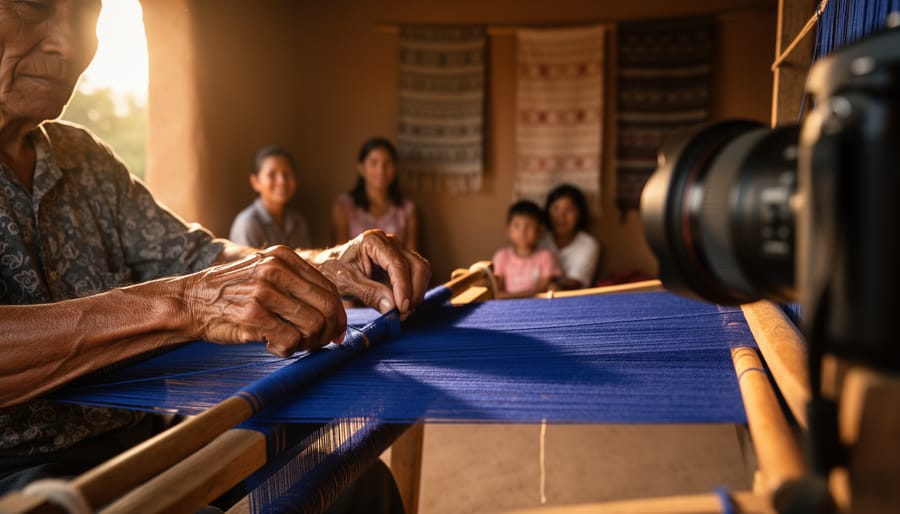
Cultural preservation through photography means documenting traditions, ceremonies, crafts, and daily life of communities before they vanish or transform beyond recognition. This specialized field transforms your camera into a time capsule, creating visual archives that future generations will treasure as irreplaceable historical records.
The role demands more than technical excellence behind the lens. You become part anthropologist, part historian, and part storyteller—someone who earns trust within communities, understands cultural sensitivities, and recognizes which moments hold significance beyond their aesthetic appeal. When an elder demonstrates a centuries-old weaving technique or families gather for a dying festival tradition, your photographs become primary source documents for researchers, educators, and descendants who may never witness these practices firsthand.
This work carries profound responsibility. Unlike typical documentary photography, cultural preservation requires deep ethical consideration about consent, representation, and ownership of images. You’re not simply capturing beautiful moments—you’re stewarding cultural heritage. Many indigenous communities have experienced exploitation through photography, making it essential to establish collaborative relationships where subjects maintain agency over how their culture is portrayed and shared.
The field offers photographers purposeful work that extends far beyond galleries and social media. Museums, cultural organizations, academic institutions, and communities themselves actively seek photographers who can sensitively document vanishing traditions. Whether you’re photographing Appalachian folk musicians, urban immigrant communities maintaining homeland customs, or indigenous language speakers, your images create bridges between past and future, ensuring cultural knowledge survives even when practitioners cannot pass it down directly.
What Makes a Photographer a Cultural Preservationist?
The Difference Between Documentation and Preservation
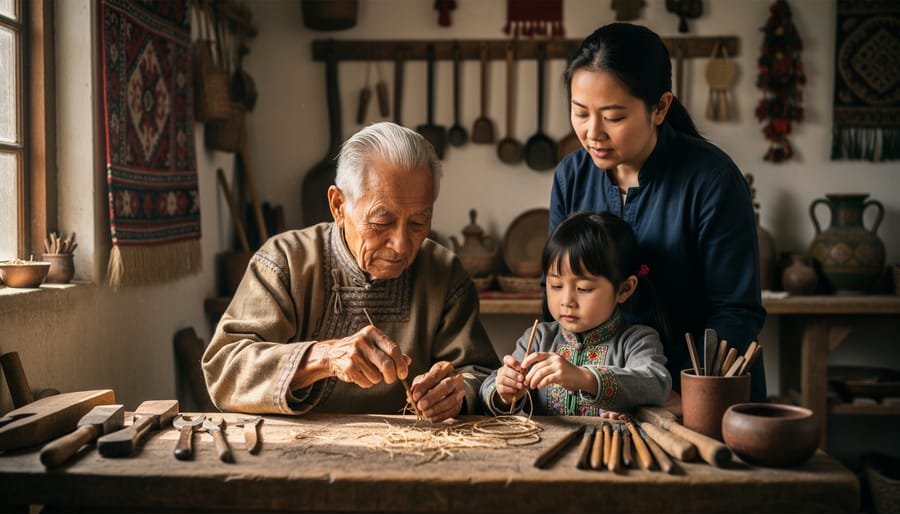
When you snap a photo of a traditional ceremony or historic building, you’re documenting a moment. But preservation? That’s a different animal entirely. While documentary photography captures what exists, cultural preservation photography creates a lasting record designed for future generations to understand not just what something looked like, but why it mattered.
Think of documentation as a snapshot and preservation as a comprehensive story. A preservationist doesn’t just photograph a weaving technique—they capture the weaver’s hands at work, the materials used, the finished product, and ideally, interview the artisan about the tradition’s significance. This context transforms a pretty picture into an educational resource that historians, anthropologists, and descendants can actually use decades later.
The intentionality makes all the difference. Preservation work requires planning: using archival-quality file formats, maintaining detailed metadata about date, location, and cultural context, and storing images in multiple secure locations. You’re thinking about longevity from the first shutter click.
Community involvement separates good preservation from potentially harmful documentation. Before photographing cultural practices, preservationists seek permission, build relationships, and often collaborate with community members to ensure accurate representation. The subjects become partners in the process, not just photographic subjects.
This approach demands patience and cultural sensitivity. You might spend months building trust before capturing a single frame. But that investment ensures your work serves the community’s interests, not just your portfolio. Real preservation photography answers to the people whose culture you’re documenting—and ultimately, to history itself.
Building Trust Within Communities
Building genuine trust within communities starts long before you lift your camera. The best cultural preservationists understand that meaningful documentation requires relationships built on mutual respect and transparency. Begin by reaching out to community leaders or cultural organizations, clearly explaining your intentions and asking how your work might serve their needs, not just your portfolio.
Photographer Kiliii Yuyan exemplifies this approach beautifully. As someone with Indigenous heritage himself, he spends months living within communities before photographing them, learning their stories and ensuring his images reflect their perspectives rather than outsider assumptions. His work demonstrates how cultural perspectives in photography become richer when photographers prioritize listening over shooting.
Always obtain explicit permission, and go beyond legal requirements. Written consent matters, but so does ongoing dialogue about how images will be used. Photographer Fazal Sheikh maintains long-term relationships with his subjects, returning to share prints and involving communities in decisions about exhibition and publication.
Create collaborative relationships by asking: What stories do you want told? How can these images benefit your community? Consider sharing digital copies freely or organizing exhibitions in the communities themselves. Brazilian photographer Sebastião Salgado’s practice of returning to document long-term changes in communities shows how photographers can become trusted chroniclers rather than extractive visitors.
Remember that saying no to a photograph sometimes builds more trust than taking it. When communities see you respect boundaries, doors open that remain closed to those who simply take what they want.
The Technical Side: Camera Gear That Serves Cultural Preservation
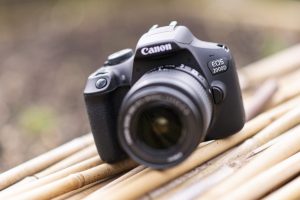
Choosing Cameras for Archival-Quality Documentation
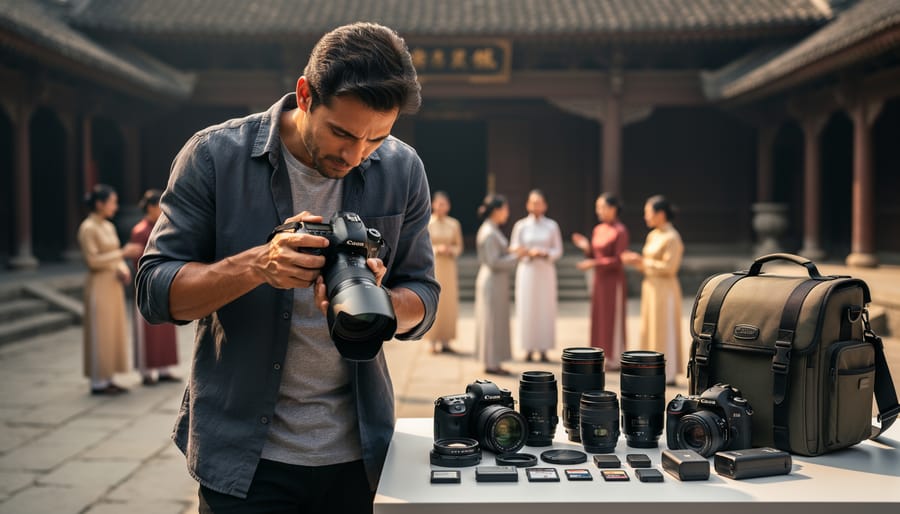
When documenting cultural heritage, your camera becomes a time capsule, not just a creative tool. This fundamental shift changes everything about how you evaluate equipment, and understanding these priorities will save you from costly mistakes.
Resolution sits at the top of your requirements list, but not for the reasons you might think. While commercial photographers might debate whether 24 megapixels suffices, preservationists need 40+ megapixels as a baseline. Why? Because someone in 2075 might need to examine a tiny detail in your image that seemed insignificant today. That weathered carving on a door frame or subtle pattern in textile work could become crucial evidence for future researchers. Higher resolution provides insurance against unknowable future needs.
Color accuracy becomes equally critical when you’re creating documentary records. Commercial work allows creative interpretation, but preservation demands forensic precision. Look for cameras with excellent color science and the ability to use color calibration targets. Your images should represent materials exactly as they appear, because scholars might use your photographs to identify specific pigments, detect deterioration, or authenticate artifacts decades from now.
RAW format capability is non-negotiable. While JPEGs work fine for Instagram, they’re inadequate for archival purposes. RAW files preserve every bit of sensor data, providing maximum flexibility for future image processing techniques we can’t imagine today. Think of RAW files as your digital negative, containing information that remains accessible as technology evolves.
Durability matters more in fieldwork than studio shoots. Cultural preservation often takes you to challenging environments—humid tropical sites, dusty archaeological digs, or remote villages without easy repair access. Weather-sealed bodies and robust construction aren’t luxury features; they’re practical necessities. Your camera needs to survive conditions that would sideline typical consumer equipment.
Lenses and Accessories for Authentic Cultural Documentation
Selecting the right equipment for cultural preservation work requires balancing technical excellence with respect for the communities you’re documenting. Your gear choices directly impact both the quality of your preservation efforts and the relationships you build with cultural custodians.
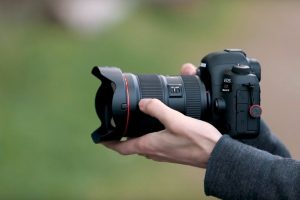
When it comes to lenses, prime lenses often prove invaluable for their superior low-light performance and discrete nature. A 35mm f/1.8 or 50mm f/1.8 allows you to photograph ceremonies in dimly lit temples or community centers without intrusive flash photography. These lenses also tend to be smaller and less intimidating than large zoom lenses, which matters when building trust with subjects. However, zoom lenses like a 24-70mm f/2.8 offer flexibility when you cannot move freely in sacred spaces or during ceremonies where your position is fixed. The key is matching your lens choice to each scenario’s specific constraints and sensitivities.
Lighting equipment demands particular thoughtfulness in cultural documentation. Consider battery-powered LED panels with adjustable color temperature rather than harsh speedlights. These continuous lights let subjects see exactly how they’re being lit, creating transparency in your process. For sacred spaces, sometimes natural light combined with a reflector is your only respectful option. Always discuss lighting plans with community leaders beforehand.
Audio recording deserves equal attention to visual documentation. A quality digital recorder like the Zoom H5 paired with a lavalier microphone captures oral histories with clarity that honors the speaker’s voice. Windscreens become essential for outdoor recordings of traditional songs or storytelling sessions.
Finally, invest in reliable portable storage solutions. Redundant backup systems using both solid-state drives and cloud storage when connectivity allows protect irreplaceable cultural documentation. Remember, you’re not just storing photographs but safeguarding community heritage that cannot be recreated if lost.
What to Photograph: Beyond the Obvious Cultural Markers
Documenting Dying Crafts and Traditional Knowledge
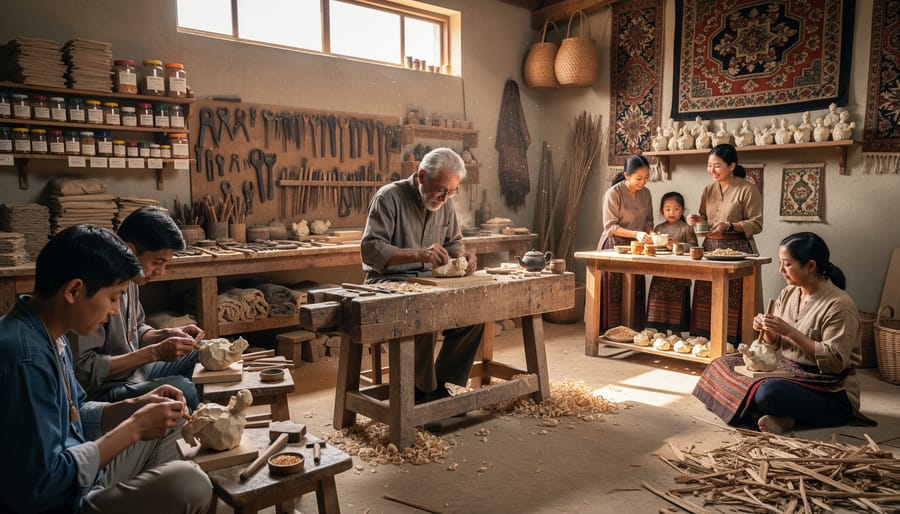
Documenting dying crafts requires patience and a methodical approach that goes far beyond simply taking beautiful photographs. Your goal is to create a visual archive that someone in the future could use to actually learn and revive these endangered skills.
Start by photographing the complete workspace. Capture the environment where the craft takes place, including lighting conditions, workbenches, and the spatial arrangement of tools. This context matters because traditional crafts often rely on specific setups that evolved over generations.
Next, focus on the tools and materials in detail. Photograph each tool from multiple angles, showing wear patterns, modifications, and how craftspeople hold them. These details reveal technique insights that written descriptions might miss. Use macro photography to capture texture in materials—the grain of wood, the weave of textiles, or the composition of natural dyes.
The heart of your documentation lies in capturing step-by-step processes. Shoot sequences that show every stage, from raw materials to finished product. Don’t skip seemingly simple steps; what appears obvious to a master craftsperson might puzzle future learners. Use burst mode during critical moments where timing and hand position matter.
Document the practitioners themselves with portrait work that shows their hands, facial expressions, and body positions during work. Many Indigenous photographers excel at this intimate documentation style, understanding how to honor their subjects while preserving technical knowledge.
Include detailed notes with your images recording measurements, timing, environmental factors, and the practitioner’s verbal explanations. These annotations transform your photographs from artistic records into practical teaching tools that future generations can genuinely learn from.
The Power of Environmental and Contextual Shots
While portraits capture individual faces and stories, the environments where people live, work, and gather provide essential context that completes the cultural narrative. Think of environmental shots as the stage where cultural life unfolds—without understanding the setting, we miss crucial elements of the story.
Photographing sacred spaces, marketplaces, community centers, and domestic environments reveals how architecture and geography shape cultural practices. A temple’s orientation, a village’s layout, or the worn threshold of a communal doorway all communicate information that portraits alone cannot convey. These spaces hold centuries of collective memory and continue to influence daily routines and social interactions.
Daily environments are particularly valuable for cultural documentation. Photograph the kitchen where traditional meals are prepared, the workshop where craftspeople practice their trades, or the courtyard where neighbors congregate at day’s end. These seemingly ordinary spaces become extraordinary historical records as communities change and modernize.
When capturing these contextual shots, work with available light to maintain authenticity, and use wide-angle lenses to show spatial relationships. Document details like worn steps, weathered walls, and arrangement of objects—these elements reveal patterns of use and cultural priorities. Consider creating environmental portraits that place subjects within their natural settings, showing the relationship between people and place.
Remember that landscapes themselves can be cultural artifacts. Agricultural terraces, fishing grounds, and seasonal gathering sites represent generations of interaction with the land. By documenting these environments alongside the people who inhabit them, you create a comprehensive visual record that honors the complete cultural ecosystem rather than isolated fragments.
Workflow and Archiving: Making Your Work Last Centuries
Metadata That Tells the Full Story
Every photograph you take for cultural preservation becomes exponentially more valuable when paired with comprehensive metadata. Think of metadata as the story behind the image—without it, future generations might admire a beautiful portrait but never know who that person was, when they lived, or what their traditional clothing signified.
Start with the basics: capture full names (with correct spellings and any alternate names), precise dates, and specific locations beyond just city names. For a ceremony photograph, note not only “Ghana” but the specific village, region, and even GPS coordinates if possible. Document the cultural context—is this an everyday activity or a special occasion? What’s the significance of the objects, clothing, or actions shown?
Permissions deserve their own metadata field. Record who gave consent, when, and for what uses. This protects both you and the communities you document.
For organizing large projects, Adobe Lightroom offers robust metadata capabilities, while software like Tropy specializes in archival work. Create consistent tagging systems early—use controlled vocabularies for cultural elements (like specific ceremony names or craft techniques) so you can find images years later. Consider tags for time period, generation, cultural group, and activity type.
Many preservationists maintain parallel spreadsheets linking image numbers to extended contextual information. This redundancy ensures that if one system fails, the stories survive.
Storage Solutions for Archival Longevity
Digital preservation is only as reliable as your storage strategy, and cultural preservationists know that redundancy is everything. The 3-2-1 rule should be your baseline: maintain three copies of every file, on two different media types, with one copy stored off-site. This might mean keeping original files on an external hard drive, backup copies on a second drive, and a third set in cloud storage.
When choosing between cloud and local storage, the answer is both. Cloud services like Amazon Glacier or dedicated archival platforms offer geographic redundancy and protection from local disasters, but subscription models can become costly over decades. Local storage gives you physical control but requires vigilance about drive health and migration to new formats every five to seven years.
File format decisions matter enormously. RAW files preserve maximum sensor data and are ideal for your working archive, but they’re proprietary to specific camera manufacturers. Convert copies to DNG (Digital Negative) for broader compatibility, or create TIFF versions for truly universal access. TIFF files are uncompressed, widely supported, and likely to remain readable decades from now.
Consider partnering with cultural institutions, universities, or organizations like the Library of Congress, which may host copies of culturally significant collections. These partnerships ensure your preservation work outlives individual technology cycles and remains accessible to future generations.
Getting Started: Your First Cultural Preservation Project

Starting Local: Preserving Your Own Community’s Heritage
Your most meaningful cultural preservation work often begins right outside your door. Before planning trips to distant locations, explore the rich heritage within your immediate community. Every neighborhood holds stories waiting to be documented—the Ethiopian restaurant run by three generations, the last family-owned hardware store downtown, or the weekly gathering of Portuguese elders at the community center.
Start by mapping your area’s cultural assets. Walk your neighborhood with fresh eyes, noting immigrant-owned businesses, community gathering spaces, religious institutions, and longtime residents. These are your living archives. Strike up conversations at that Vietnamese bakery you pass daily or attend public events at the local cultural center. Building genuine relationships comes before capturing human stories through your lens.
For your first project, consider documenting a specific tradition or skill at risk of disappearing. Perhaps Mrs. Rodriguez down the street still makes tamales using her grandmother’s technique, or the neighborhood cobbler represents a vanishing trade. Propose a simple portrait and interview session, explaining your preservation goals clearly.
Another approachable project involves photographing neighborhood change. Document that corner store before it becomes a chain franchise, or capture block parties and street life that define your community’s character today. Create comparison images showing architectural or demographic shifts over time.
Remember, you don’t need exotic locations to create meaningful preservation work. Your community’s everyday heritage deserves the same respect and documentation as any distant culture—and you’re uniquely positioned to tell these stories authentically.
Collaborating With Cultural Organizations and Museums
Building partnerships with cultural institutions opens doors to funding, exhibitions, and long-term preservation impact. Start by researching organizations whose missions align with your photographic work. Local historical societies often seek documentation of changing neighborhoods, while ethnic heritage centers might need archives of traditional ceremonies or cultural diaspora documentation.
When approaching these organizations, prepare a concise proposal outlining your project’s scope, its cultural significance, and how it serves their preservation goals. Include sample images that demonstrate both technical quality and cultural sensitivity. Museum curators particularly value photographers who understand archival standards and metadata requirements.
Grant opportunities abound through cultural councils, heritage foundations, and museum partnerships. Many institutions offer artist residencies or project-based funding specifically for documentation work. The National Endowment for the Arts and regional humanities councils frequently support cultural preservation photography.
Consider proposing temporary exhibitions that raise awareness while building your professional portfolio. These shows often lead to acquisition discussions for permanent collections. When donating work, negotiate terms that protect your copyright while ensuring public access. Museums typically provide proper attribution and professional handling of prints.
Collaborative projects benefit everyone. You gain legitimacy, funding, and archival expertise, while institutions receive professionally documented cultural materials. Some museums even offer technical resources like scanning equipment or conservation advice. Building these relationships takes time, but they create lasting impact beyond individual photography projects, ensuring your cultural preservation work reaches future generations.
Cultural preservation photography isn’t reserved for National Geographic photographers or academic researchers with extensive grants. It’s a meaningful pursuit accessible to anyone holding a camera, regardless of skill level or equipment. The truth is, culture worth preserving exists all around you, right now, in your own community.
That family-owned restaurant serving recipes passed down through generations, the local craftsperson creating traditional goods, the neighborhood celebrations reflecting immigrant heritage, the aging architecture telling your town’s story—these are all subjects urgently needing documentation. Each day that passes without these photographs being made, we lose irreplaceable visual records of our collective human experience.
Starting your preservation project requires nothing more than intention and curiosity. Begin by identifying what makes your community culturally unique. Talk with elders, visit cultural centers, attend local festivals. Build relationships before building your portfolio. Remember that preservation work offers rewards far beyond Instagram likes or commercial assignments—you’re creating historical records that future generations will treasure.
The technical skills you’ve been developing, whether you’re shooting with a smartphone or professional gear, are already sufficient to begin this work. What matters most is showing up with respect, patience, and commitment to telling authentic stories.
Consider this your invitation to look beyond purely aesthetic or commercial photography goals. Every photographer has the power to become a cultural preservationist. The only question remaining is: what culture within your reach will you choose to document? The world is waiting for your perspective, and the time to start is now.

 By
By