 By
By 
Look beyond the standard tripod and lens filter—truly innovative camera accessories are redefining what’s possible behind the lens. While essential camera accessories form your foundation, the cutting edge of photography gear now includes AI-powered tracking systems, modular lighting solutions that fit in your pocket, and smartphone-integrated tools that bridge the gap between professional and mobile photography.
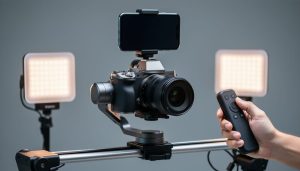
The photography landscape has shifted dramatically in recent years. What once required a studio full of equipment can now be achieved with compact, intelligent accessories that cost a fraction of traditional gear. Motion control systems that once demanded five-figure investments are now available as portable rigs under $500. Lighting modifiers have evolved from bulky softboxes to magnetic, collapsible designs that transform in seconds.
This evolution matters because it democratizes creative possibilities. A landscape photographer can now capture breathtaking time-blends using motorized slider systems small enough for backcountry hiking. Portrait shooters are achieving studio-quality results in client homes with LED panels that pack flat and adjust color temperature via smartphone app.
The accessories we’ll explore aren’t just incremental improvements on existing tools—they represent fundamental shifts in how photographers approach their craft. Whether you’re shooting weddings, wildlife, or commercial work, these innovations solve real problems you face in the field, often in ways you didn’t know were possible.
Smart Triggers and Remote Control Systems
Voice-Activated Camera Controls
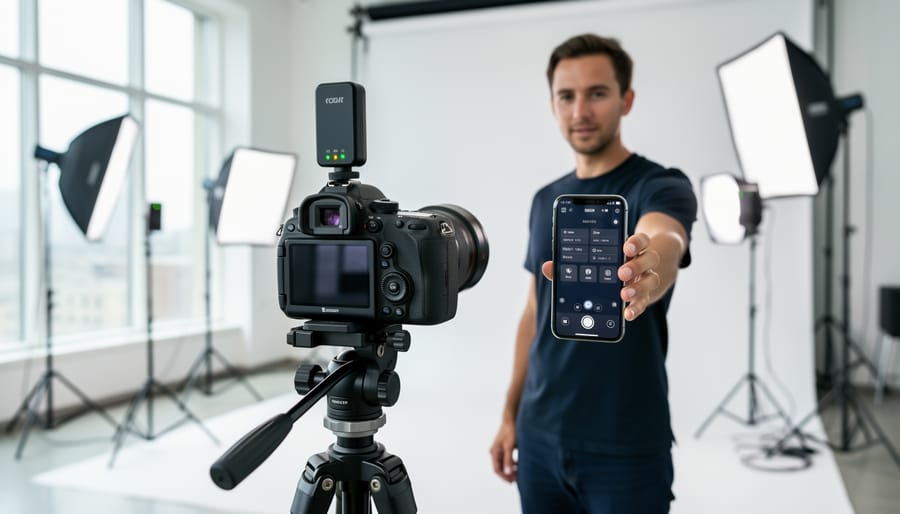
Imagine you’re photographing a skittish fox in dense woodland. You’ve finally got the perfect composition, but reaching for the shutter button might send your subject bolting. Or picture yourself trying to capture a group self-portrait on a mountain peak—you’ve set up the tripod, but you’re stuck sprinting back and forth to check if everyone’s in frame. This is where voice-activated camera controls become genuinely transformative.
These devices use speech recognition to trigger your camera’s shutter, start video recording, or even adjust settings—all without touching your gear. Modern options like dedicated voice triggers sync wirelessly with your camera, while some advanced cameras now feature built-in voice control. The technology has matured considerably, with most systems reliably recognizing commands even in moderately noisy environments.
For wildlife photographers, voice activation eliminates camera shake from pressing buttons and allows you to keep binoculars trained on your subject while shooting. Portrait and wedding photographers use them during client sessions to maintain eye contact and conversation while capturing candid moments. They’re also invaluable for product photography, where you might have your hands full arranging items in a scene.
The accessibility benefits deserve special mention. Photographers with limited mobility or dexterity challenges gain genuine independence through voice control, removing barriers that traditional shutter releases create. Commands like “take a photo” or “start recording” might seem simple, but they open creative possibilities that were previously difficult or impossible.
Most voice-activated accessories work across multiple camera brands and cost between fifty and one hundred fifty dollars—a modest investment for truly hands-free operation.
Advanced Intervalometers with Scene Detection
Traditional intervalometers have long been the go-to tool for time-lapse photography, allowing you to program your camera to take shots at set intervals. But here’s the thing: lighting conditions don’t change at predictable intervals, and neither do compelling compositional elements. That’s where the next generation of smart intervalometers comes in, joining other game-changing photo gadgets that are transforming how we capture the world.
These AI-powered controllers continuously analyze your scene in real-time, automatically adjusting exposure settings as light conditions shift. Imagine shooting a sunset time-lapse where the device seamlessly transitions from bright daylight to the golden hour and into blue hour, all without the dreaded flickering that plagues traditional time-lapses. The technology uses machine learning algorithms to detect changes in ambient light, cloud movement, and even scene composition.
Some advanced models, like the Arsenal 2, can recognize when interesting elements enter the frame—say, a person walking through your architectural shot—and either pause the sequence or adjust composition tracking. This scene detection capability means you’re not just capturing time passing; you’re capturing the most compelling moments within that passage.
For professional work, these devices eliminate hours of post-processing work typically needed to smooth exposure transitions. They’re particularly valuable for architectural photographers documenting construction projects or landscape photographers working through rapidly changing weather conditions. The initial investment might seem steep, but the time saved and improved results make these smart controllers invaluable for serious time-lapse work.
Modular Mounting and Stabilization Solutions
Magnetic Camera Mounting Systems
Imagine scaling a fire escape to capture street art from an unusual perspective, or quickly attaching your camera to a metal beam to document an industrial renovation project. Magnetic camera mounting systems make these scenarios not just possible, but remarkably simple. These clever accessories use powerful neodymium magnets to instantly grip any ferrous metal surface, giving you mounting flexibility that traditional tripods simply can’t match.
The beauty of magnetic mounts lies in their speed and adaptability. Instead of fumbling with tripod legs or searching for a flat surface, you simply place the mount against any steel structure—warehouse beams, vehicle panels, metal railings, or even street furniture—and it locks on immediately. Many systems feature articulating ball heads or adjustable arms, allowing you to fine-tune your composition once attached. This is particularly valuable for time-sensitive shoots where repositioning needs to happen in seconds rather than minutes.
Professional architectural photographers have embraced magnetic mounts for capturing building interiors with steel framework, while automotive photographers use them to secure cameras to car bodies for dynamic rolling shots. The mount strength matters significantly here; quality models can safely hold DSLRs with moderate lenses, while lighter mirrorless setups open up even more possibilities.
One practical consideration: always test the magnetic hold before trusting it with expensive gear, especially on painted or coated surfaces where the connection might be less secure. Some photographers keep a safety strap as backup insurance. When you’re shooting in urban environments rich with metal infrastructure, these mounts become creative problem-solvers, transforming everyday surfaces into stable camera platforms.
Wearable Camera Rigs for POV Shooting
Action cameras revolutionized POV shooting, but they come with limitations that frustrate photographers accustomed to the image quality and control of mirrorless cameras and DSLRs. Enter a new generation of wearable camera rigs designed specifically for larger-sensor cameras, bringing cinematic quality to first-person perspectives without sacrificing stability or comfort.
These body-mounted systems distribute weight across your chest, shoulders, or head, allowing you to shoot hands-free while maintaining access to camera controls. Unlike simple strap solutions, engineered wearable rigs incorporate vibration dampening, adjustable mounting points, and quick-release mechanisms. Documentary filmmakers use chest-mounted rigs to capture intimate moments without the barrier of holding a camera, while adventure photographers employ them to document technical climbs or mountain biking descents where handheld shooting would be impossible.
The Cotton Carrier StrapShot exemplifies practical design in this category. This chest-mounting system positions your camera at an accessible angle, letting you grab it instantly for traditional shooting or leave it mounted for walk-and-talk sequences. The aluminum hub rotates to accommodate different shooting angles, and the design works with cameras up to professional DSLR sizes with attached lenses.
For extreme applications, helmet-mounted systems like those from Glide Gear adapt professional cameras to headgear using counterbalance weights and multi-point attachment. These setups deliver true eye-level perspective that action cameras approximate but never quite achieve. The learning curve is steeper, requiring practice to control head movements smoothly, but the results provide an immersive quality that engages viewers differently than traditional framing.
When selecting a wearable rig, prioritize adjustability and build quality over price. Your expensive camera gear depends on secure mounting, and comfort matters during extended shoots.

Lighting Accessories That Break the Mold
Compact RGB Tube Lights
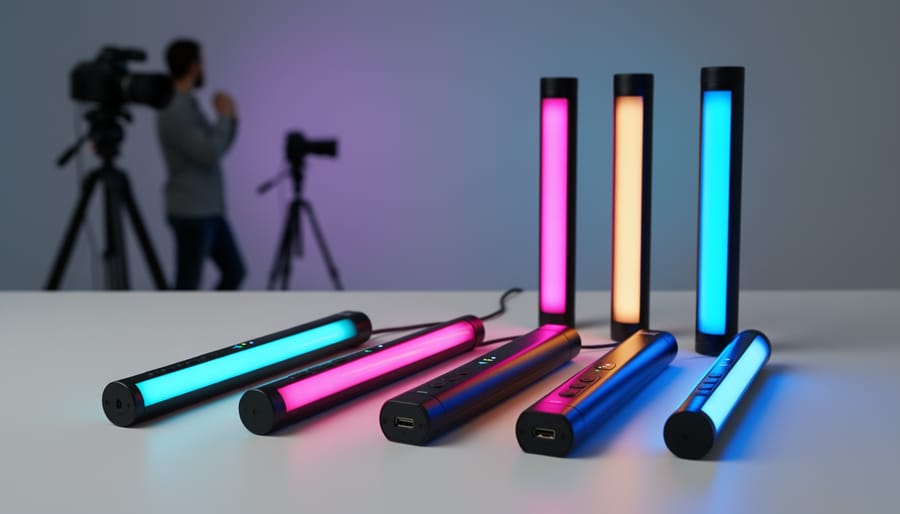
Compact RGB tube lights have transformed how photographers approach lighting, offering a portable solution that fits in your camera bag but delivers professional-grade results. These sleek, battery-powered units pack infinite color possibilities into form factors that range from six inches to two feet, making them incredibly versatile for photographers working across multiple genres.
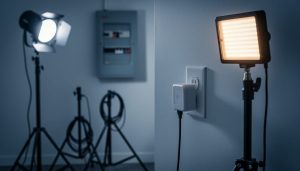
What makes these lights truly innovative is their combination of portability and creative control. Unlike traditional continuous lights that require wall power and bulky modifiers, RGB tubes can be positioned anywhere, from tight product photography setups to outdoor portrait sessions at dusk. Many models feature built-in effects like lightning, fire, and paparazzi simulations that would otherwise require expensive post-production work or complex lighting setups.
For product photographers, these lights excel at creating vibrant background gradients or accent lighting that makes items pop against the frame. You can precisely match brand colors or create complementary color schemes that elevate your commercial work. In portrait photography, RGB tubes allow you to add creative edge lighting, simulate practical light sources like neon signs, or paint dynamic colors onto your subjects for editorial-style imagery.
The practical advantages extend beyond aesthetics. Most RGB tubes offer smartphone app control, letting you dial in exact color temperatures, adjust brightness remotely, and save custom presets for repeatable lighting setups. Battery runtimes typically range from 90 minutes to several hours depending on brightness levels, giving you genuine freedom to work away from power outlets. Whether you’re shooting behind-the-scenes content, adding drama to environmental portraits, or experimenting with color theory in your studio, these compact powerhouses deliver professional lighting effects that were once only possible with extensive gear investments.
Smart Light Modifiers and Diffusers
Gone are the days when controlling light in the field meant hauling heavy softboxes and bulky reflectors. Today’s smart light modifiers combine sophisticated engineering with ultraportable designs, giving you professional lighting control without the professional-sized gear bag.
Modern collapsible diffusion systems have evolved beyond simple fabric stretched over frames. Take the latest generation of magnetic light modifiers, which snap onto speedlights in seconds and fold down to the size of a smartphone. These ingenious designs use memory wire technology, similar to popup reflectors, but with precision-engineered diffusion fabrics that rival studio softboxes. I’ve used these on location shoots where hiking a mile to a waterfall made every ounce count, and the quality difference compared to basic flash diffusers was immediately visible in my subjects’ skin tones.
Innovative light shapers now incorporate features you’d expect from AI-powered lighting solutions. Some diffusers include built-in color temperature adjustment through interchangeable gel layers, while others feature modular designs that transform from spotlights to broad light sources by swapping magnetic panels. This adaptability means carrying one system instead of five separate modifiers.
For real-world application, consider portrait photographers working in harsh midday sun. A compact accordion-style diffuser, which extends to 42 inches but collapses to fit in a camera bag’s side pocket, can soften that overhead light beautifully. These often include adjustable legs for positioning without an assistant, solving the eternal “who’s holding the reflector” problem.
The investment typically ranges from 50 to 200 dollars, but the creative freedom and portability make these accessories essential for photographers who refuse to compromise quality for convenience.
Next-Generation Lens and Sensor Accessories
Smart Filter Systems with Digital Control
Gone are the days of manually twisting filter rings mid-shoot. Smart filter systems represent a genuine leap forward in photography technology, bringing electronic precision to what’s traditionally been a manual process.
These innovative accessories use electronically-controlled variable ND (neutral density) and polarizing filters that connect directly to your camera or smartphone via Bluetooth or cable. Through a dedicated app or control wheel, you can adjust filter intensity in real-time without touching the lens. Think of it as having an infinitely adjustable filter at your fingertips.
For landscape photographers, this technology solves a common frustration. Imagine capturing a waterfall at golden hour—the light changes every minute, and you’re constantly adjusting exposure. With smart filters, you simply dial in the exact ND strength you need through your phone while composing, watching the effect live on screen. Companies like Aurora and PolarPro have developed systems that remember your preferred settings for different scenarios, learning your shooting style over time.
The practical benefits extend beyond convenience. Smart polarizers let you find that perfect angle to eliminate reflections or enhance sky saturation with millimeter precision, something that’s surprisingly difficult when your camera’s already mounted on a tripod. Since these systems draw minimal power and can integrate with existing camera power management systems, they won’t significantly impact your shooting time.
While premium-priced compared to traditional glass, smart filters eliminate the need for carrying multiple physical filters, making them a worthwhile investment for photographers seeking streamlined, precise control.
Specialty Lens Attachments for Creative Effects
Sometimes the most captivating images come not from expensive lenses, but from creative accessories that transform your existing glass into something entirely different. Specialty lens attachments offer photographers the chance to experiment with unique visual effects that would be difficult or impossible to replicate in post-processing software.
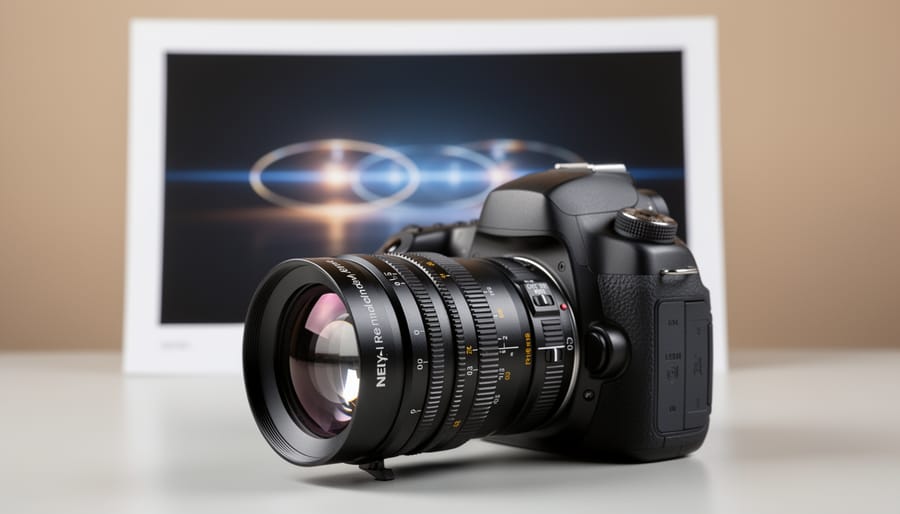
Anamorphic adapters sit at the top of this creative toolkit. Originally developed for cinema, these attachments squeeze a wider image onto your sensor, creating that distinctive widescreen look complete with horizontal lens flares and oval bokeh. Brands like Moment and PolarPro now offer affordable options for mirrorless cameras and even smartphones. The key advantage? You’re capturing genuine optical characteristics rather than applying digital filters. Portrait photographers particularly love the cinematic quality these adapters bring to their work, while videographers appreciate the authentic film aesthetic.
Prism attachments represent another fascinating category. By holding a glass prism in front of your lens, or using purpose-built prism attachments, you can introduce light leaks, rainbow refractions, and dreamy color shifts directly into your frame. These work brilliantly for portrait and product photography, adding an artistic flair that feels organic rather than manufactured. Companies like Lensbaby have created entire systems around this concept, offering rotating prism optics and kaleidoscope effects.
Crystal ball attachments and fractal filters also deserve mention. These create surreal reflections and geometric patterns that add depth and intrigue to otherwise ordinary scenes. Landscape photographers often use crystal balls to capture unique perspectives, while architectural shooters employ fractal filters to create mesmerizing symmetrical compositions.
The beauty of these accessories lies in their immediacy—what you see through the viewfinder is exactly what you’ll capture.
Power Solutions and Connectivity Tools
High-Capacity Power Banks Designed for Cameras
Running out of battery during a crucial shoot is every photographer’s nightmare. High-capacity power banks designed specifically for cameras have evolved far beyond generic smartphone chargers, offering robust solutions that keep your gear operational throughout extended sessions.
These camera-focused power banks typically deliver 10,000mAh to 30,000mAh capacity with multiple output options including USB-C Power Delivery, traditional USB-A ports, and often DC barrel connectors that match popular camera models. Unlike standard power banks, they provide the sustained amperage cameras need for continuous operation, particularly when recording video or shooting in cold conditions that drain batteries faster.
The V-Mount style power banks represent the professional end of this spectrum, mounting directly to camera rigs and powering both the camera body and accessories like monitors and wireless transmitters simultaneously. For more portable needs, compact units from brands like Anker and Ravpower now include camera-specific adapters and dummy batteries that slot into your camera’s battery compartment while connected via cable to the power bank in your bag.
Real-world benefit? Wedding photographers can shoot an entire 12-hour event without swapping batteries. Travel photographers can recharge multiple camera batteries, drones, and smartphones from a single device during multi-day backcountry trips. When choosing a power bank, verify it supports your camera’s voltage requirements and consider units with pass-through charging capabilities, allowing you to charge the power bank while simultaneously powering your camera.
Wireless Tethering and Storage Devices
Gone are the days of fumbling with SD card readers or waiting until you’re back at your computer to share images. Wireless tethering and storage devices have transformed how photographers transfer, backup, and share their work in the field.
These portable wireless hubs create their own Wi-Fi networks, allowing you to wirelessly transfer images from your camera directly to your smartphone, tablet, or laptop. Devices like the Gnarbox and WD My Passport Wireless Pro combine storage capacity with wireless connectivity, offering photographers an elegant solution for backing up thousands of images during extended shoots without a computer.
What makes these accessories truly innovative is their versatility. Wedding photographers can instantly send preview images to clients’ phones during the reception, while travel photographers on multi-week trips can back up their entire memory cards to a portable hard drive, then wipe the cards clean for the next day’s shoot. Some models even feature built-in card readers supporting multiple formats, eliminating the need to carry separate adapters.
The real-world benefit becomes obvious during collaborative shoots. Rather than gathering around a tiny camera LCD, your entire team can review images on tablets in real-time, making creative decisions faster and more effectively. This immediate feedback loop significantly improves workflow efficiency and client satisfaction.
The photography accessories we’ve explored aren’t just clever gadgets—they’re practical solutions to real challenges you face in the field. Whether it’s capturing stable footage in unpredictable conditions, controlling natural light with precision, or streamlining your workflow on location, these innovations exist because photographers like you identified problems that needed solving.
Here’s what matters most: not every accessory will revolutionize your photography, and that’s perfectly fine. A gimbal might transform how a wedding videographer captures ceremonies, while a wildlife photographer finds their game-changer in a better lens support system. The key is identifying which barriers currently stand between you and the images you envision, then finding tools designed to remove those specific obstacles.
I encourage you to experiment thoughtfully. Start with accessories that address your most frequent frustrations. If you’re constantly fighting harsh midday sun, invest in quality diffusion tools before adding another camera bag to your collection. If camera shake ruins your long-exposure landscapes, prioritize stabilization solutions over decorative straps.
Remember that innovation doesn’t always mean complexity or expense. Sometimes the most effective accessory is surprisingly simple—a well-designed L-bracket that saves you seconds on every composition, or a cable organizer that prevents the fumbling that costs you critical moments.
The best accessory ultimately isn’t the newest or most technologically advanced. It’s the one that disappears into your workflow, quietly removing friction so you can focus entirely on creativity and connection with your subject.

 By
By