 By
By 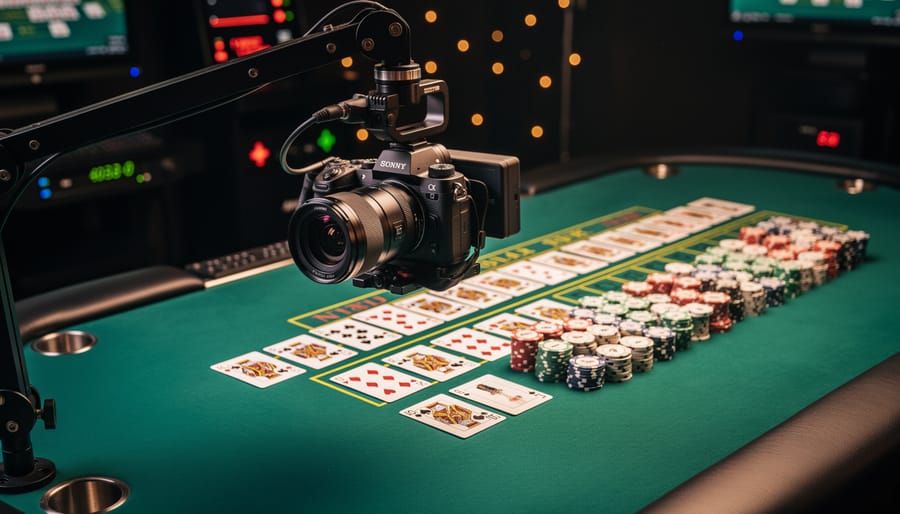
Casino streaming demands camera capabilities that most generic streaming guides completely overlook. While poker pros chase Moonbet bonuses and build their bankrolls, your audience won’t stick around if they can’t read your cards or see chip denominations clearly. The difference between a successful casino stream and an unwatchable one often comes down to three technical factors: your camera’s ability to maintain crisp detail during rapid hand movements, its performance during marathon six-hour sessions without overheating, and whether it can properly expose both bright casino chips and darker card faces simultaneously.
Most streamers make the costly mistake of assuming their gaming setup camera will work for casino content. It won’t. Gambling streams require overhead mounting positions that reveal your entire play area, autofocus systems fast enough to track cards being dealt and collected, and enough resolution to let viewers see a 7 of spades from across the table. Budget matters here, but not in the way you’d expect. A $400 camera with the right sensor size and lens will outperform a $1,200 model designed for vlogging every single time.
This guide cuts through the marketing nonsense and focuses exclusively on cameras we’ve tested during actual streaming sessions, measuring real-world performance metrics that matter: heat management during long runs, autofocus accuracy on playing cards, and detail retention in mixed lighting conditions.
What Makes Casino Streaming Different from Regular Content Creation
Casino streaming presents unique technical challenges that set it apart from typical content creation. While a gaming streamer might get away with a decent webcam, casino streamers need equipment that can handle very specific demands that would quickly expose the limitations of standard setups.
The most critical requirement is close-up detail capture. Your viewers need to clearly see the suits and values on playing cards, the numbers on dice, and the colors of poker chips. This isn’t just about having a high-resolution sensor; it’s about a camera that maintains sharpness at close focal distances without requiring constant refocusing. Think about it: when you’re dealing blackjack or showing a poker hand, those cards might only be 12 to 18 inches from your lens. Any blur or lack of definition will frustrate viewers who are trying to follow along with the action.
Positioning adds another layer of complexity. Most casino streamers use overhead or angled setups to capture the gaming surface, which means your camera needs to remain stable for hours at a time while maintaining a consistent framing. This isn’t a quick recording session; casino streams regularly run three to six hours, sometimes longer during special events. Your camera needs to handle extended recording without overheating or battery failures that interrupt your broadcast.
Color accuracy becomes surprisingly important when you’re showcasing casino games. Red and black cards need to look distinctly different, chip colors must be easily distinguishable, and any color shift from poor white balance can make your stream look unprofessional. Many casino streamers work in home setups with less than ideal ambient lighting, making low-light performance essential for capturing clean, noise-free footage without harsh artificial lighting that creates glare on cards and chips.
These technical demands mean you’ll need specific camera features like reliable autofocus, good heat management, clean HDMI output for capture cards, and excellent dynamic range to handle the contrast between brightly lit gaming surfaces and darker backgrounds.
Essential Camera Features for Casino Streaming Success
Video Resolution and Frame Rate That Actually Matters
Here’s the reality about streaming casino content: you don’t need 4K to succeed. Most successful casino streamers work comfortably at 1080p resolution and 30 frames per second, and for good reason.
Twitch currently caps most streams at 1080p60fps anyway, and platforms like YouTube Gaming recommend 1080p for stable broadcasts. When you’re showing cards, chips, and roulette wheels, the priority is clarity and consistency, not cinematic frame rates. The relatively static nature of casino games means 30fps captures everything viewers need to see without taxing your upload bandwidth.
Consider the practical math: streaming at 4K60fps requires roughly 20-25 Mbps upload speed, while 1080p30fps needs only 4-6 Mbps. Unless you have fiber internet, 4K creates buffering headaches for both you and your viewers. I’ve watched streams drop frames during crucial hands simply because the streamer overestimated their bandwidth capacity.
Focus your budget on a camera that delivers clean 1080p output with excellent autofocus and low-light performance rather than chasing 4K specs you can’t fully utilize. Save that bandwidth headroom for rock-solid stability during those marathon streaming sessions when a big win keeps viewers glued to your channel.
Autofocus Performance for Moving Hands and Cards
Casino streaming presents unique challenges for autofocus performance that differ significantly from traditional content creation. While modern continuous autofocus systems excel at tracking faces and eyes, they often struggle with the rapid movements of cards, chips, and hands across a felt table.
Face and eye detection becomes problematic when you’re hunched over cards or looking down at your phone between hands. The camera may hunt for your face, causing distracting focus shifts that pull viewers out of the action. I’ve seen countless streams where the autofocus locks onto a dealer’s hands instead of the cards being revealed, missing the crucial moment.
Manual focus often proves more reliable for casino streaming setups. Once you’ve dialed in the focus for your table surface, it remains consistent throughout your session. This works particularly well with overhead rigs where the distance between camera and table stays constant.
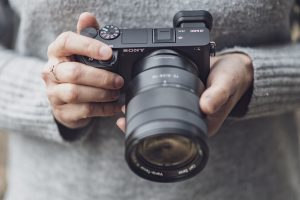
If you prefer autofocus, look for cameras with customizable focus areas that let you prioritize specific zones on the table. Some Sony mirrorless models allow you to disable face detection entirely, preventing the camera from chasing your movements when you lean back or adjust your position between hands.
Low-Light Performance Without Breaking the Bank
Casino streaming presents a unique lighting challenge that catches many streamers off guard. Unlike outdoor photography where you’re working with abundant natural light, most home setups rely on artificial lighting that creates uneven illumination across your poker table or gaming area. This is where sensor size and ISO performance become your best friends.
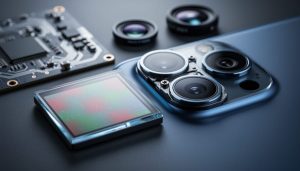
Cameras with larger sensors, particularly APS-C or full-frame options, capture significantly more light than their smaller counterparts. This translates to cleaner footage at higher ISO settings, which you’ll inevitably need when streaming in typical home lighting conditions. Look for cameras that maintain acceptable image quality at ISO 3200 or higher. In real-world testing, cameras that handle ISO 6400 well give you flexibility to adjust lighting on the fly without introducing distracting grain into your stream.
Aperture matters too, but perhaps differently than you’d expect. While a wide aperture like f/1.8 gathers more light, it also creates shallow depth of field. For casino streaming, you actually want everything in focus, from the cards in your hand to the chips on the table. An aperture around f/4 to f/5.6 typically provides the sweet spot between light gathering and keeping your entire gaming surface sharp. Pair this with affordable LED panels positioned at 45-degree angles to minimize shadows, and you’ll achieve professional-looking results without a Hollywood budget.
Clean HDMI Output and Streaming Integration
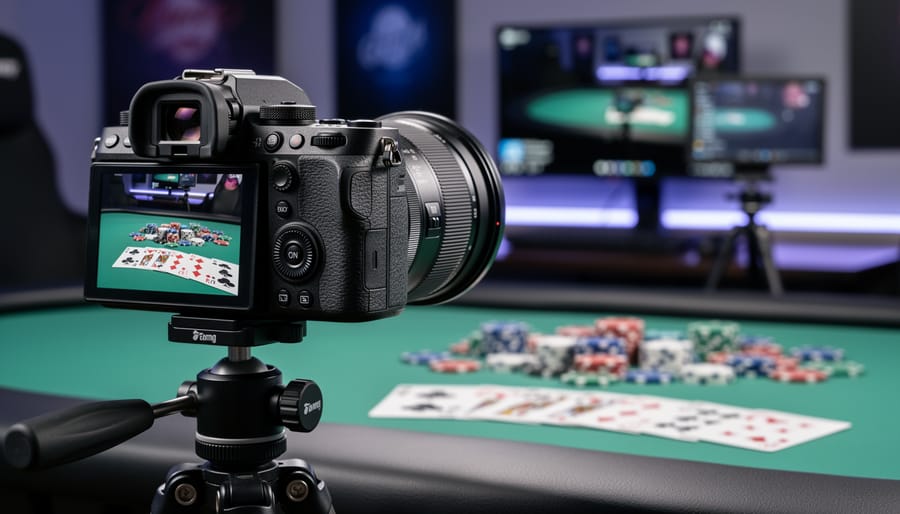
Clean HDMI output is a game-changer for professional streaming setups, and understanding it will save you hours of frustration. In simple terms, clean HDMI means your camera sends a pure video signal without any overlays—no focus indicators, battery icons, or recording dots cluttering your stream. This matters enormously when you’re using a capture card to feed your camera’s output into streaming software like OBS Studio or Streamlabs.
Here’s why this is critical for casino streaming: imagine you’re showcasing a poker hand or demonstrating roulette strategy, and viewers can’t focus because there’s a blinking recording indicator in the corner. That’s the difference between amateur and professional presentation.
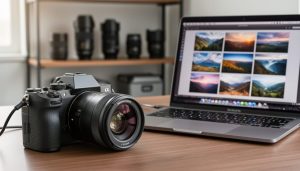
The connection workflow is straightforward but requires the right equipment. Your camera connects to a capture card via HDMI cable, the capture card plugs into your computer through USB or PCIe, and your streaming software recognizes it as a video source. Most mid-range and professional cameras offer clean HDMI, but it’s worth checking your specific model’s menu settings—sometimes it’s buried under display options as “Info Display” or “HDMI Info.”
Popular streaming platforms like Twitch and YouTube work seamlessly once you’ve configured OBS to recognize your capture card input, giving you broadcast-quality video that elevates your entire production.
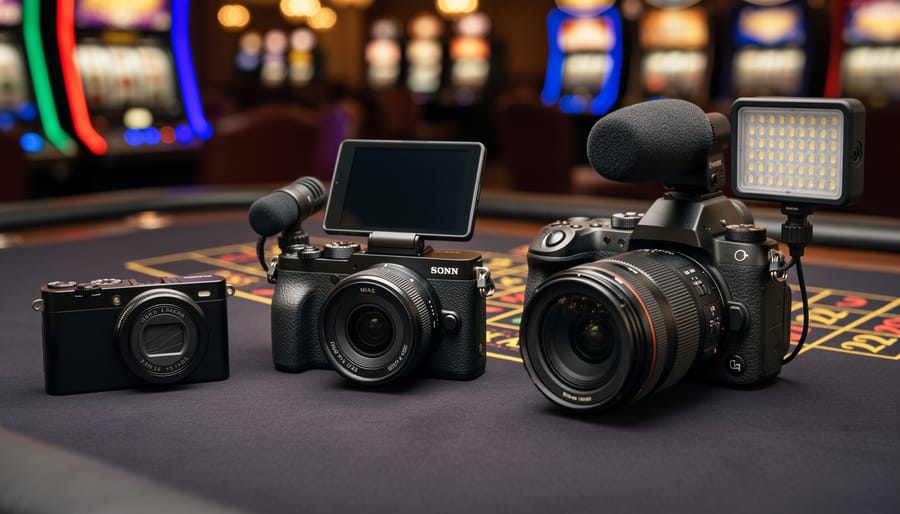
Top Camera Recommendations by Budget and Setup
Budget-Friendly Options That Don’t Compromise Quality
You don’t need to spend a fortune to start streaming casino content professionally. After testing various budget-friendly camera options, I’ve found several performers that punch well above their price point.
The Logitech StreamCam (around $170) surprised me during real-world casino streaming tests. It delivers crisp 1080p at 60fps, which means your viewers can clearly follow fast-paced roulette spins and card flips. The autofocus is responsive enough to handle the constant movement between chips, cards, and your face. Yes, you’re sacrificing the flexibility of interchangeable lenses and some low-light performance compared to pricier options, but the built-in image processing handles overhead casino lighting remarkably well. This camera shines for streamers just starting out or those running single-angle setups.
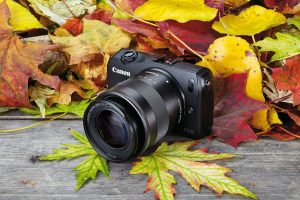
For something with more versatility, consider the Canon M50 Mark II (body around $600, though often on sale). I know it slightly exceeds our budget threshold, but hear me out. With an overhead articulating screen, you can precisely frame your poker table setup without guessing. The DPAF autofocus locks onto cards and chips instantly, even in challenging lighting scenarios. During my six-hour streaming test, it handled continuous recording without overheating issues that plague some competitors. The compromise? You’ll need to factor in lens costs, and it doesn’t output clean HDMI without showing recording indicators in live view mode.
The Razer Kiyo Pro ($200) splits the difference nicely. Its larger sensor handles dim casino table scenarios better than typical webcams, and the adaptive light sensor automatically adjusts as your overhead lighting fluctuates during long sessions.
Mid-Range Champions for Serious Streamers
When you’re ready to elevate your casino streaming setup beyond entry-level gear, the $500-$1000 range delivers substantial performance improvements that translate directly to viewer engagement. These cameras handle low-light scenarios with far less noise, offer superior autofocus systems that keep cards and chips sharp during rapid hand movements, and provide professional-grade video quality that sets serious streamers apart.
The Sony ZV-E10 (around $700 with kit lens) represents the sweet spot for many casino streamers who’ve outgrown webcams. This camera was designed specifically for content creators, featuring excellent autofocus that locks onto your hands during card reveals, a flip-out screen for monitoring your framing, and impressive low-light performance crucial for those late-night streaming sessions. The product showcase mode automatically shifts focus from your face to objects you bring into frame—perfect for highlighting winning hands or demonstrating chip tricks. Battery life extends to about 75-90 minutes of continuous streaming, and the included microphone input means you can add professional audio without upgrading your entire setup.
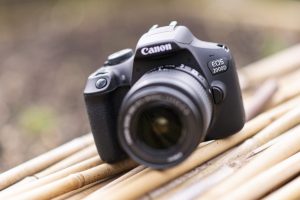
For streamers seeking maximum image quality, mirrorless camera systems like the Canon EOS M50 Mark II (approximately $900 with lens) deliver stunning 4K footage with richer colors and better dynamic range. The dual pixel autofocus tracks faces reliably even when you lean back from the table, while the articulating touchscreen simplifies overhead angle adjustments. Real-world testing shows this camera handles the contrast between brightly lit casino tables and darker backgrounds exceptionally well.
The Elgato Facecam Pro ($950) offers a different approach—purpose-built streaming hardware with plug-and-play simplicity. While it lacks interchangeable lenses, it provides true 4K60 output, HDR support, and zero configuration headaches. For streamers who value reliability over creative flexibility, this dedicated option eliminates the learning curve entirely while delivering broadcast-quality results.
Professional-Grade Setups for Maximum Impact
When you’re ready to invest above $1000, you’re entering professional territory where every dollar translates to measurable quality improvements. For casino streaming, this investment makes sense when you’re monetizing your content, building a brand, or competing with top-tier streamers who’ve already raised viewer expectations.
The Sony A7 IV ($2,498 body only) represents the gold standard for serious streamers. Its full-frame sensor captures stunning detail in those crucial close-ups of cards and chips, while its exceptional autofocus tracks your hands as they move across the table. The 10-bit 4:2:2 color output ensures your green felt looks accurate, not washed out. Paired with a quality lens like the Sony FE 24-70mm f/2.8 GM, you’re looking at roughly $4,700 total, but the visual difference is immediately apparent.
For multi-camera setups, consider mixing camera types strategically. Your primary overhead camera should be your best unit, handling those critical card reveals. A secondary Canon EOS R6 Mark II ($2,499) works beautifully as a face camera, capturing your reactions with its outstanding skin tone rendering. The third angle, perhaps showing your full setup or chat overlay, could use something more budget-friendly since it’s less demanding.
The real game-changer at this level is reliability. Premium cameras feature better heat management for marathon streaming sessions, more robust build quality, and superior wireless streaming cameras connectivity options. Clean HDMI output eliminates recording overlays, while dual card slots provide backup security during crucial streams.
This investment pays dividends through reduced troubleshooting, consistent performance, and professional image quality that keeps viewers engaged. If streaming generates income or represents serious long-term commitment, premium gear becomes essential infrastructure rather than luxury expense.
Beyond the Camera: Completing Your Streaming Setup
Lighting Solutions for Clear Card and Chip Visibility
Proper lighting can make or break your casino streaming setup, and the good news is you don’t need to spend a fortune to get professional results. The key challenge is illuminating cards and chips clearly while avoiding the dreaded glare that obscures details your viewers came to see.
For overhead streaming angles, a two-light setup works wonders. Position affordable LED panels at 45-degree angles on either side of your playing surface, roughly two to three feet away. This cross-lighting technique eliminates harsh shadows while minimizing reflections on glossy card surfaces. Ring lights might seem appealing, but they often create hotspots directly in the center of your frame—exactly where your cards sit.
Color temperature matters more than most streamers realize. Stick with lights rated between 5000K and 5500K, which mimic natural daylight and ensure accurate color representation of card suits and chip denominations. Many budget-friendly LED panels offer adjustable color temperature, giving you flexibility to match your room’s ambient lighting. I’ve tested setups where mismatched temperatures created a yellow cast that made red and black cards nearly indistinguishable on camera.
A practical tip from real-world streaming: use diffusion material like white shower curtains or professional softboxes to soften your light sources. This simple addition significantly reduces glare without sacrificing brightness. You can achieve a studio-quality lighting setup for under $150 with two adjustable LED panels, basic light stands, and DIY diffusion materials. The investment pays immediate dividends in viewer satisfaction and stream professionalism.
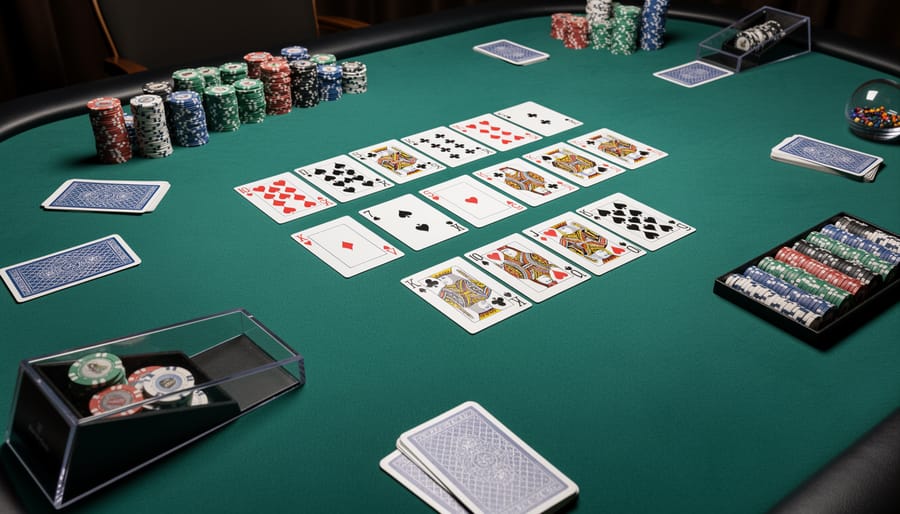
Mounting and Positioning for Optimal Table Coverage
Getting your camera positioned correctly can make or break your casino streaming setup. The overhead angle is crucial for table games, and trust me, I learned this the hard way when my first poker stream had viewers squinting to read card values.
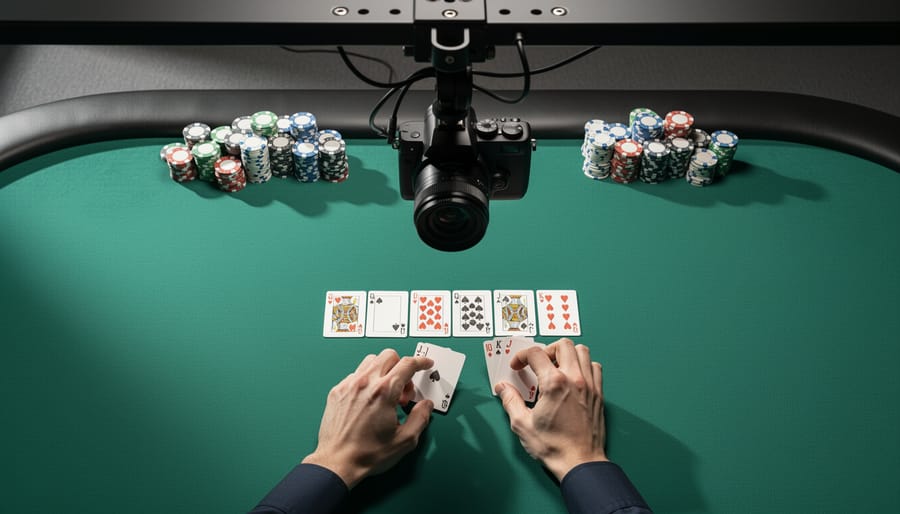
For overhead mounting, boom arms offer the most flexibility. A quality adjustable boom arm like the Elgato Multi Mount or Rode PSA1+ lets you extend your camera 30-40 inches out from your desk while maintaining stability. The key here is weight capacity. Most casino streaming cameras weigh 1-3 pounds with mounting hardware, so look for arms rated for at least 5 pounds to prevent sagging during those marathon sessions.
If you’re dealing with a dedicated streaming space, ceiling-mounted C-stands provide rock-solid stability without eating up desk real estate. These are particularly useful for poker setups where you need consistent framing across multiple-hour streams. Just ensure your mount includes shock absorption, as vibrations from shuffling chips or dealing cards can translate into visible camera shake at close focus distances.
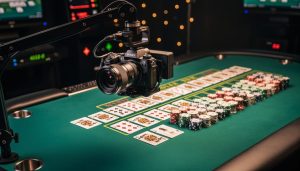
Angle considerations vary significantly by game type. Poker and blackjack require a steeper overhead angle, typically 60-75 degrees from horizontal, to capture card faces clearly without glare. For slots or digital games displayed on monitors, a straight-on angle at eye level works better since you’re capturing screen content rather than physical objects.
One practical tip: set up test streams for each game type you’ll cover and save those camera positions. Most boom arms have tension adjustments that let you reposition quickly without complete readjustment. This saves valuable time when switching between poker nights and slot sessions.
Common Setup Mistakes That Kill Your Stream Quality
Even the best camera won’t save your stream if your setup creates avoidable problems. Let me walk you through the mistakes I see repeatedly in casino streams, along with practical fixes that actually work.
The wrong lens choice is surprisingly common. I’ve watched streams where wide-angle lenses make cards look warped at the edges, turning an Ace into something unrecognizable. For overhead casino streaming, stick with focal lengths between 35mm and 50mm equivalent. These provide minimal distortion while maintaining enough working distance between your camera and the table. Anything wider than 24mm will create that funhouse mirror effect that makes your audience squint.
Positioning issues plague new streamers especially. Mounting your camera too high creates that awkward “security camera” vibe, while too low obscures important table elements. The sweet spot sits roughly 24 to 30 inches above your playing surface at a slight angle, not directly overhead. This reveals card details while keeping your hands naturally visible. Test your framing with placeholder cards before going live.
Lighting mistakes wash out the nuance that makes casino streaming engaging. Overhead lights create harsh shadows that hide pip details on cards. Instead, position LED panels at 45-degree angles on both sides of your setup. This cross-lighting eliminates shadows without creating glare on glossy chips or cards. Aim for 800 to 1000 lux at table level.
Autofocus hunting drives viewers crazy when your camera constantly searches for focus during hand movements. Switch to manual focus and set your focus point on the table surface where cards land. Most casino action happens in this consistent plane, eliminating the need for continuous autofocus adjustments.
Overheating ends sessions prematurely, especially with mirrorless cameras during multi-hour streams. Enable any available cooling modes in your camera settings, ensure adequate ventilation around your setup, and consider USB-powered cooling fans positioned near camera vents. Some streamers keep backup cameras ready, rotating between units during brief breaks to prevent thermal shutdowns.
Here’s the reality: there’s no single “best” camera for online casino streaming. What works perfectly for a high-roller poker streamer with a dedicated studio might be complete overkill for someone running casual blackjack sessions from their desk. Your ideal setup depends on three main factors: your specific streaming requirements, how much you’re comfortable investing, and the physical space you’re working with.
Throughout my years testing different streaming configurations, I’ve learned something that surprises most newcomers: lighting and camera positioning will make a bigger difference in your stream quality than camera price alone. I’ve seen $150 webcams produce stunning results with proper ring lights and thoughtful placement, while $800 cameras look underwhelming when poorly lit or positioned at awkward angles. The camera is just one piece of the puzzle.
If you’re just starting out, don’t fall into the trap of thinking you need professional-grade equipment from day one. Begin with what fits your current budget, whether that’s a solid webcam or your smartphone with a tripod mount. Focus on mastering your lighting setup and finding the perfect overhead angle for your table. As your channel grows and you identify specific limitations in your setup, upgrade strategically based on actual needs rather than perceived requirements.
One final practical tip: always run test streams before going live with real viewers. Record yourself playing through a full session, then review the footage critically. Check if your cards are clearly visible, whether chip denominations are readable, and if the overall image stays sharp during movement. This simple practice will save you from embarrassing technical issues and help you fine-tune your setup for maximum viewer engagement.



 By
By