 By
By 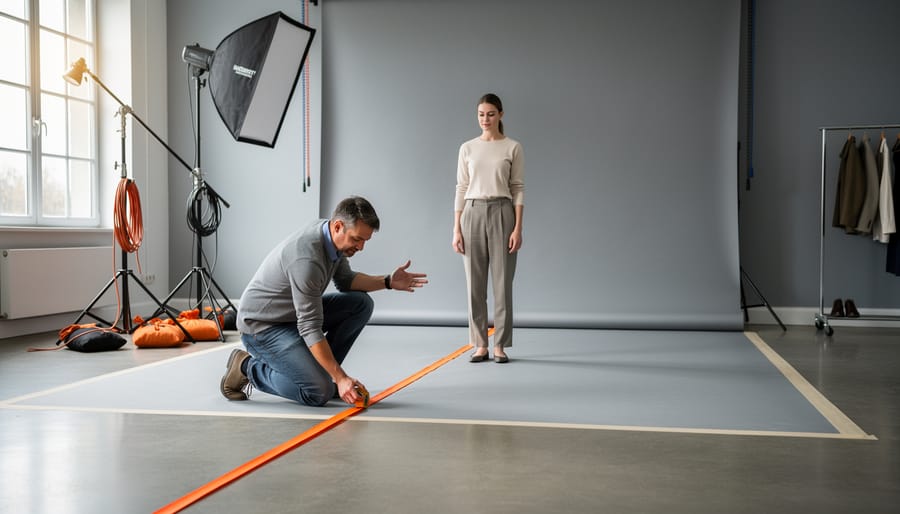
Recognize the photoshoot environment as a professional workspace requiring the same safety protocols you’d expect in any other professional setting. The SAFE-R model—which stands for Setting expectations, Assessing risks, Facilitating communication, Establishing boundaries, and Reviewing practices—transforms abstract ethical principles into concrete actions that protect both you and your subjects while producing better work.
Create a pre-shoot safety checklist that addresses physical environment hazards, such as loose cables, unstable props, adequate lighting for navigation, and temperature control. Professional photographers who implement this framework report fewer incidents, improved model retention, and stronger portfolios because subjects who feel secure deliver more authentic expressions and poses.
Understand that model safety and consent extends beyond the initial agreement—it’s an ongoing conversation throughout every session. Before each setup change, communicate what you’re planning, why you’re planning it, and what the model should expect. This simple practice prevents uncomfortable surprises and builds the trust necessary for creative collaboration.
Document your safety protocols in writing, even if you’re shooting with friends or family. A simple one-page agreement outlining wardrobe changes, location boundaries, image usage, and emergency procedures establishes professionalism and protects everyone involved. This documentation becomes particularly valuable as you transition from hobbyist to paid work, demonstrating to clients and agencies that you maintain industry standards.
The SAFE-R model isn’t just about risk management—it’s about creating conditions where creativity thrives. When models feel respected and secure, they bring energy and authenticity to sessions that simply can’t be achieved through technical skill alone.
What Is the SAFE-R Model?
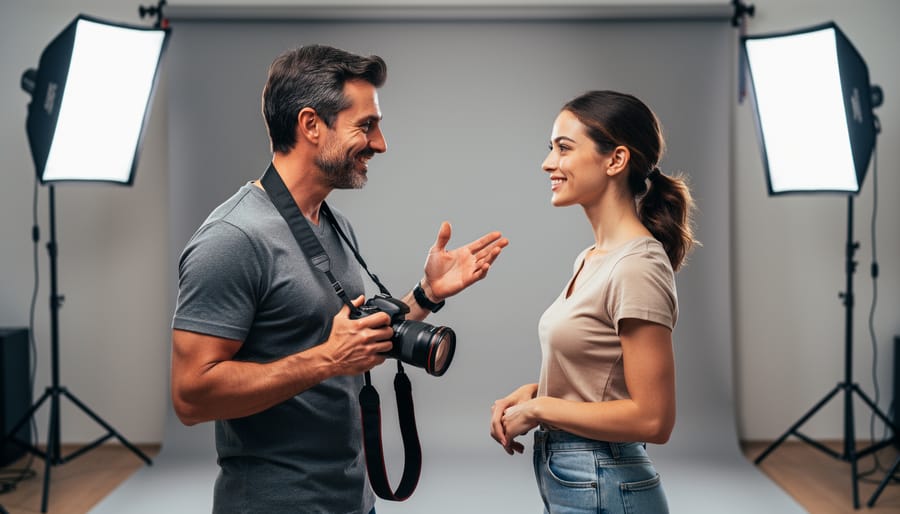
Breaking Down Each Component
Let’s break down what SAFE-R actually means in practice. Each letter represents a crucial element that helps create a professional, respectful photography environment.
S stands for Safety. This encompasses physical safety on set—checking that your shooting location doesn’t have hazards like exposed wiring, unstable surfaces, or extreme temperatures. For example, if you’re shooting outdoors in summer heat, having water and shade available isn’t just courteous; it’s essential. Safety also means creating an emotionally secure environment where models feel comfortable speaking up if something feels wrong.
A is for Awareness. This means staying conscious of power dynamics inherent in photographer-model relationships. You’re directing the shoot, which puts you in a position of authority. Being aware means recognizing that a model might agree to something uncomfortable simply because they fear losing future opportunities. Always check in throughout the session—a simple “How are you feeling about this?” goes a long way.
F represents Fairness. This covers transparent communication about compensation, usage rights, and expectations before the shoot begins. If you’re shooting test images for your portfolio, say so upfront. Planning a swimwear session? Discuss wardrobe specifics beforehand, never springing surprises on shoot day.
E stands for Ethics. This involves respecting boundaries around physical touch, wardrobe adjustments, and image editing. Always ask permission before adjusting clothing or props, and discuss retouching expectations—models deserve to know how their images will be presented.
R is Respect. Fundamental courtesy matters: arriving on time, honoring agreed-upon shoot durations, and treating everyone on set as valued collaborators rather than interchangeable props.
Why On-Set Safety Matters More Than Ever
The Trust Factor in Photography
Here’s a truth every experienced photographer knows: technical skill gets you in the door, but trust creates magic. The connection between safety protocols and image quality isn’t just theoretical—it’s the difference between stiff, guarded expressions and genuine, captivating moments.
When models feel safe, their entire physical presence transforms. Tension melts from shoulders. Eyes soften. Breathing becomes natural rather than shallow and anxious. These subtle shifts matter enormously in ethical portrait photography, where authenticity separates memorable images from forgettable ones.
Consider a real-world scenario: A photographer shooting a fitness campaign clearly communicated wardrobe changes would happen in a private space with a assistant present if needed. This simple protocol meant the model focused entirely on delivering powerful poses rather than worrying about exposure or vulnerability. The resulting images showed confident strength—exactly what the campaign needed.
Contrast this with sessions where boundaries remain unclear. Models unconsciously protect themselves through closed body language, forced smiles, or distracted expressions. You can see the guardedness in every frame, no matter how perfect your lighting setup.
The practical benefit extends beyond the immediate shoot. Models who feel respected become enthusiastic collaborators, offering creative input and pushing their own boundaries voluntarily. They arrive prepared, communicate openly about what works, and often agree to future projects. This collaborative energy consistently produces portfolio-worthy work that rigid, uncomfortable sessions simply cannot match.
Safety protocols aren’t obstacles to creativity—they’re the foundation that allows genuine artistry to emerge.
Legal and Professional Implications
Implementing the SAFE-R model isn’t just about doing the right thing—it’s also smart business practice. When you establish clear safety protocols, you’re creating documentation that protects you in case of disputes or misunderstandings. Think of model releases, consent forms, and safety checklists as your professional insurance policy. These records demonstrate that you’ve taken reasonable precautions and respected your model’s boundaries, which can be crucial if questions arise later.
Beyond legal protection, adopting these practices significantly enhances your professional reputation. Models talk to each other, and photographers known for creating safe, respectful environments attract better talent and more collaborative working relationships. You’ll find that models perform better when they feel secure, resulting in more authentic expressions and stronger portfolios for everyone involved.
For photographers building sustainable businesses, this framework helps establish systems that scale. Whether you’re shooting your tenth portrait or your thousandth, having consistent protocols means fewer awkward moments, clearer communication, and more time focused on creativity rather than damage control. Professional clients increasingly expect photographers to demonstrate these competencies, making safety protocols not just ethical practice but a competitive advantage in today’s photography marketplace.
Implementing SAFE-R Before Your Shoot
Pre-Shoot Communication Checklist
Before stepping onto set, clear communication establishes trust and prevents uncomfortable situations. Think of this conversation as creating a roadmap everyone agrees to follow. Ideally, conduct this discussion at least 24-48 hours before your session, giving your model time to process and ask follow-up questions.
Start with the creative vision. Describe the mood, style, and intended use of the images. Will these photos appear in a portfolio, on social media, or for commercial purposes? Being transparent about usage rights from the beginning prevents misunderstandings later.
Discuss wardrobe thoroughly. If you’re providing clothing, share photos beforehand and confirm sizes. If the model brings their own options, describe the colors, styles, and level of coverage you envision. For sessions involving swimwear, lingerie, or implied nudity, be especially explicit about what will and won’t be photographed.
Address physical boundaries directly. Will there be any physical contact during posing adjustments? Some photographers prefer demonstrating poses themselves or using visual references rather than touching models at all. Establish this preference upfront.
Cover location logistics: exact address, parking availability, whether others will be present, restroom access, and climate control. Ask about dietary restrictions if you’re providing refreshments.
Finally, discuss the model’s comfort level with specific poses or concepts. For example, a portrait session might involve close-up facial expressions that feel vulnerable to some people. Creating space for these conversations demonstrates professionalism and shows you prioritize their wellbeing alongside creative results. This investment in communication typically yields more relaxed, authentic images.
Essential Documentation and Contracts
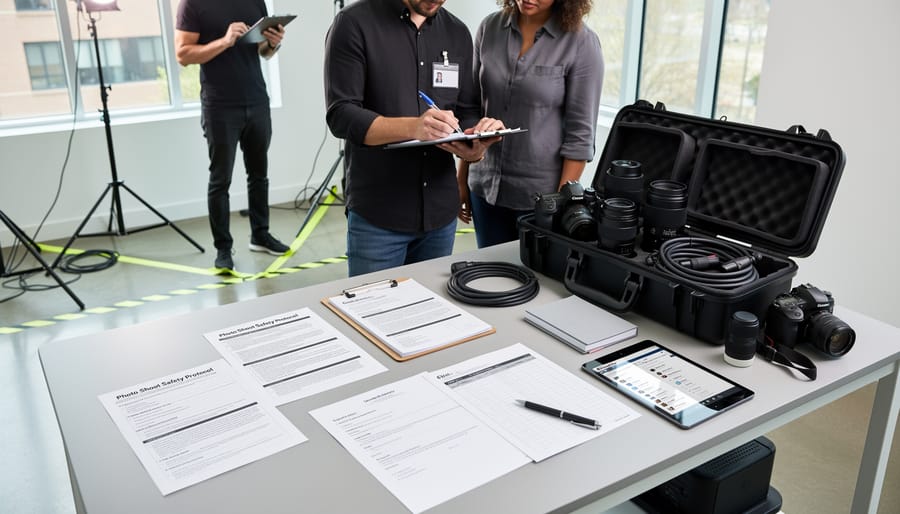
Documentation forms the backbone of professional model-photographer relationships, protecting everyone involved while establishing clear expectations. At minimum, you’ll need a model release form that grants you permission to use the images created during your shoot. This isn’t just legal protection—it’s a conversation starter about how the photos will be used, where they’ll appear, and for how long.
A comprehensive approach includes three key documents: a model release covering usage rights, a safety agreement outlining the SAFE-R protocols you’ll follow, and a shoot brief detailing wardrobe, locations, and creative direction. For example, if you’re shooting fitness photography in a gym setting, your safety agreement should specifically address equipment hazards, hydration breaks, and physical boundaries during posing adjustments.
Keep these documents accessible and readable—avoid dense legal jargon. Many photographers now use digital signing tools that models can review on their phones before the shoot begins. Remember, having a model initial specific safety provisions (like break schedules and the presence of chaperones) demonstrates your commitment to their wellbeing. Store signed agreements for at least seven years, as usage disputes can emerge long after the shutter clicks. These aren’t bureaucratic hurdles; they’re professional tools that build trust from your very first interaction.
During the Shoot: Maintaining Safety and Respect
The Power of Continuous Consent
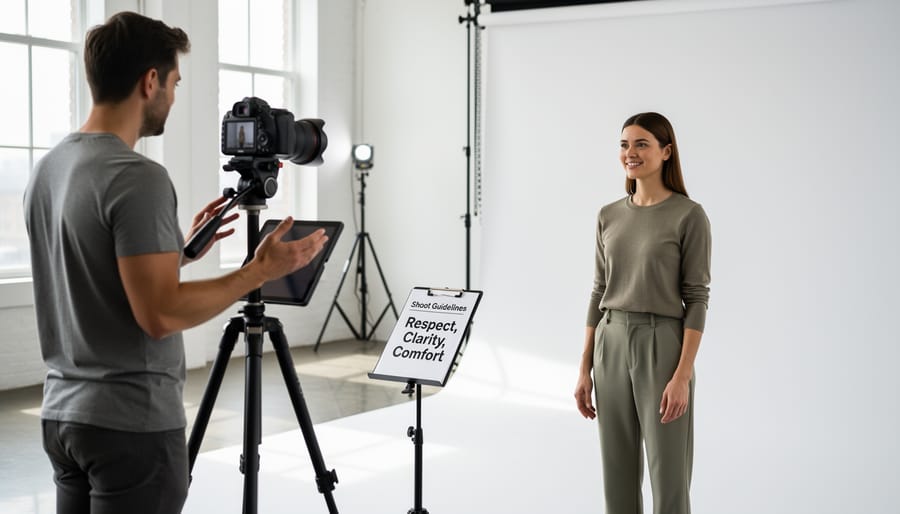
Consent isn’t a single checkbox you tick before the shoot begins. It’s an ongoing conversation that flows throughout your entire session. Think of it as a continuous check-in system that respects the dynamic nature of photography work.
Before changing anything significant during your shoot, pause and communicate. When you’re ready to adjust the lighting setup, try saying: “I’m going to move this light closer to create more dramatic shadows on your face. How do you feel about that?” This gives your model a moment to process and respond. Similarly, when suggesting a new pose, frame it as a question: “Would you be comfortable trying a sitting pose on the floor?” rather than issuing a directive.
Wardrobe changes deserve particular attention. Even if an outfit was discussed beforehand, confirm again: “We talked about the evening gown earlier. Are you still feeling good about changing into that now?” Models might feel differently once they’re in the studio environment, and that’s perfectly valid.
Watch for non-verbal cues as well. If you notice hesitation, fidgeting, or if your model seems less engaged, pause and ask directly: “How are you feeling right now? Do you need a break?” Creating these natural stopping points prevents anyone from feeling rushed or pressured.
Real-world example: During a portrait session, photographer Maria noticed her model’s energy shift when suggesting backlit silhouettes. By simply asking, “You seem uncertain—would you rather try something else?” she discovered the model felt self-conscious about body outlines. They pivoted to a different approach, and the resulting images were far more successful because the model felt genuinely comfortable.
Remember, checking in frequently doesn’t slow down your workflow; it actually improves collaboration and image quality.
Creating a Professional Environment
The physical space where you photograph models matters more than you might think. A professional environment isn’t just about having nice equipment—it’s about creating conditions where everyone feels secure and can do their best work.
Start by considering who’s present during the shoot. While intimate one-on-one sessions might seem efficient, they can create uncomfortable power dynamics. Whenever possible, especially when working with new models or in private locations, invite a third party like an assistant, makeup artist, or the model’s companion. This isn’t about mistrust; it’s about establishing clear professional boundaries that protect everyone involved.
Physical distance during the shoot deserves attention too. When you need to adjust lighting, clothing, or positioning, always ask permission before touching. A simple “May I adjust your collar?” goes a long way. Many photographers solve this by demonstrating the pose themselves or using verbal direction, only making physical adjustments when absolutely necessary and with explicit consent.
The shooting location itself should be appropriate for your intended work. If you’re planning wardrobe changes, ensure there’s a private changing area—not just a corner with a sheet. Studio spaces should have clear entry points, adequate lighting in all areas, and climate control for comfort.
Keep the atmosphere professional by limiting casual visitors and maintaining focus on the creative work at hand.
Special Considerations for Different Photography Genres
Boudoir and Intimate Photography
Boudoir and intimate photography requires the most rigorous application of SAFE-R principles due to the vulnerable nature of these sessions. The power dynamics inherent in photographing someone in various states of undress demand extra precautions beyond standard protocols.
Consider offering same-gender photographer or assistant options when possible, as this simple accommodation significantly increases comfort levels for many clients. One established boudoir photographer shared how having a female makeup artist present during sessions transformed her clients’ body language from guarded to confident within minutes.
Implement a layered consent approach specific to intimate work. Before the shoot, discuss exactly which body parts will be photographed and which angles are off-limits. During the session, verbally confirm before transitioning to more revealing poses or wardrobe changes. This ongoing dialogue prevents assumptions and maintains trust.
Viewing protocols become critical here. Never show images to anyone without explicit permission, and establish clear agreements about who sees unedited versus final images. Some photographers use privacy screens on camera backs, allowing only the client to review shots during the session.
Storage and delivery security matters tremendously. Use password-protected galleries and encrypted file transfers rather than standard cloud sharing. These practices align with broader fashion photography ethics while addressing the heightened sensitivity of intimate imagery.
Working with Minor Models
Photographing minors requires heightened awareness and additional safeguards beyond standard model safety protocols. First and foremost, always obtain written consent from a parent or legal guardian—verbal permission isn’t enough. The guardian should remain on set throughout the entire shoot, positioned where they can observe without disrupting your workflow.
Before the session, communicate clearly with both the guardian and the young model about what poses, wardrobe, and concepts you’re planning. This transparency builds trust and prevents uncomfortable situations. Avoid any poses or scenarios that could be misinterpreted, even if they seem innocent to you. When in doubt, skip it.
Consider having a second adult present as an additional witness, particularly if you’re shooting alone. This protects everyone involved and demonstrates your commitment to maintaining professional boundaries. Take regular breaks—young models tire more easily and may not advocate for themselves when they need rest.
Document everything: consent forms, shot lists, and communication with guardians. These records protect you legally and show you’ve followed proper protocols. Remember, working with minors isn’t just about legal compliance—it’s about creating an environment where young people feel valued, protected, and respected throughout their experience in front of your camera.
Common Mistakes Photographers Make (And How to Avoid Them)
Even experienced photographers sometimes stumble when it comes to safety protocols. The good news? Most mistakes are preventable once you recognize the patterns. Let’s look at some common scenarios that highlight where things can go wrong—and how the SAFE-R framework helps you course-correct.
One frequent oversight involves assuming consent. A portrait photographer once shared how they’d developed a comfortable working relationship with a regular model over several sessions. During their fifth shoot, they introduced lingerie concepts without prior discussion, assuming the model would be fine with it given their history together. The model felt pressured to agree on the spot, creating an uncomfortable dynamic that damaged the professional relationship. The lesson? Never assume. Each new concept requires fresh conversation, regardless of your history. The SAFE-R model’s Assessment phase reminds us to explicitly discuss and document boundaries for every single session.
Location scouting failures represent another common pitfall. An enthusiast photographer arranged an outdoor portrait session at what seemed like a secluded forest location. They arrived to discover the area was much more public than anticipated, with hikers regularly passing by while the model changed outfits behind inadequate cover. This relates directly to photography ethics and the Environment component of SAFE-R—always visit locations beforehand and have backup plans.
Perhaps the most serious breach involves failing to respect a model’s right to stop. During a challenging outdoor shoot in cold weather, a model expressed discomfort, but the photographer encouraged “just a few more shots” to get the perfect light. What could have been a brief pause became a situation where the model felt their wellbeing was secondary to the image. The Response element of SAFE-R exists specifically for this: when someone says stop, you stop immediately, no questions asked.
The solution to all these scenarios? Treat safety protocols as non-negotiable foundations, not optional extras that slow down your creative process.
Building Your Own Safety Protocol
Creating your own safety protocol doesn’t require a law degree or mountains of paperwork. Think of it as building a personalized checklist that becomes second nature over time. Here’s how to develop a framework that works for your specific photography practice.
Start by auditing your current workflow. Take a moment to write down every step of your typical shoot, from initial client contact through final image delivery. Look for gaps where miscommunication or discomfort might arise. Maybe you’ve never formally discussed wardrobe expectations, or perhaps you don’t have a clear policy about who can be present during sessions. These gaps are your starting points.
Next, customize the SAFE-R principles to match your photography style. A wedding photographer will emphasize different elements than a fitness photographer. For instance, if you shoot boudoir sessions, your consent conversations need extra attention around image usage and retouching expectations. Portrait photographers working with families should establish protocols about photographing minors, including parental presence requirements.
Create tangible documents that reflect your commitment. Draft a simple one-page safety agreement that models sign before shoots. Include basics like emergency contact information, comfort level indicators, and break schedules. Develop a pre-shoot questionnaire that asks about boundaries, physical limitations, and specific concerns. These don’t need to be complicated, just clear and consistent.
Test your protocol with a trusted colleague or model before rolling it out broadly. Ask for honest feedback about whether your documents feel reassuring or overwhelming. Adjust based on what you learn. Remember, your safety framework should reduce anxiety for everyone involved, not create additional stress.
Finally, commit to regular reviews. Set a calendar reminder every six months to revisit your protocols, incorporating lessons learned from recent shoots and staying current with industry best practices.
Here’s the truth that separates photographers who build lasting careers from those who flame out: safety protocols don’t limit your creativity, they amplify it. When models feel genuinely safe and respected on set, they bring more authenticity, more willingness to collaborate, and more trust to your images. The SAFE-R framework isn’t a bureaucratic checklist designed to slow you down—it’s the foundation for creating your best work while building a reputation that opens doors rather than closes them.
Implementing ethical photography practices through SAFE-R is an investment that pays dividends. You’ll spend less time managing uncomfortable situations and more time capturing compelling images. You’ll attract better collaborators who appreciate professionalism. You’ll sleep better knowing you’re protecting both your subjects and your business from potential harm.
Before your next shoot, commit to implementing at least one safety improvement. Maybe it’s creating a simple consent form, establishing a chaperone policy, or having an honest conversation about boundaries during your pre-shoot consultation. Start small, but start now. Your future self, your models, and your portfolio will thank you.
The photography industry is evolving toward greater accountability and respect. Those who embrace these changes aren’t sacrificing their artistic vision—they’re securing their place in photography’s future. Make SAFE-R part of your professional identity, and watch how it transforms not just your shoots, but your entire approach to this craft we love.



 By
By