
 By
By 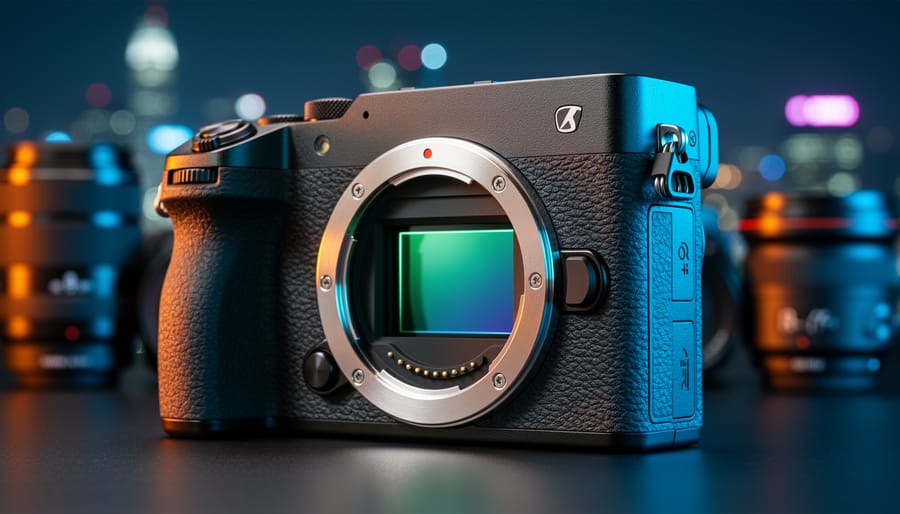
Look at your camera’s sensor specifications next time you’re shopping for a new body, and you’ll likely see “BSI” prominently featured. This three-letter acronym has revolutionized digital photography over the past decade, transforming how sensors capture light and dramatically improving image quality, especially in challenging conditions.
BSI stands for Back-Side Illuminated, a sensor architecture that literally flips traditional design on its head. In conventional CMOS sensors, light must pass through a maze of circuitry and wiring before reaching the photodiodes that actually capture your image. BSI sensors reverse this arrangement, placing the light-sensitive layer at the front and moving the circuitry behind it. Think of it like removing a screen door between your camera and the scene you’re photographing—suddenly, significantly more light reaches where it needs to go.
This architectural change delivers tangible benefits you’ll notice in your images: cleaner high-ISO performance for low-light shooting, improved dynamic range that preserves both shadow and highlight detail, and better overall image quality across all shooting conditions. Whether you’re capturing dimly-lit concerts, fast-moving sports, or landscapes with challenging contrast, BSI technology gives your sensor a fighting chance.
Understanding how BSI sensors work, how they compare to other architectures like stacked sensors, and what they mean for your photography will help you make smarter purchasing decisions and maximize your camera’s capabilities.
What Makes a CMOS BSI Sensor Different?

The Traditional Approach: Front-Side Illumination
For decades, camera sensors followed a straightforward design principle: light enters from the front, passes through various layers, and reaches the photodiodes that capture the image. This traditional sensor architecture, known as Front-Side Illumination (FSI), stacks the sensor’s circuitry and metal wiring on top of the light-sensitive layer.
Here’s the catch: those wires and transistors sitting above the photodiodes act like a partial curtain, blocking some of the precious light trying to reach the sensor. Imagine trying to photograph through a window with metal bars across it. The light still gets through, but not as efficiently as it could.
This design worked reasonably well for larger sensors and well-lit conditions. However, as manufacturers pushed to create smaller pixels for higher resolution sensors, especially in smartphones and compact cameras, the problem intensified. Smaller photodiodes meant less surface area to collect light, and the overlying circuitry became proportionally more obstructive. The result? Reduced light gathering ability, which translates to noisier images in low light and reduced dynamic range.
The BSI Revolution: Moving the Wiring Out of the Way
Think of a traditional CMOS sensor like a solar panel with all its wiring on the sun-facing side. That’s essentially how conventional front-side illuminated (FSI) sensors work. The photodiodes, which capture light, sit beneath layers of circuitry, transistors, and metal wiring. While this arrangement works, it’s far from ideal because all that electronics create obstacles that block and scatter incoming light before it reaches the light-sensitive layer.
Backside Illuminated (BSI) sensors flip this design on its head, literally. Engineers relocated all the circuitry and wiring to the rear of the sensor, behind the photodiodes. This means light now travels directly to the photodiodes without navigating through a maze of electronic components first.
The practical benefits are substantial. With circuitry out of the way, each pixel can capture significantly more photons, particularly at oblique angles where light enters the sensor from the sides rather than straight on. This is especially important for pixels near the image edges, which naturally receive light at steeper angles due to lens geometry.
The improvement becomes most noticeable in challenging lighting conditions. When you’re shooting a dimly lit concert or capturing the Milky Way at night, BSI sensors pull in considerably more light per pixel compared to their FSI predecessors. This translates to cleaner images with less noise, better dynamic range, and improved color accuracy, particularly in shadows. For photographers, it means you can push your ISO higher while maintaining image quality, or capture faster-moving subjects in low light without sacrificing detail.
Real-World Performance: What BSI Sensors Actually Do for Your Photos
Better Low-Light Performance and Reduced Noise
The magic of BSI sensors really shines when the lights go down. Because these sensors capture light more efficiently, they’re essentially gathering more photons from every scene. This improved sensor light sensitivity means you can shoot at higher ISO settings without the dreaded noise that typically plagues low-light photography.
Think about photographing your child’s school play in a dimly lit auditorium or capturing the ambiance of a candlelit dinner. With a traditional front-illuminated sensor, you’d likely see visible grain and color noise when pushing your ISO to 3200 or 6400. A BSI sensor, however, delivers noticeably cleaner files at these same settings because it’s working with more actual light data rather than amplifying weak signals.
Night photographers particularly appreciate this advantage. Whether you’re shooting cityscapes after sunset or attempting Milky Way photography, the reduced noise means you can preserve fine details in shadows while maintaining smooth gradations in darker tones. Wedding photographers also benefit enormously, moving confidently through reception venues without constantly reaching for their flash. The difference isn’t just technical; it’s the freedom to shoot in environments that previously felt challenging or impossible, knowing your images will maintain professional quality.

Improved Dynamic Range
One of the standout benefits of BSI sensors is their ability to capture a wider dynamic range, meaning you’ll retain more detail in both the brightest highlights and deepest shadows of your images. This happens because the back-illuminated design allows photosites to gather light more efficiently, reducing noise in darker areas while preventing blown-out highlights.
For landscape photographers, this translates to capturing those tricky sunrise or sunset scenes where the sky is brilliant but the foreground is still in shadow. With a BSI sensor, you can pull up shadow detail in post-processing without introducing excessive noise, while still maintaining texture in clouds and sun-kissed highlights. Those dramatic mountain silhouettes against golden skies become much more manageable.
Portrait photographers benefit too, especially when shooting in challenging mixed lighting. Think of a subject standing near a bright window—BSI sensors help you preserve facial detail without completely losing the view outside. You’ll spend less time wrestling with exposure compensation and more time focusing on your subject’s expression and composition.
Faster Readout Speeds
Beyond capturing more light, BSI sensors offer another practical advantage: faster data readout. By repositioning the wiring beneath the photodiodes, engineers created a more direct pathway for electrical signals to travel from the sensor to the camera’s processor. Think of it like rerouting traffic through a newly built tunnel instead of winding city streets—the destination is the same, but you get there quicker.
This speed boost translates directly to better performance when you’re shooting action. Modern BSI sensors can empty their pixel data rapidly, enabling faster continuous shooting rates without buffer slowdowns. If you’re photographing wildlife or sports, those extra frames per second can mean the difference between catching the decisive moment or missing it entirely.
Video shooters benefit even more dramatically. High-resolution 4K and 8K video recording demands massive amounts of data transfer every second. The efficient architecture of BSI sensors handles these requirements with less heat generation and power consumption, allowing cameras to record longer without overheating or draining batteries prematurely.
Taking It Further: Stacked CMOS Sensor Architecture
What ‘Stacked’ Actually Means
Think of a stacked sensor like a modern apartment building where the architect cleverly separated living spaces from utilities and mechanical systems. In traditional BSI sensors, everything exists on essentially one level – the photodiodes capture light on top while the processing circuitry sits beside them, sharing the same floor. A stacked sensor takes a different approach by literally stacking the components vertically.
In this architecture, the image sensor layer – where your photodiodes live and capture light – sits on top, just like in a regular BSI design. But here’s where it gets interesting: all the processing circuitry, the analog-to-digital converters, and supporting electronics are placed on an entirely separate silicon layer beneath it. These layers are bonded together using specialized manufacturing techniques, creating what’s essentially a sensor sandwich.
This separation offers some remarkable advantages. First, engineers gain more real estate to work with. Without processing circuits competing for space on the sensor layer, they can either make the photodiodes larger for better light gathering, or pack in more features without compromise. Second, and perhaps more importantly, it allows for dramatically faster data readout. The dedicated processing layer can be optimized specifically for speed, which translates directly to practical benefits you’ll notice: faster burst shooting, reduced rolling shutter in video, and quicker autofocus processing.
For photographers, this means cameras that can capture 20 or 30 frames per second without breaking a sweat, or record high-resolution video without the weird “jello effect” you sometimes see when panning quickly.
The Performance Leap: Speed and Power
Here’s where things get really exciting. Stacked CMOS BSI sensors represent a fundamental reimagining of how sensor data flows from capture to processing. Unlike traditional BSI sensors where all components share the same silicon layer, stacked designs separate the photodiodes from the processing circuitry onto different layers connected vertically. Think of it like moving from a cramped studio apartment to a two-story house—suddenly, you have dedicated space for everything.
This architectural change delivers a dramatic performance leap. The dedicated processing layer handles data much faster, enabling readout speeds that were simply impossible before. For video shooters, this translates directly into smooth 4K and 8K recording without overheating or dropped frames. Professional sports photographers benefit from blistering burst modes—we’re talking 20, 30, even 120 frames per second in some flagship cameras.
Perhaps most impressively, stacked sensors significantly reduce rolling shutter distortion. That annoying jello effect when panning across a scene? Vastly diminished. Faster readout means each row of pixels is captured in quicker succession, minimizing the time difference between the top and bottom of your frame.
Real-world impact? Sony’s A9 series cameras can shoot silently at 20fps with minimal blackout, tracking fast-moving subjects with unprecedented accuracy. Canon’s R3 pushes beyond 30fps with full autofocus. These aren’t incremental improvements—they’re capabilities that fundamentally change what’s photographically possible.

BSI vs. Stacked: Which Technology Do You Need?
When BSI Alone Is Plenty
For many photographers, a standard BSI sensor delivers everything you need without the added expense of stacked technology. Think about landscape photography, where you’re working with a tripod at base ISO, capturing intricate details in golden hour light. The improved light-gathering ability of BSI architecture shines here, providing excellent dynamic range and color depth, but you’re not pushing frame rates or dealing with challenging autofocus scenarios where stacked sensors truly flex their muscles.
Portrait photographers working in controlled studio environments similarly find BSI sensors more than capable. When you’re shooting at moderate burst speeds with carefully positioned lighting, the enhanced low-light performance of BSI helps capture beautiful skin tones and shadow detail, while the processing speed is perfectly adequate for capturing natural expressions and subtle movements.
Even street photographers who shoot single frames rather than continuous bursts will appreciate how BSI sensors handle mixed lighting conditions, from shadowy alleyways to bright storefronts, without needing the lightning-fast readout speeds of stacked designs. The key consideration is your shooting style. If you’re not regularly shooting fast action, high-speed video, or subjects requiring cutting-edge autofocus tracking, a quality BSI sensor camera will deliver outstanding image quality while keeping your investment focused on what matters most: lenses, lighting, and developing your creative vision.
When Stacked Sensors Make the Difference
While BSI sensors offer impressive improvements in light-gathering ability, stacked sensor technology takes things several steps further in situations where speed and performance are paramount. Think of it this way: BSI handles the “what” you capture, while stacking addresses “how quickly” you can capture it.
For sports photographers tracking fast-moving athletes, stacked sensors become game-changers. The dedicated processing layer enables burst shooting speeds that can reach 30 frames per second or higher with full autofocus tracking. When you’re photographing a basketball player mid-dunk or a sprinter crossing the finish line, those extra frames mean the difference between capturing the peak moment and missing it entirely.
Wildlife photographers face similar demands. A bird taking flight doesn’t wait for your camera to catch up, and modern stacked sensors eliminate the frustrating rolling shutter effect that can make fast-moving subjects appear distorted. The near-instantaneous data readout means a heron’s wings stay crisp and properly proportioned, even at high shutter speeds.
Professional videographers benefit tremendously from stacked architecture as well. High-resolution 4K or 8K video requires processing massive amounts of data continuously, and the dedicated circuitry layer handles this workload without overheating or dropping frames. The result is smoother footage with better autofocus performance during recording.
The honest assessment? If you primarily shoot landscapes, portraits, or static subjects, the premium price of stacked sensors might not justify the investment. But when motion, speed, and continuous performance define your work, stacked technology becomes less luxury and more necessity.
Spotting BSI and Stacked Sensors in Today’s Cameras
Reading Camera Specs: What to Look For
When shopping for a new camera, finding sensor architecture details requires a bit of detective work. Manufacturers don’t always make this information immediately obvious on spec sheets, but it’s typically there if you know where to look.
Start with the imaging sensor section of the official specifications. Look for terms like “Back-Illuminated CMOS” or the abbreviation “BSI” in the sensor description. Some manufacturers use “Exmor RS” (Sony’s branding for stacked BSI sensors) or similar proprietary names. If you see “front-illuminated” or just “CMOS” without additional descriptors, it’s likely a traditional sensor design.
Marketing materials and press releases often highlight BSI technology as a selling point, especially for low-light performance claims. Camera manufacturers understand that BSI sensors represent a competitive advantage, so they’ll usually mention it prominently when present.
For smartphones, this information appears in the camera specifications section, often alongside megapixel count and aperture values. Professional camera bodies from Canon, Sony, and Nikon typically include sensor architecture details in their white papers or detailed technical documentation available on manufacturer websites.
When specifications seem vague, photography forums and trusted review sites like DPReview often clarify the sensor type through their teardown analysis and testing, giving you the complete picture before making your purchase decision.
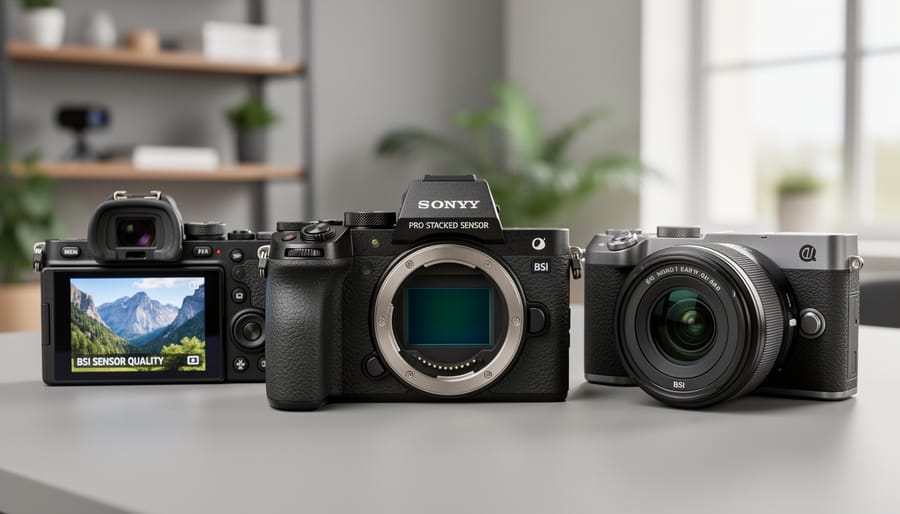
Popular Cameras with BSI and Stacked Sensors
BSI sensors have become the industry standard in modern cameras, appearing across virtually every price point and manufacturer. Understanding which cameras use this technology—and which take it further with stacked designs—can help you make smarter purchasing decisions based on your actual shooting needs.
In the flagship mirrorless category, Sony’s Alpha 1 and A9 III both feature stacked sensors, with the A9 III being the world’s first full-frame camera with a global shutter. These cameras excel at capturing fast action with zero rolling shutter distortion. Canon’s EOS R3 also uses a stacked sensor, delivering impressive burst speeds and reduced lag for sports and wildlife photographers. Nikon’s Z9 and Z8 similarly employ stacked technology, offering exceptional video capabilities alongside blazing-fast continuous shooting.
For more budget-conscious enthusiasts, BSI sensors (without stacking) deliver excellent results. The Sony A7 IV uses a BSI design that provides outstanding low-light performance and dynamic range. Canon’s EOS R6 Mark II features a BSI sensor that balances resolution with high ISO capabilities. Fujifilm’s X-T5 demonstrates how BSI technology benefits APS-C sensor types, delivering exceptional image quality in a smaller, lighter package.
Even entry-level cameras now incorporate BSI sensors. The Nikon Z5 and Canon EOS R8 prove that this advanced technology isn’t reserved for premium models. Micro Four Thirds shooters benefit too—the OM System OM-1 uses a stacked BSI sensor, bringing professional-grade performance to a compact system.
The key takeaway? BSI sensors have trickled down across the market, meaning you’re likely getting this technology regardless of budget. Stacked sensors remain in the premium tier, justifying their higher cost primarily for professionals who need absolute speed and minimal electronic shutter artifacts.
Understanding BSI and stacked sensor technology isn’t just about knowing the latest buzzwords in camera specifications. It’s about recognizing how these innovations can genuinely improve your photography in specific situations. If you frequently shoot in challenging lighting conditions, capture fast-moving subjects, or push your camera’s video capabilities, these technologies offer tangible benefits worth considering.
However, here’s the reality: sensor technology is just one piece of the puzzle. A camera with a BSI sensor won’t magically transform your photography if your lenses are subpar or if the camera’s ergonomics don’t suit your shooting style. I’ve seen photographers produce stunning work with older cameras lacking these advanced sensors, simply because they understood their equipment and used it skillfully.
So how should you approach this knowledge when shopping for your next camera? Start by honestly assessing your photography needs. Do you regularly shoot concerts, wildlife at dawn, or sports events? Then BSI or stacked sensors could make a real difference. Are you primarily a studio portrait photographer with controlled lighting? The benefits become less critical.
When evaluating cameras, look beyond the sensor architecture alone. Consider the entire system: lens selection, autofocus performance, handling, and features that match your workflow. Read real-world reviews from photographers who shoot similar subjects to yours, not just lab tests comparing noise levels at ISO 25,600.
The best camera isn’t always the one with the newest sensor technology. It’s the one that fits your creative vision, feels intuitive in your hands, and helps you capture the images you envision. Use your understanding of BSI and stacked sensors as informed context, not as the sole deciding factor.





 By
By