 By
By 
Ordering that dream lens from overseas can turn into a nightmare when your $2,500 package gets held at customs, racking up unexpected fees or, worse, returned to sender. Customs compliance isn’t bureaucratic red tape—it’s the difference between seamlessly receiving your international photography gear and facing delays, surprise charges exceeding $300, or confiscation.
When you purchase camera equipment internationally, you’re entering a world where proper documentation, harmonized tariff codes, and country-specific regulations determine whether your shipment clears smoothly or gets flagged. A simple error on a commercial invoice—like an undervalued declaration or missing product specifications—can trigger inspections that delay your package for weeks. Many photographers learn this the hard way when importing specialty lenses, lighting equipment, or vintage cameras that customs officials scrutinize carefully.
The stakes are real: duty rates on photographic equipment typically range from 0% to 7% in the US, but improper classification can double those costs. Add value-added taxes in other countries, brokerage fees, and potential penalties for non-compliance, and that “great deal” from abroad suddenly isn’t so great.
Understanding customs requirements before you click “purchase” protects both your investment and timeline. Whether you’re a professional photographer needing gear for an upcoming shoot or an enthusiast building your kit, mastering these fundamentals ensures your equipment arrives on time, correctly valued, and without unwelcome financial surprises.
What Customs Compliance Really Means for Photography Gear
Why Camera Equipment Gets Extra Scrutiny
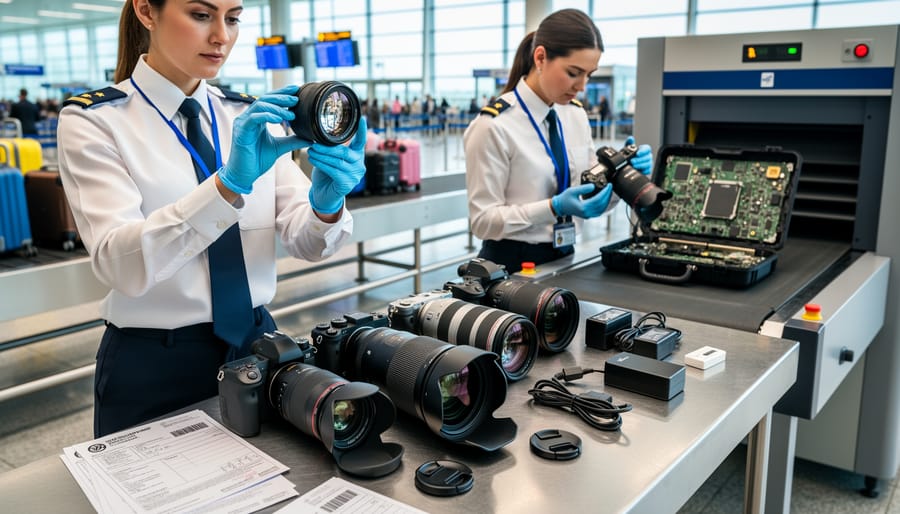
Photography gear occupies a unique space in the world of international shipping, and customs officials have legitimate reasons to give it extra attention. Understanding these concerns can help you prepare better documentation and avoid unnecessary delays.
First and foremost, camera equipment represents high-value electronics that cross borders regularly. A professional camera body can easily exceed $3,000, while specialized lenses may cost upward of $10,000. This value alone triggers heightened scrutiny, as customs officials work to prevent undervaluation fraud and ensure proper duties are collected. When you’re shipping or traveling with $20,000 worth of gear, expect questions.
Lithium batteries present another layer of complexity. Most modern cameras and accessories contain these power sources, which are subject to strict international shipping regulations due to fire risks. Different countries maintain varying restrictions on lithium battery capacity and quantity, particularly for air freight. For example, spare batteries over 160 watt-hours typically require special handling and documentation.
Certain optical equipment also faces export restrictions. High-end sensors and specialized lenses with military or surveillance applications may require export licenses from countries like the United States. While your landscape photography lens likely won’t qualify, thermal imaging cameras or equipment with night-vision capabilities often will.
Country-specific regulations add another wrangle to the equation. India, for instance, requires special permits for professional video equipment, while some Middle Eastern nations scrutinize camera gear entering their borders for security reasons. Brazil’s complex import duties on electronics can add 60% or more to your gear’s value. Always research your destination country’s specific requirements before shipping or traveling with substantial equipment.
The Real Cost of Non-Compliance
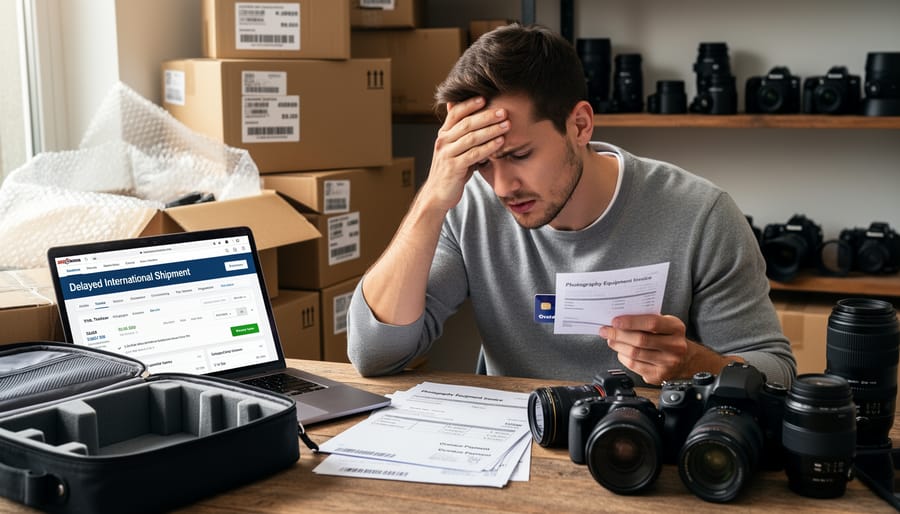
Let me share what happened to Marcus, a wedding photographer from Toronto, when he ordered a specialty lens from Japan. The package sat in customs for three weeks because he’d incorrectly declared the lens as “used equipment” when it was actually new. The result? $450 in storage fees, a delayed wedding shoot where he’d promised that specific lens aesthetic to his client, and nearly $200 in expedited shipping to get a rental replacement. His total non-compliance cost topped $850, plus a frustrated client who posted a lukewarm review.
This isn’t unusual. When customs paperwork contains errors or incomplete information, the financial consequences stack up quickly. Storage fees typically run between $25 to $75 per day after the first 48 hours. If your shipment gets flagged for inspection, you’re looking at additional examination fees ranging from $150 to $500, depending on the package size and contents.
Perhaps more concerning for those making high-value equipment investments is the risk of confiscation. Camera gear falsely declared as gifts or with suspiciously low values can be seized, requiring legal intervention to recover. Return shipping costs fall entirely on you, often matching or exceeding the original shipping expense.
The hidden costs go beyond dollars. Professional photographers lose client trust when promised equipment doesn’t arrive on schedule. Hobbyists miss once-in-a-lifetime shooting opportunities. One miscalculated duty rate can trigger audits of your previous imports, opening a cascade of reviews.
Border agencies maintain databases of non-compliant importers. Repeated violations can flag your name, subjecting future shipments to mandatory inspections and increased scrutiny. For photographers who regularly import gear, lenses, or lighting equipment, a clean compliance record isn’t just smart business; it’s essential for maintaining efficient, cost-effective international purchasing.
Essential Documents You Need Before Ordering
Commercial Invoice Requirements
When you’re importing camera gear, lenses, or photographic equipment across borders, your commercial invoice becomes the single most important document in your shipment—and getting it wrong can mean delays, unexpected fees, or even having your package held indefinitely at customs.
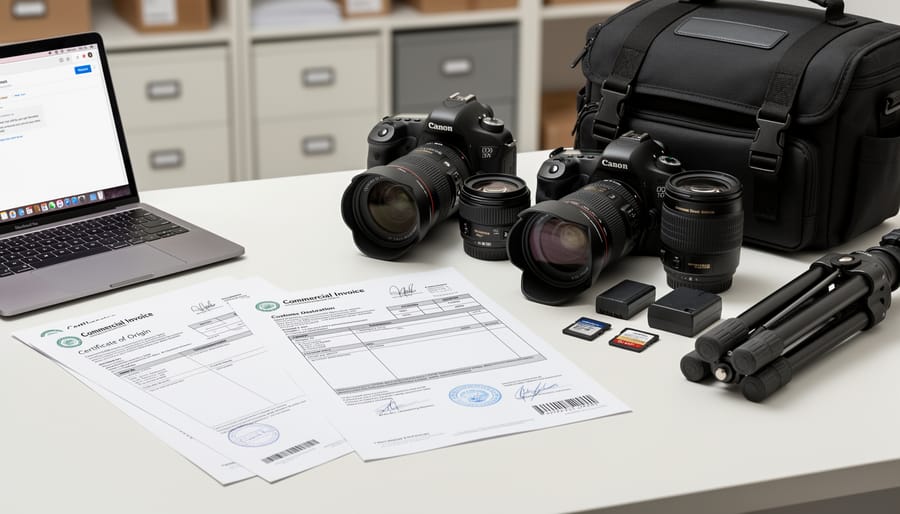
Think of your commercial invoice as a detailed story that tells customs officials exactly what’s crossing their border. It needs to include specific elements: a precise product description, the correct Harmonized System (HS) code, the actual value you paid, the country of origin, and the quantity. Each piece matters because customs agents use this information to assess duties and verify you’re not importing restricted items.
Here’s where many photographers run into trouble. Let’s say you’re importing a vintage Nikon lens adapter. Writing “camera parts” or “photography accessories” on your invoice is like telling customs officials “there’s something camera-related in here—good luck figuring it out.” This vagueness triggers red flags. Customs may open your package for inspection, causing delays, or they might assess duties based on their best guess, which usually isn’t in your favor.
Instead, your invoice should read something like “Nikon F-mount to Sony E-mount lens adapter, aluminum construction” with the corresponding HS code (typically 9002.11.90 for lens mounts). Include the actual purchase price—not an inflated or deflated amount—since customs can verify values online.
This level of detail, combined with proper packaging documentation, ensures your gear clears customs smoothly and reaches you without unnecessary complications or surprise charges.
Certificates and Special Documentation
When you’re importing high-end camera gear, specialized documentation often determines whether your shipment clears customs smoothly or gets held up for weeks. Beyond standard commercial invoices, certain products require additional certificates that verify their legitimacy and safety.
Certificates of origin prove where your equipment was manufactured, which matters because trade agreements between countries can significantly reduce or eliminate duties. For instance, a lens made in Japan might qualify for preferential tariff treatment when imported to certain countries. Many reputable dealers provide these automatically, but always confirm before purchase.
Lithium battery documentation has become increasingly critical. Most modern cameras, flashes, and accessories contain lithium-ion batteries, which are classified as dangerous goods for shipping purposes. You’ll need Material Safety Data Sheets and UN38.3 test summaries showing the batteries meet international safety standards. Without these documents, your shipment could be refused entry or face expensive storage fees while you scramble to obtain them.
Conformity certificates demonstrate that electronic equipment meets local safety and electromagnetic compatibility standards. In the European Union, this means CE marking documentation. In the United States, you might need FCC compliance certificates for wireless-enabled gear like camera triggers or GPS units.
Professional photographers importing specialized equipment sometimes need import licenses, particularly for items with encryption capabilities or night-vision components. Research your country’s specific requirements well before ordering, as obtaining these licenses can take several weeks or even months in some cases.
Personal Use vs. Commercial Import
Understanding whether you’re importing equipment for personal use or commercial resale fundamentally changes your customs obligations. When you order a new lens or camera body for your own photography work, you’re typically subject to standard import duties and taxes. However, if customs suspects you’re importing items for resale, you may face commercial import requirements, including business registration numbers and significantly higher fees.
The key distinction lies in documentation and quantity. Ordering a single high-end camera lens? That’s clearly personal use. Ordering five identical camera bodies simultaneously raises red flags. For those running a professional photography business, purchasing equipment for your own client work still qualifies as personal use, not commercial import.
To document your intent properly, keep purchase receipts showing single-unit orders and maintain records of your photography activities. If questioned, you should be prepared to demonstrate the equipment’s role in your personal or professional photography practice rather than inventory for resale.
Navigating Duties, Taxes, and Tariffs on Camera Gear
How Import Duties Are Calculated
Understanding how import duties are calculated can save you significant money when ordering photography gear internationally. The process might seem mysterious at first, but it breaks down into three key components.
First, duty rates vary by product classification. Photography equipment typically falls under specific Harmonized System (HS) codes—the global product classification system used by customs authorities. Most camera bodies and lenses carry duty rates between 0% and 5% in the United States, while accessories like tripods or bags might be taxed at different rates, sometimes reaching 10-15%. The European Union follows similar patterns, though rates can differ by country.
The declared value on your package determines the actual amount owed. If you purchase a $2,000 lens subject to a 3% duty rate, you’ll owe $60 in duties. However, this is where it gets interesting—many countries have de minimis thresholds, which are duty-free limits below which customs won’t collect taxes.
In the United States, packages valued under $800 typically enter duty-free. Canada’s threshold sits at CAD $20 (significantly lower), while the UK allows £135 before duties apply. Australia’s threshold is AUD $1,000. These limits can dramatically affect your purchase strategy. For example, splitting a large order into smaller shipments might seem clever, but customs authorities consider this practice—called undervaluation or splitting shipments—illegal and may impose penalties if discovered.
Always verify current thresholds before ordering, as governments periodically adjust these amounts based on trade agreements and economic policies.
VAT, GST, and Other Taxes to Expect
Beyond the basic import duties, you’ll encounter several additional taxes that can significantly impact your total cost. Understanding these beforehand prevents unwelcome surprises at checkout or delivery.
In the United States, most states charge sales tax on imported goods, typically ranging from 0% to 10% depending on your location. If you’re ordering a $2,000 lens to California, expect to add roughly $200 in state sales tax on top of any federal duties.
The United Kingdom applies VAT (Value Added Tax) at 20% on most photography equipment imports. When importing that same lens, you’d pay £400 in VAT plus applicable customs duties. Remember, post-Brexit, imports from the EU now face these charges too.
European Union countries also charge VAT, though rates vary by nation—from 17% in Luxembourg to 27% in Hungary. Most photography gear falls under standard VAT rates. For example, ordering a $3,000 camera body into Germany means adding 19% VAT (approximately €540).
Canada applies both GST (Goods and Services Tax) at 5% federally, plus provincial sales taxes that vary. In Ontario, the combined HST reaches 13%.
Australia charges 10% GST on imported goods, while India applies an 18% GST on photography equipment. These taxes calculate on the total value including shipping and insurance, not just the product price alone.
When ‘Free Shipping’ Isn’t Actually Free
You’ve spotted that coveted vintage lens on an overseas marketplace, and the listing proudly states “Free Shipping!” Sounds perfect, right? Here’s the reality check: that free shipping only covers the journey from the seller’s door to your country’s border. What happens next is on you.
When your package arrives, customs authorities assess its declared value and classify the contents. For photography gear valued over your country’s de minimis threshold (typically $800 in the US, much lower elsewhere), you’ll receive a bill for duties, taxes, and often a carrier processing fee. That $500 lens might suddenly cost you an additional $75-150 in charges you weren’t expecting.
The seller isn’t responsible for these fees unless explicitly stated in their terms. The courier handling your package will collect payment before releasing it to you, and refusing delivery doesn’t eliminate the charges. Some photographers have learned this lesson the hard way when a “great deal” on a $2,000 medium format camera body turned into a customs nightmare with nearly $400 in unexpected fees. Always factor customs costs into your budget before clicking “buy now” on international purchases.
Red Flags That Trigger Customs Holds
Undervalued Declarations and Misclassifications
It might seem tempting to mark that expensive telephoto lens as a “gift” or declare its value at a fraction of the purchase price to dodge customs duties. This shortcut, however, is one of the costliest mistakes photographers make when importing gear internationally.
Customs officials aren’t new to this game. They have extensive databases showing typical market values for camera equipment, and modern technology allows them to cross-reference commercial invoices, manufacturer data, and online pricing in seconds. When your declaration doesn’t match reality, red flags go up immediately.
The consequences go far beyond simply paying the duties you tried to avoid. Penalties typically start at double or triple the evaded amount, but can escalate dramatically. In many countries, deliberate misclassification is considered fraud, carrying fines of up to 40% of the item’s true value. Your shipment gets held indefinitely while authorities investigate, and you might face criminal charges for serious violations.
Professional photographer Maria learned this the hard way when she marked a $4,500 mirrorless camera body as worth $500. Customs seized her package, imposed a $2,000 penalty, and flagged her account. Now every shipment she receives undergoes intensive inspection, causing weeks of delays.
Insurance companies also won’t cover items you’ve undervalued, leaving you completely unprotected if something goes wrong during transit.
Restricted and Controlled Items
Not all photography gear crosses borders without complications. While your camera body and lenses typically clear customs smoothly, certain specialized equipment requires additional licensing or may face restrictions altogether.
Night vision adapters that attach to your camera fall under International Traffic in Arms Regulations (ITAR) in many countries. These devices, popular for wildlife photography at dusk or dawn, are considered dual-use technology with potential military applications. If you’re purchasing one from overseas, expect to provide end-user certificates and potentially wait weeks for export approval. One Canadian wildlife photographer learned this the hard way when his $3,000 night vision adapter sat in customs for six weeks while authorities verified his documentation.
Similarly, thermal imaging accessories raise red flags at customs checkpoints. While consumer-grade thermal cameras for building inspections are generally fine, high-resolution thermal imaging equipment capable of detecting heat signatures beyond certain distances requires special permits. The threshold varies by country, but resolution above 640×480 pixels often triggers scrutiny.
High-powered lasers used in photography trigger systems present another challenge. These precision tools, which photographers use to capture high-speed events like water droplets or balloon bursts, are regulated based on power output. Lasers exceeding Class 3R (5mW) typically require import permits and safety certifications.
Export-controlled technology extends to certain advanced camera stabilization systems and GPS-enabled equipment with encryption capabilities. Before shipping valuable photography equipment internationally, verify whether your specialized gear appears on your country’s controlled goods list. Contact the manufacturer directly—they typically know which markets require additional documentation for their products.
Working with Customs Brokers and Couriers
When to Use a Customs Broker
Here’s a practical approach to deciding when you’ll benefit from hiring a customs broker versus handling clearance yourself. As a general rule, consider using a broker when your shipment exceeds $2,500 in value or involves multiple items requiring complex classification. That high-end telephoto lens or professional lighting kit often falls into this category.
The math is straightforward. Brokers typically charge between $50 to $200 for standard clearance, depending on shipment complexity. For a $500 tripod, that fee represents 10-40% of your purchase price, making self-clearance more economical. However, for a $5,000 camera body, the same fee is only 1-4% of value while potentially saving you hours of paperwork and reducing the risk of misclassification penalties.
Self-clearing works well for straightforward purchases like single lenses or accessories where the harmonized code is clear and you’re comfortable navigating customs forms. I’ve successfully self-cleared basic equipment numerous times, saving broker fees when the process was simple.
However, brokers become invaluable when dealing with combined shipments mixing different duty rates, equipment requiring origin certificates, or time-sensitive professional gear needed for upcoming shoots. They also provide liability protection since customs errors become their responsibility, not yours.
Courier Service Differences
When shipping camera equipment internationally, your choice of courier significantly impacts both cost and speed. Here’s what you need to know about the major players.
DHL typically offers the fastest customs clearance, often processing camera gear within 24-48 hours. However, they charge brokerage fees ranging from $25-75 for packages valued under $2,500. For example, a photographer importing a mirrorless body from Japan might pay around $45 in DHL brokerage fees on top of duties and taxes.
FedEx and UPS operate similarly, with competitive clearance speeds of 2-3 business days. Their brokerage fees can be steeper, sometimes reaching $100 for mid-value shipments. Both companies offer the advantage of detailed online tracking through customs, which reduces anxiety when expensive lenses are in transit.
Postal services like USPS, Royal Mail, or Canada Post generally charge lower or no brokerage fees, making them attractive for budget-conscious photographers. The trade-off? Clearance can take 5-10 business days, and tracking updates may be sparse during the customs phase.
Pro tip: Some couriers allow you to self-clear commercial shipments at the border, avoiding brokerage fees entirely. This requires completing paperwork yourself but can save $50-100 on high-value equipment purchases. Check each carrier’s self-clearance policies before your shipment arrives.
Your Pre-Purchase Compliance Checklist
Before clicking that “buy now” button on an international camera gear purchase, take fifteen minutes to work through this compliance checklist. Think of it as protecting your photography investment before it even arrives at your door.
Start by researching your country’s import regulations on the official customs website. Note any value thresholds that trigger duties—in Canada, for instance, purchases under $20 CAD from most countries are duty-free, while the US exempts items under $800. Screenshot or bookmark the specific tariff codes for your gear type. A professional camera lens typically falls under HS code 9002, which carries different duty rates than electronics.
Next, verify the seller’s shipping practices. Confirm they’ll provide a detailed commercial invoice listing each item separately with accurate values. Ask explicitly whether they mark packages as gifts or undervalue items—if they do, find another seller. This practice puts you at risk, not them.
Calculate your total landing cost by adding the item price, shipping, estimated duties (usually 0-8% for camera equipment), and applicable taxes. Use your customs agency’s online duty calculator for precision. If the final number stretches your budget uncomfortably, reconsider the purchase.
Contact your credit card company to understand their foreign transaction fees and confirm your card’s purchase protection covers international orders. Some cards offer extended warranties that might influence your buying decision.
Finally, create a digital folder containing your purchase confirmation, payment receipt, and seller communication. You’ll need these documents readily accessible if customs contacts you. One photographer I know keeps everything in a dedicated cloud folder labeled by purchase date—a simple system that’s saved him hours of searching during clearance delays.
Proper customs compliance isn’t just red tape to navigate—it’s about protecting your investment and ensuring that dream lens or camera body actually makes it into your hands without unexpected costs or legal headaches. I’ve seen too many photographers get burned by assuming everything will just work out, only to face delays, penalty fees, or worse, having their gear held indefinitely at the border.
Think of the time you spend researching customs requirements as part of your purchasing process, just like reading reviews or comparing specifications. A few hours of homework upfront can save you hundreds or even thousands of dollars, not to mention weeks of stress waiting for customs issues to resolve. Know your country’s import thresholds, understand what documentation you’ll need, and factor in duties and taxes when budgeting for international purchases.
The good news? You’re now equipped with the knowledge to make informed decisions. Whether you’re ordering a vintage film camera from Japan or the latest mirrorless body from Europe, you understand what to expect and how to prepare. That puts you in control of the process rather than at its mercy. Smart photographers plan ahead, ask the right questions, and never assume anything when it comes to international shipping. Your gear—and your wallet—will thank you.



 By
By