 By
By 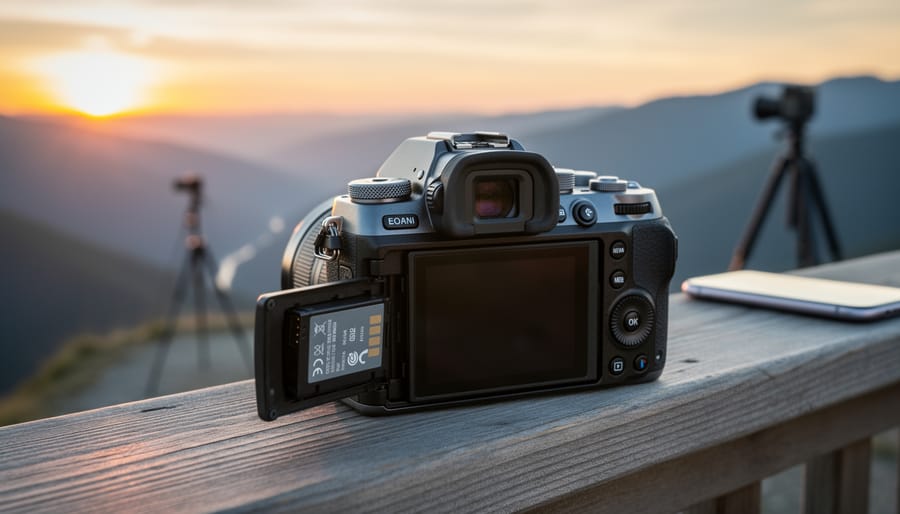
Your camera died halfway through the golden hour shoot. Again. You’re not alone—battery anxiety ranks among photographers’ top frustrations, whether you’re a weekend hobbyist or a professional on a multi-day assignment. The culprit? Modern cameras pack increasingly powerful processors, high-resolution sensors, and connectivity features that devour power at alarming rates.
Here’s the good news: camera manufacturers have finally recognized that megapixels and frame rates mean nothing if your gear can’t last through a session. Energy-efficient hardware has become the silent revolution in camera design, employing technologies borrowed from smartphones and electric vehicles to dramatically extend shooting time without compromising performance.
Understanding what drains your battery—and what innovations counteract those drains—transforms how you evaluate cameras and manage shoots. The image sensor alone can consume 30-40% of total power during continuous shooting. Add in power-hungry electronic viewfinders refreshing at 120fps, real-time autofocus calculations processing hundreds of data points per second, and wireless connectivity maintaining constant handshakes with your phone, and you’ve got a perfect storm of energy demands.
But engineering breakthroughs are changing this equation. Stacked sensor architectures, dedicated AI processors handling computational tasks more efficiently than main processors, and adaptive refresh rate displays that intelligently throttle power usage are making all-day shooting realistic without a backpack full of batteries. This guide breaks down exactly which hardware components matter most for battery longevity and how to identify truly efficient cameras beyond marketing claims.
Why Energy Efficiency Suddenly Matters in Camera Design
The camera world experienced a seismic shift over the past decade, and if you’ve felt like your battery can barely keep up, you’re not imagining things. The transition from DSLRs to mirrorless cameras brought incredible innovation, but it also created power demands that would have been unthinkable just a few years ago.
Think about it: DSLRs had optical viewfinders that required zero power. You could keep one eye pressed to that viewfinder all day, and your battery wouldn’t even notice. Mirrorless cameras replaced that simple prism with an electronic viewfinder (EVF) that’s essentially a tiny, high-resolution screen refreshing 60 to 120 times per second, inches from your eye. That alone is a significant power draw.
But the EVF is just the beginning. Modern mirrorless cameras employ constant on-sensor phase detection autofocus, meaning the sensor is continuously analyzing the scene, tracking subjects, and even recognizing eyes and faces. This revolutionary camera technology requires processors working overtime, and processors consume power.
Then there’s video. Wedding photographers might shoot 4K footage for hours. Content creators need 10-bit color and high frame rates. Each of these capabilities demands more from the sensor, processor, and heat management systems, all of which drain batteries faster than traditional still photography ever did.
The real-world impact is stark. Early mirrorless cameras struggled to deliver 300 shots per charge, while comparable DSLRs routinely exceeded 800 shots. For professional photographers shooting events or wildlife, this wasn’t just inconvenient; it was potentially career-threatening. Miss the decisive moment while swapping batteries, and you might lose a client.
Battery life has become a primary consideration in camera reviews and buying decisions. Forums overflow with discussions about which cameras can last through a wedding day or a full wildlife shoot. Manufacturers have responded by developing larger capacity batteries, more efficient processors, and smarter power management systems. Today’s flagship mirrorless cameras can approach or even exceed DSLR battery performance, but only because energy efficiency has become a critical design priority rather than an afterthought.
The Biggest Energy Vampires Hiding in Your Camera
Electronic Viewfinders and LCD Screens
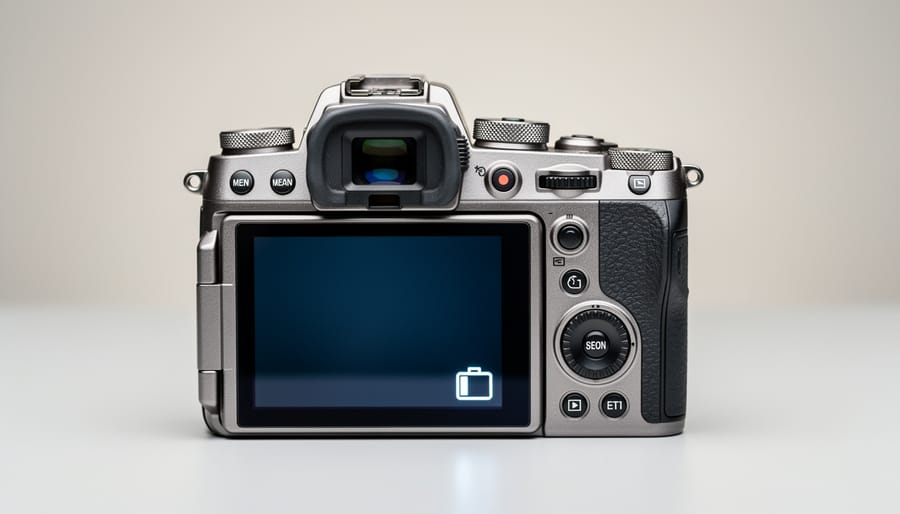
Your camera’s electronic viewfinder (EVF) and rear LCD screen are among the biggest battery drains you’ll encounter in modern digital cameras. Think of them as tiny, constantly-running televisions that require significant power to operate, especially during extended shooting sessions.
The technology behind these displays matters considerably. OLED (Organic Light-Emitting Diode) screens, found in cameras like the Sony A7 IV and Fujifilm X-T5, offer superior contrast and deeper blacks because individual pixels can turn completely off. However, they typically consume more power when displaying bright scenes compared to traditional LCD (Liquid Crystal Display) technology. LCD screens, like those in the Canon EOS R6, use a backlight that stays on regardless of what’s displayed, which can be more efficient in bright shooting conditions but less so in darker environments.
Refresh rates significantly impact battery consumption too. Many EVFs operate at 60Hz or 120Hz, with the higher refresh rate providing smoother motion but draining your battery faster. The Nikon Z9, for instance, offers a 120Hz EVF that’s buttery smooth but demands more juice than standard options.
Brightness settings represent your most controllable variable. Running your EVF or LCD at maximum brightness can reduce shooting time by 20-30% compared to moderate levels. Many photographers unnecessarily max out their screen brightness in daylight, when a slightly dimmer setting with proper eye shading would work just fine.
Here’s a practical tip: use your EVF primarily and turn off the rear LCD when possible. Most cameras automatically switch between them, but disabling the LCD entirely through your menu settings can extend battery life by 15-20%. Similarly, reducing EVF brightness by just two stops from maximum often goes unnoticed but saves considerable power throughout the day.
Image Sensors and Processing Engines
The sensor is your camera’s biggest power consumer, and understanding how it affects battery life can help you make smarter purchasing decisions. Think of your image sensor as constantly sipping power whenever your camera is on, even when you’re not actively shooting.
Larger sensors generally draw more power because they contain more photosites that need constant electrical management. A full-frame sensor, for example, typically consumes more energy than an APS-C sensor, all else being equal. Resolution plays a similar role. A 45-megapixel sensor requires more processing power to read out and handle all that data compared to a 24-megapixel sensor, which translates directly to faster battery drain.
Here’s where modern technology offers real solutions. Backside-illuminated sensors have revolutionized efficiency by placing the sensor’s circuitry behind the photosites rather than in front. This design allows more light to reach each pixel, meaning your camera needs less processing power to produce clean images, especially in low light. You’ll find BSI sensors in everything from flagship mirrorless cameras to modern smartphones.
Stacked sensor designs take efficiency even further. These sensors add a dedicated processing layer directly beneath the imaging layer, dramatically speeding up data readout while reducing the workload on your camera’s main processor. Sony’s implementation in cameras like the A9 series demonstrates how this technology enables features like silent shooting and high-speed burst modes without decimating battery life. The faster, more efficient data handling means less time with power-hungry components running at full capacity between shots.
Autofocus Systems and Stabilization
Your camera’s autofocus system is working overtime, and it’s quietly draining your battery in the process. Modern phase-detection autofocus (PDAF) systems are remarkably efficient compared to older contrast-detection methods, but they still require significant power, especially when continuously tracking moving subjects.
Phase-detection AF uses dedicated sensor pixels to calculate focus almost instantly, consuming less power per focus operation than contrast-detection, which needs to hunt back and forth. However, during continuous shooting or video recording, that advantage diminishes as the system constantly works to maintain focus. Mirrorless cameras with on-sensor PDAF generally perform better than traditional DSLR systems since they eliminate the need for separate AF modules and mirror mechanisms.
In-body image stabilization (IBIS) presents another power consideration. Those gyroscopic sensors and actuator motors that keep your images sharp are continuously active when the camera is powered on, even if you’re not shooting. Some cameras draw 15-20% more power with IBIS enabled. Lens-based stabilization typically consumes less battery from the camera body itself, though it requires powered lenses.
The practical takeaway? If you’re shooting static subjects, consider disabling continuous AF and IBIS when unnecessary. Many modern cameras offer customizable AF settings that let you balance tracking performance against battery consumption. For instance, reducing AF sensitivity or switching from continuous to single-shot AF during less demanding scenarios can meaningfully extend your shooting time without sacrificing image quality.
Smart Hardware Solutions That Actually Work
Power-Sipping Processors and AI Chips
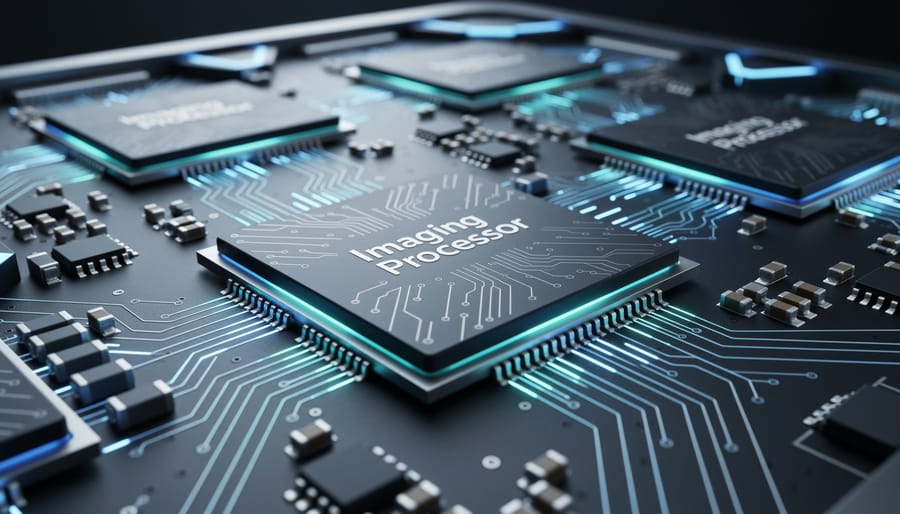
Think of your camera’s processor as its beating heart—and like any heart, efficiency matters. Modern imaging processors have undergone a remarkable transformation, shifting from power-hungry workhorses to sophisticated, energy-conscious chips that deliver more performance while sipping battery power.
Canon’s DIGIC X processor exemplifies this evolution. Found in cameras like the EOS R5 and R3, it processes images up to 3.1 times faster than its predecessor while actually consuming less power. How? By using a more advanced 14-nanometer architecture that packs transistors more densely, reducing the electrical distance signals must travel. Think of it as redesigning a city’s roads to make every trip shorter and more efficient.
Sony has taken a similar approach with their BIONZ XR processor, which powers cameras like the A7 IV and A1. This chip integrates AI-driven functions directly into the processor, eliminating the need for separate power-hungry components to handle computational photography tasks like subject recognition and real-time tracking.
These dedicated AI chips represent one of the most significant groundbreaking camera innovations in recent years. Rather than using the main processor for everything, manufacturers now include specialized neural processing units that handle specific tasks with remarkable efficiency. Fujifilm’s X-Processor 5, for instance, includes dedicated circuitry for film simulations and autofocus calculations, dramatically reducing overall power draw.
The practical impact? The Canon EOS R6 Mark II delivers approximately 760 shots per charge despite its advanced capabilities, while Sony’s A7 IV manages around 580 shots—both substantial improvements over earlier generations. These processors prove that doing more doesn’t have to mean consuming more, giving photographers the freedom to shoot longer without constantly hunting for charging outlets.
Adaptive Display Technology
Modern camera displays have become surprisingly intelligent about power management, and understanding these features can significantly extend your shooting time in the field. Think of adaptive display technology as your screen learning to be efficient without you having to manually adjust settings constantly.
Variable refresh rate displays represent one of the most impactful advancements in screen efficiency. Traditional displays refresh at a fixed rate, typically 60 times per second, regardless of what you’re viewing. Newer cameras employ adaptive refresh rates that scale down to as low as 1Hz when displaying static content like a photo you’re reviewing. When you’re chimping through images after a portrait session, your display might only refresh once per second instead of sixty times, dramatically reducing power draw. You’ll notice this translates to noticeably longer review sessions without depleting your battery.
Automatic brightness adjustment goes beyond simple ambient light sensors. Advanced systems now analyze both surrounding light conditions and the actual content being displayed, optimizing brightness levels precisely. During a bright outdoor shoot, your screen automatically cranks up brightness so you can properly evaluate exposure and focus. Move into shade or indoors, and it seamlessly dims to comfortable levels. This intelligent scaling prevents the common habit of manually maxing out brightness and forgetting about it, which absolutely destroys battery life.
Proximity sensors add another layer of efficiency by detecting when your eye approaches the electronic viewfinder, instantly shutting off the rear LCD. This seemingly simple feature prevents the wasteful situation where both displays run simultaneously, effectively doubling screen power consumption during critical shooting moments.
Smart Sleep Modes and Power Management
Modern cameras have become remarkably sophisticated at managing power, much like how your smartphone knows when to conserve battery. Unlike older camera designs that essentially ran at full power whenever switched on, today’s models utilize multiple hardware-level power states that can shut down specific components while keeping critical systems ready to shoot.
Think of it this way: traditional cameras were like leaving every light in your house on, while contemporary energy-efficient photography technology works more like motion-activated lighting that illuminates only what you need, when you need it.
The key innovation is instant wake functionality. When you bring your camera to your eye or tap the shutter button, critical components like the image sensor, processor, and autofocus system spring to life in milliseconds. Meanwhile, non-essential systems like the rear display, Wi-Fi module, and menu processing remain dormant until actually needed. This graduated approach means you’re not sacrificing shooting readiness for battery life.
Older cameras typically featured just “on” and “off” states, with perhaps a basic sleep mode that could take frustratingly long to wake from, potentially causing you to miss the shot. Modern power management operates on a spectrum, with processors intelligently monitoring which components you’re actively using and adjusting power distribution accordingly.
For example, if you’re shooting through the viewfinder, the rear LCD can completely power down. If you haven’t adjusted settings in several seconds, the menu processor enters a low-power state while keeping the shutter and autofocus instantly responsive.
Battery Technology That’s Changing the Game
Remember when a full day of shooting meant carrying three or four spare batteries? Those days are fading fast, thanks to remarkable advances in battery technology that are fundamentally changing how we power our cameras.
Modern lithium-ion batteries have evolved significantly beyond their predecessors. Today’s batteries deliver higher capacity in smaller packages, with many mirrorless cameras now achieving 400-500 shots per charge compared to just 250-300 shots from batteries of similar size five years ago. This improvement comes from refinements in battery chemistry, particularly in cathode materials that allow for greater energy density without compromising safety or longevity.
The real game-changer, however, is USB-C Power Delivery. This standardized charging protocol is revolutionizing camera power management in ways that go beyond simple convenience. USB-C PD allows cameras to charge at much higher wattages, meaning you can top up your battery during a lunch break rather than waiting hours. Even better, many newer cameras can operate while charging, effectively giving you unlimited shooting time when tethered to a power source.
For photographers shooting video or time-lapses, this technology is transformative. You can power your camera directly from portable power banks that you probably already carry for your phone. A 20,000mAh power bank can extend your shooting day by 3-4 times, and these are among the most practical essential camera accessories for serious work.
When comparing battery types, look beyond just capacity ratings measured in milliamp-hours. A 2,250mAh battery in a power-efficient camera will outlast a 2,400mAh battery in a less optimized body. Pay attention to real-world shot counts provided by manufacturers, keeping in mind these are tested under specific conditions. Your actual mileage will vary based on how you shoot.
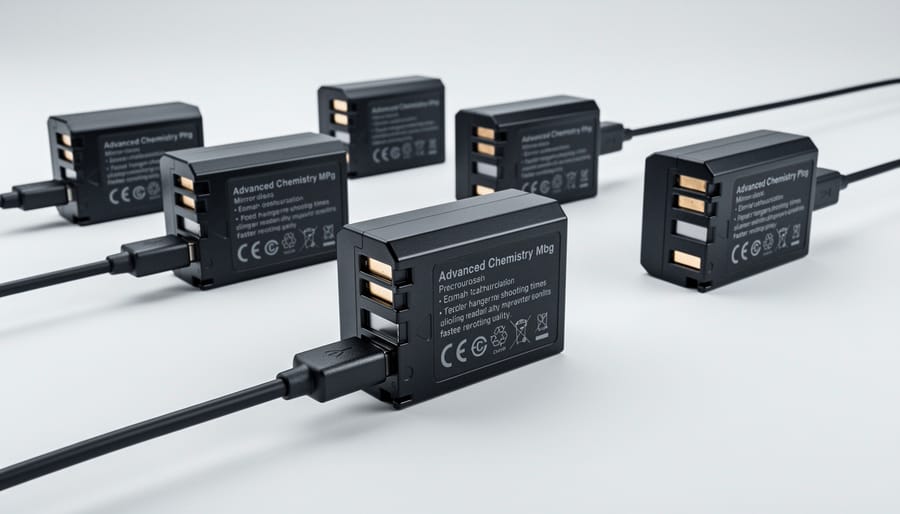
Smart charging technology has also improved dramatically. Modern chargers communicate with batteries to optimize charging speed and protect against overcharging, extending battery lifespan. Some systems can fully charge a depleted battery in under 90 minutes without generating excessive heat or degrading the cells.
For practical charging solutions, consider investing in dual-battery chargers that work with USB-C PD. These let you charge two batteries simultaneously from a single power source, perfect for overnight charging in hotel rooms or while traveling between locations.
What to Look for When Buying Your Next Camera
When you’re in the market for a new camera, thinking about energy efficiency might not top your initial checklist, but it should absolutely be part of your decision-making process. After all, what good is having all those game-changing camera features if your battery dies halfway through a shoot?
Start by examining the battery capacity specification, measured in milliampere-hours (mAh). A higher number means more stored energy, but don’t stop there. Ask retailers or check manufacturer specifications for the CIPA (Camera & Imaging Products Association) shot count rating. This standardized test tells you approximately how many shots you can expect per charge under typical conditions. Modern mirrorless cameras should deliver at least 300-400 shots, while many newer models exceed 500-700.
Pay attention to screen technology. Cameras equipped with OLED electronic viewfinders typically consume less power than older LCD-based systems when you’re actively shooting. Similarly, check if the camera offers adjustable screen brightness and auto-dimming features, which help conserve energy without sacrificing visibility.
Look for cameras with multiple power-saving modes. Can you customize sleep timers? Does it offer a power-efficient standby mode that lets you quickly resume shooting? These options matter during real-world use.
Don’t overlook connectivity features either. While Wi-Fi and Bluetooth are incredibly useful, they’re also power-hungry. Choose cameras that let you easily toggle these features on and off, or better yet, offer low-energy Bluetooth variants for maintaining connections without draining your battery.
Finally, consider the availability and cost of spare batteries. Even the most efficient camera will eventually need a recharge, so having affordable backup options ensures you’ll never miss a shot.
Energy-efficient hardware isn’t just about squeezing extra shots from a single battery charge, though that’s certainly a welcome benefit when you’re deep into a wedding reception or miles from the trailhead. The ripple effects extend much further. Cooler-running processors mean you can shoot longer video sequences without thermal shutdowns interrupting your creative flow. Faster, more efficient image processors translate to snappier autofocus and reduced buffer clearing times, keeping you ready for the next decisive moment. And collectively, as photographers, choosing energy-conscious gear means reducing our environmental footprint, one camera body at a time.
Looking ahead, expect manufacturers to push even further into AI-accelerated processing and refined sensor architectures that do more with less power. The next generation of mirrorless cameras will likely make today’s efficient models look wasteful by comparison. For now, prioritize cameras with modern processors, efficient sensor designs, and smart power management features. Your back will thank you for the lighter battery load, your memory cards will fill faster, and you’ll spend more time capturing images rather than swapping batteries.


 By
By