 By
By 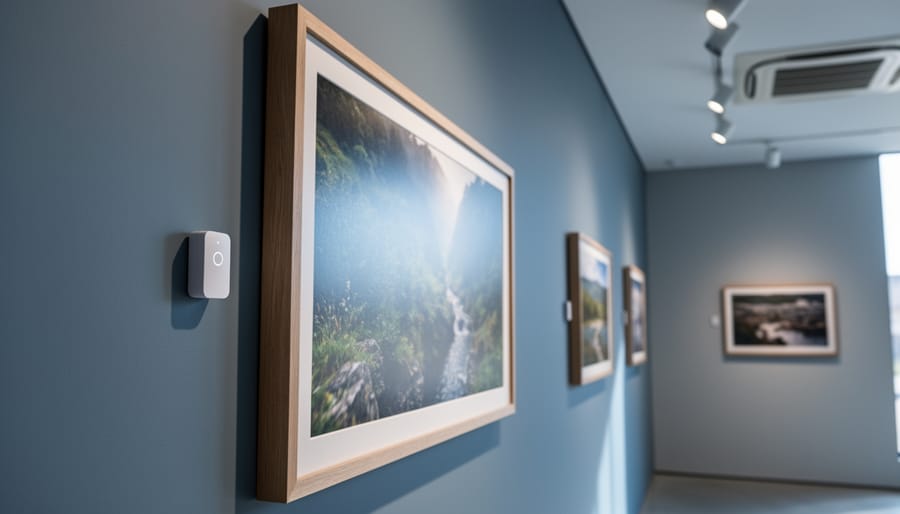
Install smart sensors in your gallery or exhibition space to track temperature fluctuations between 65-75°F and humidity levels at 30-50% relative humidity—the sweet spot that prevents your photographic prints from warping, fading, or developing mold. A sudden spike to 80% humidity overnight could damage months of displayed work before you even arrive in the morning.
Position light sensors near your most valuable prints to monitor cumulative UV exposure, which degrades pigments and paper fibers invisibly over time. These devices log exposure data continuously, allowing you to identify problem areas where sunlight streams through windows at certain times of day or where LED lighting systems emit unexpected UV wavelengths.
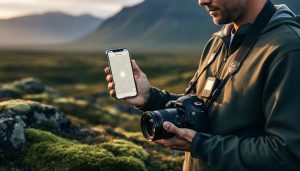
Connect these monitoring devices to your smartphone through WiFi or cellular networks so you receive instant alerts when conditions drift outside safe parameters. When a heating system fails at 2 AM during winter, you’ll know immediately rather than discovering cracked prints and buckled frames the next day.
The real power of IoT monitoring isn’t just collecting data—it’s the automated response capability. Modern systems can trigger HVAC adjustments, activate backup dehumidifiers, or alert building management when your precious photographic displays face environmental threats. For photographers who’ve invested hundreds of hours capturing the perfect image and additional resources in professional printing, transit, and display, environmental monitoring transforms from optional insurance to essential protection.
This technology has become surprisingly affordable and accessible, with basic monitoring kits starting under $200. The question isn’t whether monitoring makes sense for your photographic displays—it’s how quickly you can implement a system before environmental damage occurs.
The Silent Killers of Your Printed Photography
You’ve invested in premium paper, perfected your protecting your prints workflow, and finally achieved that flawless print quality you’ve been chasing. But here’s the uncomfortable truth: from the moment your print leaves the studio, invisible environmental forces begin their slow assault.
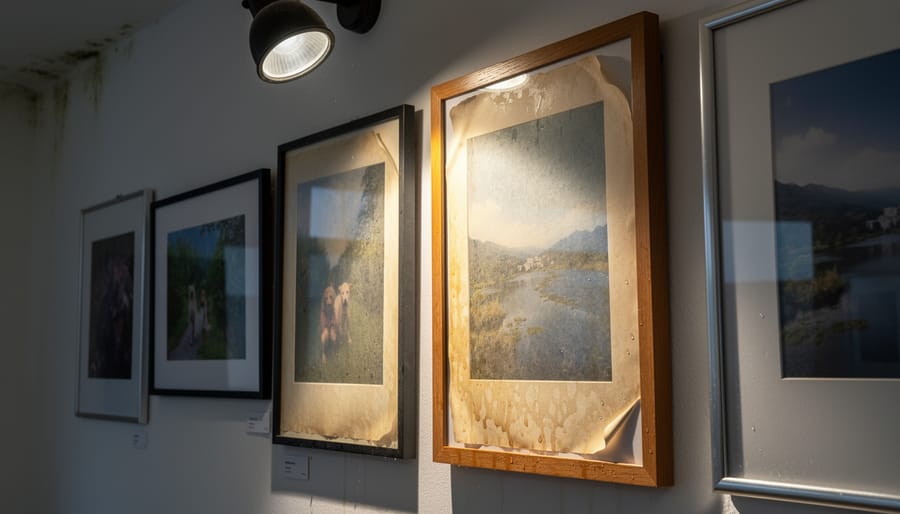
Humidity is perhaps the most insidious enemy. A gallery in Vancouver discovered this the hard way when a collection of fine art prints developed noticeable waviness after just three weeks on display. The culprit? Humidity levels fluctuating between 35% and 75% as the gallery’s aging HVAC system cycled erratically. Paper is hygroscopic, meaning it absorbs and releases moisture constantly. When relative humidity swings beyond 10-15%, prints expand and contract, leading to warping, cockling, and eventual delamination of mounted work.
Temperature fluctuations work hand-in-hand with humidity to accelerate deterioration. A striking example comes from outdoor advertising displays in Toronto, where backlit prints endured temperature variations of 40 degrees Celsius between daytime heat buildup and nighttime cooling. These prints showed visible color shifts and substrate degradation within two months, despite being rated for outdoor use.
UV exposure, meanwhile, is photography’s silent bleacher. Even gallery lighting can be problematic. One Manhattan photographer documented a 15% color shift in unmounted prints after just six months under standard LED gallery lights. The damage wasn’t uniform, either. Warm tones faded noticeably faster, creating an unwanted cool cast across the entire image.
Air quality often goes overlooked, but pollutants like ozone, sulfur dioxide, and particulates actively attack photographic emulsions and substrates. A shipping company tracking cross-country transit noticed prints arriving with surface degradation after passing through industrial corridors, where airborne pollutants infiltrated supposedly sealed packaging.
The challenge? These factors don’t operate independently. High humidity amplifies UV damage. Temperature extremes accelerate chemical reactions triggered by pollutants. And you won’t notice the damage until it’s irreversible. Traditional methods like periodic visual inspections or basic thermometers provide only snapshots, missing the continuous environmental story unfolding between checks. This is precisely where IoT monitoring technology transforms print preservation from guesswork into data-driven protection.
What IoT Environmental Monitoring Actually Means for Photographers
If you’re like most photographers, the phrase “IoT environmental monitoring” probably sounds like something from a tech conference rather than a tool for your creative work. But here’s the reality: these wireless sensors are simply small devices that keep watch over your prints when you can’t be there yourself.
Think of IoT monitoring as having a vigilant assistant who never sleeps. These compact sensors continuously measure the conditions around your displayed or stored prints, tracking temperature, humidity, light exposure, and sometimes even vibration or shock events. The “IoT” part—which stands for Internet of Things—simply means these devices connect to the internet, sending you real-time alerts and data about what’s happening to your work.
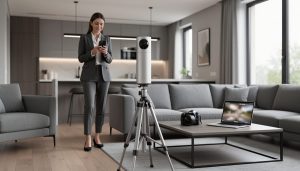
Here’s how it works in practice. You place a small sensor near your displayed prints or inside a shipping container. The device contains specialized components that detect environmental changes and transmit this information wirelessly to your smartphone or computer. Most systems use either Wi-Fi or cellular connections, so you can monitor conditions from anywhere in the world. Some photographers check their dashboard during morning coffee, while others only glance when they receive an alert about concerning conditions.
What makes these sensors particularly valuable is their ability to catch problems before they become disasters. Traditional methods—like checking a wall-mounted thermometer when you visit a gallery—only show you conditions at that exact moment. IoT sensors, by contrast, reveal patterns over days or weeks. You might discover that humidity spikes every night when the HVAC system switches modes, or that direct sunlight hits your display case during specific afternoon hours.
The technology has become remarkably affordable too. Basic monitoring setups now cost less than a quality lens, making them accessible to serious hobbyists and not just institutional collectors. For anyone who’s invested hundreds of hours perfecting a print, these devices offer genuine peace of mind. They transform environmental protection from guesswork into measurable, manageable data you can actually act upon.
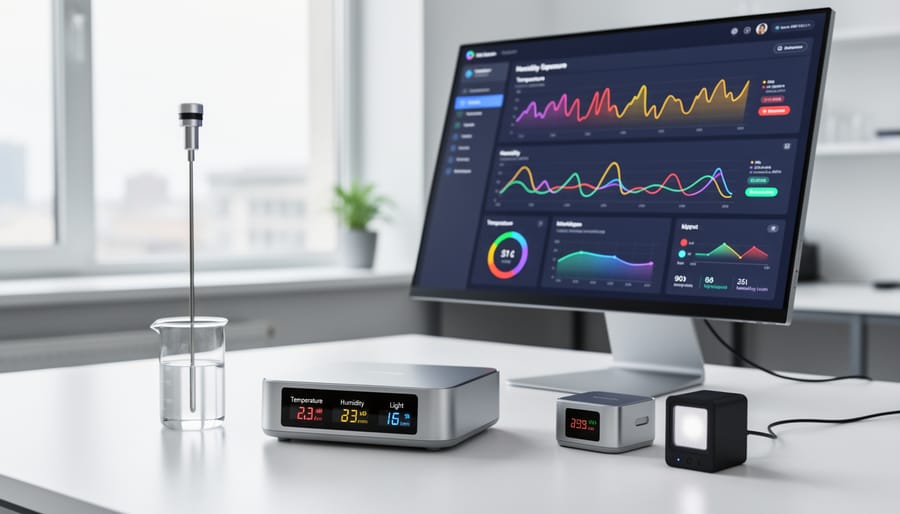
The Key Metrics Your Displays Need to Track
Temperature and Humidity: The Dynamic Duo
Think of temperature and humidity as dance partners – they work together, and when one gets out of step, your prints suffer. For photographic materials, the sweet spot sits between 65-70°F (18-21°C) with relative humidity around 30-50%. Stay within these ranges and your prints remain stable. Drift outside them, and you’re inviting trouble.
Here’s what many photographers miss: it’s not the absolute numbers that cause the most damage, but the fluctuations. A print can adapt to slightly warmer conditions if they remain consistent. However, swing from 65°F to 75°F daily, or let humidity yo-yo between 40% and 70%, and you’ll see accelerated aging. The physical expansion and contraction stresses paper fibers, loosens adhesives, and creates microcracks in emulsions.
I learned this the hard way when a client’s limited edition prints developed subtle cockling after just three months in a gallery. The temperature was technically “fine” at 68°F, but the HVAC system cycled aggressively, creating 10-degree swings throughout the day. The humidity, controlled by a basic humidifier, varied even more wildly.
This is precisely why IoT monitoring outperforms those periodic checks with a handheld meter. A single reading tells you conditions at that exact moment – essentially a photograph of your environment. Continuous monitoring reveals the full story, capturing those overnight temperature drops when the AC shuts off or humidity spikes during rainy weather. You need that complete picture to truly protect your work.
Light Exposure and UV Radiation
Light is perhaps the most insidious threat to your displayed prints because the damage accumulates silently over time. While we often think about direct sunlight as the primary culprit, the reality is more nuanced. Fluorescent lighting, LED displays, and even ambient daylight streaming through windows all contribute to photochemical degradation. The ultraviolet wavelengths present in these light sources break down the molecular bonds in both paper and ink, causing what we commonly recognize as fading.
Here’s where IoT monitoring becomes invaluable: lux meters integrated into smart sensors measure the total light exposure your prints receive. Think of it like a fitness tracker, but instead of counting your daily steps, it’s tallying every lumen-hour your artwork endures. These devices record not just instantaneous brightness but cumulative exposure over days, weeks, and months.
This data transforms from reactive to predictive. Rather than discovering fading after it’s already visible, you can establish exposure thresholds based on your specific print materials. A carbon pigment print on archival paper might tolerate 450,000 lux-hours before showing degradation, while a dye-based print might start fading at 150,000. Your IoT system can alert you when you’re approaching these limits, allowing you to rotate pieces, adjust lighting schedules, or implement UV-filtering glazing before irreversible damage occurs. This proactive approach extends the exhibition life of valuable prints significantly.
Air Quality and Particulates
Air quality poses a significant threat to displayed prints, particularly in high-traffic transit stations, outdoor kiosks, and urban gallery spaces. Airborne particulates including dust, vehicle exhaust, industrial pollutants, and chemical vapors can gradually degrade print surfaces, causing discoloration, fading, and physical deterioration over time.
IoT air quality sensors continuously monitor particulate matter levels (PM2.5 and PM10), volatile organic compounds (VOCs), and humidity fluctuations that accelerate print degradation. For transit displays, these sensors are especially valuable because subway systems and bus stations experience particularly high concentrations of brake dust and diesel particulates. A single week of exposure to these contaminants can be equivalent to months in a controlled indoor environment.
Modern air quality monitors connect wirelessly to your monitoring system, providing real-time alerts when pollutant levels exceed safe thresholds. This allows you to schedule protective measures like filter changes, enclosure cleaning, or temporary display removal during severe pollution events. Just as proper print handling protects work during shipping, air quality monitoring extends that protection throughout the display lifecycle.
For outdoor installations, tracking daily air quality patterns helps you anticipate seasonal threats like pollen in spring or wildfire smoke in summer, enabling proactive conservation strategies that preserve your work’s visual integrity.
Choosing IoT Sensors for Your Display Environment
Selecting the right IoT sensors for monitoring your display environment doesn’t have to be overwhelming. Think of it like choosing the right camera gear – you wouldn’t use the same setup for wildlife photography as you would for studio portraits, and the same principle applies here.
Start by evaluating your display type and location. A gallery showcasing fine art prints has different needs than a digital billboard displaying commercial photography in a transit hub. For gallery environments, you’ll want sensors that measure temperature, humidity, and light exposure – the big three threats to print longevity. Temperature and humidity sensors are essential, as fluctuations can cause paper warping, color shifts, and accelerated fading. Look for devices with accuracy ratings of plus or minus 2 percent for humidity and 0.3 degrees Celsius for temperature.
Light sensors are equally critical, especially for displays near windows or under intense artificial lighting. UV sensors help you track cumulative exposure, which is particularly important for traditional photographic prints that can fade over time. Some advanced sensors even differentiate between UV, visible, and infrared light, giving you a complete picture of your lighting conditions.
For outdoor or transit displays, consider ruggedized sensors that can handle weather exposure and vibration. You’ll also want motion detection capabilities to alert you to potential tampering or theft. Accelerometers built into IoT devices can detect when a display has been moved or knocked, which is invaluable for high-value photographic installations.
Connectivity options matter more than you might think. Wi-Fi sensors are convenient and work well in gallery spaces with existing networks, but they consume more power and may need frequent battery changes. Bluetooth Low Energy devices offer excellent battery life but require you to be within range to collect data. For more extensive installations, consider LoRaWAN or cellular-connected sensors that can transmit data over longer distances without relying on local Wi-Fi infrastructure.
Budget-conscious photographers can start with basic temperature and humidity monitors in the fifty to one hundred dollar range. These entry-level devices typically connect via Bluetooth and work well for small galleries or home studios. Mid-range solutions, priced between two hundred and five hundred dollars, often include cloud connectivity, data logging, and smartphone alerts. Professional-grade systems with multiple sensor types and advanced analytics can run into thousands but provide comprehensive protection for valuable collections.
Essential features to prioritize include data logging capabilities, customizable alert thresholds, and battery life indicators. Real-time alerts sent to your phone mean you can respond immediately when conditions drift outside safe parameters, potentially saving your displayed work from irreversible damage.
Setting Up Your Monitoring System: A Photographer’s Approach
Sensor Placement for Accurate Readings
Getting accurate environmental readings depends entirely on where you place your sensors. Think of it this way: you wouldn’t meter for exposure in a completely different room from your subject, right? The same principle applies to environmental monitoring.
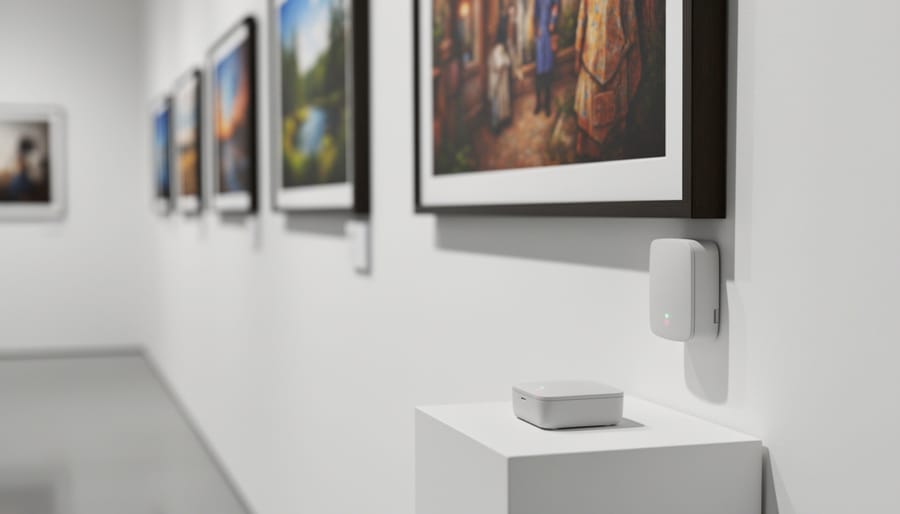
For gallery installations, position sensors at print height, not ceiling level. Temperature and humidity can vary significantly between floor and ceiling, sometimes by several degrees. Place sensors approximately 6-12 inches from the wall where your prints hang, ensuring they’re not directly exposed to heating vents, air conditioning units, or direct sunlight from windows. These create microenvironments that don’t reflect the actual conditions your prints experience.
In lightbox displays, mount sensors inside the enclosure but away from the light source itself. LEDs generate heat, and you need to know what temperature your print actually experiences, not just the hottest point near the bulbs. Attach sensors to the frame’s interior surface where heat dissipates naturally.
For transit displays like bus shelters or subway platforms, positioning becomes trickier. Place sensors in protected corners where they won’t be tampered with but still measure ambient conditions. Avoid mounting directly above heating elements or against metal surfaces that absorb and radiate heat differently than your prints.
The biggest mistake? Installing sensors in convenient locations rather than representative ones. That sensor tucked behind equipment might be easy to access, but if it’s reading conditions your prints never experience, you’re monitoring the wrong environment entirely.
Connecting and Configuring Your Devices
Setting up IoT monitoring for your displayed photographs is surprisingly straightforward, even if you’ve never worked with connected devices before. Most modern sensors arrive ready to use with minimal configuration required.
The setup process typically involves three simple steps: powering the device, connecting it to your network, and configuring alerts through a companion app or web dashboard. Think of it like setting up a smartphone—you’ll follow on-screen prompts that guide you through each stage.
For connectivity, you have several options depending on your display location. WiFi works perfectly for indoor galleries and exhibition spaces with existing networks. If you’re monitoring outdoor installations or transit displays without reliable WiFi, cellular-connected devices use 4G or 5G networks just like your phone. For remote locations like billboards in rural areas, LoRaWAN (Long Range Wide Area Network) provides connectivity over distances up to several miles using minimal power.
When configuring your devices for photography-specific monitoring, focus on setting appropriate thresholds. For fine art prints, you might set humidity alerts between 40-60% and temperature warnings if conditions exceed 70°F. UV sensor thresholds depend on your print medium—traditional silver gelatin prints tolerate less UV exposure than modern pigment prints. The beauty of IoT monitoring is that you can adjust these parameters remotely as you learn what works best for your specific installation environment.
Setting Alerts That Actually Matter
The key to effective IoT monitoring is setting smart thresholds that reflect actual risk to your prints. Start by researching the specific vulnerabilities of your display materials. For example, fine art papers typically deteriorate when humidity exceeds 65% or drops below 35%, so set your alerts at 68% and 33% to catch problems before damage occurs.
Avoid alert fatigue by creating tiered notifications. Configure immediate alerts for critical threats like temperatures above 80°F or sudden humidity spikes, while scheduling daily summary reports for minor fluctuations. Most IoT platforms allow you to set “dead bands” where small, harmless variations won’t trigger notifications.
Consider your response time when setting parameters. If you’re monitoring a gallery across town, you’ll need earlier warnings than if you’re checking prints in your home studio. Real-world example: A wedding photographer learned to set humidity alerts 5% before the danger zone after losing valuable samples to warping. That buffer gave him time to adjust climate control before damage occurred. Test your system with intentional threshold breaches to verify notifications reach you reliably.
Reading and Acting on Your Environmental Data
Collecting environmental data is only half the battle—the real value comes from understanding what those numbers mean and knowing when to take action. Think of your IoT monitoring system as an early warning system for your prints, similar to how you might monitor exposure histograms during a shoot to avoid blown highlights.
Start by establishing baseline readings for your display environment. Over the first week or two, you’ll notice patterns: humidity typically rises after cleaning routines, temperature fluctuates with HVAC cycles, and light levels change throughout the day. These normal variations help you distinguish between everyday fluctuations and genuine concerns.
Let’s look at a common scenario: your humidity sensor sends an alert showing a spike from 45% to 68% relative humidity. Before panicking, check the context. Did it happen after mopping the gallery floor? That’s temporary and harmless. But if humidity remains elevated for several hours without explanation, investigate immediately. High humidity can cause paper fibers in prints to expand, leading to warping or encouraging mold growth on organic substrates.
Temperature alerts require similar contextual thinking. A sudden drop might indicate HVAC failure, while gradual increases could signal direct sunlight exposure as seasons change. I’ve seen photographers lose entire collections because they didn’t notice afternoon sun patterns shifting over several months, slowly cooking their prints at elevated temperatures.
UV exposure data becomes particularly valuable when tracked cumulatively. Your monitoring system should calculate total UV exposure over time. When a print reaches 50% of its recommended lifetime exposure, consider rotating it out of high-light areas or reducing display lighting intensity. This approach extends the life of valuable pieces significantly.
Many modern monitoring platforms offer customizable alert thresholds. Set conservative limits initially—better to receive a few false alarms than miss a real threat. As you become familiar with your environment’s personality, you can fine-tune these settings.
Just as monitoring workflows streamlines client management, environmental monitoring should integrate seamlessly into your routine. Review weekly reports to spot gradual trends that daily alerts might miss. Look for patterns like humidity creeping upward each month or UV exposure accelerating seasonally. These insights allow proactive adjustments before damage occurs, protecting both your artistic investment and professional reputation.
Real-World Applications: From Gallery Walls to Bus Shelters
Let’s look at how photographers and display professionals are putting IoT monitoring to work in the real world. These aren’t hypothetical scenarios—they’re actual implementations solving genuine problems for people who care deeply about protecting displayed photographs.
The Morrison Gallery in Portland faced a recurring nightmare. During summer months, their street-level exhibition space would experience dramatic temperature swings as visitors entered and exited. Within two months of hanging a new exhibition featuring large-format landscape prints, they noticed visible warping along the edges of several pieces valued at thousands of dollars. Their solution? A network of compact IoT sensors positioned throughout the gallery that alert staff via smartphone when temperature or humidity deviates from safe parameters. The system cost less than replacing a single damaged print and now monitors their space 24/7. Gallery director Sarah Chen notes that the peace of mind alone justified the investment, but the real value came when sensors detected a malfunctioning HVAC unit before it caused any damage.
Transit advertising presents unique challenges. ClearView Advertising manages over 200 bus shelter displays across three cities, showcasing everything from commercial campaigns to rotating public art installations. Their outdoor environments mean constant exposure to weather extremes, vandalism risks, and equipment failures. By deploying weatherproof IoT monitoring devices, they now receive instant alerts about damaged protective glazing, water infiltration, or lighting failures. This proactive approach transformed their maintenance model from reactive repairs to preventive care, reducing print replacement costs by 40 percent in the first year alone.
Museum environments demand even stricter standards. The photography wing at the Regional Art Museum uses a comprehensive IoT network that doesn’t just monitor conditions—it creates detailed environmental logs required for insurance documentation and conservation records. When loaning pieces to other institutions, they can provide potential borrowers with months of environmental data proving proper care, which significantly streamlines the loan approval process.
Even individual photographers are getting involved. Wedding photographer Marcus Liu invested in basic IoT monitoring for his studio’s client viewing room, where finished prints await pickup. After a weekend air conditioning failure once damaged an entire wedding album, he installed sensors that text him immediately if conditions shift. It’s transformed his professional presentation from hoping everything stays safe to knowing with certainty that his work is protected from the moment prints arrive until clients take them home.
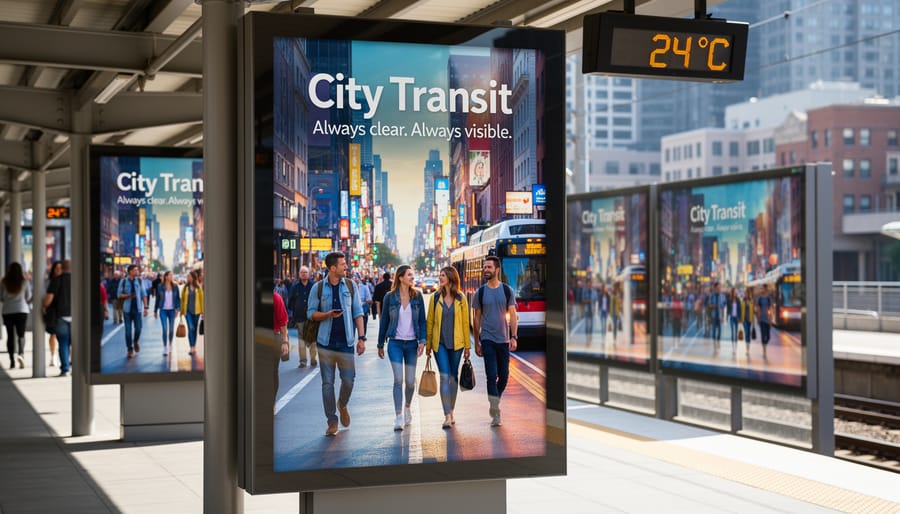
Think of IoT monitoring as insurance for your photographic work and professional reputation. Just as you wouldn’t display valuable prints without proper framing and lighting, you shouldn’t place them in transit or display environments without knowing what conditions they’re experiencing. The peace of mind alone is worth the investment, but the real value comes when monitoring alerts you to problems before they become disasters.
The beauty of IoT monitoring is that you don’t need to implement everything at once. Start small with a basic temperature and humidity sensor for your most valuable displays or shipments. Get comfortable with the technology, understand how your prints respond to different conditions, and build from there. Many photographers begin with a single sensor monitoring their studio storage and gradually expand to track prints during gallery exhibitions or client deliveries.
As your monitoring needs grow, you can add motion detection for security, light sensors for fade prevention, or GPS tracking for high-value shipments. The scalability means your investment grows with your business rather than requiring a massive upfront commitment.
Ready to take the first step? Start by identifying your highest-risk scenario, whether that’s shipping prints to clients, displaying work in uncontrolled gallery spaces, or storing inventory. Research basic IoT sensors compatible with your smartphone, set a modest budget, and experiment with one monitoring solution. Once you see the data and experience that first save from a monitoring alert, you’ll wonder how you ever managed without it.




 By
By