 By
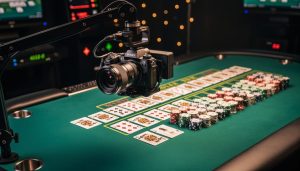
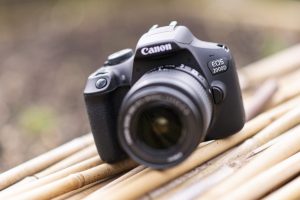
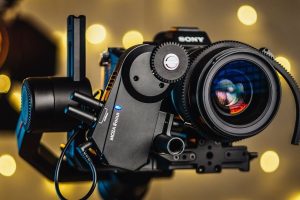
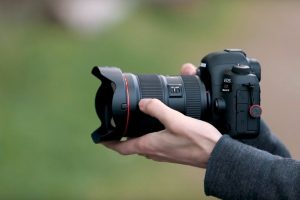
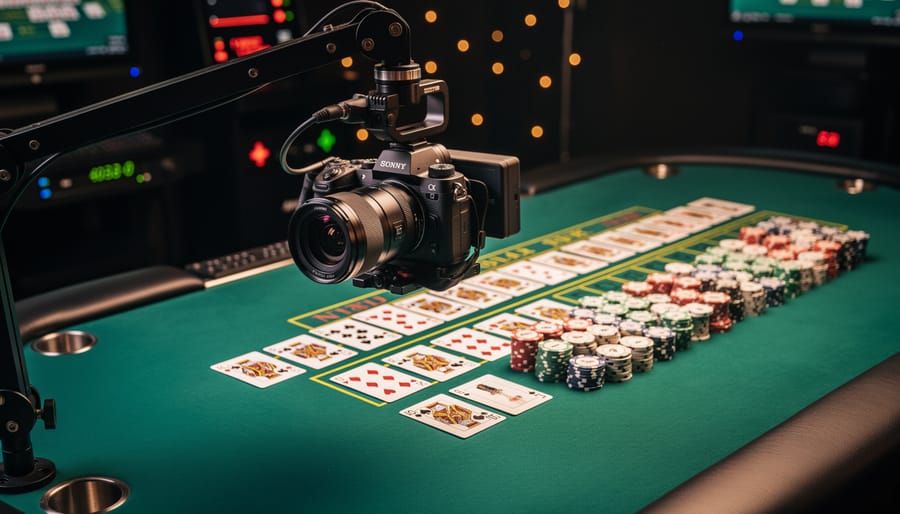
By Casino streaming demands camera capabilities that most generic streaming guides completely overlook. While poker pros chase Moonbet bonuses and build their bankrolls, your audience won’t stick around if they can’t read your cards or see chip denominations clearly. The difference between a successful casino stream and an unwatchable one often comes down to three technical factors: your camera’s ability to maintain crisp detail during rapid hand movements, its performance during marathon six-hour sessions without overheating, and whether it can properly expose both bright casino chips …
Why X10 Lighting Control Still Matters for Studio Photographers
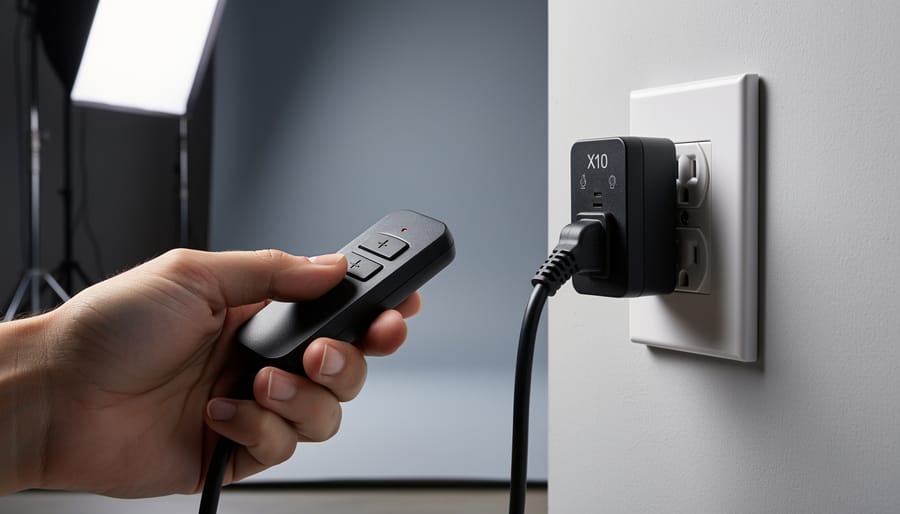
Consider X10 lighting control as your gateway to affordable studio automation—a decades-old home automation protocol that photographers have repurposed to remotely trigger strobes, continuous lights, and modeling lamps without expensive proprietary systems. Install X10 modules between your standard electrical outlets and lighting equipment to create wireless on/off control through radio frequency signals, allowing you to adjust your lighting setup from across the room using handheld remotes or computer interfaces. Evaluate whether this budget-friendly option suits your workflow by understanding that X10 operates on powerline …
Why Your Studio Lights Keep Tripping Breakers (And How X10 Can Fix It)
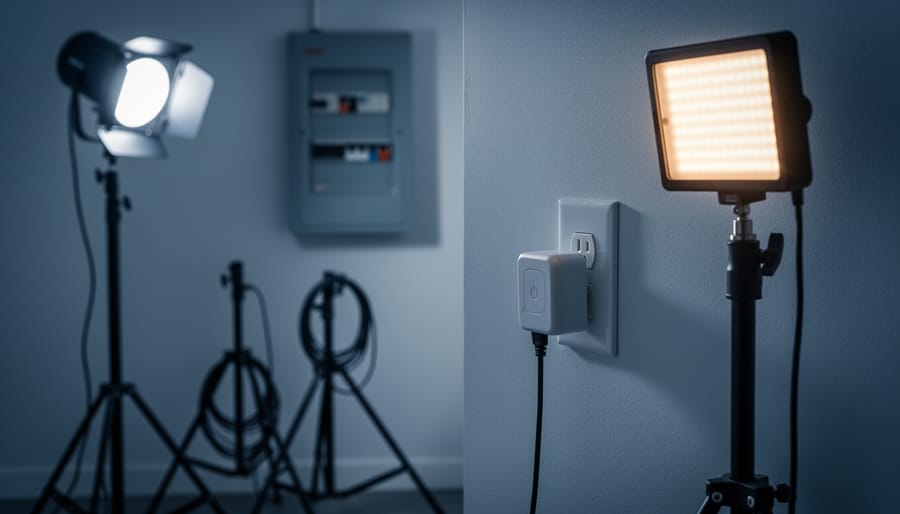
Understand that X10 is a decades-old home automation protocol that can control studio lighting through your electrical wiring, but it comes with significant limitations for photography use. The system works by sending digital signals through existing power lines, allowing you to switch lights on and off remotely using wall switches, timers, or computer interfaces—appealing for photographers on tight budgets who need basic lighting control without rewiring their studio.
Recognize the critical safety concerns before implementing X10 with studio strobes and continuous lights. Most X10 modules are rated for 500 watts incandescent …
Why Your Studio Photos Look Wrong (And How the Lighting Color Wheel Fixes It)
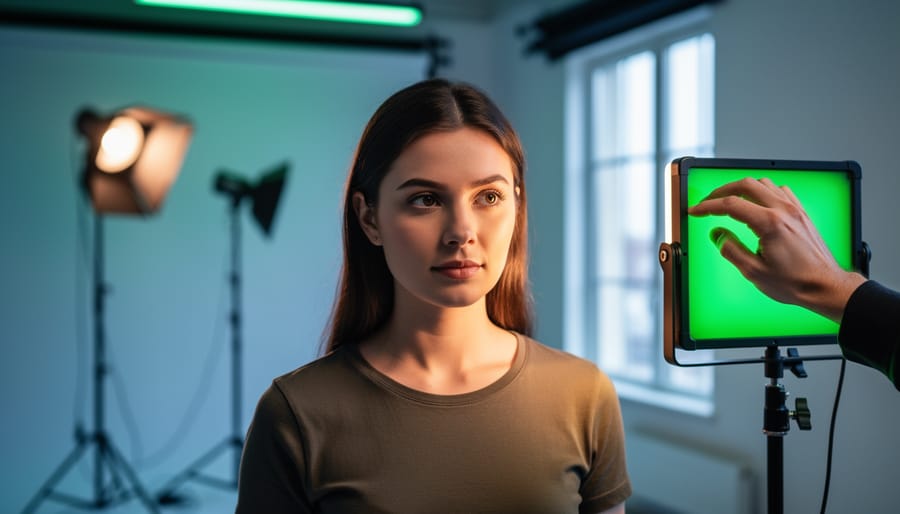
Understand that the lighting color wheel maps the relationship between light temperature and complementary colors, operating on a different principle than the traditional artist’s color wheel you learned in school. In photography, this tool reveals how your camera sensor interprets mixed lighting sources and why that overhead fluorescent creates a sickly green cast on your subject’s skin while the window light reads beautifully warm.
Master color temperature shifts by recognizing that moving from tungsten (3200K) to daylight (5600K) doesn’t just make light “cooler”—it fundamentally changes how colors …
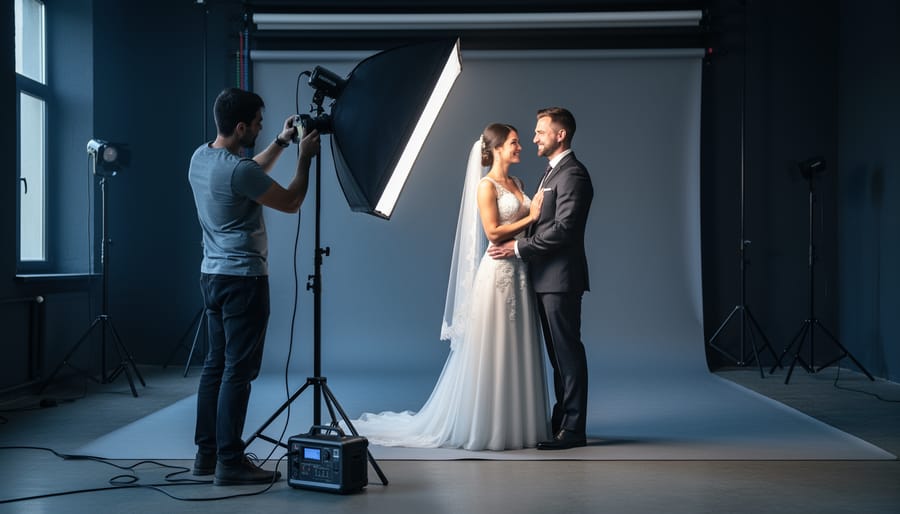
When the Power Goes Out: Keeping Your Studio Shoot Running
Picture this: You’re halfway through a high-paying wedding shoot when the power cuts out. Your strobes go dark, your continuous lights fade, and you’re left scrambling with nothing but window light and a panicked couple. For professional photographers, a single power failure can mean lost revenue, damaged reputation, and disappointed clients who’ve invested thousands in capturing their most important moments.
Emergency power and lighting equipment isn’t just insurance against worst-case scenarios—it’s professional infrastructure that separates reliable studios from vulnerable ones. Whether you’…
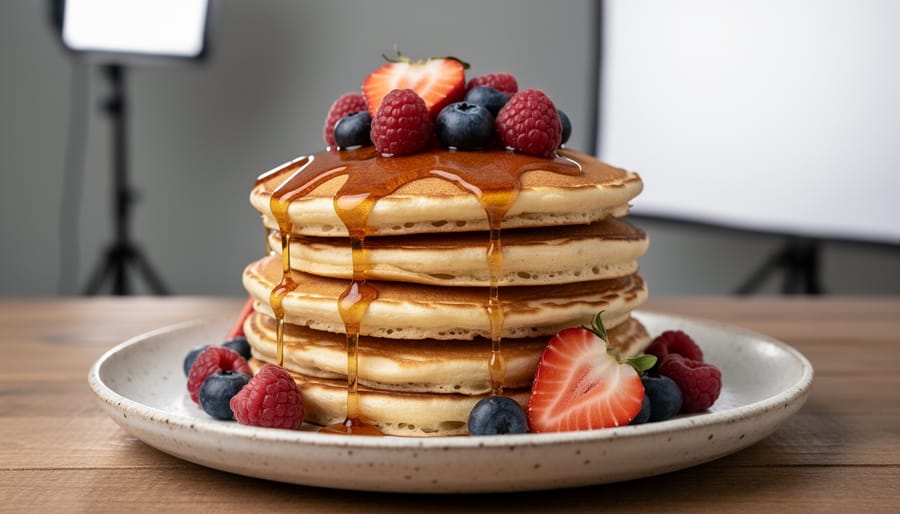
Why Your Food Photos Look Flat (And the Lighting Gear That Fixes It)
Invest in continuous LED panels over speedlights when you’re starting out—they let you see exactly how light falls on your food in real-time, eliminating the frustrating guess-and-check cycle that wastes ingredients and shooting time. A single 50-watt LED panel positioned at a 45-degree angle with a simple white reflector opposite will dramatically improve your results more than any expensive camera upgrade.
Stop buying lighting kits marketed specifically for photography. The markup is often 200-300% compared to video or studio lights with identical specifications. Look for adjustable color temperature (3200K-5600K minimum…
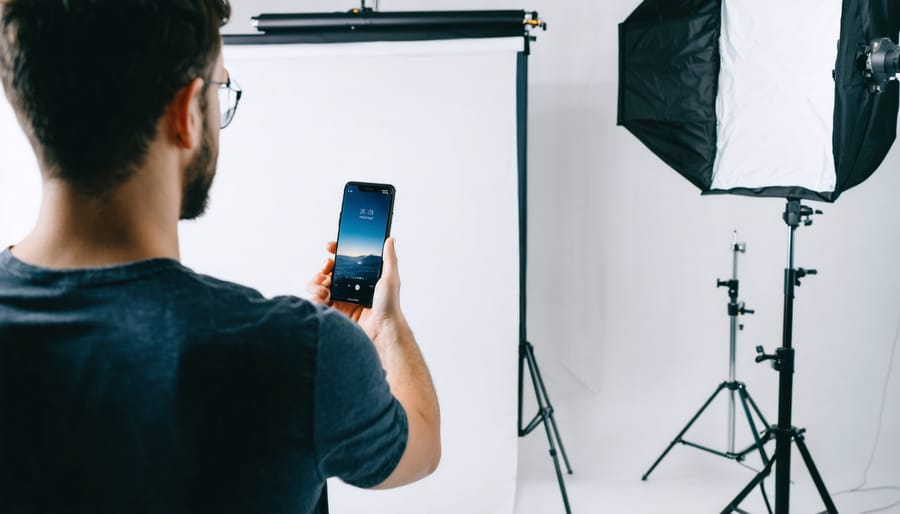
Why Z-Wave Lighting Transforms Your Studio Workflow (And How to Set It Up)
**Transform Your Photography Studio with Smart Wireless Control**
Picture this: You’re mid-shoot, your model is perfectly posed, and the lighting is *almost* right. Instead of breaking the moment to manually adjust multiple stands, you tap your phone and fine-tune every light’s intensity without moving an inch. This is the promise of Z-Wave lighting for photographers.
Z-Wave is a wireless communication protocol that lets you control compatible smart lights, switches, and dimmers through a central hub—typically using a smartphone app or voice commands. Unlike photography-specific systems like PocketWizard (which …
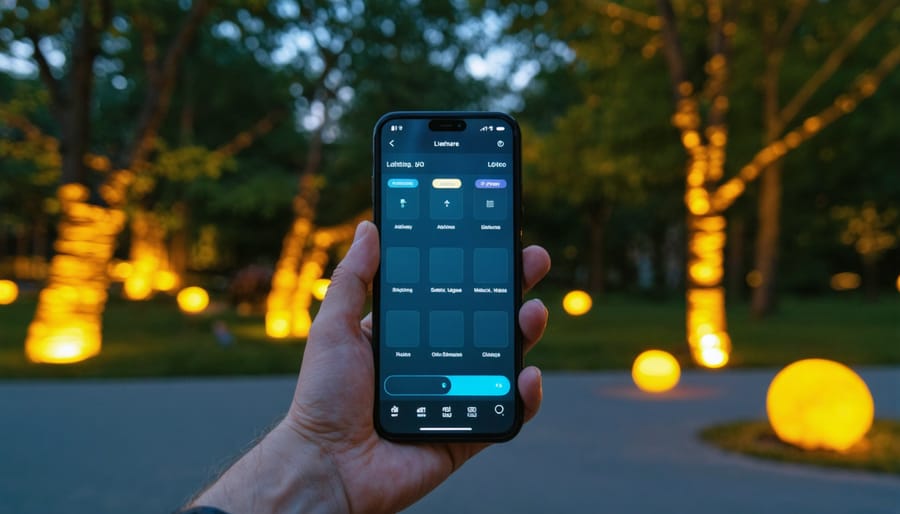
Transform Your Night Photography with Smart Phone-Controlled Lighting
Transform your outdoor photography with smartphone-controlled lighting systems that put professional-grade illumination control at your fingertips. Gone are the days of manually adjusting each light fixture or rushing to beat the sunset – today’s wireless lighting technology enables photographers to craft perfect exposures from their mobile devices with unprecedented precision and convenience.
Modern phone-controlled outdoor lighting systems combine powerful LED fixtures, robust wireless connectivity, and intuitive apps to create a seamless shooting experience. Whether you’re capturing architectural exteriors, …
Master Outdoor Photography Lighting (Without Breaking the Bank)
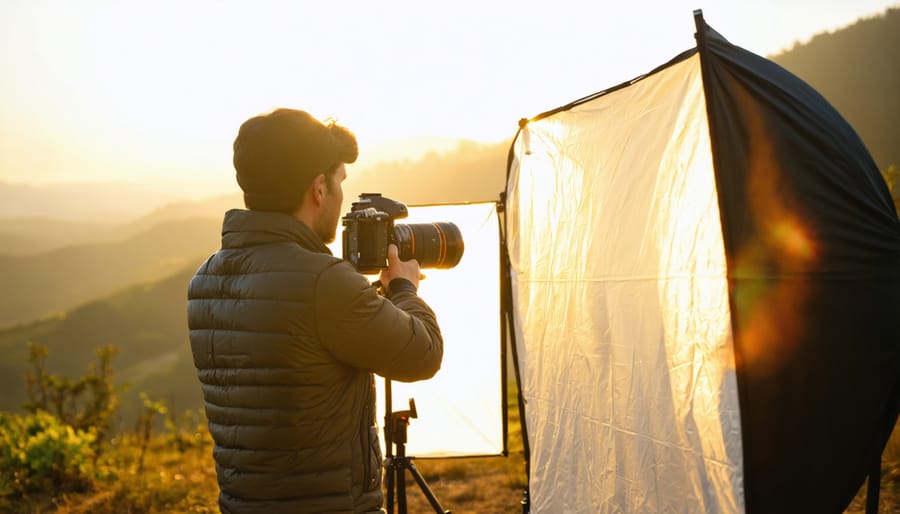
Master outdoor photography lighting by combining natural sunlight with portable strobes, creating the perfect balance between ambient light and artificial fill. Professional-grade location shoots demand more than just golden hour timing – they require strategic equipment choices that can withstand environmental challenges while delivering studio-quality results in any setting.
Successful outdoor lighting starts with understanding three essential gear categories: portable flash units for run-and-gun flexibility, battery-powered strobes for power and consistency, and light modifiers that shape and control natural and artificial …
Perfect Your Video Lighting: Pro Indoor Shooting Secrets That Actually Work
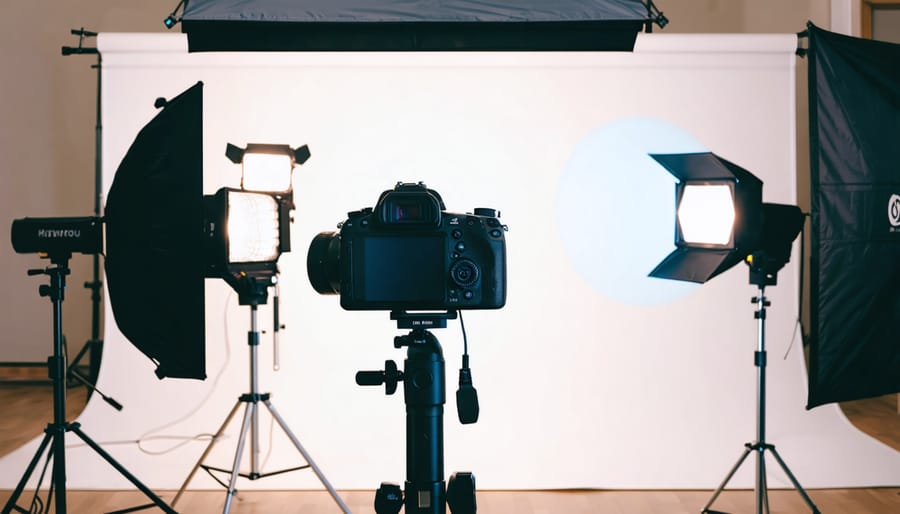
Mastering video lighting transforms amateur footage into professional-quality content instantly. Professional cinematographers know that lighting accounts for 80% of the visual impact in any video production – far more than camera choice or lens selection. Whether you’re shooting interviews, product demos, or creative content, three fundamental principles shape every successful lighting setup: direction, intensity, and color temperature.
The art of video lighting balances technical precision with creative vision. Strategic placement of key lights creates depth and dimension, while thoughtful manipulation of shadows …