Month: January 2026

When the Power Goes Out: Keeping Your Studio Shoot Running

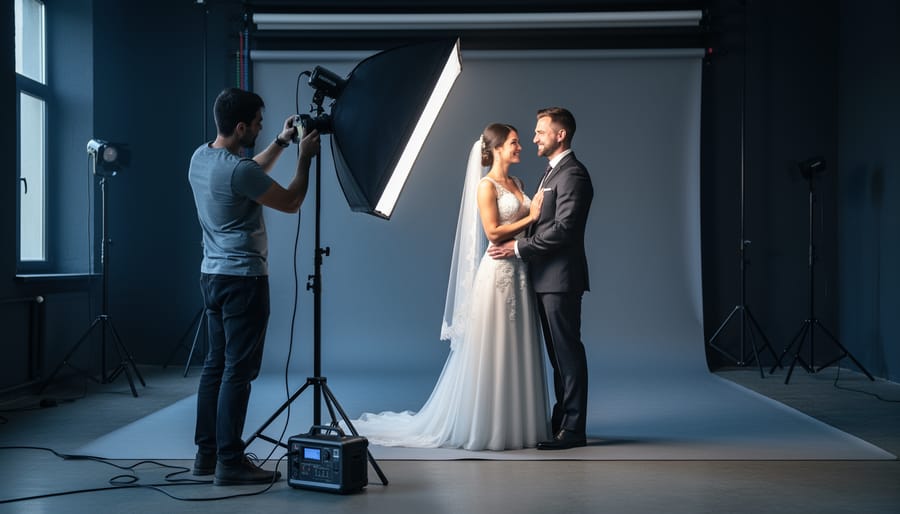
Picture this: You’re halfway through a high-paying wedding shoot when the power cuts out. Your strobes go dark, your continuous lights fade, and you’re left scrambling with nothing but window light and a panicked couple. For professional photographers, a single power failure can mean lost revenue, damaged reputation, and disappointed clients who’ve invested thousands in capturing their most important moments.
Emergency power and lighting equipment isn’t just insurance against worst-case scenarios—it’s professional infrastructure that separates reliable studios from vulnerable ones. Whether you’…

Your iPhone Already Has the Best Panoramic Camera You’ll Ever Need

Hold your iPhone vertically, not horizontally, when shooting panoramas. This counterintuitive technique captures more vertical detail in your scene, from foreground to sky, giving you taller, more dramatic final images. Move the camera smoothly in one continuous motion at a steady pace—the iPhone’s software stitches frames together in real-time, and jerky movements or speed variations create visible distortion and alignment errors.
Lock your exposure and focus before you start panning by tapping and holding on your subject until the AE/AF Lock indicator appears. This prevents the camera from adjusting exposure mid-sweep, …

How to Photograph Nature Without Destroying What You Love

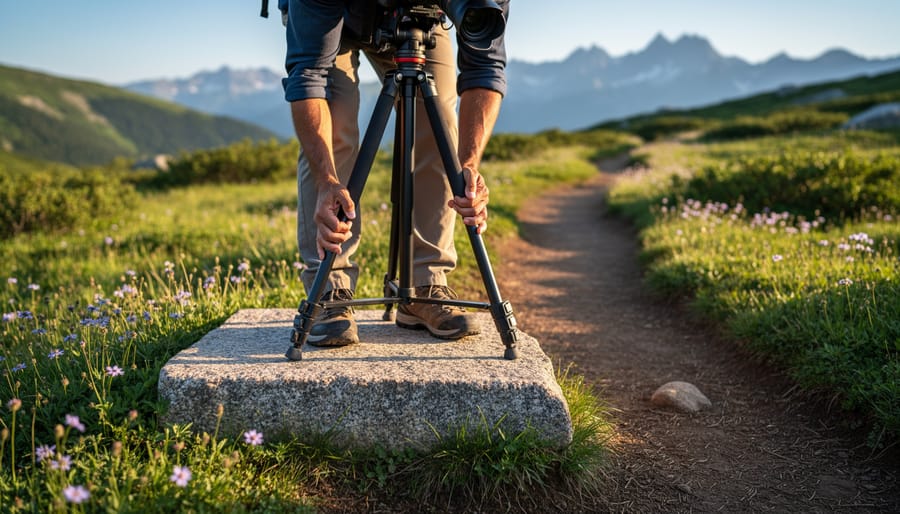
Position your tripod on durable surfaces like rock slabs or established trails rather than crushing delicate alpine flowers that took decades to grow. When scouting that perfect sunrise composition, use existing paths worn by previous visitors instead of creating new social trails through pristine meadows. Pack a microfiber cloth to wipe your boots clean before moving between locations, preventing the spread of invasive plant species that can devastate native ecosystems.
The photographer’s paradox is real: we venture into wild places to capture their beauty, yet our presence can inadvertently destroy what we came to document. …

Why Zstandard is Changing How We Store and Share Photos

Your camera’s RAW files are swelling your hard drives, cloud storage costs are climbing every month, and file transfers still crawl at frustrating speeds. Zstandard—often shortened to Zstd—is a compression algorithm that’s quietly revolutionizing how photographers store and move their massive image libraries, offering dramatically better compression ratios than the industry-standard ZIP format while maintaining blazing-fast decompression speeds.
Think of Zstandard as the modern alternative to compression methods that haven’t meaningfully evolved in decades. Developed by Facebook (now Meta) engineer Yann Collet …

Why Film Photographers Are Ditching Digital Darkrooms for These Hands-On Processes

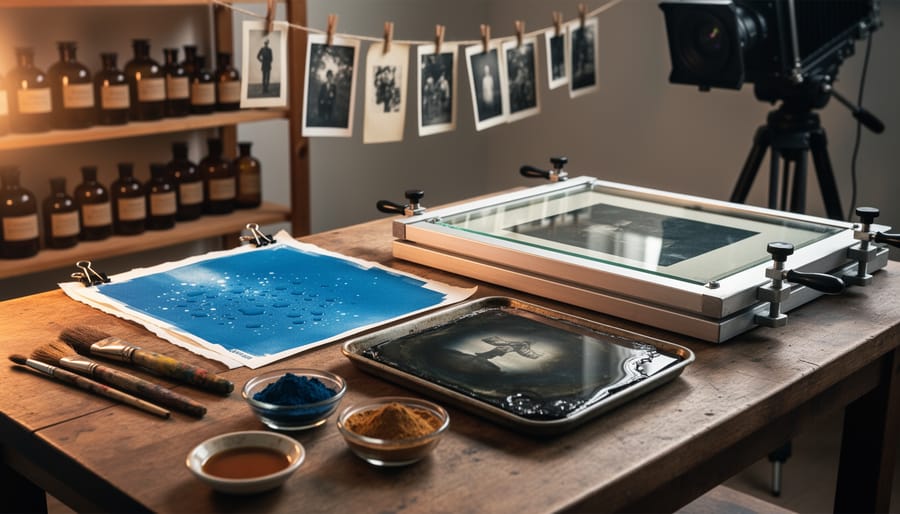
Explore cyanotypes to create distinctive cyan-blue prints using simple chemistry and sunlight, requiring only light-sensitive solution, paper, and UV exposure—a perfect entry point that produces results in minutes without needing a traditional darkroom. Master wet plate collodion for glass or metal plates that capture extraordinary detail and tonal range reminiscent of Civil War-era photography, though this demands dedicated workspace, precise chemical handling, and shooting while the plate remains wet. Experiment with gum bichromate printing to layer pigmented emulsions that deliver painterly, customizable color control impossible …

Visual Metaphors That Transform Ordinary Photos Into Powerful Stories

Look beyond literal representation and recognize that a visual metaphor transforms ordinary subjects into symbols that convey deeper meaning—like photographing a single seedling pushing through cracked concrete to represent resilience, or capturing an empty swing set at dusk to evoke childhood nostalgia and the passage of time.
Consider the power of juxtaposition, where placing contrasting elements within your frame creates commentary. A wilted flower beside fresh blooms speaks to mortality and renewal. A weathered hand holding a smartphone bridges generations and technological change. These comparative relationships allow viewers…

How Old Photos Are Bringing Lost Heritage Sites Back to Life

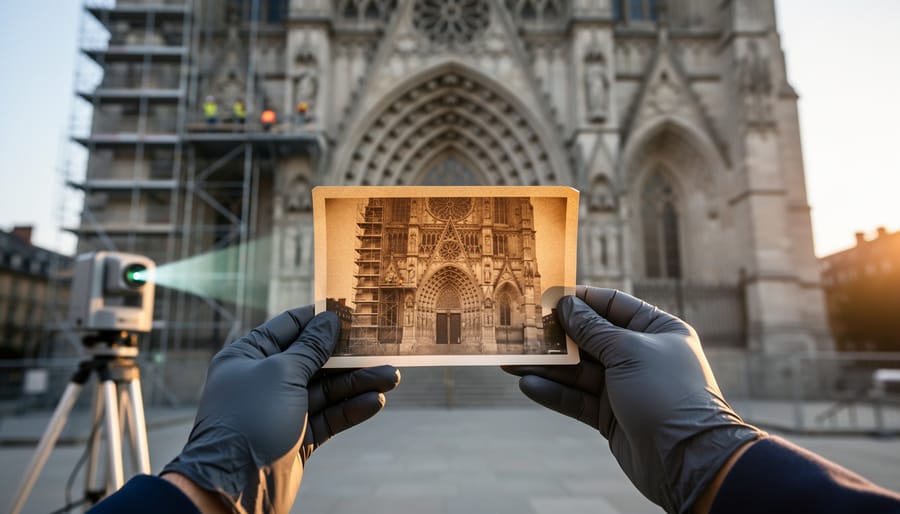
Every photograph holds a piece of history frozen in time, and when it comes to reconstructing heritage sites, these old images become invaluable blueprints for restoring what’s been lost. Historical photograph duplication for reconstruction projects involves far more than simply making copies—it’s a sophisticated process that transforms faded snapshots into detailed architectural references, enabling historians and architects to rebuild monuments, buildings, and cultural landmarks with remarkable accuracy.
The destruction of Notre-Dame Cathedral in 2019 showcased this perfectly. Thousands of historical photographs, …

Why Your NAS Is Killing Your Video Editing Workflow (And How to Fix It)

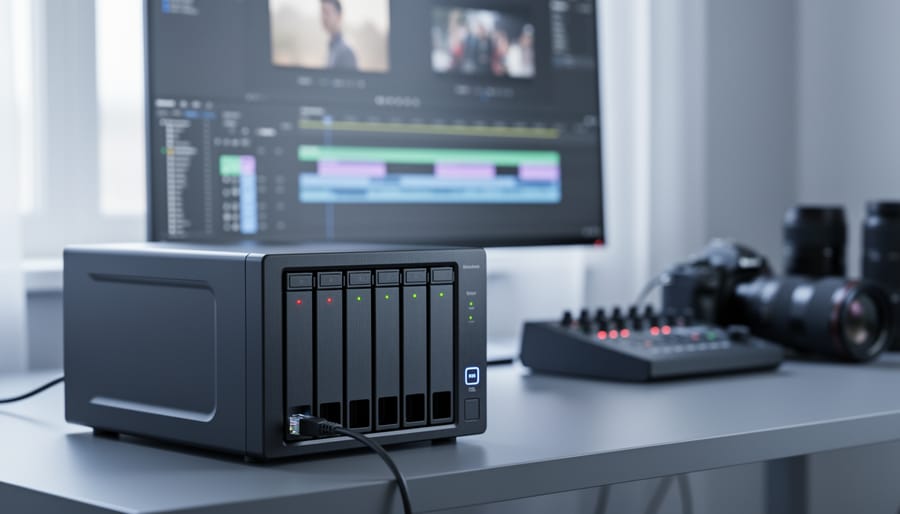
Your current photo editing setup works perfectly until you export that first 4K video project and watch your computer grind to a halt for 45 minutes. If you’re among the growing number of photographers expanding into video, you’ve likely discovered that video files demand entirely different storage solutions than the RAW photos you’re used to handling.
The challenge isn’t just about having enough space. A 10-minute 4K video can easily consume 40GB, but the real problem surfaces when you try editing that footage directly from your storage drive. Choppy playback, dropped frames, and endless buffering turn what …

The Photography Contract That Actually Protects Your Business (And Gets Clients to Sign)

Treat your photography contract as your most powerful sales tool, not just a formality clients sign before a shoot. A well-crafted contract closes deals by demonstrating professionalism, eliminating client uncertainty, and positioning you as an established business rather than a casual hobbyist. Present your contract during initial consultations to set expectations upfront, which reduces negotiation friction and separates serious clients from tire-kickers who waste your time.
Structure your contract to address the three concerns every client has: what they’re getting, when they’re getting it, and what happens if …

Why Your Prints Look Wrong (And How Process vs Spot Color Explains Everything)

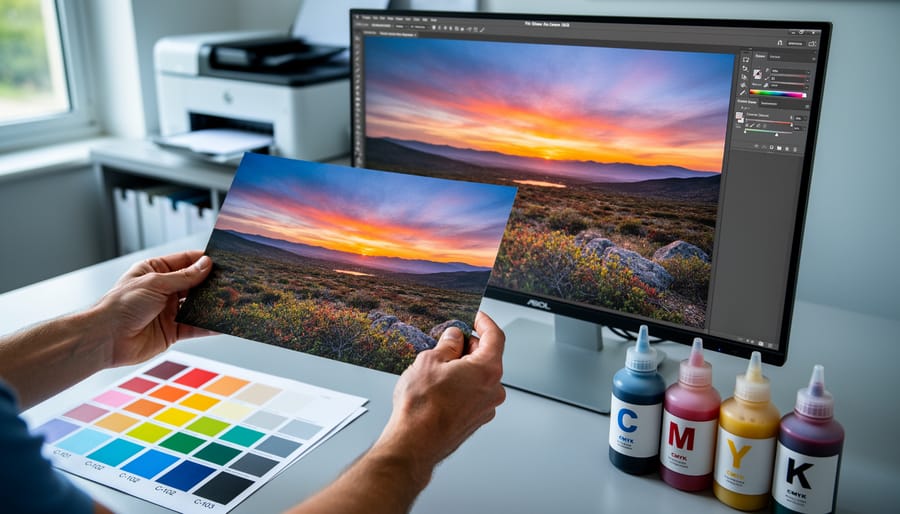
You’ve spent hours perfecting an image in Lightroom—the colors are vibrant, the tones balanced—only to receive prints that look muddy, flat, or completely wrong. The culprit? A fundamental misunderstanding of how colors translate from screen to paper. When you edit photos, you’re working with light-based RGB colors, but commercial printing uses either process colors (CMYK inks mixed to create your image) or spot colors (premixed inks for exact shades). This distinction directly impacts whether your sunset oranges stay brilliant or turn dull, whether your carefully crafted blues remain true or shift unexpectedly.