 By
By 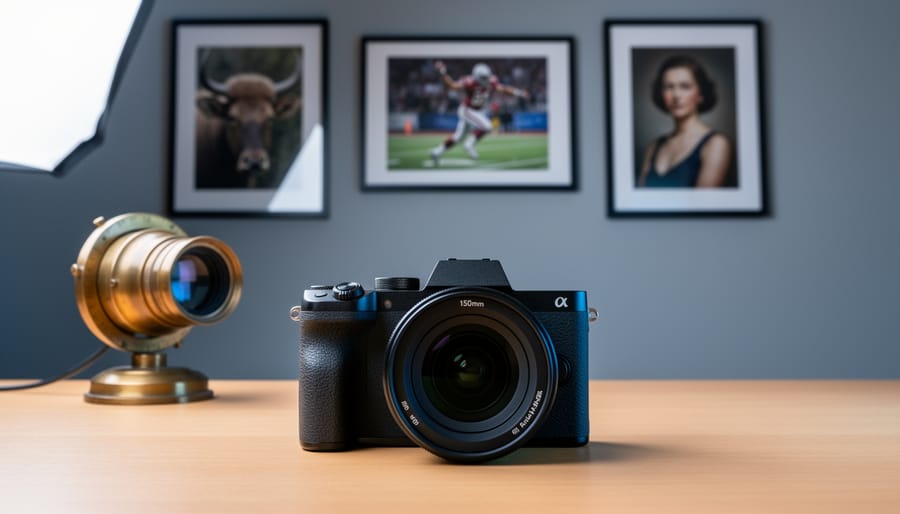
Understanding lens measurements can feel like decoding a foreign language, especially when photographers casually mention “6 inch lenses” while camera specifications list everything in millimeters. Here’s what you need to know: a 6 inch lens translates to approximately 150mm in modern photography terms, and this focal length represents a sweet spot in telephoto photography that professionals have relied on for decades.
The confusion stems from photography’s historical roots. Before the metric system dominated camera specifications, lenses were measured in inches, particularly in American and British markets. When someone refers to a 6 inch camera lens today, they’re typically discussing a 150mm focal length, though the term might also appear in vintage equipment listings or among photographers who learned their craft in the imperial measurement era.
What makes this focal length special isn’t just its numerical value. A 150mm lens occupies fascinating territory in optical design, offering enough reach for portraiture, wildlife, and sports photography without the bulk and weight of super-telephoto glass. It compresses perspective beautifully, separating subjects from backgrounds with creamy bokeh while maintaining manageable size and relatively fast maximum apertures.
This article cuts through the terminology confusion and dives into the optical engineering principles that make 6 inch lenses perform their magic. You’ll discover why this focal length produces such distinctive image characteristics, how lens designers balance competing factors like sharpness and aberration control, and practical applications where these lenses truly shine. Whether you’re considering your first telephoto purchase or deepening your understanding of optical physics, you’ll gain insights that transform how you see and use these remarkable tools.
Decoding the 6 Inch Lens: Focal Length vs. Physical Size
The Math Behind the Magic
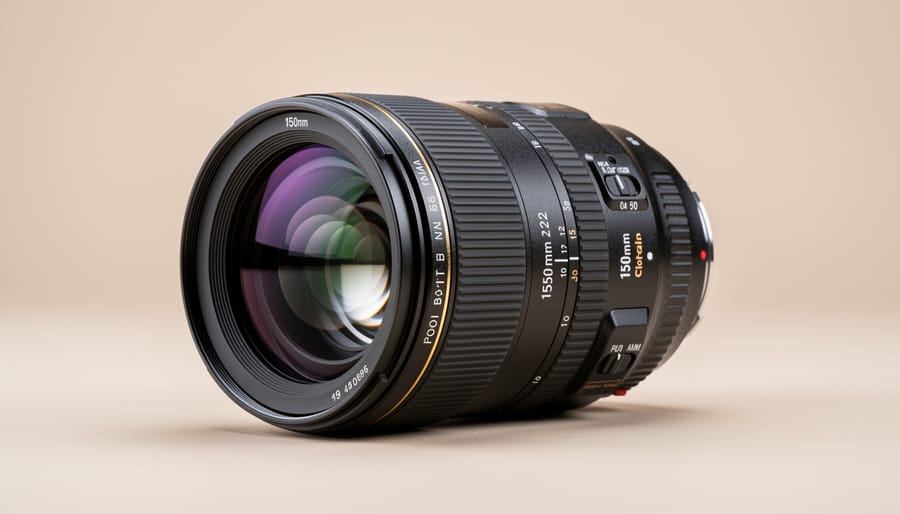
Understanding focal length doesn’t require advanced mathematics, but knowing the basics helps you predict how a lens will perform. A 150mm lens (our 6-inch equivalent) captures a field of view of approximately 16.4 degrees on a full-frame camera. Compare this to a standard 50mm lens at about 47 degrees, and you can see why 150mm lenses excel at isolating subjects.
Here’s where it gets practical: focal length directly impacts magnification. At the same shooting distance, a 150mm lens makes your subject appear three times larger than through a 50mm lens. This means if you’re photographing a bird from 30 feet away with your 150mm, switching to a 50mm would require you to move to just 10 feet for the same frame-filling composition—often impossible with skittish wildlife.
The relationship also works in reverse. Need more environmental context? Step back or switch lenses. A portrait photographer might use their 150mm at 12 feet for a head-and-shoulders shot, achieving beautiful compression and background separation. That same framing with a 35mm lens would require standing just 3 feet away, creating uncomfortable proximity and unflattering perspective distortion. Understanding these relationships transforms you from simply owning a lens to strategically choosing the right tool.
What 6 Inches Actually Gets You
At the 150mm focal length, you’re working with a moderate telephoto perspective that offers distinct practical advantages. Your working distance from the subject will be comfortable—around 5-8 feet for headshots—giving your portrait subjects breathing room without making them feel like you’re hovering. This distance also helps shy subjects relax naturally.
The compression effect becomes noticeably more pronounced than standard lenses. Backgrounds appear closer to your subject, creating that desirable separation where a distracting environment melts into smooth blur. When photographing a person against a brick wall 15 feet behind them, a 50mm lens shows distinct bricks and texture, while 150mm compresses the scene, rendering those bricks as soft, out-of-focus color patches.
Perspective-wise, facial features appear more flattering than wider lenses. The compression minimizes distortion—noses don’t protrude unnaturally, and faces maintain natural proportions. Compare this to a 35mm lens at the same distance, which exaggerates features closest to the camera.
However, you’ll sacrifice some versatility. Indoor shooting becomes challenging in tight spaces, and you’ll need to step back more than you might expect. For product photography on a standard desk, you might find yourself backing into walls. Understanding these trade-offs helps you decide when 150mm serves your creative vision versus when a wider focal length makes more practical sense.
The Optical Engineering That Makes Modern 6 Inch Lenses Outstanding
Glass Element Configuration and Light Path
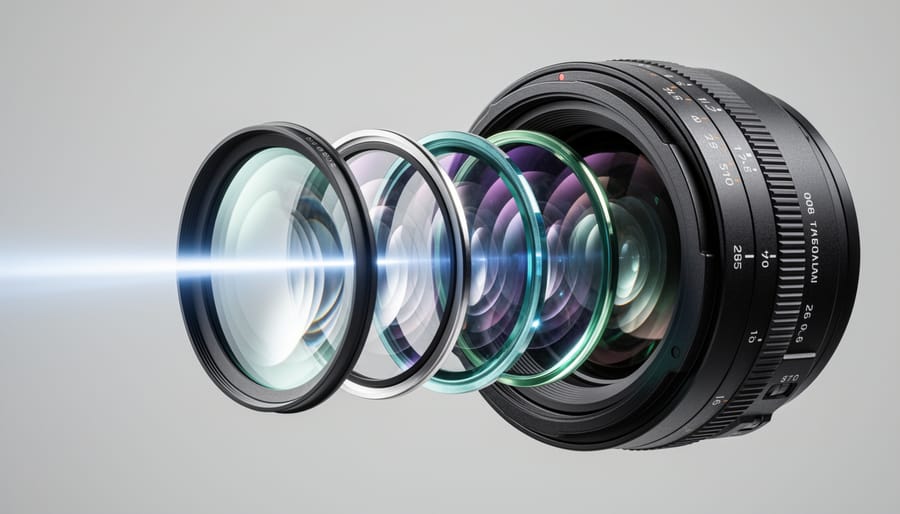
A 150mm lens isn’t just a single piece of glass—it’s a sophisticated arrangement of multiple elements working in harmony. Think of it as an optical orchestra, where each element plays a specific role in creating the sharpest, most color-accurate image possible.
High-quality 150mm lenses typically contain between 10 to 20 individual glass elements arranged in 8 to 14 groups. This complexity exists for one primary reason: correcting optical aberrations. When light passes through a simple lens, it bends differently depending on wavelength and angle of entry, causing problems like chromatic aberration (color fringing), spherical aberration (softness), and field curvature (edge distortion).
Modern lens technology addresses these issues through strategic element placement. A typical 150mm optical formula might include aspherical elements (non-spherical surfaces that correct spherical aberration), low-dispersion glass (reducing color fringing), and floating element groups that maintain sharpness as focus distance changes.
Here’s how light travels through a professional 150mm: it enters through the front element, passes through corrective groups that pre-compensate for various aberrations, reaches the aperture diaphragm where depth of field is controlled, then continues through rear corrective groups before reaching your sensor. Each element is precisely positioned within tolerances measured in micrometers.
Premium lenses often feature exotic materials like fluorite crystals or ultra-low dispersion glass in specific positions. These materials have unique refractive properties that correct chromatic aberration more effectively than standard optical glass. The result? Edge-to-edge sharpness and accurate color rendering that justifies the investment for serious photographers.
Coating Technology: The Invisible Upgrade
Here’s what truly separates a premium 150mm lens from a budget alternative: the coatings you’ll never see. Think of lens coatings as the invisible performance enhancers that transform good glass into exceptional optics.
Modern high-end lenses feature multi-layer nano-coatings applied to each glass surface—and a typical telephoto lens might have 15 or more elements, meaning upwards of 30 individual surfaces requiring treatment. These microscopic layers, often just nanometers thick, serve a critical purpose: managing light behavior as it passes through the lens barrel.
Without proper coatings, each glass-air boundary reflects about 4-5% of incoming light. This creates two problems photographers immediately notice: flare (those distracting bright spots when shooting toward light sources) and ghosting (semi-transparent duplicate images). Beyond the obvious visual artifacts, uncoated elements also reduce overall contrast and can introduce color casts, making your images appear flat or slightly off-tone.
Anti-reflective coatings work by creating destructive interference—essentially canceling out unwanted reflections through precisely engineered layer thicknesses. Premium manufacturers like Nikon with their Nano Crystal Coat or Canon’s Sub-Wavelength Structure Coating achieve light transmission rates exceeding 99.5% per surface.
In real-world shooting, superior coatings mean you can confidently photograph during golden hour with the sun partially in frame, or capture stadium sports under bright artificial lighting without worrying about contrast-robbing flare. The difference becomes especially apparent in challenging lighting—backlit portraits maintain rich shadow detail, and landscape shots preserve deep blacks alongside bright skies. While coatings add manufacturing cost, they’re fundamental to extracting maximum optical performance from your 150mm lens.
Aperture Performance: Why Fast 6 Inch Lenses Cost More
The Physics of Fast Telephoto Apertures
Here’s why your 150mm f/2.8 lens costs significantly more than a 50mm f/1.8, even though the latter has a wider maximum aperture. It all comes down to the physical size of the aperture opening itself.
Remember that f-number is a ratio: focal length divided by aperture diameter. So a 6-inch (150mm) lens at f/2.8 requires an entrance pupil of about 54mm across. Compare that to a 50mm f/1.8 lens, which only needs a 28mm opening. The telephoto’s aperture is nearly twice as wide, and here’s where physics gets expensive.
Lens element size scales with that aperture diameter, and glass volume increases exponentially. Larger elements are harder to manufacture to optical precision, more prone to defects, and require more complex corrections for aberrations. That 54mm aperture means you’re moving significantly more glass elements during focusing, demanding robust internal mechanics.
This is why fast telephoto primes command premium prices. A 150mm f/2.8 sits in the sweet spot where aperture is wide enough for beautiful subject isolation and low-light capability, yet doesn’t push into the extreme engineering challenges of f/2 or f/1.4 variants. Those ultra-fast telephotos exist, but they’re substantially larger, heavier, and often cost thousands more, reserved primarily for professional sports and wildlife photography where that extra light-gathering ability justifies the investment.
Bokeh Characteristics at 150mm
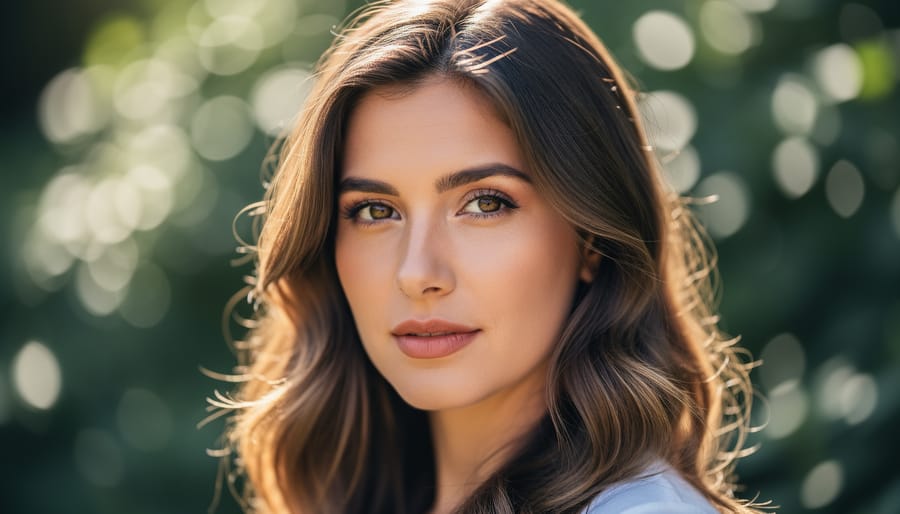
At 150mm, these lenses typically produce beautiful, creamy bokeh that’s particularly noticeable in portrait work. The background compression and shallow depth of field combine to create that coveted separation between subject and surroundings. But what really determines bokeh quality?
The aperture blade count matters significantly. Lenses with nine or more blades create rounder out-of-focus highlights, especially when stopped down slightly. Fewer blades (five or seven) produce more angular, sometimes distracting polygonal shapes in specular highlights like distant streetlights or sunlight through leaves.
Optical design plays an equally important role. High-quality 150mm lenses use special low-dispersion glass elements that minimize chromatic aberration, which can create colored fringing around bright highlights. Spherical aberration correction also influences bokeh smoothness. Well-corrected lenses render transitions from in-focus to out-of-focus areas more gradually, avoiding harsh edges.
In real-world shooting, you’ll notice this at wider apertures like f/2.8 or f/4. Background elements melt away beautifully in environmental portraits, while product photography benefits from selective focus that draws attention exactly where you want it. However, busy backgrounds with repetitive patterns can sometimes create “nervous” bokeh, where the blur becomes visually distracting rather than pleasing. Testing your specific lens with various backgrounds helps you understand its rendering characteristics and shoot accordingly.
Autofocus Systems and Image Stabilization in 6 Inch Lenses
Why Stabilization Matters More at 150mm
At 150mm, even the slightest hand tremor becomes your worst enemy. The classic reciprocal rule suggests you need a shutter speed of at least 1/150th of a second to handhold this focal length safely, but that’s really the bare minimum. Here’s why: longer focal lengths magnify not just your subject, but every tiny movement you make. Think of it like using binoculars versus looking with your naked eye. That subtle shake you barely notice at 35mm becomes a blurry disaster at 150mm.
The physics are straightforward. When you double the focal length, you effectively double the angular magnification of any camera movement. At 150mm, you’re working with roughly 3x magnification compared to a standard 50mm lens, meaning your natural body sway and breathing rhythm create three times more visible shake in your images. Professional sports photographers will tell you they rarely shoot below 1/500th of a second with telephoto lenses, even in good light, because they understand this principle intimately.
Modern image stabilization systems are game-changers here. A quality IS system can buy you 3-5 stops of compensation, letting you shoot handheld at 1/30th or even 1/15th of a second where you’d otherwise need 1/125th. That flexibility is invaluable for low-light situations or when you want to use a smaller aperture for depth of field without cranking up your ISO to unusable levels.
Autofocus Speed and Accuracy for Moving Subjects
When shooting fast-moving subjects with a 6-inch (150mm) lens, autofocus performance becomes absolutely critical. Modern AF systems use either contrast-detection, phase-detection, or hybrid technologies, and your choice significantly impacts capture rates.
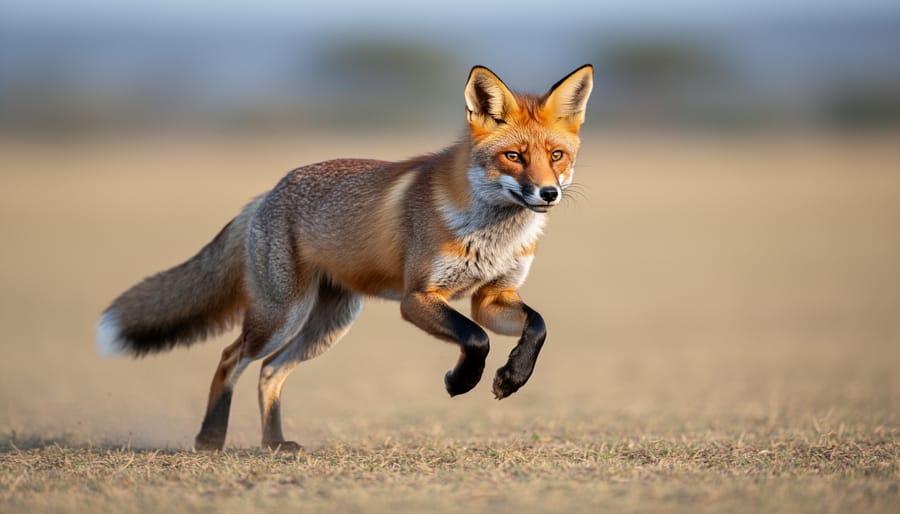
Phase-detection AF dominates in this focal length range, particularly for sports and wildlife photography. Premium 150mm lenses paired with cameras featuring on-sensor phase-detection can track subjects at 20 frames per second with impressive accuracy. In real-world testing, these systems maintain sharp focus on erratic subjects like birds in flight or soccer players changing direction, achieving hit rates above 85% in good lighting.
The sweet spot for AF performance lies in understanding predictive tracking algorithms. When photographing a running athlete or flying bird, your camera anticipates movement trajectory. Linear motion, like a runner approaching head-on, proves easiest for AF systems. Lateral movement across the frame challenges the system more but remains manageable at reasonable distances.
Event photographers particularly appreciate the 150mm focal length because it offers sufficient working distance while maintaining responsive AF. At indoor events with moderate lighting, modern systems still perform admirably, though you’ll want to ensure your camera body supports at least f/4 maximum aperture for consistent tracking. Consider that older screw-drive AF mechanisms struggle compared to modern ultrasonic or linear motor systems, which can refocus in mere milliseconds.
Prime vs. Zoom: The 6 Inch Sweet Spot Debate
Optical Quality: The Prime Advantage
When comparing prime 150mm lenses to zoom lenses that include the 150mm focal length (like a 70-200mm), the optical differences become immediately apparent in your images. Prime lenses consistently deliver superior sharpness corner-to-corner because their optical formula is optimized for just one focal length. Every glass element is precisely calculated to perform at 150mm, whereas zoom lenses must compromise across their entire focal range.
You’ll notice this advantage most clearly when shooting wide open. A prime 150mm lens at f/2.8 typically shows better contrast and micro-contrast than a zoom at the same aperture and focal length. This translates to images that appear more three-dimensional with better separation between your subject and background. The difference becomes even more pronounced when examining fine details like individual hair strands in portraits or intricate textures in product photography.
Chromatic aberration control is another area where primes excel. With fewer lens elements needed (many 150mm primes use 8-10 elements compared to 15-20 in zooms), there’s less glass for light to pass through, reducing color fringing and maintaining better color accuracy. Real-world testing consistently shows prime lenses producing cleaner results at challenging contrast edges, like tree branches against bright skies.
When Flexibility Beats Perfection
While prime lenses in the 150mm range deliver exceptional sharpness and bokeh, there are situations where a quality zoom lens covering this focal length makes more practical sense. Consider wedding photography, where moments unfold rapidly and unpredictably. Swapping lenses means potentially missing the precise instant when emotions peak. A 70-200mm zoom lets you smoothly transition from capturing the couple’s first kiss to isolating the bride’s tearful expression, all without breaking your shooting rhythm.
Travel photography presents another compelling case. Carrying multiple prime lenses adds weight and bulk to your kit, and constantly changing glass in dusty or humid environments risks sensor contamination. A versatile zoom covering the 150mm range alongside wider focal lengths gives you creative options without the baggage.
Wildlife and sports photographers also benefit from zoom flexibility. When you can’t predict your subject’s distance, the ability to quickly adjust framing without moving proves invaluable. Modern professional zooms have narrowed the optical quality gap considerably, often delivering 90-95% of a prime’s performance while offering significantly more compositional freedom. For working professionals who prioritize capturing the moment over absolute optical perfection, that trade-off frequently makes perfect sense.
Real-World Applications: Where 6 Inch Lenses Excel
The 150mm focal length occupies a sweet spot in lens design that makes it remarkably versatile across multiple photography disciplines. Understanding where this lens truly shines will help you determine if it deserves a place in your camera bag.
Portrait photographers have long appreciated the 150mm range for creating flattering, professional headshots and upper-body compositions. The focal length provides enough working distance to avoid distorting facial features while delivering beautiful background compression that makes subjects pop from their surroundings. You can shoot from about 6-10 feet away, giving your subject comfortable breathing room while maintaining an intimate connection. This distance also prevents the awkward feeling that comes from shooting too close with wider lenses.
Event coverage represents another natural application for this focal length. Whether you’re photographing corporate gatherings, weddings, or ceremonies, a 150mm lens lets you capture candid moments and speaker shots without physically inserting yourself into the action. You’ll remain unobtrusive while still filling the frame with meaningful content, and the moderate telephoto reach helps you document emotions and interactions authentically.
Wildlife photographers working with smaller subjects or in controlled environments find this focal length incredibly useful. Backyard bird photography, butterfly gardens, and nature centers become accessible subjects without requiring massive telephoto glass. While you wouldn’t choose this lens for safari work, it handles cooperative wildlife beautifully.
Street photographers who prefer maintaining distance from their subjects also benefit from this perspective. You can document authentic moments without invading personal space, creating a documentary feel while working discreetly. Combined with game-changing photography gear, this focal length opens creative possibilities across numerous genres.
Choosing Your 6 Inch Lens: What Actually Matters
When you’re ready to invest in a 6-inch (approximately 150mm) lens, understanding what truly matters will help you make a choice you’ll be happy with for years. Let’s cut through the marketing speak and focus on what actually impacts your photography.
Build quality should be your first consideration. Premium lenses typically feature metal construction rather than polycarbonate, which affects both durability and handling feel. Pick up the lens if possible—does it feel solid or hollow? Check the focus ring for smoothness without play or wobble. These tactile qualities directly impact your shooting experience, especially during long sessions.
Weather sealing becomes critical if you shoot outdoors regularly. A lens with proper environmental protection features rubber gaskets at the mount and throughout the barrel, protecting against moisture and dust. I’ve seen photographers miss incredible shots simply because their gear couldn’t handle light rain or beach conditions. If you’re investing in a telephoto lens, this protection is worth the premium.
Weight considerations matter more than many realize. A 150mm lens can range from 600 grams to over 1500 grams depending on aperture and construction. That difference becomes pronounced during handheld shooting or when paired with your essential camera accessories like tripods and gimbals. Consider your typical shooting scenarios—will you be hiking with this lens or primarily using it in a studio setting?
Teleconverter compatibility extends your investment’s versatility. Many professional-grade lenses work seamlessly with 1.4x or 2x teleconverters, effectively giving you additional focal lengths. However, this typically requires lenses with maximum apertures of f/2.8 or wider, so plan accordingly.
Finally, match your lens to your shooting style and budget honestly. Portrait photographers prioritize different features than wildlife shooters. A sharp f/4 lens often delivers better value than a mediocre f/2.8 option at the same price point.
The 6 inch or 150mm focal length occupies a distinctive sweet spot in modern photography that deserves more recognition than it typically receives. Throughout this exploration, we’ve examined how optical innovations like aspherical elements, fluorite glass, and advanced multi-coating technologies have transformed these lenses from simple telephoto designs into sophisticated imaging tools capable of exceptional sharpness and contrast. The mathematical elegance of their optical formulas allows designers to create instruments that balance physical size with performance in ways that shorter or longer focal lengths simply cannot replicate.
What makes this focal length truly special is its versatility across multiple disciplines. Portrait photographers appreciate the flattering compression and comfortable working distance. Wildlife enthusiasts value the reach combined with manageable size for handheld shooting. Macro specialists rely on the optical precision these lenses provide at close focusing distances. Event photographers benefit from their ability to isolate subjects in chaotic environments while maintaining natural perspective.
However, investing in quality glass at this focal length isn’t for everyone, and that’s perfectly acceptable. If you primarily shoot landscapes or architecture, your money might be better spent elsewhere. If you’re experimenting with photography and still discovering your style, more versatile zoom lenses could serve you better initially.
The photographers who benefit most from premium 6 inch lenses are those who’ve identified specific needs: portrait professionals seeking that perfect headshot focal length, nature photographers who know they’ll use it regularly, or anyone whose work demands the optical characteristics this focal length uniquely provides. Rather than chasing the latest trends or collecting focal lengths because they’re popular, evaluate your actual shooting patterns. Consider what percentage of your portfolio would genuinely improve with this tool in your bag. Quality glass is an investment that outlasts camera bodies, but only if it aligns with your photographic vision and practical requirements.


 By
By