 By
By 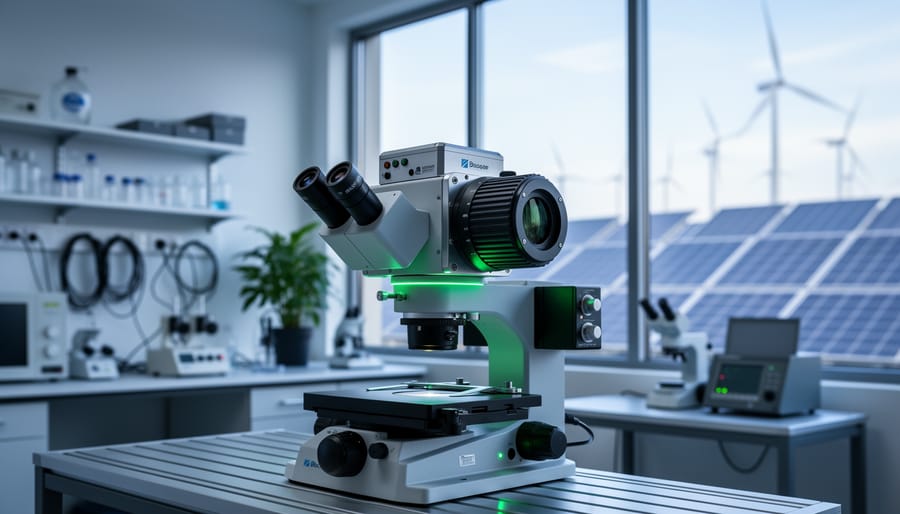
When you’re selecting scientific cameras for research, industrial inspection, or specialized imaging applications, the manufacturer’s environmental commitment matters as much as sensor performance. Hamamatsu Photonics has built its reputation on precision imaging sensors that capture everything from high-speed industrial processes to faint bioluminescence in laboratory settings, but their approach to sustainable manufacturing reveals something equally important about how cutting-edge technology can coexist with environmental responsibility.
Unlike consumer camera brands focused primarily on megapixel counts and autofocus speed, Hamamatsu operates in the specialized realm of scientific and industrial imaging. Their cameras don’t end up in wildlife photographers’ bags or wedding shooters’ kits. Instead, they’re the workhorses of semiconductor inspection lines, medical research laboratories, and astronomical observatories where image quality requirements exceed anything in conventional photography. These are the cameras detecting defects in microchips, tracking cellular processes under microscopes, and capturing photons from distant galaxies.
This specialization creates unique sustainability challenges. Scientific cameras require exotic materials, precision manufacturing processes, and extremely tight quality controls. A single camera might contain custom-designed sensors, thermoelectric cooling systems, and specialized optics that demand considerable resources to produce. The relatively low production volumes compared to consumer electronics mean economies of scale work differently.
Yet Hamamatsu’s sustainability practices demonstrate that even niche, high-precision manufacturing can prioritize environmental stewardship. Their initiatives span energy-efficient production facilities, material recovery programs, and design choices that extend product lifecycles well beyond typical consumer electronics. For photography enthusiasts accustomed to upgrade cycles measured in years, Hamamatsu’s cameras often serve faithfully for decades, representing a fundamentally different relationship between user and equipment that challenges our throwaway culture.
What Makes Hamamatsu Different in the Camera World
Beyond Consumer Photography
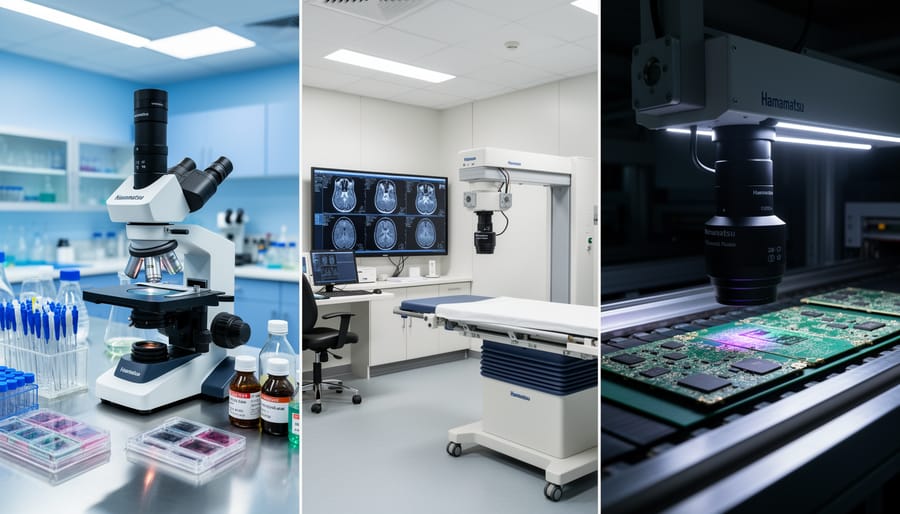
When most people think of cameras, they picture someone capturing a sunset or photographing a wedding. But Hamamatsu Photonics operates in an entirely different realm. This Japanese manufacturer creates highly specialized imaging systems for scientific research laboratories, medical diagnostic facilities, and industrial quality control operations. You won’t find these cameras at your local electronics store, and they certainly won’t fit in your camera bag.
In research environments, Hamamatsu cameras might capture the faint fluorescence of individual cells under a microscope or document chemical reactions happening in microseconds. Medical facilities use their imaging sensors in everything from advanced CT scanners to retinal examination equipment. Industrial settings deploy these cameras to detect microscopic defects in semiconductor manufacturing or inspect products moving at incredible speeds on assembly lines.
These applications demand capabilities far beyond consumer photography: extreme sensitivity to light, the ability to capture images in complete darkness using specialized wavelengths, frame rates reaching thousands per second, and sensors cooled to subzero temperatures to eliminate electronic noise. A single scientific camera can cost as much as a luxury car.
Here’s where sustainability gets complicated. These high-performance cameras require rare materials, consume significant power during operation, and their specialized cooling systems need regular maintenance. Unlike consumer cameras that might be replaced every few years following trends, scientific instruments often run continuously for a decade or more in climate-controlled environments. This creates a unique sustainability challenge: building equipment robust enough to justify its substantial environmental footprint through extended longevity and irreplaceable contributions to research and healthcare.
The Longevity Advantage
Here’s something most photographers don’t think about: that shiny new consumer camera you’re eyeing will likely feel outdated in two years, nudging you toward the next upgrade. Hamamatsu takes a fundamentally different approach that quietly champions sustainability through longevity.
When Hamamatsu designs a camera system for scientific research or industrial inspection, they’re building for decades, not product cycles. A university lab investing in a Hamamatsu ORCA-Flash4.0 expects that camera to deliver consistent performance for 10-15 years or more. This isn’t accidental—it’s embedded in their engineering philosophy. Components are selected for durability, firmware receives long-term support, and modular designs allow for repairs rather than wholesale replacement.
Consider the environmental math here. Manufacturing any camera requires significant resources—rare earth elements for sensors, energy-intensive production processes, and global shipping networks. When you extend a camera’s useful life from three years to fifteen, you’re dividing that environmental cost by five. You’re also keeping electronic waste out of landfills, which matters when you realize that discarded electronics contribute millions of tons of toxic materials annually.
This professional-grade durability contrasts sharply with consumer camera markets, where marketing pressures encourage frequent upgrades based on marginal improvements. While hobbyists might not need Hamamatsu’s specialized scientific cameras, understanding this longevity-first philosophy offers valuable perspective. It demonstrates that sustainability doesn’t always require dramatic green initiatives—sometimes it’s simply about building things that last and supporting them properly throughout their lifespan.
Hamamatsu’s Green Manufacturing Initiatives
Energy-Efficient Production Facilities
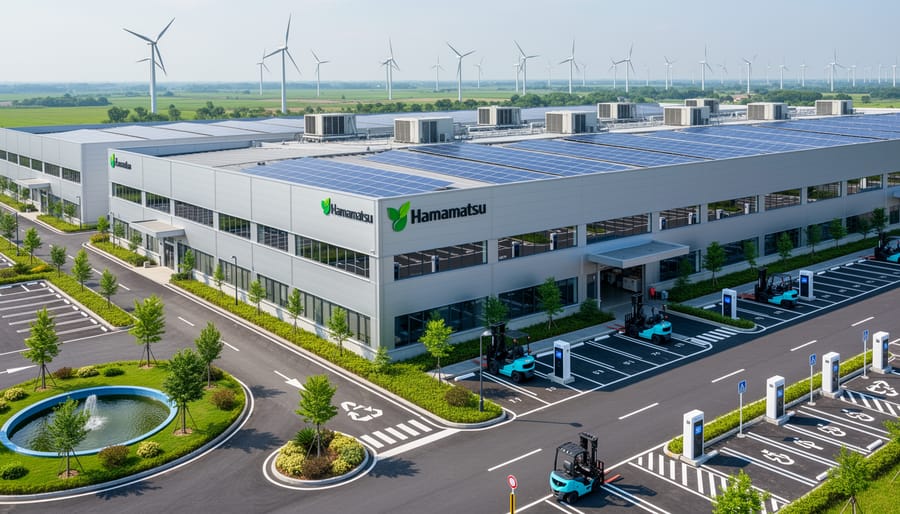
Hamamatsu’s commitment to sustainability isn’t just talk—it’s built right into their manufacturing facilities in Japan. Their main production plant in Hamamatsu City has been leading the charge with some impressive energy initiatives that directly impact how your camera sensors are made.
The facility installed a 1.2-megawatt solar panel array on its rooftops back in 2019, which now generates approximately 1.3 million kilowatt-hours annually. To put that in perspective, that’s enough to power the equivalent of about 400 average Japanese households for a year. This solar infrastructure supplies roughly 15% of the plant’s total energy needs, reducing carbon emissions by an estimated 650 tons per year.
Beyond solar power, Hamamatsu has retrofitted their production floors with LED lighting systems that consume 40% less energy than their previous fluorescent setup. These aren’t just any LEDs—they’re specifically calibrated to maintain the precise lighting conditions needed for semiconductor manufacturing without wasting energy on unnecessary wavelengths.
Climate control is another area where they’ve made meaningful progress. Their cleanrooms, which are essential for producing those incredibly sensitive image sensors, now use advanced heat recovery systems. These capture waste heat from manufacturing equipment and redirect it to other areas of the facility during colder months, cutting heating costs by approximately 20%.
The company has also implemented real-time energy monitoring systems throughout their facilities, allowing them to identify and eliminate energy waste as it happens rather than discovering it weeks later in utility bills.
Waste Reduction and Recycling Programs
When it comes to manufacturing precision sensors and cameras, Hamamatsu faces unique environmental challenges—particularly managing specialized materials like silicon wafers and rare earth elements. These aren’t your everyday recyclables, but the company has developed sophisticated programs to address them responsibly.
Silicon, the foundation of their imaging sensors, rarely gets a second life in most electronics manufacturing. Hamamatsu has implemented reclamation processes that recover and purify silicon from production waste, reintroducing it into their manufacturing cycle. This isn’t just good environmental stewardship—it makes economic sense when dealing with materials requiring such precise specifications.
The rare materials used in sensor coatings and specialized optical components present an even greater challenge. Elements like indium and certain lanthanides are both expensive and environmentally problematic to extract. Hamamatsu partners with specialized recycling facilities to recover these materials from defective sensors and end-of-life products, preventing them from entering landfills where they could leach into groundwater.
Their zero-waste initiatives extend beyond high-value materials. Manufacturing facilities have achieved impressive diversion rates by reimagining packaging materials, chemical containers, and even cleanroom supplies. For example, protective packaging used during sensor shipment gets returned, sanitized, and reused rather than discarded.
For photographers considering equipment purchases, these programs represent more than corporate responsibility—they demonstrate a manufacturer’s commitment to long-term thinking. Companies investing in material recovery infrastructure tend to build products designed for longevity rather than planned obsolescence, which ultimately benefits both your wallet and the planet.
Supply Chain Transparency
Hamamatsu takes supply chain responsibility seriously, implementing rigorous vetting processes that extend from raw material sourcing to final assembly. The company maintains detailed documentation of its supplier network, ensuring that every component meets both quality and ethical standards before entering production.
When it comes to conflict minerals—particularly tin, tungsten, tantalum, and gold commonly used in electronics—Hamamatsu adheres to international standards including the OECD Due Diligence Guidance. They require suppliers to complete detailed declarations confirming materials don’t originate from conflict-affected regions, particularly areas where mining revenues fund armed groups. For photographers concerned about the ethical footprint of their equipment, this means the sensors and electronic components in Hamamatsu cameras undergo scrutiny that extends beyond technical specifications.
Labor practices receive equal attention throughout the supply chain. Hamamatsu conducts regular audits of manufacturing partners, checking for compliance with fair labor standards including safe working conditions, reasonable hours, and fair compensation. These audits aren’t just paperwork exercises—they involve site visits and worker interviews to verify actual conditions match reported policies.
The company also prioritizes supplier partnerships that demonstrate environmental responsibility, favoring vendors who minimize waste and reduce harmful chemical usage in their operations. This creates a ripple effect: when a manufacturer like Hamamatsu demands accountability, it encourages better practices throughout the entire imaging industry. For you as a photographer, choosing equipment from companies with transparent supply chains sends a market signal that ethics matter alongside image quality.
Sustainable Sensor Technology: The Heart of the Matter
Low-Power Sensor Design
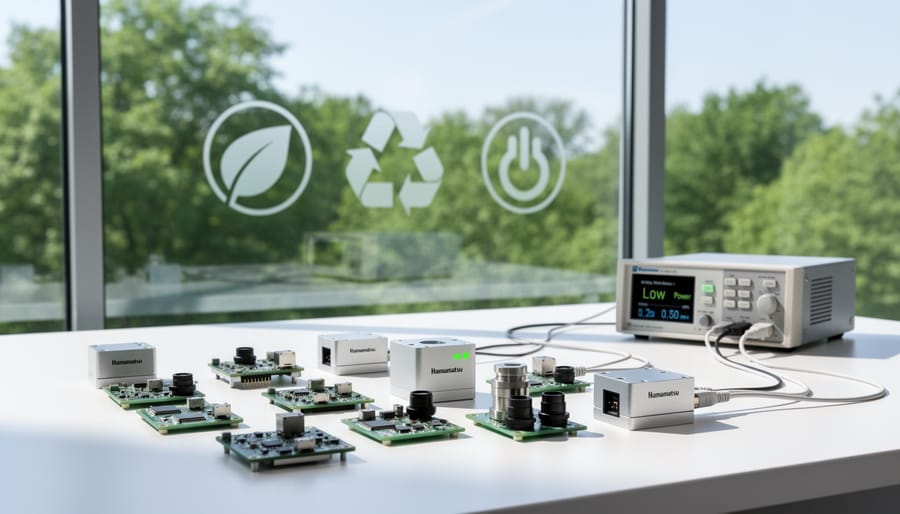
At the heart of Hamamatsu’s sustainable approach lies something most photographers don’t think about when they’re composing a shot: how much power their camera actually consumes. While we tend to focus on megapixels and dynamic range, the engineering behind low-power sensor design directly impacts both your shooting endurance and the broader environmental footprint of your equipment.
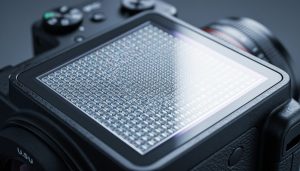
Hamamatsu achieves minimal power consumption through strategic choices in their CMOS and CCD sensor architecture. Their CMOS sensors use a technology called “column-parallel ADC” (analog-to-digital conversion), which essentially means each column of pixels has its own dedicated converter. Think of it like having multiple checkout lanes at a grocery store instead of one—the work gets done faster and more efficiently, requiring less energy overall.
For their CCD sensors, Hamamatsu employs what’s known as “multi-phase clocking optimization.” In practical terms, this means the electrical signals that move charge across the sensor are carefully timed to use only the minimum voltage necessary. It’s similar to driving at optimal RPM rather than constantly revving your engine—you get where you need to go while consuming less fuel.
The real-world benefits extend beyond just battery life. Lower power draw means less heat generation, which is crucial for long-exposure astrophotography or scientific imaging where thermal noise can ruin a shot. One wildlife photographer I spoke with mentioned that their Hamamatsu-equipped camera runs noticeably cooler during extended time-lapse sessions, reducing the infrared glow that might otherwise spook nocturnal subjects.
From a sustainability perspective, these efficiency gains compound over a camera’s lifetime. A sensor drawing 30 percent less power might save only a few watts during a single shoot, but across thousands of hours of use and millions of units produced, the energy savings become substantial—both for your wallet and the planet.
Reduced Hazardous Materials
When you’re investing in camera equipment, you’re probably thinking about image quality and performance—but there’s another consideration that’s becoming increasingly important: what’s actually inside that camera. Modern sensor manufacturing has made significant strides in reducing or eliminating hazardous materials, and Hamamatsu has been at the forefront of this movement.
Traditional electronics manufacturing once relied heavily on substances like lead, mercury, cadmium, and certain flame retardants that posed risks to both human health and the environment. Think about it: every camera that eventually reaches its end of life needs to be disposed of or recycled, and toxic materials can leach into soil and water systems if not handled properly.
Hamamatsu takes this seriously by maintaining strict compliance with RoHS (Restriction of Hazardous Substances) directives, which originated in Europe but have become a global standard. RoHS compliance means their cameras and sensors are manufactured without six key hazardous materials, including lead in solder and mercury in certain components. This isn’t just about following regulations—it’s about designing products from the ground up with environmental impact in mind.
For photographers and researchers, this compliance offers peace of mind. When you purchase a Hamamatsu camera, you’re not just getting cutting-edge imaging technology; you’re supporting manufacturing practices that prioritize worker safety during production and minimize environmental harm throughout the product lifecycle. Many professional labs and institutions now require RoHS compliance for equipment purchases, making Hamamatsu cameras a practical choice for those working in regulated environments.
The company also extends this commitment beyond minimum legal requirements, regularly auditing their supply chain to ensure component suppliers meet the same environmental standards, creating a ripple effect throughout the industry.
Product Lifecycle and Repairability
Built to Last: Design Philosophy
When you’re investing in specialized imaging equipment, longevity matters. Hamamatsu cameras have earned a reputation for remarkable durability that extends far beyond typical consumer electronics lifespans. Let me share some real-world examples that illustrate what this means for your purchasing decision.
Dr. Sarah Chen, a materials scientist at MIT, still relies on a Hamamatsu ORCA camera purchased in 2004 for her fluorescence microscopy work. “We’ve pushed this camera through thousands of imaging sessions,” she explains. “It’s outlasted three microscope upgrades.” Her experience isn’t unique. Research labs worldwide report Hamamatsu cameras functioning reliably after 15-20 years of continuous operation.
In industrial quality control settings, the story is similar. A semiconductor manufacturing facility in Arizona operates Hamamatsu line-scan cameras installed in 2006, processing millions of wafer inspections without failure. The facility manager notes they’ve only performed routine sensor cleaning and occasional firmware updates.
What does this longevity mean for you? First, while Hamamatsu cameras carry premium price tags, their cost-per-year of operation often undercuts cheaper alternatives. Second, their modular design philosophy means components can be serviced or upgraded rather than replaced entirely. Third, you’re not contributing to electronic waste cycles every few years.
The practical advice here is straightforward: when evaluating Hamamatsu against competitors, calculate total cost of ownership over a 10-year horizon rather than focusing solely on initial purchase price. Factor in reduced replacement frequency, maintained calibration stability, and available long-term technical support. For serious imaging applications, this built-to-last approach represents genuine value and environmental responsibility combined.
Support and Serviceable Design
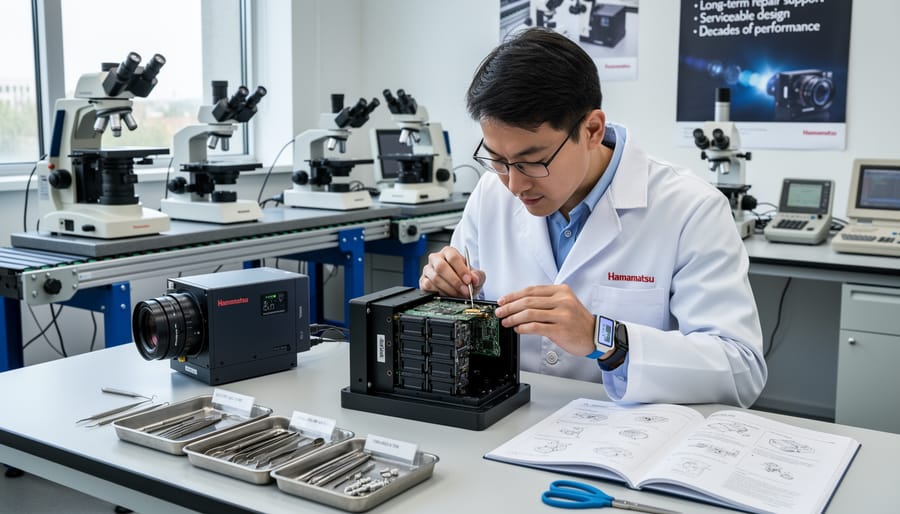
When you invest in specialized scientific cameras, you’re making a significant commitment—and Hamamatsu recognizes this by offering comprehensive support that keeps equipment functional for decades, not just years. Unlike consumer-grade cameras that often become obsolete within a few product cycles, Hamamatsu designs their cameras with longevity in mind, providing extensive technical documentation, readily available replacement parts, and professional repair services that genuinely extend equipment lifespan.
Their service model includes direct access to engineers who understand the specific technology inside each camera model, meaning you’re not dealing with scripted support responses. Many research facilities report using the same Hamamatsu cameras for 10-15 years because individual components like cooling systems or sensor electronics can be serviced or replaced rather than requiring complete unit replacement.
This serviceable design philosophy significantly reduces electronic waste while providing better value for users. Hamamatsu maintains parts inventory for discontinued models and offers calibration services that keep older cameras performing to specification. For photographers and researchers concerned about sustainability, this long-term support structure represents a tangible alternative to the throwaway culture prevalent in much of the imaging industry.
What Photographers Can Learn from Industrial Camera Makers
Choosing Longevity Over Novelty
While Hamamatsu specializes in scientific imaging rather than consumer cameras, their approach to building equipment that lasts decades offers valuable lessons for everyday photographers. Instead of chasing the latest megapixel count or trendy features, consider investing in cameras with proven track records and strong manufacturer support.
When evaluating your next camera purchase, ask yourself: Does this manufacturer still service ten-year-old models? Are replacement parts available? Can the firmware be updated to extend functionality? These questions matter more than flashy launch-day specifications that quickly become obsolete.
Look for cameras with robust metal bodies rather than plastic construction, weather-sealing that protects internal components, and modular designs that allow for repairs. Many professional-grade cameras from established brands can serve you for a decade or more with proper maintenance, while budget models often need replacement within three years.
The environmental impact adds up quickly. A single durable camera used for fifteen years generates far less waste than three or four cheaper replacements. Plus, you’ll develop deeper familiarity with your equipment, leading to better photographs. This principle extends beyond the camera body to lenses, which often outlast multiple camera generations when chosen wisely.
Supporting Brands with Environmental Commitments
When evaluating camera manufacturers for genuine environmental commitments, start by examining their publicly available sustainability reports and certifications. Hamamatsu Photonics, for instance, publishes detailed environmental data including energy consumption metrics, waste reduction targets, and carbon footprint analyses. Look for third-party certifications like ISO 14001 environmental management standards or membership in recognized sustainability initiatives.
Beyond marketing claims, investigate whether companies invest in concrete practices: renewable energy usage in manufacturing facilities, responsible sourcing of materials, and end-of-life recycling programs for their products. Hamamatsu’s commitment extends to designing energy-efficient sensors that consume less power during operation, reducing the environmental impact throughout a camera’s lifespan.
Check whether manufacturers provide transparency about their supply chain and conflict mineral policies. Companies with genuine commitments typically offer repair services and replacement parts to extend product longevity rather than encouraging frequent upgrades. When making environmentally conscious equipment choices, remember that smaller specialized manufacturers like Hamamatsu often have more traceable and accountable production processes compared to mass-market brands, making it easier to verify their environmental claims through direct communication and facility documentation.
Hamamatsu’s commitment to environmental responsibility shows us that even specialized camera manufacturers can make significant strides toward sustainability. Their energy-efficient production processes, responsible material sourcing, and long-lasting product design demonstrate that cutting-edge imaging technology and environmental stewardship aren’t mutually exclusive. In fact, they work hand in hand.
As photographers, we often focus on megapixels, sensor size, and dynamic range when choosing equipment, but there’s real value in considering a manufacturer’s environmental track record too. Every purchase we make sends a signal about what matters to us as consumers. By supporting companies that prioritize sustainability alongside performance, we encourage broader industry adoption of these practices.
The good news? You don’t need to compromise on quality to make environmentally conscious choices. Hamamatsu proves that specialized imaging equipment can meet rigorous scientific and industrial standards while being manufactured responsibly. As you explore your next camera purchase or evaluate your current gear, consider how your choices align with sustainable photography practices. The future of photography looks brighter when innovation meets responsibility.




 By
By