 By
By 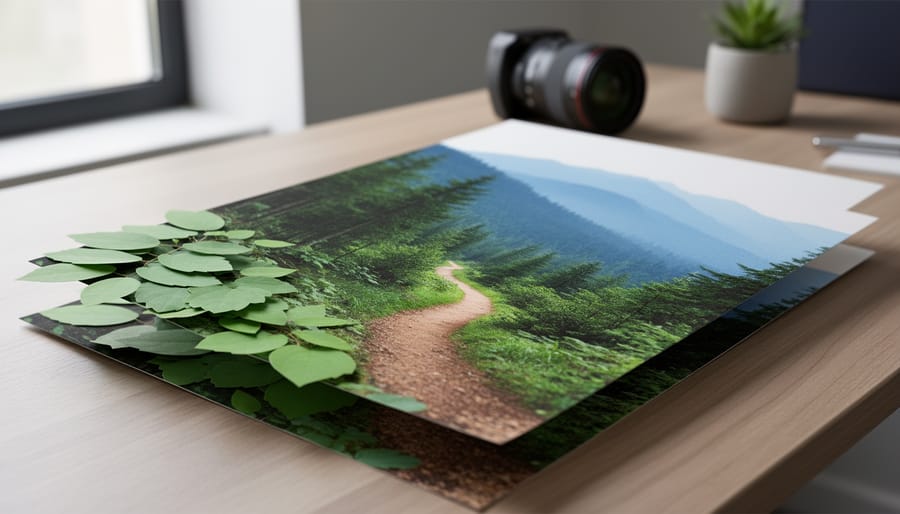
Imagine capturing a single photograph and transforming it into a fully three-dimensional scene that viewers can explore from multiple angles. This isn’t science fiction—it’s the breakthrough capability of context-aware layered depth inpainting, a technology that’s reshaping how we create and experience photographic images. Traditional 3D photography required expensive equipment arrays or specialized cameras, but this AI-driven approach uses computational intelligence to analyze a standard 2D image, understand its spatial relationships, and reconstruct the missing information that exists behind visible objects.
AI is revolutionizing photography by solving one of the medium’s fundamental limitations: the collapse of three-dimensional reality onto a flat plane. Context-aware layered depth inpainting tackles this challenge by separating a photograph into distinct depth layers—foreground, middle ground, and background—then intelligently filling in the occluded areas that were hidden in the original shot. Think of it like peeling apart the layers of a collage and painting in the missing pieces based on contextual clues from surrounding pixels.
The practical applications extend far beyond novelty effects. Product photographers can create interactive 360-degree views from single shots, real estate agents can generate virtual walkthroughs from static listings, and portrait photographers can add cinematic depth-of-field adjustments in post-production that weren’t possible during capture. Social media creators are using this technology to produce eye-catching parallax animations that make still images come alive.
What makes this particularly exciting is accessibility. Unlike previous 3D photography methods requiring specialized hardware, context-aware depth inpainting works with images you’ve already captured, transforming your existing photo library into a resource for immersive three-dimensional content.
What Is Context-Aware Layered Depth Inpainting?
The Three Key Components
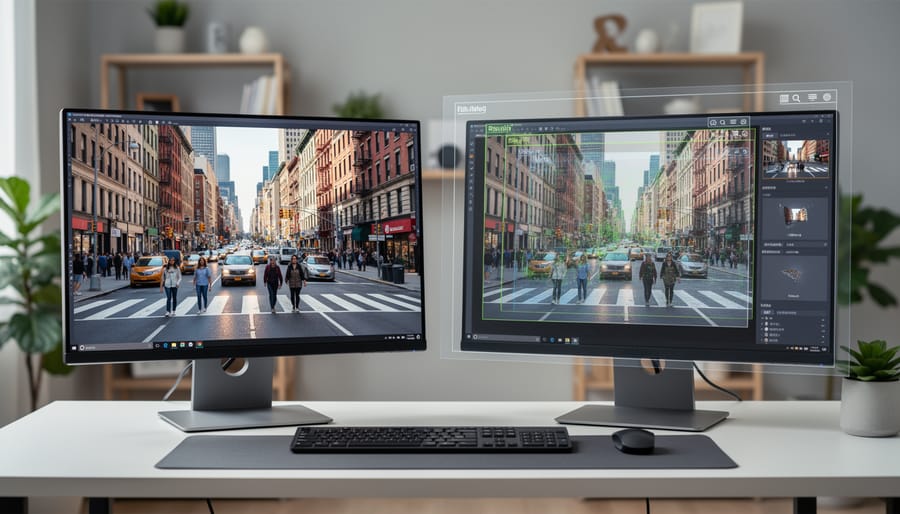
Think of 3D photography as a clever magic trick with three essential parts working together. First comes depth estimation, where AI algorithms analyze your flat 2D image to create a depth map—essentially a grayscale representation where darker areas indicate distance and lighter areas show what’s closer to the camera. Imagine looking at a portrait: the software recognizes that the person’s nose is closer than their ears, and their face is much closer than the background trees.
Next is layer separation, where the technology slices your image into distinct planes, like cutting a sandwich into layers. The person becomes one layer, the middle-ground bushes another, and the distant sky yet another. This separation is crucial because it allows each element to move independently when you create that 3D effect.
The real magic happens with intelligent fill algorithms, also called depth inpainting. Here’s the challenge: when you separate layers, you expose areas that were hidden in the original photo. What was behind your subject’s head? The AI doesn’t just blur or stretch pixels randomly—it analyzes the surrounding context and intelligently reconstructs what should logically be there. If you’re standing in front of a brick wall, the algorithm recognizes the pattern and extends those bricks naturally behind you. It’s like having a skilled artist paint in the missing pieces, but done instantly by machine learning trained on millions of images.
How It Differs From Traditional 3D Photography
Unlike traditional 3D photography, which relies on capturing multiple perspectives simultaneously, context-aware layered depth inpainting takes a fundamentally different approach. Traditional methods like stereoscopic photography require specialized dual-lens cameras or complex multi-camera rigs to capture left and right eye views at the same time. This means investing in expensive equipment and dealing with synchronization challenges.
The AI-powered approach changes everything. You can use any standard camera you already own, even your smartphone, to capture a single image. The artificial intelligence analyzes that lone photograph, identifies depth cues like size relationships and perspective, then intelligently separates the scene into layers and fills in the hidden areas behind foreground objects. Think of it as computational magic that reconstructs what the camera couldn’t originally see.
This democratizes 3D photography significantly. Instead of needing matching lenses or precise camera positioning, you’re working with your existing photo library. That vacation snapshot from five years ago? It can become a 3D image today. The technology essentially reverse-engineers depth information from visual context, making three-dimensional imagery accessible to anyone with a camera and processing software.
The Technology Behind the Magic
How AI Reads Depth in Your Photos
When you look at a photograph, your brain instantly understands which objects are near and which are far away. You don’t even think about it. The same lamp that appears large in the foreground is clearly closer than the tiny car visible through the window. This natural ability is something AI transforms photos by mimicking through a process called monocular depth estimation.
Here’s what makes it fascinating: the AI has never seen the real scene. It’s working from a single flat image, just like you are. Yet it can build a surprisingly accurate depth map by recognizing the same visual clues you unconsciously use.
The AI looks for occlusion, which is just a fancy term for when one object blocks another. That person standing in front of the building? They must be closer. It analyzes relative size, knowing that familiar objects like cars or doorways follow predictable dimensions. A smaller car is likely farther away than a larger one in the same frame.
Texture gradients provide another clue. Notice how a brick wall’s pattern becomes finer and more compressed as it recedes into the distance? The AI picks up on that. It also examines atmospheric perspective, where distant objects appear hazier and less saturated. Shadows and lighting patterns reveal the three-dimensional form of objects, while perspective lines converging toward vanishing points indicate depth relationships.
The remarkable achievement is that modern AI systems have been trained on millions of images, learning these relationships so thoroughly that they can estimate depth with impressive accuracy.
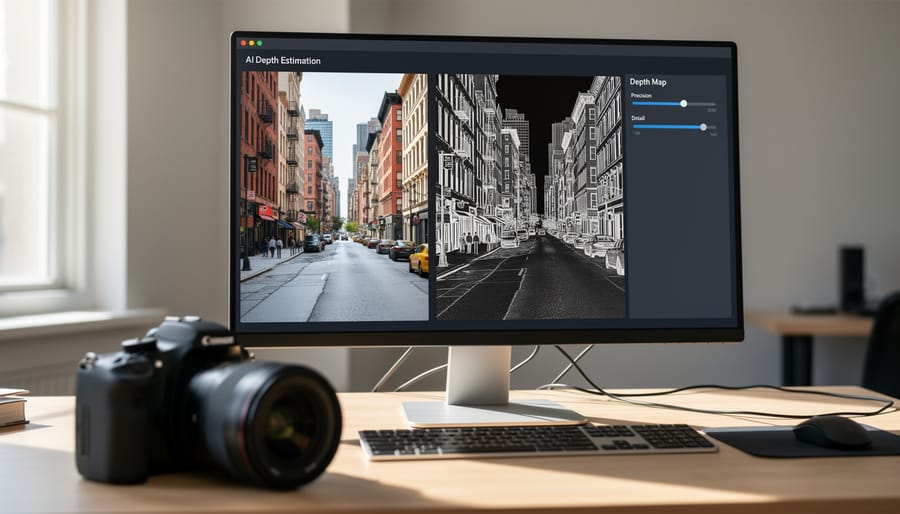
The Inpainting Process: Filling What’s Hidden
Here’s where the magic really happens. When you capture a standard photograph, objects in the foreground naturally block what’s behind them. Think about a portrait where someone stands in front of a bookshelf—the shelves directly behind their shoulders simply don’t exist in your image data. Yet for 3D photography to work convincingly, the system needs to know what’s there when the viewer shifts their perspective.
Context-aware layered depth inpainting uses artificial intelligence to make educated guesses about these hidden areas. The AI analyzes the surrounding visible pixels and uses pattern recognition to predict what logically should appear in the obscured zones. It’s similar to how your brain fills in visual gaps, but powered by algorithms trained on millions of images.
Let’s look at practical examples. In a beach portrait, if someone stands against the ocean horizon, the AI examines the water patterns on either side of the person. It recognizes the texture, color gradient, and wave patterns, then intelligently extends these elements behind the subject. The result? When you shift your view in the 3D image, you see believable water continuing behind where the person stands, not an awkward blank space or distorted mess.
For landscape photography, consider a tree in front of distant mountains. The inpainting algorithm identifies the mountain ridgeline visible on both sides of the tree, analyzes the terrain patterns, lighting, and atmospheric perspective, then reconstructs the hidden portion. The AI doesn’t just copy and paste—it creates contextually appropriate content that matches the scene’s depth, lighting conditions, and natural flow.
The technology isn’t perfect and occasionally produces artifacts, especially with complex or unusual scenes. However, modern algorithms have become remarkably sophisticated at understanding photographic context and generating plausible hidden content.
Practical Applications for Photographers
Creating 3D Photos for Social Media
Social media platforms have embraced depth-based photography, making it easier than ever to share your 3D creations. Facebook’s 3D Photos feature, launched in 2018, uses context-aware layered depth inpainting to transform standard smartphone images into interactive experiences. When you upload a photo with depth information (captured on portrait mode-enabled phones), Facebook automatically generates the layered depth effect that viewers can explore by tilting their device or moving their cursor.
Instagram has followed suit with various AR effects and features that leverage depth data, though the implementation varies depending on your device. The key is understanding which images translate best into 3D. Portraits with clear subject separation work exceptionally well, as do landscapes with distinct foreground elements like flowers or rocks against distant backgrounds. Avoid images with complex overlapping elements, reflective surfaces, or transparent objects, as these can confuse the depth mapping algorithms.
For optimal results, shoot with depth in mind from the start. Position your subject three to six feet away with a clean, uncluttered background. Natural depth cues like leading lines or layered scenery help the algorithm understand spatial relationships. Once processed, these 3D photos consistently generate higher engagement rates than standard posts, as viewers naturally interact longer with the parallax effect.
Enhanced Portrait Photography
Portrait photography gets a remarkable upgrade with context-aware layered depth inpainting. This technology transforms static headshots and portraits into dynamic, three-dimensional experiences that viewers can explore from subtle angles.
The magic happens when the AI analyzes your portrait, identifying the subject’s position in space relative to the background. It then intelligently fills in the hidden areas behind the subject’s head, shoulders, and body that weren’t visible in the original shot. The result? A portrait with genuine depth that responds to viewer movement with smooth parallax effects.
Consider a professional headshot taken against a studio backdrop. Before processing, it’s a flat image. After applying depth inpainting, the subject appears to stand distinctly in front of the background, with their hair and facial features showing realistic depth separation. When viewed on a compatible device or platform, tilting the screen creates a subtle parallax effect where the subject and background move at different rates, mimicking how our eyes perceive real depth.
This works exceptionally well for portraits with bokeh backgrounds, where the AI can convincingly extend the out-of-focus elements behind the subject. Even simple portraits gain new life, making them perfect for social media profiles, portfolio presentations, or digital galleries where that extra dimension helps your work stand out and capture viewer attention longer.

Virtual Reality and Immersive Experiences
Context-aware layered depth inpainting isn’t just transforming how we create three-dimensional images—it’s revolutionizing the entire landscape of VR content creation and immersive experiences. If you’ve ever wondered how photographers are producing those stunning virtual tours without expensive multi-camera rigs, this technology is often the secret ingredient.
For real estate photographers, this is a game-changer. Instead of shooting dozens of photos from multiple angles or investing in specialized 360-degree cameras, you can now capture a standard set of images and use depth inpainting to fill in the gaps, creating seamless virtual walkthroughs. The AI intelligently reconstructs what would be visible from different viewpoints, making properties feel explorable and alive.
Travel photographers are embracing this too. Imagine capturing a breathtaking landscape or historic site and transforming it into an immersive experience where viewers can virtually step into the scene. The technology handles those tricky perspective shifts and hidden areas that would normally require multiple shots.
Event photographers are finding creative applications as well, offering clients interactive memories where guests can virtually revisit special moments from different angles. The depth information allows for smooth transitions between viewpoints, creating that wow factor clients love.
The beauty of this approach is accessibility. You don’t need specialized equipment—just your existing camera and the right software. This democratization of immersive content creation means more photographers can compete in markets that once required significant capital investment.
Tools and Software You Can Use Today
Consumer-Friendly Options
The good news? You don’t need expensive software or a computer science degree to experiment with 3D photography using context-aware layered depth inpainting. Several consumer-friendly options have emerged that put this technology right in your pocket.
LucidPix stands out as one of the most accessible apps for creating 3D photos from standard 2D images. Simply upload a photo, and the app automatically generates depth maps and fills in occluded areas to create convincing 3D effects. The interface is intuitive, making it perfect for beginners. The downside? Results can be hit-or-miss with complex scenes, and you’ll occasionally notice artifacts around fine details like hair or tree branches. Still, for casual experimentation and social media sharing, it delivers impressive results without a learning curve.
Facebook (now Meta) has integrated 3D photo capabilities directly into its platform. If you have a dual-camera smartphone, you can create 3D photos that come alive as viewers scroll past them. The advantage here is seamless integration—no separate app needed, and your friends can view the effect without downloading anything. However, the feature works best with newer phones and requires specific compositional choices to shine. Busy backgrounds or subjects too close to the camera often produce unconvincing results.
Other mobile apps like Parallax and PopPic offer similar functionality with varying degrees of quality. Expect a bit of trial and error as you learn which types of scenes work best. Generally, images with clear foreground subjects against simpler backgrounds produce the most convincing 3D conversions.
Professional-Grade Solutions
When you’re ready to move beyond the basics, professional-grade solutions offer significantly more control and sophistication in creating 3D photography with context-aware layered depth inpainting. These tools are designed for photographers who need reliable, consistent results for client work or advanced creative projects.
Commercial software like Adobe Photoshop’s neural filters and specialized plugins have integrated depth-based inpainting capabilities that work seamlessly within familiar workflows. While Adobe hasn’t released a standalone depth inpainting tool yet, third-party developers have created plugins that leverage Photoshop’s layering system to achieve professional results. These typically range from $50 to $300 for perpetual licenses, though some operate on subscription models.
DepthAI represents a step up in terms of both capability and complexity. This platform combines advanced AI photography software with hardware optimization, making it particularly effective for processing large batches of images. The learning curve is steeper here, expect to invest 10 to 15 hours understanding the interface and calibration settings, but the payoff is exceptional depth accuracy and faster processing times.
For video production work, solutions like Runway ML and specialized depth-mapping software can handle moving subjects and maintain temporal consistency across frames. These professional tools typically start around $500 annually but offer features that consumer apps simply cannot match.
The investment required goes beyond money. Professional tools demand time for mastery and often require more powerful hardware, ideally a dedicated GPU with at least 8GB of VRAM. However, if you’re producing work for clients or planning to monetize your 3D photography, this investment pays dividends through superior quality, batch processing capabilities, and integration with existing professional workflows.
Best Practices for Shooting 3D-Ready Photos
Composition Tips That Enhance Depth Conversion
Not all photographs convert equally well into convincing 3D images. Understanding what makes an image ideal for depth conversion can save you hours of frustration and dramatically improve your results.
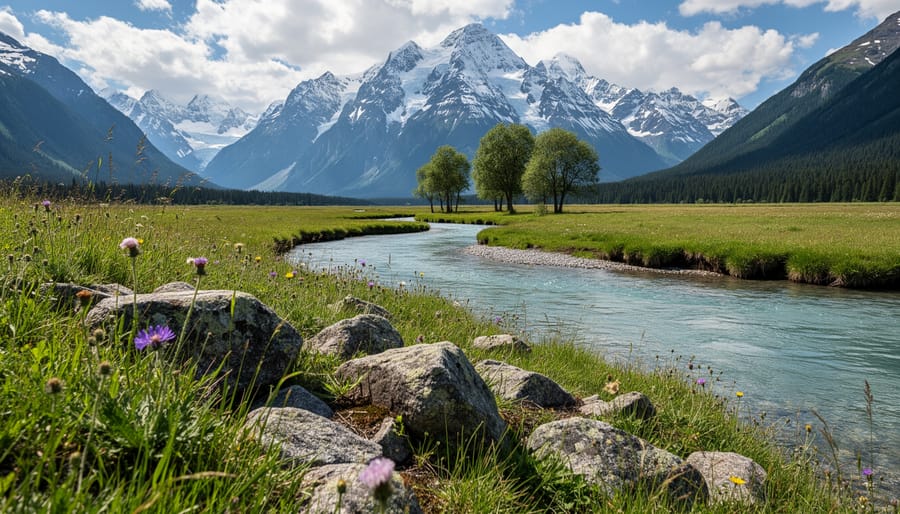
The golden rule is clear foreground-background separation. Images with distinct layers work best because the AI can more accurately predict where one object ends and another begins. Think of a portrait with a person standing several feet from a wall, or a landscape where mountains recede into the distance. These natural breaks help the algorithm make intelligent decisions about depth mapping.
Complex overlapping elements present the biggest challenge. When tree branches interweave with a fence, or when hair partially covers a face, the AI must guess what exists behind the visible portions. While modern inpainting algorithms handle this remarkably well, simpler compositions yield cleaner results. If you’re shooting specifically for 3D conversion, consider positioning subjects with breathing room around them.
Lighting plays a surprisingly important role in depth conversion quality. Images with good contrast and well-defined edges give the AI more information to work with. Flat, evenly-lit scenes can confuse depth estimation because there are fewer visual cues about spatial relationships. Side lighting that creates shadows and highlights naturally enhances the perception of depth and helps algorithms identify object boundaries more accurately.
Avoid busy backgrounds when possible. A cluttered scene with multiple objects at varying distances creates more opportunities for depth estimation errors. While you don’t need studio-perfect conditions, being mindful of these composition principles during capture will significantly improve your 3D photography outcomes.
Common Pitfalls and How to Avoid Them
While context-aware layered depth inpainting works remarkably well in many scenarios, understanding its limitations will save you considerable frustration and help you achieve better results.
Reflective surfaces present one of the most common challenges. Mirrors, glass windows, and shiny metallic objects confuse the algorithm because they display depth information from two different planes simultaneously. When processing an image of someone standing in front of a mirror, the technology might struggle to determine whether the reflection belongs to the foreground or background layer. The workaround? If possible, adjust your shooting angle to minimize reflections, or be prepared to manually mask these areas in post-processing before applying depth inpainting.
Transparent and semi-transparent objects like wine glasses, eyeglasses, or glass vases also trip up the system. Since these objects allow you to see through them, the depth map becomes ambiguous. When photographing scenes with transparent elements, consider whether they’re essential to your composition. If they are, you might need to generate the depth map without them, then composite them back separately.
Highly complex textures such as tree branches, intricate lace patterns, or chain-link fences can result in incomplete depth data with numerous gaps. The algorithm may oversimplify these details or create artifacts. In these cases, shooting from a slightly different angle that reduces visual complexity or using supplementary reference photos can help fill in missing information.
Surprisingly, very flat scenes with minimal depth variation can also pose problems. The algorithm needs depth differentiation to work effectively, so photographing a painted wall straight-on might yield disappointing results compared to capturing architectural details at an angle.
Limitations and Future Developments
Like any emerging technology, context-aware layered depth inpainting isn’t quite perfect yet, and it’s important to understand what it can and can’t do before diving in headfirst.
The biggest limitation you’ll encounter is handling complex scenes with intricate details. Think of photographing through a chain-link fence or capturing tree branches against a busy background. The AI sometimes struggles to accurately determine which elements belong to which depth layer, resulting in artifacts or unnatural-looking fills in the inpainted areas. Transparent or reflective surfaces can also throw the algorithms for a loop, as they don’t fit neatly into traditional depth categories.
Processing time remains another consideration, especially if you’re working with high-resolution images or don’t have access to powerful GPU hardware. While some cloud-based solutions help democratize access, they often come with subscription costs or upload limitations that might not suit everyone’s workflow.
Current implementations also tend to work best with static scenes. If you’re trying to create 3D effects from action shots or images with significant motion blur, the results can be unpredictable. The technology needs clear visual information to make intelligent decisions about depth and content, which fast-moving subjects don’t always provide.
But here’s the exciting part: the technology is advancing rapidly. Researchers are actively developing better edge-detection algorithms that can handle those tricky fence and foliage scenarios. Machine learning models are being trained on increasingly diverse datasets, improving their ability to understand unusual or complex scenes.
We’re also seeing promising developments in real-time processing, which could eventually allow photographers to preview 3D effects before clicking the shutter. Integration with computational photography features in modern smartphones suggests that this technology might soon become as commonplace as portrait mode.
The trajectory is clear: what seems cutting-edge today will likely become standard practice tomorrow, opening up creative possibilities we haven’t even imagined yet.
The beauty of context-aware layered depth inpainting lies not in its complex algorithms or sophisticated neural networks, but in what it represents for photographers everywhere: the democratization of 3D photography. You no longer need expensive depth cameras, specialized rigs, or even dual-lens smartphones to create compelling three-dimensional images. Your existing photo library, filled with memories captured over years, is now a treasure trove of potential 3D content waiting to be discovered.
This is the fundamental shift that AI brings to photography. Techniques that once required professional equipment and expertise are now accessible through software solutions, many of which are free or remarkably affordable. Whether you’re a hobbyist wanting to add depth to family photos or a professional exploring new creative directions, the barriers to entry have never been lower.
I encourage you to experiment with the tools mentioned in this article. Take that favorite landscape shot from last year’s vacation, or that portrait you’ve always loved, and run it through one of these depth inpainting applications. You might be surprised at how effectively the AI interprets and enhances your work, opening up possibilities for immersive displays, 3D prints, or simply a fresh perspective on familiar images.
Looking ahead, AI integration in photography will become increasingly seamless and expected rather than exceptional. We’re witnessing the beginning of a transformation where computational photography and artificial intelligence work hand-in-hand with traditional photographic skills, expanding creative possibilities in ways we’re only beginning to explore.




 By
By