 By
By 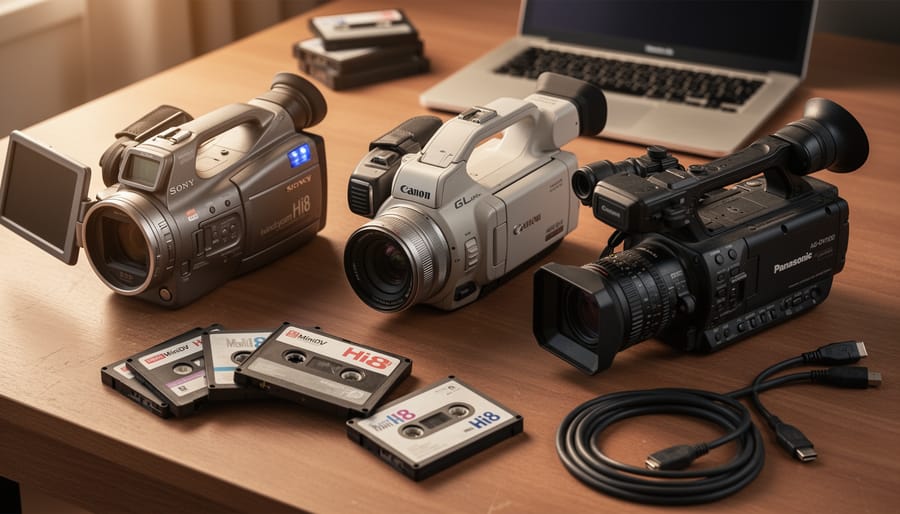
Identify cameras manufactured between the late 1980s and early 2000s—particularly models like the Sony Handycam Hi8 series, Canon GL2, or Panasonic AG-DVX100—which produce that distinctive grainy, tape-era quality creators are actively seeking today. These cameras have transitioned from obsolete technology to sought-after tools for achieving authentic retro aesthetics that digital filters simply cannot replicate convincingly.
Capture your footage directly to the camera’s native format, whether that’s MiniDV tape, Hi8, or early digital storage, then digitize using proper transfer equipment rather than recording through the viewfinder. Connect cameras with FireWire ports directly to your computer using IEEE 1394 cables and capture software like DaVinci Resolve or OBS Studio, which preserves the original interlaced scan lines and compression artifacts that give vintage camcorder aesthetics their unmistakable character.
Test your acquisition thoroughly before committing to important shoots, since these cameras require specific batteries that may no longer be manufactured, tapes that are increasingly scarce, and maintenance knowledge that differs significantly from modern digital cameras. Check online marketplaces like eBay, thrift stores, and estate sales where working units regularly appear for $50-$300, though pristine professional models command higher prices.
Embrace the limitations as creative opportunities rather than technical drawbacks. The lower resolution, automatic exposure quirks, and built-in stabilization artifacts of vintage cameras create visual signatures that contemporary audiences find nostalgic and authentic, making these devices valuable additions to any creator’s toolkit for music videos, documentaries, or experimental projects seeking genuine period-appropriate visuals.
What Makes a Video Camera ‘Vintage’?
Analog vs. Early Digital Formats
Understanding the distinction between analog and early digital video formats is crucial when diving into vintage video cameras, as each creates fundamentally different visual characteristics.
True analog formats like VHS-C, Hi8, and Betamax record video as continuous electronic signals on magnetic tape. These formats produce that distinctive soft, slightly blurry quality with natural color bleeding and visible scan lines that many creators seek today. The image degradation inherent to analog tape—including noise, generation loss, and chromatic aberrations—contributes to their unique aesthetic appeal. When you play back analog footage, you’re watching a direct representation of those magnetic patterns, complete with all their imperfections.
Early digital formats, including MiniDV and Digital8, represent a transitional technology. These cameras record digital data onto tape, compressing video into streams of ones and zeros. The result is sharper, cleaner footage with better color accuracy and no generation loss when copying. MiniDV, introduced in 1995, offered impressive quality at 500 lines of resolution—significantly better than its analog predecessors. Digital8 used the same codec but recorded onto more affordable Hi8 tapes.
For modern usage, this distinction matters significantly. Analog footage requires real-time capture through analog-to-digital converters, adding complexity to your workflow. Digital formats can often be transferred via FireWire or USB connections, preserving the original quality without conversion loss. However, if you’re specifically chasing that dreamy, nostalgic look, authentic analog formats deliver visual character that digital formats simply cannot replicate, even with filters or post-processing effects.
The Golden Era: 1980s-2000s
The period spanning the 1980s through early 2000s represents the golden era for collectible video cameras, marking the transition from analog formats like VHS-C and Hi8 to early digital formats like MiniDV. This timeframe produced cameras that perfectly balance accessibility, image character, and nostalgic appeal.
Cameras from this era are particularly prized because they captured authentic home video aesthetics that today’s creators deliberately seek to recreate. Sony’s Handycam series, especially models from the late 1990s, offers that characteristic warmth and slight color saturation that evokes powerful nostalgia. Canon’s GL and XL series from the early 2000s, initially designed for prosumer videographers, now command premium prices among indie filmmakers seeking genuine period-accurate footage.
What makes these cameras especially valuable is their sweet spot between affordability and quality. Unlike earlier formats requiring extensive restoration, many late 1990s and early 2000s models remain functional and use batteries still available through third-party manufacturers. The MiniDV format, in particular, strikes an ideal balance because tapes are still relatively accessible and transfer equipment is widely available.
Content creators appreciate these cameras for music videos, short films, and social media content because the aesthetic feels earned rather than filtered. The slight imperfections, natural grain structure, and organic color response create visual character that digital filters struggle to authentically replicate. This authenticity drives continued demand among both collectors and working creatives.
The Aesthetic Appeal: Why Vintage Video Looks Different
CCD Sensors and Their Unique Character
The magic behind that distinctive vintage video look often comes down to one crucial component: the CCD (Charge-Coupled Device) sensor. These sensors were the workhorses of video cameras from the 1980s through the early 2000s, before being largely replaced by CMOS (Complementary Metal-Oxide Semiconductor) technology in modern devices.
CCD sensors have a fundamentally different way of reading and processing light. Rather than each pixel having its own amplifier like CMOS sensors, CCDs transfer charge across the chip and read it at one corner. This creates what many describe as a more organic, film-like quality. The colors tend to be warmer and slightly less saturated, with a softness that digital purists might criticize but creatives often cherish.
One of the most celebrated characteristics is how CCDs handle highlights. Instead of the harsh clipping you sometimes see with CMOS sensors, CCDs offer a gentle rolloff, where bright areas gradually transition to white. This creates a forgiving, almost dreamlike quality in high-contrast situations. Think of sunny outdoor scenes where the light seems to glow rather than blow out completely.
There’s also that intangible video feel that’s hard to quantify but immediately recognizable. It’s partly the motion cadence, partly the grain structure, and partly the way CCDs render detail. Modern cameras are sharper and cleaner, but CCDs capture something with character and soul. For content creators chasing that nostalgic aesthetic, this imperfection is the entire point. Understanding these technical differences helps you make informed decisions about which vintage cameras will deliver the look you’re after.
Tape Compression and Artifacts
When you record on magnetic tape—whether it’s VHS, Hi8, or MiniDV—you’re working with an analog storage medium that has physical limitations. Unlike digital files that either work perfectly or fail completely, tape degrades gracefully, creating a unique visual signature that many creators now actively seek out.
The compression artifacts from tape formats manifest in several distinctive ways. You’ll notice color bleeding, where bright hues bleed slightly into adjacent areas, creating that soft, dreamy quality absent from razor-sharp digital footage. Horizontal lines often show slight misalignment, producing subtle tracking errors that add organic movement to static shots. Luminance and chrominance information separate differently on tape, resulting in that characteristic separation between brightness and color data.
Generation loss deserves special attention because it’s essentially unavoidable with analog tape. Each time you dub footage from one tape to another, you lose detail and introduce new artifacts. While this was frustrating in professional workflows, it creates increasingly abstract, textured visuals that contemporary filmmakers now replicate digitally. That slightly muddy, softened quality with enhanced grain and reduced sharpness has become an aesthetic choice rather than a technical limitation.
This tape texture provides visual warmth that contrasts sharply with clinical digital perfection. The subtle noise, gentle motion blur, and organic imperfections give footage an emotional quality that resonates with viewers seeking authenticity in an increasingly polished digital landscape.
Popular Vintage Video Cameras Worth Collecting
Sony Handycam Series (Hi8 and MiniDV)
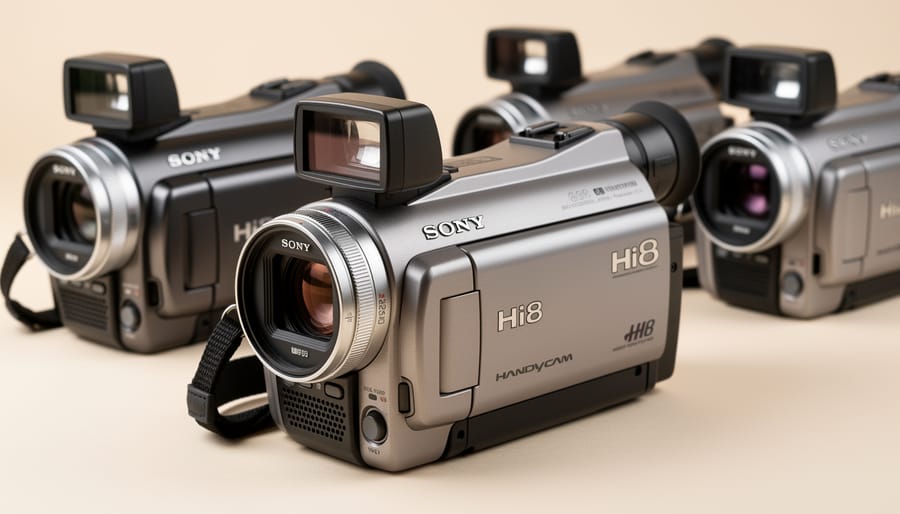
The Sony Handycam series represents the holy grail for many vintage video enthusiasts, particularly the Hi8 and MiniDV models from the 1990s and early 2000s. These cameras revolutionized home video with their compact size and impressive image quality for the era, and today they’re experiencing a renaissance among content creators drawn to their distinctive aesthetic.
The CCD-TRV series stands out as the most coveted lineup. Models like the CCD-TRV94E and CCD-TRV138 feature Sony’s exceptional Super HAD CCD sensors, which produce that characteristic warm, slightly saturated look that’s nearly impossible to replicate digitally. These sensors handle highlights gracefully and create a natural film-like quality that modern digital cameras often struggle to achieve, even with filters.
For collectors, the CCD-TRV900 and CCD-TRV950 represent the peak of MiniDV technology. These prosumer models offer manual controls, excellent low-light performance, and build quality that often outlasts modern consumer cameras. The DCR-VX2000, while technically part of a different series, shares similar appeal with its three-CCD system delivering broadcast-quality footage.
When hunting for these cameras, prioritize units with clean CCD sensors and functioning viewfinders. Test the tape mechanisms thoroughly, as worn belts and gears are common issues. Working FireWire ports are essential for capturing MiniDV footage digitally without quality loss, making these cameras surprisingly practical for modern workflows despite their age.
Canon and Panasonic Prosumer Models
If you’re serious about vintage digital video with better image quality and manual control, Canon’s GL and XL series represent a significant step up from basic consumer models. These prosumer cameras from the early 2000s were designed for wedding videographers, independent filmmakers, and serious hobbyists who needed professional features without the professional price tag.
The Canon GL2, released in 2002, became a workhorse camera for many aspiring filmmakers. It featured three 1/4-inch CCDs, manual focus rings, zebra patterns for exposure monitoring, and XLR audio inputs—tools that gave you genuine creative control over your footage. The XL1 and XL2 took things further with interchangeable lens systems, allowing you to swap optics for different shooting scenarios. These cameras captured to Mini DV tape, which means you’ll need a FireWire connection to digitize your footage, but the image quality holds up surprisingly well, especially in good lighting conditions.
Panasonic’s AG-DVX100 deserves special mention as it was among the first prosumer cameras offering a true 24p frame rate, mimicking film’s cinematic motion. This feature alone made it incredibly popular with independent filmmakers seeking that film-like aesthetic without film budgets. These cameras require patience and proper technique, but they reward you with footage that has genuine character and depth.
VHS-C Cameras: The Ultra-Vintage Aesthetic
For videographers chasing the most authentic retro look, nothing beats a genuine analog VHS-C camera. These compact camcorders from the late 1980s and early 1990s produce footage with natural grain, color shifts, and tracking artifacts that digital filters simply can’t replicate convincingly. Models like the Canon E77, JVC GR-AX7, and Panasonic PV-A207 are relatively affordable on secondhand markets, often available for under $50.
The appeal lies in their imperfections. VHS-C naturally produces washed-out colors, reduced contrast, and soft edges that instantly transport viewers to home movies of decades past. This degradation creates an emotional response that resonates particularly well with content targeting millennials and Gen Z audiences seeking nostalgia.
However, using VHS-C cameras requires commitment. You’ll need to source blank tapes, which are still available but increasingly scarce. Battery replacements or AC adapters are essential since original batteries rarely hold charges. Most importantly, you’ll need a VHS-C adapter and VCR for playback, plus a video capture device to digitize your footage.
Condition matters significantly. Check viewfinders for clarity, test recording and playback functions, and inspect tape mechanisms for smooth operation. While the degraded aesthetic is desirable, a malfunctioning camera produces unusable footage rather than charming imperfection. Consider these cameras investment pieces requiring patience and maintenance, but the authentic vintage results justify the effort for serious creators.
Getting Footage from Vintage Cameras to Digital
Analog Transfer Methods
Getting your vintage analog footage into a digital format requires the right hardware bridge between old and new technology. The process is straightforward once you understand the equipment needed.
For VHS and Hi8 tapes, you’ll need a capture card or external video capture device. These devices connect your old camcorder or VCR to your computer via USB. The Elgato Video Capture is a reliable entry-level option that works with both Mac and PC, handling composite and S-Video connections. It comes with intuitive software that makes the transfer process simple for beginners.
For better quality results, consider the Diamond VC500 One Touch Video Capture device, which preserves more detail from higher-quality formats like Hi8 and S-VHS. Professional videographers often use BlackMagic Intensity devices, which support higher resolutions and offer more control over the digitization process, though they come at a higher price point.
Quality considerations matter significantly. Always use the best available output from your source device. S-Video connections provide better quality than standard composite RCA cables. If your camcorder has a FireWire output (common on MiniDV cameras), this provides lossless digital transfer and requires only a FireWire-to-USB adapter for modern computers.
Before starting your transfer, clean your tape heads and ensure tapes are stored properly. The capture process happens in real-time, meaning a 60-minute tape takes 60 minutes to digitize. Save your files in a high-quality format like AVI or MOV before compressing them for sharing or storage.
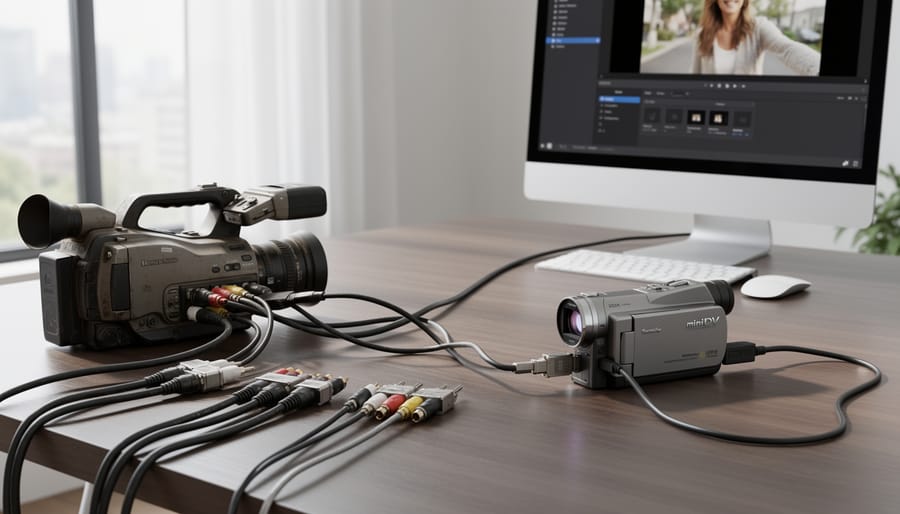
MiniDV and Digital8 Transfer
If you’re working with MiniDV or Digital8 tapes, you’re in luck—these formats were designed as digital from the start, which makes transferring footage significantly more straightforward than dealing with analog formats. Both store video as digital data on tape, meaning you can capture footage without any quality loss during the transfer process.
The key to accessing this digital goldmine is FireWire, also known as IEEE 1394 or i.Link. Most MiniDV and Digital8 camcorders feature a FireWire port, typically a 4-pin connection. To transfer footage, you’ll connect your camera directly to your computer using a FireWire cable. The challenge today is that modern computers rarely include FireWire ports, so you’ll likely need an adapter.
For Mac users, Thunderbolt to FireWire adapters work seamlessly with older MacBook Pro and iMac models. PC users can find FireWire PCIe cards for desktops or ExpressCard adapters for laptops, though compatibility varies depending on your system.
Once connected, your computer should recognize the camera as an external device. On Mac, iMovie provides native support for capturing DV footage and offers a clean, intuitive interface. Windows users can utilize the built-in Windows Movie Maker on older systems, or explore free options like WinDV or DVDate for newer operating systems.
The real advantage here is simplicity—connect, press play on your camera, hit record in your software, and watch your memories transfer in real-time. The footage arrives as pristine digital files, ready for editing or archiving without the generational loss that plagues analog transfers.
Practical Considerations for Using Vintage Video Cameras
Finding Batteries and Media
Finding reliable power sources and media for vintage video cameras requires some resourcefulness, but the process is more manageable than you might expect. Start by identifying your camera’s exact battery model number, usually found in the manual or on the battery compartment itself. While original manufacturer batteries may be discontinued, third-party alternatives are often available through online marketplaces like eBay or specialty electronics retailers. These aftermarket options typically offer comparable performance at a fraction of the cost. For comprehensive guidance on keeping your camcorder powered, check out these battery solutions that work across different vintage models.
Blank tapes present another challenge, particularly for formats like MiniDV, Hi8, and Digital8. While production has slowed, new old stock still circulates through online retailers and auction sites. Consider purchasing in bulk when you find reputable sellers. Many videographers also recycle previously recorded tapes by recording over them, which works perfectly fine for most applications. Don’t overlook local thrift stores and estate sales where unopened tape packs sometimes appear.
For discontinued accessories like chargers or AV cables, universal adapters can bridge the gap. Research voltage requirements carefully to avoid damaging your equipment, and always test with less critical footage first.
Common Issues and Maintenance
Vintage video cameras, whether analog or early digital models, require special attention to keep them running smoothly. The most common issue you’ll encounter involves tape mechanisms. These delicate systems can suffer from worn belts, sticky capstans, and dirty heads that prevent proper playback or recording. If your camera ejects tapes unexpectedly or displays tracking errors, it’s often a sign that internal components need cleaning or replacement.
Viewfinder problems rank as another frequent headache. CRT viewfinders in older cameras can develop dim displays or complete blackouts due to aging phosphors or failing backlights. LCD screens on early digital models may show dead pixels or fail entirely. While some viewfinder issues can be addressed through adjustment menus, others require professional repair.
Lens complications typically manifest as focus drift, stuck zoom mechanisms, or fungus growth between elements. Regular use actually helps keep mechanical parts moving freely, so don’t let your vintage camera sit idle for extended periods.
Preventive care makes all the difference. Store cameras in climate-controlled environments with moderate humidity to prevent mold and corrosion. Clean tape heads after every few hours of use with dedicated cleaning cassettes or isopropyl alcohol on cotton swabs. Check battery compartments regularly for corrosion, and remove batteries during long-term storage.
Follow these essential maintenance tips and exercise your camera’s functions monthly, even if you’re not actively shooting. This simple routine prevents lubricants from drying out and keeps mechanical components from seizing.
Where Vintage Video Cameras Excel Today
Music Videos and Artistic Projects
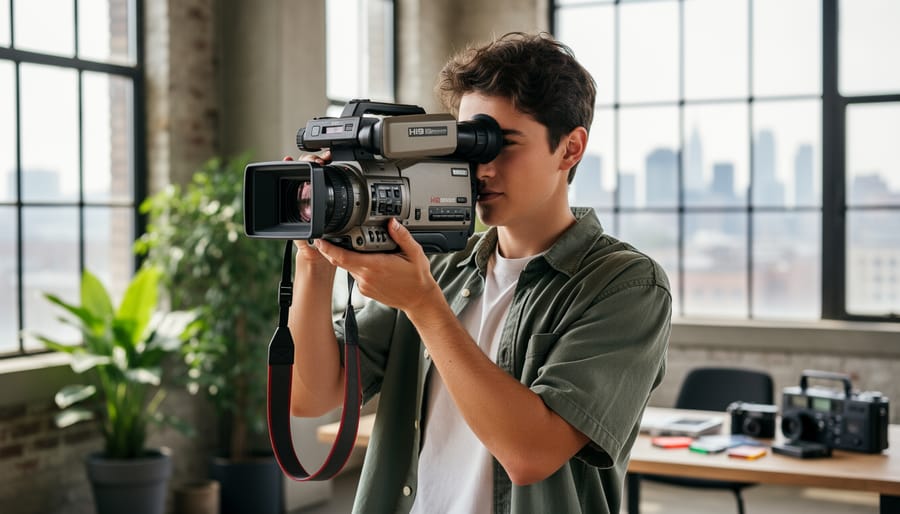
Artists and filmmakers are increasingly turning to vintage video cameras to create work that stands out in our high-definition world. The distinctive look of early digital and analog video has become a creative statement rather than a limitation.
Music video directors have been particularly enthusiastic adopters of vintage video aesthetics. Artists like ASAP Rocky and Frank Ocean have released videos shot entirely on vintage camcorders, achieving a nostalgic, intimate quality that connects with audiences who grew up during the VHS and early digital era. The grainy texture and color saturation of these cameras evoke specific emotional memories that modern cameras simply can’t replicate.
Independent filmmakers are also exploring vintage video for artistic projects. Director Steven Soderbergh famously shot experimental projects on consumer-grade equipment, demonstrating that compelling storytelling doesn’t require expensive gear. Today’s creators follow this tradition, using cameras like the Sony Handycam or Canon GL series to produce work with authentic period aesthetics.
Visual artists have incorporated vintage video into gallery installations and experimental films, celebrating the medium’s unique characteristics rather than hiding its imperfections. The lo-fi quality becomes part of the artistic message, challenging our expectations of what professional video should look like. This creative movement proves that limitations often spark the most innovative work.
Social Media and Content Creation
The lo-fi aesthetic isn’t just nostalgia—it’s become a legitimate creative choice that resonates across social platforms. On TikTok, Instagram Reels, and YouTube, creators are deliberately seeking out that grainy, imperfect vintage video look to make their content stand out in a sea of crystal-clear smartphone footage.
This trend makes perfect sense when you think about it. Modern digital video can feel almost too polished, too perfect. The slight color shifts, lower resolution, and analog warmth of vintage cameras create an immediate emotional connection with viewers. It feels authentic, lived-in, and uniquely human in ways that heavily processed digital footage sometimes doesn’t.
Platforms like TikTok have even built filters mimicking vintage camcorder aesthetics, proving the demand is real. But savvy creators know there’s something special about using actual vintage equipment. The unpredictability—the occasional tape tracking lines, the specific way colors bloom—can’t be perfectly replicated digitally.
For content creators, this opens creative possibilities. Wedding videographers are incorporating vintage footage for ceremony highlights. Music video directors are mixing formats for visual interest. Even corporate brands are adopting the aesthetic to appear more relatable and less corporate. The vintage video look has evolved from throwback novelty to legitimate artistic tool.
Building Your Vintage Video Camera Collection
Where to Buy and What to Pay
Finding the perfect vintage video camera requires knowing where to look and what constitutes a fair price. eBay remains the gold standard for selection, with dozens of models available at any given time. You’ll find everything from $50 consumer-grade camcorders to $500+ professional units like Sony’s DVCAM series. The key advantage is buyer protection and searchable sold listings that show actual market values.
Facebook Marketplace and Craigslist often yield unexpected bargains, particularly from sellers clearing out closets who don’t realize what they have. I’ve seen Hi8 cameras go for $20 at yard sales that sell for $80 online. Local thrift stores like Goodwill can be hit-or-miss but occasionally stock donated cameras in working condition for under $30.
For tested, guaranteed-working units, specialty retailers like KEH Camera or B&H’s used department charge premium prices but include warranties. Expect to pay 20-40% more than private sales, but you’re buying peace of mind.
When negotiating, always ask if accessories like chargers, tapes, and cases are included. Test footage before buying locally, and on eBay, scrutinize seller ratings and return policies. Remember that working tape mechanisms are crucial since replacement parts are increasingly scarce. Budget an extra $30-50 for cables and digitization equipment if they’re not included.
Evaluating Condition and Functionality
Before committing to a vintage video camera purchase, a thorough inspection can save you from buyer’s remorse. Start with the tape mechanism if you’re dealing with analog formats like VHS-C, Hi8, or MiniDV. Insert and eject a tape several times to ensure smooth operation without grinding sounds or resistance. If possible, record a brief test clip and play it back to check for tracking issues or audio problems.
The lens deserves careful attention. Look through the viewfinder while pointing the camera at different light sources to spot fungus, haze, or scratches on the glass elements. Test the zoom function across its entire range, listening for smooth motor operation. Manual focus rings should move without sticking.
Check the viewfinder itself for clarity and any dead pixels if it’s an LCD model. Flip-out screens should open and close without excessive wobbling. Test all connection ports, including AV outputs, headphone jacks, and any FireWire or USB connections you’ll need for digitization. Wiggle cables gently while connected to identify loose sockets.
Finally, inspect the battery compartment for corrosion, which appears as white or green crusty deposits. Even minor corrosion can indicate the camera sat unused for years and may harbor other hidden issues. Request to see the camera powered on with both battery and AC adapter if available.
Vintage video cameras offer something uniquely valuable in today’s digital landscape: an authentic analog aesthetic that can’t be perfectly replicated through filters or plugins. Whether you’re drawn to the nostalgic warmth of VHS, the documentary feel of Hi8, or the characteristic grain of early DV formats, these cameras provide genuine creative tools for visual storytelling. Yes, they come with real limitations—lower resolution, limited manual controls, and the need for digitization workflows—but these constraints can actually sharpen your creative vision. Working within boundaries often produces more intentional, thoughtful results than having unlimited options.
The key is approaching vintage video with clear-eyed realism. These aren’t museum pieces to worship, nor are they perfect substitutes for modern equipment. They’re specialized creative instruments best suited for projects where their specific aesthetic serves your vision. Experiment freely, understand what each format brings to your work, and don’t hesitate to blend vintage footage with contemporary techniques. The current revival isn’t purely about nostalgia—it’s about expanding your creative palette. Whether you’re shooting music videos, art projects, or personal documentaries, vintage video cameras remind us that technical perfection isn’t always the goal; emotional resonance is.


 By
By