 By
By 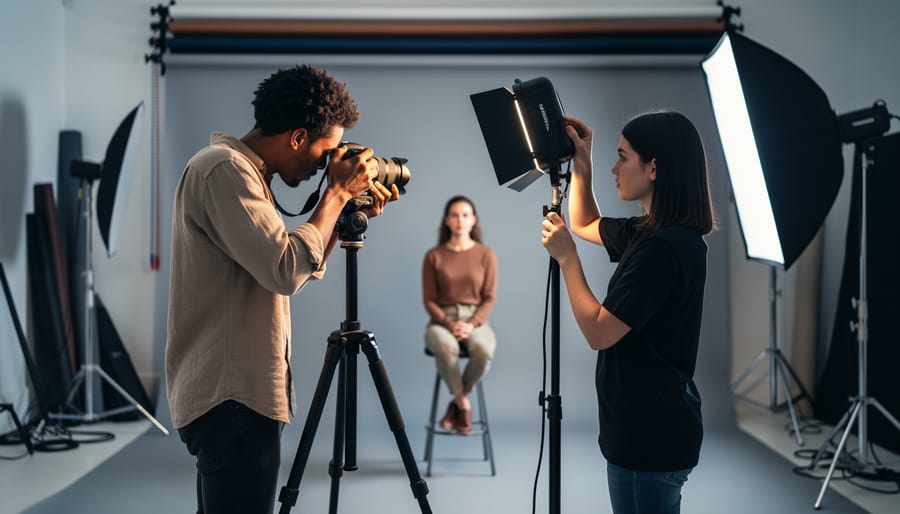
Photography has always been viewed as a solitary pursuit—one artist, one camera, one vision. But some of the most groundbreaking images emerge when photographers break from this tradition and join forces. Collaborative photography transforms the creative process from individual expression into shared exploration, where two or more artists combine their skills, perspectives, and equipment to produce work neither could achieve alone.
Consider a portrait photographer teaming with a lighting specialist to craft images with production value beyond either’s solo capabilities. Or documentary photographers pooling resources to cover a story across multiple locations simultaneously. These partnerships aren’t just about dividing labor—they’re about multiplying creative possibilities through complementary strengths and fresh perspectives.
The collaborative approach takes many forms in photography. Some artists work side-by-side during shoots, making creative decisions together in real-time. Others divide responsibilities strategically—one handling composition while another manages post-processing. Collectives pool equipment, studio space, and client networks. Even temporary partnerships for specific projects introduce photographers to creative photographic approaches they might never have explored independently.
This shift challenges traditional notions of artistic authorship while opening doors to ambitious projects that would overwhelm a single photographer. Yet collaboration demands clear communication, aligned visions, and honest agreements about credit and compensation—skills as crucial as mastering aperture or shutter speed.
Whether you’re considering a long-term creative partnership or a one-time joint project, understanding how collaborative photography works practically can help you decide if this approach suits your creative goals and working style.
What Defines a Collaborative Artist in Photography?

The Spectrum of Photographic Collaboration
Photographic collaboration isn’t one-size-fits-all. It exists on a spectrum, ranging from simple technical partnerships to deeply intertwined creative co-authorship. Understanding where your collaboration falls can help set clear expectations and avoid misunderstandings down the line.
At the most basic level, you have technical partnerships. Think of a photographer working with a lighting assistant who helps position strobes and modifiers. The assistant contributes essential skills, but the creative vision remains solely with the primary photographer. Similarly, when you hire a retoucher to edit your images according to your specific instructions, that’s a technical collaboration—valuable, but not necessarily co-creative.
Moving up the spectrum, we find interpretive collaborations. Here’s where things get interesting. Consider a fashion photographer working with a stylist. The photographer might have the overall concept, but the stylist brings their own creative interpretation through clothing choices, accessories, and prop selection. Both contribute creatively, though one typically maintains primary authorship.
Then there’s true co-authorship, where two or more artists share equal creative input from concept to execution. The legendary duo Pierre et Gilles exemplifies this—one photographs while the other paints, creating inseparable collaborative works. Similarly, Inez van Lamsweerde and Vinoodh Matadin have built their entire careers as a photographic team, with neither working independently.
The key is recognizing which level fits your project and being honest about roles, contributions, and expectations from the start.
Where Collaboration Ends and Direction Begins
Understanding the boundaries of collaboration helps clarify what makes a collaborative artist relationship unique. When you hire a makeup artist or stylist for a shoot, you’re typically directing their work to serve your vision—that’s a photographer-assistant dynamic. Similarly, when you photograph a subject who follows your posing instructions, you’re in a traditional photographer-subject relationship, even if they offer input.
True collaboration emerges when creative control becomes genuinely shared. Both parties contribute ideas from conception through execution, make artistic decisions together, and can veto directions that don’t align with the shared vision. For example, a photographer and dancer might co-create a series where the dancer choreographs movements specifically for the camera while the photographer adapts lighting and angles in real-time response. Neither person is simply executing the other’s instructions.
The key distinction lies in co-ownership of the creative direction. In collaborative artistry, you’re not just receiving services or directing subjects—you’re building something neither of you could create alone. This means accepting that your collaborator’s artistic judgment carries equal weight, which requires trust, communication, and sometimes compromise on both sides.
Common Forms of Collaborative Photography Projects
Photographer-Photographer Partnerships
When two photographers join forces, something magical can happen—their combined perspectives often create work that neither could achieve alone. Photographer-photographer partnerships typically form around complementary skills, shared aesthetics, or the practical demands of complex projects.
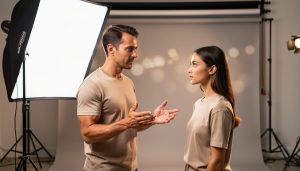
One common model is the portrait-styling duo, where one photographer focuses on lighting and composition while their partner handles creative direction, styling, or even operates a second camera for alternate angles. This approach is particularly popular in fashion and commercial photography, where efficiency and creative depth both matter. The dynamic allows one photographer to concentrate entirely on technical execution while the other ensures the overall vision stays on track.
Documentary teams represent another powerful collaboration model. Photojournalists working in challenging environments—conflict zones, disaster areas, or remote locations—often pair up for safety and coverage breadth. One photographer might capture wide establishing shots while their partner focuses on intimate portraits, creating a more comprehensive visual narrative than either could produce independently.
Some photographer partnerships emerge from specialization gaps. A landscape photographer skilled in natural light might team with someone expert in astrophotography, creating twilight images that blend both skill sets seamlessly. Similarly, drone photographers often collaborate with ground-based shooters to provide clients with complete coverage packages.
The key to successful photographer partnerships is establishing clear roles from the start. Who handles post-processing? How do you credit the work? What happens if your artistic visions diverge mid-project? Addressing these questions early prevents friction later. Many successful teams create formal agreements outlining creative responsibilities, equipment sharing, revenue splits, and even client communication protocols.
These partnerships work best when both photographers maintain mutual respect and recognize that collaboration means compromise without losing your individual voice.

Cross-Discipline Creative Teams
Photography flourishes when different artistic disciplines converge. Cross-discipline creative teams bring together photographers with professionals from various creative fields, where everyone contributes ideas and expertise rather than simply executing the photographer’s vision. This approach transforms photography from a solitary craft into a rich collaborative experience.
Think of a fashion shoot where the stylist doesn’t just provide clothing but actively shapes the narrative through fabric choices and layering techniques. The photographer responds to these choices, adjusting lighting and composition to highlight textures the stylist has introduced. Meanwhile, a set designer might build an environment that neither professional initially envisioned, sparking new creative directions for everyone involved.
Digital artists have become increasingly integral to photographic collaborations, working alongside photographers from concept through final output. Rather than simply retouching finished images, they co-create from the start, suggesting compositions that blend practical photography with digital elements. This partnership requires mutual understanding of both mediums and often produces work neither artist could achieve alone.
Dancers and choreographers bring movement expertise that transforms static photography. When working with these performers, photographers learn to anticipate motion and emotion, while dancers gain insight into how their movements translate through the camera lens. This exchange creates images with authentic dynamism rather than posed approximations of movement.
The key to successful cross-discipline collaboration is recognizing that each participant brings specialized knowledge worth incorporating from the beginning. When a makeup artist suggests a color palette that complements your lighting plan, or a musician creates soundscapes that influence the shoot’s energy, you’re experiencing genuine creative partnership. These collaborations demand flexibility and ego-checking, but they consistently produce work that transcends what any single artist could achieve independently.
Community and Participatory Photography
Community and participatory photography flips the traditional photographer-subject relationship on its head, inviting the people in front of the lens to become active participants in the creative process. This collaborative approach has produced some of the most meaningful and authentic documentary work in recent years.
Projects like Photovoice empower marginalized communities by giving participants cameras to document their own lives and perspectives. Rather than having outsiders tell their stories, community members become the storytellers themselves. The photographer’s role shifts to facilitator and educator, providing technical guidance while the participants drive the narrative. This method creates powerful visual storytelling that carries genuine authenticity and emotional weight.
Crowdsourced photography projects take collaboration even further by involving hundreds or thousands of contributors. Initiatives like “A Day in the Life” series invite photographers worldwide to capture their communities on a specific date, creating collective portraits of culture and daily life. Instagram’s community hashtag projects operate similarly, gathering diverse perspectives around shared themes.
The beauty of participatory photography lies in its democratizing effect. When you involve subjects as co-creators, you gain access to perspectives and moments impossible to capture as an outsider. The resulting images often reveal deeper truths about communities because they’re created from within, not observed from outside. For photographers willing to share creative control, these collaborations offer rewarding opportunities to create meaningful work that genuinely serves and represents the communities involved.
The Creative Benefits (And Honest Challenges)
How Collaboration Expands Your Creative Vision
Working with other artists fundamentally changes how you approach photography. When you collaborate, you’re not just sharing space with another creative person—you’re gaining access to their unique skill set, perspective, and problem-solving abilities. This exchange can transform your creative vision in ways that solo work simply cannot.
Consider skill complementarity. Perhaps you excel at composition and natural lighting but struggle with post-processing. Partnering with someone who thrives in Lightroom or Photoshop opens doors to finished images you couldn’t achieve alone. I’ve seen portrait photographers team up with retouchers, landscape shooters collaborate with drone operators, and product photographers work alongside stylists—each partnership filling gaps and elevating the final work beyond what either person could produce independently.
Creative problem-solving becomes remarkably more dynamic with collaboration. When you’re stuck on a challenging shoot, a fresh perspective can unlock solutions you’d never considered. Your collaborator might suggest an unconventional angle, a different time of day, or an entirely new approach to the concept. These moments of collective brainstorming often lead to your most innovative work.
Access to new perspectives is invaluable. Different photographers see the world through different lenses, literally and figuratively. A collaborator raised in another culture, trained in a different genre, or working with alternative equipment brings viewpoints that challenge your assumptions and expand your artistic range.
Finally, collaboration combats creative burnout. Photography can feel isolating when you’re constantly working alone. Sharing the journey with someone else reignites enthusiasm, provides accountability, and reminds you why you picked up a camera in the first place. The energy exchange keeps projects moving forward when your solo motivation might falter.
Navigating the Rough Patches
Let’s be real: working with other creative minds isn’t always sunshine and perfectly synchronized shutters. Even the most compatible photography partners will hit rough patches, and knowing what to expect can save both your project and your friendship.
The most common stumbling block? Conflicting creative visions. You might envision a moody, high-contrast final image while your collaborator sees soft, dreamy pastels. When this happens, resist the urge to dig in your heels. Instead, create mockups of both approaches or even produce two versions. Sometimes the solution isn’t compromise but parallel exploration. One commercial photographer I know collaborates with a retoucher who initially clashed with her editing style. They now maintain a shared inspiration board before each project, aligning expectations before anyone touches a camera.
Credit attribution can get surprisingly messy. Who gets top billing when a stylist’s vision, a photographer’s execution, and a makeup artist’s skills all contribute equally? Establish clear agreements upfront about how credits will appear on portfolios, social media, and client-facing materials. A simple written agreement, even an email confirmation, prevents awkward conversations later.
Revenue sharing presents its own complications, especially when contributions feel unequal. The photographer might spend eight hours shooting while the assistant puts in three. Document everyone’s roles and agree on percentages before the work begins. Consider tracking time and expenses in a shared spreadsheet for transparency. Some collaborators work on flat fee arrangements, while others prefer percentage splits based on specific contributions.
Workflow complications multiply when you’re coordinating schedules, equipment, and client communications across multiple people. Project management tools become essential rather than optional. Designate one person as the primary client contact to avoid mixed messages, and establish clear communication protocols about response times and decision-making authority.
When conflicts arise, address them directly and quickly. Small irritations become major resentments when left to fester. Remember, you chose to collaborate because combined talents create something neither could achieve alone. That goal is worth working through the challenges.
Technical Considerations for Collaborative Shoots
Equipment Sharing and Compatibility
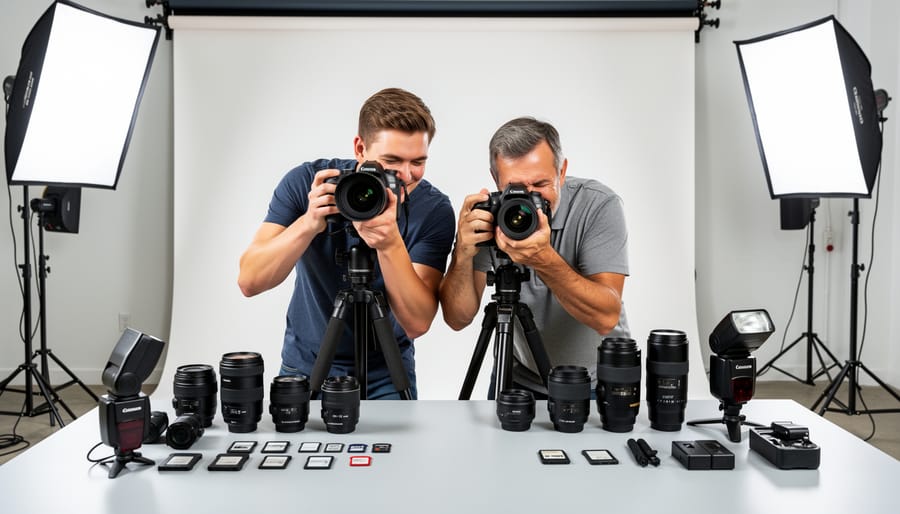
When multiple photographers work together on a shoot, equipment compatibility becomes more than just a technical consideration—it’s essential for workflow efficiency and creative consistency.
The most practical starting point is understanding lens mount compatibility. If you’re collaborating with another Canon shooter, sharing lenses becomes seamless. However, mixing camera brands means you’ll need to plan ahead. I learned this the hard way during a wedding shoot when my collaborator brought Nikon glass that couldn’t fit my Canon body during a critical moment when my telephoto malfunctioned.
Flash systems deserve equal attention. Modern wireless flash triggers often work across brands, but proprietary TTL systems may not communicate properly between different manufacturers. Before the shoot, test your flash setup together to ensure both photographers can trigger strobes reliably. Many professionals now use universal radio triggers specifically to avoid compatibility headaches during collaborative work.
File format standardization matters too, especially for post-processing efficiency. Agree beforehand whether you’ll shoot RAW, JPEG, or both. If one photographer shoots Canon RAW files and another uses Sony, ensure your editing software supports both formats. Some collaborators create shared Lightroom catalogs, which requires identical file naming conventions and folder structures.
Consider creating a shared equipment inventory spreadsheet listing each person’s gear, including backup bodies, lenses, batteries, and memory cards. This simple step prevents duplicate gear while identifying potential gaps in your collective toolkit, ensuring you’re prepared for any shooting scenario.
Workflow and File Management Systems
When multiple photographers collaborate on a project, chaos can quickly derail even the most promising creative partnership. The solution? A rock-solid workflow and file management system that everyone understands and follows from day one.
Start with cloud storage that fits your team size and budget. Services like Dropbox, Google Drive, or dedicated photography platforms such as PhotoShelter offer collaborative access with version control. The key is choosing one primary location rather than scattering files across multiple platforms. I once worked with a team that used three different cloud services simultaneously—it was a nightmare tracking down the latest edits.
Naming conventions deserve serious attention before anyone clicks the shutter. Develop a simple system that includes the date, location, photographer initials, and sequence number. For example: 2024-01-15_BeachShoot_JD_001.RAW. This eliminates confusion when reviewing hundreds of images from multiple contributors.
Create a shared catalog in Lightroom or Capture One where everyone can apply ratings, keywords, and basic adjustments. Establish clear rules about who handles which editing stages. Perhaps one person manages color correction while another focuses on retouching. Document these responsibilities in a simple shared document.
Version control prevents accidentally overwriting someone’s work. Use clear suffixes like “v1,” “v2,” or “final” in filenames. Many cloud services automatically save previous versions, but don’t rely solely on that safety net.
Finally, schedule regular check-ins to review the workflow itself. What’s working? What’s causing bottlenecks? The best systems evolve based on real-world use, not theoretical perfection.
Setting Up Your Collaboration for Success
Finding the Right Creative Partners
Finding the right collaborative partner starts with tapping into your existing networks. Look within local photography clubs, workshops, and online communities where photographers share their work. Instagram and photography forums often reveal artists whose style resonates with yours, while portfolio platforms like Behance showcase detailed project histories that help you understand someone’s creative approach.
When assessing compatibility, review their portfolio thoroughly. Do their aesthetic sensibilities complement or clash with yours? Schedule a coffee meeting or video call to discuss a small test project before committing to anything substantial. This initial collaboration acts as a low-stakes trial run. For example, when landscape photographer Sarah Chen partnered with portraitist Mark Rodriguez on an environmental portrait series, they first spent a day shooting together to see if their working rhythms aligned.
Pay attention to communication styles early on. Does your potential partner respond promptly and clearly? Are they receptive to feedback, or do they become defensive? Red flags include vague answers about past projects, reluctance to discuss creative differences openly, or dismissiveness toward contracts and agreements. Someone who overpromises without demonstrating past results may lack follow-through.
Trust your instincts. The right collaborator should energize you, not drain your creative enthusiasm. Chemistry matters as much as technical skill.

Agreements That Protect Everyone
Before you start sharing equipment, merging creative visions, or posting collaborative work online, let’s talk about something that might seem unromantic but is actually one of the kindest things you can do for your creative partnerships: getting everything in writing.
Think of a collaboration agreement as a roadmap that everyone agreed to follow before the journey started. When photographer Maria and stylist James created their first fashion series together, they spent an afternoon at a coffee shop hammering out the details. That conversation prevented countless headaches later.
Copyright ownership is your starting point. Will you share copyright equally, or does the photographer retain image rights while the other collaborator owns certain creative elements? There’s no single right answer, but deciding upfront matters enormously. In many jurisdictions, copyright automatically goes to whoever pressed the shutter, but collaborative works can create joint ownership scenarios that get legally complex fast.
Usage rights deserve their own conversation. Maybe you’re comfortable with your collaborator using images for their portfolio and Instagram, but what about licensing them to commercial clients? Be specific about who can do what with the final work, whether that’s selling prints, licensing to third parties, or entering competitions.
Credit attribution might seem straightforward until it isn’t. Spell out exactly how each person will be credited. Will it be “Photo by Sarah, styling by Tom” on every post? What happens if someone features the work in a magazine spread or exhibition?
Financial arrangements need clarity too. Who covers equipment rentals, model fees, or location costs? If you sell prints or license images later, how do you split the income? Consider what happens if one person wants to buy out the other’s rights down the road.
Real-world example: Photographers collective Offset learned this lesson when one member wanted to leave. Because they’d documented everything from the start, including exit terms, the separation happened smoothly. Document your agreements, even with friends. Especially with friends.
Real Examples: Collaborative Artists Who Made It Work
Looking at successful collaborations can illuminate just how powerful partnering with other photographers can be. Here are three compelling examples that demonstrate different approaches to collaborative work, each offering valuable lessons for photographers considering this path.
Inez van Lamsweerde and Vinoodh Matadin stand as perhaps the most iconic duo in fashion photography. This Dutch partnership has been creating images together since 1986, working with major publications like Vogue and shooting campaigns for luxury brands including Yves Saint Laurent and Calvin Klein. What makes their collaboration particularly interesting is their completely integrated approach—they literally share the camera, with neither claiming credit as the primary shooter. In interviews, they’ve explained that they’ve developed an intuitive visual language where one might suggest a lighting adjustment while the other directs the model, often switching roles seamlessly throughout a shoot. Their success stems from complementary skills: Inez brings a fine art background while Vinoodh contributes technical precision. This partnership proves that when egos are set aside and a unified vision is prioritized, the resulting work can transcend what either artist might create alone.
In the documentary realm, Sasha Maslov and Stephen Mayes collaborated on “Veterans,” a project documenting war veterans from multiple countries. While Maslov handled the photography, Mayes contributed research, interview questions, and contextual framing that deepened the narrative. Their collaboration demonstrates how photographers can partner with professionals from adjacent fields—writers, researchers, or curators—to create more meaningful documentary work. The project’s strength came from combining Maslov’s photographic sensitivity with Mayes’ editorial experience, resulting in a body of work that gained international recognition and museum exhibitions.
Commercial photographers Alex Strohl and Andrea Dabene offer another collaboration model. This husband-and-wife team built a successful career creating adventure and lifestyle content for outdoor brands. They divide responsibilities strategically: one might focus on capturing the primary shot while the other handles behind-the-scenes content, drone footage, or secondary angles. This approach allows them to deliver comprehensive visual packages that single photographers would struggle to produce alone. Their partnership shows how collaborative work can offer practical advantages in fast-paced commercial environments where clients expect diverse deliverables within tight timeframes.
Each of these examples reveals a common thread: successful collaborations require clear communication, mutual respect, and well-defined roles that leverage each person’s strengths rather than duplicating efforts.
Collaborative photography isn’t just a trend—it’s a powerful catalyst for creative growth that can transform your work in ways solo practice simply can’t match. Whether you’re a hobbyist looking to break out of a creative rut or a seasoned professional seeking fresh perspectives, working with others opens doors to new techniques, styles, and ideas you might never have discovered on your own.
The beauty of collaboration lies in its accessibility. You don’t need to organize elaborate projects with multiple partners to reap the benefits. Sometimes the most profound growth comes from simple exchanges—sharing your portfolio with a fellow photographer for honest feedback, joining another artist on a location scout, or even discussing your creative process over coffee. These seemingly small interactions plant seeds that often blossom into unexpected creative breakthroughs.
What makes collaboration particularly valuable in today’s photography landscape is how it combats the isolation many artists experience. When you’re constantly working alone, it’s easy to develop blind spots or get stuck in repetitive patterns. A collaborative mindset keeps you sharp, accountable, and engaged with the broader creative community.
Ready to take the first step? Here’s your challenge for this week: identify one potential collaborator. This could be a photographer whose work you admire, a makeup artist, a model, or even another creative professional outside photography. Reach out with a genuine compliment about their work and express interest in connecting. That single conversation might just lead to your next breakthrough project.




 By
By