 By
By 
An environmental portrait is a photograph of a person captured within a setting that reveals something meaningful about who they are, what they do, or how they live. Unlike studio portraits that isolate the subject against a plain backdrop, environmental portraits weave context into the frame. A chef photographed in her bustling kitchen, a mechanic framed by vintage motorcycles in his garage, or a novelist seated among towering bookshelves all tell richer stories because their surroundings speak alongside their faces.
This approach matters because it transforms a simple likeness into a narrative. The location, props, lighting, and spatial relationship between subject and environment all become visual language. For photographers, mastering environmental portraiture means learning to see beyond the person in front of the lens and recognizing how place, profession, and personality intersect in a single frame.
The technique has grown in popularity across commercial, editorial, and personal work precisely because viewers crave authenticity. A headshot shows what someone looks like. An environmental portrait shows who they are. That distinction is why this style dominates magazine features, corporate branding campaigns, and documentary projects.
This guide breaks down exactly how environmental portrait photography works, from choosing locations and directing subjects to managing natural light in unpredictable spaces. You’ll learn the core types of environmental portraits, when to use this approach over alternatives, and the practical gear decisions that make or break a shoot. Whether you’re photographing a local artisan for a community project or building a portfolio of character-driven work, understanding environmental portraiture gives you a powerful storytelling tool that goes far beyond traditional portraiture.
What Environmental Portraits Actually Are
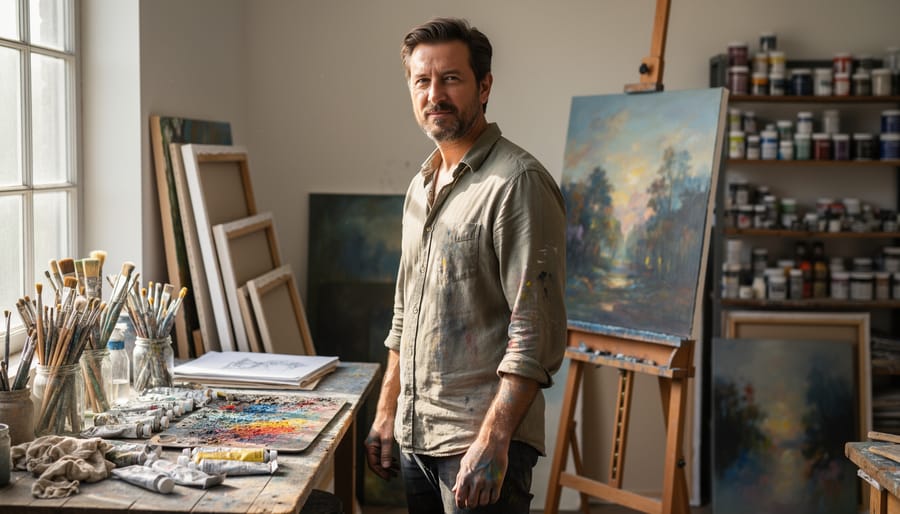
An environmental portrait is a photograph that places the subject in their own surroundings, the places where they work, live, create, or spend meaningful time, rather than isolating them against a plain backdrop. The environment itself becomes part of the story, adding layers of context that reveal who the person is, what they do, or what matters to them. Where a traditional studio portrait might show a clean headshot against seamless paper, an environmental portrait captures a chef surrounded by copper pots and mise en place, or an artist standing in a studio cluttered with canvases and paint-splattered drop cloths.
The setting isn’t just decoration. It’s visual information that helps viewers understand the subject’s profession, personality, passions, or daily reality. When you photograph a mechanic under the hood of a vintage car in their garage, or a writer at their desk piled with manuscripts and coffee cups, the background elements confirm and deepen what the portrait communicates. The person remains the focal point, but the environment provides authenticity and narrative weight that a blank wall never could.
- Environmental portrait
- A photograph that shows a person in their natural or characteristic surroundings, using the setting to add context about their identity, work, or lifestyle.
- Subject context
- The visual information provided by the environment that helps viewers understand who the subject is and what they do, turning the background into meaningful storytelling detail.
- Background storytelling
- The deliberate use of location, objects, and setting elements to communicate narrative information about the subject’s life, profession, or character beyond what their face and posture alone convey.
- Candid versus posed environmental shots
- Environmental portraits can be carefully staged with the subject positioned deliberately within their space, or captured more spontaneously as the person interacts naturally with their surroundings.
This approach differs sharply from traditional studio work, where controlled lighting and neutral backgrounds eliminate distractions to focus entirely on expression and form. Headshots for corporate directories or acting portfolios need that simplicity. Environmental portraits embrace complexity, accepting the messiness and detail of real spaces as assets rather than problems. A farmer photographed in their field at golden hour, a surgeon in scrubs beside an operating theatre, a musician in a dim club with instruments hanging on the walls, each of these settings does work that no studio can replicate, grounding the portrait in tangible reality and giving viewers a richer sense of the person’s world.
How Environmental Portrait Photography Works

Choosing the Right Environment
The environment you choose should tell a story about who the subject is, not just where they happened to be standing when you pressed the shutter. Start the conversation early, ask your subject about the spaces where they feel most themselves, whether that’s a workshop cluttered with tools, a kitchen where they’ve perfected recipes, or a home studio filled with works in progress. The best locations often emerge from genuine dialogue rather than your first guess.
Look for environments rich in visual cues: equipment, textures, colours, objects that hint at daily routines or long-held passions. A musician surrounded by instruments mid-repair says something different than the same person posed with a pristine guitar. Pay attention to authenticity, a sterile conference room might technically be where someone works, but the coffee-stained desk where they actually spend their days will yield a more honest portrait.
Consider practical factors too: available light, space to manoeuvre, whether the location allows you to isolate the subject without constant interruptions. Sometimes the most meaningful setting isn’t accessible or photogenic enough, and that’s when you collaborate to find alternatives that still capture the essence. The goal isn’t documentary accuracy; it’s visual truth that communicates character through context.
Balancing Subject and Setting
The core challenge in environmental portrait photography is keeping your subject as the clear hero while letting the setting tell its part of the story. This balance lives in three interconnected decisions: where you position yourself and your subject, what aperture you choose, and how focal length effects shape the relationship between person and place.
Start with positioning. Place your subject where they naturally interact with their environment, a potter at the wheel, a musician near their instruments, rather than awkwardly staged in front of it. Move around them to find angles where the background elements frame or complement without crowding. A slight shift left or right can mean the difference between distracting clutter and meaningful context.
Aperture controls how much of the environment stays sharp. Shoot too wide open (f/1.8, f/2) and you’ll blur away the very context you’re trying to capture. Too narrow (f/11, f/16) and every background detail competes for attention. Most environmental portraits work best between f/4 and f/8, rendering the subject sharp while keeping the setting recognizable but slightly softened.
Lens choice matters equally. A 35mm or 50mm lens on full-frame lets you include environment without distortion, maintaining natural proportions. Longer lenses (85mm) compress space and isolate more, reducing environmental emphasis. Wider glass (24mm) expands context but requires careful positioning to avoid making your subject small or distorted at the edges.
Working with Available Light
Environmental portrait photography demands that you master natural light in unpredictable settings rather than controlling it in a studio. Start by reading the existing light: note its direction, quality, and color. Window light in someone’s office, garage daylight streaming across tools, or the soft overcast sky above an outdoor workspace each create different moods and require different handling.
Position your subject to take advantage of the best available light, whether that means turning them toward a window or stepping into open shade. Watch for harsh shadows under eyes or across faces, and adjust your angle or your subject’s position to soften them. When the ambient light supports the story but leaves the subject underexposed or unevenly lit, use a reflector to bounce light into shadows or add a subtle flash as fill, the key is maintaining the natural quality of the scene while ensuring the person remains visible and well-defined.
Learning to mix ambient and fill-flash takes practice, but the payoff is portraits that feel authentic to the location while still flattering the subject. Your lighting choices directly shape the narrative: warm afternoon light through workshop windows conveys intimacy, while crisp daylight in an industrial space suggests energy and purpose. Let the environment’s natural light inform your decisions rather than fighting it.
Types of Environmental Portraits
Workplace and Professional Portraits
Workplace and professional portraits document people in the environments where they spend their working lives, chef’s kitchens, artist studios, construction sites, medical offices, maker workshops, corporate boardrooms. These images anchor the subject’s identity to their craft or profession, using tools, materials, and spatial context to communicate expertise and daily reality. A mechanic photographed beneath a lifted car, hands still bearing grease, tells a fundamentally different story than the same person in a neutral studio backdrop.
This approach dominates editorial photography for magazines and journals profiling professionals, corporate communications showcasing team members in authentic work settings, and documentary projects exploring trades and industries. The environment itself functions as visual evidence, the scattered paint tubes reveal the working artist, the dual-monitor setup identifies the designer, the lab equipment frames the researcher. Successful workplace portraits balance portrait lighting that flatters the subject with ambient or modified light that preserves the authentic character of the space, maintaining enough environmental detail to establish context without overwhelming the human element at the image’s centre.
Lifestyle and Personal Space Portraits
Lifestyle and personal space portraits bring environmental portrait photography into intimate, everyday settings where people live and spend their free time. These images capture subjects in their homes, gardens, hobby spaces, or favorite local spots, anywhere that reflects how they choose to spend their personal time and what genuinely matters to them outside of work.
A musician photographed surrounded by instruments in their home studio, a gardener among raised beds in their backyard, or a book collector in their library all tell stories through the objects and spaces they’ve curated. The environment here isn’t just backdrop; it’s evidence of passion, routine, and personality. Family photographers frequently use this approach to create portraits that show children in their bedrooms, parents in kitchens where they cook, or grandparents in workshops where they build things.
Personal branding has driven much of the recent growth in lifestyle environmental portraits. Entrepreneurs, creatives, and professionals building online presence want images that feel authentic rather than corporate, showing them where they actually work from home, pursue side projects, or relax. These portraits work because the setting feels chosen by the subject, not staged for the camera, even when carefully composed.
Cultural and Documentary Environmental Portraits
Cultural and documentary environmental portraits use setting as evidence, showing not just who someone is, but the larger world they inhabit. Photojournalists and documentary photographers employ this approach to capture subjects within communities, neighborhoods, or cultural contexts that speak to identity, work, or social conditions. A farmer photographed in drought-stricken fields tells a different story than the same person shot against a neutral backdrop. The environment becomes testimony.
This style has deep roots in documentary traditions, from Dorothea Lange’s Depression-era portraits of migrant workers in their camps to Steve McCurry’s images of people framed by the textures and colors of their villages. The surroundings provide context that a studio portrait strips away, economic realities, cultural markers, the physical traces of how people live. When done thoughtfully, these portraits honor subjects by showing them as part of something larger rather than isolated from it.
Artistic and Conceptual Environmental Portraits
Artistic and conceptual environmental portraits push beyond literal documentation into creative territory. Here, photographers choose settings for their symbolic weight, aesthetic quality, or emotional resonance rather than because the subject actually lives or works there. A musician might be photographed in an abandoned theatre not because they perform there, but because the decay and grandeur mirror themes in their work. A writer could be placed in a fog-shrouded forest to evoke the mysterious tone of their novels.
This approach borrows from fine art photography, using environment as metaphor. The setting becomes a visual tool to express ideas about the subject, their inner life, their artistic vision, or abstract qualities like isolation, ambition, or transformation. Composition, color palette, and lighting are often highly stylized. The result feels more like a constructed tableau than a candid slice of life, which makes these portraits powerful for album covers, book jackets, and gallery exhibitions where mood and concept matter more than literal accuracy.
When and Why Photographers Use Environmental Portraits

Environmental portraits serve distinct purposes across professional and personal photography contexts, each leveraging the storytelling power of place to achieve specific goals. Understanding when this approach delivers the most value helps photographers choose the right method for each project.
Editorial and journalistic assignments frequently demand environmental portraits because publications need images that tell complete stories in a single frame. A magazine profiling a marine biologist gains more impact showing them on a research vessel or in their lab than against a neutral backdrop. News outlets covering local business owners photograph them in their shops or restaurants, giving readers immediate visual context about who they are and what they do. These assignments often operate under tight deadlines and use a tethered workflow to review images immediately with editors or subjects.
Commercial and corporate clients increasingly choose environmental portraits for websites, annual reports, and marketing materials because authenticity drives engagement in 2026. A law firm might commission portraits of attorneys in conference rooms or courthouses rather than generic headshots. Tech companies photograph developers at their workstations surrounded by monitors and equipment. These images humanize brands and demonstrate real expertise, making them more effective than sterile studio alternatives for building trust with audiences.
Personal projects and documentary work benefit enormously from environmental context. Photographers documenting craftspeople, artists, or community members create richer narratives by showing people where they actually live and work. A portrait series about local farmers means more when each subject appears in their fields, barns, or market stalls. The environment becomes evidence and testimony, not just decoration.
Family photography has embraced this approach as clients move beyond posed studio sessions. Capturing a parent teaching a child to bake in their kitchen, or a teenager in their bedroom surrounded by their interests, creates portraits families value for their specificity and emotional resonance. These images trigger memories tied to specific places and moments.
The fundamental advantage appears when the photographer’s goal extends beyond showing what someone looks like to revealing who they are, what they do, or what matters to them. When context strengthens the story, environmental portraits outperform conventional approaches.
Essential Gear and Camera Settings
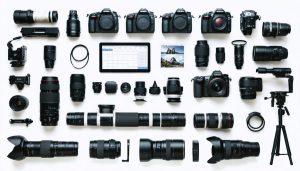
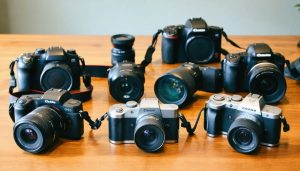
The good news about environmental portrait photography is that you don’t need a specialized kit to get started. Most photographers already own the core tools, and success depends more on understanding light and composition than owning expensive gear.
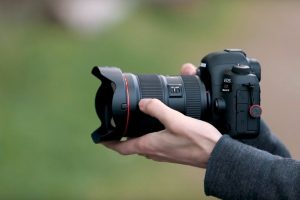
Your lens choice has the biggest impact on how viewers experience the relationship between subject and setting. Moderate wide-angles in the 24mm to 35mm range work well when you want to show meaningful context, enough environment to tell the story without distortion turning your subject into a caricature. The 35mm focal length hits a sweet spot for many photographers, capturing context while keeping facial features natural. Short telephoto lenses from 50mm to 85mm let you compress the background slightly and isolate your subject more, useful when the environment is busy or you want the setting to read as texture rather than detailed information. Avoid ultra-wide lenses unless you’re deliberately pursuing a stylized look; they can make people appear distorted when positioned near frame edges.
Camera settings require balancing two priorities: keeping your subject sharp and preserving the environmental details that make this approach meaningful. Start with aperture between f/2.8 and f/5.6, adjusting based on how much background detail you need readable. An f/2.8 aperture beautifully separates a portrait subject from a cluttered workspace while keeping enough context visible; f/5.6 or narrower works when the environment contains important details you want viewers to recognize. Shutter speed needs to be fast enough to freeze any subject movement, 1/125s minimum for stationary subjects, faster if they’re working or moving. ISO becomes your variable for proper exposure, especially when working with available light in real spaces.
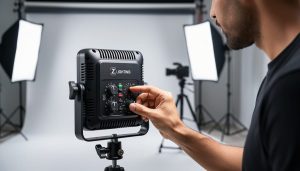
Lighting equipment for environmental portraits centers on portability and flexibility:
- Battery-powered speedlight or strobe for filling shadows without overpowering ambient light
- Collapsible reflector (silver or white) to bounce existing light onto your subject’s face
- Small LED panel for continuous light when ambient levels are too low
- Light stand and modifier (small softbox or shoot-through umbrella) for softening artificial light
- Radio triggers for off-camera flash positioning
The goal is balancing your added light with the existing environment rather than replacing it entirely. Set your camera exposure for the ambient light first, then add flash or reflector fill at lower power to lift shadows and add dimension to your subject’s face. This preserves the natural character of the space while ensuring your subject remains the visual anchor.
A sturdy but lightweight tripod helps in low-light environments, letting you use slower shutter speeds for ambient exposure while keeping flash-frozen subjects sharp. Professional photographers often invest in higher-powered battery strobes for larger spaces, but hobbyists get excellent results with affordable speedlights and thoughtful positioning.
Learning Through Workshops and Hands-On Practice

Workshops offer one of the fastest paths to improving your environmental portrait work. Unlike online tutorials, structured sessions put you in real locations with actual subjects, where you make decisions under pressure and get immediate feedback on what’s working and what isn’t.
The best environmental portrait workshops combine location scouting, subject direction, and technical problem-solving in a single session. You might spend the morning evaluating different settings, a workshop, a studio, someone’s home, then shoot in those spaces while an instructor watches your approach and points out missed opportunities or better angles. That real-time guidance helps you recognize patterns in your own work and adjust your thinking on the spot.
Collaboration matters just as much as instruction. Working alongside other photographers exposes you to different compositional choices and lighting solutions. Someone else might see a window angle you overlooked or suggest a subject position that changes the entire frame. These exchanges build your visual vocabulary faster than solo practice.
As interest in environmental portraiture grows, more workshops are emerging across different regions. For example, Darren Rigo is leading an environmental portrait workshop on June 16 at the County Arts Lab in Picton for $40, while Todd Hido and Ramos Projects are organizing a photography workshop in Oakland from May 1-5, 2026. Sessions like these reflect the genre’s rising relevance and give photographers access to practitioners who’ve solved the problems you’re facing.
Look for workshops that prioritize shooting time over lectures. The value is in making images, not just talking about them.
Common Questions About Environmental Portrait Photography
What makes a portrait “environmental”?
An environmental portrait includes meaningful surroundings that reveal something about the subject’s life, work, or personality, not just a person isolated against a plain background. The environment provides context and tells part of the story.
How do you pose subjects in environmental portraits?
Position subjects naturally within their environment, interacting with tools, furniture, or elements of the space rather than standing stiffly. The pose should look authentic to how they actually use that space, whether they’re leaning against a workbench, sitting at their desk, or moving through their studio.
What’s the difference between environmental and lifestyle portraits?
Environmental portraits focus on showing who someone is through their surroundings, often highlighting their profession or passion. Lifestyle portraits capture everyday moments and activities, emphasizing candid interaction and movement rather than the relationship between person and place.
Do you need special equipment for environmental portraits?
You don’t need specialized gear, but a moderate wide-angle lens (24-50mm) helps include enough environment without distortion, and a camera that handles mixed lighting well makes location work easier. Many photographers start with what they already own and add tools as their approach develops.
How do workshops help you learn environmental portrait photography?
Workshops provide hands-on practice with real subjects in actual locations, plus immediate feedback on your composition, lighting, and subject direction choices. They compress months of trial-and-error learning into focused sessions where you can experiment and ask questions in real time.
These questions come up frequently because environmental portraits require rethinking the traditional portrait approach. New practitioners often worry about losing focus on the subject when adding environmental elements, but the technique is about integration rather than competition between person and place.
One practical concern that catches beginners off guard is permissions. When you’re photographing someone in their workplace or home, you need both their consent and potentially property permissions depending on the location and intended use. Getting a model release signed protects both you and your subject, especially for commercial work or editorial publication.
The learning curve for this style is gentler than many photographers expect. Your biggest challenges are usually logistical, coordinating access to locations, working with whatever light exists there, and making subjects comfortable in front of the camera in spaces where they might feel self-conscious. The technical photography part follows familiar portrait principles, just adapted to less controlled conditions.
Environmental portrait photography stands apart because it doesn’t just show what people look like, it reveals who they are. By weaving together subject and setting, you create images that carry weight, context, and genuine narrative. A chef framed by their well-worn kitchen tells a different story than that same person against seamless paper, and that difference is what makes this approach powerful.
Mastering environmental portraits expands your creative range and opens doors professionally. Editorial clients value photographers who can capture compelling context, families want images that reflect real life, and personal projects gain depth when you look beyond faces to the spaces that shape identity. The technique rewards curiosity: experiment with locations, pay attention to how light shapes mood, and collaborate with subjects to find settings that genuinely matter.
The growing number of workshops and learning opportunities in 2026 signals that photographers across experience levels recognize this genre’s relevance. Whether you’re shooting for clients or building a personal body of work, environmental portraits offer a way to make images that do more than document, they illuminate.
 By
By