 By
In the interest of transparency, we earn a commission on some purchases made through links on this site. As an Amazon Associate I earn from qualifying purchases.
Choosing the right underwater camera for ice fishing and structure scouting comes down to three factors: screen size for your eyesight and conditions, cable length for the depths you fish, and whether you need recording capability to review your sessions later. Most anglers will find the best value in mid-range models like the Aqua Vu Micro Stealth 4.3 Underwater Camera Viewing System for portable scouting or the Marcum Recon 5 Underwater Camera Viewing System for budget-conscious buyers, though serious anglers who want the fastest deployment should look at premium options with integrated spools.
Unlike action cameras or general underwater housings, fishing cameras are purpose-built tools designed to withstand frigid temperatures, provide real-time viewing while you’re on the ice, and help you understand what’s happening below before you even drop a line. The difference matters when you’re dealing with numbed fingers, limited daylight, and the need to move quickly between productive spots. A quality fishing camera shows you bottom composition, weed lines, suspended fish, and how they react to your presentation in ways that sonar simply can’t match.
The challenge is that the market now offers everything from pocket-sized scouts with 4.3-inch screens to premium 360-degree systems that monitor all four directions simultaneously. Some models prioritize portability with integrated cable spools that prevent tangles in your coat pocket. Others focus on large 7-inch displays for better visibility in bright conditions or through a shelter window. Recording features let you review footage later to pattern fish behavior, but they add cost and complexity you might not need if you’re just checking structure.
This guide cuts through the marketing claims to help you match camera features to your actual fishing style, whether you’re a run-and-gun angler drilling dozens of holes or someone who sets up over known structure and wants maximum detail.
What Makes a Great Underwater Fishing Camera
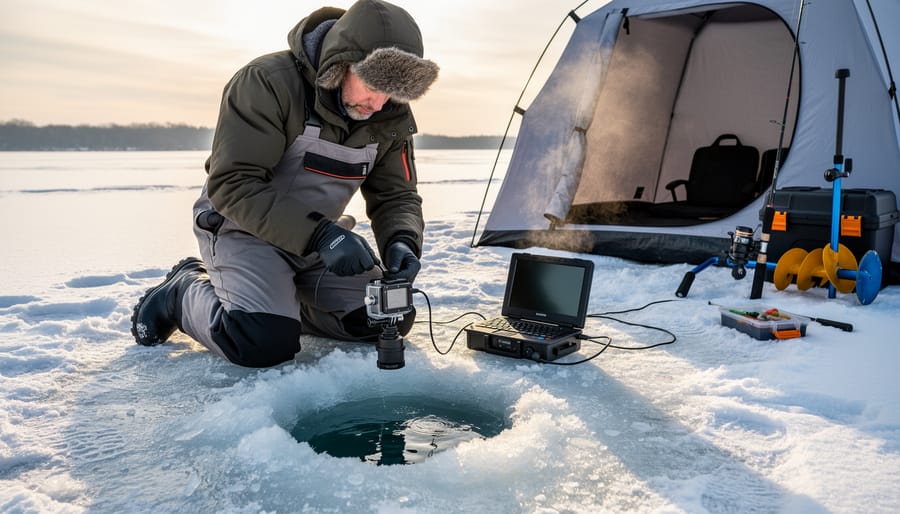
Underwater fishing cameras serve a completely different mission than the waterproof cases and action cams recreational divers use. They’re purpose-built tools for anglers who need to see structure, monitor presentations, and watch how fish respond in real time. While a tourist snaps coral with their GoPro in clear Caribbean water, ice anglers drop cameras through 20 feet of stained lake water to locate suspended crappies or confirm that a rock pile actually holds walleyes.
The core purpose is threefold: ice fishing observation, structure scouting before you commit to drilling holes, and learning underwater cameras and fish behavior patterns that make you a better angler. You’re not trying to capture beautiful footage for social media. You want to see what’s biting what’s ignoring your lure, and whether that hump 40 yards out actually holds the school you’re targeting.
This changes everything about what makes a camera “great” in fishing contexts. Anglers prioritize rugged construction that survives being dragged across ice and dropped on frozen lakes. They need screens large enough to share with fishing partners in a shelter or bright enough to see in full daylight through a hole. Battery life matters more than megapixels because you’re running the system for eight-hour trips in subzero temperatures. Cable management becomes critical when you’re dealing with 50 feet of cord that tangles if you’re not careful.
Resolution helps, but water clarity and lighting conditions limit what any camera can show. A budget model in gin-clear water often outperforms a premium system in murky reservoirs. The best underwater fishing camera for you depends on whether you’re a solo mobile angler who needs packable gear or a shelter crew wanting a big screen everyone can watch.
Key Factors When Choosing an Underwater Fishing Camera
Screen Size and Visibility
Screen size isn’t just about seeing better, it determines how you fish. A 4.3-inch display like the one on the Aqua-Vu Micro Stealth 4.3 fits in a coat pocket and works perfectly when you’re hole-hopping solo, drilling exploratory holes, or scouting structure quickly. You lean over the hole, check what’s below, and move on. The compact screen handles that workflow without unnecessary bulk.
Seven-inch screens change the equation entirely. Models like the Aqua-Vu AV715c turn camera viewing into a group activity inside a shelter. Everyone can watch simultaneously without crowding a tiny display, which matters when you’re teaching kids, fishing with friends, or running a guide operation where clients want to see the action. The larger screen also reduces eye strain during extended viewing sessions when you’re studying bottom composition or waiting for fish to move through.
The tradeoff is portability. Bigger screens mean larger housings, heavier packs, and setups that favor stationary fishing over mobile scouting. Match your screen size to how you actually fish, not just what looks impressive in the store.
Video Resolution and Image Quality
Most fishing cameras still use standard definition (SD) video, and that’s perfectly adequate for identifying fish species, watching lure action, and scouting structure. The extra clarity of 1080p HD matters most when you’re trying to distinguish subtle details, baitfish activity near cover, fine vegetation types, or exactly how a perch is mouthing your bait. Models like the Aqua Vu HD7I feature full 1080p resolution with True-Color technology that maintains accurate color representation as depth increases, which helps differentiate rock from mud or identify weed species without guessing.
However, water clarity trumps resolution every time. A standard-definition camera in gin-clear water shows you more useful information than an HD system in stained or algae-clouded conditions. If you primarily fish turbid reservoirs or rivers with low visibility, investing in premium resolution delivers minimal real-world benefit compared to better lighting or a larger screen. Save HD for situations where water clarity allows you to actually use that detail, or when you’re recording footage to review later and want sharper playback. The gap between SD and HD is noticeable side-by-side, but most anglers find SD completely functional for making fishing decisions on the ice.
While underwater 4K options exist for serious photography work, they’re overkill for fishing applications where durability, battery life, and ease of use matter far more than maximum pixel count.
Recording Capabilities
Recording capabilities transform an underwater fishing camera from a real-time viewing tool into a learning system. Built-in recording lets you capture what you see below the ice and review it later, which changes how you approach structure scouting and fish behavior study.
The practical benefit shows up immediately when you’re mapping unfamiliar water. Drop the camera, record a pass along a weed edge or over a hump, then review the footage back at camp to identify the exact depth transitions and cover types where fish held. You’ll spot details in the replay that you missed while watching live, a secondary break, scattered rocks within a mud flat, or the precise spot where baitfish concentrated. This documented intel means you return to productive zones instead of re-searching.
Recording also accelerates pattern recognition. Capture how fish react to different jigging cadences, lure colors, or bait presentations, then compare footage across multiple trips. You’ll notice whether crappies consistently approach from the left side of your hole, if walleyes spook at aggressive movements, or what triggers a following pike to commit. This self-coaching element makes every outing a teaching session.
The MarCum Pursuit SD Plus and Aqua-Vu Micro Revolution Pro 5.0 include recording as core features, capturing your underwater sessions for later analysis without external equipment or complicated setups.
Coverage Area and Camera Angles
Most ice cameras point in a single direction, giving you a clear view of what’s directly in front of the lens. This works perfectly fine for scouting structure, watching your bait, and observing how fish approach from the primary angle. You can rotate the camera if you need to check another direction, but you’re always looking at one slice of the underwater environment at a time.
Premium systems like the Aqua-Vu QUAD HD offer simultaneous viewing in four directions, creating a complete picture of everything around your hole. This matters most when you’re fishing pressured waters where cautious fish circle before committing, or when you’re targeting species that approach from unexpected angles. If you’ve ever watched a big fish appear briefly on a single-direction camera and then vanish, you understand the appeal of seeing all approaches at once.
The tradeoff is cost. 360-degree camera prices reflect the additional hardware and processing power required for multi-angle systems. For most anglers fishing typical conditions, a standard single-direction camera provides everything needed to locate structure, watch bait action, and gauge fish interest. Multi-directional coverage becomes worth the investment when you’re tournament fishing, targeting highly pressured fish, or spending enough days on the ice that missing subtle approaches costs you consistently.
Portability and Cable Management
Portability separates cameras you’ll actually use from ones that stay home. An integrated spool transforms a 50-foot cable from a tangled mess into a grab-and-go system. Without one, you’ll waste minutes untangling line every time you move holes, which kills momentum when fish are biting. The Micro Stealth 4.3’s integrated spool keeps the cable from becoming a bird’s nest in a coat pocket, making it ideal for run-and-gun anglers who hop between spots.
Consider your fishing style. Mobile anglers drilling twenty holes need compact, self-contained units that pack into a sled or backpack without hassle. Permanent shelter crews can tolerate bulkier systems with separate cable reels since everything stays organized in one location. A 7-inch screen like the AV715c offers better group viewing but demands dedicated storage space. Fifty feet handles most ice-fishing depths and structure scouting, though deeper lakes may require extended cable options. The key is matching portability to how often you relocate during a typical outing.
Battery Life and Power Options
Expect four to six hours of continuous operation from most underwater fishing cameras under moderate use, with lithium-ion batteries delivering better cold-weather performance than traditional lead-acid options. Lithium batteries maintain voltage more consistently in sub-freezing temperatures and weigh considerably less, making them ideal for mobile anglers who walk from hole to hole. Traditional batteries cost less upfront but lose capacity faster when mercury drops, sometimes cutting runtime in half during extreme cold snaps.
Bring a fully-charged backup battery for all-day trips, especially when using recording features or running IR lights at full brightness, both drain power quickly. Store spare batteries inside your jacket to keep them warm until needed. Some anglers run portable power banks as emergency reserves, though you’ll need proper voltage adapters matched to your camera’s input requirements.
If your camera offers adjustable LED brightness, dial it down in clear shallow water where you don’t need maximum illumination. Dimming lights by half can extend battery life by 30 to 40 percent without sacrificing image quality in good visibility conditions, letting you fish longer between charges.
Underwater Lighting
Most underwater fishing cameras include built-in LED lighting around the lens, and understanding how these lights perform in different conditions helps you anticipate what you’ll actually see below the ice. In deep water or stained conditions, common in many northern lakes during winter, LEDs illuminate suspended particles and structure that would otherwise disappear into murky darkness. The lights provide essential visibility when you’re fishing 20-plus feet down or targeting walleye in tannin-stained reservoirs where ambient light barely penetrates.
The tradeoff comes with fish behavior. Bright LEDs can spook finicky panfish in shallow, clear water, particularly pressured crappie that have seen plenty of cameras. Some anglers dim their lights or turn them off entirely when fishing gin-clear water less than ten feet deep, relying on natural light to avoid alerting fish to the camera’s presence. In practice, aggressive biters like pike rarely care about camera lights regardless of depth, while neutral or negative fish in ultra-clear conditions may shift away from the glow. Consider your typical fishing depth and water clarity when evaluating how much you’ll rely on built-in lighting versus situations where you’ll want the option to fish dark.
Types of Underwater Fishing Cameras Compared
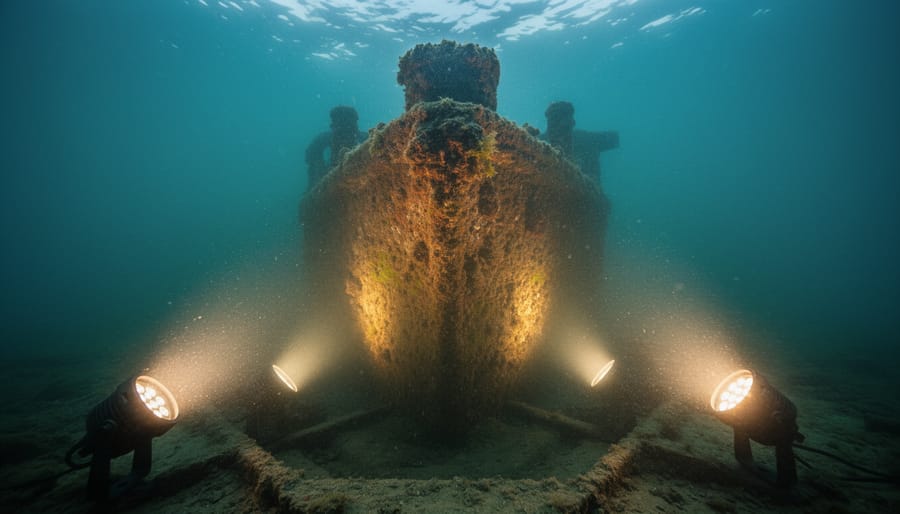
Underwater fishing cameras fall into three distinct categories, each designed for different fishing styles and priorities. Understanding these types helps you avoid paying for features you won’t use while ensuring you get the capabilities that matter for your conditions.
Pocket scouting cameras are ultra-compact systems built around 4.3 to 5-inch screens with integrated cable spools. These cameras prioritize portability above all else, slipping into a coat pocket for mobile anglers who cover multiple holes throughout the day. The Aqua-Vu Micro Stealth 4.3 exemplifies this category with its integrated spool that keeps the 50-foot cable from becoming a bird nest in your pocket. The tradeoff is obvious: that small screen works fine for solo scouting but frustrates groups trying to watch together. If you’re a run-and-gun angler who values speed over shared viewing, pocket cameras deliver exactly what you need without the bulk of larger systems.
Standard viewing systems occupy the middle ground with 5 to 7-inch screens and traditional case designs. These cameras balance portability with better visibility, making them ideal for shelter fishing or two-person setups. Models like the Aqua-Vu Micro Revolution Pro 5.0 sit at the compact end of this range, deploying and retrieving as fast as cranking a reel while recording what it sees. At the larger end, the Aqua-Vu AV715c brings a 7-inch display to anglers who want everyone to watch together without premium pricing. Standard systems handle the widest range of fishing scenarios, which explains why they dominate ice fishing sales. While less pocket-friendly than micro cameras, they still pack into a tackle bag or sled without taking over your entire setup. Many budget underwater cameras fall into this category, offering core functionality at accessible price points.
Premium multi-angle systems deliver simultaneous viewing from multiple directions, eliminating blind spots that single-camera systems create. The Aqua-Vu QUAD HD watches all four directions at once, giving competitive anglers and serious ice teams the comprehensive coverage they’re willing to pay for. These systems cost significantly more and require larger screens to display multiple feeds effectively, but they answer a specific need: knowing exactly what’s approaching your bait from every angle. The 360-degree setup complexity means they’re overkill for casual anglers, but invaluable when fish behavior observation justifies the investment.
| Camera Type | Best Use Case | Typical Screen Size | Portability Level |
|---|---|---|---|
| Pocket Scouting | Mobile solo anglers covering multiple holes | 4.3-5 inches | Fits in coat pocket |
| Standard Viewing | Shelter fishing and small groups | 5-7 inches | Tackle bag or sled |
| Premium Multi-Angle | Serious anglers needing complete coverage | 7+ inches | Dedicated case or shelter setup |
Your fishing style determines which type makes sense. Run-and-gun anglers waste money on big screens they’ll never deploy comfortably, while shelter crews squinting at a 4.3-inch display regret not spending the extra hundred dollars for a 7-inch view everyone can watch. Match the camera category to how you actually fish, not to an aspirational scenario that happens twice a season.
Top Underwater Fishing Camera Recommendations for 2026
The underwater fishing camera market in 2026 offers clear standouts across every price tier and use case. We’ve identified seven models that represent the best current choices based on real-world fishing performance rather than spec-sheet promises.
For anglers watching their wallet, the MarCum Recon 5 delivers essential viewing capability without unnecessary features, while those wanting proven budget options can explore cameras under $150 tested for recreational use. If portability matters most, the Aqua-Vu Micro Stealth 4.3 fits in a coat pocket with its integrated spool managing the 50-foot cable.
Our top overall pick is the Aqua-Vu Micro Revolution Pro 5.0, which deploys as fast as cranking a reel and records everything it sees, the sweet spot for most ice anglers who want versatility without complexity. Groups fishing from permanent shelters benefit from the Aqua-Vu 715C’s large 7-inch display at an accessible price point, while serious anglers ready to document their outings should consider the MarCum Pursuit SD Plus for its practical recording features.
At the premium end, the Aqua-Vu QUAD HD watches all four directions simultaneously, ensuring nothing approaches unseen, overkill for casual anglers but invaluable for competitive fishermen who need complete situational awareness.
Aqua Vu Micro Stealth 4.3 Underwater Camera Viewing System

The Aqua Vu Micro Stealth 4.3 earns its place as the best pocket scouting camera by shrinking a capable viewing system into a package you can actually carry in your coat. Its 4.3-inch color screen sits inside an integrated spool that keeps the 50-foot cable from turning into a tangled mess between holes, a detail that matters more after you’ve fought a frozen rat’s nest on the ice.
This camera exists for anglers who move constantly. If you’re drilling twenty holes to pattern fish across a flat or scout unfamiliar structure, the Micro Stealth deploys faster than larger systems and stores in the same pocket as your phone. The screen is bright enough to read in direct sunlight on clear ice, and the clarity is sufficient for identifying weed edges, rock piles, and whether those marks on your sonar are actually fish. The integrated spool design means setup takes seconds: drop the camera, watch what’s below, reel it back, move.
The tradeoff is obvious. A 4.3-inch screen works perfectly when you’re fishing solo or with one partner leaning over your shoulder. It doesn’t work when three people want to watch simultaneously, and the smaller display makes it harder to track fast-moving fish in deep water compared to the 7-inch screens found on shelter-focused systems like the AV715c. You’re also sacrificing the recording capabilities of models like the Micro Revolution Pro 5.0 and the multi-directional coverage of the QUAD HD.
But if your fishing style prioritizes mobility over group viewing, and you’d rather scout ten spots quickly than watch one hole for an hour, the Micro Stealth delivers exactly what you need. It won’t replace a premium system for serious tournament anglers, but for run-and-gun fishing where portability determines whether you bring the camera at all, it’s the right tool.
Marcum Recon 5 Underwater Camera Viewing System

The MarCum Recon 5 delivers what ice anglers actually need without the premium price tag. This system strips away the extras and focuses on the fundamentals: a reliable underwater camera that shows you what’s below the ice, packaged in a format that won’t drain your wallet before the season even starts.
At its core, the Recon 5 offers straightforward viewing functionality with a screen large enough to see detail but compact enough to carry solo. The display won’t match the expansive real estate of 7-inch models, but it provides clear visibility for one or two anglers checking structure and tracking fish movement. You get standard definition video rather than 1080p HD, which matters less than you’d think when you’re staring into dark water or heavy stain. The camera sees what you need to see: bottom composition, weed edges, fish holding tight to cover.
The included cable management keeps everything organized, though you’ll notice the difference between this system and pricier options with integrated spools that retract at the turn of a handle. The Recon 5 requires a bit more hands-on wrapping after each drop, but that’s a reasonable tradeoff when you’re saving substantial money over mid-range and premium models.
Battery performance holds up for full-day outings in typical ice fishing temperatures, giving you reliable power without constant charging breaks. The built-in LED lighting illuminates enough underwater real estate to scout effectively in moderate depths and clarity conditions. You won’t get multi-angle simultaneous viewing or recording capabilities, but most budget-focused anglers don’t need those features for successful structure scouting.
If you’re learning to pick a durable camera for ice fishing without overspending on capabilities you’ll rarely use, the Recon 5 hits the sweet spot between functionality and affordability. It’s earned a solid 4.3 out of 5 from 151 customer ratings by doing the essential job well.
Aqua-Vu Micro Revolution Pro 5.0
The Aqua-Vu Micro Revolution Pro 5.0 earns its position as the best overall ice camera by balancing portability with features that serious anglers actually use. This system deploys and retrieves as fast as cranking a reel, eliminating the awkward cable tangles and slow hand-over-hand retrieval that plague cheaper systems. When fish move or you want to check a different hole quickly, that speed advantage translates into more productive ice time.
The integrated reel mechanism makes a real difference in how you fish. You can drop the camera, scan structure or locate fish, then crank it back up and move to the next spot without wrestling fifty feet of loose cable. For anglers who drill multiple holes to pattern fish or scout new water, this fast deployment changes your entire approach, you’re not locked into one hole because retrieval is a hassle.
Recording capabilities set this model apart from budget options that only offer live viewing. The Micro Revolution Pro 5.0 records what it sees, letting you document underwater structure, review how fish responded to different presentations, or study bottom composition when you’re back home. Anglers who take their fishing seriously find this recorded footage invaluable for learning patterns and sharing discoveries with fishing partners.
The 5-inch screen hits the sweet spot between pocket cameras like the 4.3-inch Micro Stealth and bulkier 7-inch systems. It provides enough viewing area for detailed observation without requiring a dedicated tackle bag. You can see subtle details like how perch react to your lure or identify the composition of bottom structure, but the unit remains portable enough for mobile fishing.
This camera handles the core scenarios most ice anglers face: scouting new lakes, checking structure beneath the ice, and watching fish behavior in real time. Unless you specifically need four-direction coverage or are committed to ultra-light pocket fishing, the Micro Revolution Pro 5.0 delivers the right combination of speed, recording, and portability for the majority of ice fishing situations.
Aqua-Vu QUAD HD
The Aqua-Vu QUAD HD delivers simultaneous four-direction viewing for anglers who demand complete coverage of everything happening below the ice. Instead of monitoring a single field of view and hoping fish don’t approach from behind or the sides, this system shows all four directions at once on a split screen, eliminating blind spots entirely.
This level of coverage matters most for competitive anglers fishing tournaments where understanding fish movement patterns can mean the difference between catching and just watching. When you’re targeting pressured fish in heavily-fished areas, seeing a school approach from any angle lets you adjust your presentation before they reach your lure rather than discovering them too late. The QUAD HD also excels for serious anglers scouting new structure who want to map the entire underwater environment efficiently, documenting fish holding areas and travel routes that single-direction cameras would miss.
The four-camera system uses individual lenses positioned to cover front, back, left, and right simultaneously. You watch all feeds on one display, building a mental map of the complete scene rather than guessing what’s happening outside a single camera’s cone of vision. This proves particularly valuable when fish circle before committing to a bite, or when you’re fishing near complex structure where predators might appear from unexpected directions.
However, this premium coverage comes with tradeoffs beyond price. The multi-camera housing is larger and heavier than standard single-camera models, and reviewing split-screen footage later can feel cluttered compared to the clean single view of simpler systems. Most recreational ice anglers won’t encounter situations where four-direction coverage genuinely improves their catch rate enough to justify the investment, making this a specialty tool rather than a universal recommendation. For those instances covered in any underwater camera buying guide where missing an approach angle could cost you fish, the QUAD HD removes that variable completely.
MarCum Pursuit SD Plus
The MarCum Pursuit SD Plus occupies the sweet spot for anglers who’ve outgrown entry-level cameras but don’t need premium multi-angle coverage. What sets it apart is built-in recording that actually works without complicated setup, press record, drop the camera, and capture everything you see for later review or sharing with fishing partners who missed the trip.
Recording transforms how you use an underwater camera. Instead of trying to remember exactly where that submerged timber sat or how bass were positioned around rock piles, you review the footage. Many anglers find recorded runs reveal details they missed in real-time: subtle structure changes, preferred holding depths, or how fish react to different lure presentations. The Pursuit SD Plus makes this accessible without the learning curve or price tag of GoPro-style systems that require separate housings and mounts.
The camera delivers standard definition video, which proves perfectly adequate for structure documentation and fish observation in typical ice fishing and open-water scouting scenarios. You’re not filming wildlife documentaries, you need clear enough footage to identify cover, count fish, and recognize bottom composition. SD handles that while keeping file sizes manageable and battery demands reasonable for all-day fishing.
Build quality reflects MarCum’s ice fishing heritage. The system handles repeated deployments in cold conditions without the fragility issues that plague cameras designed for occasional recreational use. Cable management isn’t as refined as Aqua-Vu’s integrated spool systems, but the tradeoff is a lower price point than the Micro Revolution Pro 5.0 while still offering recording capabilities the budget Recon 5 lacks.
This camera makes sense for anglers who fish enough to benefit from documented outings but don’t need four-direction simultaneous viewing or the fastest deploy-retrieve systems available.
Aqua-Vu 715C
The Aqua-Vu 715C earns its reputation as the most affordable 7-inch screen camera on the market, making big-screen viewing accessible to anglers who previously couldn’t justify premium pricing. For shelter crews and groups who fish together, that large display transforms the underwater experience from individual glimpses to shared observation where everyone can spot approaching fish, study structure, and discuss strategy in real time.
The 7-inch screen delivers enough viewing area for three or four people to watch comfortably without crowding around a pocket-sized display. This matters most during slower bite periods when you’re studying bottom composition or monitoring suspended fish, and it’s invaluable when teaching kids or newcomers who benefit from seeing what you’re describing rather than taking turns squinting at a handheld screen.
What the 715C sacrifices for affordability is primarily resolution and advanced features. You won’t get 1080p HD or True-Color technology like you’d find on premium models, but the standard definition image quality proves perfectly adequate for the camera’s core mission: showing you what’s below the ice. Fish, structure, and weeds remain clearly identifiable, which is what actually matters when you’re deciding whether to drill another hole or adjust your presentation.
The tradeoff extends to portability. The larger screen and housing make this a shelter-focused system rather than a run-and-gun scouting tool. Plan to dedicate space in your sled or vehicle rather than expecting it to slip into a coat pocket.
For permanent shelter setups, weekend warriors who fish in groups, or families introducing younger anglers to ice fishing, the 715C delivers big-screen convenience without the premium price tag that keeps many anglers on the sidelines.
Aqua-Vu AV722
The Aqua-Vu AV722 occupies an interesting middle ground in the 7-inch screen category, offering a full-size color LCD display without the premium features that drive up costs on higher-end models. This positioning makes it worth considering for anglers who have decided they want a large screen but aren’t ready to commit to the most expensive options in that class.
The defining characteristic here is obviously that 7-inch screen. At this size, the viewing experience changes substantially from pocket models. Multiple people can watch comfortably from several feet away, which matters when you’re fishing in a shelter with friends or family. The larger display also reduces eye strain during long sessions and makes it easier to identify smaller details in structure and fish behavior without squinting.
Where the AV722 differs from both budget and premium 7-inch models is in what you get beyond just screen real estate. It sits above entry-level big-screen options in build quality and image processing, but below models that add recording, advanced resolution, or multi-angle viewing. Think of it as the straightforward viewing system for groups who want everyone to see clearly without paying for features they won’t use.
The tradeoff for this mid-range positioning is straightforward: you’re investing primarily in viewing comfort rather than technical capabilities. If your fishing style revolves around shelter sessions where several anglers will be watching simultaneously, and you don’t need to document footage or cover every angle, the AV722 delivers exactly what matters most, a clear, shared view of what’s happening below the ice. For solo anglers or those who rarely fish in groups, the larger form factor and cost might outweigh the screen size benefits.
Common Mistakes to Avoid When Buying an Underwater Fishing Camera
Most anglers make avoidable mistakes when buying their first underwater fishing camera, and these missteps often lead to frustration or wasted money. Understanding these common pitfalls helps you choose a camera that actually serves your fishing style instead of one that disappoints in real-world conditions.
Many anglers fixate on resolution differences between standard definition and 1080p HD without considering durability and reliability first. A camera that captures stunning HD footage means nothing if it fails after one season or leaks on your third trip. Water clarity and lighting conditions affect image quality far more than the jump from SD to HD in most ice fishing scenarios. Build quality, proven track records, and proper waterproof ratings matter more than pixel counts on a spec sheet.
Ignoring cable management is another frequent oversight. That 50-foot cable seems manageable in the store, but without an integrated spool system it becomes a tangled mess in your truck, sled, or shelter. The Aqua-Vu Micro Stealth 4.3 succeeds partly because its built-in spool prevents the cable from becoming a bird’s nest in your coat pocket. Budget cameras that save money by skipping proper cable storage create headaches every time you set up or pack down, especially in freezing conditions when stiff cables tangle worse than summer.
Battery performance in cold weather catches many buyers off guard. Manufacturers list runtime based on room temperature testing, but lithium and traditional batteries both lose significant capacity below freezing. Budget an extra battery or understand that your advertised six-hour runtime might shrink to three hours when you’re fishing in subzero temperatures. Cameras without external battery options leave you with no backup when power runs out mid-trip.
Choosing screen size without matching it to your actual fishing setup wastes either money or viewing experience. A 7-inch display like the Aqua-Vu AV715c makes sense for permanent shelters with multiple anglers, but it’s overkill for solo mobile fishing where portability trumps screen real estate. Conversely, trying to share a pocket-sized screen with three fishing buddies means nobody gets a decent view of what’s happening below.
Frequently Asked Questions
Anglers considering their first camera often have the same practical questions about durability, real-world performance, and whether premium features justify the cost. Here are the answers to the most common concerns.
Do I need HD resolution for ice fishing?
HD resolution offers sharper images in clear water, but standard definition cameras work perfectly well for most ice fishing applications where you’re primarily identifying structure and watching fish approach. If you fish consistently clear lakes and want to identify smaller baitfish species or subtle bottom details, HD provides a noticeable upgrade, but for general fish observation and structure scouting in typical or stained water, standard definition delivers everything you need at a lower price point.
How long do these cameras typically last?
Quality underwater fishing cameras from established brands like Aqua-Vu and MarCum routinely last five to ten years with proper care and storage. The cables and connectors are usually the first components to show wear, particularly if you drag them across ice or snow frequently, but with careful handling and dry storage between seasons, the electronic components prove remarkably durable.
Can I use these in saltwater?
Most underwater fishing cameras are designed for freshwater use and will corrode quickly in saltwater without thorough freshwater rinsing after each use. If you plan to fish both environments, check the manufacturer specifications carefully, and even with rated saltwater compatibility, rinse all components and connections with fresh water immediately after saltwater exposure to prevent corrosion damage.
What’s the real advantage of 360-degree coverage?
Systems like the Aqua-Vu QUAD HD watching all four directions simultaneously eliminate blind spots, letting you see fish approach from any angle without constantly repositioning the camera. This matters most when fishing active schools in open water or competitive situations where you can’t afford to miss approaching fish, but for hole-hopping or fishing tight structure where fish approach from predictable directions, a single-direction camera handles the job without the premium cost.
Beyond these core questions, maintenance between seasons determines how long your investment lasts. After your final trip each year, wipe down the camera housing and cable with a clean, dry cloth to remove any moisture or debris. Store the camera in a climate-controlled space rather than a garage or shed where temperature swings cause condensation inside sealed components. Check cable connections for corrosion or wear before the next season starts, and replace any damaged sections immediately rather than risk water intrusion during use.
Battery maintenance matters just as much as camera care. If your system uses removable lithium batteries, store them partially charged rather than fully drained or at full capacity, which extends their overall lifespan. Check battery terminals for corrosion before each season and clean them with a dry cloth if you spot any buildup. For cold-weather performance, keep spare batteries inside your shelter or coat rather than in your tackle box, where the warmth preserves capacity when you need to swap them mid-day.
Choosing the right underwater fishing camera comes down to honest self-assessment rather than chasing specs. Match screen size and portability to how you actually fish. If you’re drilling dozens of holes across the ice, a pocket system like the Aqua-Vu Micro Stealth 4.3 makes sense because it won’t weigh you down or tangle in your gear. When you fish from a shelter with friends who want to watch alongside you, the larger display of a model like the AV715c delivers group viewing without premium pricing. Don’t convince yourself you need 360-degree coverage unless you genuinely fish competitively or in conditions where fish approach from unpredictable angles, most anglers get everything they need from a single forward-facing camera.
For the majority of ice anglers, the Aqua-Vu Micro Revolution Pro 5.0 hits the sweet spot: it deploys quickly, records your findings for later review, and balances portability with enough screen real estate to see what matters. Prioritize durability and ease of use over resolution numbers that look impressive on paper but don’t survive a season of hard fishing. Consider your coldest days, your typical water clarity, and whether you fish solo or with others. The right camera fits your routine rather than forcing you to adapt to its limitations. Think through a full day on the ice before you buy, and choose the system that disappears into your process instead of complicating it.
 By