 By
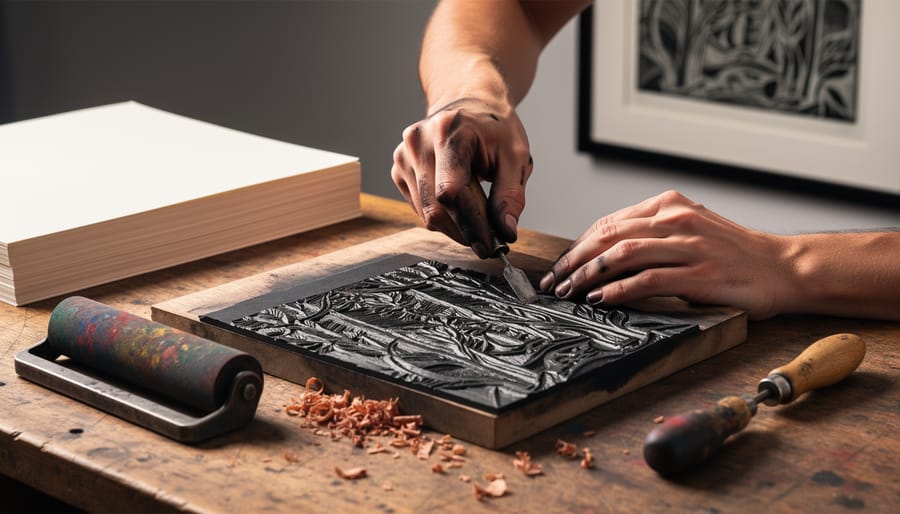
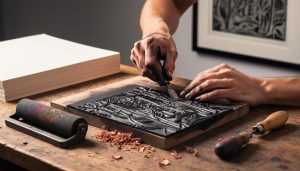
Contemporary relief printmaking is a hands-on process where artists carve or build up a surface, apply ink to the raised areas, and transfer the image to paper or fabric under pressure. Unlike photographic printing, relief printmaking creates physical, tactile works through techniques like woodcut, linocut, and letterpress, often combining traditional craft with modern innovation to produce unique, multilayered imagery.
For photographers and visual artists, relief printmaking offers a compelling way to extend your creative practice beyond the camera. You can transform your photographic images into carved matrices, experiment with texture and materiality that digital processes can’t replicate, and produce editions that carry the mark of your hand. Contemporary printmakers are pushing the boundaries of what relief techniques can do, incorporating photo transfers, CNC carving, laser etching, and hybrid methods that bridge analog and digital worlds.
This explainer will walk you through what relief printmaking actually is, how the core process works from surface preparation to final impression, and the specific techniques and materials artists use today. We’ll look at real applications in gallery work, book arts, and photographic hybrids, showing you how contemporary practitioners like Tom Killion and Vance Studley blend observation, craft, and photographic sensibility in their relief prints. Whether you’re curious about adding printmaking to your toolkit or simply want to understand this resurgent medium, you’ll come away with a clear sense of how relief printmaking functions and where it intersects with photography in 2026.
What Contemporary Relief Printmaking Means for Today’s Visual Artists
Contemporary relief printmaking is a modern approach to one of the oldest forms of image-making, where artists carve, cut, or otherwise remove material from a flat surface, creating a raised matrix that holds ink for transfer to paper or other substrates. What sets contemporary practice apart from its centuries-old roots is how today’s printmakers freely mix traditional methods with digital tools, photographic imagery, and unconventional materials. You might see an artist laser-cut a relief block from a photograph, or hand-carve a woodcut that incorporates screen-printed photographic elements in later layers.
At its core, relief printing still works the same way it did for Dürer or Hokusai: the raised areas accept ink, while carved-away sections remain white or transparent. But contemporary practitioners aren’t bound by historical orthodoxy. They might start with a digital photograph, convert it to high-contrast line work in Photoshop, then carve that image into linoleum. Or they’ll combine traditional woodcut techniques with 3D-printed textures, creating hybrid works that honor craft while embracing technology.
- Matrix
- The physical surface (wood block, linoleum, MDF, plastic, or other material) that the artist carves or prepares for printing. In contemporary practice, matrices can be hand-carved, laser-cut, or digitally fabricated.
- Reduction Print
- A multi-color technique where the artist prints one color, then carves away more material from the same block before printing the next color, progressively reducing the matrix until the final layer is complete.
- Registration
- The precise alignment of multiple color layers or blocks during printing. Contemporary printmakers use registration marks, jigs, or digital guides to ensure each layer lands exactly where intended.
- Edition
- A set of identical prints pulled from the same matrix, typically numbered (e.g., 5/20) to indicate which print in the series and the total number produced. Contemporary artists may create variable editions or unique prints alongside traditional numbered runs.
For photographers, this medium offers a compelling bridge between lens-based and hand-made image creation. You can use your own photographs as source material, translating tonal information into carved marks, or print photographic elements directly onto relief-printed backgrounds. The physicality of carving and the visible texture of the printed surface provide a material quality that purely digital workflows can’t replicate, making relief printmaking an increasingly popular choice for photographers exploring tactile, fine-art outputs.
How the Relief Printing Process Works
Working from Photographic Source Material
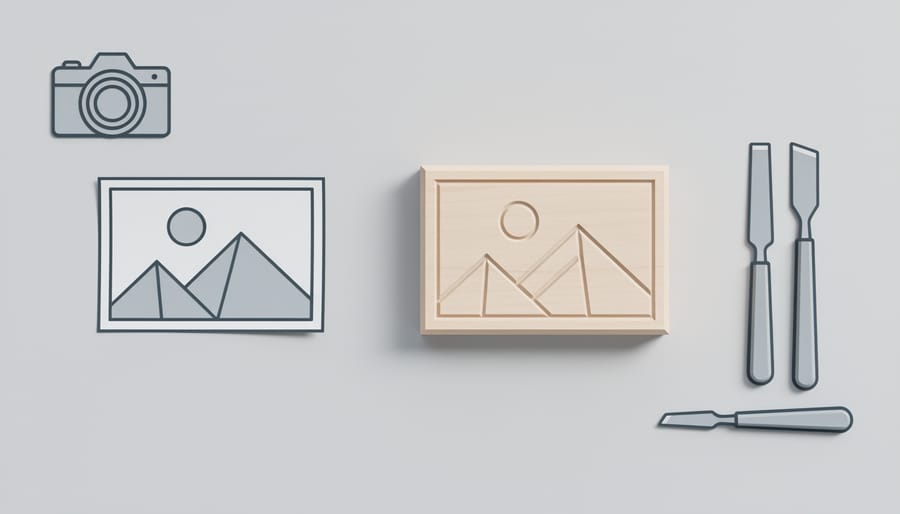
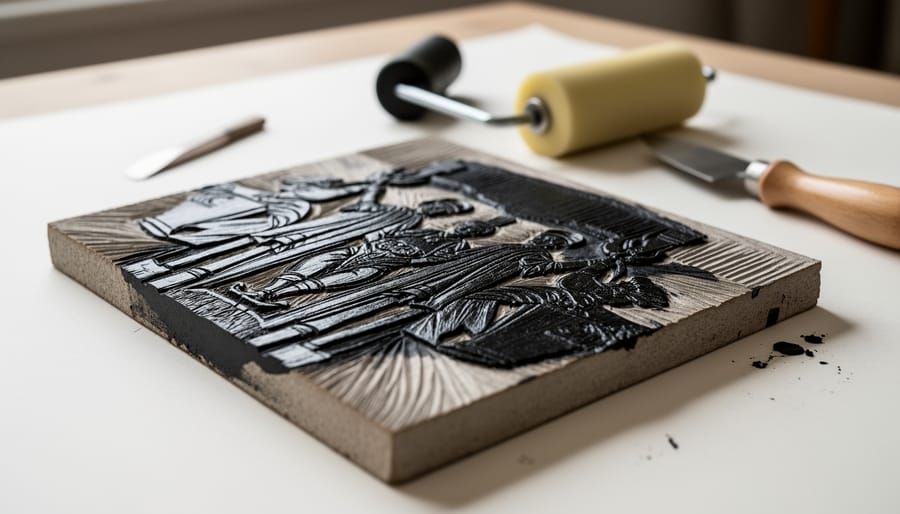
Many contemporary relief printmakers don’t start with a pencil sketch, they start with a camera. Photographers and printmakers alike mine their own image archives or historical photographs, using the camera’s record as a foundation rather than working purely from imagination. This approach bridges two worlds: the mechanical precision of the lens and the interpretive freedom of hand-carving.
The translation process is where the craft becomes genuinely creative. A photograph captures continuous tone, thousands of gradations from deep shadow to bright highlight. Relief printing, by contrast, deals in absolutes: ink or no ink, raised surface or carved void. The printmaker must decide which tonal values matter most, which details anchor the image, and what can be stripped away. A portrait might reduce to bold contours and a few strategic shadows. A landscape condenses into rhythmic marks suggesting texture rather than rendering every blade of grass.
This interpretive layer attracts photographers exploring materiality because it demands artistic judgment at every turn. You’re not mechanically reproducing a photo; you’re distilling it, finding its essential structure. Some artists preserve photographic detail through meticulous cross-hatching or stippling. Others embrace radical simplification, using the photograph as a reference point while the carved image becomes something entirely new, perhaps incorporating visual metaphors that weren’t present in the original exposure.
The block itself resists faithful reproduction, and that resistance becomes part of the conversation. Wood grain interrupts clean lines. The carving tool slips or digs deeper than planned. These so-called imperfections become signatures of the hand, transforming mechanical seeing into tactile expression.
Materials and Surfaces Used by Contemporary Relief Printmakers
Contemporary relief printmakers in 2026 work with a far broader palette of materials than the traditional woodblocks and linoleum sheets that defined the medium a century ago. Each surface brings its own carving characteristics, print texture, and aesthetic personality, giving photographers and visual artists plenty of room to experiment and find the material that best suits their vision.
Wood remains a beloved choice, but modern printmakers often reach for MDF (medium-density fiberboard) or plywood instead of traditional hardwoods. MDF carves smoothly and consistently, with no grain to fight or work around, making it ideal for detailed, intricate imagery translated from photographic sources. Plywood offers layered, fibrous edges that can add unexpected texture to a print, especially when carved aggressively. Both materials are affordable, widely available, and forgiving for beginners.
Linoleum has evolved too. Resingrave and similar synthetic carving blocks provide a firm, consistent surface that holds crisp detail better than traditional soft lino, while still being easier to carve than wood. Rubber blocks, often marketed as easy-carve or soft-cut, allow even novice printmakers to cut fluid lines and large cleared areas quickly, though they wear down faster with repeated printing. Cardboard and corrugated board, sometimes laminated for strength, offer a low-barrier entry point and a distinctly rough, organic texture that appeals to artists seeking rawness and immediacy in their prints.
Some contemporary printmakers push further into experimental territory, using 3D-printed or laser-cut matrices generated from digital files. These methods, occasionally found in a lithography studio equipped with fabrication tools, allow precise translation of photographic detail into relief surfaces that would be nearly impossible to carve by hand. Critics debate whether machine assistance diminishes the handmade ethos, but many artists view these tools as extensions of their creative process, blending analog and digital workflows.
- MDF: smooth, grainless, excellent for fine detail and photographic translation
- Plywood: layered texture, affordable, adds character to bold graphic prints
- Resingrave: firm synthetic, crisp lines, durable for long print runs
- Rubber blocks: soft, easy to carve, good for beginners, wears quickly
- Cardboard: low-cost, textured, ideal for experimental or ephemeral work
- 3D-printed or laser-cut: precise, digital-origin, suits complex photographic detail
Material choice directly shapes the final print. A hardwood block yields clean, sharp lines and can withstand hundreds of impressions, while a cardboard matrix might deliver only a handful of prints but with a distinctive, weathered aesthetic. Photographers drawn to printmaking often appreciate these material differences because they mirror the textural and tonal choices made in the darkroom or digital editing suite. The block becomes a physical extension of the photographic negative, each surface offering a different way to translate light, shadow, and form into ink on paper.
Techniques and Approaches in Contemporary Practice
Reduction Printing
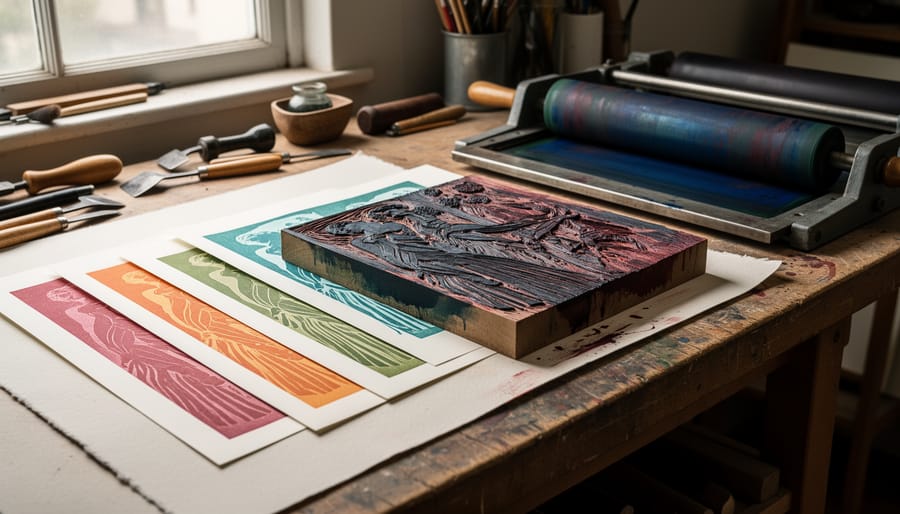
Reduction printing, sometimes called the “suicide print” because the block is progressively destroyed, involves carving and printing from a single matrix in multiple stages. You begin with the lightest color, printing an entire edition. Then you carve away more material and print the next color over the first layer. Each successive pass removes more surface, building depth and complexity. By the final color, much of the original block is gone, making it impossible to reprint the edition if something goes wrong.
This technique demands careful planning. You must visualize the complete image before making the first cut, mapping out which areas will carry each color and how they’ll overlap. Photographers drawn to photographic printmaking find reduction printing especially rewarding for translating high-contrast source images into vibrant, painterly compositions. The layered colors create optical mixing and richness that feels both controlled and spontaneous, a quality difficult to achieve through other methods. The risk and irreversibility add intensity to the process, forcing decisive choices that often yield the most compelling results.
Multi-Block Color Printing
Multi-block color printing gives artists complete control over each hue in a composition by carving a separate block for every color layer. Unlike reduction printing, which progressively destroys the matrix, this method preserves individual blocks, allowing you to reprint exact editions or experiment with different color combinations on separate proofs without starting over.
The technique demands careful registration, aligning each block precisely so colors layer correctly, but rewards that patience with crisp edges, subtle overprints, and the ability to print thousands of consistent impressions. Contemporary printmakers often use registration jigs, kento marks adapted from Japanese woodblock traditions, or simple pin-hole systems to maintain alignment across multiple passes.
For photographers translating camera work into relief prints, multi-block printing opens compelling possibilities. You might carve one block for structural elements from a high-contrast exposure, another for midtone details from a second frame, and a third for atmospheric color washes. Each block captures a different aspect of your visual investigation, then layers combine into a composition impossible to achieve in a single photograph. This method particularly suits artists working from multiple exposures, composite images, or sequential frames who want to build spatial depth through intentional color separation rather than digital blending.
Hybrid and Mixed-Media Methods
Many contemporary relief printmakers refuse to stay within the boundaries of a single medium. They layer carved woodcuts over screenprinted photographs, embed relief prints in collage assemblages, or combine linocut textures with lithographic washes. This cross-pollination creates visual complexity and narrative depth that a single technique rarely achieves.
A typical hybrid workflow might begin with a photograph manipulated digitally, adjusting contrast, isolating elements, or converting to high-contrast line art. The artist then hand-carves a relief block based on this processed image, prints it, and adds screenprinted color fields or monotype gestures on top. The relief layer provides crisp, tactile marks; the screenprint contributes flat color; the monotype adds painterly spontaneity. Each process contributes what it does best.
Some artists print relief blocks onto collage substrates, combining carved imagery with torn paper, fabric, or found ephemera. Others integrate relief printing into book arts, alternating carved pages with photographic tipped-in plates or letterpress text. Digital tools enter at various stages: generating preparatory drawings, exposing photo-sensitive blocks, or creating digital layers that are output as inkjet prints and then hand-embellished with relief elements.
This experimental ethos reflects contemporary printmaking’s embrace of materiality and process diversity. For photographers, hybrid methods offer a way to extend camera-based imagery into tactile, multi-layered artworks that resist easy categorization. The freedom to combine techniques means you follow the image’s needs rather than medium orthodoxy.
Large-Scale and Installation Relief Prints
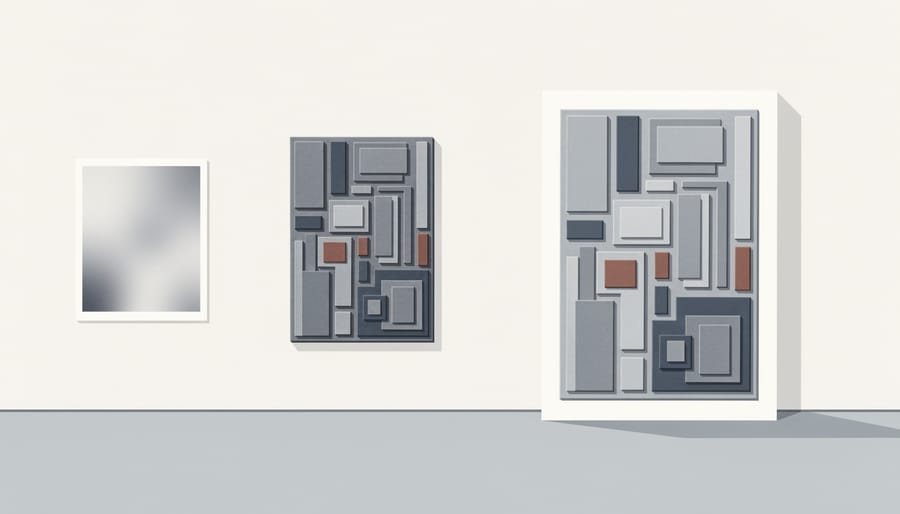
Contemporary relief printmakers increasingly push past the traditional confines of the printing press to create monumental works that command entire walls or transform gallery spaces. Artists like Kelli Vance and Tom Hück carve massive woodblocks, sometimes eight feet tall or larger, then print them in sections or use hydraulic presses and specialized equipment to transfer the image onto paper or fabric in a single impression.
The challenges are substantial. Moving and storing large blocks requires dedicated studio space and often collaborative effort. Inking evenly across several square meters of carved surface demands patience and physical stamina. Registration becomes critical when printing oversized sheets in multiple passes or assembling modular blocks into a unified composition. Some printmakers coat the block with ink, lay dampened paper over it, then walk across the surface or use rollers to achieve pressure, an improvisational approach that turns the body into the press.
These architectural-scale prints blur boundaries between printmaking, painting, and installation art. They command attention in public lobbies, museum atriums, and outdoor settings where traditional framed prints would disappear. For photographers exploring materiality, large-scale relief work demonstrates how printmaking can compete with photographic murals while offering distinct textural presence and hand-carved immediacy.
Digital-Assisted Relief Printing
Laser cutters, CNC routers, and 3D printers have opened new territory for relief printmakers working from photographic sources. Artists upload digital files, often processed photos converted to vector outlines or relief maps, and machines carve or build blocks with precision impossible by hand. A laser can burn intricate halftone patterns into plywood; a CNC router cuts deep channels for bold lines; a 3D printer extrudes resin matrices with graduated relief heights that capture tonal nuance from a photograph.
Some purists question whether machine-carved blocks constitute “authentic” printmaking. Yet many contemporary artists see these tools as partners, not replacements. The creative decisions, selecting the image, translating tone to texture, choosing materials, inking, and printing, remain entirely human. Digital assistance speeds iteration and enables complexity, but the final print still demands handwork, judgment, and the unpredictable alchemy of ink meeting paper.
How Relief Printmaking Is Used in Photographic and Fine Art Contexts
Contemporary relief printmaking thrives in a surprisingly wide range of contexts, from intimate artist’s books to large-scale public installations. For photographers exploring this medium, understanding these applications reveals why so many visual artists are drawn to the tactile, expressive qualities of carved and inked surfaces.
Fine art editions remain the most established outlet. Printmakers create limited runs, typically between five and fifty impressions, signed, numbered, and sold through galleries or directly to collectors. The handmade nature and edition size make relief prints accessible compared to unique photographic works, while the material presence commands attention that digital prints sometimes lack. Photographers who carve from their own images often find that the translation process strips away superfluous detail, distilling a photograph into its essential forms and textures.
The book arts community has embraced relief printmaking with particular enthusiasm. Artists create hand-printed zines, accordion-fold books, and limited-edition photobooks where relief-printed covers, chapter dividers, or interspersed images complement photographic content. The physicality of a carved print page against a photograph creates a dialogue between mechanical and manual processes, depth and flatness.
Gallery exhibitions increasingly feature relief prints alongside or integrated with photographic work. Solo shows might present series where the same subject appears as both photograph and relief print, inviting viewers to compare how materiality shifts perception. Group exhibitions exploring themes like memory, landscape, or portraiture often include relief prints for their expressive, interpretive qualities that contrast with photography’s documentary associations.
- Public art commissions for murals, transit stations, and community centers, where large-scale relief prints offer durability and visual impact
- Collaborative projects pairing printmakers with poets, photographers, or musicians to create multidisciplinary artist’s books or broadside editions
- Commercial illustration for book covers, album art, posters, and editorial work, where clients value the distinctive handmade aesthetic
- Educational workshops and residencies where photographers learn relief techniques to expand their creative practice
- Print exchanges and portfolio groups that foster community and allow artists to trade work and share techniques
What draws photographers to these contexts is relief printmaking’s resistance to easy replication. In an era of infinite digital copies, a hand-carved, hand-printed image carries visible evidence of making, ink variation, embossment, carving marks. This materiality doesn’t replace photography but enriches it, offering a complementary photography style that foregrounds process, texture, and the artist’s hand. The slowness of carving a block becomes a meditative counterpoint to the instantaneous capture of a camera, and the physical print becomes an object, not just an image.
Frequently Asked Questions About Contemporary Relief Printmaking
What equipment do I need to start relief printmaking?
You can begin with minimal investment: a soft linoleum block or rubber carving material, a basic set of carving tools (often sold as starter kits for under $30), water-based relief ink, a brayer for rolling ink, decent paper, and a wooden spoon or Japanese baren for hand-burnishing prints. A dedicated press is optional, many contemporary printmakers produce excellent work using only hand pressure.
Can I work directly from my own photographs?
Absolutely. Most contemporary relief printmakers translate photographic source material into carved images by converting photos to high-contrast black-and-white versions, then transferring the simplified design to the block. This process forces you to interpret tone and detail as line and texture, which many photographers find creatively liberating.
What’s the practical difference between woodcut and linocut?
Woodcut carves into actual wood, which has grain that influences the mark-making and offers finer detail potential but requires sharper tools and more physical effort. Linocut uses softer, grainless linoleum that’s easier to carve in any direction, making it more forgiving for beginners and better suited to bold, graphic work.
How do contemporary printmakers price and edition their work?
Most create limited editions (typically 10 to 100 prints), numbering each print as a fraction (e.g., 5/25) and pricing based on edition size, complexity, reputation, and market demand. Smaller editions and more labor-intensive multi-block prints command higher individual prices, while larger editions remain accessible to collectors at lower per-print costs.
The learning curve for relief printmaking is gentler than many photographers expect. Numerous online tutorials, workshop courses at community printmaking studios, and instructional books break down carving and printing techniques step-by-step. The tactile, immediate feedback, seeing your carved marks transfer to paper, accelerates learning in a way that feels intuitive once you’ve pulled your first print.
Starting with simple, high-contrast images from your photography archive works well. Choose photographs with strong shapes and clear tonal separation rather than subtle gradations. As you gain confidence carving and printing, you’ll develop an eye for which photographic subjects translate effectively into relief prints and how to use texture and line to tell powerful stories through this analog medium. Many printmakers find that working from their own camera images creates a satisfying bridge between digital capture and handmade output, honoring both the precision of photography and the materiality of printmaking.
Getting Started: Practical Advice for Photographers Exploring Relief Prints
Photographers who want to test relief printmaking don’t need a studio or heavy investment. Start with a beginner-friendly material like linoleum or Speedball Speedy-Carve blocks, which are softer than traditional wood and easier to control. Pick a high-contrast black-and-white photograph from your archive, something with bold shapes and clear tonal separation, and simplify it into distinct areas of light and dark. This translation process teaches you to see your photographic work in a new way, prioritizing form and texture over continuous tone.
Invest in a basic carving set with a handle and several blade shapes (V-gouge, U-gouge, and knife), a rubber braren or wooden spoon for hand-printing, water-based relief inks, and smooth paper designed for printmaking. You can print your first blocks at home on a kitchen table. The physicality of carving and the satisfying resistance of the material offer a tactile counterpoint to digital workflows, and mistakes become part of the learning.
Look for local printmaking workshops, community art centers, or online courses that cover relief basics. Watching an experienced printmaker demonstrate carving pressure, ink consistency, and registration removes much of the guesswork. YouTube channels and printmaking forums also offer generous, step-by-step guidance. The relief printing community is welcoming and collaborative, and most practitioners are happy to share techniques.
Embrace the learning curve. Your first prints won’t be gallery-ready, but they’ll teach you how ink spreads, how much pressure transfers the image, and how your photographic eye translates into carved marks. Relief printmaking rewards patience and repetition, and the hands-on process deepens your understanding of materiality in ways that purely photographic work cannot.
Contemporary relief printmaking remains vibrantly relevant in 2026, offering photographers and visual artists a tactile counterpoint to increasingly digital workflows. The physicality of carving into a block, the scent of ink, the resistance of paper under pressure, these material experiences connect us to centuries of printmaking tradition while inviting fresh interpretation through modern tools and hybrid approaches.
For photographers exploring materiality, relief printing transforms your captured images into something you can hold, touch, and feel. The carved surface holds your creative decisions in a way pixels never will. That translation from photograph to print, deciding what to keep, what to simplify, how to render tone through line and texture, deepens your understanding of both mediums.
The barrier to entry is lower than you might think. A small linoleum block, a set of carving tools, and some paper will get you started. Workshops, online communities, and fellow artists welcome newcomers. Whether you’re seeking gallery-worthy editions or simply want to experiment with a new creative outlet, relief printing rewards the curious.
The best way to understand this medium isn’t reading about it, it’s picking up a gouge, carving away your first lines, and pulling that first print. The revelation happens in the doing.
 By