Shoot a series of the same subject at different step intervals—start with your calculated distance, then photograph at half that distance and double that distance. Compare the resulting stacks side-by-side in your editing software to see where detail breaks down or overlap becomes excessive. This simple test reveals whether your math matches your real-world needs far better than any formula alone.
Document your aperture, focal length, and magnification ratio for each successful test. Keep a simple spreadsheet or notebook entry showing which settings produced sharp results for different subject types—flowers need different …
Why Your Camera’s Colors Look Wrong (And How to Fix Them with a Color Calibration Chart)
Place your color calibration chart in even, neutral lighting at the same angle as your subject to capture a reference frame before every important shoot. This single frame becomes your blueprint for correcting color casts and ensuring accurate skin tones, product colors, and landscape hues in post-processing.
Photograph the chart at the beginning of each lighting setup change, whether you’re moving from shade to sunlight outdoors or switching from window light to strobes in studio. Your editing software reads the neutral gray patches on the chart to calculate precise white balance adjustments, eliminating the guesswork of …
IBIS vs OIS: Which Stabilization Actually Keeps Your Shots Sharp?
In-Body Image Stabilization (IBIS) has transformed handheld photography, letting you shoot at shutter speeds that would have been impossible just a decade ago. This sensor-shift technology compensates for camera shake by physically moving your camera’s sensor in the opposite direction of detected movement, typically delivering 3 to 8 stops of stabilization depending on your camera model and shooting conditions.
Understanding how IBIS performs on your specific camera body matters more than manufacturer claims. A camera advertised with 5-stop stabilization might deliver 7 stops when you’re using proper technique with a …
Why Your Camera’s Rolling Shutter Ruins Action Shots (And How to Test It)
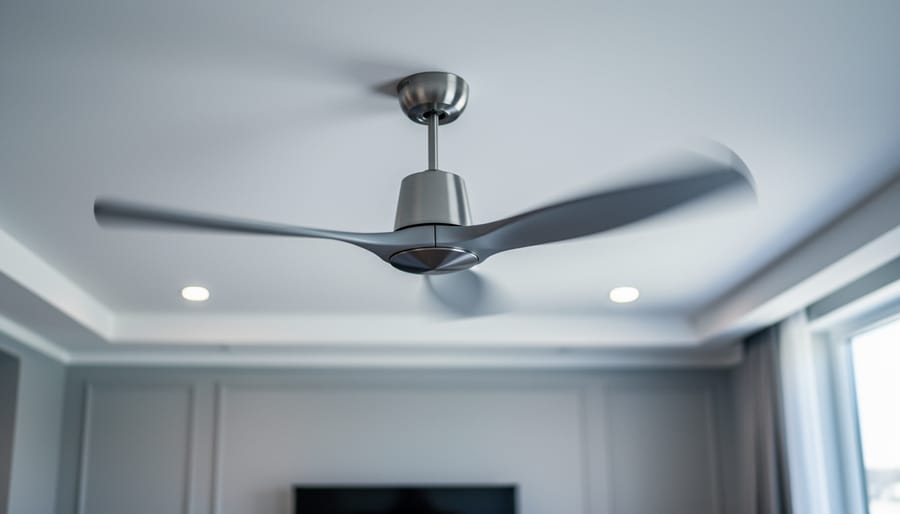
Point your camera at a moving fan blade or spinning object with clear markings, then shoot at 1/1000s or faster in electronic shutter mode. If the blade appears bent, slanted, or distorted in the image, you’re witnessing rolling shutter—the telltale sign that your camera’s sensor reads data line-by-line rather than all at once. This simple test reveals how your specific camera handles fast motion, which directly impacts everything from sports photography to panning shots.
Record the degree of distortion you observe, then compare it against known benchmarks for your camera model. A quick sweep past vertical lines—like…
High-Speed Sync Flash: When Your Shutter Is Too Fast for Normal Flash
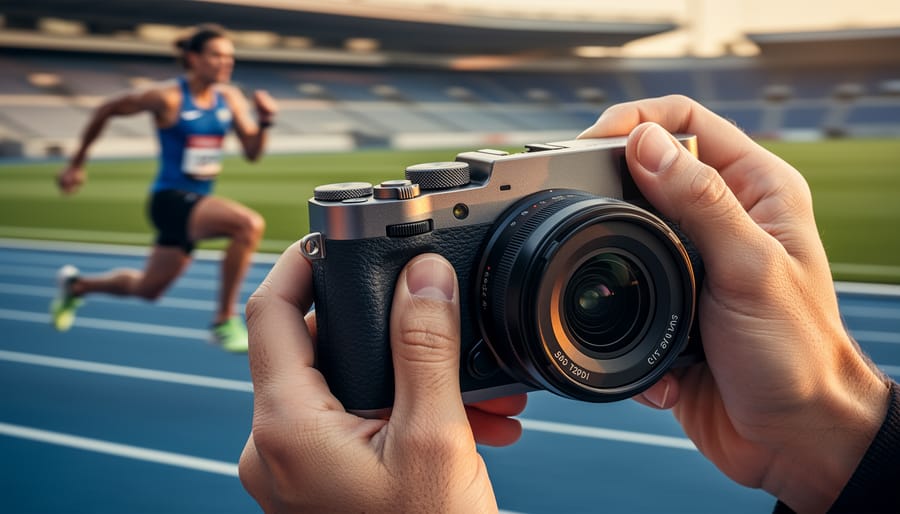
Freeze a tennis player mid-serve in bright afternoon sun with your flash wide open at f/2.8. That’s the promise of high-speed sync (HSS), a technology that breaks through your camera’s normal sync speed barrier of 1/200th or 1/250th second. Without HSS, shooting with flash in bright light forces you into a frustrating compromise: either stop down to f/11 or darker to avoid the dreaded black bar across your frame, or abandon flash altogether and lose that beautiful fill light that makes your subject pop.
High-speed sync works by transforming your flash from a single burst into a rapid pulse of light that fires …
Why Your Photos Have Weird Bands (And How to Test for LED Flicker)
Test for LED flicker by shooting a series of images at progressively faster shutter speeds, starting at 1/60th of a second and increasing to 1/500th or beyond. Dark bands appearing across your frame indicate artificial lighting that cycles faster than your camera can capture uniformly. This phenomenon, called banding or the rolling shutter effect, occurs because LED and fluorescent lights pulse at frequencies tied to electrical currents, typically 100 or 120 times per second depending on your region’s power grid.
Switch your camera to shutter priority mode and photograph a white wall or neutral surface under the suspect …