 By
By 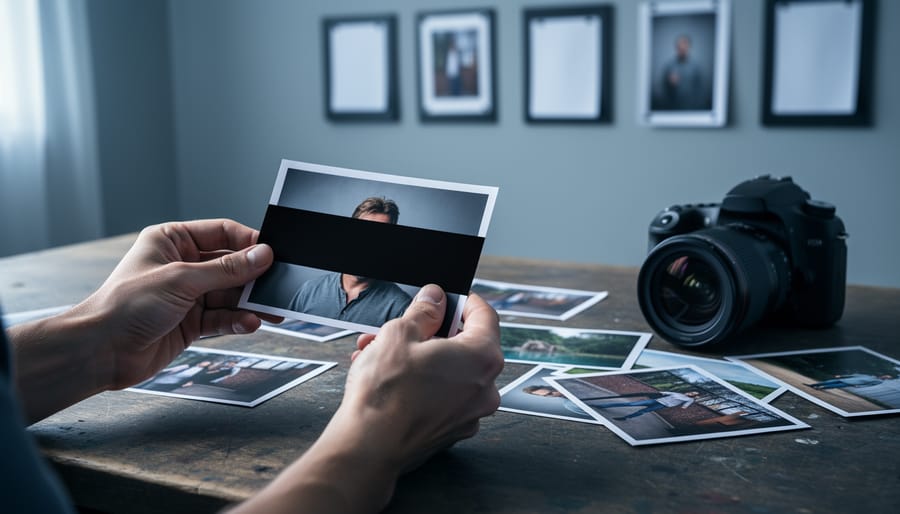
Your photograph of a breastfeeding mother was removed from Instagram within minutes. A gallery canceled your documentary series on migrant workers after pressure from local officials. Your street photography book faced distribution challenges because it contained images of protest signs. These aren’t hypothetical scenarios—they’re experiences photographers face daily as they navigate an increasingly complex landscape of censorship.
Censorship in photography operates on multiple levels, from platform algorithms flagging artistic nudes as pornography to governments restricting documentary work that challenges official narratives. The line between protecting communities and suppressing artistic expression has never been more contested, and photographers find themselves caught between creative vision and practical reality.
Understanding what triggers censorship is essential for every photographer. Social media platforms use automated systems that often can’t distinguish between exploitation and art. Government regulations vary wildly by region, making international publication complicated. Private venues and clients impose their own restrictions based on brand concerns or personal values. Even self-censorship—the internal editing we do before pressing the shutter—shapes what stories get told and which perspectives remain invisible.
The stakes are real. Censored work means lost income, damaged professional relationships, and stories that never reach their audience. But pushback against censorship has produced some of photography’s most important work. From Robert Mapplethorpe’s legal battles that redefined artistic freedom to contemporary photographers documenting suppressed social movements, the tension between restriction and expression has driven the medium forward.
This article examines the practical realities of censorship in photography: what restrictions you’ll encounter, why they exist, how to navigate platform policies without compromising your vision, and when challenging censorship becomes necessary. Whether you’re shooting commercial work that needs wide distribution or documentary projects pushing social boundaries, understanding these dynamics protects both your creative integrity and professional viability.
The Invisible Lines: What Visual Censorship Really Means for Photographers
When Platforms Become Gatekeepers
The landscape has shifted dramatically in recent years. Social media platforms, stock photography agencies, and online galleries have become the primary gatekeepers between photographers and their audiences. While these platforms connect creators with millions of potential viewers, they also enforce content policies that often extend far beyond what’s legally required.
Take Instagram, for example. The platform routinely removes artistic nude photography that would be perfectly acceptable in a gallery setting or photography publication. The challenge isn’t just about what gets removed, but when and why. A fine art nude might remain untouched for months, gathering thousands of likes, only to be suddenly flagged and deleted without clear explanation. Meanwhile, nearly identical images from different accounts remain visible. This inconsistency leaves photographers guessing about where the boundaries actually lie.
Algorithmic censorship presents an even more complex problem. Your images might not get removed, but they could be shadowbanned, meaning they simply won’t appear in search results or reach your followers’ feeds. You’ll never receive a notification about this reduced visibility. Many photographers have noticed dramatic drops in engagement on images featuring nudity, political themes, or protest imagery, even when the content violates no stated policies.
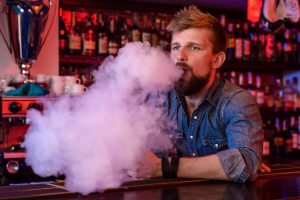
Stock photo agencies add another layer of restriction. Most maintain standards considerably more conservative than what copyright law requires. Images featuring smoking, alcohol, visible tattoos, or even everyday protest signs often get rejected, not because they’re inappropriate, but because agencies fear they might be harder to license. These commercial considerations shape what imagery becomes available for publications, advertising, and creative projects worldwide.
The frustration intensifies because these platforms rarely provide meaningful appeals processes or clear guidance about what crosses the line.
The Geography of Acceptable Images
A photograph of two women holding hands in public might win awards in Amsterdam, face platform removal in certain Middle Eastern countries, and spark debate in parts of the United States. This isn’t theoretical—it’s the daily reality photographers navigate when sharing work across borders or platforms with global reach.
The same beach photograph showing modest swimwear could appear on magazine covers in France but violate decency standards in conservative regions of Southeast Asia. Documentary photographers working in conflict zones quickly learn that images acceptable to Western news outlets might endanger local sources if published without careful consideration of regional sensitivities. Understanding how cultural perspectives shape photography becomes essential for anyone working internationally.
Religious imagery presents particularly complex challenges. A street photograph capturing everyday worship might be celebrated as cultural documentation in one context but deemed disrespectful in another. I’ve spoken with photographers who’ve had exhibition pieces removed in certain countries while the same work received critical acclaim elsewhere. Political subjects multiply these complications—images of protests or demonstrations carry vastly different consequences depending on the government in question.
Even nature photography isn’t immune. Photographs of certain sacred mountains or protected sites face restrictions in countries where these landscapes hold religious significance. Food photography involving pork or beef can create unexpected issues in regions with dietary restrictions.
Social media platforms attempt to create universal standards, but they inevitably reflect Western corporate values, creating friction with users from different cultural backgrounds. This means photographers must increasingly think globally about their work, even when shooting locally, anticipating how images might be received across different cultural contexts before clicking the shutter.
Cultural Flash Points: What Gets Censored and Why
The Body and Nudity: A Global Patchwork
The human body has been a central subject in art for millennia, yet what’s considered acceptable varies wildly depending on where you are and which platform you’re using. For photographers, this creates a minefield of contradictions that can feel arbitrary and frustrating.
Western art history celebrates the nude figure—think of all those Renaissance paintings and classical sculptures we study in museums. Yet modern platforms often flag artistic nudes while allowing images that sexualize clothed bodies. The algorithms can’t always distinguish between a documentary photograph of indigenous peoples in traditional dress (or lack thereof) and content that violates community standards. National Geographic photographers have famously encountered this problem, with educational content about remote cultures getting flagged simply because community members aren’t wearing Western clothing.
The gender double standard adds another layer of complexity. Male nipples? Generally fine. Female nipples? Instant violation on most major platforms, even in breastfeeding photos or mastectomy documentation. This has led to creative workarounds and ongoing debates about whose bodies are inherently “obscene” versus natural.
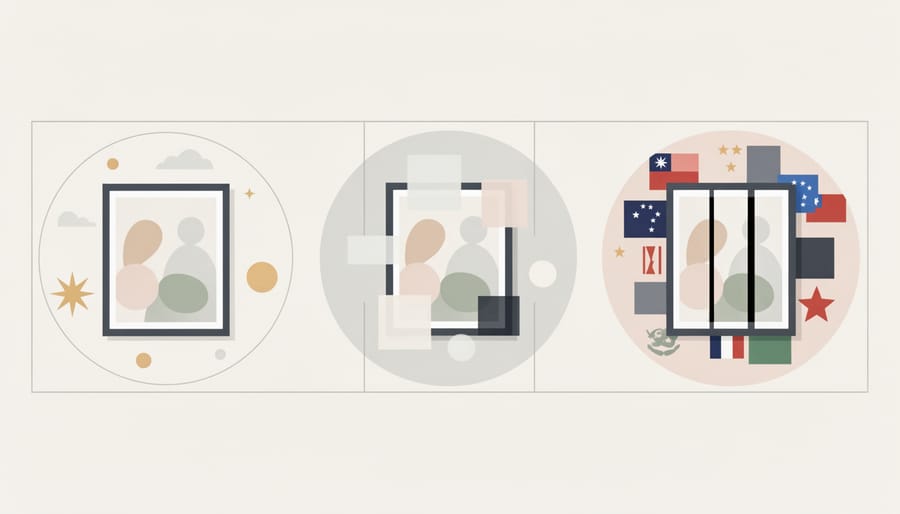
Geography matters enormously too. A fine art nude that wins awards in Europe might get you banned in more conservative regions. Some countries prohibit any depiction of nudity regardless of artistic merit, while others draw distinctions based on context and intent. The challenge for photographers is that online platforms must navigate all these cultural perspectives simultaneously, often defaulting to the most restrictive interpretation.
The line between art and obscenity remains frustratingly subjective. Intent matters, context matters, and presentation matters—but automated systems don’t evaluate these nuances well. Understanding your platform’s specific guidelines and your target audience’s cultural context isn’t just good practice; it’s essential for keeping your work visible.
Religion, Politics, and Power
Photography intersects with power in ways that can quickly become dangerous. When you point your camera at religious symbols, political leaders, or government buildings, you’re entering territory where art meets authority—and where censorship often follows.
Religious imagery presents particularly complex challenges. In 2012, Pakistani photographer Samia Rasheed faced death threats after documenting minority religious communities in her country. Her work, intended to promote tolerance, was deemed blasphemous by extremist groups. Similarly, Andres Serrano’s “Piss Christ” photograph sparked international controversy and was physically attacked in multiple countries, demonstrating how religious sensitivities can lead to both censorship and violence against artists.
Political photography carries equally high stakes. Chinese photographer Lu Guang disappeared in 2018 after documenting pollution, poverty, and ethnic tensions. He resurfaced weeks later but has faced continued restrictions on his work. Iranian photographers regularly navigate strict government controls—Alieh Motalebzadeh received a two-year suspended sentence in 2019 for photographing women without mandatory hijabs during protests.
Even in democratic nations, photographers face consequences. In 2020, multiple photojournalists covering Black Lives Matter protests in the United States were arrested or had equipment confiscated, despite constitutional protections. Australian photographer Andrew Quilty was denied a U.S. visa in 2019 after documenting civilian casualties in Afghanistan, highlighting how politically sensitive work can affect photographers’ ability to travel and work internationally.
The pattern is clear: photographs that challenge power structures, expose uncomfortable truths, or question religious authority frequently trigger censorship attempts. Understanding these risks doesn’t mean avoiding difficult subjects—it means approaching them with awareness of potential consequences and making informed decisions about when the importance of documentation outweighs personal risk.
Violence, Conflict, and Documentary Truth
Documentary photographers face a challenging paradox: the images that most powerfully convey human suffering are often the ones most likely to be censored. When photojournalists document war, famine, or crisis, they’re creating historical records that society needs to see—yet these same images may be deemed too graphic for publication or social media platforms.
The ethical framework of photojournalism ethics emphasizes truth-telling and bearing witness. Kevin Carter’s Pulitzer Prize-winning photograph of a vulture stalking a starving child in Sudan sparked debate about both the photographer’s role and whether such images should be shown. While disturbing, it brought international attention to a humanitarian crisis that might otherwise have been ignored.
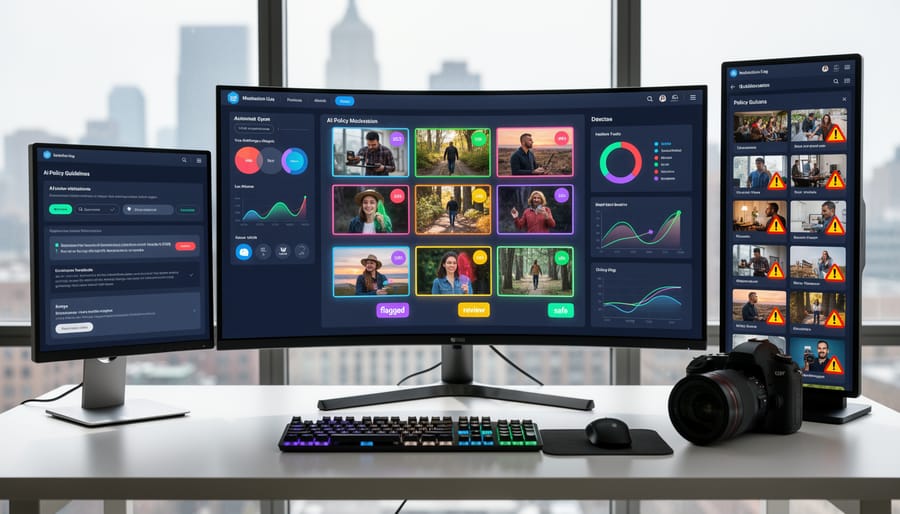
Social media algorithms now automatically flag or remove graphic content, sometimes catching legitimate news photography in their filters. This creates a troubling scenario where migration photography showing refugee suffering or images documenting police violence disappear from public view, effectively sanitizing our understanding of current events.
The line between protecting viewer sensitivity and erasing uncomfortable truths is razor-thin. Historical censorship has allowed atrocities to continue by keeping them invisible. Documentary photographers must navigate this tension thoughtfully, perhaps using content warnings while preserving the right to show reality unfiltered. When platforms or publications censor documentary work, they’re not just removing an image—they’re potentially rewriting history by making certain realities unseen and therefore easier to ignore.
The Digital Age Dilemma: Algorithms, AI, and Over-Censorship
When Your Fine Art Gets Flagged as Inappropriate
You’ve spent weeks preparing for a gallery exhibition, only to have your social media promotion rejected within minutes. An algorithm flagged your carefully composed fine art nude as “violating community standards.” Or perhaps your documentary series on maternal health disappeared without warning. You’re not alone—this happens to professional photographers daily.
Consider renowned photographer Spencer Tunick, whose large-scale nude installations routinely get removed from platforms, forcing him to share heavily cropped versions that compromise his artistic vision. Fashion photographers shooting swimwear campaigns find themselves shadow-banned, while photojournalists documenting conflict zones see their work removed for depicting violence—even when it’s newsworthy and essential.
When your work gets flagged, act quickly. Most platforms offer appeals processes, though they’re often buried in help menus. Document everything: take screenshots of the removal notice, your original post, and any correspondence. Keep a detailed record showing your artistic intent, exhibition history, and professional credentials.
In your appeal, be specific about why your work qualifies as art rather than prohibited content. Reference the platform’s stated exceptions for artistic, educational, or newsworthy material. Mention any gallery representation, publications, or professional affiliations that establish your credibility.
Prepare alternative versions of sensitive work before posting. Create crops or contextual frames that reduce algorithmic triggers while preserving your message. Maintain a portfolio website outside social platforms—your own domain where algorithms can’t touch your complete body of work.
Build relationships with photography communities and advocacy groups. Organizations like the National Press Photographers Association often assist members facing censorship. Sometimes collective voices achieve what individual appeals cannot, pushing platforms to reconsider overzealous policies affecting legitimate artistic expression.
Navigating Censorship Without Compromising Your Vision
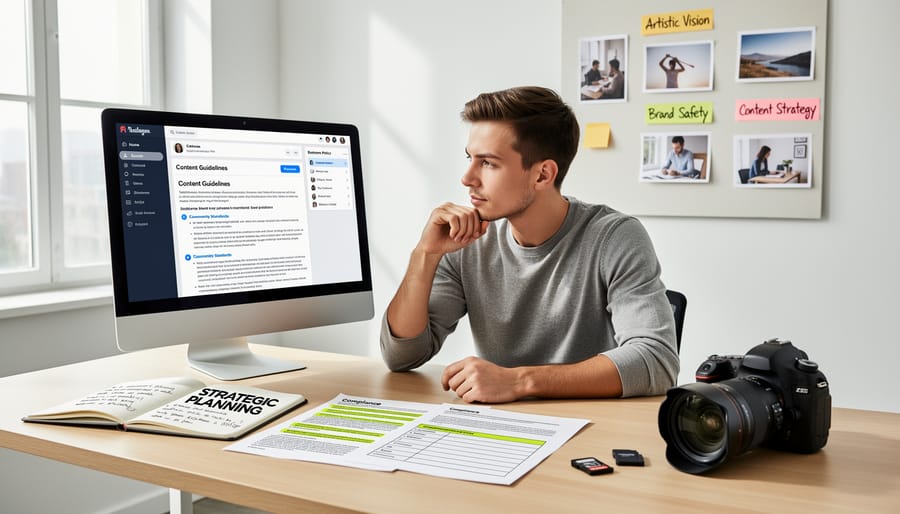
Know Before You Shoot: Research and Risk Assessment
Before you pack your camera bag for an international project, invest time in understanding where you’re headed. Start with official government resources like the U.S. State Department’s country information pages or equivalent agencies in your home country. These outline legal restrictions, cultural sensitivities, and current political climates that might affect photographers.
For cross-cultural photography, connect with local photographers through social media groups or photography forums. They offer insights you won’t find in guidebooks, like which neighborhoods welcome street photography and which don’t, or whether photographing certain religious sites might cause offense even when technically legal.
Create a risk assessment checklist for each project. Consider what you’re photographing (political subjects, religious sites, children, military installations), where you’ll be working (public versus private spaces), and how you plan to use the images (personal portfolio, editorial publication, commercial work). Different uses carry different levels of scrutiny.
Document your research. Save screenshots of relevant laws, email exchanges with local contacts, and official permits. If questioned, this paper trail demonstrates your good-faith effort to comply with local regulations.
Finally, have a backup plan. Know your country’s embassy location, carry contact information for local legal assistance, and consider travel insurance that covers equipment confiscation. Understanding the worst-case scenario helps you make informed decisions about whether a particular shot is worth the potential consequences.
Platform-Specific Strategies
Each platform operates under different rules and cultural expectations, requiring you to adapt your presentation strategy while preserving your artistic vision. Understanding these nuances helps you reach your intended audience without unnecessary friction.
Instagram presents perhaps the strictest challenge for photographers. The platform’s automated systems flag content aggressively, often catching artistic nudity, protest imagery, or documentary work in their filters. Consider creating alternate crops that maintain compositional integrity while conforming to guidelines. A portrait series might show tight facial compositions on Instagram while reserving wider shots for your portfolio site. Include clear context in captions explaining documentary or artistic intent, as human reviewers may overturn automated flags when purpose is evident.
Facebook’s community standards allow slightly more flexibility for newsworthy or artistic content, but enforcement remains inconsistent. Photography groups within Facebook often establish their own additional guidelines, so familiarize yourself with community-specific rules before posting. When sharing challenging work, engage proactively with your audience through thoughtful descriptions that establish artistic context before viewers even see the image.
Photography-specific communities like Flickr or 500px typically embrace artistic expression more openly, though they still maintain baseline content policies. These platforms work well for building a following around conceptual or fine art projects that mainstream social media might restrict. Take advantage of their tagging systems and discussion features to connect with audiences specifically interested in your photographic approach.
Stock agencies each maintain distinct submission guidelines reflecting their client bases. Editorial categories generally permit more challenging content than commercial licenses. Review individual agency policies carefully and categorize your work appropriately. Some photographers maintain separate portfolios across multiple agencies, tailoring submissions to each platform’s acceptance criteria while ensuring their complete vision remains accessible somewhere.
Building Multiple Distribution Channels
Putting all your eggs in one basket is never a good strategy, especially when that basket has unpredictable content policies. Photographers who rely solely on Instagram or Facebook to showcase their work have learned this lesson the hard way when accounts disappear overnight without warning or appeal.
The solution is building a diversified presence across multiple channels. Start with your own website, which you control completely. Platforms like WordPress, Squarespace, or custom-built sites give you ownership over your content and presentation. Nobody can take it down except you.
Next, create an email list. This direct connection with your audience bypasses algorithmic feeds and platform restrictions entirely. Services like Mailchimp or ConvertKit let you share new work, exhibitions, or projects without worrying about censorship filters.
Consider alternative platforms with different policies. Sites like Tumblr (post-2018 policy changes notwithstanding), Flickr, or photography-specific communities often have clearer guidelines than mainstream social media. Some photographers maintain presences on platforms like Ello or VSCO specifically for more artistic work.
Think of social media as promotional tools that drive traffic to your owned channels, not as your primary gallery. This approach means if one platform restricts your content, you haven’t lost your entire audience or portfolio.
The Photographer’s Role: Pushing Boundaries vs. Respecting Cultures
As photographers, we walk a fascinating tightrope between artistic expression and cultural responsibility. The camera grants us incredible power to tell stories, challenge norms, and spark conversations, but with that power comes a genuine obligation to consider the impact of our work.
Let’s be honest about something: not all censorship is unjust, and not all boundary-pushing is brave. Sometimes what feels like artistic courage is actually cultural insensitivity dressed up in creative language. The key lies in understanding the difference.
When you’re working within your own community or culture, challenging censorship often means questioning power structures that limit free expression. Think of photographers who’ve documented social movements, exposed corruption, or depicted subjects deemed controversial by authorities. These are cases where pushing boundaries serves a genuine public interest and reflects lived experiences that deserve visibility.
Cross-cultural work, however, demands a different approach. When documentary photography takes you into communities outside your own, you’re essentially a guest. The question becomes: are you challenging censorship on behalf of people whose stories aren’t being heard, or are you simply ignoring cultural boundaries that don’t align with your worldview?
Consider this practical example: photographing religious ceremonies in indigenous communities. Some cultures have legitimate spiritual reasons for restricting imagery. Disregarding these restrictions isn’t brave artistic expression; it’s disrespect. Conversely, if government authorities forbid you from photographing peaceful protests or humanitarian crises, that’s censorship worth challenging.
The distinction requires honest self-reflection. Ask yourself: who benefits from this image? Am I amplifying voices that need to be heard, or am I prioritizing my artistic vision over people’s dignity and wishes? Is the restriction I’m facing about protecting power, or protecting people?
When documenting cultural heritage or sensitive subjects, building relationships matters more than getting the shot. Spend time listening before shooting. Seek permission, not just legally but ethically. Explain your intentions clearly and be prepared to honor a “no.”
This doesn’t mean self-censoring important work. It means recognizing that ethical photography requires understanding context, building trust, and sometimes accepting that certain stories aren’t ours to tell. The most powerful images come from photographers who balance courage with conscience, creating work that challenges injustice while honoring human dignity.
Understanding censorship isn’t about limiting your creative vision—it’s about expanding your strategic toolkit. The photographers who thrive in today’s complex landscape aren’t those who avoid controversial subjects, but those who approach them with both passion and awareness. They know their platforms, understand their audiences, and make informed choices about when to adapt and when to stand firm.
Think of censorship literacy as you would any technical skill. Just as understanding depth of field doesn’t restrict your creativity but gives you more control over your images, knowing how different platforms and cultures respond to visual content empowers you to share your work more effectively. You’re not compromising your artistic integrity—you’re becoming a more sophisticated communicator.
The reality is that every choice you make as a photographer already involves navigating constraints. You work within budget limitations, weather conditions, equipment capabilities, and client expectations. Cultural and platform-specific norms are simply another set of considerations that inform your creative decisions and distribution strategies. Some of your best work might live in gallery spaces rather than social media feeds, and that’s perfectly fine.
Remember that you’re part of a larger community of image-makers collectively shaping how society views and responds to photography. Every thoughtful conversation you have about a removed image, every well-crafted artist statement that provides context, and every time you choose to publish work despite potential pushback—these actions contribute to evolving norms. The boundaries around acceptable imagery aren’t fixed; they shift through dialogue and persistent creative expression.
Move forward with confidence, create with intention, and share with strategy. Your voice matters, and your images have power precisely because they engage with the world as it is.
 By
By