 By
By 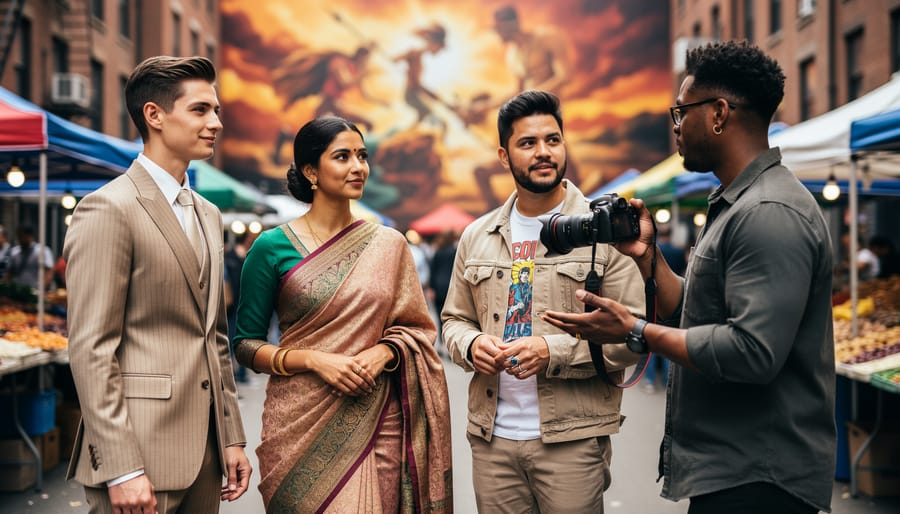
Examine your contact sheets and camera rolls with fresh eyes, asking yourself whose stories dominate your frames and whose remain invisible. Gender expression shifts dramatically across borders—what reads as traditionally masculine in Tokyo might signify differently in São Paulo, while non-binary visibility in Berlin’s queer communities offers entirely different visual languages than those in rural India. Understanding these nuances transforms you from a casual observer into a photographer capable of creating work that honors rather than appropriates.
Photography has historically reinforced limiting gender narratives, from early anthropological images that exoticized “foreign” bodies to fashion editorials that reduced entire cultures to aesthetic backdrops. Yet contemporary image-makers are dismantling these patterns, using cameras to document the rich spectrum of gender identities thriving within specific cultural contexts. This shift demands more than technical proficiency—it requires genuine engagement with communities, recognition of power dynamics inherent in pointing a lens at another person, and willingness to question your own cultural assumptions about gender presentation.
The photographers succeeding in this space share common practices: they prioritize sustained relationships over quick shoots, collaborate with subjects on representation choices, and situate their work within broader conversations about visibility and rights. They understand that a portrait of a hijra community member in India carries different weight than documenting ballroom culture in New York, though both challenge Western binary frameworks. They recognize when their presence adds value versus when it perpetuates voyeurism.
This approach to photographing gender across cultures isn’t about mastering a checklist—it’s about developing visual literacy that respects complexity while creating images powerful enough to shift perspectives.
What ‘Culture Gender’ Really Means Behind the Lens
When you point your camera at someone, you’re not just capturing their physical appearance—you’re documenting how they express identity within the framework of their cultural world. Culture gender refers to the ways different societies understand, express, and expect gender to be performed, and these expectations profoundly influence how people present themselves to your lens.
Unlike biological sex, which relates to physical characteristics, or gender identity, which is personal and internal, culture gender encompasses the social scripts, visual codes, and behavioral expectations that vary dramatically from one society to another. Think of it as the invisible rulebook that tells people in a given culture what masculine, feminine, or non-binary expression should look like—and these rules are wildly different depending on where you’re photographing.
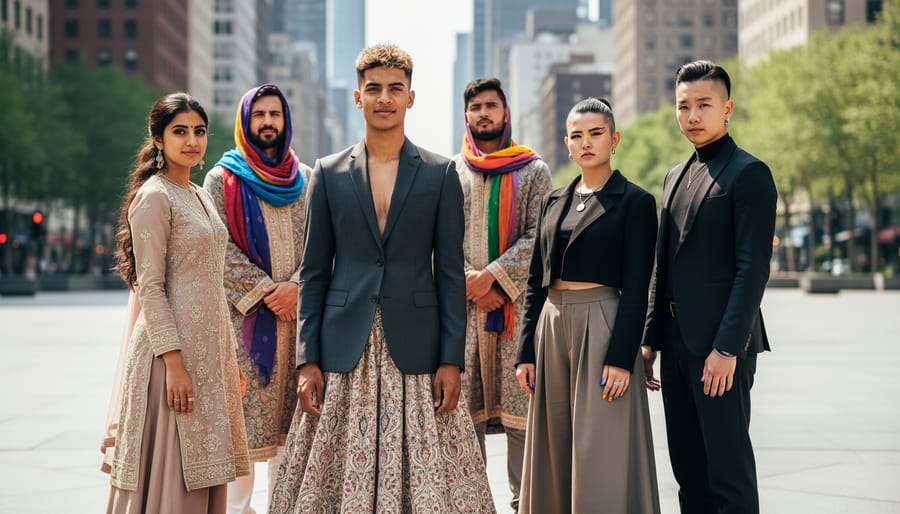
Consider how cultural perspectives shape photography when you’re working across different contexts. In Western fashion photography, we often see sharp gender distinctions in styling and posing. But photograph a traditional Samoan fa’afafine—people who embody both masculine and feminine qualities—and you’ll encounter an entirely different cultural framework where a third gender category is recognized and celebrated. Similarly, India’s hijra community, Mexico’s muxes, or Thailand’s kathoey all represent culturally specific ways of understanding gender that don’t fit into binary Western categories.
These differences become tangible behind the camera. A photographer working in conservative contexts might observe subjects adjusting their posture, clothing, or expression to align with strict cultural expectations. In more fluid environments, you might witness greater experimentation with gender presentation. The key is recognizing that what feels natural or normal to your subjects is shaped by their cultural context, not universal truths about gender.
Real-world example: When photographing a wedding in a culture where men and women celebrate separately, you’re witnessing culture gender in action—spaces and behaviors are divided along gender lines in ways that might differ completely from weddings in other societies. Understanding this helps you anticipate moments, position yourself appropriately, and capture authentic expressions of identity rather than imposing your own cultural assumptions about how people should look or behave.
The Camera’s Role in Defining (and Redefining) Gender Norms
Colonial Photography and Gender Stereotypes
When photography emerged in the mid-19th century, it quickly became a powerful tool of colonial expansion, carrying Western ideals about gender roles to every corner of the globe. Colonial photographers—often working alongside missionaries, anthropologists, and government officials—didn’t simply document what they saw. They actively constructed visual narratives that reinforced European binary gender systems while exoticizing or pathologizing cultures with different gender expressions.
These early photographers created staged portraits that emphasized perceived differences between “civilized” Western subjects and “primitive” colonial ones. Women from colonized regions were frequently photographed in ways that either hypersexualized them or presented them as passive, domestic figures in need of Western “liberation.” Meanwhile, third-gender individuals and gender-fluid expressions found in many Indigenous cultures were either ignored entirely or sensationalized as curiosities for European audiences.
The studio setup itself imposed Western standards. Photographers directed subjects into poses reflecting Victorian gender ideals—women seated and demure, men standing and authoritative—regardless of cultural context. This visual language became so dominant that it influenced how cultural identity in documentary photography developed for generations.
These colonial-era photographs now populate museum archives worldwide, their biased framing often accepted as objective historical record. Understanding this legacy is essential for contemporary photographers working across cultures, helping us recognize how deeply Western gender assumptions have shaped our visual vocabulary and inspiring us to approach gender representation with greater cultural sensitivity and awareness.
When Photographers Break the Rules
Contemporary photographers worldwide are pushing back against traditional gender portrayal, creating powerful visual narratives that challenge cultural assumptions. Their work demonstrates how the camera can become a tool for social change and authentic representation.
Nigerian photographer Ruth Ossai stands out for her vivid portraits of gender-fluid individuals in Lagos, capturing subjects in ways that honor both traditional Yoruba aesthetics and contemporary queer identity. Her series “Not All Shadows Are Dark” features bold colors and intimate compositions that present gender as fluid rather than binary, directly countering colonial-era photographic traditions that imposed rigid Western gender categories on African subjects.
In India, Dayanita Singh’s ongoing project documenting hijra communities over three decades shows the power of long-term documentary work. Singh’s approach emphasizes collaboration and trust, allowing subjects to guide their own representation rather than being observed from an outsider’s perspective.
Zanele Muholi from South Africa creates striking black-and-white self-portraits and community images that document Black LGBTQ+ experiences while simultaneously reshaping visual language around race, gender, and sexuality. Their high-contrast aesthetic and direct gaze challenge viewers to confront their own assumptions.
American photographer Jess T. Dugan combines portraiture with text, capturing transgender and gender-nonconforming individuals across the United States. Their collaborative process involves extensive conversations with subjects, ensuring authentic representation that reflects lived experience rather than external interpretation. These photographers prove that breaking rules isn’t about technical rebellion but rather questioning whose stories get told and how.
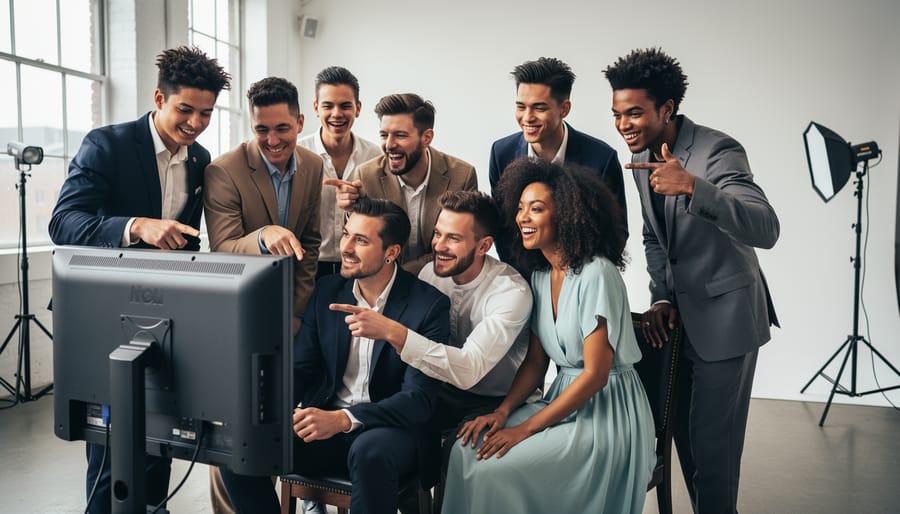
Queer Photographic Cultures: Creating Space Outside the Binary
Self-Representation and Community Documentation
For decades, queer communities have been photographed primarily through the lens of outsiders, whether well-meaning documentarians or sensationalist media outlets. This dynamic is shifting dramatically as LGBTQ+ individuals reclaim their narratives through self-documentation projects that center authenticity over external interpretation.
Community-driven archives like the Queer|Art|Archive and trans memory projects worldwide demonstrate how insider perspectives create fundamentally different visual records. When photographer Zackary Drucker collaborated with Rhys Ernst on “Relationship,” their intimate self-portrait series spanning their transitions, they produced images impossible for an outsider to capture—tender, unglamorous, and profoundly honest moments that challenged mainstream trans representation.
Social media platforms, despite their limitations, have democratized this self-documentation process. Instagram accounts like Everyday Queer and regional LGBTQ+ photography collectives allow communities to curate their own visual histories in real-time. These platforms become living archives where ordinary moments—getting ready for pride, family dinners, quiet domesticity—gain historical significance.
Practical examples of community documentation include photo voice projects, where participants receive cameras and training to document their own lives, and collaborative portrait sessions where subject and photographer share decision-making power. The Filipino LGBTQ+ collective Projekt captured their community through member-led shoots, ensuring cultural context and personal agency remained intact.
This shift matters because self-representation allows communities to control not just how they’re seen, but what stories get told at all. The resulting images prioritize complexity and humanity over spectacle, creating authentic records that future generations will inherit.
The Instagram Effect: Digital Platforms as Safe Spaces
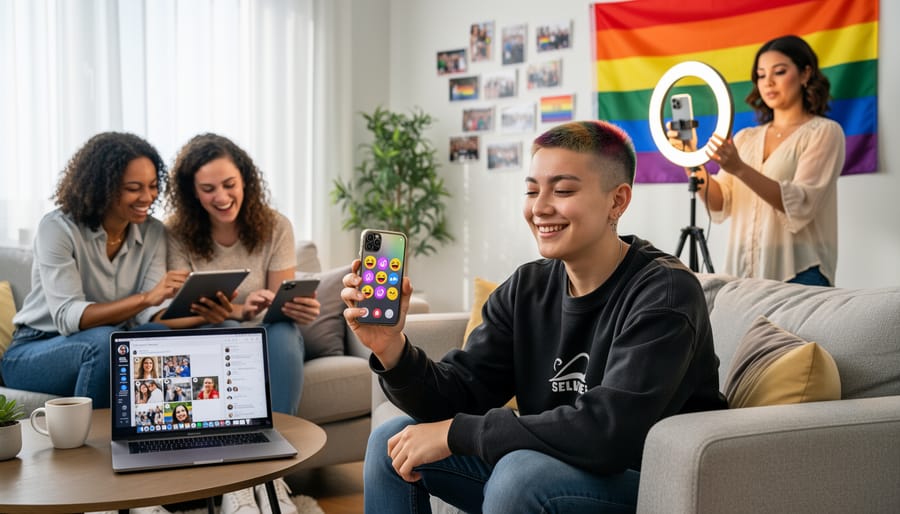
Social media platforms, particularly Instagram, have fundamentally transformed how queer individuals explore and express gender identity through photography. Unlike traditional media outlets that historically gatekeep representation, these digital spaces allow anyone with a smartphone to document their authentic selves and find their community.
Instagram’s visual-first format has become especially powerful for gender-nonconforming individuals who might struggle with text-based platforms. A single portrait can communicate aspects of gender expression that words sometimes cannot capture. Hashtags like #nonbinary, #genderqueer, and #transvisibility have created searchable archives of gender diversity, with millions of posts connecting people across continents who share similar experiences.
The platform’s algorithm-driven discovery features mean that users can stumble upon representations of gender they may never encounter in their immediate physical environment. A teenager in a conservative rural area can now access images of thriving nonbinary adults, drag performers, and gender-fluid fashion innovators, seeing possibilities for their own future that previous generations couldn’t imagine.
Photographer Zanele Muholi leveraged Instagram to amplify their ongoing project documenting Black LGBTQ+ South Africans, reaching global audiences beyond gallery walls. Similarly, countless emerging photographers use the platform to build portfolios focused on queer representation without needing traditional publishing deals or exhibition spaces.
However, these platforms present challenges too. Instagram’s community guidelines around nudity have disproportionately affected transgender creators, and algorithm changes can suddenly reduce visibility for queer content. Despite these obstacles, digital platforms remain crucial safe spaces where photographers and subjects collaborate to reshape visual narratives around gender.
For photographers working in this space, engaging authentically with these communities rather than extracting content builds trust and creates more meaningful work that resonates with lived experience.
Practical Considerations: Photographing Gender with Cultural Sensitivity
Doing Your Research Before the Shoot
Before you even pick up your camera, invest time in understanding the cultural context you’re entering. This isn’t about becoming an expert overnight, but rather approaching your subject with genuine curiosity and respect.
Start by researching the specific community you’ll be photographing. Many cultures recognize gender identities beyond the Western binary framework. For example, the Hijra community in South Asia, Two-Spirit people among Indigenous North American cultures, and Māhū in Hawaiian tradition all have distinct cultural roles and expressions that predate colonial gender concepts. Understanding these identities as legitimate cultural frameworks, rather than deviations from a Western norm, fundamentally shifts how you’ll approach your photography.
Seek out existing photographic work and writing by artists from these communities. This helps you avoid repeating harmful tropes or perspectives that have already been critiqued. Pay attention to how community members photograph themselves versus how outsiders have portrayed them historically.
Connect with cultural liaisons or community organizations when possible. A brief conversation with someone knowledgeable can prevent significant missteps. Ask about appropriate terminology, sensitive subjects to avoid, and whether certain visual elements carry meanings you might not recognize.
Consider the power dynamics at play. Who benefits from these images? How will they be used? Being transparent about your intentions helps build trust and ensures your subjects have agency in how they’re represented. This preparation demonstrates that you value people’s lived experiences over simply capturing an exotic or interesting subject.
Collaboration Over Extraction
The most meaningful photographs emerge when subjects become collaborators rather than simply objects in your frame. Before raising your camera, engage in genuine conversation about your intentions and invite input on how individuals wish to be represented. This dialogue transforms the dynamic from extraction to co-creation.
Ask permission before photographing, and go beyond a simple yes or no. Discuss what aspects of their identity they want to highlight and which might feel invasive or reductive. Some subjects may want to challenge stereotypes through specific poses or settings, while others prefer intimate, everyday moments. When documenting cultural experiences related to gender expression, let participants guide you toward authentic representation.
Share your images with subjects when possible, allowing them to provide feedback before publication. This practice builds trust and often reveals cultural nuances you might have missed. Consider inviting subjects to write their own captions or artist statements, giving them agency over the narrative surrounding their image.
Remember that collaboration means respecting boundaries. If someone declines to be photographed or requests certain images not be shared, honor those wishes without pressure. Building these relationships takes time, but the resulting photographs carry depth and authenticity that purely observational work cannot achieve.
Technical Choices That Matter
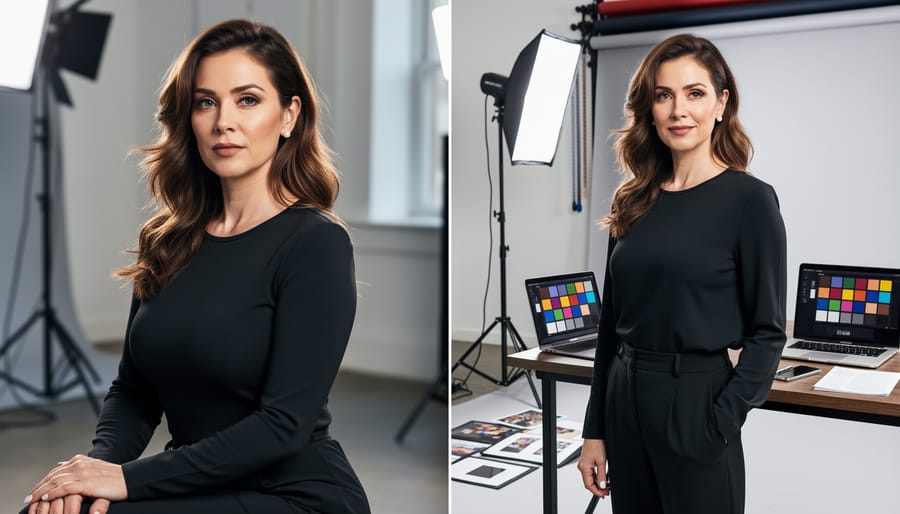
Every technical decision behind the camera carries cultural weight. Your choice of lighting can either flatten or celebrate skin tones across the melanin spectrum. Soft, diffused light might convey vulnerability traditionally coded as feminine, while hard shadows often signal masculine strength—but these associations aren’t universal or unchangeable.
Framing choices speak volumes about power dynamics. Shooting from below creates authority, while downward angles can diminish subjects. When photographing gender-nonconforming individuals, consider whether your composition honors their self-presentation or forces them into binary visual categories. A tight crop on facial features might emphasize traditionally gendered markers, while a wider environmental portrait can show subjects in their chosen contexts.
Editing decisions matter equally. Color grading that adds warmth and glow to women while keeping men’s portraits cooler perpetuates tired stereotypes. Be mindful of retouching practices—smoothing skin on feminine subjects while leaving masculine faces untouched reinforces narrow beauty standards.
The goal isn’t to avoid these techniques entirely but to deploy them consciously. Ask yourself: does this technical choice serve my subject’s self-expression, or does it impose my cultural assumptions about gender? When you photograph across cultural boundaries, these questions become even more critical to authentic, respectful representation.
Photographers Leading the Conversation
The photographers addressing gender and culture today represent a wonderfully diverse spectrum of voices, each bringing unique perspectives shaped by their own cultural contexts and lived experiences.
Zanele Muholi (South Africa) has been documenting Black LGBTQ+ communities in South Africa for over two decades. Their powerful portraits challenge both Western and traditional African notions of gender and sexuality, creating what they call “visual activism.” Muholi’s stark black-and-white self-portraits and community documentation provide an essential counter-narrative to mainstream representations of African identity and queerness.
Laurence Philomene (Canada) brings a distinctly contemporary approach to non-binary representation through surrealist self-portraiture and fashion photography. Their work explores gender fluidity with dreamlike imagery that feels both deeply personal and universally resonant. Philomene’s commercial success demonstrates growing acceptance of non-conforming gender narratives in mainstream visual culture.
Kovi Konowiecki (United States) photographs trans and gender-nonconforming individuals with remarkable intimacy and dignity. Working primarily in natural light, Konowiecki creates environmental portraits that situate subjects within their everyday spaces, emphasizing the ordinary beauty of trans lives rather than sensationalizing difference.
Dayanita Singh (India) offers a more subtle exploration through her documentation of Mona Ahmed, a hijra (a traditional South Asian third-gender identity). Singh’s decades-long photographic relationship demonstrates the importance of sustained, respectful engagement rather than extractive documentation. This approach exemplifies how cultural diaspora photography requires deep cultural understanding.
Cas Holmes (United Kingdom) combines photography with textile arts to explore gender identity through mixed-media storytelling. Their work demonstrates how photographers can push beyond traditional image-making to create layered narratives about gender experience.
Emerging voices include Malaysian photographer Rae Takahashi, whose work documents non-binary communities across Southeast Asia, and Brazilian photographer Juh Almeida, focusing on trans youth in favela communities. These photographers expand the geographic and cultural range of gender-conscious photography.
Each photographer demonstrates that culturally aware gender representation requires ongoing learning, genuine relationship-building with subjects, and willingness to challenge both your own assumptions and broader cultural narratives. Following their work provides both inspiration and practical education in approaching this vital photographic territory.
As photographers, we hold tremendous power in shaping how gender is perceived and understood across cultures. The images we create contribute to broader conversations about identity, representation, and human experience. Throughout this exploration of culture and gender in photography, we’ve seen how deeply intertwined these concepts are with history, context, and individual lived experiences.
The landscape of gender representation continues to evolve rapidly. What we consider groundbreaking today may become tomorrow’s starting point. Social media platforms have democratized visibility for gender-diverse individuals worldwide, while photographers increasingly collaborate with their subjects rather than simply documenting them. This shift toward participatory photography creates more authentic, nuanced representations that challenge stereotypes rather than reinforcing them.
Your role as a photographer in this ongoing evolution matters. Whether you’re shooting a portrait session, documenting a cultural event, or pursuing a personal project, approaching gender with curiosity rather than assumption opens doors to richer storytelling. Listen more than you assume. Ask questions with genuine interest. Recognize that your own cultural background influences what you see and how you frame it.
Take time now to examine your portfolio or recent work. What patterns emerge in how you’ve portrayed gender? Who has been centered in your images, and whose perspectives might be missing? Consider how you might expand your practice to embrace more diverse gender expressions and cultural contexts. The best photography doesn’t just capture what we already know—it reveals what we’ve yet to fully understand.


 By
By