
 By
By 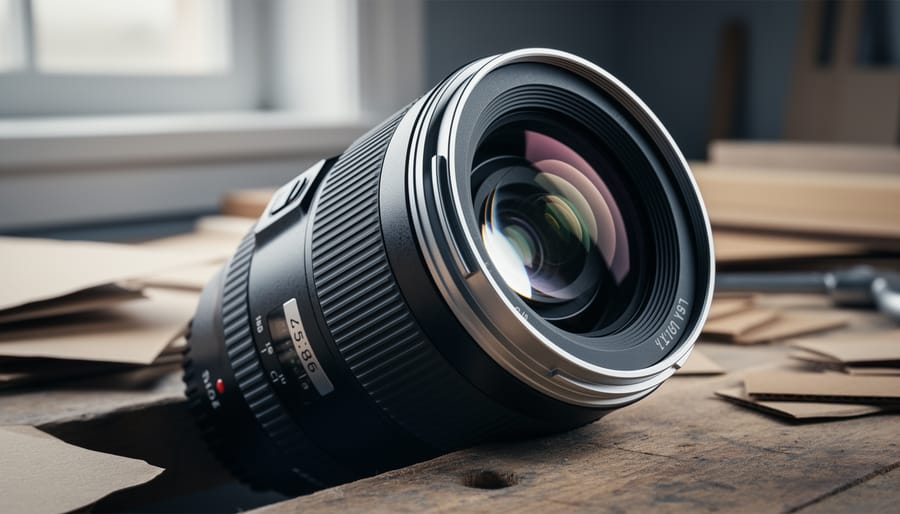
A biconcave lens is a diverging optical element with two inwardly curved surfaces that spreads light rays outward, making it essential for correcting specific vision problems and controlling focal length in complex lens systems. For photographers in 2026 seeking eco-conscious lenses understanding biconcave elements matters because these components play a critical role in multi-element designs that reduce chromatic aberration and distortion, often determining whether a lens can be manufactured with fewer elements and less environmental impact.
Unlike their convex counterparts that gather light to a focal point, biconcave lenses push light away from a central axis. You’ll find them tucked inside your camera lenses, usually paired with convex elements to fine-tune optical performance. They’re the reason a retrofocus wide-angle lens can maintain enough clearance for your camera’s mirror, and why telephoto designs can stay compact instead of stretching to impractical lengths.
The sustainability angle here isn’t obvious at first glance. Biconcave elements contribute to optical efficiency, which means lens designers can achieve sharp images with simpler formulas and lighter glass assemblies. Fewer rare-earth elements, reduced manufacturing waste, and lower shipping emissions all trace back to smart optical design. If you’re weighing upgrade options or looking to invest in glass that’ll last decades, knowing what’s inside your lenses, including how biconcave elements work, helps you make choices that align with both image quality and environmental responsibility.
Understanding Biconcave Lenses in Photography
Biconcave lenses might not be the first thing you think about when shopping for a new lens, but these curved glass elements play a crucial role in the optical quality you depend on. A biconcave lens curves inward on both sides, creating a thinner center than its edges. This distinctive shape makes diverging biconcave lenses essential for spreading light rays apart rather than concentrating them together.
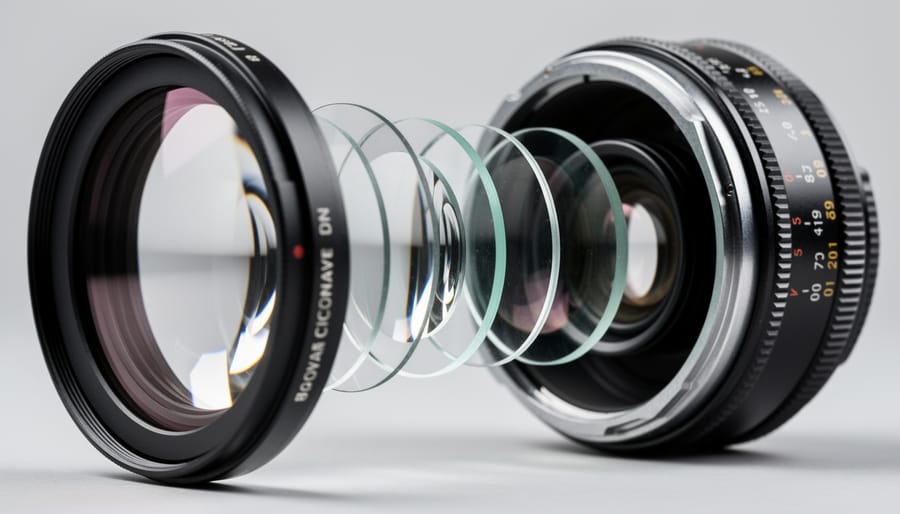
Inside your camera lens sits a sophisticated arrangement of multiple glass elements working together. Biconcave elements serve specific functions within this assembly. They counteract spherical aberration by correcting the tendency of convex lenses to focus light unevenly across their surface. They help control chromatic aberration, reducing those color fringing effects you sometimes see in lower-quality lenses. They also contribute to the overall focal length design, allowing engineers to create compact lens barrels without sacrificing optical performance.
You’ll never purchase a biconcave lens on its own for photography. These components live inside your lens barrel as part of a compound optical system, paired with convex lenses and other elements. A typical zoom lens might contain fifteen or more individual glass elements, several of which are biconcave. The quality of these internal elements directly impacts image sharpness, contrast, and color accuracy.
Why does this matter when choosing sustainable gear? Understanding that lenses are complex assemblies of precision-ground glass helps you appreciate why quality construction justifies a higher price. Cheaper lenses often use lower-grade glass in their biconcave and other elements, leading to faster degradation and earlier replacement. Premium lenses invest in better optical glass and precision manufacturing, extending useful life and reducing long-term environmental impact.
Key Factors When Choosing Eco-Conscious Lens Options
Manufacturing Materials and Processes
The glass in your camera lens starts as raw materials, silica sand, soda ash, limestone, that require substantial energy to melt and form. Traditional optical glass production operates at temperatures exceeding 1400°C, generating considerable carbon emissions. Some manufacturers now incorporate recycled optical glass (up to 30% in certain formulations), which reduces both raw material extraction and the energy needed for melting. The environmental benefit is measurable: recycled glass melts at lower temperatures and cuts production emissions by roughly 20%.
Lens coatings present another sustainability consideration. Modern lenses typically feature multiple anti-reflective, anti-scratch, and protective coatings applied through vacuum deposition. While these improve optical performance, the traditional coating process uses rare-earth elements and chemical treatments with environmental costs. Forward-thinking companies are developing water-based coating alternatives and investing in green lens manufacturing facilities powered by renewable energy.
Manufacturing location matters too. Producing lenses in facilities with strict environmental regulations, waste-water treatment systems, and renewable energy contracts reduces the overall footprint compared to less regulated operations. Some brands now disclose their manufacturing carbon intensity, allowing photographers to make informed comparisons. When researching lenses, look for manufacturers publishing detailed sustainability reports rather than vague environmental claims, transparency signals genuine commitment to reducing production impact.

Durability and Longevity
The most sustainable lens is the one you never have to replace. A well-constructed lens with metal barrel components and brass lens mounts can easily outlast plastic-bodied alternatives by decades. Professional-grade lenses often feature weather sealing with rubber gaskets that protect internal optical elements, including biconcave components, from moisture and dust that cause degradation over time.
When evaluating durability, examine the lens mount material first. Brass or stainless steel mounts withstand repeated mounting and dismounting without the wear that plagues cheaper plastic versions. Internal construction matters equally: lenses with metal focusing rings and aperture mechanisms resist the play and slippage that develop in plastic gears after heavy use.
Weather sealing extends lifespan considerably by preventing corrosion and fungus growth on internal elements. While sealed lenses command higher prices, they eliminate the common need for professional cleaning or element replacement that unsealed lenses require after exposure to humid conditions.
Repairability represents the sustainability factor photographers most frequently overlook. Manufacturers who offer replacement parts and publish service manuals enable decades of continued use. Before purchasing, research whether your chosen brand supports third-party repairs or restricts service to authorized centers. Some manufacturers design lenses with modular components that technicians can replace individually rather than requiring complete lens replacement when a single element fails.
Energy Efficiency in Autofocus Systems
When you’re evaluating lenses through an environmental lens, autofocus motor technology deserves attention beyond just speed and accuracy. The motor type directly impacts how much battery power your camera consumes, which translates to charging frequency and, over years of use, a meaningful energy footprint.
Ring-type ultrasonic motors (USM in Canon terminology, or similar implementations by other manufacturers) typically draw less power than traditional micro-motor designs, especially during continuous autofocus operation. They reach focus quickly and then consume minimal power to hold position. Linear motors in newer lens designs often improve on this further, using brief, efficient pulses rather than sustained power draw.
Stepping motors, common in budget lenses, can be less efficient during hunting behavior, that constant back-and-forth adjustment in low light. If you frequently shoot in challenging conditions where the lens searches for focus, this difference compounds.
The practical impact? A power-efficient lens might extend your battery life by 15-20% during active shooting sessions, reducing how often you charge and potentially extending your battery’s overall lifespan before replacement becomes necessary.
Manufacturer Sustainability Commitments
Researching manufacturer sustainability credentials requires digging deeper than marketing claims. Start with corporate annual reports, which publicly traded companies must publish; look for specific, measurable commitments rather than vague statements about “caring for the planet.” Certified B Corporations have undergone third-party verification of social and environmental performance, while ISO 14001 certification indicates verified environmental management systems.
Pay attention to carbon neutrality timelines with interim targets, not just distant 2050 promises. Companies serious about sustainability publish progress updates showing reduction percentages year-over-year. Investigate supply chain transparency: do they disclose where rare earth elements for autofocus motors originate? Ethical sourcing matters because mining practices for lens coatings and electronics carry environmental consequences.
Cross-reference manufacturer claims with independent assessments. Organizations like CDP (formerly Carbon Disclosure Project) score companies on climate action, and these ratings reveal which brands back up rhetoric with action. If a manufacturer won’t publicly share environmental data, that silence tells you something about their priorities.
Packaging and Accessories
When you unbox a new lens, the packaging itself carries environmental weight. Premium manufacturers increasingly use recycled cardboard and soy-based inks, while others still wrap products in layers of single-use plastic. Before purchasing, check whether the brand commits to minimal, recyclable packaging, some have eliminated plastic bags entirely, opting for biodegradable alternatives or reusable cloth pouches.
Equally important is what’s inside that box. Do you really need another plastic lens hood when you own three already? Some manufacturers bundle unnecessary duplicates, extra caps, straps, cleaning cloths, that end up in drawers. Look for brands offering streamlined packages or “bare bones” options that let you purchase only what you’ll actually use, reducing both cost and waste.

Types of Lenses: Comparing Environmental Impact
When comparing lens categories through an environmental lens, the differences in materials, construction methods, and expected lifespan reveal surprising insights that challenge conventional wisdom about optical gear. Understanding these trade-offs helps photographers make informed decisions that align both with their creative needs and sustainability values.
The prime versus zoom debate takes on new dimensions when you consider environmental impact. Prime lenses, with their simpler optical designs containing fewer glass elements (including biconcave components used for aberration correction), generally require less raw material and manufacturing energy. A typical 50mm prime might contain 6-8 lens elements, while a 24-70mm zoom could house 15-20 elements, each requiring precision grinding, polishing, and coating. However, owning several primes to cover the range of a single zoom increases your overall material footprint. The sustainable answer depends on your shooting style: if you genuinely use multiple focal lengths regularly, a quality zoom represents better resource efficiency than three or four primes gathering dust in your bag.
Construction materials present stark contrasts in environmental impact. Professional-grade lenses with metal barrels, brass lens mounts, and robust internal components demand more energy-intensive manufacturing but typically last decades with proper care. Consumer lenses with polycarbonate bodies and simpler mechanisms use fewer virgin materials initially but often fail mechanically within 5-10 years, creating electronic waste. This creates a sustainability paradox where the higher upfront environmental cost of professional construction pays dividends through extended useful life.
| Lens Type | Typical Materials | Expected Lifespan | Repairability | Key Environmental Factor |
|---|---|---|---|---|
| Professional Prime | Metal barrel, brass mount, glass elements | 20-30+ years | High (parts available) | Longevity offsets manufacturing impact |
| Consumer Zoom | Polycarbonate barrel, mixed materials | 5-10 years | Low (often unrepairable) | Shorter life creates replacement cycle |
| Professional Zoom | Metal construction, weather sealing | 15-25 years | High (serviceable) | Durability justifies complex manufacture |
| Vintage Manual | All-metal, simple mechanics | 40-60+ years | Very high (mechanical only) | Already manufactured, zero new resources |
The used and vintage market deserves special consideration as the most sustainable option available. A 1970s manual focus prime lens still functions perfectly today, requires no battery power for operation, and introduces zero new manufacturing impact into the equation. While you sacrifice autofocus convenience, the environmental savings are absolute. For photographers willing to adapt their technique, exploring greener lens options in the vintage market delivers both optical character and genuine sustainability credentials.
Third-party manufacturers complicate the comparison further. Companies like Sigma and Tamron often produce lenses with similar optical quality to first-party options but at lower prices due to different manufacturing locations and labor costs. While this makes photography more accessible, the environmental practices vary significantly between manufacturers. Some third-party makers have invested heavily in renewable energy and recycling programs, while others lag behind industry leaders in sustainability commitments.
Recommended Eco-Conscious Lens Choices for 2026
Choosing earth-friendly gear doesn’t mean compromising on image quality. Several manufacturers have made genuine strides in sustainable lens production for 2026, offering options that balance optical excellence with reduced environmental impact across various budgets and photography styles.
Canon’s RF 50mm f/1.8 STM stands out as an accessible entry point, manufactured at their carbon-neutral Utsunomiya plant using 40% recycled glass elements. Its compact design requires less material overall, and the stepping motor draws minimal battery power during use. This makes it ideal for portrait and street photographers transitioning to mirrorless systems without breaking the bank.
For landscape and architectural work, Sigma’s Contemporary line deserves attention. Their 16-28mm f/2.8 DG DN incorporates recycled aluminum barrel construction and water-based lens coatings that eliminate harmful solvents from the manufacturing process. The company’s Aizu factory runs on renewable energy, and they’ve committed to publishing third-party verified carbon footprint data for each lens model.
Mid-range photographers should consider Tamron’s 35-150mm f/2-2.8 Di III VXD, which demonstrates how zoom flexibility can actually support sustainability. One well-built zoom replacing three prime lenses means fewer optical elements manufactured overall, less packaging waste, and reduced shipping emissions. Tamron’s modular repair program allows technicians to replace individual components rather than scrapping entire units.
- Canon RF 50mm f/1.8 STM, 40% recycled glass, carbon-neutral production, efficient STM motor, under $200
- Sigma 16-28mm f/2.8 DG DN Contemporary, recycled aluminum construction, water-based coatings, renewable energy manufacturing
- Tamron 35-150mm f/2-2.8 Di III VXD, modular repair design, single lens replaces multiple primes, comprehensive 6-year warranty
- Fujifilm XF 23mm f/2 R WR, weather-sealed durability, compact metal construction, 20-year expected lifespan
- OM System 12-40mm f/2.8 PRO II, dustproof/splashproof/freezeproof build, parent company’s ocean cleanup initiatives
Fujifilm’s XF prime lineup, particularly the 23mm f/2 R WR, exemplifies the durability-first approach. Its all-metal construction and comprehensive weather sealing translate to decades of reliable use, and Fujifilm maintains parts availability for discontinued lenses longer than most competitors.
Wildlife and sports shooters face tougher choices, as telephoto lenses inherently require more glass and materials. However, OM System’s 100-400mm f/5-6.3 IS minimizes this through micro four thirds’ smaller elements while maintaining professional image quality. The parent company also funds ocean plastic cleanup programs, directing a portion of lens sales toward marine conservation.
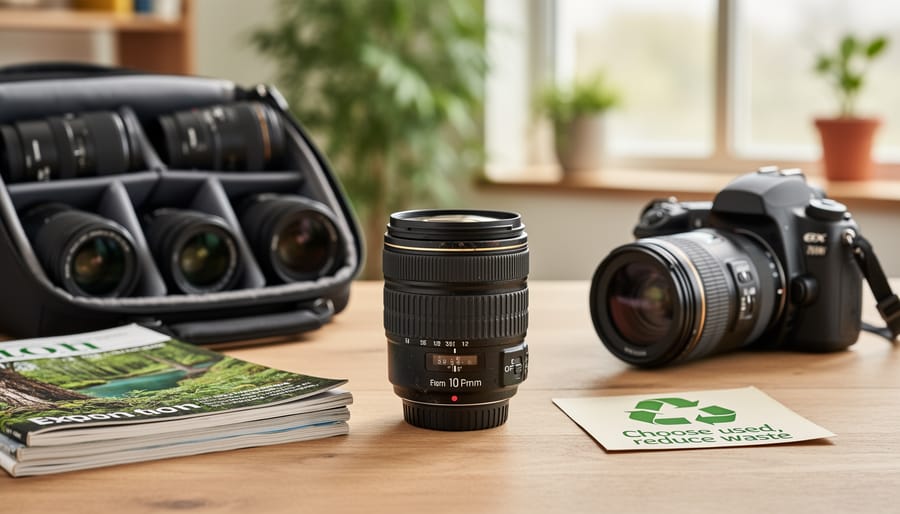
The used market remains the most sustainable option regardless of budget. A well-maintained professional lens from five years ago contains embodied carbon that’s already been spent, and purchasing secondhand prevents functional equipment from reaching landfills while avoiding new manufacturing entirely.
Common Mistakes to Avoid When Buying Sustainable Lenses
Even well-intentioned photographers stumble when trying to make sustainable lens purchases. The enthusiasm for eco-conscious choices can lead to hasty decisions that ultimately prove less green than they appear, and worse, might result in buying replacement gear sooner than necessary.
The most pervasive trap is falling for greenwashing. Some manufacturers slap “eco” or “sustainable” labels on products without meaningful environmental credentials. A lens packaged in cardboard made from 30% recycled content doesn’t offset carbon-intensive manufacturing processes or planned obsolescence. Real sustainability involves transparent supply chains, verified carbon reduction targets, and genuine circular economy principles.
Many photographers also make the false economy mistake of choosing cheap lenses to save money upfront, rationalizing that buying less expensive gear somehow reduces environmental impact. The opposite is usually true. A $200 lens with plastic mount, poor weather sealing, and unreliable autofocus motor will likely need replacement within a few years. That $800 professional lens with metal construction, extensive sealing, and repairable components can serve you for decades. The environmental cost of manufacturing two or three cheap lenses far exceeds making one quality lens that lasts.
The used market represents one of photography’s most sustainable options, yet photographers routinely overlook it in pursuit of new gear. A used lens has zero additional manufacturing footprint. Buying pre-owned doesn’t just reduce demand for new production. It extends the useful life of existing equipment and keeps perfectly functional glass out of landfills. Yet stigma around used gear persists, often based on outdated concerns about reliability.
Another common oversight involves ignoring lens ecosystems when switching camera systems. Jumping to a new brand might feel like upgrading, but it renders your existing lenses obsolete, forcing you to rebuild your entire kit. The environmental cost of replacing four or five lenses dwarfs any incremental improvement in the new system’s efficiency. Before switching, calculate the full replacement cost, both financial and environmental.
Finally, photographers frequently neglect researching manufacturer take-back and recycling programs before purchase. Some brands offer lens trade-in schemes, refurbishment services, and genuine recycling for end-of-life products. Others provide nothing, meaning your future broken lens becomes e-waste. Choosing manufacturers committed to product lifecycle responsibility makes sustainable disposal possible when the time eventually comes.
Extending Your Lens Lifespan: Maintenance Tips
Proper maintenance extends your lens life by years, often decades, dramatically reducing your environmental footprint while saving money. Even if you can’t see the biconcave elements inside your lens assembly, every protective measure you take shields the entire optical system from damage.
Store lenses in a climate-controlled environment between 40-70% humidity. Excessive moisture encourages fungal growth on internal elements (including those biconcave components), while extreme dryness can deteriorate lubricants in the focus mechanism. Silica gel packets in your camera bag provide insurance, but monitor them; once saturated, they’re useless until regenerated.
Clean your lens only when necessary, not on a schedule. Use a rocket blower first to remove loose particles; dragging grit across glass with a cloth creates microscopic scratches that accumulate over time. When fingerprints or smudges demand wet cleaning, apply lens cleaning solution to a microfiber cloth, never directly to the glass, and use gentle circular motions from center outward. Replace cleaning cloths when they show visible dirt, washing them introduces lint and residue.
Store lenses in a climate-controlled environment between 40-70% humidity. Excessive moisture encourages fungal growth on internal elements (including those biconcave components), while extreme dryness can deteriorate lubricants in the focus mechanism. Silica gel packets in your camera bag provide insurance, but monitor them; once saturated, they’re useless until regenerated.
Check weather sealing annually. The rubber gaskets around lens mounts degrade with temperature fluctuations and UV exposure. Apply a tiny amount of pure silicone grease to the mount gasket if it feels brittle, this simple step prevents dust infiltration that could reach internal optics.
Address small issues immediately. A slightly loose filter ring or intermittent autofocus noise often signals problems that worsen if ignored. Many photographers successfully make gear last longer by scheduling professional servicing every five years, which costs far less than replacement and keeps lenses functioning at peak performance well into their third decade.
Frequently Asked Questions
Photographers exploring sustainable lens options often have questions about how environmental considerations affect optical quality and practical usability. Here are answers to the most common concerns:
Do eco-conscious lenses perform as well as conventional options?
Yes, sustainable manufacturing practices and materials do not compromise optical quality. Many premium manufacturers leading in sustainability produce lenses with exceptional sharpness and minimal aberrations, proving environmental responsibility and performance excellence go hand in hand.
Are used lenses a truly sustainable choice?
Buying used lenses is one of the most environmentally friendly options available. It eliminates manufacturing emissions entirely, prevents functional equipment from reaching landfills, and typically costs 30-50% less than new, making it both ecologically and financially smart.
What should I look for in manufacturer recycling programs?
Seek programs that accept lenses regardless of brand or condition, offer prepaid shipping labels, and transparently report what percentage of materials they actually recycle versus discard. Some manufacturers now offer trade-in credit for old lenses, creating a circular economy.
How do biconcave elements affect lens repairability?
Biconcave elements are typically cemented within lens groups, making individual replacement difficult. However, quality manufacturers design modular assemblies where entire groups can be swapped, extending overall lens lifespan through practical repairs rather than requiring complete replacement.
Beyond these basics, understanding the relationship between lens complexity and environmental impact helps guide smarter purchases. Simpler optical designs with fewer elements generally consume less energy to manufacture and prove easier to repair, though they may involve performance compromises. Modern computer-aided lens design has improved this equation, allowing manufacturers to achieve excellent results with streamlined constructions that minimize both material use and weight.
The question of whether to prioritize environmental features over optical specifications depends on your actual needs. A professional wildlife photographer requiring maximum sharpness across the frame may justify a complex, resource-intensive super-telephoto, while a hobbyist could achieve 95% of their goals with a simpler, more sustainable alternative. Honest assessment of your requirements prevents both overspending and over-consuming resources.
Warranty length serves as a useful proxy for manufacturer confidence in durability. Lenses backed by extended warranties or lifetime support programs signal construction built to last, aligning economic and environmental interests. Conversely, short warranties on budget lenses often foreshadow early failures and replacement cycles that multiply environmental costs despite initial savings.
Key buying factors
When selecting lenses with sustainability in mind, prioritize durability over initial cost. A well-built lens with metal construction and weather sealing will serve you for decades, dramatically reducing environmental impact compared to replacing cheaper alternatives every few years. Check manufacturer specifications for repairability, some brands design lenses with modular components that can be serviced rather than discarded.
Material sourcing matters more than most photographers realize. Look for manufacturers transparent about their glass sources and coating processes. Some companies now use recycled optical glass without compromising image quality, while others have invested in low-VOC coatings that reduce chemical waste during production.
Optical design efficiency affects both performance and sustainability. Lenses requiring fewer elements to achieve the same results, including sophisticated biconcave components that correct aberrations, use less material and energy in manufacturing. Modern computational designs often achieve superior results with simpler construction.
Consider the complete lifecycle cost. Factor in energy consumption from autofocus motors, availability of replacement parts, manufacturer take-back programs, and resale value. A lens that retains value supports the used market, extending product lifespan across multiple owners.
Types compared
When comparing lenses from an environmental standpoint, the distinctions go beyond optical formulas to encompass materials, construction methods, and longevity potential.
Prime lenses typically contain fewer glass elements (including any biconcave components) than zoom lenses, resulting in less raw material consumption and simpler manufacturing. Their fixed focal length design often means more durable construction and longer service life, though zoom lenses offer versatility that might eliminate the need for multiple primes.
Metal-bodied professional lenses outlast plastic-mount consumer models by decades, offsetting their higher initial carbon footprint through extended use. A metal lens from the 1980s can still deliver excellent results today, while plastic mounts often fail within 10-15 years.
Manual focus lenses eliminate autofocus motors entirely, removing electronic components and battery drain from the equation. They suit deliberate shooting styles and adapt easily across camera systems, extending their useful life indefinitely.
Third-party manufacturers sometimes use more sustainable practices than major brands, though quality varies. Research specific models rather than dismissing alternatives based on brand alone. The most sustainable lens is often the one already made, making used purchases environmentally superior regardless of type.
Choosing eco-conscious lenses doesn’t mean compromising on the optical excellence your photography demands. Throughout this guide, we’ve seen how biconcave lens elements and other optical components can deliver exceptional image quality while being part of sustainably manufactured products. The key is shifting your perspective from viewing lenses as disposable consumer goods to understanding them as long-term investments in your craft and the planet.
The most sustainable lens you can buy is one that will still be producing sharp, beautiful images a decade from now. That means prioritizing build quality, repairability, and manufacturers who stand behind their products with comprehensive warranties and service networks. A professional-grade lens might cost twice as much upfront, but if it lasts three times longer than a budget alternative, you’re reducing waste and saving money over its lifetime.
Before making your next lens purchase, take time to research the manufacturer’s environmental commitments beyond marketing claims. Look for specifics: carbon reduction targets, recycled materials percentages, take-back programs, and ethical sourcing documentation. Don’t overlook the used market either. A second-hand lens in excellent condition carries minimal additional environmental cost while often delivering identical optical performance to new models.
Start by auditing your current lens collection. Are you properly maintaining what you already own? Could professional cleaning or minor repairs extend their useful life? Sometimes the most eco-friendly purchase is the one you don’t make because you’ve maximized what you have.
Your lens choices ripple outward. By demanding sustainability alongside optical quality, you signal to manufacturers that environmental responsibility matters to their customers, driving industry-wide change one thoughtful purchase at a time.





 By
By