 By
By 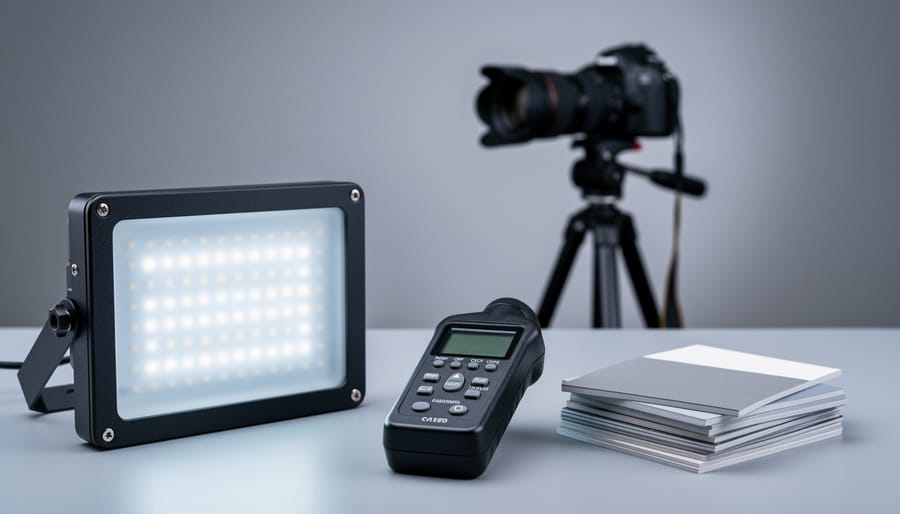
A lighting spectrometer measures the exact color temperature, spectral distribution, and intensity of your studio lights, giving you precision data that traditional light meters simply can’t provide. While a standard light meter tells you how bright a light source is, a spectrometer reveals its complete color signature, including CRI (Color Rendering Index), TLCI (Television Lighting Consistency Index), and spectral power distribution across the visible spectrum. For photographers shooting critical color work like product photography, fashion editorials, or commercial projects where color accuracy directly affects client satisfaction and post-production efficiency, this level of measurement isn’t just helpful but often essential.
The catch is that quality spectrometers range from around $300 for smartphone-based models to over $2,000 for professional units, making them a significant addition to your lighting equipment guide. Many photographers working primarily with natural light or consistent strobe setups won’t see enough practical benefit to justify the cost. But if you’ve ever struggled with color shifts between different LED panels, noticed skin tones rendering strangely under budget lighting, or spent hours color-correcting because your “daylight-balanced” fixtures didn’t quite match, a spectrometer pays for itself in time saved and results delivered.
This guide walks you through what these devices actually measure, how they differ from the meters you already own, which specifications matter for photography versus video work, and which models deliver the best value at different price points in 2026.
What Is a Lighting Spectrometer and Do You Need One?
A traditional light meter tells you how much light hits your subject and helps you nail exposure, but it tells you nothing about the quality or color characteristics of that light. A lighting spectrometer goes several steps further by measuring the actual spectral composition of your light source, breaking down the light into its component wavelengths across the visible spectrum and calculating precise metrics like color rendering index (CRI), correlated color temperature (CCT), and spectral power distribution (SPD). Think of it this way: a light meter answers “how bright?”, while a spectrometer answers “what color, how accurate, and how will this render skin tones and product colors?”
Traditional incident meters measure illuminance in lux or foot-candles, which is essentially brightness at a specific point. They’re designed for exposure calculation, not color evaluation. Spectrometers, by contrast, capture the full spectral fingerprint of your lighting, the unique wavelength distribution that determines how faithfully your lights will reproduce colors. This distinction matters enormously when you’re working with LED panels, mixing daylight with artificial sources, or shooting anything where color accuracy isn’t negotiable.
The real-world scenarios where a spectrometer becomes invaluable are specific but common. LED studio lighting has revolutionized photography, but not all LED panels are created equal, some exhibit significant color shifts or spiky spectral outputs that look fine to the eye but photograph poorly. A spectrometer reveals these issues instantly, showing you whether that affordable LED panel will render reds accurately or shift them toward magenta. When you’re mixing window light with LED fill and tungsten accents, a spectrometer helps you match color temperatures precisely and identify potential metamerism problems before you start shooting.
For product photographers working with cosmetics, textiles, or artwork, color fidelity isn’t optional. A spectrometer lets you verify that your lighting setup will reproduce your client’s brand colors accurately, measure the CRI and extended metrics that predict real-world color rendering, and document your lighting conditions for consistency across multiple shoots. Fashion and portrait photographers working with diverse skin tones benefit similarly, certain LED spectra can render darker skin tones with unflattering color casts that a spectrometer would catch immediately. The device doesn’t replace your eyes or color management workflow, but it provides objective data that removes guesswork from critical color decisions.
Types of Lighting Spectrometers Compared
Standalone Handheld Spectrometers
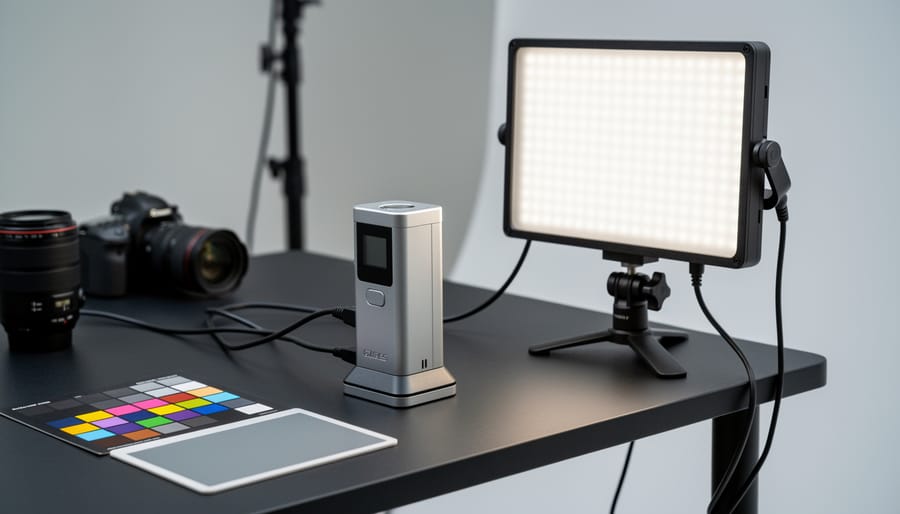
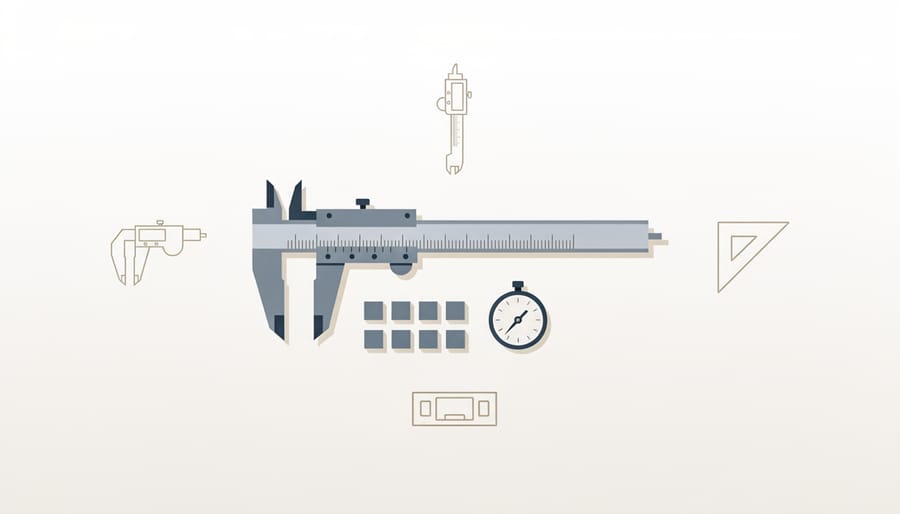
Standalone handheld spectrometers represent the professional tier of spectral measurement tools, built specifically for serious color work. These devices pack dedicated optical sensors, precision diffusers, and onboard processors into self-contained units that don’t rely on your smartphone’s limited hardware.
What sets them apart is measurement accuracy. Professional handhelds typically achieve spectral resolution of 1-5nm across the full visible spectrum, compared to 10-20nm for smartphone attachments. This tighter resolution reveals subtle color shifts that cheaper tools miss entirely, critical when you’re matching product colors to brand specifications or evaluating expensive LED panels before a shoot.
Most standalone units feature large, easy-to-read displays showing real-time spectral curves, CRI breakdowns, and multiple color rendering metrics simultaneously. You’ll find dedicated controls for measurement modes, integration times, and data logging. Better models include internal memory to store hundreds of light source profiles, USB connectivity for computer analysis, and rechargeable batteries lasting full shoot days.
The Sekonic C-800 Spectromaster exemplifies this category, offering laboratory-grade accuracy with photographer-friendly controls. Similar professional options from brands like Asensetek and UPRtek typically range from $800 to $2,500, depending on measurement capabilities and software features.
Expect annual calibration costs of $150-300 to maintain factory accuracy. That’s the trade-off: these tools deliver repeatable, trustworthy data that justifies their price for color-critical commercial work, but they’re serious investments that demand proper care and regular maintenance.
Smartphone-Connected Spectrometers
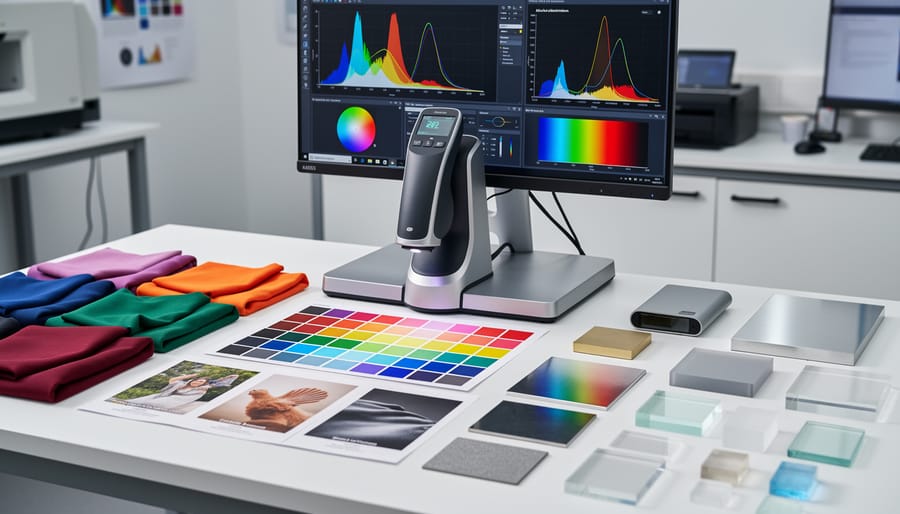
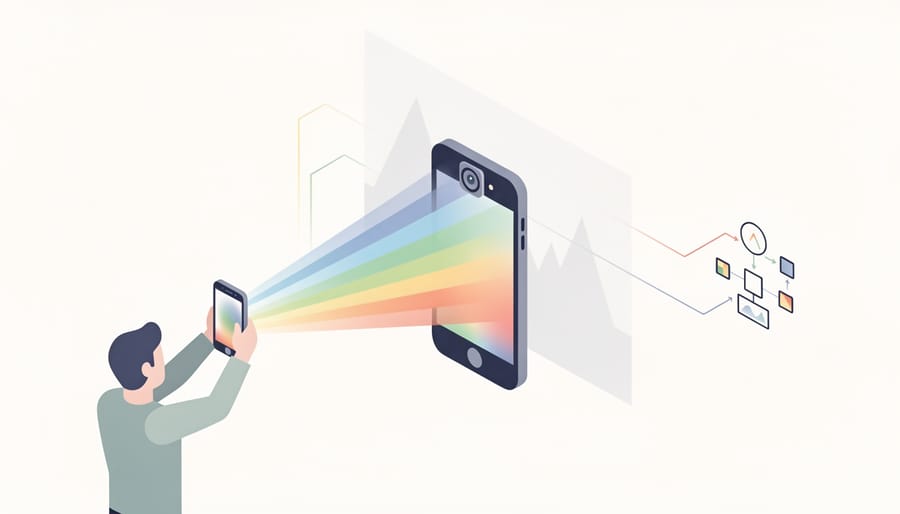
Smartphone-connected spectrometers plug directly into your phone’s charging port or connect via Bluetooth, turning your mobile device into a portable spectral analysis tool. These compact units typically cost between $200 and $500, making them the most affordable entry point for photographers who need spectral data but can’t justify a dedicated handheld device.
The main advantage is portability. These spectrometers are small enough to toss in your camera bag without second thought, and since they rely on your phone for processing and display, there’s no separate screen or battery to manage. The companion apps often provide clean spectral curve visualizations, real-time CRI readings, and the ability to save measurements for later reference or client reporting.
The trade-off comes in measurement precision and consistency. Because these devices depend on smartphone processing power and app optimization, readings can vary slightly between sessions, especially if your phone is running other background tasks. The sensors in budget smartphone spectrometers also typically have narrower measurement ranges and lower resolution than standalone units, which can affect accuracy when analyzing complex light sources with irregular spectral distributions.
That said, for location work where you need quick spectral checks to match LED panels or verify color temperature consistency across fixtures, smartphone spectrometers deliver real value. They’re particularly useful for photographers who shoot in multiple locations and need a portable solution for verifying lighting quality before a session begins. Just don’t expect laboratory-grade precision from a device designed for field convenience.
Hybrid Light Meter/Spectrometers
Hybrid devices merge exposure metering with spectral analysis in a single unit, making them appealing for photographers who want comprehensive light analysis without carrying multiple tools. These all-in-one meters can measure incident light for exposure calculation while simultaneously capturing spectral data for color rendering evaluation.
The practical advantage is workflow efficiency. You can meter your scene for proper exposure, then immediately check whether your lighting setup delivers accurate color rendition, all from one device. This proves especially valuable when balancing multiple light sources with different spectral characteristics.
Most hybrid spectrometers function primarily as traditional light meters with added spectral capabilities, so they maintain the familiar form factor and metering modes photographers already know. You’ll typically find spot metering, incident metering, and flash sync alongside CRI and color temperature readouts.
The trade-off is cost. Combining two instruments means paying a premium over basic light meters, though you’ll spend less than buying separate professional-grade devices. Accuracy generally falls between smartphone spectrometers and dedicated standalone units. For photographers who regularly need both exposure metering and color analysis, the convenience often justifies the investment, particularly on location where minimizing gear matters.
Budget vs. Professional Models
Budget spectrometers under $200 typically use single-chip sensors with 12-16 channels, providing decent accuracy for basic CRI and color temperature measurements but limited spectral resolution. You’ll get ±50K color temperature accuracy and CRI readings within 2-3 points, sufficient for general studio work with quality LED lights.
Mid-range models ($300-$800) employ better optical sensors with 20-40 channels, delivering ±20K temperature accuracy and more reliable spectral data across the visible range. These often include PC/Mac software for detailed analysis, calibration certificates, and faster measurement speeds around 0.5 seconds.
Professional instruments above $1,000 feature high-resolution spectrometers with 256+ channels, measuring spectral power distribution at 1nm intervals. They provide laboratory-grade accuracy (±5K), calculate advanced metrics like TM-30 Rf and Rg values, and include NIST-traceable calibration. The software typically offers spectral curve comparisons, batch reporting, and integration with color management systems.
The practical difference: budget models confirm whether your lights are good enough, while professional spectrometers precisely characterize lighting for color-critical work requiring reproducible results.
Key Buying Factors: What to Look for in a Lighting Spectrometer
Spectral Range and Resolution
The visible light spectrum runs from roughly 380 nanometers (violet) to 780 nanometers (red), and a spectrometer needs to cover this full range to accurately assess how a light source renders colors. Cheaper devices sometimes cut corners by measuring a narrower band, say, 400-700nm, which can miss critical spectral information at the violet and deep red ends where many LEDs have unusual peaks or gaps.
Resolution refers to how finely the spectrometer divides that spectrum into measurement points. A device sampling every 10nm gives you about 40 data points across the visible range, while one sampling every 1nm captures 400 points. Higher resolution matters most when you’re dealing with narrow-band LEDs or fluorescent lights that have sharp spikes in their spectral output. Those spikes directly affect color rendering, a 10nm resolution might completely miss a critical emission line that’s causing a color cast in your images.
For most studio photography work, a 5nm resolution across the full 380-780nm range strikes a good balance between accuracy and cost. Color-critical applications like art reproduction benefit from 1-2nm resolution, but you’ll pay significantly more for that precision.
Color Accuracy Metrics (CRI, TLCI, TM-30)
Modern lighting spectrometers report color accuracy using multiple standards, each developed for different industries and needs. Understanding these metrics helps you evaluate whether a light source will reproduce colors faithfully in your images.
The Color Rendering Index (CRI) remains the most widely quoted metric, measuring how accurately a light renders eight pastel color samples compared to a reference source, on a scale where 100 represents perfect color fidelity. While CRI values above 90 generally indicate good color quality for still photography, the metric has significant limitations, it ignores saturated colors, doesn’t account for red tones well, and was designed for human vision rather than camera sensors. For general studio work and product lighting CRI provides a useful baseline, but it shouldn’t be your only consideration.
TLCI (Television Lighting Consistency Index) was developed specifically for broadcast and video production, evaluating how lights perform with camera sensors rather than human eyes. If you shoot any video work, TLCI scores offer more relevant guidance than CRI alone, particularly for skin tones and color grading workflows.
TM-30 represents the newest standard, developed by the Illuminating Engineering Society to address CRI’s shortcomings. It evaluates 99 color samples instead of eight, provides separate scores for color fidelity and color saturation, and generates visual graphics showing exactly which hues shift under a given light source. For photographers working with critical color applications, cosmetics, textiles, artwork reproduction, TM-30 data reveals subtleties that CRI and TLCI miss entirely.
Most professional spectrometers report all three metrics, giving you a complete picture of a light’s performance characteristics.
Measurement Speed and Integration Time
Measurement speed determines how quickly a spectrometer captures and processes spectral data, typically ranging from under one second to several seconds per reading. Integration time, the duration the sensor collects light, directly affects this speed: shorter integration times yield faster measurements but may sacrifice accuracy in low-light conditions, while longer times improve precision at the cost of workflow efficiency.
In active studio sessions, faster readings matter. When you’re adjusting multiple lights to match color temperatures or testing different modifiers, waiting five seconds per measurement versus one second compounds quickly. Professional models often allow manual integration time adjustment, letting you prioritize speed during initial setup and switch to longer, more accurate readings for final verification. Budget devices typically use fixed integration times, which works fine for occasional checks but can slow down iterative lighting adjustments during client shoots.
Software and Data Export Features
The software interface can make or break your experience with a spectrometer, regardless of how accurate the hardware is. Look for devices with intuitive apps or desktop software that clearly display spectral power distribution curves, you need to see at a glance whether your LED panels have gaps in their spectrum or if your lighting modifiers are affecting color quality.
The best spectrometer software offers customizable reports you can save or share with clients, particularly useful when documenting lighting setups for consistency across shoots. Export options matter: can you output data as CSV files for further analysis, or generate PDFs showing CRI breakdowns and color temperature readings? Some advanced models integrate directly with color management systems, allowing you to create custom camera profiles based on your actual studio lighting spectrum rather than generic calibration targets.
Check whether the software receives regular updates, LED technology evolves quickly, and newer metrics like TM-30 weren’t always standard. Cloud sync features can be valuable for maintaining a library of light source profiles across multiple locations or sharing setup data with assistants.
Build Quality and Calibration
A well-built spectrometer protects its delicate optical components from dust, moisture, and impact. Look for devices with sealed sensor chambers and robust housings if you work on location frequently. Consumer-grade models may use plastic construction that’s adequate for studio use, while professional units typically feature aluminum or magnesium bodies.
Calibration drift is inevitable. All spectrometers require periodic recalibration to maintain accuracy, usually annually for professional work, though high-end models may hold calibration longer. Check whether the manufacturer offers calibration services, the cost, and turnaround time. Some devices include user-accessible calibration features using reference standards, but laboratory recalibration remains the gold standard for critical applications.
Recommended Spectrometers for Different Budgets and Needs
For Hobbyists and Emerging Photographers
For photographers building their skills and refining their home studio workflow, smartphone-connected spectrometers offer the most practical entry point. Devices like the Lighting Passport and UPRtek CV600 typically range from $400-$700, delivering surprisingly accurate spectral measurements without the investment required for professional-grade units.
These compact solutions pair with dedicated mobile apps that visualize spectral curves, calculate CRI and TLCI values, and measure color temperature, all the essential data you need to evaluate LED panels or compare continuous lights. The smartphone interface makes learning spectral analysis less intimidating, with real-time graphs showing exactly how your light source performs across the visible spectrum.
The trade-off comes in measurement precision and repeatability. Entry-level units typically have lower spectral resolution than professional models, which means slightly less granular color data. They’re also more sensitive to ambient light contamination and may require careful technique to get consistent readings. But for learning which budget LED panels actually deliver accurate color, checking if your modified lights maintain color quality, or simply understanding why certain fixtures render skin tones better than others, these tools provide genuine value at an accessible price point.
For Working Professionals
Working professionals who rely on consistent color accuracy for client work need spectrometers that deliver reliable results without requiring a scientific background to operate. Devices in the $800-$2,500 range typically offer the sweet spot of performance and practicality for commercial photographers.
Standalone units like the Sekonic C-800 Spectromaster combine traditional light metering with full spectral analysis, giving you both exposure readings and comprehensive color data in one device. This dual functionality streamlines studio workflows, you’re not juggling multiple meters during a shoot. These mid-tier devices generally measure CRI, TLCI, and increasingly TM-30 metrics, letting you evaluate lighting quality across photography and video applications.
Premium models in this category feature faster measurement speeds (under two seconds per reading), which matters when you’re testing multiple light positions or comparing fixtures during setup. They also include better software for generating client reports or logging fixture performance over time. Some offer wireless connectivity to tablets, letting assistants monitor readings remotely while you adjust lights.
Build quality becomes critical at this level. Professional-grade housings withstand the bumps of location work and maintain calibration longer than budget alternatives. Many manufacturers offer annual recalibration services, essential for maintaining accuracy when your reputation depends on color consistency.
For commercial photographers shooting product work, fashion, or any assignment where color fidelity affects client satisfaction, investing in this tier ensures you can confidently spec lighting, match conditions across shoots, and troubleshoot color issues before they reach post-production.
For Color-Critical and Scientific Work
For photographers who need absolute precision, art reproduction specialists, museum documentation teams, product photographers working with color-sensitive brands, consumer-grade spectrometers won’t cut it. Laboratory-grade instruments from manufacturers like X-Rite, Konica Minolta, and Photo Research deliver spectral resolution under 1nm, measurement repeatability within ±0.0002, and NIST-traceable calibration certificates.
These devices cost £4,000 to £15,000 but eliminate any question about accuracy. The X-Rite SPECSIS series and Konica Minolta CL-500A offer research-quality spectral analysis with comprehensive software suites that generate detailed reports, track calibration history, and export data to color management systems. Photo Research’s PR-655 and PR-670 models are industry standards in scientific imaging, capable of measuring extremely low light levels and providing full spectral curves at sub-nanometer resolution.
Beyond the hardware, these tools often require controlled measurement environments and trained operators to extract their full value. If your work involves legal color compliance, archival documentation, or scientific publications where measurement traceability matters, the investment pays for itself in eliminated guesswork. For everyone else, they’re overkill.
Common Mistakes to Avoid When Buying a Lighting Spectrometer
The excitement of upgrading your studio toolkit can lead to hasty decisions, and spectrometers are expensive enough that mistakes hurt. Many photographers buy the wrong device not because they lack information, but because they prioritize the wrong factors or misunderstand how they’ll actually use the tool.
One of the biggest traps is purchasing based on brand reputation alone without verifying that the device measures what you need. A spectrometer designed for architectural lighting analysis might have excellent build quality but lack the TLCI support that video work demands, or missing the spectral resolution needed for fine art reproduction. Match the specifications to your actual workflow, not just the manufacturer’s prestige.
Another common error is underestimating the learning curve and software integration requirements. Even the best hardware becomes frustrating if the companion software is clunky, doesn’t export data in formats you can use, or requires a separate subscription for essential features. Test the software interface before committing if possible, and verify that it integrates with your existing color management tools. A spectrometer that generates beautiful spectral curves you can’t actually apply to your lighting setup is just an expensive paperweight.
Here are specific mistakes that trip up photographers during the buying process:
- Ignoring ongoing calibration costs and requirements, many devices need annual recalibration that can cost hundreds of dollars
- Choosing a smartphone-based model when your work demands laboratory-grade precision, then being disappointed by measurement inconsistencies
- Buying excessive capability you’ll never use, like UV and IR range extension for standard photography work
- Overlooking battery life and charging requirements for location work, assuming all portable units offer the same runtime
- Failing to verify compatibility with your existing light sources, particularly older or specialized studio equipment
- Purchasing without understanding which color metrics (CRI, TLCI, TM-30) your clients or workflow actually require
Many photographers also buy a spectrometer before mastering basic indoor lighting tips and color management fundamentals. If you’re still struggling with white balance or haven’t calibrated your monitor, a spectrometer won’t solve those underlying issues. It’s a precision instrument for photographers who already understand color theory and have solid lighting fundamentals, not a shortcut that compensates for gaps in technique.
Finally, avoid the temptation to buy used spectrometers without verified calibration history. These devices drift over time, and a bargain-priced unit might deliver readings that are wildly inaccurate, giving you false confidence in your lighting choices. The money saved upfront disappears when you discover your color-critical work has been compromised by faulty measurements.
Frequently Asked Questions
Can I use a spectrometer as a light meter?
Not directly for exposure metering. Spectrometers measure light quality and color characteristics, not the illuminance values needed to set camera exposure. You’ll still need a traditional light meter or your camera’s built-in meter for determining f-stop and shutter speed settings.
How often do spectrometers need calibration?
Most consumer and prosumer spectrometers maintain accuracy for 12-24 months under normal use, though professional models may require annual factory calibration to ensure precision. Environmental factors like extreme temperatures or physical impacts can necessitate earlier recalibration.
Are smartphone spectrometers accurate enough for professional work?
Smartphone-connected spectrometers work well for general studio lighting assessment and spotting color rendering issues with LEDs, but they typically lack the precision required for color-critical applications like product photography or art reproduction. They’re excellent for checking light quality on location or making quick comparisons between fixtures.
Do I really need a spectrometer for LED studio lights?
You don’t absolutely need one, but spectrometers reveal LED quality issues that aren’t visible to the eye or captured by basic meters, particularly color spectrum gaps that can cause unexpected color shifts in skin tones or product colors. If you’re investing in LED fixtures or troubleshooting color accuracy problems, a spectrometer pays for itself by preventing costly mistakes.
What’s the difference between a colorimeter and a spectrometer?
Colorimeters measure color based on how light appears to the human eye using filtered sensors, while spectrometers measure the actual wavelengths present in the light spectrum. Spectrometers provide more detailed data and can calculate multiple color metrics from a single reading, making them more versatile for evaluating studio lighting.
These questions address the practical concerns photographers raise when first considering spectrometers. The calibration question matters because maintenance costs affect long-term ownership, while the smartphone accuracy question helps buyers set realistic expectations for budget options. Understanding the distinction between measurement tools prevents confusion when comparing devices.
One misconception worth clearing up: some photographers assume any device measuring light color can replace their light meter. That’s not how it works. Spectrometers and light meters serve complementary roles in the studio. A light meter tells you how much light hits your subject, helping you nail exposure. A spectrometer tells you what’s in that light, the color temperature, the spectral composition, how accurately it renders colors. You need both for complete control.
The LED question reflects real market conditions. Many photographers upgrading from traditional lights to LED panels discover unexpected color problems only after purchase. A spectrometer would have revealed poor CRI scores or spectrum gaps before money changed hands. That’s preventive rather than reactive lighting management, which saves both time and budget in professional settings.
Choosing the right lighting spectrometer comes down to matching the tool to your actual needs rather than chasing the most advanced specifications. Start by honestly assessing how much color accuracy matters in your work. If you’re shooting product catalogs for e-commerce clients or reproducing artwork, precision justifies the investment in professional-grade equipment. For general portrait or commercial work with quality LEDs, a mid-range device provides sufficient data to dial in your lighting.
Your workflow should guide the device type. Studio-bound photographers benefit from standalone units with comprehensive software, while location shooters need the portability of smartphone-connected options. Don’t overlook practical factors like measurement speed and battery life, these affect whether you’ll actually use the device consistently.
Focus on metrics that align with your output. Still photographers can prioritize CRI Ra and R9 values, while video shooters need TLCI or SSI measurements for footage accuracy. Understanding which numbers matter for your medium prevents analysis paralysis when comparing specifications.
Budget appropriately for your career stage. Entry-level photographers gain more from mastering affordable tools than from struggling to justify premium equipment they rarely use. As your client base and color-critical projects grow, so should your measurement capabilities.
A spectrometer transforms lighting from guesswork into precision. It reveals what your eyes can’t see, catches color shifts before they reach the sensor, and builds confidence that your lighting matches your creative vision. That clarity is worth far more than the device cost.



 By
By