 By
By 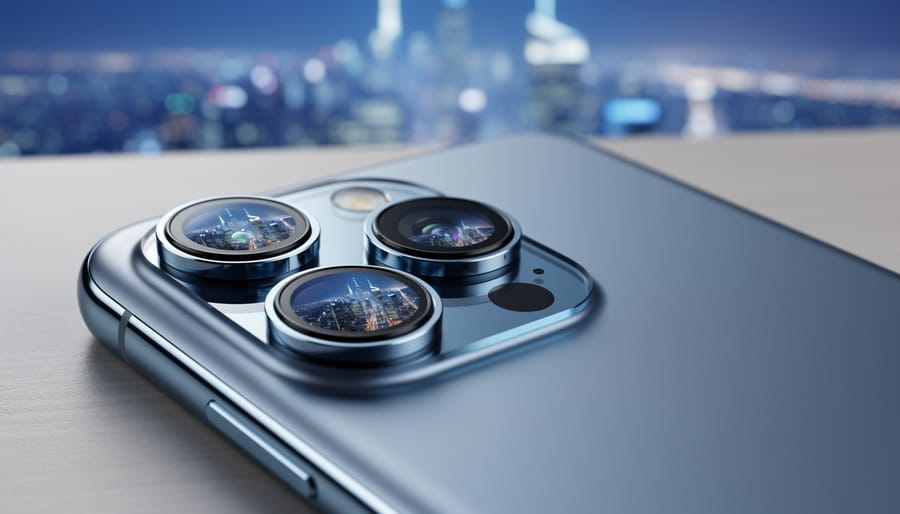
Flip open your smartphone’s camera app and you’ll see options for 0.5x, 1x, 2x, maybe even 5x or 10x. Each number represents a different lens with its own unique perspective, but here’s what most people don’t realize: these aren’t just zoom settings—they’re distinct creative tools that fundamentally change how your photos look and feel. That ultra-wide 0.5x lens doesn’t simply show “more stuff” in the frame; it stretches perspective, making foregrounds dramatic and backgrounds seem miles away. Your main 1x camera captures scenes closest to how your eye sees them, while telephoto lenses compress space, bringing distant subjects intimately close and creating beautifully blurred backgrounds.
The challenge? Most photographers stick to the default 1x camera for everything, missing out on the creative potential literally at their fingertips. Understanding when to reach for each lens transforms your photography from random snapshots into intentional images with purpose and impact.
This guide breaks down exactly what each camera in your multi-lens system actually does, cutting through marketing hype to reveal their real strengths and limitations. You’ll discover practical scenarios where each lens excels, learn to recognize their weaknesses, and master techniques that leverage their unique characteristics. Whether you’re building on smartphone photography fundamentals or pushing creative boundaries, you’ll finish with the knowledge to choose the perfect lens for any moment.
Decoding Your Smartphone’s Camera Array
The Anatomy of a Multi-Camera System
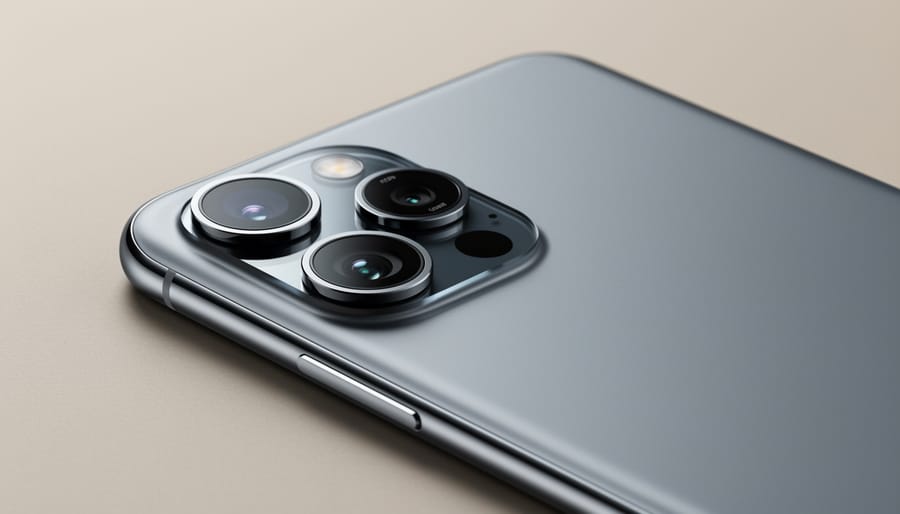
Modern smartphones typically feature three distinct cameras, each designed to capture the world from a different perspective. Think of it as having three specialized tools in your pocket instead of one Swiss Army knife approach.
The ultra-wide camera, usually ranging from 12mm to 16mm equivalent focal length, acts like your eyes stretched to peripheral vision mode. It captures approximately 110 to 120 degrees of view, perfect for cramming that entire mountain range or cramped city alleyway into a single frame. Imagine standing in a small apartment and wanting to photograph the entire living room—that’s your ultra-wide at work. The trade-off? Objects at the edges get stretched, similar to looking through a peephole in reverse.
Your main or wide camera sits around 24mm to 28mm equivalent, mimicking roughly what your natural field of vision notices when you’re casually observing a scene. This is your workhorse lens, the one your phone defaults to because it balances versatility with natural-looking proportions. It’s the camera you’ll use for everyday moments, street photography, and general documentation.
The telephoto lens, typically 50mm to 85mm or beyond, brings distant subjects closer without you taking a single step. Think of it as binoculars with a camera attached. This lens compresses perspective, making backgrounds appear closer to your subject—ideal for portraits where you want creamy background blur or capturing architectural details on distant buildings. Some phones now feature multiple telephoto options, offering 3x, 5x, or even 10x optical zoom capabilities.
Why Not Just One Really Good Camera?
It’s a fair question—why not just pack one incredible camera into a smartphone instead of multiple modest ones? The answer comes down to physics, and specifically, the tiny size of your phone.
A truly versatile single camera would need a zoom lens that could shift between wide-angle and telephoto perspectives. That requires physical space for lens elements to move back and forth, which simply doesn’t exist in a device that’s only 8-10mm thick. Think about a traditional camera zoom lens—it extends outward as you zoom in. Your phone can’t do that without looking like a periscope.
The other limitation is sensor size. Smartphone sensors are roughly the size of a baby aspirin, compared to the much larger sensors in dedicated cameras. This constraint affects light gathering and image quality, particularly in challenging conditions. While computational photography and essential smartphone camera features help bridge this gap, they can’t completely overcome physical limitations.
The multi-camera solution is an elegant workaround. Instead of one lens trying to do everything poorly, you get specialized lenses optimized for specific focal lengths. Each lens stays thin, permanently focused at its designed focal length, and delivers better results than a compromised all-in-one solution ever could within such a compact form factor.
Understanding Focal Lengths on Your Smartphone
Ultra-Wide Lenses (13-16mm Equivalent)
Ultra-wide lenses are the landscape photographer’s best friend on your smartphone, typically offering a field of view equivalent to 13-16mm on a full-frame camera. This dramatic perspective lets you capture sweeping vistas, towering architecture, and cramped interiors with impressive scope.
These lenses excel when you need to fit more into the frame than the main camera allows. Think cramped hotel rooms for vacation rental photos, group shots where you can’t step back further, or those breathtaking mountain panoramas where a standard lens simply won’t do justice. Architectural photographers particularly appreciate ultra-wides for capturing entire building facades from street level, though you’ll need to position yourself carefully to minimize distortion.
Speaking of distortion, that’s the trade-off. Ultra-wide lenses stretch the edges of your frame, making straight lines curve and faces at the corners appear elongated. Keep important subjects centered, and avoid placing people near the frame edges unless you want unflattering results. Edge sharpness often suffers too, especially on budget and mid-range phones.
For best results, use ultra-wide cameras in good lighting conditions since they typically have smaller sensors and wider apertures that gather less light per pixel than your main camera. Level your phone parallel to vertical lines when shooting buildings to minimize perspective distortion. When the situation calls for maximum visual impact and you have space to work with, the ultra-wide delivers drama that other lenses simply cannot match.
Main Wide Lenses (24-28mm Equivalent)
The main wide lens on your smartphone is your workhorse camera, and there’s a good reason manufacturers default to it. With a focal length equivalent to 24-28mm on a traditional camera, it captures a natural field of view that closely matches human peripheral vision, making it incredibly versatile for everyday shooting.
This lens handles the majority of photographic situations with ease. Street photography benefits from its ability to capture context and environment while still allowing you to get reasonably close to subjects. Group photos become manageable without backing into walls, and landscape shots maintain that sweeping sense of scale. The wide perspective also proves invaluable for interior photography, letting you showcase entire rooms without distortion becoming too distracting.
Image quality typically peaks here because manufacturers invest the most resources into this primary sensor. You’ll notice better low-light performance, faster autofocus, and more refined color science compared to your phone’s other cameras. Many pro smartphone photography tips emphasize mastering this lens first before exploring others.
When should you reach for it? Anytime you need reliability. Architectural shots, environmental portraits, travel documentation, and daily moments all sing with this focal length. It’s forgiving enough for quick snapshots yet capable enough for considered compositions.
Telephoto Lenses (50-125mm Equivalent)
Telephoto lenses in smartphone multi-camera systems typically offer focal lengths equivalent to 50-125mm in traditional photography terms, bringing distant subjects closer while adding flattering compression to your images. This is where understanding the difference between optical and digital zoom becomes crucial. Optical zoom uses actual lens elements to magnify your subject, maintaining image quality throughout the zoom range. Digital zoom, on the other hand, simply crops and enlarges the existing image, resulting in noticeable quality loss.
Most modern smartphones label their telephoto cameras as 2x, 3x, or even 5x optical zoom. When you zoom beyond these specific focal lengths, the phone switches to digital zoom or combines images from multiple cameras to simulate intermediate focal lengths. You’ll often notice a slight hesitation or jump when this happens.
Telephoto cameras excel at portrait photography, thanks to the natural compression that flatters facial features and creates pleasing background separation. The longer focal length also helps maintain a comfortable working distance from your subject. Beyond portraits, telephoto lenses shine when photographing wildlife, sports, architectural details, or any situation where you can’t physically move closer to your subject. The key is recognizing when you’re using true optical magnification versus digital enhancement, as this directly impacts your final image quality and helps you set realistic expectations for different shooting scenarios.
Switching Between Cameras Like a Pro
Reading the Scene: Which Lens When?
Understanding which lens to reach for becomes intuitive once you recognize how each focal length shapes your story. Let’s break down common scenarios and the creative decisions behind each choice.
For street photography, your wide-angle lens (typically 13-16mm equivalent) excels at capturing environmental context. When you spot a musician performing beneath a historic building, that ultrawide lens tells the complete story—subject and setting unified in one frame. The exaggerated perspective adds dynamism, pulling viewers into the scene. However, switch to your primary lens (24-28mm equivalent) when you want a more balanced perspective without the wide-angle distortion that can make buildings lean unnaturally.
Food photography benefits tremendously from your telephoto lens (50-85mm equivalent). That shallow depth of field isolates your perfectly plated dish, blurring the background clutter into creamy bokeh. The compression also makes the food look more substantial and appealing. Your main lens works when you want to show the entire table setting or capture the restaurant’s ambiance alongside the meal.
Travel scenarios demand flexibility. Architectural shots often call for the ultrawide to fit entire facades in frame, though this creates barrel distortion at the edges. For street portraits or market vendors, your telephoto provides comfortable working distance and flattering compression that doesn’t exaggerate facial features. The main lens serves as your versatile middle ground—reliable for general documentation without extreme characteristics.
Portrait work traditionally favors telephoto focal lengths. That 50-85mm range compresses features naturally, creating pleasing proportions while maintaining appropriate distance from your subject. The wide lens, conversely, works for environmental portraits where context matters as much as the person, though stay mindful of unflattering distortion if faces get too close to frame edges.
The creative impact boils down to this: wide lenses emphasize space and context, telephotos isolate and compress, while your main lens balances both qualities for everyday versatility.
The Seamless Zoom Trick
Here’s a tip that will instantly improve your multi-camera photography: understanding when your phone is actually switching lenses versus when it’s just digitally zooming. Many photographers don’t realize that the smooth zoom slider hides a lot of behind-the-scenes decision-making by your phone’s camera app.
When you pinch to zoom or drag the zoom slider, your phone doesn’t necessarily switch cameras at the exact magnification you’d expect. For instance, if you’re shooting in challenging lighting, your phone might stick with the main camera longer and use digital zoom rather than switching to the telephoto lens. Why? Because telephoto lenses typically have smaller sensors and narrower apertures, making them less capable in dim conditions.
The sweet spot is using your phone’s native focal lengths. These are the zoom levels where you’re using the actual lens without any digital enhancement. On most phones, these are 0.5x for ultrawide, 1x for the main camera, and 2x, 3x, or 5x for telephoto options. At these exact magnifications, you’re getting pure optical quality.
Here’s a practical test: slowly zoom from 1x to 3x while watching your preview carefully. You’ll often notice a subtle shift or momentary hesitation when the camera physically switches lenses. That’s your cue that you’ve hit a native focal length. Stick to these points whenever possible, especially in lower light or when maximum detail matters for your final image.
Working Around Multi-Camera Limitations
Color and Exposure Inconsistencies
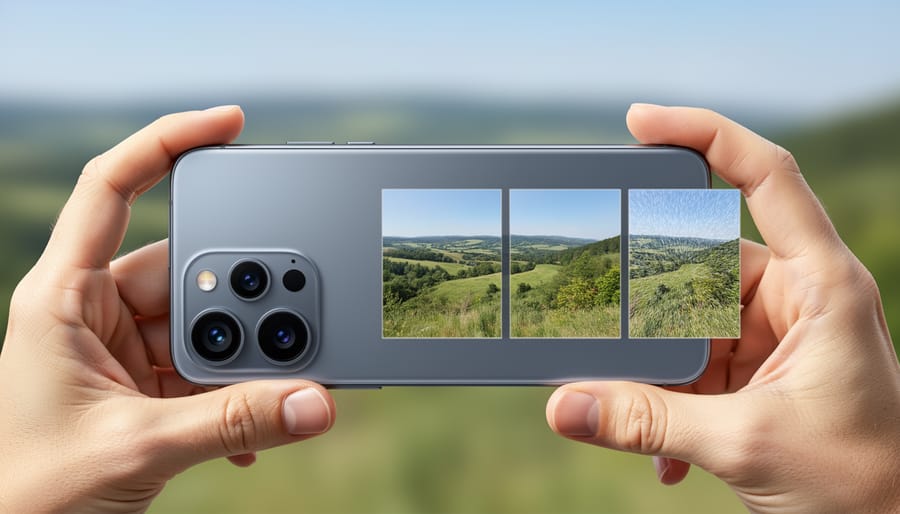
Ever notice how switching between your phone’s ultra-wide and telephoto lenses can make the same scene look surprisingly different? You’re not imagining things. Each lens in a multi-camera system often has its own sensor, and these sensors don’t always capture color and exposure identically. The main camera typically has the largest sensor and receives the most development attention, while secondary lenses might render skies slightly bluer or shadows a bit darker.
This becomes particularly noticeable when you’re shooting a series of photos for a panorama or trying to maintain visual consistency across a project. The good news is that you can minimize these differences with a few smart strategies. First, lock your exposure before switching lenses by tapping and holding on your subject. Many phones also offer manual controls that let you set white balance consistently across all cameras. When shooting important sequences, stick to the same lens whenever possible.
For post-processing, most editing apps let you copy settings from one image and paste them onto others, helping harmonize your series. You can also explore creative smartphone techniques that embrace these variations as part of your artistic vision rather than fighting against them.
Low-Light Performance Differences
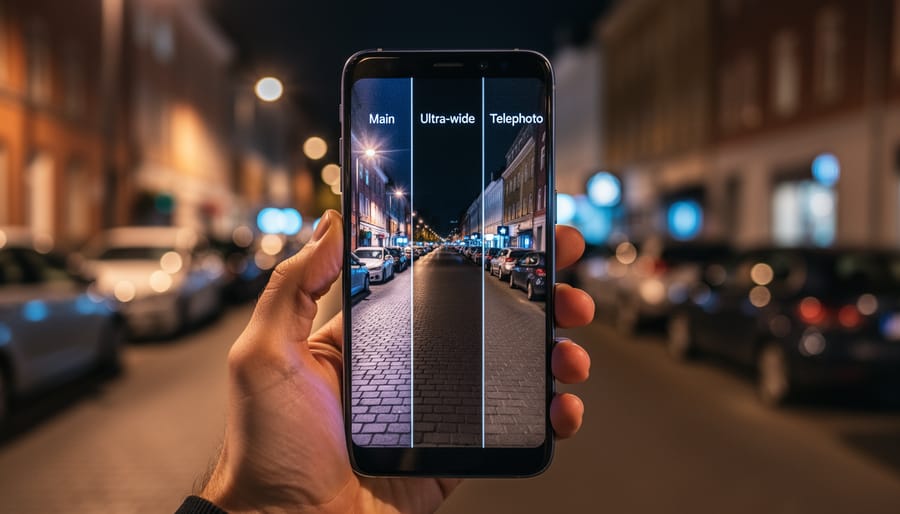
The main camera on your smartphone gets the VIP treatment—it typically features the largest sensor, widest aperture, and most advanced image processing. This translates to significantly better low-light performance compared to the ultrawide and telephoto companions, which often struggle as the sun sets.
Here’s why secondary cameras fall behind in dim conditions: smaller sensors capture less light, narrower apertures (like f/2.4 versus the main camera’s f/1.8) let in less illumination, and telephoto lenses require faster shutter speeds to avoid blur, forcing higher ISO settings that introduce noise. The result? While your main camera might capture a moody evening street scene beautifully, switching to the ultrawide could yield a grainy, muddy mess.
To maximize low-light results from all lenses, try these strategies. First, add any available light—even a subtle ambient source helps. Second, stabilize your phone against a wall or use a mini tripod to enable longer exposures through night mode, which works progressively better on main cameras but can salvage secondary lens shots. Third, shoot RAW if your camera app supports it, giving you more flexibility to rescue shadow detail and reduce noise in post-processing.
When conditions get truly challenging, accept reality: sometimes the main camera zoomed digitally produces cleaner results than optically switching to a struggling telephoto lens.
The Digital Zoom Trap
Here’s the hard truth: your phone doesn’t always tell you when it’s switched from optical to digital zoom. On most multi-camera systems, zooming beyond your longest dedicated lens triggers digital zoom, which is essentially cropping and upscaling. The image quality drops noticeably, introducing artifacts and softness that no computational magic can fully rescue.
Watch your viewfinder carefully as you zoom. Many phones subtly shift the image when switching cameras, a telltale sign you’ve moved from one lens to another. Once you’re past your final optical lens (often 3x or 5x on premium phones), you’re in digital territory. The difference becomes obvious when you examine details at full resolution.
For critical shots, resist the temptation to zoom digitally. Instead, shoot with your widest lens that captures the scene and crop during editing. You’ll maintain better control over sharpness and avoid baked-in processing artifacts. Modern smartphone sensors pack enough resolution that a thoughtful crop from a wide shot often outperforms an in-camera digital zoom. Think of your optical focal lengths as fixed creative tools, and save the cropping decisions for post-processing when you can make them deliberately.
Advanced Techniques for Multi-Camera Mastery
Creating Perspective Shifts
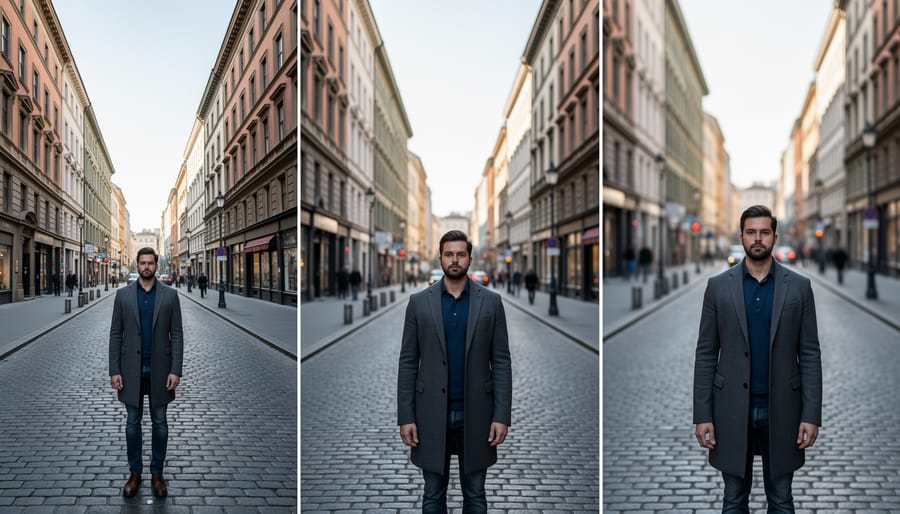
One of the most powerful yet underutilized techniques with multi-camera phones is exploring how different focal lengths transform the same scene from a single position. Simply standing in one spot and switching between your ultra-wide, standard, and telephoto lenses creates dramatically different compositional effects and emotional responses.
The ultra-wide lens (typically 13-16mm equivalent) expands space, making foregrounds feel close and backgrounds distant. This perspective exaggeration works beautifully for creating drama in architectural shots or emphasizing environmental context in portraits. Your subject remains the same distance away, but the wider field of view pulls viewers into the scene.
Switch to your telephoto lens (usually 50-85mm equivalent) from that identical position, and suddenly the background compresses toward your subject. This compression effect makes distant elements appear larger and closer, perfect for isolating subjects or creating layered compositions in crowded environments.
The standard lens (around 24-28mm equivalent) sits comfortably between these extremes, offering natural perspective similar to human vision. Try this exercise: photograph a person against an interesting background from six feet away using all three lenses. You’ll see how each focal length tells a completely different story about your subject’s relationship to their environment, opening creative possibilities without taking a single step.
Leveraging Camera-Specific Features
Modern smartphones pack specialized camera features designed to work optimally with specific lenses, and understanding these capabilities can dramatically improve your results. Let’s explore how to make the most of what your multi-camera system offers.
Macro modes have become increasingly sophisticated, typically activated through the ultrawide or a dedicated macro lens. When you get close to a subject—often within 2-4 centimeters—many phones automatically switch to this mode. However, the auto-switch doesn’t always engage at the ideal moment. Learn to manually activate macro mode when photographing flowers, insects, food details, or textures. The key is stable positioning: even slight movements become magnified at these distances, so brace your hands against a solid surface or use a small tripod.
Night modes represent another lens-specific feature, and they perform differently across your camera array. The main wide lens almost always delivers superior night mode results compared to telephoto or ultrawide options due to its larger sensor and wider aperture. When shooting in low light, stick with your primary camera and move physically closer rather than switching to other lenses. Night mode works by capturing multiple exposures over several seconds, so keeping your phone steady is essential for sharp results.
Portrait modes typically rely on the main or telephoto lens, depending on your phone model. The telephoto option generally produces more flattering facial proportions because it mimics the perspective of traditional portrait lenses. Experiment with both to understand which your device favors. Pay attention to edge detection around hair and glasses—moving your subject slightly away from complex backgrounds helps the software create cleaner depth effects. Remember that portrait mode isn’t just for people; try it on objects, pets, or even architectural details to create compelling separation from backgrounds.
Your smartphone’s multi-camera system isn’t a marketing gimmick—it’s a sophisticated toolbox waiting for you to master it. Just like traditional photographers who carefully select prime lenses for specific creative visions, you can now make intentional choices about focal length and perspective every time you frame a shot. The difference between someone who taps their screen mindlessly and someone who understands which lens tells their story best is the difference between taking pictures and making photographs.
Start experimenting deliberately. Next time you’re out shooting, force yourself to use only your ultra-wide lens for an entire session, then do the same with your telephoto. Notice how each focal length changes not just what you capture, but how you see the world. Pay attention to when your phone switches lenses automatically, and ask yourself whether that choice serves your creative intent or contradicts it.
This knowledge transforms your relationship with smartphone photography. You move from being a passive participant who accepts whatever the computational algorithms decide to an active creator who understands the why behind every optical choice. Your phone becomes less like a point-and-shoot and more like a professional camera system—compact, versatile, and capable of remarkable things in educated hands. The cameras were always there. Now you know how to use them.
 By
By