 By
By 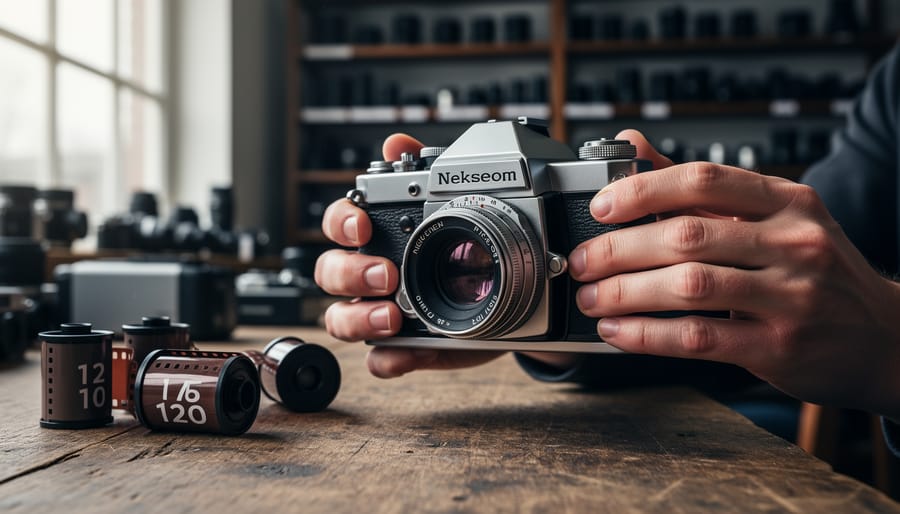
Start browsing reputable film camera retailers like KEH Camera, B&H Photo’s used department, and MPB rather than diving straight into eBay—these specialists grade condition accurately and offer return policies that protect you from expensive mistakes. Check the shutter for inconsistent speeds by shooting a test roll at various settings, inspect the light seals for deterioration (those foam strips crumble after decades), and examine the mirror and focusing screen for damage that could affect composition accuracy.
Medium format cameras deliver exceptional image quality that rivals modern digital systems, with negatives four times larger than 35mm film producing stunning detail and tonal range. That Hasselblad 500C/M from the 1970s still captures images comparable to contemporary cameras costing thousands more, making the used market remarkably accessible for photographers ready to elevate their craft without depleting their savings.
The sweet spot for value lies in mechanical cameras from the 1970s through 1990s—think Mamiya RB67, Pentax 67, or Bronica systems—which offer professional-grade optics and build quality at prices between $300 and $800. These workhorses require no batteries for basic operation and feature interchangeable film backs that let you switch between black-and-white and color mid-shoot, a flexibility that digital photographers can only achieve with multiple camera bodies.
Understanding what separates a $400 medium format camera from a $2,000 one helps you make informed decisions based on your actual shooting needs rather than gear anxiety. This guide walks you through evaluating condition, identifying reliable models, avoiding common pitfalls, and determining whether stepping into medium format genuinely serves your photography or simply feeds the collector impulse we all battle.
Understanding Medium Format: What You’re Really Buying
Sensor Size and Image Quality Differences
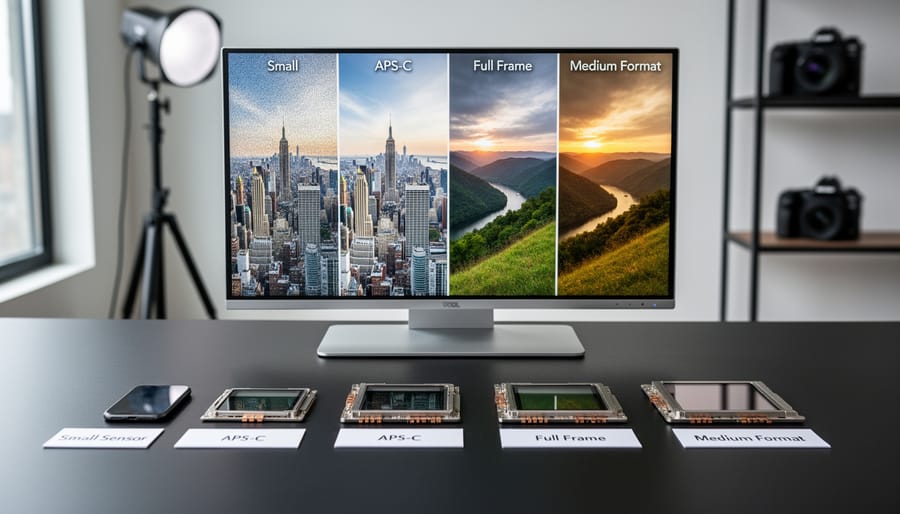
Medium format sensors typically measure around 44mm x 33mm or larger, compared to the 36mm x 24mm full-frame sensors in most professional DSLRs and mirrorless cameras. This size difference translates into real-world benefits you’ll notice immediately in your images.
The larger sensor captures more light information per pixel, resulting in smoother tonal transitions and richer color depth. Think of it like this: when you enlarge a print, those extra megapixels and larger photosites work together to maintain detail without the digital noise that plagues smaller sensors. While modern high-resolution digital cameras boast impressive pixel counts, medium format combines resolution with pixel quality.
The sensor size advantages become most apparent in dynamic range—your ability to recover shadow and highlight detail in post-processing. Landscape photographers particularly appreciate this when balancing bright skies with darker foregrounds. Portrait photographers benefit from the natural, gradual bokeh that creates three-dimensional separation without looking artificially processed. These qualities make medium format images feel tangibly different, with a depth and presence that’s difficult to replicate with smaller formats.
Who Actually Benefits From Medium Format
Medium format truly shines for commercial photographers, particularly those shooting fashion, product photography, and advertising work where clients demand maximum detail and flexibility in post-production. The larger sensor provides superior color depth and tonal gradation that becomes genuinely noticeable in large-format prints or billboard-sized advertisements. Portrait photographers working in controlled studio environments also benefit significantly, as the increased resolution allows for extensive retouching while maintaining skin texture integrity.
Landscape photographers who regularly print large wall art will appreciate the extra resolution, though this is where the line blurs. If you’re primarily sharing work online or making prints under 16×20 inches, modern full-frame cameras often deliver indistinguishable results at a fraction of the cost.
Medium format becomes overkill for event photography, sports, wildlife, or most documentary work where speed, portability, and autofocus performance matter more than absolute resolution. It’s also unnecessary if you’re just buying your first camera or primarily shoot for social media.
The honest truth? Medium format makes a measurable difference when you’re delivering files to demanding clients or creating museum-quality prints. For personal projects and most professional work, it’s a luxury rather than a necessity.
The Used Medium Format Market: Where Real Value Lives
Here’s where things get exciting: the used medium format market offers exceptional value that’s hard to match in any other camera segment. While new medium format systems command premium prices—often $4,000 to $40,000—the used market tells a completely different story.
Professional photographers typically upgrade their gear every few years to stay competitive, creating a steady stream of well-maintained equipment entering the used market. Unlike consumer cameras that might see rough handling, professional medium format gear often lives a pampered life in climate-controlled studios, carefully packed in protective cases between shoots. This means you’re frequently buying cameras that have seen careful use rather than abuse.
The depreciation curve works heavily in your favor. A medium format camera that cost $30,000 new might sell for $8,000 to $12,000 after five years, despite still producing the same stunning image quality. Technology cycles in medium format move more slowly than in consumer cameras—a 50-megapixel sensor from 2015 still outperforms most full-frame cameras today. When comparing camera systems, medium format’s slower evolution means older models remain highly relevant.
Another market advantage: medium format cameras are built like tanks. Manufacturers design these tools for daily professional use, so even a camera with 50,000 actuations might have plenty of life remaining. Many shutters are rated for 150,000 to 200,000 cycles.
The real sweet spot? Systems that are one or two generations behind current models. You’ll find cameras with 95 percent of the current performance at 30 to 40 percent of the price. For photographers seeking that distinctive medium format look—superior dynamic range, gorgeous color rendition, and incredible detail—buying used removes the primary barrier: cost.
Film vs Digital Medium Format: Which Used Option Makes Sense
Used Film Medium Format: The Affordable Entry Point
Film medium format cameras represent one of the most budget-friendly entry points into the medium format world. If you’re buying used film cameras, you’ll find impressive options that professionals have relied on for decades.
The Hasselblad 500 series, particularly the 500C/M, remains the gold standard. These modular systems are built like tanks and offer exceptional image quality with their Zeiss lenses. Expect to pay $800-1500 for a complete kit. The Mamiya RB67 and RZ67 systems deliver enormous 6x7cm negatives and professional features at lower prices, typically $400-800. They’re heavy workhorses best suited for studio or tripod use. The Pentax 67 brings SLR-style handling to medium format, making it more intuitive for 35mm shooters, though prices have climbed to $1200-2000 due to collector demand.
Beyond the initial purchase, budget for ongoing film and processing costs. A single roll of 120 film yields only 10-16 frames depending on your camera’s format, and film plus development typically runs $15-25 per roll. This makes every shot count, which many photographers find creatively liberating.
Film medium format suits photographers who value the meditative, intentional shooting process and want maximum image quality without digital’s upfront costs. It’s ideal if you have darkroom access or enjoy working with lab scans. However, if you need immediate feedback or shoot high volumes, digital might serve you better.
Used Digital Medium Format: Modern Workflow at Reduced Cost
Digital medium format cameras bring professional-grade image quality into a more accessible price range, though shopping used requires careful consideration. Phase One and Hasselblad systems dominate the high end, with used H-series Hasselblad bodies (like the H4D or H5D) now available at significantly reduced prices. These systems deliver exceptional image quality, but remember that older digital sensors won’t match the low-light performance or dynamic range of modern full-frame cameras. Technology moves quickly in the digital world.
Fujifilm’s GFX system has transformed the market since 2017, making medium format surprisingly approachable. Used GFX 50S models offer 51 megapixels and contemporary features at prices comparable to high-end full-frame cameras. The process of choosing digital cameras becomes more complex with medium format, as you’re investing in both body and system.
Pentax 645D and 645Z models present another compelling option, particularly for landscape and studio photographers who prioritize resolution over speed. These cameras feel substantial and deliberate, rewarding careful technique.
When buying used digital medium format, check shutter count, sensor condition, and whether firmware updates are still available. Consider that some systems require expensive proprietary software for raw file processing, adding to your total investment.
Top Used Medium Format Cameras Worth Your Money
Budget-Friendly Classics (Under $1,000)
Breaking into medium format doesn’t mean breaking the bank. Several excellent systems from the film era regularly appear on the used market well under $1,000, offering outstanding image quality and reliability.
The Mamiya 645 series represents perhaps the best entry point for budget-conscious photographers. You’ll find complete kits with a standard 80mm lens for $400-$700, depending on condition and which model you choose. The 645 1000S and Super models are particularly common. These cameras produce 15 exposures on a 120 roll, stretching your film budget further than 6×6 or 6×7 systems. Build quality is robust, and lenses are sharp and affordable. Expect to find working bodies with normal wear for around $300, with pristine examples commanding $500-$600.
Bronica systems offer similar value with different ergonomics. The ETR and SQ series both hover in the $400-$800 range for complete kits. The ETR uses the same 645 format as Mamiya, while the SQ shoots 6×6 squares. Bronica’s modular design means you can swap film backs mid-roll, a feature borrowed from higher-end Hasselblads. These cameras feel substantial and professional but lack some of the refinement found in pricier alternatives.
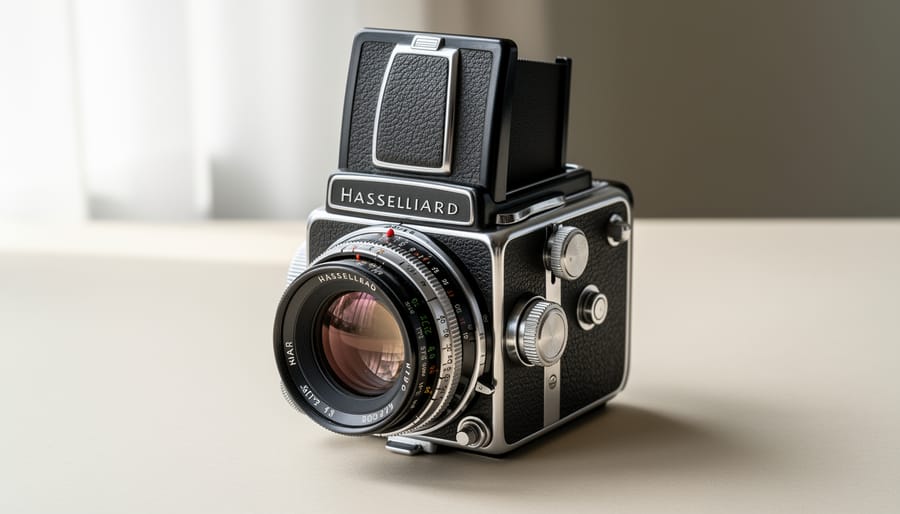
Early Hasselblad 500C/M bodies occasionally appear under $1,000, typically $800-$950 for well-used examples. These require careful inspection as repairs can be costly, but they offer legendary build quality and access to Carl Zeiss optics. Consider this option only if you’ve verified the camera functions properly and the light seals are intact.
Mid-Range Performers ($1,000-$3,500)
This price bracket represents the sweet spot for many photographers making the leap to medium format. You’re getting genuine professional-grade sensors and build quality without the sticker shock of brand-new equipment.
The Fujifilm GFX 50S has become a darling in this range, typically selling between $2,200 and $3,000 used. With its 51.4-megapixel sensor and modern mirrorless design, it offers excellent image quality and a relatively approachable learning curve if you’re coming from full-frame cameras. I’ve seen wedding photographers pick these up as backup bodies to their newer GFX models, and landscape shooters absolutely love them for the detail rendition. Just verify the shutter count and check that all electronic contacts are functioning properly.
The Pentax 645D usually falls between $1,500 and $2,500 and represents incredible value for studio work. Its 40-megapixel CCD sensor delivers gorgeous color and a unique rendering that some photographers still prefer over newer CMOS technology. The body is weather-sealed and built like a tank, though autofocus is slower than contemporary systems. This camera excels in controlled environments where you’re not chasing moving subjects.
Older Hasselblad H series bodies with digital backs can sometimes be found in this range, particularly H3D or H4D models. These require more technical knowledge to operate and maintain, but the image quality remains stunning. The modular system means you should carefully inspect both the body and digital back connection.
The Mamiya 645DF typically runs $1,200 to $2,000 for the body alone. Pair it with an affordable Phase One or Leaf digital back, and you’ve got a formidable studio setup. These cameras reward patience and deliberate shooting rather than run-and-gun photography.
Professional-Grade Bargains ($3,500-$7,000)
This price range represents the sweet spot where professional-grade image quality meets reasonable affordability in the used market. Here, you’ll find cameras that active professionals use daily, just at more accessible prices.
The Phase One IQ backs are legendary in commercial photography circles. Used IQ260 or IQ280 models offer 60-80 megapixels and extraordinary color accuracy. These backs were designed for studio work and deliver technical image quality that rivals anything available today. The catch? They’re typically paired with older Mamiya or Phase One camera bodies, which means they’re best suited for tripod-based shooting rather than handheld work. If you’re shooting product photography, architecture, or landscapes where you can take your time, they’re phenomenal tools.
The Hasselblad X1D represents a different philosophy entirely. As Hasselblad’s first mirrorless medium format camera, it brought autofocus and modern handling to a more compact body. Used models have dropped significantly from their original price, making them appealing for photographers who want medium format versatility without the bulk. The lens selection is more limited than competitors, but the build quality and that distinctive Hasselblad color rendering remain compelling reasons to consider one.
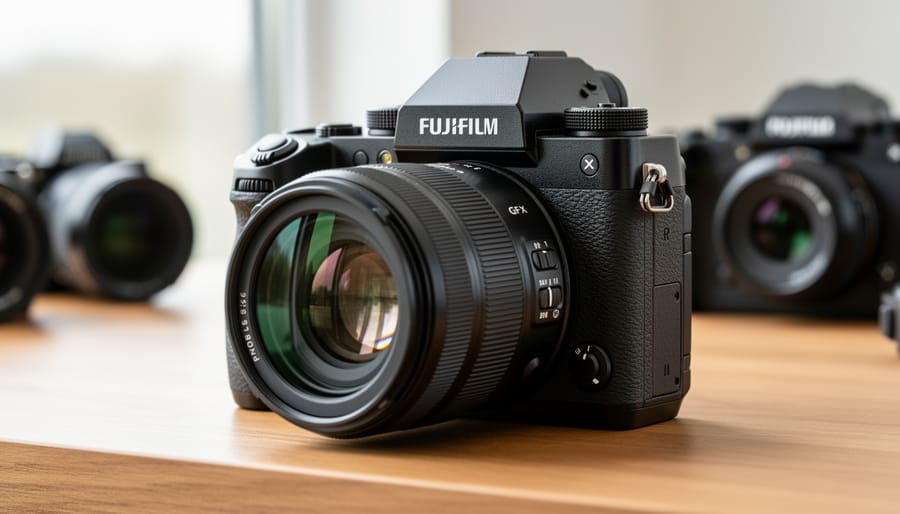
Newer Fujifilm GFX models like the GFX 50S or early GFX 100 units occasionally appear in this price bracket. These cameras changed the medium format landscape by offering exceptional value, extensive lens options, and features like in-body stabilization. They’re particularly attractive because Fujifilm continues supporting them with firmware updates, essentially future-proofing your investment. The film simulation modes also make them enjoyable for creative work beyond pure technical applications.
Lens Ecosystem Considerations
Before committing to a used medium format body, spend time researching the lens ecosystem you’re buying into. Unlike 35mm systems where affordable glass abounds, medium format lenses represent a significant portion of your total investment.
Start by identifying which lenses you actually need. A standard 80mm (equivalent to 50mm in full-frame terms) usually comes bundled with bodies, but if you’re shooting landscapes, you’ll want something wider. Check current used market prices on platforms like eBay and KEH to understand what you’ll realistically spend. A quality used 50mm or 60mm for Hasselblad V-series, for example, might cost anywhere from $400 to over $1,000 depending on condition.
Lens availability matters tremendously. Hasselblad V-series and Mamiya 645 systems have abundant used lenses because they were widely adopted professionally. Conversely, some Bronica models have excellent optics but limited selection on the used market, potentially boxing you in creatively.
Consider the quality-to-cost ratio too. Pentax 67 lenses are renowned for sharpness but command premium prices. Mamiya RB67 glass offers comparable quality at lower costs due to the system’s bulk and weight making it less desirable today.
Finally, research lens compatibility within your chosen system. Some mounts evolved over decades, and not every lens fits every body generation without adapters.
What to Inspect Before Buying Used
Film Camera Inspection Points
When examining a used medium format camera, start by testing the shutter at all speeds. Fire it multiple times at each setting, listening for consistent, distinct sounds. Slower speeds like 1 second should be noticeably different from 1/500th. If you hear hesitation or the shutter sounds sluggish, budget for a costly servicing. Many older cameras haven’t been used regularly, and shutter mechanisms can become sticky or inaccurate over time.
Light seals are often the Achilles heel of vintage cameras. Check the door seals, mirror box foam, and any light trap areas for deterioration. You’ll frequently find black goo or crumbling foam on cameras from the 1970s and 1980s. The good news is that replacing light seals is relatively inexpensive and can be a DIY project if you’re handy, though many prefer professional replacement to ensure proper light-tightness.
Peer through the viewfinder in good lighting. Look for fungus (appears as web-like patterns), haze, or separation between lens elements in the viewing system. A bright, clear finder is essential for accurate focusing, especially since many medium format cameras rely on manual focus. Don’t confuse normal focusing screen texture with actual optical problems.
Test the film advance mechanism thoroughly. It should feel smooth and positive, not crunchy or overly loose. With Hasselblad V-series cameras, watch for the notorious film transport issues that can cause overlapping frames. Mamiya RB67 and RZ67 cameras can develop problems with their rotating back mechanisms, so rotate the back multiple times and ensure it locks securely at each position.
Digital Camera and Back Inspection
When examining a used digital medium format camera, the back inspection deserves special attention since this is where most of the magic—and potential problems—happen. Start by checking the sensor for dust spots or scratches. Ask the seller to capture a test shot of a blank wall at f/16 or f/22, which will reveal any sensor issues clearly. A few dust spots aren’t deal-breakers since professional sensor cleaning typically costs between $75-150, but scratches or coating damage are permanent problems.
Shutter count is your mileage indicator, though interpreting it requires context. Professional medium format cameras are built like tanks—a Hasselblad H-series might be rated for 150,000 actuations, while Phase One bodies often exceed 200,000. A camera with 30,000 clicks might seem high compared to 35mm standards, but it’s barely broken in for medium format. Request the shutter count using the camera’s menu system or EXIF data from a recent photo.
Test all connection points thoroughly. The digital back should lock securely to the body without any play or looseness. On modular systems like Hasselblad, carefully attach and detach the back several times, listening for proper engagement clicks. Check battery health by fully charging it and monitoring how long it holds power during actual shooting. Original batteries degrade over time, and replacements can cost $200 or more.
Finally, verify software compatibility with your computer’s operating system. Some older digital backs require proprietary capture software that may not run on modern systems without workarounds or virtual machines.
Testing in Person vs Buying Online
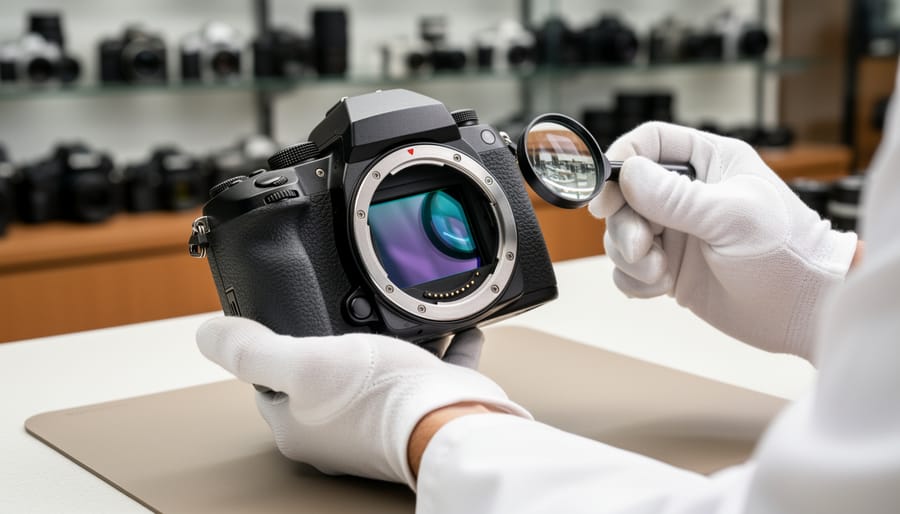
Testing a camera in person lets you assess the viewfinder brightness, check for light leaks by opening the back in daylight, and feel the smoothness of the shutter and advance mechanisms. You’ll immediately spot issues like sticky aperture blades or worn focusing screens that photos might miss.
When buying online, request specific images: the mirror with the lens removed, light seals close-up, and the film pressure plate. Ask sellers to fire the shutter at different speeds while recording video, which reveals hesitation or irregularities. Request the serial number to verify the model year and check if it’s been reported stolen.
Red flags include vague condition descriptions like “seems to work,” reluctance to provide additional photos, prices significantly below market value, and listings with only stock photos. Legitimate sellers should answer technical questions confidently and provide detailed shooting history. Consider platforms with buyer protection, and always factor in potential servicing costs. A bargain that needs a $200 repair isn’t actually a bargain.
Where to Buy and What to Pay
Trusted Marketplaces and Dealers
When buying used medium format cameras, choosing a reputable dealer can mean the difference between a great purchase and a costly mistake. Let me walk you through the most trusted options.
KEH Camera remains the gold standard for used gear in North America. They’ve been around since 1979 and use a conservative grading system, meaning their “Bargain” grade often exceeds expectations. Their 180-day warranty provides excellent peace of mind, though prices tend to run higher than private sales. I’ve personally bought several medium format bodies from them without issue.
B&H Used Department offers competitive pricing and the backing of a major retailer. Their inventory turns over quickly, and returns are straightforward. However, their grading can be somewhat optimistic compared to KEH, so read descriptions carefully.
MPB has revolutionized the used market with locations in the US, UK, and Europe. Their streamlined platform makes browsing easy, and they offer fair trade-in values. The six-month warranty is solid, though some photographers report their cosmetic grading varies more than KEH’s.
Local camera shops deserve consideration too. You can inspect gear personally, build relationships, and sometimes negotiate. The downside is limited inventory and typically higher prices.
Online platforms like eBay and Fred Miranda Forums offer the best deals but require more expertise to avoid problems. Always verify seller ratings, request detailed photos, and use buyer protection services.
Understanding Fair Market Value
Before you pull the trigger on a used medium format camera, you need to understand what fair market value actually looks like. Start by checking multiple sources: eBay’s sold listings (not current listings, which often reflect wishful thinking), KEH Camera’s grading system and pricing, and specialized forums like PhotoMarket on Reddit. You’ll quickly notice that a Mamiya RZ67 body might range from $300 to $600 depending on condition, while a Hasselblad 500C/M commands $800 to $1,500.
Seasonal trends matter more than you’d think. Prices typically dip after the holiday season in January and February when cash-strapped sellers offload gear. You’ll also see deals in late summer when students liquidate equipment before school starts. Conversely, prices spike before major holidays and wedding season.
When should you jump versus walk away? If a Pentax 67 appears at 30% below market average with clear photos and honest condition disclosure, that’s worth pursuing quickly. However, if someone’s offering a “mint” Bronica for half price but refuses additional photos or has zero selling history, trust your instincts and move on. Remember, a deal that seems too good to be true usually involves hidden damage, missing parts, or worse—it’s a scam altogether.
Common Pitfalls and How to Avoid Them
I learned this lesson the hard way when I bought my first used Mamiya RZ67. The shutter fired beautifully during inspection, the lens looked pristine, and the price was right. Three rolls of film later, I discovered light leaks that cost me several irreplaceable family portraits and a $200 repair bill. That experience taught me what most sellers won’t tell you and what many buyers only discover after it’s too late.
The light seal trap catches more beginners than any other issue. These foam strips deteriorate over time, especially in cameras from the 1970s and 1980s. They crumble into black dust that you might mistake for simple dirt. A seller once assured me the “minor dust” in a Hasselblad 500C was nothing to worry about. After shooting two weddings, I had orange streaks across every frame. Always ask when seals were last replaced, and if the answer is “I don’t know,” factor in $50-150 for professional replacement.
Sticky shutter blades present another hidden danger because they often work fine at first. Temperature changes or sitting unused can cause them to stick partially open, leading to overexposed frames. Test the camera at multiple shutter speeds, and if possible, shoot a test roll before committing to expensive film stocks for important projects.
The “fully functional” description means different things to different sellers. I once purchased a Pentax 645 advertised as working perfectly, only to find the light meter was off by two stops. For the seller, a camera that made images was fully functional. For me, it meant constantly compensating for inaccurate readings. Always clarify whether every function has been tested, not just whether the shutter fires.
Perhaps the costliest mistake is buying without researching repair availability. That incredible deal on a rare Bronica model seems less appealing when you discover parts are nearly impossible to find. Stick with popular systems like Hasselblad, Mamiya, or Pentax 645 unless you have access to specialized repair services. Your local camera shop’s ability to service your purchase matters more than you think.
Stepping into the world of medium format photography doesn’t have to mean emptying your savings account. The used market offers a legitimate, smart pathway to achieving professional-level image quality that can transform your photography. Throughout this guide, we’ve explored how to navigate this market with confidence, from understanding what makes medium format special to evaluating specific cameras and finding reputable sellers.
The beauty of buying used medium format gear is that you’re accessing proven technology. These cameras have stood the test of time, and unlike digital cameras that become outdated quickly, many medium format film cameras from decades ago still produce images that rival or exceed contemporary equipment. Even used digital medium format systems offer substantial value, delivering resolution and dynamic range that remain competitive today.
You now have the knowledge to inspect a camera properly, ask the right questions, and spot potential issues before they become expensive problems. You understand which models suit different shooting styles and budgets, and you know where to look for the best deals without unnecessary risk.
Remember, every professional photographer you admire likely started with used gear or continues to use it strategically. There’s no shame in buying pre-owned equipment; there’s only smart decision-making. Take your time, use the checklist we’ve provided, and don’t rush into a purchase just because it seems like a good deal.
Your journey into medium format photography starts now. Armed with this information, you’re ready to make a confident investment that will elevate your creative vision.


 By
By