 By
By 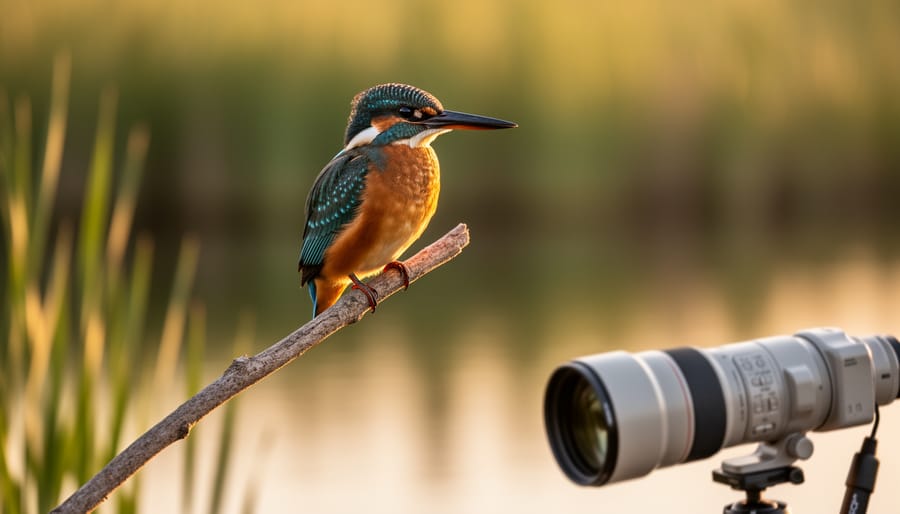
Match your lens choice to your actual shooting distance and subject size—a 400mm lens captures frame-filling shots of large wildlife at 50 feet, while smaller birds demand 600mm or longer reach. Calculate your effective focal length by multiplying the lens’s millimeter rating by your camera’s crop factor (1.6x for Canon APS-C sensors), meaning a 300mm lens delivers 480mm equivalent reach on a Rebel or 90D body.
Test your stability threshold before investing in super-telephoto glass. Most photographers struggle with sharp handheld shots beyond 400mm without image stabilization, and even the steadiest hands benefit from Canon’s IS-equipped lenses when shooting at 500mm or 600mm focal lengths. Professional wildlife photographers typically use monopods starting at 400mm and tripods with gimbal heads for anything longer, especially during extended shooting sessions where fatigue compromises sharpness.
Prioritize optical quality over maximum reach when budget constraints force compromises. The Canon EF 100-400mm f/4.5-5.6L IS II delivers sharper corner-to-corner images than budget 150-600mm third-party alternatives, and you’ll achieve better results cropping a high-quality 400mm image than accepting soft edges from inferior glass. This principle holds especially true for professional work, because quality lenses matter more than megapixel counts when clients demand tack-sharp results.
Consider the RF versus EF mount ecosystem before purchasing. Canon’s mirrorless RF mount offers newer designs with superior autofocus and lighter weight at telephoto lengths, but the mature EF system provides more affordable used options and works seamlessly with adapters on mirrorless bodies. RF 800mm f/11 IS STM costs half the price of comparable EF alternatives while delivering impressive results for daylight shooting, though the fixed f/11 aperture limits low-light performance compared to f/5.6 or faster glass.
Understanding Long Distance Photography and Lens Requirements
What Focal Length Do You Actually Need?
Choosing the right focal length depends entirely on your subject and how close you can physically get. Let’s break down what each range actually delivers in practical shooting scenarios.
A 200mm lens works beautifully for large wildlife at moderate distances, like photographing deer from 50 feet away or capturing athletes on a sports field. You’ll fill the frame with a standing person from about 30-40 feet. This focal length is surprisingly versatile and manageable for handheld shooting, making it perfect for those just entering long-distance photography.
Step up to 300mm, and you’re in the sweet spot for many wildlife photographers. At this length, you can photograph birds in your backyard with decent frame-filling results, or capture facial expressions of football players from the sidelines. A 300mm lens lets you shoot elk from 100 yards away while still showing meaningful detail and behavior.
When you reach 400mm, you’re entering serious wildlife territory. This focal length allows you to photograph skittish songbirds without disturbing them, or capture individual players in baseball from the outfield. You’ll get quality shots of subjects that would simply be too small in the frame at shorter focal lengths.
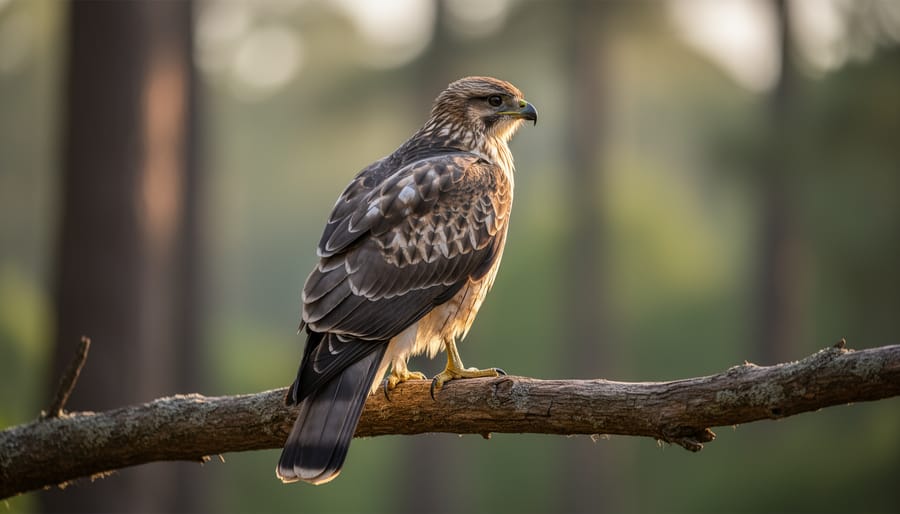
For extreme reach, 600mm and beyond serves specialized needs like photographing raptors in flight, distant mountain goats, or Olympic-distance sporting events. These lenses excel when physical proximity is impossible, though they require serious support systems and often come with substantial price tags. Most photographers find 400mm sufficient for their needs, with 600mm reserved for those who absolutely require maximum magnification.
Image Stabilization: Why It Matters More at Distance
When you’re photographing a bird perched 100 feet away, even the slightest hand movement gets magnified dramatically through a telephoto lens. Think of it like this: a tiny wobble that’s barely noticeable with a 50mm lens becomes a blurry mess at 400mm or 600mm. That’s why image stabilization, which Canon calls IS, becomes absolutely critical for long-distance shooting.
Canon’s IS technology has evolved significantly over the years. Earlier systems offered around 2-3 stops of stabilization, meaning you could shoot at shutter speeds roughly four to eight times slower than normally recommended while still getting sharp results. Modern lenses with newer IS modes can provide up to 5.5 stops of correction, a game-changer for handheld wildlife photography in challenging light.
Canon’s latest super-telephoto lenses feature multiple IS modes tailored to different shooting scenarios. Mode 1 stabilizes both horizontal and vertical movement for general use. Mode 2 corrects only the perpendicular axis, perfect for panning with moving subjects like racing cars or flying birds. Mode 3, found in newer lenses, activates stabilization only when you press the shutter, preventing the viewfinder jitter that can make tracking erratic subjects difficult.
For photographers shooting wildlife from boats or unstable platforms, this technology transforms what’s possible handheld.
Best Canon Telephoto Lenses for Long Distance Photography
Professional-Grade Super Telephoto Lenses
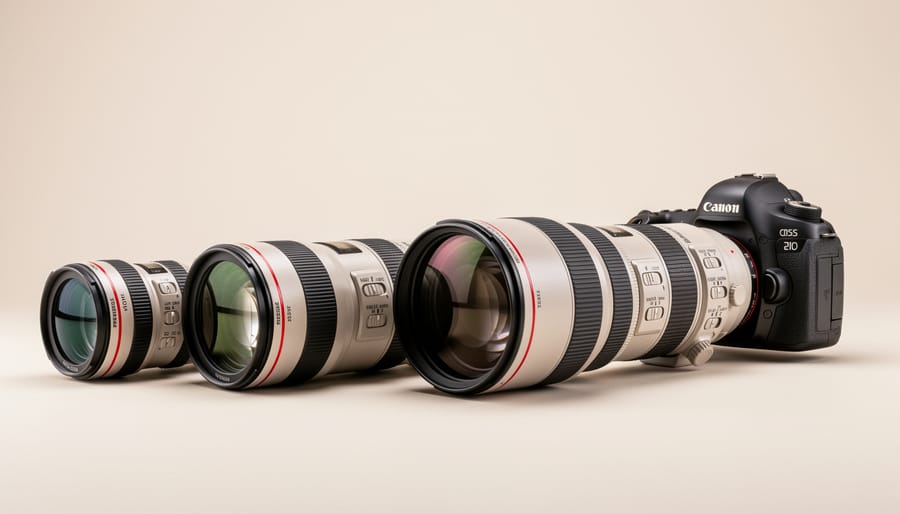
When you’re ready to invest in the absolute pinnacle of Canon’s lens technology, professional-grade super telephoto lenses represent the ultimate tools for capturing distant subjects. These are the lenses you’ll see on the sidelines at major sporting events and in the hands of professional wildlife photographers worldwide.
Canon’s flagship offerings include powerhouses like the EF 400mm f/2.8L IS III USM, EF 600mm f/4L IS III USM, and their newer RF counterparts: the RF 600mm f/4L IS USM and the groundbreaking RF 800mm f/5.6L IS USM. Let’s be honest—these lenses come with eye-watering price tags ranging from roughly $12,000 to $17,000, but they deliver performance that justifies the investment for those who depend on their gear professionally.
The image quality from these lenses is simply extraordinary. That large front element gathers tremendous amounts of light, and when combined with Canon’s finest optical engineering, you get edge-to-edge sharpness that holds up even when cropping significantly in post-production. The wide maximum apertures (f/2.8 or f/4 on most models) create gorgeous subject separation and perform admirably in challenging lighting conditions where smaller-aperture telephoto lenses struggle.
Weight is a legitimate consideration here. The EF 600mm f/4L weighs approximately 8.5 pounds, while the newer RF 600mm f/4L shaves off nearly a pound thanks to modern materials and design. The RF 800mm f/5.6L, at just 7.5 pounds, represents a remarkable engineering achievement—previous 800mm lenses were significantly heavier. Still, you’ll want a robust tripod or monopod for extended shooting sessions, and using a lens hood becomes essential for protecting that massive front element.
These lenses are best suited for professional sports photographers, serious wildlife photographers who regularly shoot challenging subjects like birds in flight, and those who license their work commercially where absolute image quality matters. The autofocus speed is blistering fast, the image stabilization systems can provide up to 5.5 stops of compensation, and the build quality ensures these lenses will perform reliably in harsh conditions for years.
If you’re a weekend enthusiast, these probably represent overkill. But for professionals whose livelihood depends on capturing that perfect moment at distance, they’re indispensable tools of the trade.
Versatile Telephoto Zoom Lenses
When you need reach but also appreciate the option to zoom in and out for compositional flexibility, these versatile telephoto zoom lenses deliver exceptional performance across a range of shooting scenarios.
The Canon EF 100-400mm f/4.5-5.6L IS II USM has become something of a legend among wildlife and sports photographers. This redesigned version addresses every complaint photographers had about its predecessor, trading the old push-pull zoom mechanism for a rotating zoom ring that feels precise and professional. The image stabilization system offers up to four stops of correction, which means you can often handhold this lens at surprisingly slow shutter speeds. I’ve watched wedding photographers use this lens to capture candid ceremony moments from the back of a church, while wildlife photographers pack it for safari trips where its zoom range handles everything from distant elephants to closer bird encounters. The fluorite and Super UD glass elements work together to minimize chromatic aberration, producing images with excellent sharpness even at the long end. At around 3.6 pounds, it’s substantial but manageable for extended handheld shooting.
For those shooting on Canon’s RF mount system, the RF 100-500mm f/4.5-7.1L IS USM represents the mirrorless evolution of the telephoto zoom concept. The extended 500mm reach gives you that extra distance compared to the EF version, though you’ll notice the maximum aperture narrows to f/7.1 at the long end. Don’t let that dissuade you though. Modern camera sensors handle higher ISO values remarkably well, and the built-in 5-stop image stabilization, which coordinates with in-body stabilization on compatible bodies, often delivers up to six stops of shake correction. This lens feels noticeably lighter than the EF 100-400mm, making it an excellent choice for photographers who hike to their shooting locations or simply prefer less shoulder fatigue during long shooting days.
The EF 200-400mm f/4L IS USM Extender 1.4x occupies rare territory in Canon’s lineup. This professional-grade zoom lens includes a built-in 1.4x extender that flips into place with a switch, instantly transforming your 200-400mm into a 280-560mm lens. That constant f/4 aperture throughout the native zoom range provides consistent exposure and autofocus performance that professional sports and wildlife photographers demand when tracking fast-moving subjects in changing light conditions.
Budget-Friendly Long Distance Options
You don’t need to spend thousands of dollars to start exploring long-distance photography. Several budget-friendly options deliver impressive results, though it’s important to understand what trade-offs you’re accepting at lower price points.
The Canon EF 70-300mm f/4-5.6 IS II USM represents exceptional value for money. Priced around $500-600, it includes Canon’s Nano USM motor for quick, quiet autofocus and a built-in LCD panel displaying focal length and focus distance. Image stabilization provides up to 4 stops of shake correction, which proves invaluable when shooting handheld at 300mm. The optical quality is genuinely good for the price, with acceptable sharpness across the zoom range. The main compromise? The variable maximum aperture of f/5.6 at 300mm limits low-light performance and background blur compared to fixed-aperture lenses.
For even tighter budgets, the EF 75-300mm f/4-5.6 III exists as Canon’s most affordable telephoto option at around $200. Let’s be honest here: this lens won’t win optical quality awards. Autofocus is slower, there’s no image stabilization, and sharpness falls off noticeably at the long end. However, if you’re experimenting with long-distance photography for the first time or need an emergency backup, it gets the job done in good lighting conditions.
RF mount shooters on a budget should consider the RF 100-400mm f/5.6-8 IS USM. Yes, that f/8 maximum aperture at 400mm is limiting, but the lens costs roughly $650 and weighs just 635 grams. The optical quality surprises many photographers, delivering sharp images when paired with modern camera bodies that handle high ISO well.
Third-party manufacturers offer compelling alternatives too. The Sigma 100-400mm f/5-6.3 DG OS HSM Contemporary and Tamron 100-400mm f/4.5-6.3 Di VC USD both deliver excellent optical performance at prices below Canon’s premium offerings. These lenses typically cost between $700-800 and include image stabilization and weather sealing. The trade-off usually involves slightly slower autofocus in challenging conditions and build quality that, while solid, doesn’t quite match Canon’s L-series construction.
Prime Telephoto Lenses for Sharpness
When you need maximum sharpness for distant subjects, prime telephoto lenses deliver exceptional optical quality that often surpasses zoom alternatives. The key advantage of fixed focal length designs is their simpler optical construction, allowing engineers to optimize every element for a single focal length rather than compromising across a zoom range.
The EF 300mm f/4L IS USM offers an outstanding balance of reach and portability, weighing just 2.6 pounds. Wildlife photographers appreciate its razor-sharp images and effective image stabilization, making it manageable for handheld shooting. Similarly, the EF 400mm f/5.6L USM remains a favorite among bird photographers thanks to its featherlight 2.8-pound build and outstanding contrast.
For budget-conscious shooters using RF-mount cameras, the RF 600mm f/11 IS STM and RF 800mm f/11 IS STM represent revolutionary options. While their f/11 aperture requires good lighting conditions, their compact retractable designs and remarkable sharpness make extreme telephoto photography accessible. The 600mm weighs only 1.5 pounds, fitting easily in a daypack.
The tradeoff with prime vs zoom lenses comes down to flexibility versus optical performance. These primes excel when you can position yourself appropriately or when subject distance is predictable, delivering consistently sharper results than comparably priced zooms.
Teleconverters: Extending Your Reach Without Breaking the Bank
Teleconverters offer an economical way to extend your lens’s reach, essentially multiplying your focal length without the expense of purchasing an entirely new super-telephoto lens. Canon offers two primary extenders: the 1.4x (which increases your focal length by 40%) and the 2x (which doubles it). So your 300mm lens becomes either a 420mm or 600mm, respectively.
Before you rush out to buy one, understand the trade-offs. Both teleconverters reduce the light entering your camera. The 1.4x costs you one stop of light (turning an f/4 lens into f/5.6), while the 2x sacrifices two stops (making that f/4 into f/8). This impacts autofocus performance significantly. Many Canon camera bodies require a maximum aperture of f/8 or wider for their autofocus points to function, and some advanced AF points need f/5.6 or better. Once you hit f/11 with a 2x converter on an f/5.6 lens, you may lose autofocus entirely on certain bodies.
Image quality takes a hit as well, though Canon’s newer extenders minimize this better than earlier versions. Expect slight decreases in sharpness and contrast, with the 1.4x performing noticeably better than the 2x. The quality loss becomes more apparent when pixel-peeping at 100% magnification.
Compatibility matters too. Canon teleconverters only work with specific lenses, primarily longer telephoto primes and select zoom lenses. Check Canon’s compatibility charts before purchasing.
When do teleconverters make sense? They’re invaluable when you occasionally need extra reach but can’t justify a longer prime’s cost. Wildlife photographers often pair them with 300mm or 400mm lenses for flexibility. However, if you consistently need that extended focal length, investing in a native longer lens usually delivers superior results. Think of teleconverters as problem-solving tools for specific situations rather than permanent solutions. The 1.4x extender generally offers the best balance between added reach and maintained image quality, making it the more practical choice for most photographers.
EF vs RF Mount: What Long Distance Shooters Need to Know
If you’re trying to decide between Canon’s EF and RF lens systems for long-distance photography, you’re not alone. Many photographers are wrestling with this question, especially as Canon continues expanding its RF lineup while maintaining a robust collection of EF telephoto lenses.
Here’s the good news: both systems deliver exceptional performance for distance shooting. EF telephoto lenses like the 100-400mm or 600mm have proven themselves over decades in the field. They’re optically excellent, and you can use them on RF-mount cameras with Canon’s EF-EOS R adapter. The adapter introduces virtually no performance loss—autofocus speed remains impressive, and image quality stays intact. I’ve used adapted EF lenses on my R5, and honestly, you’d be hard-pressed to notice any difference in real-world shooting conditions.
That said, native RF telephotos offer some compelling advantages. The RF 100-500mm and RF 800mm f/11 benefit from improved communication between lens and camera body, slightly faster autofocus acquisition, and often more compact designs. The RF 100-500mm, for instance, weighs less than its EF 100-400mm counterpart while offering extended reach. Plus, RF lenses feature customizable control rings that many photographers find invaluable during fast-paced wildlife shoots.
Should you upgrade if you already own EF glass? For telephoto work specifically, there’s no urgent need. Your existing lenses will perform beautifully with an adapter. However, if you’re building a kit from scratch or your EF lens needs replacing anyway, going native RF makes sense for future-proofing your investment.
Understanding Canon lens compatibility helps you make smarter purchasing decisions without feeling pressured to replace perfectly good glass.
Real-World Shooting Scenarios and Lens Recommendations

Wildlife and Bird Photography
Wildlife and bird photography demands lenses that combine exceptional reach with fast autofocus and image stabilization. For birding enthusiasts, the Canon EF 100-400mm f/4.5-5.6L IS II USM offers remarkable versatility. Picture yourself at a wetland preserve where a great blue heron lands 50 yards away—this lens lets you quickly zoom from capturing the bird in its environment to isolating it with beautiful bokeh. The image stabilization means you can handhold shots even in the golden hour’s dimmer light.
For serious wildlife photographers, the Canon EF 500mm f/4L IS II USM represents professional-grade performance. Imagine tracking a fox hunting in an open meadow at dawn—the f/4 aperture gathers enough light for crisp shots while maintaining fast shutter speeds to freeze motion. The fixed focal length means lighter weight than comparable zooms, making it manageable during long hikes.
Budget-conscious shooters shouldn’t overlook the Canon EF 70-300mm f/4-5.6 IS II USM paired with a 1.4x teleconverter. While you’ll sacrifice some aperture speed, this combination provides 420mm of reach for backyard birding or safari adventures where you’re shooting from vehicles in good light.

Sports and Action Photography
Sports photography demands lenses that can keep pace with rapid action while delivering tack-sharp images from considerable distances. For stadium sports like soccer or football, the Canon EF 70-200mm f/2.8L IS III USM offers an excellent starting point, providing versatile reach and lightning-fast autofocus that locks onto athletes mid-stride. However, if you’re shooting from the upper levels of stadiums or covering outdoor sports like baseball, you’ll benefit from extending to 400mm or beyond.
The RF 100-500mm f/4.5-7.1L IS USM has become a favorite among sports photographers transitioning to mirrorless systems, thanks to its advanced Dual Nano USM autofocus motor that tracks erratic movements with remarkable precision. Its animal detection autofocus even works surprisingly well for human athletes in many situations.
For professional motorsports or track and field events, prime lenses like the EF 400mm f/2.8L IS III USM remain unbeatable. The wide aperture enables faster shutter speeds to freeze motion, while the specialized autofocus algorithms predict movement patterns with incredible accuracy. When choosing a sports lens, prioritize autofocus speed and image stabilization ratings, as these factors often matter more than absolute sharpness when capturing decisive moments.
Landscape and Astrophotography
While wildlife and sports often steal the spotlight, telephoto lenses between 70-200mm offer landscape photographers a powerful creative tool. These focal lengths compress perspective, making distant mountain ranges appear stacked dramatically against each other or bringing far-off architectural elements into intimate relationship with foreground subjects. A 70-200mm f/4 lens excels at isolating specific landscape features—a lone tree on a distant hillside or patterns in rock formations—creating compositions impossible with wide-angle glass.
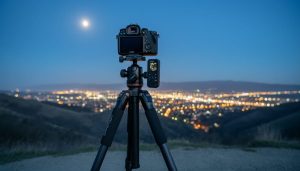
For astrophotography enthusiasts, longer lenses open celestial possibilities beyond typical Milky Way shots. The Canon RF 100-500mm can capture detailed moon photography, revealing craters and surface texture, while also allowing you to photograph star clusters and nebulae with impressive magnification. Pair these lenses with sturdy tripods and other essential landscape photography gear for sharp results during long exposures, keeping ISO manageable even when shooting the night sky.
Choosing the right Canon lens for long-distance photography ultimately comes down to understanding your unique requirements and being honest about your priorities. There’s no universal “best” lens—only the best lens for your specific situation. If you’re a wildlife photographer trekking through remote locations, portability might trump everything else, making a lightweight 100-400mm more practical than a heavier prime. Sports shooters working from fixed positions, however, might prioritize the superior autofocus and wider apertures of professional-grade super-telephotos.
Budget considerations matter just as much as optical performance. A hobbyist capturing backyard birds will likely find excellent value in Canon’s more affordable telephoto zooms, while a professional wildlife photographer earning income from their work can justify the investment in an L-series prime that delivers edge-to-edge sharpness and weather sealing.
Before making your purchase, spend time honestly evaluating what you’ll actually photograph. Consider the lighting conditions you typically work in, whether you need the flexibility of a zoom or can work with a prime’s fixed focal length, and if you’re willing to carry extra weight for better image quality. Remember that even mid-range telephoto lenses can produce stunning results in capable hands.
Quality glass is an investment that will outlast multiple camera bodies. Canon’s telephoto lenses, particularly their L-series offerings, hold their value remarkably well and continue performing beautifully for decades. Choose wisely based on your real-world needs, and you’ll have a trusted companion capturing distant moments for years to come.




 By
By