 By
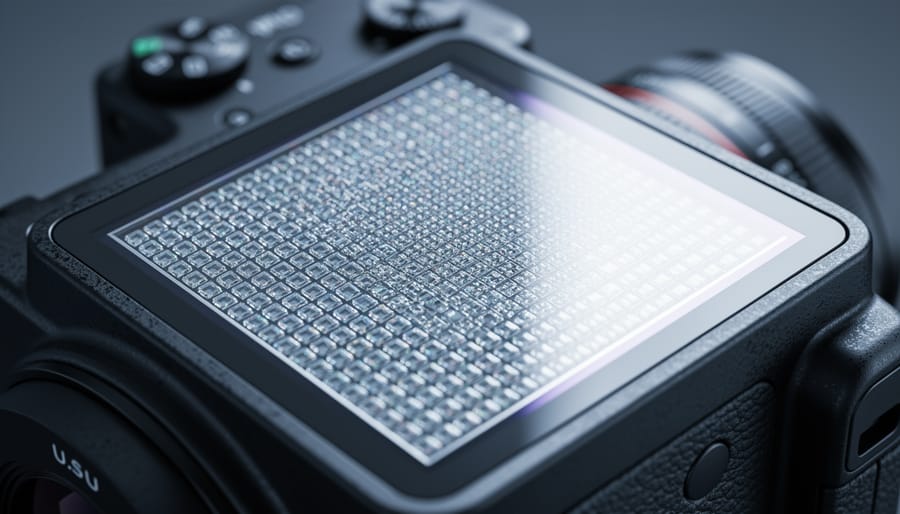
Sensor imaging is the process by which a camera sensor converts light into a digital photograph. When you press the shutter button, millions of tiny light-sensitive pixels on the sensor capture photons, measure their intensity and color, then translate that information into the digital file you see on your screen. This technology sits at the heart of every digital camera, from your smartphone to professional medium format systems.
Understanding sensor imaging matters because it directly influences everything you care about in your photos: image quality, low-light performance, dynamic range, and color accuracy. The sensor is essentially your camera’s film, and knowing how it works helps you make smarter decisions when choosing gear, troubleshooting image problems, or pushing your equipment to its limits.
The technology might sound complex, but the core concept is straightforward. Light enters through your lens and hits the sensor surface. Each pixel site records how much light it receives during the exposure. Since individual pixels can only measure light intensity (not color), the sensor uses a color filter array, most commonly the Bayer pattern, placed over the pixels to capture color information. The camera’s processor then interprets this raw data, applies demosaicing algorithms to reconstruct full-color information for each pixel, and produces the final image.
What makes this particularly relevant in 2026 is how sensor technology continues to evolve. Backside-illuminated designs improve light gathering efficiency. Stacked sensors enable faster readout speeds for better burst rates and video capabilities. Global shutter technology eliminates rolling shutter distortion in high-end models.
This article walks through exactly how sensor imaging works, the differences between common sensor types, and what these technical specifications mean for your actual shooting experience. You’ll gain practical knowledge to evaluate camera specifications confidently and understand why certain sensors excel in specific situations.
What Sensor Imaging Actually Means
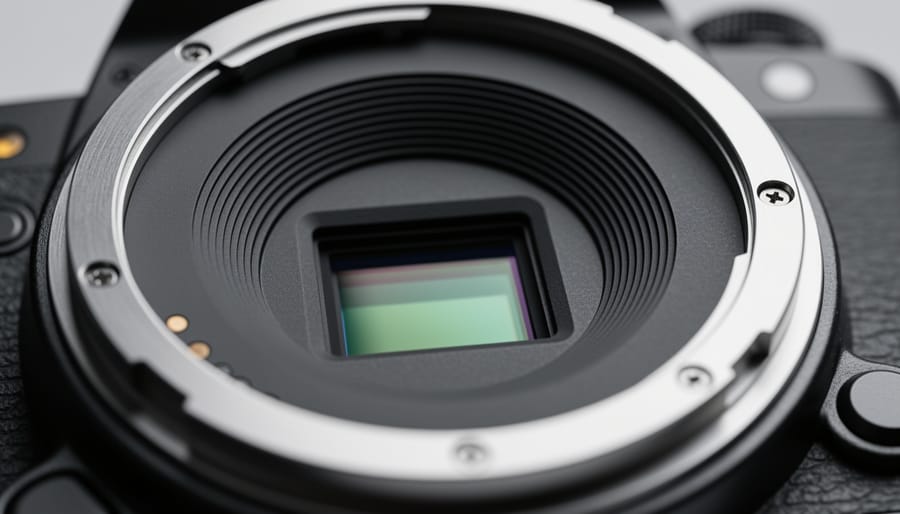
At its core, sensor imaging is the process of turning light into a digital photograph. When you press the shutter button, your camera’s sensor captures photons, particles of light, and transforms them into electrical signals that eventually become the pixels in your image file. It’s a bit like a solar panel, but instead of generating power, it generates data that represents everything the lens “saw” in that moment.
The image sensor sits at the heart of your camera, right where film used to live in analog cameras. Its surface is covered with millions of tiny light-sensitive sites called photosites, each one capable of measuring how much light hits it during an exposure. Think of the sensor as a grid of incredibly small buckets, each catching photons during the brief time the shutter is open. The more light that falls on a particular photosite, the stronger the electrical charge it builds up.
- Photosite
- A single light-sensitive location on the sensor surface that captures photons and converts them into an electrical charge. One photosite typically corresponds to one pixel in the final image.
- Pixel
- The smallest unit of a digital image, representing a single point of color and brightness. In sensor imaging, pixels are created from the data collected by photosites.
- Photodiode
- The semiconductor component within each photosite that actually converts light energy into electrical charge through the photoelectric effect.
- Photon
- An elementary particle of light. When photons strike the sensor’s photodiodes, they trigger the release of electrons, creating measurable electrical signals.
- Analog-to-digital conversion
- The process of transforming the continuously variable electrical signals from the sensor into discrete numerical values that a computer can process and store as image data.
Here’s what often confuses people: sensor imaging isn’t just about capturing light, it’s the entire chain from photon detection through signal processing to final image creation. Many photographers mistakenly think “sensor imaging” refers only to sensor size or megapixel count, but it actually encompasses how the sensor gathers light, reads that information, processes the signals, and outputs usable image data. The quality of this entire process determines what your camera can achieve, from low-light performance to dynamic range.
How Sensor Imaging Works: From Light to Photo

The Role of the Bayer Filter
Here’s something most photographers don’t realize when they press the shutter: camera sensors are colorblind. Each individual photosite on a sensor can only measure how much light hits it, not what color that light is. The Bayer filter solves this limitation through an elegant trick borrowed from your own eyes.
Named after Kodak engineer Bryce Bayer, this color filter array places a grid of tiny red, green, and blue filters over the sensor’s photosites. Each filter lets through only its specific color of light, so any given pixel captures just one color channel. The pattern follows a 2×2 repeating mosaic: one red filter, one blue, and two greens (our eyes are most sensitive to green wavelengths, so the extra green filter helps maintain natural-looking images).
Your camera’s processor then performs “demosaicing,” essentially an educated guess that reconstructs full-color information at each pixel location by analyzing the surrounding filtered pixels. When a photosite behind a red filter records a bright signal, the processor looks at neighboring green and blue sites to estimate what the complete RGB value should be at that spot.
This system works brilliantly for most photography, but it’s not the only approach. Foveon sensors stack three photodiode layers at different depths, exploiting the fact that different wavelengths penetrate silicon to varying depths, each layer naturally captures a different color without filters. More recently, some manufacturers have experimented with white or transparent pixels in the filter array to boost light-gathering, while others are refining the spectral response of traditional Bayer patterns to improve color accuracy and reduce artifacts in fine textures like fabrics or distant foliage.
The Bayer filter remains the workhorse of sensor imaging because it strikes a practical balance between color fidelity, resolution, and manufacturing cost.
Reading and Processing the Signal
Once the sensor’s photodiodes have accumulated charge from incoming photons, that electrical information needs to be extracted and transformed into usable image data. This readout process happens row by row in most camera sensors, with each pixel’s charge being measured, amplified, and converted from analog electrical signals into digital values your camera can process.
The speed at which a sensor reads this data matters enormously for performance. Faster readout speeds enable higher frame rates for burst shooting and video, but they also reduce the dreaded “rolling shutter” effect, that weird skewing or wobbling you see when panning quickly or photographing fast-moving subjects. Rolling shutter occurs because the sensor reads different rows at slightly different times; if your subject moves while the readout is happening, you get distortion. Global shutter sensors read all pixels simultaneously, eliminating this issue entirely, though they’ve historically required trade-offs in quantum efficiency.
Modern sensors increasingly perform initial processing right on the chip before sending data to the camera’s main processor. This on-sensor processing can include noise reduction, analog-to-digital conversion with sophisticated circuitry, and even preliminary autofocus calculations. The better this front-end processing works, the cleaner your images start out, less rescue work needed in post-production.
Different Sensor Technologies and Architectures
Traditional vs. Backside-Illuminated Sensors
In a traditional front-side illuminated (FSI) sensor, the photodiodes that capture light sit beneath layers of circuitry and metal wiring. Light has to pass through this maze of electronics before reaching the actual light-sensitive area, which blocks or deflects some photons along the way. Think of it like trying to collect rainwater with a bucket that has a wire rack sitting on top, you’ll catch water, but the rack inevitably blocks some of it.
Backside-illuminated sensors flip this arrangement. The photodiodes face the incoming light directly, with all the circuitry moved to the back side of the sensor. Now those photons have a clear path to where they’re actually needed, improving light-gathering efficiency by 30-40% in many cases.
This architectural change matters most when pixels are small. As manufacturers pack more megapixels onto the same sensor size, each individual pixel shrinks. Smaller pixels mean less surface area to catch photons, so any obstruction becomes proportionally more damaging to image quality. BSI sensors recover much of that lost efficiency, which is why you’ll find them in everything from high-resolution full-frame cameras to smartphone sensors where pixel size can be microscopic.
Stacked Sensor Architecture
Stacked sensor architecture takes a different approach to sensor design by separating the light-sensitive photodiodes from the processing circuitry onto distinct silicon layers, then bonding them together vertically. Instead of placing everything on a single plane, where readout circuits compete for space with photodiodes, stacked sensors put the pixel array on top and move the analog-to-digital converters, processing logic, and memory underneath.
This layered construction solves a fundamental speed bottleneck. With processing circuits tucked below rather than beside each photodiode, data can flow off the sensor much faster. That translates directly into higher burst rates for photographers shooting action: cameras with stacked sensors can fire off 20, 30, or even 40 frames per second while maintaining full autofocus tracking and exposure calculation between shots.
Video shooters benefit too. Stacked sensors handle the enormous data throughput required for 4K and 8K recording at high frame rates without overheating or stuttering. The architecture also enables features like electronic shutter with minimal rolling-shutter distortion, on-sensor AI processing for subject recognition, and built-in buffer memory that prevents the camera from choking during long bursts. Think of it as adding express lanes to the sensor’s data highway, everything moves faster because there’s more room for traffic to flow.
How Sensor Imaging Is Used in Modern Photography
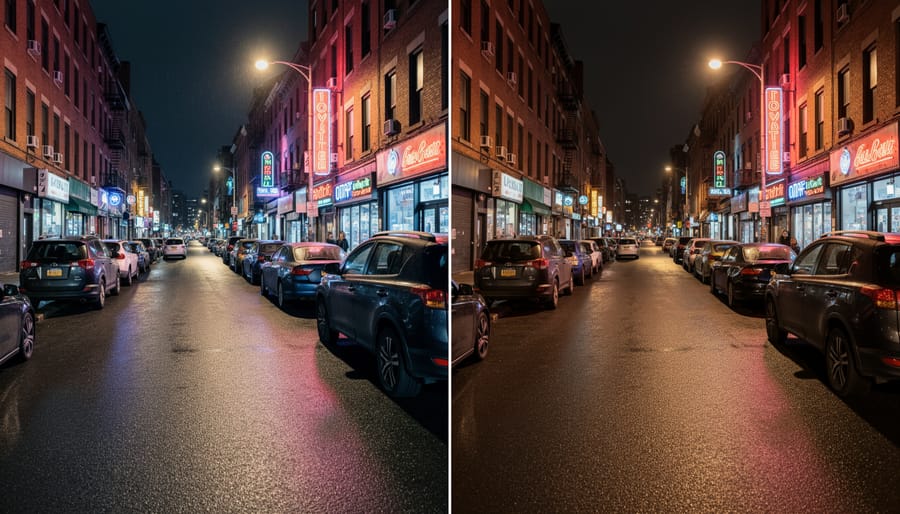
The sensor imaging innovations we’ve discussed aren’t just engineering milestones, they translate directly into capabilities that change how you shoot. Whether you’re chasing a runner in dim light, framing a landscape at golden hour, or filming a documentary in mixed lighting, the sensor’s imaging performance determines what’s possible.
Low-light shooting showcases sensor imaging at its most dramatic. When you’re photographing a candlelit dinner or a night street scene, your sensor needs to capture enough light to create a usable image without drowning it in noise. Modern sensors achieve this through larger photodiodes that gather more photons, improved microlens arrays that direct light more efficiently, and on-chip noise reduction that processes the signal before it even leaves the sensor. The difference is tangible: scenes that required ISO 3200 and visible grain five years ago now look clean at ISO 12,800, letting you shoot handheld in conditions that once demanded a tripod.
Dynamic range, the sensor’s ability to capture detail in both highlights and shadows simultaneously, matters every time you’re dealing with challenging contrast. Imagine photographing a bride in a white dress standing near a dark wood-paneled wall, or a sunset landscape where you want texture in both the bright sky and shadowed foreground. Sensors with wide dynamic range preserve information across that tonal spectrum, giving you flexibility in post-processing that compressed highlights and blocked shadows simply can’t match.
Autofocus has moved onto the sensor itself through phase-detection pixels embedded directly in the imaging array. Instead of relying solely on a separate AF module, your camera now uses dedicated pixels scattered across the frame to measure focus distance. This enables:
- Fast, accurate phase-detect AF across the entire frame
- High-speed continuous shooting with constant autofocus tracking
- Real-time subject tracking that follows eyes, faces, and moving subjects
- High-resolution 4K and 8K video with smooth focus transitions
- HDR capture combining multiple exposures in-camera
- Computational features like focus stacking and real-time exposure preview
Video capabilities lean heavily on sensor imaging performance. Recording 4K at 60 frames per second means your sensor must read and process data incredibly quickly without overheating. Stacked sensor designs handle this by separating processing from light capture, enabling the game-changing features videographers need: high frame rates, minimal rolling shutter distortion, and sustained recording times.
Computational photography takes sensor data and applies algorithms to create images impossible with traditional imaging alone. Your smartphone does this constantly, merging multiple exposures for HDR, synthesizing bokeh, or stacking frames to reduce noise. Mirrorless cameras now incorporate similar techniques, using sensor data as raw material for in-camera processing that extends dynamic range, sharpens detail, and improves color accuracy. These future camera innovations blur the line between capture and processing, making the sensor both an imaging device and the foundation for intelligent post-capture manipulation.
Current Hardware Innovations Shaping Sensor Imaging
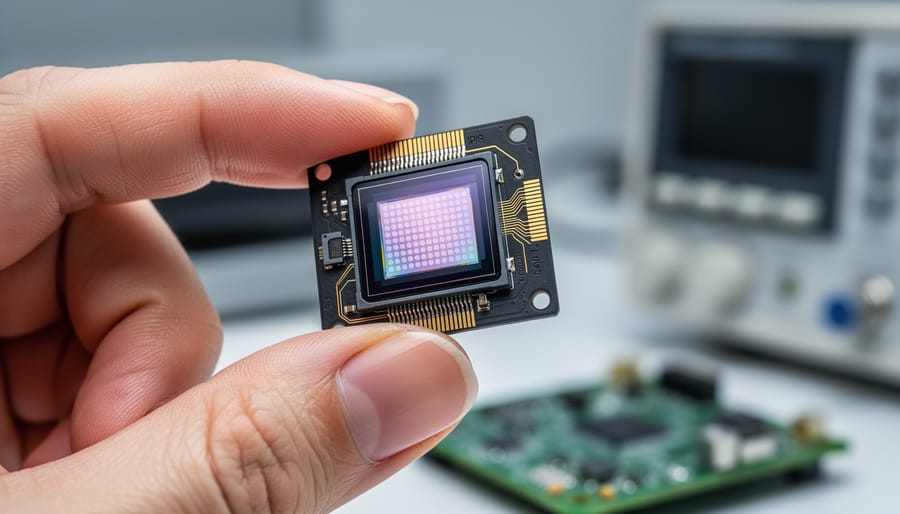
The sensor imaging landscape has shifted dramatically, and 2026 marks a turning point where innovations once confined to flagship models are trickling down to enthusiast cameras. Global shutter CMOS sensors now appear in bodies below the $3,000 mark, eliminating rolling shutter distortion that plagued fast action and panning shots. Instead of the sequential row-by-row readout that caused skewed verticals when you swung the camera, global shutter captures every pixel simultaneously. That means cleaner handheld video, sharper shots of athletes mid-sprint, and no more propeller blade warping in aerial photography.
AI integration has moved from post-processing gimmicks to hardware-level intelligence baked into the sensor itself. Several new cameras feature dedicated neural processing units sitting directly on the stacked sensor chip, analyzing the scene in real time before the image data even reaches the main processor. This on-sensor AI handles subject detection, predictive autofocus tracking, and scene optimization with near-zero lag. When you’re tracking an erratic bird in flight, that split-second advantage translates to noticeably higher keeper rates.
Higher resolution with smaller pixels sounds counterintuitive, but improved fabrication techniques and better microlens designs now allow 60-megapixel full-frame sensors to match or exceed the low-light performance of 24-megapixel sensors from just three years ago. Manufacturers achieved this through dual-gain architecture at the pixel level, each photosite can switch between high and low conversion gain depending on brightness, effectively expanding dynamic range by two to three stops. You get detail for large prints without sacrificing clean files at ISO 6400.
Sensor-based image stabilization has reached seven to eight stops of compensation in some models, partly through tighter integration between the IBIS mechanism and gyroscope data processed directly on the sensor. Combined with optical stabilization in camera lenses you can now shoot handheld in conditions that previously demanded a tripod, think one-second exposures at 85mm without visible shake. These hardware leaps mean your technique matters more than ever, but the gear forgives minor missteps that would’ve ruined shots in earlier generations.
Common Questions About Sensor Imaging
Photographers often have pointed questions about sensor imaging once they grasp the basics, questions that cut through marketing specs and get to what actually matters when you’re choosing a camera or evaluating your gear’s capabilities.
Does sensor size matter more than megapixels?
Yes, in most practical scenarios. A larger sensor with fewer megapixels typically delivers better image quality than a smaller sensor crammed with more pixels because each photosite can gather more light, resulting in lower noise, better dynamic range, and improved low-light performance. Megapixels determine resolution and detail, but sensor size fundamentally affects how cleanly that detail is captured.
How does sensor imaging affect low-light performance?
Sensor imaging determines low-light capability through photosite size and efficiency. Larger photosites collect more photons in dim conditions, producing stronger signals that require less amplification and therefore generate less noise. Backside-illuminated and stacked architectures further improve light-gathering efficiency, which is why two cameras with identical megapixel counts can show drastically different performance at high ISO settings.
Can advanced sensor technology compensate for a poor-quality lens?
No. The sensor can only work with the light information the lens delivers, so optical flaws like aberrations, soft focus, or poor contrast will be faithfully recorded regardless of how sophisticated your sensor is. Think of it as a chain: the lens gathers and focuses light, the sensor converts it to data, and weakness in either link limits your final image quality.
Why do some sensors perform better than others at the same resolution?
Sensor architecture, photodiode design, read noise levels, and on-chip processing all vary between manufacturers and generations. A 24-megapixel BSI stacked sensor with modern noise-reduction circuits will significantly outperform an older front-illuminated sensor at the same pixel count because the underlying imaging technology is simply more efficient at converting light to clean data.
These questions reveal a central truth about sensor imaging: the specifications that dominate camera marketing, megapixels, ISO range, frame rates, are outcomes of the underlying sensor technology, not the technology itself. Understanding how sensor size, architecture, and efficiency interact helps you see past the numbers and evaluate what a camera can genuinely deliver in your hands. For casual photographers shooting in good light with modern equipment, sensor differences matter less than they once did; most current sensors are remarkably capable. But if you’re pushing boundaries, shooting dimly lit events, pulling shadow detail in high-contrast scenes, or cropping heavily, the sensor’s fundamental imaging capabilities become the limiting factor that no amount of post-processing can overcome.
Understanding sensor imaging transforms the way you think about digital photography. It’s not just about megapixels or brand names, it’s about grasping the fundamental process that turns light into the images you create. When you know how photodiodes capture photons, why BSI architecture matters for low-light shooting, or what a stacked sensor brings to video performance, you’re equipped to make smarter decisions about the gear that actually serves your creative vision.
The technology keeps evolving. Global shutter sensors eliminate rolling shutter artifacts. AI integration brings computational photography capabilities that seemed impossible a few years ago. Higher resolution sensors pack more light-gathering power into smaller packages. But here’s the thing: these advances all build on the same core principles we’ve covered. Light hits the sensor. Charge accumulates. Data gets read and processed. Understanding that foundation means you won’t get lost in marketing hype or specification sheets that prioritize flashy numbers over real-world performance.
Next time you’re evaluating a camera, think beyond surface-level specs. Consider how the sensor’s architecture, readout speed, and imaging technology align with what you actually shoot. A smaller sensor with better imaging capabilities might outperform a larger one with older technology. That knowledge, understanding how sensor imaging works, gives you the confidence to choose gear that genuinely fits your needs rather than just following trends.




 By