 By
By 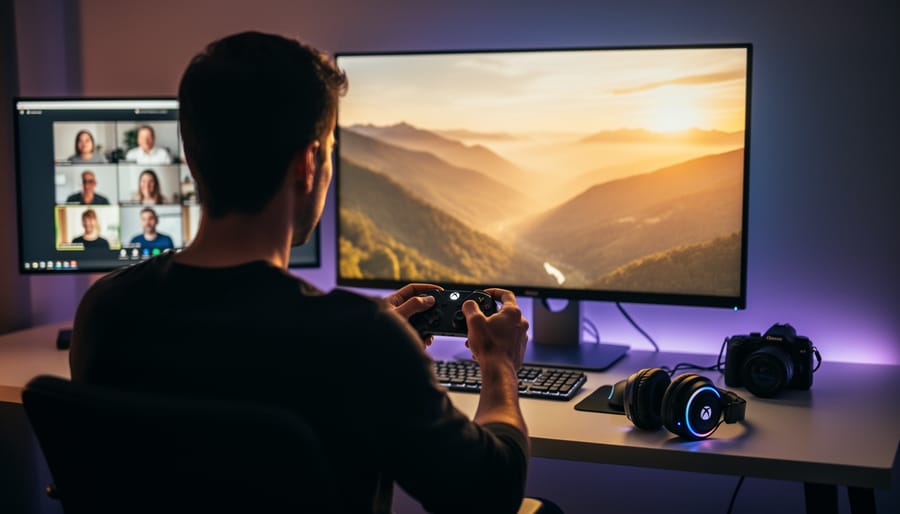
Virtual photography transforms video games into artistic studios where photographers capture stunning images without physical cameras. Instead of shooting landscapes in Iceland or wildlife in Africa, practitioners explore meticulously crafted digital worlds—from the neon-drenched streets of Cyberpunk 2077 to the haunting beauty of Red Dead Redemption 2—using in-game photo modes that rival professional equipment.
This emerging art form mirrors traditional photography in every meaningful way. You’ll compose shots using rule of thirds, manipulate depth of field to isolate subjects, adjust exposure and color grading, and wait for golden hour lighting—all within virtual environments. Games like Ghost of Tsushima and Horizon Forbidden West offer controls sophisticated enough to teach fundamental photographic principles, making them unexpected educational tools for beginners while providing creative playgrounds for seasoned photographers.
Virtual photography meetup series have exploded in popularity because they solve photography’s biggest barriers: cost, location, and accessibility. You don’t need expensive gear, travel budgets, or perfect weather. A gaming console or PC becomes your entire kit, and digital worlds remain perpetually available for exploration.
These online gatherings typically feature themed challenges, portfolio reviews, and collaborative shoots where participants explore the same virtual location simultaneously. Whether you’re learning composition basics, experimenting with challenging techniques like astrophotography, or simply connecting with like-minded creatives, virtual photography meetups offer genuine skill development that translates directly to real-world photography—all from the comfort of home.
What Virtual Photography Actually Is (And Why It Matters)
Virtual photography is the art of capturing and composing images within video game environments using built-in photo modes or similar tools. Think of it as traditional photography, but your camera exists in a digital world where the laws of physics bend to your creative vision. Instead of waiting for golden hour or the perfect weather, you’re working within game engines that offer unprecedented control over lighting, perspective, and subject matter.
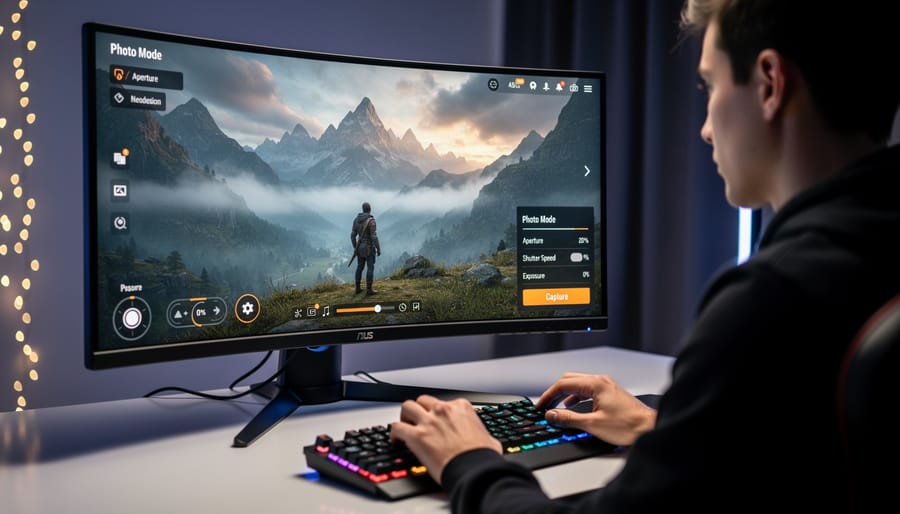
What makes this more than just taking screenshots is the intentional application of genuine photographic principles. Virtual photographers consider composition rules like the rule of thirds, leading lines, and negative space. They think about depth of field, focal length, and how light interacts with their subjects. Games like Ghost of Tsushima, Red Dead Redemption 2, and Marvel’s Spider-Man have elevated their photo modes into sophisticated creative tools, offering aperture control, customizable filters, and even pose adjustments for characters.
The skills you develop translate directly to real-world photography. Understanding how different focal lengths affect perspective compression or how backlighting creates dramatic silhouettes works the same way whether you’re shooting in Horizon Forbidden West or standing in a national park with your DSLR. The difference is that virtual environments let you experiment without equipment costs, travel expenses, or weather limitations.
Major gaming communities have recognized virtual photography as a legitimate art form. PlayStation and Xbox regularly feature virtual photographs in official showcases, while photographers have exhibited their in-game work in physical galleries. The hashtag #VirtualPhotography on social media platforms hosts millions of images, with some virtual photographers building substantial followings and even landing professional opportunities based on their digital portfolios.
This isn’t about replacing traditional photography. Rather, it’s an accessible entry point for learning photographic fundamentals and a creative outlet for experienced photographers to explore fantastical scenarios impossible to capture in reality. Whether you’re photographing a thunderstorm rolling over a post-apocalyptic landscape or capturing the perfect action shot of a superhero mid-swing, you’re practicing the same artistic eye that makes great photography compelling in any medium.
The Rise of Virtual Photography Communities
From Solo Screenshots to Organized Events
Virtual photography started modestly, with individual gamers capturing beautiful in-game moments and sharing them on forums or social media. In the early 2010s, titles like Skyrim and Grand Theft Auto V inspired players to experiment with photo modes, posting their work to Reddit communities like r/gaming or dedicated screenshot threads. These solo efforts, while impressive, lacked the collaborative energy that would later define the community.
The shift began around 2015 when photographers started organizing informal meetups within games. One pioneering example emerged in Final Fantasy XIV, where players designated specific in-game locations and times to gather their characters for group photos. What made these events special wasn’t just the coordination, but the sense of shared purpose. Participants would discuss lighting angles, character positioning, and post-processing techniques in real-time through Discord voice channels.
By 2018, games like Horizon Zero Dawn and Spider-Man on PlayStation popularized robust photo modes, fueling demand for more structured events. Communities began hosting weekly themed challenges where participants would shoot the same subject or location, then compare results. This format proved educational, as newcomers could see how experienced virtual photographers approached identical scenarios differently.
The evolution continued as photographers connect and create online through increasingly sophisticated platforms. Today’s meetup series feature scheduled events, curated portfolios, and even mentorship programs, transforming what began as casual screenshot sharing into a legitimate creative discipline with its own techniques, standards, and thriving community.
What Happens at a Virtual Photography Meetup
Virtual photography meetups bring together creative minds from around the globe, creating dynamic spaces where photographers explore digital worlds with their cameras. These gatherings typically last between one to two hours and follow several engaging formats that cater to different skill levels and interests.
The most popular format is the in-game photo walk, where participants join the same virtual environment—whether that’s a photorealistic racing game, an open-world adventure, or a dedicated photography simulator. Everyone starts at a designated meeting point, then the group explores together, stopping at visually interesting locations to capture images. During these walks, experienced photographers often share composition tips in real-time through voice chat or text, pointing out lighting opportunities or unique perspectives others might have missed.
Themed challenges add an exciting competitive element to many meetups. Organizers might announce a theme like “golden hour portraits” or “architectural symmetry,” giving participants 30 minutes to capture their best shot. Afterward, everyone shares their work and discusses their creative decisions. This format encourages quick thinking and helps photographers develop their artistic eye under time constraints.
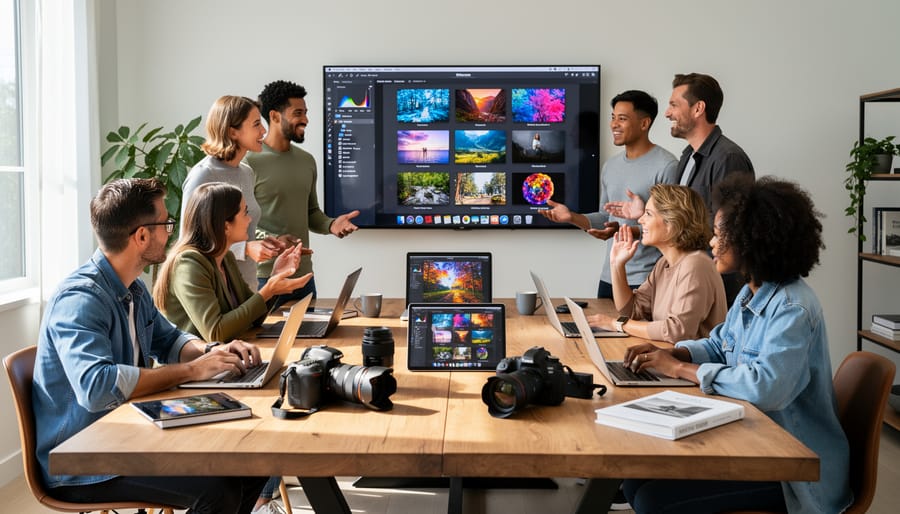
Online critique sessions form another valuable component of the virtual meetup experience. These sessions typically involve participants submitting images beforehand, which are then reviewed by the group. Constructive feedback covers everything from composition and color grading to storytelling elements, helping photographers refine their technical skills and creative vision.
Some meetups also feature guest speakers or tutorials on post-processing techniques specific to virtual photography, teaching participants how to edit their captures using popular software. The casual, supportive atmosphere makes these gatherings perfect for both newcomers testing the waters and experienced virtual photographers seeking fresh inspiration and community connection.
Skills You’ll Actually Learn
Composition Without the Price Tag
One of virtual photography’s most liberating aspects is the complete freedom to experiment without consequences. In traditional photography, every shutter click potentially costs you something—whether it’s film, wear on your equipment, or simply the time spent in a specific location. Virtual photography eliminates these barriers entirely.
Want to test whether the rule of thirds really works better than centered composition? Take both shots. Curious about extreme Dutch angles or unconventional framing that might look ridiculous? Go for it—nobody’s watching, and you haven’t wasted anything if it doesn’t work out. This risk-free environment transforms virtual photography into exceptional learning experiences where failure becomes just another step toward mastery.
Many photographers discover that virtual environments actually sharpen their compositional eye for real-world work. By practicing leading lines in a racing game’s urban environment or experimenting with negative space in an open-world adventure, you’re training your brain to recognize these elements instinctively. The best part? You can reset and try again instantly, something impossible when you’re standing on a mountainside at golden hour with fading light.
This playground approach to composition helps photographers develop confidence in breaking rules intentionally rather than accidentally, knowing exactly why certain techniques work or fail.
Lighting Lessons That Transfer to Your Camera
One of the most valuable surprises in virtual photography is how deeply it teaches you about lighting—knowledge that directly translates to your real-world camera work.
When you’re positioning a virtual character in a game environment, you’re essentially working with the same principles photographers have used for decades. You’ll notice how moving your subject closer to a window creates soft, directional light with gradual falloff. Position them near a campfire, and you’ll see how warm light sources create dramatic shadows and orange color casts. These aren’t arbitrary game mechanics—they’re based on actual physics of light.
The best part? You can experiment without consequences. Want to see how overhead noon sunlight creates unflattering shadows under the eyes? Place your virtual subject outside at midday and observe. Curious about the golden hour’s magic? Fast-forward to sunset in-game and watch how those warm, angled rays transform your scene. You’re building visual intuition in a risk-free environment.
Many photographers report that virtual photography helped them understand concepts like rim lighting, three-point lighting setups, and color temperature in ways that theoretical tutorials never could. When you’ve spent time manually adjusting virtual light sources to achieve a specific mood, you start recognizing those same lighting patterns in the real world.
Think of it as a lighting sandbox where you can practice reading light, understanding direction and quality, and predicting how different sources will affect your subject—all skills that make you faster and more confident when you’re behind your actual camera.
How to Find and Join Virtual Photography Meetups
Where the Communities Gather
Finding your tribe in virtual photography is easier than you might think, with thriving communities across multiple platforms ready to welcome newcomers and veterans alike.
Discord has become the primary hub for virtual photography gatherings. The Virtual Photography Discord server boasts over 15,000 members and hosts weekly themed challenges alongside regular portfolio reviews. Similarly, the Game Photography Hideout focuses specifically on in-game captures, organizing monthly meetups where members explore new titles together. For those interested in specific games, dedicated servers like GhostWire: Tokyo VP Community or Horizon Virtual Lens offer focused environments where you can deep-dive into particular virtual worlds.
On Twitter, the #VirtualPhotography and #GamerGrams hashtags connect thousands of creators daily. Follow accounts like @VPGamers and @TheFourthFocus to discover curated showcases and event announcements. These accounts regularly promote community challenges that anyone can join, regardless of skill level.
Reddit’s r/VirtualPhotography subreddit serves as an excellent starting point for beginners, offering critique threads, technical tutorials, and event calendars. The community emphasizes constructive feedback, making it particularly welcoming for those just starting their virtual photography journey.
Instagram remains vital for showcasing work and discovering meetup announcements. Search for virtual photography collectives in your region or game of choice—many organize synchronous photo walks where members explore the same virtual location simultaneously while chatting via voice channels.
To get involved, start by lurking in one or two communities that align with your interests. Introduce yourself in welcome channels, share a few of your captures, and don’t hesitate to ask questions. Most virtual photography communities explicitly welcome beginners and actively encourage participation in challenges and critiques. The barrier to entry is remarkably low—all you need is enthusiasm and a willingness to learn from fellow photographers who share your passion for capturing digital worlds.
What You Need to Get Started
Getting started with virtual photography is refreshingly accessible—you don’t need expensive camera gear, just a gaming platform and the right software. First, you’ll need a PC, PlayStation, or Xbox console capable of running modern games. Most virtual photography meetups focus on games with robust photo modes, so having at least one photography-friendly title is essential.
For beginners, games like Ghost of Tsushima, Horizon Zero Dawn, or Spider-Man offer intuitive photo modes with accessible controls and stunning visuals. These titles provide excellent training grounds for composition and lighting without overwhelming newcomers. PC players should consider games like Control or Red Dead Redemption 2, which feature particularly sophisticated camera tools.
You’ll also need screen capture software. Console players can use built-in capture features, while PC photographers often prefer tools like NVIDIA GeForce Experience or AMD ReLive for higher quality outputs. Many meetup participants recommend having at least 50GB of free storage space for capturing and organizing your virtual shots.
Beyond hardware, joining a virtual photography meetup typically requires a Discord account or access to the community’s chosen communication platform. This is where organizers share meeting times, game selections, and themes. Some communities also use social media platforms like Twitter or Instagram for sharing work, so having accounts there can enhance your experience and help you connect with fellow virtual photographers between meetups.
Making the Most of Your First Meetup
Preparing for your first virtual photography meetup doesn’t need to be intimidating. Think of it like attending any photography workshop, just from the comfort of your home. Start by testing your technology beforehand. Check your internet connection, microphone, and camera if you plan to participate actively. There’s nothing worse than having a great question or image to share, only to discover your audio isn’t working.
Before the session begins, review any agenda or theme provided by the organizers. If the meetup focuses on landscape photography techniques, spend time gathering a few of your own landscape images to discuss or receive feedback on. This preparation shows respect for the community’s time and helps you get personalized value from the experience.
During the meetup, remember that everyone was a first-timer once. Most virtual photography communities thrive on welcoming newcomers. When introducing yourself, briefly mention your photography interests and what you hope to learn. This helps others connect with you and creates potential mentorship opportunities.
Engage actively but respectfully. Use the chat feature to ask questions or share relevant experiences, but avoid dominating the conversation. If you’re offering feedback on someone’s work, follow the compliment sandwich approach: start with what works well, suggest one area for improvement, then end with encouragement. Virtual photography communities value constructive criticism delivered with kindness.
Take notes during the session. Whether it’s a new editing technique, camera setting recommendation, or simply the name of a plugin someone mentioned, jotting down these details ensures you can practice what you’ve learned afterward. Many participants find that the real growth happens when they apply meetup lessons to their own work between sessions.
Don’t disappear after your first meetup. Follow up with participants who shared helpful advice, and consider sharing your progress in subsequent sessions. Building relationships takes time, but the photography community rewards those who consistently show up, contribute thoughtfully, and remain open to learning. Your first meetup is just the beginning of what could become an invaluable creative resource.
Real Photographers Who Started with Virtual Meetups
The impact of virtual photography communities extends far beyond the digital realm, as evidenced by the growing number of professional photographers who credit these online spaces with shaping their creative development.
Take Sarah Chen, a wedding photographer based in Portland, who began her photography journey during the pandemic lockdowns. Unable to attend in-person workshops, she discovered virtual photography meetups focused on composition and lighting techniques. “I’d spend hours in virtual environments, experimenting with different angles and light conditions without any pressure,” Chen recalls. “When I finally shot my first real wedding, I already had an intuitive understanding of how to work with difficult lighting scenarios because I’d solved those problems hundreds of times virtually.” Today, her portfolio showcases the sophisticated compositional skills she first practiced in digital spaces.
Similarly, Marcus Rodriguez, now a commercial product photographer, attributes his understanding of color theory and product staging to his time participating in weekly virtual photography challenges. These online gatherings pushed him to recreate real-world advertising shots in virtual environments, forcing him to deconstruct what made professional images work. “Virtual photography taught me to see light as a sculptable element,” Rodriguez explains. “I learned to be intentional about every shadow and highlight before I ever touched an expensive lighting setup.”
The common thread among these photographers is how virtual communities provided a low-stakes practice ground. Without the pressure of client expectations or expensive equipment requirements, they could experiment freely, receive constructive feedback from peers worldwide, and develop their artistic voice. These virtual experiences didn’t replace traditional photography education but complemented it, offering unlimited practice opportunities that accelerated their learning curves and built confidence before transitioning to professional work.
Virtual photography meetups aren’t just a pandemic-era workaround—they’re a legitimate pathway to skill development and meaningful creative connections. Whether you’re looking to master off-camera flash techniques, get honest feedback on your portfolio, or simply connect with others who understand the difference between bokeh and blur, these online gatherings deliver real value from the comfort of your home.
The beauty of virtual meetups lies in their accessibility. You can attend sessions led by photographers across the country or even internationally, learn specialized techniques that might not have local instructors, and build relationships without geographic constraints. Many participants report that the focused, distraction-free environment actually enhances learning compared to crowded in-person workshops.
Ready to dive in? Start by searching platforms like Meetup.com or Facebook Groups for photography-specific virtual events in your area of interest. Look for meetups with clear agendas and active facilitators. Join one or two that align with your goals—portrait lighting, landscape composition, or business strategy—and commit to attending regularly for at least three sessions. Come prepared with questions, participate in critiques when offered, and don’t hesitate to share your own work. The worst that can happen is you spend an evening talking photography, and the best? You’ll discover a supportive community that accelerates your growth behind the lens.




 By
By